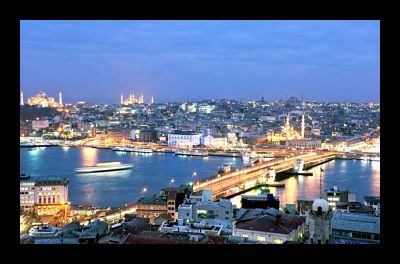
In the sprawling metropolis of Istanbul, which over 14 million people call home, there is a sense of progress and modernity. The city, the largest in Turkey, sits at the crossroads of Europe, the Middle East and Asia, and claims thousands of years of history.
Istanbul is one of the more diverse cities in Turkey. It is home to not only Turks, but also Kurds, the Romani people and immigrants from Europe, the Middle East, Asia, the Americas and Africa. While the tourist and central areas seem modern, safe and progressive, there is another side of the city.
Poverty in Istanbul is pocketed. About an hour bus ride out of the central city, there are two neighborhoods that are some of Istanbul’s poorest and most violent: Gazi Mahallesi and Karayollari. The first, Gazi Mahallesi, is a multiethnic neighborhood. The neighborhood sports anti-government vandalism and leftover destruction from riots by anarchist, Kurdish and leftist groups that reside there.
Karayollari, separated from Gazi Mahallesi by a highway overpass, is a primarily Kurdish neighborhood. Many of the Kurds who call the neighborhood home have been displaced by the violence in southeastern Turkey, where Turkey’s Kurds are the most populous. Karayollari seems to be stuck in a cycle of violence, encouraged by poverty and unemployment. Residents say the police no longer even venture near the neighborhood unless to break up riots.
Because of rapid and unplanned migration to the city, 70 percent of housing in Istanbul was built in 30 years. At first, housing was built wherever land could be found. These settlements are Istanbul’s version of shantytowns or squatter towns and are called gacekondu. The gacekondu originally were accepted by the city because they passed the costs of urbanization from the government to the migrants. The gecekondus were the homes of the poorest migrants who found work in the industrial parts of Istanbul.
The make-shift neighborhoods were accepted as a solution to urbanization through 1980s, but are now being razed in an attempt modernize the city. Forced evictions have occurred, putting already poor families into the streets of sometimes violent, dangerous parts of Istanbul. Early last year, a group of 30 Roma families, previously evicted from their homes, was in danger of being forcibly evicted again, this time from their makeshift shack camp. The group included children and elderly persons. Amnesty International reported that the group was “living in conditions of extreme poverty since their forced eviction” and was “without access to…electricity, clean water and basic sanitation.”
Overall poverty in Turkey is a diminishing problem. Over the last ten years, the number of people living on less than $4.30 per day decreased from 20 million to 1.7 million. In Istanbul, the percent of people living in poverty has decreased 2.2 percent over the last eight years. The government claims that this reduction is due to government support programs to poorer citizens.
There is some contest as the whether the government’s attitude towards poverty and the poor can really lead to effective policy. Dr. Ebru Soytemel, of the Oxford Program for the Future of Cities, says that the “current government regards poverty as a temporary, individual problem that can be fixed, not a structural problem.They say that your religion or your family should provide you with help.”
Distribution of poverty is a problem for Turkey. While overall inequality has diminished, the distribution of poverty is a stark reminder of the discrepancies among living standards within the country. When looking at a map of regional poverty rates in Turkey, eastern regions, where most of Turkey’s ethnic minority groups live, are severely disadvantaged. Istanbul, which is the most western region of Turkey, is the most well off. Istanbul is a microcosm of this map: minority neighborhoods are generally far worse off than primarily Turkish neighborhoods.
– Caitlin Huber
Sources: Oxford, Today’s Zaman, Daily Sabah, Hurriyet Daily News Non-Descrimination Time Pulitzer Center LSE Cities
Photo: Telegraph U.K.

Bill and Melinda Gates’ ‘Big Bet’ for Future of Poverty
It has been 15 years since Bill and Melinda Gates started the Gates Foundation, and the couple has made a big bet for the next decade-and-a-half: the lives of people in poor countries will improve faster in the next 15 years than any other time in history.
The Gates’ annual letter was released on Wednesday, Jan. 21, 2015, on the foundation’s blog. The Gates’ are focusing on wiping out diseases, reducing poverty, and improving education. The letter is broken down into four sub-categories of the overall “bet.”
Child Deaths Will Be Cut In Half
The leading cause of death for children under 5 is disease. Unsanitary living conditions and a lack of vaccines kill one in 20 children, and the Gates hope to see a decrease by at least 50 percent by 2030. All countries will add vaccines for pneumonia, diarrhea, malaria and measles to their individual immunization programs. Better sanitation will also contribute to the decrease in disease. In addition to providing vaccinations, the Gates Foundation plans to help mothers adopt new practices, such as proper breastfeeding and skin-to-skin contact with newborns.
Africa Will Be Able to Feed Itself
Although seven out of 10 people in sub-Saharan Africa are farmers, many farms do not yield the benefits of their counterparts in the developed world. Many parts of Africa currently rely on food aid and imports from outside sources to feed their people. Innovations in farming can provide farmers with better fertilizers and a surplus in crops, allowing farmers to farm more food. As technology expands and becomes more easily available, communications with farmers in remote areas will become possible and business will increase. In the next 15 years, Africa will be able to export more than it receives in imports, creating a balanced economy.
Mobile Banking Will Transform Banking
Digital banking can give the poor easy access and control of their assets. Approximately 2.5 billion people don’t have access to cheap and easy financial services, and for many people, their savings is in the form of jewelry or livestock; it is very difficult to cover daily expenses. To be able to use a mobile phone to take care of finances makes it much easier to purchase and save money. Mobile banking is expected to expand and cover a wide range of financial services, such as interest-bearing savings accounts to credit and insurance.
Online Education
Smartphones and software will become more available to African families that can provide more access to education. In remote areas where schools are hours away or students must be of a certain age to attend, it is essential to provide education as early as possible. As more children are exposed to education earlier in life, they are set down a path that leads to success in all areas of life. Online education can be crucial in countries where gender gaps are wide and girls can’t go to school or start a business. Countries that stay behind in education will eventually be left behind.
– Alaina Grote
Sources: CNN, NPR, Youtube
Photo: Computer Business Review
Poverty in Istanbul
In the sprawling metropolis of Istanbul, which over 14 million people call home, there is a sense of progress and modernity. The city, the largest in Turkey, sits at the crossroads of Europe, the Middle East and Asia, and claims thousands of years of history.
Istanbul is one of the more diverse cities in Turkey. It is home to not only Turks, but also Kurds, the Romani people and immigrants from Europe, the Middle East, Asia, the Americas and Africa. While the tourist and central areas seem modern, safe and progressive, there is another side of the city.
Poverty in Istanbul is pocketed. About an hour bus ride out of the central city, there are two neighborhoods that are some of Istanbul’s poorest and most violent: Gazi Mahallesi and Karayollari. The first, Gazi Mahallesi, is a multiethnic neighborhood. The neighborhood sports anti-government vandalism and leftover destruction from riots by anarchist, Kurdish and leftist groups that reside there.
Karayollari, separated from Gazi Mahallesi by a highway overpass, is a primarily Kurdish neighborhood. Many of the Kurds who call the neighborhood home have been displaced by the violence in southeastern Turkey, where Turkey’s Kurds are the most populous. Karayollari seems to be stuck in a cycle of violence, encouraged by poverty and unemployment. Residents say the police no longer even venture near the neighborhood unless to break up riots.
Because of rapid and unplanned migration to the city, 70 percent of housing in Istanbul was built in 30 years. At first, housing was built wherever land could be found. These settlements are Istanbul’s version of shantytowns or squatter towns and are called gacekondu. The gacekondu originally were accepted by the city because they passed the costs of urbanization from the government to the migrants. The gecekondus were the homes of the poorest migrants who found work in the industrial parts of Istanbul.
The make-shift neighborhoods were accepted as a solution to urbanization through 1980s, but are now being razed in an attempt modernize the city. Forced evictions have occurred, putting already poor families into the streets of sometimes violent, dangerous parts of Istanbul. Early last year, a group of 30 Roma families, previously evicted from their homes, was in danger of being forcibly evicted again, this time from their makeshift shack camp. The group included children and elderly persons. Amnesty International reported that the group was “living in conditions of extreme poverty since their forced eviction” and was “without access to…electricity, clean water and basic sanitation.”
Overall poverty in Turkey is a diminishing problem. Over the last ten years, the number of people living on less than $4.30 per day decreased from 20 million to 1.7 million. In Istanbul, the percent of people living in poverty has decreased 2.2 percent over the last eight years. The government claims that this reduction is due to government support programs to poorer citizens.
There is some contest as the whether the government’s attitude towards poverty and the poor can really lead to effective policy. Dr. Ebru Soytemel, of the Oxford Program for the Future of Cities, says that the “current government regards poverty as a temporary, individual problem that can be fixed, not a structural problem.They say that your religion or your family should provide you with help.”
Distribution of poverty is a problem for Turkey. While overall inequality has diminished, the distribution of poverty is a stark reminder of the discrepancies among living standards within the country. When looking at a map of regional poverty rates in Turkey, eastern regions, where most of Turkey’s ethnic minority groups live, are severely disadvantaged. Istanbul, which is the most western region of Turkey, is the most well off. Istanbul is a microcosm of this map: minority neighborhoods are generally far worse off than primarily Turkish neighborhoods.
– Caitlin Huber
Sources: Oxford, Today’s Zaman, Daily Sabah, Hurriyet Daily News Non-Descrimination Time Pulitzer Center LSE Cities
Photo: Telegraph U.K.
State of the Union Addresses Economic Inequality
Social mobility in the U.S. played an extremely crucial role in President Barack Obama’s most recent State of the Union Address. He took the opportunity to comment on the furthering economic divide occuring between the lower middle and upper middle and upper classes in America.
“Will we accept an economy where only a few of us do spectacularly well,” the president asked, appealing to lower class Americans.
One of the stories he told pertained to a young couple who was negatively affected by the economic crisis of 2008. The story represents that of resilience and the couple was able to rebuild their lives.
In addition, Mr. Obama is sending a bill to Congress that would lower the cost of a community college education to zero. President Obama said that the measure will provide students without the means to go to college, an opportunity to attend without taking on large amounts of debt.
“Forty percent of our college students choose community college. Some are young and starting out. Some are older and looking for a better job. Some are veterans and single parents trying to transition back into the job market. Whoever you are, this plan is your chance to graduate ready for the new economy, without a load of debt,” Mr. Obama said.
College tuition is on the rise and inhibiting many from receiving graduate degrees that would allow them to get higher paying jobs. In addition he requested that companies start providing more benefits for their employees including higher wages even without a bachelors or masters degree. In general, Obama solicited companies to provide more benefits because currently 43 million workers in the U.S. do not get paid sick leave.
Smoothing over the vast inequality that is present in America is pertinent to developing a better life for many citizens. Another subject he focused on was that congress needs to impose higher taxes on wealthy Americans who can afford to take higher cuts. This is likely to fail especially in a full GOP congress.
Some have called President Obama’s economic approach “populist” as he is appealing to ordinary Americans, many of whom are still suffering from the 2008 economic crisis.
Bipartisanship in congress was another focal point of the address. He focused on issues that in the past had garnered bipartisan support such as creating jobs. Although job growth in the private sector has been relatively successful, there are other parts of the economy where job growth has been limited.
Although President Obama is faced with a GOP congress he seemed to try to appeal to Republicans on a number of issues. With a majority Republican congress, Obama has no other option if he wants to make headway on a number of issues in his agenda.
– Maxine Gordon
Sources: Bloomberg, NPR, The Washington Post
Photo: TIME
Development Gateway
Development Gateway is an organization committed to international development. This nonprofit advises and provides consulting services for non governmental organizations and organizations operating oversees.
They apply effective methods of collaboration and cooperation in order to find solutions for how to utilize scarce resources or distribute aid workers to regions in humanitarian crisis. The Development Gateway is there as a tool for organizations and professionals involved in international development.
Development Gateway has offices in the United States, Europe and two locations in Africa. However, they work in 20 countries on five continents. The main tool they use to help professionals and organizations is called Results Management. Results management uses data analyses to track results in order to employ policies that reflect the findings of the data. The Development Gateway team uses custom data management applications and information management consulting to solve problems.
To show results of the data they gather and analyze, Development Gateway uses graphics, databases, dashboards and maps as ways to show the material and advise their partners and employers.
Many of Development Gateway’s projects are done in cooperation with other partners including public, private and non-governmental agencies and organizations. They work in tandem with other organizations in order to provide solutions that are well-rounded and dynamic. Gateway Development works with the United Nations, Virtual Statistical Systems and the Kellogg Foundation among many others to provide the most recent and up-to-date information.
The organization employs highly skilled and experienced Technical Project Specialists, Regional Managers, Business Analysts, Aid Coordinator Specialists, Policy Advisors and Financial Analysts among other roles. These highly skilled professionals contribute to solving the vast number of problems that arise in international development. Together, they work toward solving issues and forming solutions to better the world.
– Maxine Gordon
Sources: Development Gateway, Glassdoor
Photo: Development Gateway
Problems Facing the New Congress
The newly-elected Republican House and Senate is facing several problems related to foreign aid and other issues dealing with foreign policy and international relations.
For instance in 2014, due to the influx of illegal immigrants from Mexico and Latin America, Republicans proposed to stop sending aid to countries such as El Salvador, Guatamala and Hondouras. Instead of providing foreign aid, Republicans proposed to provide funding for initiatives that would protect the border states.
President Barack Obama’s strategy in congress is “play offense” against the majority GOP Congress. This includes using his veto power to stop legislation of the XL pipeline and increased sanctions on Iran.
“We in the administration believe that, at this time, increasing sanctions would dramatically undermine our efforts to reach this shared goal” of reducing Iran’s nuclear weapon capacity, said Samantha Power, the U.S. ambassador to the United Nations, at a Louisville event with Senate Majority Leader Mitch McConnell (R-Ky.) earlier this week.
The situation worsens as Democrats and Republicans further divide over social issues.
The United Nations Population Fund is the branch of the United Nations that supports development of programs and clinics that provide reproductive services for women. This institution needs funding to cut down on unplanned or unexpected pregnancy. The strict policy enacted by Ronald Reagan mandates that non-governmental organizations providing support for women cannot even mention abortion let alone refer them to doctors.
The order was rescinded by Bill Clinton in 1993 and then reinstated during George W. Bush’s administration. The bill is also known as the “gag rule” and is an example of the volatility of bipartisan politics in Washington.
“The global gag rule has had a dire impact on vulnerable women by allowing critical family planning programs in the developing nations to be held hostage by the ping pong game of U.S. partisan polices,” said Brian Dixon.
Obama also stated, “I’m not going to spend the next two years on defense; I’m going to play offense,” he said, at his speech to Democrats. Obama has made it clear that he is not laying down for his last term in office.
– Maxine Gordon
Photo: Politico Fox News Women’s E-News
Photo: The New Yorker
Solidarity Center Stands Up For Workers’ Rights
The Solidarity Center is dedicated to helping workers around the world build a shared prosperity in both their local and global economies.
Workers who struggle to find safe and healthy job sites as well as family-supporting wages have concerns that far too often go unheard.
This nonprofit aims to help these workers find their voice on the job, working with unions, worker associations and community groups worldwide to achieve equitable and sustainable development.
Since 1997, the Solidarity Center has made it their mission to stand up for international worker rights so that workers can gain the social protections they need to improve their working and living conditions.
With programs expanding across some 60 countries, the Solidarity Center provides workers a range of education and training that focus on the following: worker rights, union skills, occupational safety and health, economic literacy, human trafficking, women’s empowerment and bolstering workers in an informal economy.
In addition, they provide research, legal support and other resources that help build strong trade unions and more equitable societies.
More specifically, the Solidarity Center assists unions with strengthening internal structures, like gender parity, and helping workers recover stolen wages or benefits illegally denied to them. They also connect migrant workers to protective networks to decrease vulnerability. Most importantly, they boost advocacy efforts so that campaigns can go beyond borders.
These examples can be found in a short bullet-point list on the Solidarity Center’s website, where one can also find the annual reports they conduct for each country that they work in.
In addition, the Solidarity Center keeps their news and events up-to-date, a testament to how actively involved they are in their work.
Recently, the Solidarity Center received the biggest testament to their efforts when President Barack Obama spoke at the 2014 Clinton Global Initiative about the need to develop young civil society leaders.
The first person that he recognized as a contributor to the development of his community was Solidarity Center’s own Walid Ahmed Ali, a Kenyan social justice activist.
President Obama congratulated him on his work in creating jobs at the Kenya-Somali border for unemployed youth, telling him that he “strives not just for the idea of democracy,” but “to cement the practice of democracy.”
At the Solidarity Center, you’ll find people like Walid Ahmed Ali who do just that. Though not all can be recognized in the same manner, everyone is fully committed to helping working men and women to be a force for democracy and shared prosperity.
If you believe that all people who work should receive the rewards of their work – decent paychecks and befits, safe jobs, respect and fair treatment – then visit the Solidarity Center to learn how you can get involved in creating a more inclusive economic development.
– Chelsee Yee
Sources: Solidarity Center, ALFCIO
Photo: Bangor Daily News
Teixobactin: The First New Antibiotic in Decades
As the growing resistance against drugs becomes more disturbing, a new discovery has the potential to dramatically alter the situation.
Teixobactin is the first new antibiotic to be discovered in almost 30 years. Safely tested on mice, not only is the drug capable of fighting both drug-resistant bacteria and common drug bacterial infections such as tuberculosis, septicaemia and clostridium difficile colitis, but it could also pave the path for a host of new antibiotics through the method in which the drug was discovered.
The soil has always had the potential to reveal many new antibiotics. Scientists have noted the interesting and innovative ways many microbes have managed to fight off other microbes, but they found that 99 percent of microbes would not grow under laboratory conditions. This obstacle prevented scientists from unlocking the potential wave of antibiotics that could be developed.
A group of researchers at Northeastern University in Boston has overcome that barrier. Essentially deceiving the bacteria, soils with the microbes were sandwiched between two semi-permeable membranes to imitate a natural environment.
With that method, the researchers were able to grow 10,000 different strains of bacteria and isolate 25 potential antibiotics. Ultimately, Teixobactin was the most promising antibiotic that they discovered.
Teixobactin is especially unique due to its mechanism of targeting two different lipids that are required for cell wall production in bacteria. Its innovative process will most likely prove to prevent the development of resistance for quite some time.
In cell cultures and later on with mice, Teixobactin was capable of successfully killing MRSA and drug-resistant TB. The antibiotic was so effective that the researchers were concerned that the drug would fail to make a distinction between the mammalian cells and the bacteria when testing on mice. Surprisingly, Teixobactin performed exceedingly well, killing the bacteria while leaving no notable side effects.
Still there is a long way to go before Teixobactin becomes available for human use. It has yet to be tested on humans so its effectiveness and side effects are unknown. Even if the drug passes all the required tests, it is estimated that it will be five to six years before it becomes available.
Furthermore, due to its function of destroying the cell walls of bacteria, Teixobactin is ineffective against gram-negative bacteria such as E. coli and many sexually transmitted diseases which have outer membranes that the antibiotic cannot penetrate.
But the main issue concerning Teixobactin is the potential overuse of the drug once it does become available. The growing threat against antibiotics and their overuse is that it may develop into the “post-antibiotic era,” referring to a time when a number of infectious diseases will be unresponsive to antibiotic treatments.
While the development of antibiotics is essential, the culture of over-prescribing antibiotics must change. A continuation of that culture would further the course toward a post-antibiotic era and limit the effectiveness of Teixobactin and other potentially effective antibiotics.
Nevertheless, this development could begin the transition away from building resistances in bacteria and open whole new channels for better and more innovative drugs to save lives all around the world.
– William Ying
Sources: The Guardian, Washington Post, Telegraph UK, The New York Times, Smithsonian,Live Science, Time, Newsweek
Photo: Independent U.K.
What is the Out of Poverty Caucus?
The Out of Poverty Caucus, also known as the COPC, was founded in January 2007 for the purpose of creating solutions to help end poverty in America. Led by congresswoman Barbara Lee, COPC brings together lawmakers and congressmen to focus their energy and resources into developing new policies to help find solutions to factors that contribute to poverty.
The COPC will develop legislation and gather support keeping the following principles in mind: Provide affordable healthcare, provide affordable housing, reduce unemployment and reduce hunger among many others.
The COPC also works to connect people to resources and anti-poverty associations. Government subsidized programs that provide affordable food like the Supplemental Nutrition Assistance Program, or SNAP, and Housing and Urban Development, or HUD, provide necessary services to people.
A census done in 2011 shows that approximately one in six Americans were living below the poverty line. That number settled around 46.2 million Americans. Safety net programs help keep many Americans from falling below the poverty line which is why it is important that the federal government continues to use federal funds to support these programs.
Medicaid is also an important program that the COPC seeks to continue funding for because it provides for Americans who cannot afford privatized health care. When private health care is so expensive, other alternatives need to be accessible to citizens.
“Social service programs serve as a life line for our nation’s low income and poor communities,” Lee said. “Social services need to be provided by the government to provide a safety net for people who have lost their jobs or have dealt with unfortunate circumstances.”
Though there have been differing opinions about what factors contribute to whether a person is considered to be living in poverty, there has been strong bipartisan support on the issue.
Coalitions like the Out of Poverty Caucus are important because they seek to represent the needs of impoverished Americans in Congress. In 2014 when Congress had multiple hearings on whether or not to drop bombs on Syria, SNAP was in the midst of being cut by five percent.
Representative Jim McGovern, (D-Mass), a proponent of putting the impoverished first, addressed the situation.
“I hope through all this Syria stuff, that we’re able to shed a bit of light on this, because I think most Americans, if they realize what’s going on, would be outraged,” McGovern said. “The fact is that foreign affairs, and especially military action abroad, will be more prominent in the media and in Congress.”
The COPC deals with numerous issues including childhood poverty, education, transportation, energy and education among many others. The organization uses congressmen, congresswomen, lawmakers and lawyers to put together legislation that focuses on bettering people’s lives.
– Maxine Gordon
Sources: The Nation, Out of Poverty Caucus, Huffington Post
Chimamanda Adichie’s “Danger of a Single Story”
We are all guilty of perpetuating stereotypes that create a single story, whether it’s intentional or not. In “Danger of a Single Story,” novelist Chimamanda Adichie puts it best: “Show people as one thing over and over again, and that’s what they become.”
In this TED Talk, the Nigerian author warns that we risk a very critical and very cultural misunderstanding when we forget that everyone’s lives and identities are composed of many overlapping stories.
What is the Danger of a Single Story?
“The single story creates stereotypes, and the problem with stereotypes is not that they are untrue, but that they are incomplete.”
When we hear the same story over and over again, it becomes the only story we ever believe. And this stands especially true for the story of Africa.
Too often do we hear this version—Africa, the poorest “country” in the world where only rural landscapes exist and where people live in terror amongst wild animals.
Too often do we treat Africa as one narrative, one we have fostered over generations and generations, becoming so institutionalized that even those who graduated from universities will sometimes slip and refer to Africa as a country or their language as “African.”
This is the danger of a single story, and it brings to mind a quote by American writer Alvin Toffler: “The illiterate of the 21st century will not be those who cannot read and write, but those who cannot learn, unlearn and relearn.”
We must learn to unlearn these perpetuated stereotypes in order to allow ourselves to see that there is more than this one narrative to Africa—to anything, really.
Adichie’s novels are inspired by Nigerian history, telling the forgotten stories that generations of Westerners fail to repeat.
However, she reminds us that we must not only seek diverse perspectives, we must also tell our own stories, ones that only we can tell about our own personal experiences.
What she hopes to follow are the first signs of crumbling of clichés and stereotypes, something that’s long overdue but never too late a process to begin.
Adichie’s “Danger of a Single Story” is one of the most powerfully crafted speeches ever given, one where every single word counts.
“Stories matter. Many stories matter. Stories have been used to dispossess and to malign, but stories can also be used to empower and to humanize. Stories can break the dignity of a people, but stories can also repair that broken dignity.”
– Chelsee Yee
Sources: TED Talks, CNN
Photo: BBC
Ending Poverty Through Mobile Banking
With populations in the developing world on the steady rise and technology becoming more user-friendly, there is no doubt that technology will make drastic changes to the developing world in the next decade.
In a recent 2015 Gates Annual Letter published by the Bill and Melinda Gates Foundation, Gates declared that innovation will play a vital role in improving the lives of people in poor countries in the next 15 years.
Moreover, Melinda Gates argues that an increase in access to mobile banking through cell phones will provide impoverished people with the opportunity to save what they earn or perhaps borrow what they need at a low rate.
One of the many benefits of mobile banking is its socio-economic impact. The country of Kenya was known to have an underdeveloped banking infrastructure, high poverty rate and a large population of migrant people. Since the introduction of mobile banking in Kenya, financial inclusion is reported to have increased to 80 percent. Along with significant changes and improvements in global health and agricultural production, increased access to mobile technologies in developing nations is the starting point to something greater.
Developing countries are limited by the physical infrastructure of financial institutions, which means that a large part of their population is not included in a banking system. Financial inclusions have an important impact on the lives of people. Reports indicate that when poor people receive access to financial services, their cash management improves and creates better infrastructure for business and development of markets.
This change in the infrastructure in developing nations is a start to change the way people live in these countries. A small technological innovation like the mobile phone has made huge impacts in providing the opportunity to build a more developed economy in these countries.
Other innovations in technology have become popular in benefiting the developing world as well. Telecenters are an example of how technology has changed in order to suit those living in remote areas. Telecenters range from innovations in the education sector to the medical industry.
For learning, distance education developed by technology has the ability to make every child a scholar. For health, telemedicine has the ability to change dysfunctional rural health-care systems by providing clinical health care at a distance.
Other small inventions, such as the Soccket and Lifestraw, have been developed to help those living in poverty-stricken areas and to improve the lives of those individuals.
This shows how a simple change in technology can change the lives of people living in poverty. These types of actions should be embedded in all development efforts that aim to challenge poverty through innovations of new technology.
Although technology does not end poverty, it allows people to create connections and relationships that together can break down the systems that keep people poor, and then it is up to humanity to end it.
– Sandy Phan
Sources: Bill Gates’ Blog, Consultive Group to Assist the Poor