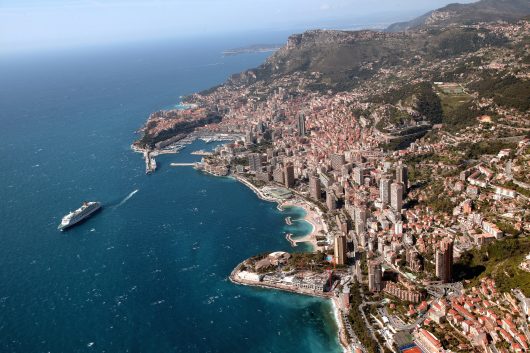
Poverty in Monaco? The nation is a sovereign city-state that lies along the southern border of France with its toes in the French Riviera. It is the second smallest sovereign nation on earth being only slightly larger than the Vatican. The population is only about 38,000 people. With the size being only about 0.78 square miles, it is possible to walk the width of the country within an hour.
Monaco has two major sources of income: tourism and millionaires purchasing properties. As a result, the poverty line has been all but erased, with everyone being above it. According to the World Health Organization (WHO) in 2009, Monaco is “NA [not-applicable]” for statistics on the national population below the poverty line because there are none.
One-third of the population is made up of millionaires. Monaco’s population is only 16% Monegasque in origin while the other 84% are wealthy outsiders. With 47% French nationals, and the other 37% a combination of Italians, Britons, Belgians, Germans and Americans (and recognizing that Monaco is only 38,000 people strong), the imposition of foreigners is unusual.
Monaco does not charge income tax on its residents. This hefty tax break attracts many of the globe’s rich and famous to its shores. According to WealthInsight, one-third of the population of Monaco is made up of millionaires. That means that if 12 people were walking down the streets of Monaco, at least four of them would have platinum cards in their pockets and millions of dollars in their bank accounts.
Monaco began its tradition of no income tax in 1869 after the creation of the Grand Casino de Monte Carlo. In 1858, when the Casino had its grand opening, it “[had] been so successful in bringing in profits that the government decided to stop collecting income taxes from residents,” according to Eric Goldschien in Business Insider Magazine.
Tourism is a big income earner. One of Monaco’s only income-earning industries is tourism and with its beautiful climate and crowd-drawing sites like the Grand Prix and five major casinos, three of which being in Monte Carlo, it is an easy means for capital. In Professor Michael Porter’s paper Monaco’s Tourism Cluster, he states that “Monaco has, for over a century, successfully made tourism…its biggest income earner…”
The many areas of tourism in Monaco include hotels/spas, restaurants/bars, gambling, conferences, sports, tour operators, health/medical and culture/leisure activities. With all of these major tourism sectors hard at work, the income turnover for Monaco totals 100 billion euros, which is roughly equivalent to 105,775,000,000 dollars.
A Monegasque family’s monthly budget averages higher than global comparisons. Paul Nayakazeya in The Financial Gazette compared the average consumer basket of a family in Zimbabwe to that of a family in Monaco.
A consumer basket explains the way a family spends its money by monitoring the most commonly bought foods, household items and services that are offered in the consumer market. Anything a person can buy, be it a sandwich or a haircut, is included in the consumer market and examined in a family’s basket, i.e. the purchased commodities.
A family of six in Zimbabwe will spend roughly 561 dollars in one month, while a family of five in Monaco will spend an average of 12,000 dollars.
The government reinvests tourism earnings and other capital gains back into the community to improve the quality of life and to entice the wealthy to continue traveling and buying properties. Even though these improvements are meant to attract foreigners with money, the natives benefit from it as well, effectively creating a virtually nonexistent poverty line within their tiny, proud and sovereign nation.
– Karyn Adams
Photo: Flickr

Feed the Future Initiative Fights Hunger in Bangladesh
Bangladesh, a primarily agricultural society, has been plagued by poverty and malnutrition for many years. The 2010 USAID-funded Feed the Future training program, however, has empowered farmers to increase their yields. The program has improved economic status and given the Bangladeshi people the means to fight back against hunger. This can particularly be seen in the life of Taroni Kanto Shikari, whose economic status improved to the point where he could send his son to school and his daughter to college.
Hunger and food insecurity continue to plague many Asian countries, and Bangladesh is no exception. The country has a population of 160 million. Over 40% of that population lives on less than one dollar per day and struggles with food insecurity. A stagnating economy, rising inflation and unpredictable natural disasters all contribute to hunger in Bangladesh. As the nation’s population grows, so does its rates of hunger and malnutrition.
Malnutrition is extremely prevalent in Bangladesh, particularly among children and pregnant women. In 2015, worldhunger.org reported that 51% of pregnant women in Bangladesh do not consume adequate amounts of vitamin A. The site also reported that over 40% of adolescent girls are iron deficient and anemic. Bangladesh also has a high wasting and stunting rate, both of which stem from malnutrition and can permanently inhibit a child’s growth.
Battling Hunger Through Education
In 2010, USAID began the Feed the Future initiative, an ongoing program that fights back against hunger and malnutrition. The program operates by equipping farmers with the tools and the knowledge to increase their crop yields. The initiative consists of training seminars to teach farmers in Bangladesh better farming techniques and to equip them with better seeds and fertilizers.
Feed the Future has been very effective towards fighting hunger in Bangladesh, as can be seen in the life of Taroni Kanto Shikari, a rice farmer from the southern region of Bangladesh. As a rice farmer, Taroni’s income is dependent upon his yield. After all, Taroni says, “Rice is our life, rice is everything.” In 2010, Taroni attended USAID agricultural training, where he learned how to increase his rice yields with better seeds, fertilizer and techniques.
As a result of Taroni’s USAID-training, his rice production practically doubled and has increased steadily by 18% each season. His rice now requires one-third less fertilizer, reducing his production costs. He is also able to produce more vegetables with these new techniques, significantly increasing nutrient intake for his family. Taroni’s income has dramatically increased, and he can now afford to send his daughter to medical school and buy a bicycle for his son to attend school.
Hunger and malnutrition in southern Asian countries such as Bangladesh are rising issues. The problem will continue to worsen as populations rise and natural disasters ravage the region. Initiatives such as USAID’s Feed the Future program, however, are operating in countries around the world to give farmers like Taroni the tools to fight back against hunger and malnutrition.
– Chasen Turk
Photo: Flickr
African Leaders of State Vow to Provide Universal Access to Immunization
Preventable diseases continue to claim thousands of lives each year in Africa, but leaders of state have taken a bold stand against this reality. An official pledge in January affirmed their commitment to realizing the goal of universal access to immunization by the year 2020.
African Union Commission Chairperson Nkosazana Dlamini-Zuma stated in a press release following the Addis Declaration on Immunization (ADI) summit: “With political support at the highest levels, we are closer than ever to ensuring that all children in Africa have an equal shot at a healthy and productive life.”
This announcement marks the continuation of ongoing efforts to provide immunizations to citizens of 40 separate countries by Gavi, the Vaccine Alliance. To date, Gavi has saved more than 4.5 million lives by providing vaccines.
“African leaders are making a sound economic investment in future generations,” Dr. Seth Berkley, the CEO of Gavi, said in response to the announcement.
Berkley’s comment is not figurative. According to a 2016 study by Johns Hopkins University, when factoring in quality of life and reduction in economic disease burdens, every one dollar invested by the U.S. in vaccination among the 94 poorest countries on Earth yields a staggering 44 dollars in returns. In those countries directly supported by Gavi, the figure rises even higher, to 48 dollars.
The extensive list of diseases prevented by such immunizations includes polio, whooping cough, tetanus, yellow fever, diarrhea, cervical cancers and the most deadly of all, measles. Due to its highly contagious nature, measles alone was the cause of nearly 40,000 deaths in Africa in 2013, based on a survey by the World Health Organization.
The African government is not alone in supporting immunization efforts for children. Africa United, a platform for raising awareness of global health issues, has enlisted star football athletes to provide public service adverts during this year’s Total Africa Cup of Nations tournament. “Football unites people from all across Africa and beyond,” stated Issa Hayatou, the President of the Confederation of African Football, the governing body of professional football for Africa. “Together we can help ensure millions of African children are immunized by 2020.”
Though great strides have been made during the past 15 years, approximately one in five young people in Africa still do not have access to vaccines that prevent these life-threatening diseases. This pledge may mark the first step in reducing that number to zero by providing universal access to immunization.
– Dan Krajewski
Photo: Flickr
Armyworm Infestation May Cause New Food Crisis in Southern Africa
Particular regions of southern Africa are currently grappling with food crises caused by record-setting droughts. On top of this, a new crop-eater is singling out these vulnerable areas. In doing so, the crop-eater’s presence causes concern for a new food crisis in southern Africa.
The pest is called a “fall armyworm,” though it is far more caterpillar-like than that of a worm. The first report of an infestation came from South Africa’s agricultural department in early February, when they noted its arrival and unfamiliarity.
The fall armyworm does not originate in Africa and is instead proven to come from the Americas. Experts believe the invasion may have arrived on ships of maize imported from the Americas during the El Nino between 2015 and 2016. The same El Nino jumpstarted the droughts that southern Africa is still currently wrestling through.
Farmers have likened the infestation of this new, strange pest to “one of the 10 plagues in the Bible […] It’s widespread and seems to be spreading rapidly.”
Indeed, there are several problems caused by the fall armyworm that may induce a new food crisis in southern Africa.
The Dangers
Currently, the fall armyworm has traveled to South Africa, Zimbabwe, Malawi, Zambia, Namibia and Mozambique. New reports are currently developing in Nigeria and Ghana. Unfortunately, the Americas—where the fall armyworm originates—first reported infestations in 1957 and have still been unable to find solutions to eradicate them. They are considered second only to the red locusts in terms of the amount of damage they are able to inflict.
The most farmers can do now is try to control the invasion through pesticides and careful watch for larva in the leaves of their crops.
In the meantime, the U.N. Food and Agriculture Organization is holding an emergency meeting on this matter later this week in Zimbabwe.
– Brenna Yowell
Photo: Flickr
Poverty in Monaco: A Dream Come True
Poverty in Monaco? The nation is a sovereign city-state that lies along the southern border of France with its toes in the French Riviera. It is the second smallest sovereign nation on earth being only slightly larger than the Vatican. The population is only about 38,000 people. With the size being only about 0.78 square miles, it is possible to walk the width of the country within an hour.
Monaco has two major sources of income: tourism and millionaires purchasing properties. As a result, the poverty line has been all but erased, with everyone being above it. According to the World Health Organization (WHO) in 2009, Monaco is “NA [not-applicable]” for statistics on the national population below the poverty line because there are none.
One-third of the population is made up of millionaires. Monaco’s population is only 16% Monegasque in origin while the other 84% are wealthy outsiders. With 47% French nationals, and the other 37% a combination of Italians, Britons, Belgians, Germans and Americans (and recognizing that Monaco is only 38,000 people strong), the imposition of foreigners is unusual.
Monaco does not charge income tax on its residents. This hefty tax break attracts many of the globe’s rich and famous to its shores. According to WealthInsight, one-third of the population of Monaco is made up of millionaires. That means that if 12 people were walking down the streets of Monaco, at least four of them would have platinum cards in their pockets and millions of dollars in their bank accounts.
Monaco began its tradition of no income tax in 1869 after the creation of the Grand Casino de Monte Carlo. In 1858, when the Casino had its grand opening, it “[had] been so successful in bringing in profits that the government decided to stop collecting income taxes from residents,” according to Eric Goldschien in Business Insider Magazine.
Tourism is a big income earner. One of Monaco’s only income-earning industries is tourism and with its beautiful climate and crowd-drawing sites like the Grand Prix and five major casinos, three of which being in Monte Carlo, it is an easy means for capital. In Professor Michael Porter’s paper Monaco’s Tourism Cluster, he states that “Monaco has, for over a century, successfully made tourism…its biggest income earner…”
The many areas of tourism in Monaco include hotels/spas, restaurants/bars, gambling, conferences, sports, tour operators, health/medical and culture/leisure activities. With all of these major tourism sectors hard at work, the income turnover for Monaco totals 100 billion euros, which is roughly equivalent to 105,775,000,000 dollars.
A Monegasque family’s monthly budget averages higher than global comparisons. Paul Nayakazeya in The Financial Gazette compared the average consumer basket of a family in Zimbabwe to that of a family in Monaco.
A consumer basket explains the way a family spends its money by monitoring the most commonly bought foods, household items and services that are offered in the consumer market. Anything a person can buy, be it a sandwich or a haircut, is included in the consumer market and examined in a family’s basket, i.e. the purchased commodities.
A family of six in Zimbabwe will spend roughly 561 dollars in one month, while a family of five in Monaco will spend an average of 12,000 dollars.
The government reinvests tourism earnings and other capital gains back into the community to improve the quality of life and to entice the wealthy to continue traveling and buying properties. Even though these improvements are meant to attract foreigners with money, the natives benefit from it as well, effectively creating a virtually nonexistent poverty line within their tiny, proud and sovereign nation.
– Karyn Adams
Photo: Flickr
10 Facts About Bahamas Refugees
The Bahamas is an archipelago of over seven hundred islands and keys. It is nestled in the Caribbean with close proximity to the U.S. and has a populous of 319,000, as recorded by the United Nations in 2005.
The country has always been plagued with refugees and asylum seekers. Recently, there has been a change in immigration policies by the current governing administration, the Progressive Liberal Party. It has received much scrutiny and gotten backlash from international organizations inclusive of Amnesty International and the Robert F. Kennedy Center for Justice and Human Rights.
To understand the Bahamas’ position and the state of refugees, here are 10 facts about Bahamas refugees:
With proper policy reform, training and understanding of human rights, as well as taking preliminary measures to establish a fair asylum process to regulate more efficiently situation with the Bahamas refugees, the country will be on the right path to compliance with international human rights law and eligible for aid.
– Rochelle R. Dean
Photo: Flickr
US Benefits of Global Health Initiatives
Healing the sick and preventing disease worldwide are more than merely altruistic goals: they contribute directly to the economic and physical prosperity of the U.S. as a whole. Here are three U.S. benefits of global health initiatives:
1. Prevention is cheap, while intervention is expensive. The Ebola crisis in West Africa between 2014 and 2016 incurred enormous costs worldwide to contain the spread of the virus. According to the Centers for Disease Control and Prevention (CDC), the U.S. alone spent a whopping $2.37 billion responding to the epidemic. By contrast, the U.S. spends no money at all treating smallpox, because preventative measures such as vaccines and education have eradicated the disease entirely. Moreover, the cost of effective aid is surprisingly low. The less than one percent of the U.S. federal budget that goes to foreign aid has resulted in a 60% reduction in reported deaths from malaria.
2. Healthy populations overseas keep Americans healthy. The modern highly globalized environment, which includes growth in short term travel and international transport of goods, makes communicable diseases likelier than ever before to become cross-continent pandemics. Investing in global health helps to ensure U.S. citizens are kept safe from exposure to diseases with the potential to become epidemics. This is a well-known fact in the medical world, as the concept of community immunity, more commonly known as herd immunity, prevents infectious diseases from reaching those even with the most vulnerable immune systems. Each case of Ebola, SARS (severe acute respiratory syndrome), influenza or any other similar virulent infection prevented in Africa is one less threat to an American citizen at risk. The physical health of the American people is one more of many U.S. benefits of global health initiatives.
3. Healthy people make good consumers of American products. Every person living in extreme poverty can result in an opportunity to create a productive member of economic society. As people emerge from struggling with subsistence living and gain access to more money, they create demand for products and services that can be created in America. This directly results in a financial boon to the local U.S. economy. Foreign aid is not just charity; it is an investment in the expansion of the free market. In fact, global health experts estimate that for every one dollar invested in global health, the U.S. is repaid 20 dollars.
Recent political shifts in the U.S. and England have caused concern among philanthropists that the issue of foreign aid, which has long been bipartisan, is at risk of being politicized. Bill Gates told USA Today on February 14: “If you interpret America First (the campaign tagline of President Trump) in certain ways, it would suggest not prioritizing the stability of Africa and American leadership.” Despite these fears, hope remains among experienced proponents of global health initiatives that these new administrations will view global health initiatives as long term investments in their home countries.
– Dan Krajewski
Photo: Flickr
Six Organizations Fighting Hunger in Costa Rica
While Costa Rica is doing fairly well as an upper-class nation, there is still a portion of the country suffering from hunger. However, many organizations are able to do a number of things to reduce hunger in Costa Rica.
A group of students from the University of Costa Rica. In 2016, as part of the International Union of Food Science and Technology competition, 11 Costa Rican Food Science majors from the University of Costa Rica developed a nutritional grain called naji which can be used to make tortillas, empanadas, high-protein smoothies and cereal. The grain can help combat malnutrition in high poverty areas and can especially help improve the health of pregnant women in the Chorotega tribe in Costa Rica’s Guanacaste region.
Nadie con Hambre (No One Should Be Hungry). Nadie con Hambre is a string of non-profit Christian organizations. Their main tasks are to collect money and distribute food to low-income families in Costa Rica. One of their biggest food donations is rice; they have previously donated up to six tons of rice. Nadie con Hambre also benefits Fundacion Piedad (Mercy Foundation) which hosts six soup kitchens in low-income neighborhoods.
Costa Rica’s School Child and Adolescent Food and Nutrition Programme (PANEA). This program is funded by Costa Rica’s central government and the Education board of each school in the country. This program is in charge of distributing healthy foods and promoting healthy eating among the students. PANEA also provides training for agricultural projects for schools to build gardens to grow their own food.
Scaling Up Nutrition. This organization promotes healthy living and nutrition in many countries, but it started operating in Costa Rica in 2014. Its main goal is to increase financial and human resources to work on malnutrition. Once Costa Rica became the fiftieth country to commit to Scaling Up Nutrition, chronic undernutrition in the country decreased.
Food for the Hungry. This federal organization fights world hunger in the name of Christian values and started its branch with Costa Rica in 2003.
ECLA World Hunger. The Evangelical Lutheran Church in America helps more than 60 countries. One notable project with Costa Rica was to teach the people in El Jardin, who were working in harsh conditions and getting paid poorly, how to grow other crops and use agriculture efficiently.
There have been organizations fighting hunger in Costa Rica both internationally and regionally. Even though poverty has increased and decreased throughout the years in Costa Rica, people are still struggling, and it is important to continue to combat hunger in Costa Rica.
– Emma Majewski
Photo: Flickr
Fighting Non-Communicable Diseases in Africa
Communicable diseases such as malaria, tuberculosis and HIV/AIDS are still the biggest health concerns in Africa. However, the World Health Organization (WHO) projects that by 2030, non-communicable diseases (NCDs) will become the leading cause of death in Africa. Currently, only two percent of all donor funding goes to chronic diseases. NCDs in Africa is an issue that deserves more attention.
Non-communicable diseases in Africa include diabetes, cardiovascular and chronic respiratory diseases, as well as cancer. These diseases often stem from unhealthy lifestyles, like diet, smoking, drinking and physical inactivity. These behaviors can cause high blood pressure, weight gain, respiratory ailments, high blood sugar and cholesterol levels.
NCDs are already the leading cause of death in most regions of the world. These diseases cause the deaths of 38 million people each year and almost three-quarters of these deaths occur in low and middle-income countries. Projections show that NCDs in Africa will see the biggest growth globally in the next few decades.
Widespread chronic illness is detrimental to the economy and poverty reduction initiatives in developing countries because they result in decreased labor outputs, lower returns on human capital investments and increased healthcare costs. Non-communicable diseases should thus be afforded more attention in discussions about alleviating global poverty.
There are several initiatives working to address the issue of NCDs and the impact they will have on developing countries. The WHO created a Global Action Plan for the Prevention and Control of NCDs, which focuses on national actions to address harmful lifestyle choices that cause NCDs. This includes the taxation of tobacco and alcohol products and targets education programs on healthy living.
However, the increase in cases of non-communicable diseases in Africa will also require more resources to strengthen and adapt healthcare systems to deal with the growing disease burden. In 2014, only 49% of African countries reported that they have the necessary funds for the early detection, screening and treatment of NCDs.
One program working to solve this issue is Access Accelerated, a partnership between the World Bank, the Union of International Cancer Control and more than 20 pharmaceutical companies. The Access Accelerated initiative aims to address the access barriers to NCD medicines in low-income countries. Novartis Access, for example, is providing 15 NCD treatments in Kenya at $1.00 per treatment per month. This program will roll out in 30 other developing countries over the next few years.
Providing affordable medicines is just one of the aspects of creating sustainable solutions to the growing burden of non-communicable diseases in Africa. Other priorities include training healthcare workers to deal with NCDs, educating local communities about these diseases and improving healthcare infrastructure and distribution networks in rural areas.
– Helena Kamper
Photo: Flickr
Ten Facts About Refugees in Malta
Situated by the Mediterranean Sea, the island country of Malta has long been a safe haven for refugees. Although Malta is geographically and economically small, its location between Europe and North Africa makes it a logical first step for refugees seeking a new life in Europe. Discussed below are 10 facts about refugees in Malta.
Top 10 Facts about Refugees in Malta
Despite crowding and tight resources, refugees in Malta are working together to create a sense of community and home despite being so far away from their own.
– Alexi Worley
Photo: Flickr
Ten Facts About Refugees in Iran
There are more refugees and displaced people now than ever before in history. An estimated 65.3 million people are displaced, with 21.3 million of those being refugees. Here are 10 facts about refugees in Iran.
Over 20 million refugees, including refugees in Iran, are under the age of 18. Every day, nearly 34,000 people are forced to flee their home countries worldwide. Some organizations that assist Iran and other developing countries in their support of refugees are UNHCR, Amnesty International, and World Relief — among many others.
– Shannon Elder
Photo: Flickr