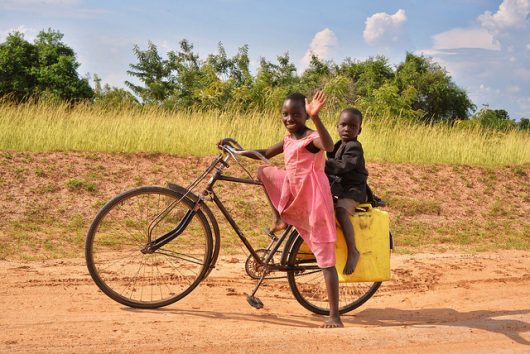
At least 1.3 million Ugandans face hunger following drought conditions and subsequent poor crop yields, according to a 2016 email statement from Christopher Kibazanga, Ugandan Minister of State for Agriculture. Among the harder hit were the citizens of the northeastern Karamoja region, with 65 percent of people having access to only half a meal or less per day.
Multiple nonprofits, however, have focused on eliminating Uganda food insecurity for decades and are still seeking long-term solutions to this crisis. Here are three nonprofit initiatives that are contributing to the fight against hunger in Uganda.
Hunger Project
Hunger Project has been working in Uganda since 1999, and utilizes an aid distribution method they refer to as an “epicenter strategy.” This method involves establishing community-built and community-facilitated mobilization centers that bring together multiple villages to share resources and address issues that affect all communities involved.
Over an eight-year timeframe, an epicenter addresses hunger and poverty while allowing communities to become sustainable and self-reliant, with the goal of being able to fund programs and activities without investor involvement.
Hunger Project has established 11 epicenters that serve 494 villages in total, reaching 287,807 people in all.
The World Food Programme
World Food Programme (WFP) is working with the Ugandan government, partners in the United Nations and nongovernment organizations to turn emergency responses to food insecurity into longer-term investments that seek to solve the root of the problems.
WFP supports approximately 70 percent of refugees in Uganda through monthly rations, cooked meals at transit centers and nutrition support for pregnant and nursing women and children aged between six months and five years.
This nonprofit program also organizes the distribution of 284 school meals to students in Karamoja. The meals include locally produced cereals, in hopes of facilitating local commerce.
Feed the Children
Since 2012, Feed the Children has provided health education to communities in northern Uganda. These services include school health programs that provide meals and vitamin supplements, as well as teaching teens about making good food choices, pregnancy and breastfeeding.
As of 2015, 274 children in early learning centers received meals through their schools, 118 children received vitamin A supplements and 302 children received deworming medicine.
Feed the Children also promotes community malnutrition detection education to increase the number of children that can access quality and timely treatment. This initiative advocates family health planning as a realistic and sustainable method to minimize hunger in Uganda.
– Casie Wilson
Photo: Flickr

Samaritan’s Purse Hospital in Iraq
In October of last year, a coalition including Iraqi, Kurdish and Assyrian troops launched what they hoped would be a final assault to retake Mosul from the Islamic State. Nearly six months later, the battle continues to rage on. Over 200,000 people have been displaced because of this conflict. In northern Iraq, Samaritan’s Purse is working to provide food and healthcare. The Samaritan’s Purse Hospital in Iraq opened on Christmas day and has cared for more nearly 1,000 patients.
The Samaritan’s Purse Hospital in Iraq is located in the northern plains of Nineveh. It has an emergency room and two operating rooms to serve patients who might not survive a lengthy trip to the nearest medical center in Erbil.
As expected, many of the patients being treated are victims of trauma, both physical and psychological. What may surprise people is that most of the patients at the Samaritan’s Purse Hospital in Iraq are women or children. For over two years, Mosul has been under ISIS control. The Iraqis have witnessed their communities destroyed by fire and bombs set off by the extremists. They have witnessed the beheading of those that have tried to resist.
Time seems to be running out for ISIS in Iraq’s second-largest city, and their desperation is clear. As Iraqi forces close in on the remaining ISIS stronghold, the extremists have resorted to using chemical weapons on innocent civilians. Patients at the Samaritan’s Purse Hospital in Iraq and other medical facilities have presented symptoms consistent with chemical exposure. Victims of chemical attacks can suffer from eye irritation, coughing, blisters, and vomiting. WHO activated an emergency response plan to help aid in the treatment of these patients.
These extreme measures being used by ISIS suggest that defeat is imminent. However, even after ISIS has been defeated in Mosul, and the Samaritan’s Purse hospital in Iraq can be closed, a battle remains to be fought — one with new, potentially more difficult challenges than the current conflict. In the absence of a shared, unifying enemy, disparate factions could prevent the country from recovering properly. Without sufficient support and leadership, the victory would be incomplete.
– Rebecca Yu
Photo: Flickr
Hunger in Botswana: A Problem of Climate Change
Botswana was rated as Serious on the Global Hunger Index, and hunger in Botswana is a problem that is highly correlated with climate. Botswana has a semi-arid climate that is not opportune to grow food. In the summer, temperatures can climb as high as 40 degrees Celsius (104 degrees Fahrenheit).
For this reason, the nation imports 90 percent of its food. Global food prices in 2011 were particularly high, and this caused Botswana’s food security to suffer. Every few decades, Botswana experiences a drought that can last five years or more. Those in poverty cannot afford imported food, and therefore are most affected by droughts within the country.
From 2008-2012, 31 percent of children in Botswana suffered moderate to severe stunting due to malnutrition, according to UNICEF. In 2016, almost a quarter of the population was malnourished and 23 percent of children under five years old were affected by stunting. In 2012, the amount of stunting in children under five was doubled in children from the most impoverished families compared to children from wealthier families. The government has invested in infrastructure to help increase food production.
Climate change directly affects crops and water for irrigation. Ninety-five percent of crops in sub-Saharan Africa depend on rainwater irrigation. There is an average of 460 mm of rain in Botswana each year, depending on the region. In comparison, the average amount of rainfall in the United States each year is 767 mm.
One solution to hunger in Botswana is to focus on creating jobs in the agricultural sector, rather than creating an abundance of food. In 2010, 26.4 percent of employment in Botswana was in the agricultural sector. Only wealthy farmers can afford the fossil fuels necessary for large scale production. Since expensive farming methods increase food prices, Botswana should focus on farming methods that create jobs for more people.
To alleviate hunger in Botswana, the large role that agriculture plays in the economy should not be ignored.
– Jennifer Taggart
Photo: Flickr
Education in Hungary
Hungary offers free state education to all children residing in the country. Education in Hungary is more traditional than other systems and focuses on many areas in various industries in order to prepare students for life after full-time education.
From the ages of five to 16, Hungarian children are required by law to attend full-time education. Most schools are funded by the state, with private schools charging fees that are subsidized by the government. Education in Hungary is based highly on tradition, which lies at the heart of the system. Prior to examinations in the final years of secondary education, there is a famous “Ribbon Consecration,” with a final party at the end of school where traditional college songs are sung. It is compulsory to spend eight years in full-time education and two more years in high school, vocational school, or trade school.
A third of students choose to continue with vocational education after graduating from secondary school. There are three types of vocational schools: technician training, skilled-worker training, and middle vocational school. Students graduate from vocational education with a double qualification and a “Mantura,” meaning university entrance, and qualify as a skilled worker.
Vocational colleges differentiate from vocational schools. Vocational colleges offer more specialized courses, for example, in health or stereography. Each course lasts three years and final exams are taken at the end. If passed, students receive their diploma.
Another post-secondary school option is to attend a trade school. It lasts three to four years, with limited theoretic content, and involves a work placement. Students can only attend trade school if they have secured work placement, provided either by the school or through a specific company.
As a nation, Hungary is known to be very welcoming to refugees and asylum-seekers, accepting more than 480,000 refugees over the past few years. Education in Hungary is offered to any child residing in the country free of charge, according to the Public Education Act, meaning that refugee children have the same rights as Hungarian students. There is difficulty with integrating refugees with students, as there are limited spaces in schools, but this is resolved with special preparatory classes that are offered.
Education in Hungary is easily accessible for all, with every opportunity being open to students of any nationality. Different areas of training prepare students for working life and enable them to learn key skills within industries.
– Georgia Boyle
Photo: Flickr
How Members of the House of Representatives are Elected
When the founding fathers of the United States sought independence from the British Empire, they were determined to create a government based on representation. Many settlers in the new world were not happy being taxed by a government in which they did not have a voice. The desire for a fair democracy that represented the interests of its citizens was manifested in the House of Representatives. The process for how members of the House of Representatives are elected was first laid out in the Constitution, but the process has evolved over time.
The legislative branch was first defined in Article I of the United States Constitution. It is comprised of two chambers, the upper chamber (the Senate) and the lower chamber (the House of Representatives). Article I Section II clarified that members of the house are to represent the interests of the people. Representatives do not have to be residents of the districts they seek to represent, but they are required to be residents of that district’s state. This rule was created to ensure that representatives worked in the interest of the state’s voters.
At the time of the Constitution’s inception, only a few states were part of the union. As states were admitted, the number of representatives was adjusted to ensure equal representation. The House would use the census every 10 years to determine or adjust representative districts. In 1929, the Permanent Apportion Act capped the number of house seats at 435, the same as the number of representatives at the time. This act sought to keep the House of Representatives from growing to an unmanageable number.
Members of the house each serve two-year terms, as opposed to the six-year terms of senators. While the Senate is split into three classes, with one class up for election every two years, the entire House of Representatives is up for election every two years.
Term length aside, the process for electing members of the House of Representatives follows the standard for presidential and senate elections. Party primaries are held first to determine who the individual political parties nominate as their candidate for the seat. The primary is the widest field of candidates for voters. Once parties choose their candidates, a general election is held in November of even calendar years. Whoever receives the popular vote within the specific house district is the declared winner of that House Seat. Since there are no specified term limits for any member in the House of Representatives, it is possible for a representative to hold their seat for the remainder of his or her life.
– Jeffery Silvey
Photo: Flickr
Three Nonprofits That Fight Hunger in Uganda
At least 1.3 million Ugandans face hunger following drought conditions and subsequent poor crop yields, according to a 2016 email statement from Christopher Kibazanga, Ugandan Minister of State for Agriculture. Among the harder hit were the citizens of the northeastern Karamoja region, with 65 percent of people having access to only half a meal or less per day.
Multiple nonprofits, however, have focused on eliminating Uganda food insecurity for decades and are still seeking long-term solutions to this crisis. Here are three nonprofit initiatives that are contributing to the fight against hunger in Uganda.
Hunger Project
Hunger Project has been working in Uganda since 1999, and utilizes an aid distribution method they refer to as an “epicenter strategy.” This method involves establishing community-built and community-facilitated mobilization centers that bring together multiple villages to share resources and address issues that affect all communities involved.
Over an eight-year timeframe, an epicenter addresses hunger and poverty while allowing communities to become sustainable and self-reliant, with the goal of being able to fund programs and activities without investor involvement.
Hunger Project has established 11 epicenters that serve 494 villages in total, reaching 287,807 people in all.
The World Food Programme
World Food Programme (WFP) is working with the Ugandan government, partners in the United Nations and nongovernment organizations to turn emergency responses to food insecurity into longer-term investments that seek to solve the root of the problems.
WFP supports approximately 70 percent of refugees in Uganda through monthly rations, cooked meals at transit centers and nutrition support for pregnant and nursing women and children aged between six months and five years.
This nonprofit program also organizes the distribution of 284 school meals to students in Karamoja. The meals include locally produced cereals, in hopes of facilitating local commerce.
Feed the Children
Since 2012, Feed the Children has provided health education to communities in northern Uganda. These services include school health programs that provide meals and vitamin supplements, as well as teaching teens about making good food choices, pregnancy and breastfeeding.
As of 2015, 274 children in early learning centers received meals through their schools, 118 children received vitamin A supplements and 302 children received deworming medicine.
Feed the Children also promotes community malnutrition detection education to increase the number of children that can access quality and timely treatment. This initiative advocates family health planning as a realistic and sustainable method to minimize hunger in Uganda.
– Casie Wilson
Photo: Flickr
Five Facts About Hunger in the Democratic Republic of Congo
The people of the Democratic Republic of Congo held their first election in 2006, and their young democratic nation has been making steady economic progress in the years since. However, research by organizations such as the World Food Programme and Action Against Hunger shows that economic progress in the DRC is not necessarily translating into improved lives for the nation’s poor. Experts suggest that acute and chronic hunger in the Democratic Republic of Congo is the result of many factors, including the conflict in eastern regions and the government’s failure to invest in agriculture and infrastructure. Here are five facts about hunger in the Democratic Republic of Congo:
The old, ever-present geopolitical conflicts happening in eastern Congo put the young democratic nation in a vulnerable position, and the people living in the rural communities surrounding the area bear the brunt of the problems. Hunger in the Democratic Republic of Congo is an example of why those who seek world prosperity should also seek world peace.
– Mary Grace Costa
Photo: Flickr
US and Denmark Team Up to Fund African Renewable Energy Projects
The African Renewable Energy Fund (AREF) was created in March 2014. The US and Denmark committed $100 million dollars to the fund, which was created to diversify Africa’s energy portfolio through funding and providing technical support for renewable energy projects.
The fund invests in hydro, wind, geothermal, solar, biomass and waste gas projects that connect to the greater African energy grid or local energy grids. Berkeley Energy manages AREF and has successfully doubled the initial investment, reaching an operational budget of $200 million. This was made possible through multi-lateral partnerships and investments from the African Development Bank (AfDB), African Biofuel and Renewable Energy Company (ABREC), Nederlandse Financierings-Maatschappij voor Ontwikkelingslanden N.V. (FMO), the Calvert Foundation and many others.
In the past few years, the Sustainable Energy Fund for Africa, (SEFA) has committed one million dollars to Green Mini-Grids in Gambia, one million dollars to a community-owned hydropower project in Kenya and $870,000 to Tanzania’s Renewable Energy Investment Facility. In addition, they funded the first-ever Biomass Gasification Project in Uganda.
Access to energy is arguably the only true equalizing catalyst for development. According to the Food and Agriculture Organization of the United Nations (FAO), there is a direct correlation between the amount of energy used per capita and the average life expectancy in a country. As energy consumption increases, life expectancy rates increase in turn.
There is currently a race to implement clean energy in Africa among development contractors and development banks. This is in order to raise the quality of life without adding greenhouse gases into the atmosphere. Every year, 5.5 million people die prematurely from air pollution-related illnesses. If Africa diversifies its energy portfolio at this early stage of energy infrastructure development by installing renewable energy technologies instead of traditional coal-fired power plants, it could save millions of lives on the continent from pollution-related deaths, and continue to benefit economically from its carbon credit cap and trade practices.
– Josh Ward
Photo: Flickr
15 World Hunger Statistics
While great strides have been made towards fighting hunger and malnutrition, world hunger remains a persistent problem. Hunger is detrimental to developing countries, as it pushes impoverished families into a downward spiral and prevents further development. This article discusses the leading world hunger statistics.
Top 15 World Hunger Statistics
World hunger has proven to be a difficult problem to solve, despite the efforts of many nations and organizations working to eradicate it. However, world hunger statistics show that great progress has been made towards reducing it, and regions such as East Asia, South-East Asia and Latin America have met the Millennium Development Goal for developing countries to cut their hunger rates in half by 2015. If efforts from organizations like USAID and UNICEF continue, even more progress can be made to fight world hunger.
– Chasen Turk
Photo: Flickr
Poverty in Barbados: What You Need to Know
Barbados is a sovereign island country in the Lesser Antilles situated left of the North Atlantic belt in the Americas. The country’s poverty levels have been at an all-time high since 2006. A study from 1998 described the poverty line in Barbados as BDS$ 5,503 per capita per year. Approximately 7,000 households existed on income below this threshold, and poverty affected about 13.9 percent of the country’s population at the time.
Poverty in Barbados tends to affect female-headed households at 60 percent, and poverty is concentrated in more urban areas of the country.
In 1997 the Caribbean Development Bank (CDB) worked with UNDP officials as well as the government of Barbados to launch a poverty alleviation program aimed at helping people living in poverty in Barbados. The concerns were that the most vulnerable parts of the population were not being helped, that measures put in place were only temporary, and that these measures did not affect the root causes of the problem.
Barbados currently has the lowest poverty rate in the Caribbean region as of 2007, but the rate is still significantly high at 14 percent.
As of 2014, poverty in Barbados continued to increase, and a Country Assessment of Living Conditions (CALC) survey conducted in the same year revealed rising levels of poverty in the country, with a six percent increase of households living below suitable living conditions.
Additionally, as of 2016, Barbados implemented the Strengthening Human and Social Development in Barbados Project 2016 program as a means to properly measure variables that impact the country’s poverty. The program is expected to serve as an interlinkage to the country’s already existing ISEE Bridge Programme, which aids those who are poor and vulnerable by providing Barbadians opportunities for employment and training and decreasing poverty altogether.
It will be interesting to see if Barbados remains the most prosperous nation in the Caribbean region while income is impacted by a weak tourism outlook and planned austerity measures.
– Rochelle R. Dean
Photo: Flickr
Poverty in Finland
Poverty in Finland? Regardless of a person’s wealth, social well-being or background, Finland is one of the most successful countries in providing equal opportunities for all citizens. No person in Finland lives beneath the international poverty line due to social benefits for employees, pensioners and young people.
Successfully Fighting Poverty in Finland
As of January, Finland has seen its highest unemployment rate since June 2016, with an increase to 9.2 percent. Although the rate has increased, Finland is currently in the midst of trialing a universal basic income scheme. The country now pays its unemployed citizens £475 per month in place of previous social benefits and will continue to pay this even when citizens find work. This trial aims to not only reduce but bring an end to poverty in Finland.
Although this scheme is intended to alleviate poverty in Finland, it could also push more people below the poverty line. Due to child benefits, housing allowances and national pensions being cut, Finland could see a rise in poverty rates. Already 180,000 pensioners live below the poverty line and this could increase due to the cuts in benefits and allowances that the government previously provided. Even with the government paying unemployed citizens monthly, pensioners will benefit more from social allowances than from this recurring payment.
Education in Finland is designed to provide the best experience for students and to lead them straight into employment. Children do not start school until they reach the age of seven and are not formally tested until they reach 16. With a high graduation rate of 93 percent, 66 percent of students then continue to study at college-level and another 43 percent begin vocational training. The school system is completely funded by the state in order for every child to have the opportunity to receive an education. With a high rate of college and vocational applicants, Finland provides every opportunity for students to head straight into employment.
Healthcare is not free in Finland; it is funded through taxation and patient fees. Facilities determine medical charges based on the patient’s ability to pay for their medication. Nevertheless, healthcare is available to all permanent residents in Finland.
Poverty in Finland is one of the lowest worldwide due to social benefits. Hopefully, this new scheme will prove to alleviate poverty and boost employment rates.
– Georgia Boyle
Photo: Flickr