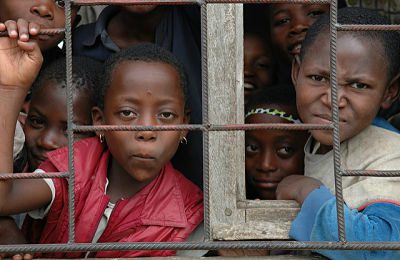
 The Democratic Republic of the Congo is one of the largest countries in Central Africa and is a land rich with natural resources and raw materials, inevitably leading to an economic boom for its mining industry.
Despite a population of 77 million people, 80 million acres of land suitable for farming and an abundance of over 1,100 different rare metals and minerals, the DRC poverty rate remains among the highest in the world. While many consider it to be the poorest, the most recent United Nations Human Development Index of 2015 ranked the country at 176 out of 187 countries.
Between 1970 and 2012, the average annual growth rate of the DRC’s GDP per capita remained at -2.1 percent. From 1990-2012, annual inflation rates increased by 191 percent. As of 2011, an estimated 87.7 percent of the population, about 67.5 million people, remained under the international poverty line, which is currently $1.25 per day.
Currently, the average income for a Congolese citizen is about $400 per year. One example of the negative results of the DRC poverty rate is an extremely high infant mortality rate, with one in seven newborns dying before the age of 5.
Among other things, the poverty rate has caused a high usage of child labor, with about 25 percent of children ages 5-14 employed, an increasing prevalence of HIV/AIDS and a notable decline in school enrollment.
Additionally, the country has a 45 percent vaccination rate for some of the most commonly known diseases, a lack of access to clean drinking water and severe malnutrition nationwide.
Reasons for DRC Poverty
The reasons for the DRC poverty rate stem from a number of factors, however, can be summarized as the result of political instability and corruption, particularly in the mining industry.
In addition to this, there are large swaths of land in the country that are controlled by militia groups, the land where many mines are located, allowing for them to be the financial beneficiaries to some foreign investors.
This problem originates from government corruption and an intended overall lack of transparency in the mining contracts from all parties involved, specifically in regards to where the money will be directed. All of these factors have resulted in the DRC government losing more than $5 billion in revenue that could have been allotted to fund infrastructure, public health, education or foreign commerce.
Fortunately, two prominent activists have emerged to speak out against these injustices. American television star Robin Wright in “House of Cards,” in coordination with JD Stier, president of the social activist organization Stier Forward, has created the “Stand With Congo” campaign.
Stand With Congo
Founded in the spring of 2016, the campaign’s main focus geared toward influencing the Congolese mining industry to achieve full transparency, under the idea that doing so could inherently solve other problems for the country.
Another focus of the campaign is to demand that the current DRC President, Joseph Kabila, who is often associated with corruption, vacate office immediately. Kabila has been in power since 2006, and ignored the provisions of the DRC constitution, exceeding the two-term limit.
In 2016 alone, the Stand With Congo campaign hosted 88 events in 17 countries and has also joined the Congolese Youth Movement who is advocating for reelections and Kabila to be removed from office.
– Hunter McFerrin
Photo: Flickr

Australian Aborigines and Barrel Train to Keep School Attendance
John Reudavey, the chief architect of this novel school train, got the idea while holidaying in Perth, where he noticed a couple of drums being towed behind a ride – on the mower. He saw parents paying $2 for the kids to putt around the footy oval and an idea was born.
The Train
For the rugged and uneven terrain of Pilbara, Reudavey along with volunteers Donald Graham, Peter Doery and the Punmu community, linked barrels and attached them to a front tractor, which ultimately drives the entire system around. They mounted the drums onto metal framings with wheels and linked them together to form this 24-seater desert transit.
The carriages were decorated using design artwork from children and community members. Local industries like the Newcrest Mining, Telfer provided the necessary support for the successful creation of this project.
Reudavey’s Western Desert Express now serves around 40 Punmu children which go to RAWA community school which is an independent school catering to students from Kindergarten to Year 12.
According to the Principal Sarah Mortimer, the ride is safe and positive and is welcomed by parents with younger kids, who can now send their children safely and timely to school. While school attendance has never been an issue, the biggest challenge faced by Mortimer has been student arrivals. The principal hopes that the barrel train would help address the issue of late arrivals and encourage students to stay at schools for the entire day.
For Reudavey, the biggest driver is the eager look on the faces of young children as they wait for their unique barrel train ride each morning, rain, hail or shine.
The Punmu Aboriginal Community
Punmu is an Aboriginal community situated in the very heart of Western Australia, located 640 km southeast of Port Hedland in the Pilbara Region of Western Australia, within the Shire of East Pilbara. Punmu are considered to be the most isolated communities in Australia. The Punmu community has a population of approximately 180 people and Manyjiljarra (pronounced Mun-dul-jar-ah) is the spoken language. Two main reasons the Martu live out in the middle of the desert are: to return to their traditional land and to save the community from the ill effects of alcohol, petrol sniffing and drugs.
– Jagriti Misra
Poor Water Quality in Equatorial Guinea
The small country of Equatorial Guinea lies on central Africa’s west coast. Equatorial Guinea is an upper-middle class income country with a Gross National Income (GNI) higher than most other African countries. Much of this is due to the country’s oil production. However, despite the affluence of Equatorial Guinea, it has a comparatively low human development index rating. The water quality in Equatorial Guinea ranks near that of a much poorer sub-Saharan country.
Human Rights Watch reports that, in 2011, up to $125 million dollars was supposed to be spent to improve the water quality in Equatorial Guinea. Instead, the country spent 50 percent of its budget (originally approved for $783 million, but later estimated at $1.5 billion) on urban infrastructure. $80 million was spent on sports, which is more than was first budgeted for that sector. Meanwhile, only $60 million was spent on potable water, education and health combined as of June 30, 2011—a mere three percent of the expenditures that year.
Water quality in Equatorial Guinea is very poor in terms of access. Fewer households in Equatorial Guinea have access to safe water than most other countries. In 2002, just 60 percent of schools had a reliable water source. Sanitation has also been a regular problem area in schools. As of 2009, only 43 percent of Equatorial Guinea’s population had a safe and reliable water source, and only 51 percent had access to proper sanitation.
By 2015, access to clean water had risen by just a few percentage points. Still, just over half of the population had adequate access to water.
The poor often pay the most for and have the least access to clean water. Limited access to clean water and sanitation increases the risk of widespread health issues, especially for young children. The World Health Organization estimates that 1.5 million children die from diarrhea each year worldwide. This figure is composed primarily of children that live in developing countries and are younger than five. Equatorial Guinea’s under-five mortality rate is 8.9 percent higher than the average for sub-Saharan Africa.
Water quality in Equatorial Guinea should be considerably better than it is. There is no larger gap between the Gross National Income and the human development index rating in any African country other than Equatorial Guinea. Spending large amounts of money on infrastructure can be helpful, but only if it benefits rural and urban citizens. The country should make the health of its citizens a higher priority and create a realistic and appropriate annual budget.
– Emma Tennyson
Photo: Flickr
The Impact of Hunger in Montenegro
Montenegro is a small Balkan country in Southeastern Europe located between the Adriatic Sea and Serbia. Although hunger in Montenegro is currently not as severe as it is in its surrounding countries, recent data indicates that it still affects the lives of approximately 12.3% of the nation’s population. As such, below is a list of three initiatives that seek to diminish the persistent impact of hunger throughout the country, ranging from state-led reform to international aid.
Recognizing its vulnerability to external shocks, Montenegro aims to strengthen its overall stability in the coming years. By engaging in constructive partnerships with the IFAD, FAO and UNICEF, the country has been able to vastly improve its ongoing efforts to reduce hunger in regions and populations still lacking in social welfare. Moving forward, key Montenegrin stakeholders hope to merge sustainable agrifood systems with traditional food cultures to not only reduce the impact of hunger throughout the nation but also promote inclusivity – ensuring that no one is left behind.
– Emma Tennyson, Moon Jung Kim
Photo: Google
Updated: November 25, 2024
14 Important Facts and Figures in Ghana
These facts and figures in Ghana demonstrate the incredible strides the country has made to better lives and meet MDG goals. They also reveal where the country needs to continue to make improvements to fight poverty.
– Francesca Montalto
Photo: Flickr
Togo Refugees: 10 Important Facts Everyone Should Know
The first massive group of Togolese citizens to escape to refuge in neighboring countries were in 1993. Togo refugees relocated to Ghana and Benin because of the violent unrest in Togo. The violence that ensued during the fight for the new constitution, and its subsequent abolishment in 1993, led to enormous physical insecurities in Togo.
Here are ten facts about the conditions for Togo refugees since the flight for life in 1993:
Togo refugees are hopeful that security conditions in Togo will improve so that they can return.
– Ebuka Okoye
Photo: Flickr
News from Africa: The DRC Poverty Rate Continues to Stagnate
Despite a population of 77 million people, 80 million acres of land suitable for farming and an abundance of over 1,100 different rare metals and minerals, the DRC poverty rate remains among the highest in the world. While many consider it to be the poorest, the most recent United Nations Human Development Index of 2015 ranked the country at 176 out of 187 countries.
Between 1970 and 2012, the average annual growth rate of the DRC’s GDP per capita remained at -2.1 percent. From 1990-2012, annual inflation rates increased by 191 percent. As of 2011, an estimated 87.7 percent of the population, about 67.5 million people, remained under the international poverty line, which is currently $1.25 per day.
Currently, the average income for a Congolese citizen is about $400 per year. One example of the negative results of the DRC poverty rate is an extremely high infant mortality rate, with one in seven newborns dying before the age of 5.
Among other things, the poverty rate has caused a high usage of child labor, with about 25 percent of children ages 5-14 employed, an increasing prevalence of HIV/AIDS and a notable decline in school enrollment.
Additionally, the country has a 45 percent vaccination rate for some of the most commonly known diseases, a lack of access to clean drinking water and severe malnutrition nationwide.
Reasons for DRC Poverty
The reasons for the DRC poverty rate stem from a number of factors, however, can be summarized as the result of political instability and corruption, particularly in the mining industry.
In addition to this, there are large swaths of land in the country that are controlled by militia groups, the land where many mines are located, allowing for them to be the financial beneficiaries to some foreign investors.
This problem originates from government corruption and an intended overall lack of transparency in the mining contracts from all parties involved, specifically in regards to where the money will be directed. All of these factors have resulted in the DRC government losing more than $5 billion in revenue that could have been allotted to fund infrastructure, public health, education or foreign commerce.
Fortunately, two prominent activists have emerged to speak out against these injustices. American television star Robin Wright in “House of Cards,” in coordination with JD Stier, president of the social activist organization Stier Forward, has created the “Stand With Congo” campaign.
Stand With Congo
Founded in the spring of 2016, the campaign’s main focus geared toward influencing the Congolese mining industry to achieve full transparency, under the idea that doing so could inherently solve other problems for the country.
Another focus of the campaign is to demand that the current DRC President, Joseph Kabila, who is often associated with corruption, vacate office immediately. Kabila has been in power since 2006, and ignored the provisions of the DRC constitution, exceeding the two-term limit.
In 2016 alone, the Stand With Congo campaign hosted 88 events in 17 countries and has also joined the Congolese Youth Movement who is advocating for reelections and Kabila to be removed from office.
– Hunter McFerrin
Photo: Flickr
Sanitation and Safe Water Quality in Swaziland
Three hundred and thirty thousand Swazis lack access to safe water, while 500,000 people do not have adequate sanitation. This is especially concerning for a country with so many HIV/AIDS patients that have weakened immune systems and therefore are more susceptible to waterborne diseases. The lack of safe water quality in Swaziland also causes the death of 200 children per year.
The Swazi government tried to offer assistance by drilling boreholes throughout the country, leaving the future management of the boreholes to its users. However, since locals could not afford to pay for the boreholes’ maintenance, the wells became dilapidated.
USAID and nonprofits such as WaterAid have taken measures in order to improve the water quality in Swaziland.
WaterAid lobbies the Swazi government to ensure that there is funding for water services to poor citizens. It also educates communities about simple and efficient ways to maintain safe water sources and toilets. In 2016, WaterAid provided 1,000 people with safe water and 1,000 people with better sanitation.
USAID has specifically focused on schools and the methods in which they obtain and use their water. They have set up programs that teach schools how to establish and maintain adequate sanitation systems. They have also provided schools access to clean drinking water. Additionally, with the introduction of new and effective methods for having safe water and good sanitation,
USAID was able to help schools create their own vegetable gardens to improve student nutrition. These programs have been set up in 57 schools and have improved the lives of around 9,000 students.
– Anna Gargiulo
Photo: Flickr
Common Diseases in Ecuador: A Reflection of Socioeconomic Disparity
Ecuador is a developing country highly dependent on the export of petroleum and agricultural products for economic growth. Although the country has seen improvements in its health care system through the efforts of President Rafael Correa since 2007, many public hospitals are in poor condition and often lack necessary supplies to tend to the high demand of patients. Private hospitals and clinics, on the other hand, are well equipped but too expensive for a large part of the population.
Mumps and Tetanus
Several common diseases in Ecuador continue to take a toll on the population. Mumps and tetanus are just two examples. According to the World Health Organization, the number of reported mumps cases in Ecuador has increased and remained relatively constant since 1980. While 799 cases were reported in 2012, approximately 1,400 cases have been reported on average from 2013 to 2016. The number of tetanus cases has also increased since 2012, from 27 to 52 last year. These, however, are the least of the country’s problems.
Communicable Diseases
Many common diseases in Ecuador are communicable diseases. The World Health Organization reports that 18 percent of all 81,000 deaths in 2016 resulted from communicable diseases and nutritional conditions. Due to environmental conditions, smoking habits and malnutrition, tuberculosis is one of the most common health problems in Ecuador.
The World Health Organization documents approximately 14,000 cases annually. Hepatitis A and typhoid fever are the most common diseases transmitted through food and water. Yellow fever, dengue and malaria are the most common diseases transmitted by insects, especially mosquitos. Dengue fever is particularly common in all regions of the country, as no immunization or specific treatment currently exists.
Non-communicable Diseases
Non-communicable diseases such as cancer, diabetes and cardiovascular disease also negatively affect Ecuador’s population. The World Bank found that the mortality rate per 100,000 people from non-communicable diseases increased an average of 1.5 percent each year since 1990. The World Health Organization reported that in 2016, cancers, diabetes and cardiovascular disease accounted for 46 percent of all deaths.
Smoking and alcohol were the two most prevalent risk factors, alongside dietary issues caused by high intakes of sodium and low intakes of whole grains, fruits, vegetables, nuts and proteins.
Nutrition
Indeed, nutrition or rather, lack thereof, is another one of Ecuador’s major health issues and is often a root cause of many common diseases in Ecuador. In 2006, roughly 25.8 percent of children under 5 years old suffered from chronic malnutrition, and in 2013, government data showed the rate of chronic malnutrition in children under 5 years old remained at approximately 26 percent. This trend most directly relates to Ecuador’s ongoing socioeconomic disparities and status as a developing nation.
Today, a decade after Correa took office, Ecuador’s public health care system is ranked as one of the best in South America. Since Correa’s health care policies have been implemented, the government has constructed over 46 health centers and 12 hospitals throughout the country. The number of free consultations has also increased from 20.3 million in 2007 to 39 million in 2015.
Visiting a general practitioner costs only $25 to $35 while visiting a specialist costs as low as $30 to $40, and a thirty-minute session with a psychiatrist costs just $30 to $50. Outpatient surgeries cost around $125.
Given the prevalence of certain non-communicable and communicable diseases. However, much still needs to be done before citizens are guaranteed equal standards of health care across all socioeconomic barriers.
– Katherine Wang
Photo: Flickr
Chinese Investment in Cambodian Rice Storage Facility
The Phnom Penh Post reported on July 3 that two Chinese investors are interested in building a large rice storage facility. The investors, Jilin Province Investment Group Co. Ltd. and Jilin Ianzhong Agricultural Development Co. Ltd., are from the northern Chinese province of Jilin.
The Jilin province is a major food producer, specializing in rice, corn, grain sorghum, millet and beans. Unlike Cambodia, the region is also very industrialized.
According to the World Bank, the agricultural industry in Cambodia is experiencing a deceleration from its prior growth, decreasing from 5.3 percent between 2004 and 2012 to less than two percent between 2013 and 2014. At the same time, poverty rates in the country also decreased, at least partly fueled by positive developments in agriculture. The World Bank reported it at 18 percent in 2012.
With 14 percent of the population living below the poverty line, Cambodia has a higher poverty rate than some of its neighbors. For example, in Indonesia only 10.9 percent of the population lives below the national poverty line, and in Vietnam the percentage is seven.
The Asian Development Bank emphasized the importance of the agricultural industry in sustaining the economy in Cambodia.
The World Bank reported that “since 2013, Cambodia’s rice production has flattened. This was due to the deceleration in land expansion, bad weather, failing global rice prices, and the tightening of completion among rice partners.”
The World Bank also recommended a policy of developing the agricultural business and agro-processing industry in Cambodia. Structural innovations like a rice storage facility in Cambodia would be able to contribute to a boost in the country’s economy.
In addition to boosting Cambodia’s rice exports, the new rice storage facility also has the potential to allow local millers to operate year-round. With safe, dry storage, the rice will also be less likely to absorb water from the humid environment.
By increasing the number of rice storage facilities, rice farmers will be able to protect their harvested rice from the weather and increase their crop production to offset lower global rice prices.
– Hannah Pickering
Photo: Google
Kuwaiti Leaders and their Attempts to End Hunger in Kuwait
According to Kuwait Times, Jabri made this announcement in Rome during the 40th Session FAO Conference on July 3, 2017. Jabri solidified Kuwait’s efforts to cooperate with FAO by signing an agreement for the agricultural development, which will help enhance Kuwait’s food and nutrition security while developing human and natural resources to eliminate hunger in Kuwait.
Additionally, a representative of Kuwait announced Kuwait’s preliminary approval of two projects including the DNA project for agriculture and the project of agricultural waste recycling. The increasingly high temperatures of Kuwait’s regional waters and immense environmental pollution put the country, specifically fisheries, in danger of climate change, which has a notoriously negative impact on hunger in Kuwait.
Climate change imposes a number of threats on the people of Kuwait. Without proper modern technology to combat the rising temperatures, a large portion of the country’s food supply is being compromised. Additionally, potable water is diminishing at rapid rates due to the lack of proper technology necessary to clean local water.
The amount of potable water is diminishing as the water supply is getting smaller and smaller in a country that is getting hotter and hotter. With this destructive climate change comes the lack of water needed to cultivate crops. Thus, leaders of Kuwait are teaming with FAO in an attempt to save the scarce water supply via water harvesting, drip irrigation and wastewater treatment.
Rising temperatures make land that was once fertile incapable of producing the food that the people of Kuwait rely on. Only approximately 0.3 percent of the country is utilized for crop production. According to FAO, the land that is used for the cultivation of crops is frequently unreliable as it is very poor in the organic nutritional matter, so there are limited opportunities to alleviate hunger in Kuwait.
The Center of Kuwait is one of the few areas that possess rich, sandy soil that allows for the transfer of air and water, making crop production much more possible. However, this small area of the country is unable to produce enough food for the entire population of Kuwait. With the desert-like climate of Kuwait that is constantly increasing in temperature, this already limited farmable area is rapidly diminishing.
A country constantly battling poverty and hunger, Kuwait is pursuing joint Arab action to help people in Kuwait. By tackling economic, humanitarian, educational and media objectives, leaders of Kuwait are uniting to protect Arab societies and interests. And at the forefront of these is, as it long has been, hunger.
With massive economic issues, an outbreak of diseases, poverty and famine, Kuwait is struggling to fight the inevitable consequences of living in a world of immense poverty and hunger. Jabri and the rest of Kuwait are hopeful that by partnering with FAO, these issues can be stopped in their tracks and eventually hunger in Kuwait will be reversed entirely.
– Kassidy Tarala
Photo: Flickr