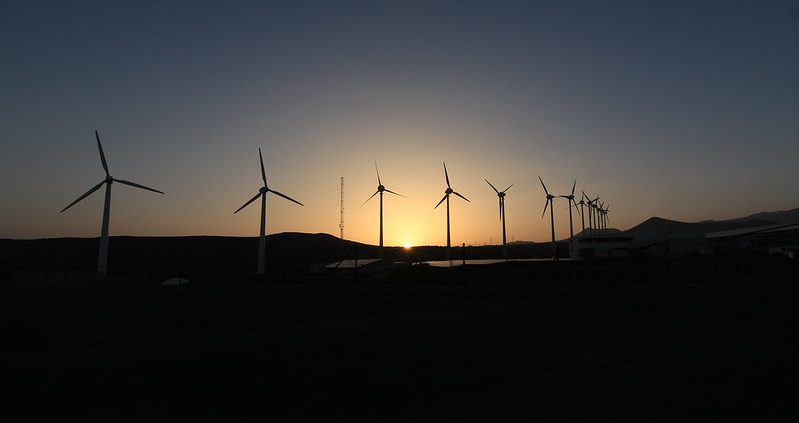
 In the governorate of Dhofar in Oman’s fog-filled mountains, the traditional khareef (monsoon) winds have become a new form of currency. By 2026, the initiative to provide clean, low-cost electricity to remote communities will advance with the expansion of Dhofar Wind Farms. Civilians will witness the region’s most remote desert landscape transform into a renewable energy powerhouse, showcasing the power of wind energy projects in rural Oman.
The Power of Two: Dhofar 1 and Dhofar 2
The Dhofar 1 Wind Farm became the first utility-scale wind project in the Gulf. Developed by Abu Dhabi Future Energy Company (Masdar) through an EPC consortium of GE Renewable Energy and Spain’s TSK, the wind farm aimed to generate enough electricity to supply 16,000 homes, meeting 7% of Dhofar Governorate’s total power demand.
By doing so, it offset carbon dioxide emissions annually and reduced reliance on natural gas for domestic power generation. In 2026, 150 km north of Salalah, 13 General Electric wind turbines totaling 50MW of power will operate. While the official estimate for homes powered is 16,000, the project was designed to potentially meet the consumption of up to 60,000 homes in ideal conditions.
The proven reliability of Dhofar 1 established a blueprint for scalable green infrastructure in the desert. Recognizing that clean energy could catalyze broader regional development, Oman accelerated its strategy. Building on the operational success of this initial project, the newly commissioned Dhofar 2 launched through a strategic agreement between Nama Power and Water Procurement and a consortium of leading energy firms.
In the spirit of Oman’s 2040 vision, a $112 million (RO 43 million) investment was accumulated. At double the number and capacity of Dhofar 1, Dhofar 2 adds another 125MW to the grid.
Together, these facilities now provide clean energy to more than 34,000 homes and offset 268,000 tonnes of carbon dioxide annually. For the first time, rural southern Oman is seeing a future where its energy is as limitless as the wind.
The Local Impact: In-Country Value
The CEO of Nama Power, Ahmed bin Salm Al Abri, stated that Dhofar 2 will contribute to freeing an estimated 76 million cubic meters of natural gas annually. Said gas can now be diverted to more valuable industrial uses or exported to stabilize the national economy. The 36 wind turbines required for the completion of the project have arrived, with foundations completed and in-country value targets exceeded through these vital wind energy projects in rural Oman.
Oman utilizes a targeted procurement method called “Ring-Fencing.” By legally isolating specific components of the project’s supply chain, such as road construction, electrical wiring and long-term maintenance services, the government ensures that international conglomerates cannot bring in foreign subcontractors. Instead, these contracts are “fenced off” exclusively for Omani National Registered Suppliers (NRS) and local SMEs. This mechanism guarantees that a massive portion of the project’s capital remains within the governorate, transforming a standard construction site into a self-sustaining regional economic hub.
Not only is the government pushing the 2040 vision for an environmentally friendly economy, but it is also nurturing local businesses, shifting the Dhofar project into a regional economic hub. A “Mandatory List” of contractors was created, including more than 312 products that must be “Made in Oman.” For the Dhofar 2 expansion, reaching the 25% In-Country Value target allows at least $28 million of the $112 million investment to be paid directly to Omani companies for engineering, logistics and civil works.
Major energy players run “Vendor Development Programs” that provide technical training to small local businesses so they can meet international quality standards.
The Human Impact: “Omanization” and Training
For remote southern communities, this shift fundamentally alters daily life. Previously, local schools and health care clinics in the Dhofar highlands faced frequent power rationing due to the erratic nature of diesel transport. The integration of stabilized wind power means these vital facilities now operate with uninterrupted, 24-hour electricity.
According to the Nama Group’s sustainability frameworks, the Dhofar wind initiatives are serving as an active classroom for the next generation of Omani engineers. Specialized training modules have been deployed to equip local youth with highly technical competencies in wind turbine diagnostics, AI-driven grid management and automated robotics. This targeted capacity building has generated approximately 150 direct and indirect jobs within the region.
By shifting local expertise toward advanced green technologies, the project ensures that these newly skilled professionals secure sustainable careers designed to last throughout the 25-year operational lifespan of the wind farms, keeping the financial and intellectual rewards of the energy transition entirely within the local community.
Rural Stability
For generations, economic necessity forced rural Omani youth to abandon their home provinces, migrating en masse to the heavily centralized capital city of Muscat in search of employment. This traditional “urban drift” hollowed out rural communities and placed immense infrastructure strain on the capital. However, the specialized localized training mandated by the Dhofar wind farm initiatives is successfully turning the tide. Guided by the Oman National Spatial Strategy (ONSS) managed by the Ministry of Housing and Urban Planning, these projects serve as a key place-based delivery model to decentralize public investment and economic development across all 11 governorates.
By equipping local technical college graduates directly with elite skills in wind turbine diagnostics, AI-driven grid management and automated engineering, these projects provide lucrative, high-tech career trajectories without forcing families apart. Instead of fleeing the countryside, young Omani professionals are choosing to stay in the Dhofar governorate to anchor a newly emergent local green economy. This structural shift achieves a core priority of the ONSS framework: ensuring a balanced, resilient distribution of growth that keeps rural communities both demographically stable and economically vibrant.
Looking Ahead
In 2026, the Dhofar wind projects proved a transition of dual victory. In addition to creating sustainable energy, they have created investments in local companies and expanded the job market for the Omani youth. The Sultanate is ensuring an often difficult goal: driving long-term economic development through wind energy projects in rural Oman. The desert winds, once only regarded as a geographical consequence, have become the heart of Oman’s rural future.
– Celine Dib
Celine is based in London, UK and focuses on Good News and Technology for The Borgen Project.
Photo: Flickr

rYojbaba Rings Nasdaq Opening Bell to Fight Poverty
In traveling from Japan to New York to ring the Opening Bell, Baba aimed to further the organization’s anti-poverty cause. It is a goal the organization has pursued since its inception and may have an even bigger chance of achieving through this excursion.
rYojbaba’s History
rYojbaba’s roots trace back to 1989, when the Japanese health care organization Sakai Seikotsuin was founded. Over the past 38 years, it has served local health care communities throughout Japan, providing countless individuals with a better quality of life.
When rYojbaba was officially created in 2021, it sought to expand on the foundation Sakai Seikotsuin had established nearly four decades earlier. The organization was founded by professionals with deep experience in Japan’s legal and labor systems, including certified social insurance and labor consultants. These consultants are nationally licensed specialists in labor relations, employment matters, social insurance and human resource management.
On the “Our Story” section of rYojbaba’s official website, Baba explains how his personal experiences with poverty across Japan informed their goals to combat it. During his time working as a police officer, certified social insurance labor consultant and administrative scrivener, he encountered those severely disadvantaged by the systems they lived within. He decided to start this company to fundamentally solve these labor issues he had witnessed.
Baba acknowledges that these labor issues cannot be solved by corporate consulting or technology alone. It is important to involve individuals who can provide impartial consulting to companies, workers and labor unions. Provided these individuals have fair judgment and a true sense of justice, they can be crucial in providing rational solutions to these labor issues.
rYojbaba’s Accomplishments
rYojbaba has successfully created a labor union that waives union dues. This accomplishment, which no one else has achieved, has significantly increased the possibility of resolving labor issues altogether. Considering that labor issues directly inspired Baba to found this company, it represents a tremendous milestone.
The strengths of rYojbaba’s services lie in their ability to consult with both labor unions and employers. They can work productively with these groups, despite their interests often being at odds and resolve the problems of each employer one-on-one. This is aided by their understanding of various laws and regulations and their awareness of those in poverty who are often overlooked.
rYojbaba Attends Opening Bell Ceremony
As part of Nasdaq’s “Opening Bell” ceremony, Baba took the stage at the Nasdaq MarketSite alongside Brian Joyce, who works at the company’s market intelligence desk, to deliver a speech about his company’s efforts to fight poverty. “Our mission is to fight poverty and create opportunities for the next generation,” he said early in the speech. “We do not measure success only by profit, but by how many lives we can improve.”
After Baba finished his speech, he received the Nasdaq Opening Bell Crystal to commemorate the day’s bell ringing. Surrounded by other rYojbaba representatives, a 10-second countdown led to him ringing the Opening Bell by pressing a small screen in front of him, triggering applause from his team.
Final Remarks
“We know today is just one milestone,” Joyce remarked to Baba shortly before the bell ringing. “You have had many milestones up until this point and we know you will be back. We look forward to welcoming you back to celebrate future milestones.”
These words symbolize rYojbaba’s mission over the years. With every accomplishment, the company has worked to spread awareness of poverty globally. Whether or not they ring the Nasdaq Opening Bell again, achieving this for the sake of furthering a noble cause is a remarkable achievement.
– Benjamin Parker
Photo: Flickr
Persistence in Health Care: Polio Vaccines in Nigeria
Though Nigeria was certified polio-free in 2020 due to its approach to implementing routine immunization, health care workers continue to provide treatment and care for children who have slipped through the cracks.
Integrated Health Campaigns
Nigeria has launched 20 health campaigns annually, with fewer than 15% integrated during this period. This strained resources, stretched health care workers thin and caused communities to lose faith in preventative care, opting instead for palliative care rather than seeking proper treatment for polio.
This began to change when Nigeria launched one of its largest vaccination campaigns in 2025, combining a variety of vaccines and child health care services to ensure treatment for children across the nation.
The campaign targets children ages 0-14 and 0-59 months for polio and was implemented in two phases:
In addition to vaccines for measles and rubella, the integration of routine immunization and necessary health services will reinforce Nigeria’s “Primary Health Care Under One Roof” strategy and advance its Health Campaign Effectiveness in the direction of universal health coverage.
By the end of 2025, Nigeria achieved a 31% reduction in polio cases through persistence and constant vigilance.
Building Trust
With these campaigns shifting into routine immunization, Nigeria is prioritizing the health of its new generation while also addressing distrust.
In northern states like Sokoto, vaccinations were not readily accepted due to religious and cultural beliefs. Trust is part of the solution. Without it, polio vaccines in Nigeria go unused.
During Nigeria’s polio campaigns, communities and their religious leaders built community networks, called majalisa, where they assured families that the vaccines were safe and crucial for their children’s health. This partnership bridged the gap between hesitant families and health care workers, increasing the intake of not only polio vaccines but also treatments for other childhood diseases.
The same health workers who helped control polio initially convinced communities to bring in their children for continual treatment. This communication and connection have paid off as health care workers can identify households, plan outreach routes and record how many children are vaccinated, improving their reach.
Ongoing Efforts
It takes many components to create a solution, but once they come together, they work in harmony. Polio vaccines in Nigeria are now reaching children and households that were often underrepresented or out of the health system’s reach. Nigeria’s efforts will continue to pay off and even as challenges arise, persistence will increase the number of children receiving polio vaccines.
– Kianna Phosouvanh-Sythong
Photo: Flickr
TRANSFORM Master Trainers in Western Africa
Nigeria’s First TRANSFORM Master Trainers
Nigeria has certified its first group of 21 TRANSFORM Master Trainers through the International Labour Organization (ILO), European Union (EU) and UNICEF program to rebuild social protection systems across Western Africa.
The newly accredited TRANSFORM Master Trainers completed intensive courses on governance, financing and program and target delivery, allowing them to become well-versed in the skills required to create strong social protections in Western Africa. The training took place in April 2026, at the United Nations Building in Abuja. The initiative stands as part of the Supporting Sustainable Social Protection System (SUSI) project, which plans to expand the program across Abia, Benue, Oyo, and Sokoto throughout the next year.
According to the ILO director for both Nigeria and the Economic Community of West African States (ECOWAS), Dr. Vanessa Phala, the TRANSFORM Master Trainers program has already been able to train over 5,000 people across about 30 African nations. Additionally, she states that the TRANSFORM program has ensured that these certifications are not merely participation trophies for the course, but instead an important distinction, recognizing the participants’ new skills and dedication to building a socially safer Western Africa.
The Impact
For Nigerians living in extreme poverty, this development promises a brighter future. This program could enable efficient aid distribution throughout the country, allowing impoverished Nigerians to receive their needed aid reliably while creating an economic base that is protected by government-backed safety nets. These social protections in Western Africa could make the region more resilient to crises like economic shocks, climate disasters and major displacements.
Specifically, the initiative targets Nigeria’s social protection management and information systems, with the groundwork laid for a seamless transition of information across departments, agencies and even countries. This integration could allow for enhanced coordination and overall efficiency of government programs, directly benefiting impoverished populations.
The Future of the Program
Over the next year, the TRANSFORM Master Trainers will undertake training initiatives across Nigeria, Ghana, Liberia and Sierra Leone, spreading the effect of the TRANSFORM program across borders and throughout the region. Two newly certified trainers, Ge Matthew Terver and Tor-Wombo Jacyntha Ngodoo, both note that because of their training, they now understand what makes up the backbone of efficient social protection and how people are directly affected by administrative decisions, according to the ILO.
– Luca Napolitano
Photo: Flickr
Urban Food Poverty in India: Delhi’s 3 a.m. Kitchen
Kapur is not a celebrity chef. He is a Delhi restaurateur, co-owner of the Q’BA restaurant in Connaught Place, who looked at the hunger around him and decided his kitchen could do more. In 2016, he co-founded Rasoi on Wheels — a mobile kitchen that now distributes thousands of freshly cooked meals every week to homeless individuals, slum schools and daily wage workers across Delhi-NCR. The meals are not leftovers.
A City Sitting on Top of a Hunger Crisis
Delhi’s contradictions are visible from any street corner. Gleaming malls stand minutes from settlements where families cannot guarantee a single meal a day. India ranks 102 out of 123 countries on the 2024 Global Hunger Index, with a hunger level classified as “serious.”
Nationally, an estimated 811 million people remain undernourished — the largest such population in the world. In Delhi’s urban slums specifically, a Tata-Cornell Institute study found that 51% of households experienced food insecurity. India produces enough food to feed itself. The crisis is not one of supply — it is one of access, distribution and dignity.
Ghar Jaisa Khana: Food Like Home
Rasoi on Wheels started by serving 30 meals a day. That grew to 300, then to 800 to 1,000 meals five days a week, plus Sunday langars for the homeless.
During the COVID-19 pandemic, with Delhi’s migrant workers stranded, the organization distributed close to 20,000 meals a day.
The operation’s tagline is ghar jaisa khana — food like home. It is a deliberate choice. The people served are not handed scraps. They receive a rotating daily menu, individually packaged and prepared fresh from 3 a.m. every morning. Kapur calls the funding model ISR — Individual Social Responsibility — donations from ordinary people marking birthdays, weddings and funerals by feeding strangers instead.
Kapur has said that food is the most important requirement and that people should not be deprived of healthy food simply because they cannot afford it.
A Global Movement, One Kitchen at a Time
Kapur’s model sits within a broader shift in how food professionals are responding to hunger. Globally, José Andrés’ World Central Kitchen has served hundreds of millions of meals across crisis zones, built on the same core principle: that trained cooks, given the right support, can respond to hunger faster and more humanely than most institutions. In 2024 alone, World Central Kitchen served more than 109 million meals across 20 countries.
Both operations reject the model of surplus redistribution — the cold, leftover approach to aid — in favor of treating hungry people as people who deserve a proper meal.
What Policy Can Learn From a Van
Rasoi on Wheels is not a comprehensive solution to Delhi’s hunger crisis. But it points to something that policy consistently underestimates — the capacity of local, sustained, community-rooted action to fill gaps that government programs leave open.
India’s Public Distribution System, designed to provide subsidized food grains to the poor, reaches millions. But it does not reach the homeless man sleeping under a bridge in Connaught Place, or the construction worker’s child who arrives at school too hungry to learn. Rasoi on Wheels does.
Looking Ahead
Urban food poverty in India remains a structural challenge that no single organization can solve. The work of Rasoi on Wheels demonstrates that locally rooted, dignity-centered food initiatives can reach populations that formal systems miss. As India continues to grapple with the gap between food production and food access, models like this offer practical evidence that sustained, community-driven action can complement broader policy efforts to reduce hunger and poverty.
– Parthive Mukherji
Photo: Flickr
Reducing Maternal Deaths in CAR
Rural areas record only 28% of deliveries assisted by a skilled worker and just 2% of deliveries receive surgical assistance. The World Health Organization (WHO), UNICEF and the International Medical Corps expand access to maternal health care, train community midwives and strengthen rural health systems.
Training Community Midwives to Deliver Safer Births
WHO trains and deploys community midwives to expand access to skilled care. Fewer than half of pregnant women in CAR attend fewer than the four recommended antenatal consultations, with most deliveries occurring at home. By placing midwives directly within communities, WHO reduces the distance and cost barriers that prevent many women from seeking care.
Community midwives build trust and encourage families to seek skilled delivery services. In 2024, WHO equipped 30 maternity wards with essential medical equipment and medicines to improve the safety and dignity of maternal care. These improvements ensure that midwives can manage complications more effectively and women receive specialized and emergency care.
Community midwives help lower maternal deaths in the CAR.
Improving Access to Maternity Services
Rural communities in CAR face significantly higher risks during pregnancy and childbirth. Although understanding of midwifery care is increasing, many women still cannot reach health facilities.
UNICEF works to reduce delays in antenatal consultations and ensure that women receive timely and appropriate care. This support operates in five of the country’s 35 health districts. Bossangoa, a district of 176,688 people, shows the impact of this initiative. The regional hospital sits more than 90 kilometers from the farthest village, which makes access difficult. These long distances often force women to give birth at home without skilled assistance, increasing the likelihood of preventable complications.
In Nodokota, a local matron, Adele, received hands-on obstetric and neonatal training supported by UNICEF and donor funding. These practical skills improve conditions in remote communities and contribute to helping community midwives reduce maternal deaths in the CAR.
Establishing New Midwife Training Schools
To strengthen maternal health care, the Ministry of Health and Bangui University partnered with the International Medical Corps to establish the Bria Auxiliary Midwife Training School in 2024. The school serves a remote region of more than 150,000 people and offers a two-year certification program based on French Red Cross curriculum adapted to national and international standards.
This program covers prenatal care, labor and delivery, postpartum care, family planning and newborn care. Enrollment reached 51 students by November 2024, with graduates expected in 2026. These trained auxiliary midwives will return to their rural communities with the skills needed to support mothers and newborns. By expanding the midwifery workforce, the program advances helping community midwives reduce maternal deaths in the CAR.
Strengthening Midwifery Leadership
In 2024, African midwives gathered in Ghana to discuss a new advisory body to represent midwifery across the continent. The summit brought together midwifery associations and young midwives and emphasized leadership development and equitable representation.
With 70% of the population under 30, investing in young midwives strengthens the future of maternal health. The movement also focuses on shaping maternal care around African realities and ensuring midwives closest to communities guide decision-making. This approach shifts influence toward local practitioners who understand the community needs and the barriers women face when seeking care. It also helps build a new generation of midwifery leaders who can advocate for stronger policies and more equitable health systems.
This regional collaboration supports long-term progress in helping community midwives reduce maternal deaths in the CAR.
Final Thoughts
These initiatives transform maternal health in the CAR by expanding access to health care, strengthening midwife training and improving services in rural areas. This support is especially important because most medical personnel work in urban centers, which leaves rural communities underserved. Through the efforts of WHO, UNICEF, the International Medical Corps and regional midwifery leaders, community midwives are increasingly equipped to provide safe, skilled care and continue helping community midwives reduce maternal deaths in the CAR.
– Flora de Leeuw
Photo: Flickr
Poverty Reduction Efforts Across Africa
From East Africa, home to Kenya, to the western coast of Sierra Leone, the continent is home to diverse populations that have both experienced and influenced much of modern history. Africa features climates ranging from tropical beaches to vast desert regions. Despite decades of systemic and economic challenges, countries across Africa have made significant progress in reducing poverty through foreign aid and locally driven social programs.
Kenya’s Clean Start Africa
International collaboration remains important in the mission to reduce poverty across Africa. Local social programs have also become central to this effort. For example, Kenya is advancing local social initiatives through Clean Start Africa, an organization that empowers women and girls through rehabilitation and reintegration.
Clean Start Africa was founded in Kenya with a mission to support women and girls affected by the criminal justice system, particularly those from vulnerable communities. The organization works to reintegrate participants into society through a three-pillar model.
The first pillar, dignified rehabilitation, prepares women for release by emphasizing healing and leadership development. The second pillar, re-entry pathways, supports formerly incarcerated women through peer mentorship, networking opportunities, business training and much more. The final pillar focuses on systemic change by speaking against laws, policies and social conditions that contribute to women’s vulnerability.
International Support Through WPHF
The United Nations Women’s Peace and Humanitarian Fund (WPHF) supports local projects across Africa and women-led initiatives focused on peacebuilding and gender equality. International programs such as WPHF have contributed significantly to poverty reduction efforts across Africa by investing in and strengthening women’s leadership. Funding allocated through WPHF enhances women’s participation and leadership across the continent.
In Nigeria, WPHF supports projects that work to reduce violence against women and promote human rights and gender equality. WPHF has partnered with several organizations, including Ambassadors of Dialogue, Climate and Reintegration, Grassroots Researchers Association, Green Concern for Development and Muslim Sisters Organization. These partnerships further the WPHF’s agenda, which focuses on women’s safety and gender equality in leadership roles.
Outside Nigeria, WPHF has also supported displaced women in Yemen, contributed to Uganda’s fight against sexual and gender-based violence and aided women in Mali in their efforts to participate in peacebuilding and economic recovery. The program highlights the importance of worldwide investment in women’s empowerment and underscores that when women are given the tools and freedom to succeed, it benefits national economies as a whole.
Expanding Women’s Economic Leadership
Other international partnerships share the same focus on helping women across Africa gain economic stability. Similar to WPHF, the U.S. Department of State established the African Women’s Entrepreneurship Program (AWEP) in 2010. AWEP operates in 44 countries across Africa through local chapters that serve as business and networking centers. The program was expanded in 2022 under the Joe Biden administration.
The U.S. Department of State created AWEP to provide African businesswomen with the tools, resources and opportunities needed to grow sustainable businesses. AWEP also encourages women to become community leaders and participate in international trade, helping create more economic opportunities across Africa.
Combined Impact
Poverty reduction efforts across Africa highlight the value and dedication of local social programs and international partnerships. Programs like Clean Start Africa, along with the WPHF and AWEP, demonstrate how important support and civic involvement can be in strengthening communities. As more countries globally adapt, more opportunities for women will continue to reflect that women’s empowerment is tied to poverty reduction efforts. Both are attainable through foreign aid and global partnership and will create lasting growth and social progress.
– Rayonna M Sander
Photo: Unsplash
How Local Peace Efforts in Sudan Have Reduced Violence
Religious leaders, respected elders and youth groups trained in peacebuilding have protected markets, brokered local peace agreements, improved communication and community outreach and helped civilians relocate safely and access hospitals. Although only national peace negotiations can end the war, local peace efforts in Sudan have saved lives and rebuilt the trust necessary for creating and maintaining a peaceful nation.
Ground-Level Efforts
There have been noticeable reductions in violence where local peace initiatives have taken place, as seen in the United Nations Development Programme’s (UNDP) “Bridging Divides” report from October 2025. The report tracked efforts in the Darfur and Kordofan regions, noting the key actors, objectives and successes. In places such as Nyala, Ad-duain and Babanousa, native administrative figures, business leaders, local authorities and tribal chiefs led the charge; while in Zalingei, Youth Peace Ambassadors trained by the UNDP drove the initiatives.
In El Fasher, a formal group, the Elders and Mediation Committee of El Fasher, formed to represent various voices throughout the region including women’s representatives and representatives of armed groups. These leaders shared similar objectives, namely protecting essential infrastructure and medical facilities, brokering local cease-fires and assisting civilians with travel and aid. Because of the polarization experienced throughout Sudan, these groups also spread awareness campaigns and opened up dialogue between divided community members.
While most negotiated temporary cease-fires or truces to sustain regular civilian life, the efforts in Ad-duain led to a seven-month peace span and the committee in El Fasher prevented large-scale clashes for about a year. Local leaders in Ad-duain, Zalingei and Babanousa also reached out to the Rapid Support Forces and Sudanese Armed Forces directly in hopes of postponing major confrontations and creating verbal non-aggression arrangements within their regions.
Within all of these local peace efforts in Sudan, community aid was an entry point for rebuilding trust and traditional community structures, such as tribal leadership, served as a vessel for mediation. An important objective in every region was the maintenance of hospitals and local markets, as well as safeguarding the routes leading to essential services. By protecting and providing for civilians, fractured communities unified for peace despite the conflict at the national scale.
The UN in Kassala
In Kassala, the U.N. Secretary-General Peacebuilding Fund funded a project titled “Strengthening Capacities for Peace and Social Cohesion in Kassala and Red Sea States.” The project supports social cohesion, gender equality and youth engagement. It helped 25 women in Kassala town establish a petty trade business supplying sugar, flour, cooking oils and other essentials. Through this, women who lived on opposite sides of the divide came together to collectively support each other.
Gisma, a woman from Kassala who is part of the enterprise, stated, “I used to worry about the future, about division. But this project gave me hope. We now have a reason to work together, to support each other.” The fund has also been used to train Youth Ambassadors who are assuming leadership roles within their communities, such as those in Zalingei.
Looking Ahead
Local peace efforts in Sudan currently lack the resources and recognition needed to sustain their successes. As long as the war continues, these initiatives remain under constant threat due to changing conditions and positions, which affect different areas. However, investments in these initiatives could also kick start a new approach to diplomacy. Rather than working only for a national cease-fire, victories in smaller regions could accumulate into a larger one. The tireless and dangerous work of local leaders and groups has paved the path for stability and will hopefully lead to lasting peace in Sudan.
– Joshua P Megson
Photo: Wikimedia Commons
Technology for Smallholder Farmers in India
Not anymore.
Before the trader has finished talking, the farmer’s phone buzzes. A message in a WhatsApp group — 2,000 members, all onion growers in the same region — has just circulated today’s wholesale rate from the nearest mandi market. The trader’s offer is 30% below it. The farmer tells him to leave.
This single exchange captures what the technology for smallholder farmers in India revolution looks like. Not a Silicon Valley app. Not a government scheme. A free messaging platform, a few thousand farmers and information that was always available — just never to them.
The Middleman’s Greatest Weapon Was Ignorance
India’s agriculture sector employs 42% of the country’s workforce.
Yet the people doing that work have historically been the most informationally isolated. Smallholder and marginal farmers — those with less than two hectares of land — account for 86.2% of all farmers in India, but own just 47.3% of the arable land. They grow the country’s food from a position of almost zero leverage.
The trader knew the mandi price. The farmer did not. That single information gap — replicated across millions of transactions every harvest season — has quietly transferred billions of rupees from the people who grew the food to the people who simply moved it. WhatsApp groups are closing that gap in real time.
500,000 Farmers, Two Friends From Sangli
In 2012, two friends in Sangli, Maharashtra — Dr. Ankush Chormule and Amol Patil — noticed something simple: farmers around them had endless questions about pests, soil, crop timing and market prices and nowhere fast to get answers. WhatsApp had just launched. They started a group.
Seven years later, that group had grown into a network of more than 500,000 farmers across seven states. Their sugarcane group alone has 230,000 members from Karnataka, Rajasthan, Madhya Pradesh, Uttar Pradesh, Chhattisgarh and Gujarat. Farmers report getting answers to crop questions within five to 15 minutes. Farmers in the network detected the arrival of fall armyworm pests in Maharashtra before it became a regional epidemic — weeks before any government alert.
“If something as simple as a video helps a farmer, it means his income goes up and his faith in the occupation is restored,” Patil told The Better India.
No funding. No offices. No staff. Just a phone and a willingness to answer messages.
One farmer in the network, Ramesh Jadhav of Nashik district, told local reporters that the group helped him identify a fungal infection in his tomato crop within hours of posting a photo — saving an estimated ₹80,000 (approximately $841) worth of produce he would otherwise have lost. Cases like his are now common across the network.
What the Data Says
The anecdotes are compelling. The data backs them up. Research from the GSMA found that 75% of active users of mobile agricultural services made measurable improvements to their farming practices — translating to 1.5 million farmers globally reporting better productivity outcomes.
The annual financing gap for smallholder farmers worldwide sits at $170 billion — a number that better market access directly chips away at.
Meanwhile, the infrastructure for scaling this further is already in place. India crossed 958 million active internet users in 2025, with rural India now accounting for 57% of that base — around 548 million people.
Rural internet users are growing at 16% annually, twice the pace of urban areas. By 2026, India is projected to have one billion smartphone users, with rural areas driving the majority of that growth. The phones are there. The farmers are using them. The question is whether anyone in power is paying attention.
The Problem With Official Solutions
For decades, governments and development organizations have tried to close the agricultural information gap through extension officers, radio broadcasts and expensive digital platforms. Many have produced modest results at enormous cost. WhatsApp groups are producing comparable — often greater — impact for free.
The reason is trust. A price update from a government portal is data. The same update forwarded by a cousin farming the same crop two villages over is intelligence. Technology for smallholder farmers in India works when it moves through existing social networks, not around them.
India’s farmers are not waiting for a solution to be designed for them. In Maharashtra, Punjab and Andhra Pradesh, they have already built one — on a platform that was never intended for agriculture, using nothing more than the collective knowledge of people who have worked the same land for generations.
The middleman still shows up. He just does not get the same answer he used to.
– Parthivee Mukherji
Photo: Unsplash
Environmental Risks to Children’s Health in Central Asia
Household Air Pollution (HAP)
An annual 2.9 million deaths are attributed to HAP worldwide. Some common conditions include ischaemic heart disease, stroke and lower respiratory infections, which cause a total of 76% of HAP-related deaths per year. In Mongolia, where coal is the predominant energy source for those living in poverty, indoor and outdoor air pollution cause 132 out of every 100,000 people to die prematurely each year.
Ulaanbaatar is the capital city of Mongolia. With 60% of the city’s population living in ger districts and many living in traditional felt tents, known as “gers” and small houses, a large number of children are exposed to extreme levels of HAP every day.
The country’s harsh climate, which can cause temperatures to plummet to as low as -20°C, forces Mongolians to heavily rely upon coal to survive, with three to six tons being burned annually in order to cook and provide warmth to their homes.
A study by Zaiyou Dai and colleagues in 2025 investigated the effects of HAP on the health of 1,279 infants by monitoring their health at 7, 13 and 36 months. They found the following results:
The incomplete combustion caused by burning other materials, such as wood and charcoal, can also result in the emission of toxic gases like carbon monoxide. As one of the biggest environmental risks to children’s health in Central Asia, it is critical that energy production shift permanently away from burning these fossil fuels.
Mercury Poisoning
Mercury can be extremely harmful if consumed or inhaled. Central Asia has some of the most mercury-contaminated countries on the planet. For example, China contributes more than 600 tons of Hg to global emissions.
Toxic to humans, most people who experience mercury poisoning have come into contact with the chemical element by eating contaminated fish or inhaling vapors during industrial processing. Exposure can cause difficulties in child development both in utero and early life, as well as the following issues:
Due to fish being a key food source for lower-income families, children all over the world are put at risk of mercury poisoning. A study by Zhen-Yan Gao and colleagues in 2015 found that more than 14,000 Chinese children aged 0 to 6 years old had higher mercury levels than normal, with concentrations rising significantly if their diets included the frequent consumption of fish. These levels are an extreme cause for concern.
Ultraviolet Radiation
Ultraviolet rays, which individuals are vulnerable to during any exposure to sunlight, can be a useful source of much-needed vitamin D, but they can also have some disastrous and harmful effects. Because they are immunosuppressive, UV-B rays can cause skin damage and autoimmune diseases like lupus.
Sufferers of lupus, otherwise known as systemic lupus erythematosus, often experience:
A long-term condition, lupus is life-changing and, while rare, about 15-20% of lupus patients are diagnosed as children. As the ozone layer slowly thins due to the changing climate, it is more critical than ever to protect children’s skin and their health from ultraviolet radiation.
While new environmental issues arise every day, it is also important to acknowledge the progress being made toward protecting children’s health. People from hundreds of nations are collaborating to find solutions to the many environmental risks to children’s health in Central Asia.
UNICEF and Its Fight Against Air Pollution
In 2021, UNICEF launched a program called UniSat, which was designed to help protect children’s health in Central Asia by educating youths. Girls from Kazakhstan, Uzbekistan and Kyrgyzstan were taught how to use nanosatellites and other technology that can be used to monitor air, so the future generation can make life-saving, progressive changes that will reduce air pollution in their country and consequently protect thousands of children’s health.
The staggering loss of 1.7 million lives each year emphasizes the significance of the environment and its impact on health, a harsh reality now catalyzing countless life-changing, innovative programs and policies, such as UniSat and the Minamata Convention. With the ever-changing climate and a surge in pollution worldwide, it is now more important than ever to rethink energy usage and direct attention toward achieving a safe environment where children can thrive, not just survive.
– Ruby Fraser
Photo: Pixabay
Wind Energy Projects in Rural Oman and Economic Stabilization
The Power of Two: Dhofar 1 and Dhofar 2
The Dhofar 1 Wind Farm became the first utility-scale wind project in the Gulf. Developed by Abu Dhabi Future Energy Company (Masdar) through an EPC consortium of GE Renewable Energy and Spain’s TSK, the wind farm aimed to generate enough electricity to supply 16,000 homes, meeting 7% of Dhofar Governorate’s total power demand.
By doing so, it offset carbon dioxide emissions annually and reduced reliance on natural gas for domestic power generation. In 2026, 150 km north of Salalah, 13 General Electric wind turbines totaling 50MW of power will operate. While the official estimate for homes powered is 16,000, the project was designed to potentially meet the consumption of up to 60,000 homes in ideal conditions.
The proven reliability of Dhofar 1 established a blueprint for scalable green infrastructure in the desert. Recognizing that clean energy could catalyze broader regional development, Oman accelerated its strategy. Building on the operational success of this initial project, the newly commissioned Dhofar 2 launched through a strategic agreement between Nama Power and Water Procurement and a consortium of leading energy firms.
In the spirit of Oman’s 2040 vision, a $112 million (RO 43 million) investment was accumulated. At double the number and capacity of Dhofar 1, Dhofar 2 adds another 125MW to the grid.
Together, these facilities now provide clean energy to more than 34,000 homes and offset 268,000 tonnes of carbon dioxide annually. For the first time, rural southern Oman is seeing a future where its energy is as limitless as the wind.
The Local Impact: In-Country Value
The CEO of Nama Power, Ahmed bin Salm Al Abri, stated that Dhofar 2 will contribute to freeing an estimated 76 million cubic meters of natural gas annually. Said gas can now be diverted to more valuable industrial uses or exported to stabilize the national economy. The 36 wind turbines required for the completion of the project have arrived, with foundations completed and in-country value targets exceeded through these vital wind energy projects in rural Oman.
Oman utilizes a targeted procurement method called “Ring-Fencing.” By legally isolating specific components of the project’s supply chain, such as road construction, electrical wiring and long-term maintenance services, the government ensures that international conglomerates cannot bring in foreign subcontractors. Instead, these contracts are “fenced off” exclusively for Omani National Registered Suppliers (NRS) and local SMEs. This mechanism guarantees that a massive portion of the project’s capital remains within the governorate, transforming a standard construction site into a self-sustaining regional economic hub.
Not only is the government pushing the 2040 vision for an environmentally friendly economy, but it is also nurturing local businesses, shifting the Dhofar project into a regional economic hub. A “Mandatory List” of contractors was created, including more than 312 products that must be “Made in Oman.” For the Dhofar 2 expansion, reaching the 25% In-Country Value target allows at least $28 million of the $112 million investment to be paid directly to Omani companies for engineering, logistics and civil works.
Major energy players run “Vendor Development Programs” that provide technical training to small local businesses so they can meet international quality standards.
The Human Impact: “Omanization” and Training
For remote southern communities, this shift fundamentally alters daily life. Previously, local schools and health care clinics in the Dhofar highlands faced frequent power rationing due to the erratic nature of diesel transport. The integration of stabilized wind power means these vital facilities now operate with uninterrupted, 24-hour electricity.
According to the Nama Group’s sustainability frameworks, the Dhofar wind initiatives are serving as an active classroom for the next generation of Omani engineers. Specialized training modules have been deployed to equip local youth with highly technical competencies in wind turbine diagnostics, AI-driven grid management and automated robotics. This targeted capacity building has generated approximately 150 direct and indirect jobs within the region.
By shifting local expertise toward advanced green technologies, the project ensures that these newly skilled professionals secure sustainable careers designed to last throughout the 25-year operational lifespan of the wind farms, keeping the financial and intellectual rewards of the energy transition entirely within the local community.
Rural Stability
For generations, economic necessity forced rural Omani youth to abandon their home provinces, migrating en masse to the heavily centralized capital city of Muscat in search of employment. This traditional “urban drift” hollowed out rural communities and placed immense infrastructure strain on the capital. However, the specialized localized training mandated by the Dhofar wind farm initiatives is successfully turning the tide. Guided by the Oman National Spatial Strategy (ONSS) managed by the Ministry of Housing and Urban Planning, these projects serve as a key place-based delivery model to decentralize public investment and economic development across all 11 governorates.
By equipping local technical college graduates directly with elite skills in wind turbine diagnostics, AI-driven grid management and automated engineering, these projects provide lucrative, high-tech career trajectories without forcing families apart. Instead of fleeing the countryside, young Omani professionals are choosing to stay in the Dhofar governorate to anchor a newly emergent local green economy. This structural shift achieves a core priority of the ONSS framework: ensuring a balanced, resilient distribution of growth that keeps rural communities both demographically stable and economically vibrant.
Looking Ahead
In 2026, the Dhofar wind projects proved a transition of dual victory. In addition to creating sustainable energy, they have created investments in local companies and expanded the job market for the Omani youth. The Sultanate is ensuring an often difficult goal: driving long-term economic development through wind energy projects in rural Oman. The desert winds, once only regarded as a geographical consequence, have become the heart of Oman’s rural future.
– Celine Dib
Photo: Flickr