Technology for Smallholder Farmers in India
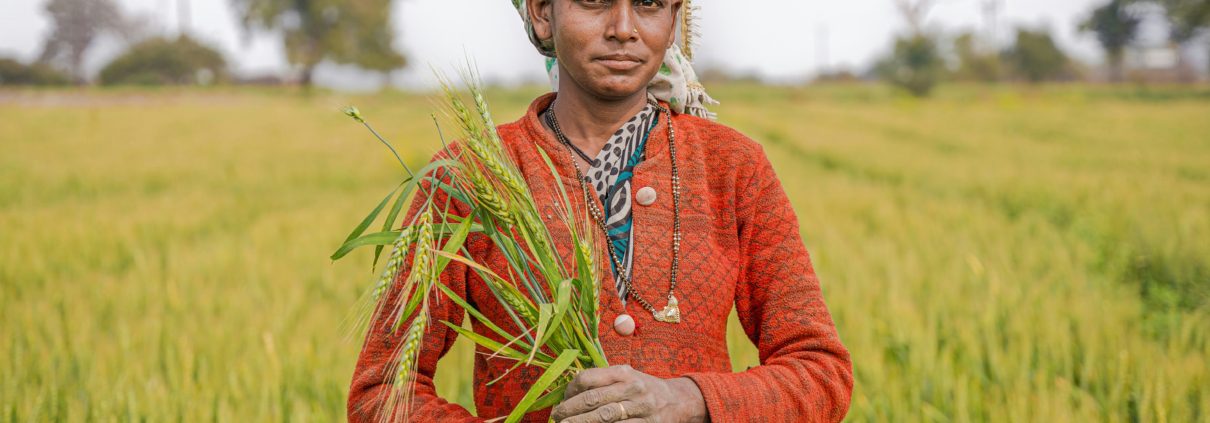 A trader pulls up to a field in rural Maharashtra. He names a price for the onion harvest. The farmer, who has no way to check if it is fair, has always accepted. That is how it has worked for generations.
Not anymore.
Before the trader has finished talking, the farmer’s phone buzzes. A message in a WhatsApp group — 2,000 members, all onion growers in the same region — has just circulated today’s wholesale rate from the nearest mandi market. The trader’s offer is 30% below it. The farmer tells him to leave.
This single exchange captures what the technology for smallholder farmers in India revolution looks like. Not a Silicon Valley app. Not a government scheme. A free messaging platform, a few thousand farmers and information that was always available — just never to them.
The Middleman’s Greatest Weapon Was Ignorance
India’s agriculture sector employs 42% of the country’s workforce.
Yet the people doing that work have historically been the most informationally isolated. Smallholder and marginal farmers — those with less than two hectares of land — account for 86.2% of all farmers in India, but own just 47.3% of the arable land. They grow the country’s food from a position of almost zero leverage.
The trader knew the mandi price. The farmer did not. That single information gap — replicated across millions of transactions every harvest season — has quietly transferred billions of rupees from the people who grew the food to the people who simply moved it. WhatsApp groups are closing that gap in real time.
500,000 Farmers, Two Friends From Sangli
In 2012, two friends in Sangli, Maharashtra — Dr. Ankush Chormule and Amol Patil — noticed something simple: farmers around them had endless questions about pests, soil, crop timing and market prices and nowhere fast to get answers. WhatsApp had just launched. They started a group.
Seven years later, that group had grown into a network of more than 500,000 farmers across seven states. Their sugarcane group alone has 230,000 members from Karnataka, Rajasthan, Madhya Pradesh, Uttar Pradesh, Chhattisgarh and Gujarat. Farmers report getting answers to crop questions within five to 15 minutes. Farmers in the network detected the arrival of fall armyworm pests in Maharashtra before it became a regional epidemic — weeks before any government alert.
“If something as simple as a video helps a farmer, it means his income goes up and his faith in the occupation is restored,” Patil told The Better India.
No funding. No offices. No staff. Just a phone and a willingness to answer messages.
One farmer in the network, Ramesh Jadhav of Nashik district, told local reporters that the group helped him identify a fungal infection in his tomato crop within hours of posting a photo — saving an estimated ₹80,000 (approximately $841) worth of produce he would otherwise have lost. Cases like his are now common across the network.
What the Data Says
The anecdotes are compelling. The data backs them up. Research from the GSMA found that 75% of active users of mobile agricultural services made measurable improvements to their farming practices — translating to 1.5 million farmers globally reporting better productivity outcomes.
The annual financing gap for smallholder farmers worldwide sits at $170 billion — a number that better market access directly chips away at.
Meanwhile, the infrastructure for scaling this further is already in place. India crossed 958 million active internet users in 2025, with rural India now accounting for 57% of that base — around 548 million people.
Rural internet users are growing at 16% annually, twice the pace of urban areas. By 2026, India is projected to have one billion smartphone users, with rural areas driving the majority of that growth. The phones are there. The farmers are using them. The question is whether anyone in power is paying attention.
The Problem With Official Solutions
For decades, governments and development organizations have tried to close the agricultural information gap through extension officers, radio broadcasts and expensive digital platforms. Many have produced modest results at enormous cost. WhatsApp groups are producing comparable — often greater — impact for free.
The reason is trust. A price update from a government portal is data. The same update forwarded by a cousin farming the same crop two villages over is intelligence. Technology for smallholder farmers in India works when it moves through existing social networks, not around them.
India’s farmers are not waiting for a solution to be designed for them. In Maharashtra, Punjab and Andhra Pradesh, they have already built one — on a platform that was never intended for agriculture, using nothing more than the collective knowledge of people who have worked the same land for generations.
The middleman still shows up. He just does not get the same answer he used to.
– Parthivee Mukherji
Parthivee is based in Edinburgh, Scotland and focuses on Technology and Solutions for The Borgen Project.
Photo: Unsplash
