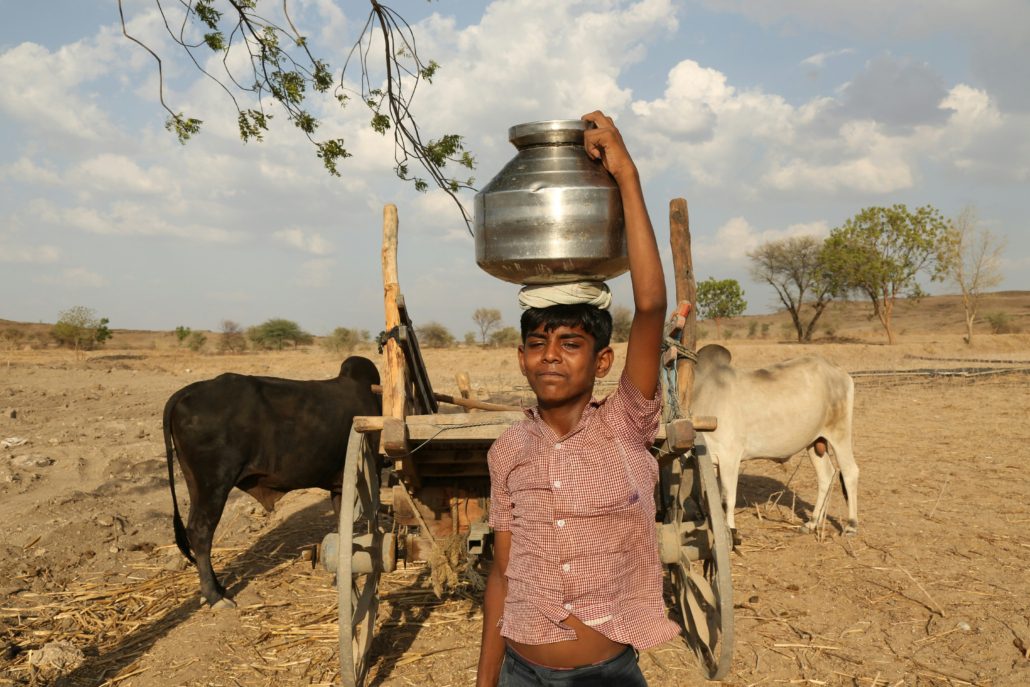
 India, home to 18% of the world’s population and only 4% of its water resources, faces a need for sustainable water management. In response, national campaigns and programs that local communities and women are leading are transforming how India conserves, consumes and manages water, thus addressing the water crisis in India.
About the Water Crisis in India
The severe water crisis amid record-breaking heat waves intensifies each summer, and according to data from India’s Health Ministry, between March 1st and June 18th, 2024, 110 people died from heatstroke.
The right to safe drinking water is a fundamental human right. According to the Central Ground Water Board in 2020, 256 districts were water-stressed. In rural areas groundwater levels are overexploited, and as per a report from the National Commission on Integrated Water Resources Development (NCIWRD), India’s average per capita water availability, is likely to reduce drastically by 2050, leading to a severely water stressed country.
In rural settings, the lack of infrastructure and sanitation, fueled by a lack of hygiene education, gives way for preventable waterborne diseases to take the lives of millions every year. It affects countless children and elderly folk whose immune systems are weakened by age. The public taps and tube wells that are the primary source for many in rural areas are the most prone to contamination.
In addition to global causes like changing weather patterns and availability, India faces specific, deeply rooted challenges. In a country like India where social inequalities have persisted, social inequities that linger directly impact access to water, how it is allocated, distributed and consumed. Additionally, water scarcity and exclusion from public resources continue to disproportionately affect marginalized communities. Here are some key missions working to address the water crisis in India:
1. Jal Shakti Abhiyan: Catch the Rain Campaign
The Indian government launched the Jal Shakti Abhiyan campaign, which translates to “water power,” in 2019 to promote water conservation strategies across India, especially the rural areas. The initiative introduces a new slogan and theme each year on World Water Day, March 22nd. In 2024, the focus was to empower women with the slogan “Nari Shakti Se Jal Shakti’ to highlight the role of women in sustainable management of water resources.
This year’s campaign emphasizes water conservation and management through community participation and innovative strategies. It launched in Banaskantha, Gujarat, with the aim to construct 50,000 recharge wells along with water conservation strategies that boost groundwater levels, agriculture and sustainable farming.
To raise awareness this year, it featured several key events including the inauguration of exhibitions that highlighted water conservation through artistic expression and the unveiling of innovative water management projects, including Community Sanitary Complexes, Liquid Waste Management Systems, the Gobardhan Project and a Solid Waste Management Shed in Haryana, according to a press release by the Press Information Bureau.
Since its launch in 2019, this campaign has had tremendous success. Between March 2023 to December 2023 alone, the initiative implemented 66.4 million afforestation activities, built approximately 1.06 million water harvesting structures, renovated more than 250,000 traditional water bodies and created 1.24 million watershed development structures.
2. Jal Jeevan Mission: Har Ghar Jal
The government of India launched The Jal Jeevan Mission in 2019 as a flagship program to provide safe and adequate drinking water to rural households across India. Planned as a four-year initiative, the mission focuses on implementing long term sustainable water systems as well as greywater management and rainwater harvesting.
Since its announcement in 2019, rural households with tap water connections have grown from 17% to 80%, now reaching around 156 million households. The mission enabled a total of 154 districts, 1,570 blocks, 95,728 Gram Panchayats and 1,99,675 villages to become “Har Ghar Jal,” meaning every home has access to water.
According to a report by the World Health Organization (WHO), the mission has helped avert nearly 400,000 deaths from diarrheal diseases, prevented 14 million Disability Adjusted Life Years (DALYs) and saved up to $101 billion in health-related costs.
3. Jal Sahelis or “Water friends”
India’s drought-prone Bundelkhand region saw a movement in water conservation led by local communities and women. Local NGO group Parmarth Samaj Sevi Sansthan set up the Jal Saheli program in 2011 to address the long history of water scarcity in the region. The initiative aimed to empower women— many of whom used to walk over a mile to fetch water from a well— to take charge of water management in their communities.
This program enabled women from different villages to receive training in water conservation efforts and management, learning about sustainability and government schemes. Challenging gender norms, the women became the face of advocacy and leadership.
The initiative’s efforts contributed to a shift in agricultural water use, retention of rainwater techniques, and more. Today, there are around 1,530 Jal Sahelis (water friends) across 321 villages in Bundelkhand.
Other Initiatives
Additional campaigns and government initiatives, such as the Repair, Renovation and Restoration of Water Bodies (RRR) scheme, have launched to support broader water management and conservation goals. The RRR scheme is a more long-term scheme that originated in 2005 with a focus to restore and enhance water bodies such as to improve irrigation and efficiency. Since its launch, more than 1,000 water bodies have been restored across multiple states.
Looking Ahead
The growing impacts of changing weather patterns, groundwater crisis and water availability emphasizes the need to focus on water not just as a resource but as a lifeline. Initiatives and movements like the Jal Shakti Abhiyan and Jal Jeevan mission make empowering communities to learn more about water conservation and management more imperative than ever.
For millions of villages in India, the promise of safe water is not just a milestone, but a shift toward a more water abundant and sustainable country in the face of changing climates.
– Sahana Shastry
Sahana is based in Newtown Square, PA, USA and focuses on Good News and Global Health for The Borgen Project.
Photo: Unsplash

Oman’s Poverty Eradication: A Global Model for Ending Poverty
Oman guided its fight to end poverty through a national plan called Vision 2040. It focuses on improving education, creating more jobs outside of oil and helping people in every part of the country. Another plan, called the 10th Five-Year Development Plan, helped turn these goals into real projects. As of 2025, Oman has completed 95% of the programs in the plan and invested more than $28 billion to help improve people’s lives.
Expanding Social Protection
A big part of Oman’s poverty eradication came from a new social protection law. This law, which started in 2024, created a national program to give financial help to more than 1.5 million people. Families now get support for children, seniors, people with disabilities and workers who lose their jobs. The program is paid for by the government and makes sure no one is left behind. Oman also worked closely with international groups like the United Nations International Children’s Emergency Fund (UNICEF). Together, they launched a Child Protection Guide to keep children safe and supported across the country.
Investing in Education, Health and Housing
Oman has made big improvements in education and health. The country now ranks among the top 20 in the world for how much it spends on each student and nearly 98% of adults can read and write. Health care is free for all citizens and new hospitals and digital systems are making care even better. Housing is another important part of reducing poverty. Oman has given money to thousands of low-income families to help them build or fix homes. The country is also building Sultan Haitham City, a new city with 20,000 homes, schools, parks and clean energy. It will house 100,000 people once finished.
Looking Ahead
Even with all this spending, Oman has managed to keep its finances under control. It used oil money wisely, paid off debts and still had enough left to support the country’s programs. In fact, its credit rating was upgraded in 2024, suggesting higher levels of trust from global investors. Oman tracks its progress using the United Nations’ Sustainable Development Goals. These goals help countries measure how well they’re doing on issues like poverty, education and health care. Oman has met or is close to meeting many of them.
– Cameron Jones
Photo: Flickr
AFCON: Fighting Poverty in Africa
Fighting Poverty in Africa: Short-Term Benefits
“In the short term, the tournament has a positive effect,” explains Roméo Boye, a researcher at the Ivorian Center for Economic and Social Research. Throughout the four-week-long tournament, the host nation experiences a significant boost in hospitality revenue, primarily at hotels, restaurants and souvenir shops, as a result of the increased traffic from tournament attendees. According to Roméo Boye, the tournament has an extremely positive impact on the host nation’s GDP despite only being four weeks long.
These businesses also expand during the tournament, creating short-term professional opportunities that not only provide job seekers with a temporary financial boost but also allow them to gain valuable workplace experience and enhance their resumes. Although these jobs only last the duration of the tournament, they still possess the ability to aid those who are jobless and in poverty. As the market expands, the tournament provides them with opportunities to gain work experience and financial capital.
Infrastructure and Long-Term Growth
Although the short-term economic benefits outnumber the long-term benefits, the tournament provides the host nation with the opportunity to develop its cities while making long-lasting improvements to the infrastructure of the country. For example, transportation was an issue in the Ivory Coast for many years before the country hosted AFCON. Traveling from city to city could be difficult and tedious. However, after the improvements to roads, bridges and airports born during AFCON, movement throughout the country is far more accessible and efficient, according to Julien Adhepeau, professor at the Université Félix Houphouët-Boigny, in Abidjan.
In the fight against poverty in developing countries, these infrastructural improvements appear to be vital. In the case of the Ivory Coast, transportation upgrades have made employment more accessible, as prospective candidates can move more easily throughout the country, expanding their job opportunities. The Ivory Coast created 24 ‘AFCON cities’ which served as residences for international delegations during the tournament. These cities were a point of growth for new communities and businesses, providing even more job opportunities to Ivorians.
Sporting Infrastructure and Financial Rewards
On the sporting side, in addition to economic stimulation provided by ticket sales and broadcasting revenue, AFCON also allows for the development of state-of-the-art sporting facilities, which create even more job opportunities as workers are needed at these sites. Finally, the Confédération Africaine de Football (CAF) provides a large payout to all teams competing in the tournament. In 2019, all participating nations received at least $600,000, while the winners took home about $4.5 million. In 2017, even the four semifinalists received a substantial payout of $1.5 million each.
Looking Ahead
At first glance, the Africa Cup of Nations is an intense sporting competition with international recognition at stake. However, it also presents opportunities, fighting Poverty in Africa and improving living conditions in developing countries. Through financial and infrastructural developments, AFCON has contributed to increased employment opportunities and improved access to services in some host communities.
– Jack Schuchard
Photo: Flickr
Teaching Abroad: A Form of Equity
Teaching Abroad
Teaching abroad as a form of equity shares similarities with Teach For America. Teach For America recruits recent, excelling graduates to teach in high-need areas. This allows aspiring teachers to grow their careers and students in low-income areas to receive a better education. Organizations like the Peace Corps work in a similar way. Participants for the Peace Corps need to have a bachelor’s degree, but no teaching experience is necessary. The volunteers then go on to teach in high-need areas across the world. Volunteers practice kindness by teaching their knowledge, empowering the students by equipping them with a better education.
History of the Peace Corps
The Peace Corps was established in 1961 by the United States (U.S.) President John F Kennedy through an executive order. The agency’s mission is to create friendship and peace with other countries through helpful engagement. The first countries ever visited were Tanzania and Ghana.
The Power of Education
Education enables social mobility. Obtaining a higher education is a reliable path to higher salaries and upward mobility. Among OECD nations, earning a college degree increases income by 54% compared to a high school diploma. Additionally, higher education has been shown to boost a country’s gross domestic product (GDP).
Since 1961, the Peace Corps has expanded its impact around the world. In its education sector, volunteers have taught more than 212,000 students in subjects such as English, literacy, math and science. The organization has served in 144 countries and supported local projects through in-person and online efforts. The Peace Corps also offers opportunities in other sectors, including health, economic development and engineering, allowing volunteers to choose how they want to serve.
Ongoing Challenges
Volunteers may experience culture shock, homesickness and language barriers. In addition, living conditions are often less resourced than what they are used to in their home countries. Volunteers are not paid a salary but receive a stipend along with room and board. Many use money saved from their home countries during their service.
According to the information on the Peace Corps website, teaching abroad as a form of equity can also be a way of travel. It can be an immersive and enriching experience to be in another country for an extended period of time. Likewise, teaching abroad can be a great career builder for students in social work, global health, international relations and education.
Looking Ahead
Through the Peace Corps and similar initiatives, teaching abroad continues to be a powerful force for global equity. By connecting volunteers with underserved communities, programs like these promote access to education, encourage cultural exchange and support long-term development goals. As stories like Reda’s show, a single educator can help unlock opportunities that last a lifetime.
– Andrea Roji
Photo: Flickr
Rising for the Greater Good: Poverty in Liberia
Poor physical and mental health, often the result of infections and diseases is one of the most problematic factors for disadvantaged communities. Tuberculosis, measles and malaria, among others, remain public health concerns. However, some initiatives have improved health care access in many regions. The average life expectancy rose 1.2 years over the last decade.
Many organizations are working to reduce poverty in the country through action plans and implemented programs. Among them is Mercy Corps, which supports with educational and health access, donations, charitable missions and emergency responses.
Post-War Recovery and Poverty in Liberia
Mercy Corps, a global humanitarian organization, focuses on alleviating poverty in underdeveloped countries like Liberia. The organization establishes communal stability for all families. Nearly 4,300 colleagues under Mercy Corps work together to grant communities first aid assistance and ally with local government officials to create long-term renovations.
Mercy Corps supported Liberia with many recovery efforts after the nation’s 1989-2003 civil war. The civil war marked a period of political unrest between diverse ethnic groups. This caused significant tension between the land and the people. Liberia experienced 14 years of economic recession. Food scarcity was another result of the aftermath. Produce became scarce, affecting 50% of families.
Mercy Corps faces challenges in providing aid to large populations but continues working to reach as many families as possible. In a discussion with CEO Micromentor Anita Ramachandran, Mercy Corps’ Executive Director Tjada D’Oyen McKenna shared personal and professional details about her path to joining the organization. She spoke with Ramachandran, stating, “…our work is now more necessary than it ever was.” She explained that while some populations will always be affected by natural disasters, the ongoing challenge is to “remind people…that there are more vulnerable [communities] deserving of our support.”
Economic Progress
Mercy Corps is dedicated to guiding communities in finding impactful employment opportunities by linking them with private businesses and agencies. The training for these individuals extends beyond basic skills, focusing instead on establishing a foundation in finance and business management. This emphasizes the vital role of technology and digitalization in Liberia’s economic journey. This approach is modeled to help individuals reach their full potential to become creative leaders in all fields of work. As part of this growing development training, Mercy Corps formed a partnership with a nascent tech entrepreneurship space. This joint collaboration provides innovators a unique role in immersing themselves in a real-world experience. This shapes them to drive future economic stability.
Tackling Poverty, Hunger and Education Gaps in Liberia
Food production in Liberia has been dwindling after the country faced numerous challenges, like the aftermath of the Civil War. Almost 25,000 kids are unable to receive adequate meals in schools due to inaccessibility. About 146 schools encounter this issue, leaving children hungry. Many kids retire from school early because they lack the energy to keep going. As the problem worsened, attendance and enrollment rates fell significantly.
Mercy Corps launched the Liberia Empowerment, Attendance, Reading and Nutrition (LEARN) Program in 2021. The goal of the program is to help children living in vulnerable communities. Funded by the U.S. Department of Agriculture and the McGovern-Dole International Food for Education Program, LEARN supplies schools with nutritious meals sourced from local food vendors. LEARN also organizes activities and clubs for children to interact and learn about health outcomes. Some of the clubs the program established include school health and garden clubs. The program’s main objective is to help around 265,830 recipients, with a small portion of that being 85,129 preschoolers in 234 school systems.
Growth and Wellness
Every year, about one-third of Liberian individuals contract malaria, according to the World Health Organization (WHO). The death rate primarily affects small children who suffer not only from malaria but also from pneumonia. Based on the Liberia Institute of Statistics and the Ministry of Health and Social Welfare, the maternal mortality rate in Liberia is one of the highest in the world. The rate is 994 per 100,000 childbirths. Mercy Corps is playing an active role in increasing accessibility to sanitation services to stop the contraction of such infections. The organization works alongside regional systems. Health services based in the United States (U.S.) are spending $52 million to open more medical clinics to reach people residing in rural areas of the country.
Building Self-resilience
Poverty remains detrimental to many nations, including Liberia, particularly in regard to food scarcity and education. So, in response, Mercy Corps’ initiatives have implemented support for children and adults. These plans, along with active health services, improved sterilized water and job training, demonstrate a commitment to resolving pressing issues. Addressing these matters, McKenna says, “…We’ve been reminded of our interconnectedness so much…and we believe them…that one of our core principles…is driving toward a more just world.” Liberia hopes to restore its confidence and better its prospects.
– Janae Bayford
Photo: Flickr
CARE International: Social and Economic Aid in the Balkans
History of CARE International in the Balkans
In the 1990s, CARE International’s humanitarian efforts focused on addressing the trauma caused by the widespread war that plagued the region. Most of the trauma from these wars included displacement, destruction and intercultural tension within the Balkans. In response, CARE led many life-saving humanitarian efforts in the 1990s to help restore the region.
The life-saving efforts included:
Present Day Aid with CARE International
By the year 2000, CARE International began shifting its focus to social and economic aid in the Balkans as the region stabilized after the war. Within the more stable Balkan region, CARE International focuses on supporting underrepresented groups by expanding their access to opportunities and rights through two main pillars:
With these two vital pillars, CARE International seeks to make new opportunities for vulnerable groups to gain access to the same opportunities as everyone else in the Balkan region. These opportunities also offer a vital source of peace within the region. CARE International also contributes to ensuring sustainable peace within the Balkans. In addition to the aforementioned opportunities, CARE provides many different peacebuilding and conflict protection services in the region that offer vulnerable groups the aid they need after experiencing violence.
Looking Ahead: Social and Economic Aid in the Balkans
CARE International’s social and economic aid in the Balkans extends to all groups in need of support. Indeed, its goals focus on assisting struggling communities throughout the region and helping them reach their full potential. This opportunity for vulnerable groups helps the Balkan region continue to prosper economically and, in return, closes the gap of missed chances for lower-income or vulnerable individuals. Furthermore, CARE International’s efforts offer a chance to improve the livelihoods of many underrepresented or lower-income groups by expanding access to better social and economic opportunities.
As CARE International’s efforts focused on social and economic aid in the Balkans, the region’s support is evident through the increased participation of vulnerable groups in society on more equal terms. Through the humanitarian aid powered by CARE International, the groups most in need get a chance at a proper livelihood and the ability to live their lives to the fullest.
– Angelina Tas
Photo: Flickr
Foreign Aid to Cuba: Supporting Recovery and Reducing Poverty
Cuba’s Economic Crisis
Cuba has a reputation for strong public services, especially in health care and education, but the country’s economic situation has sharply deteriorated. The pandemic, combined with tightened U.S. sanctions and a drop in tourism, has left millions struggling to access food, medicine and basic goods. According to the U.S. Department of Agriculture (USDA), about 4 million Cubans are food insecure and per forecasts, this number could rise without consistent aid.
The Role of Foreign Aid to Cuba
Although the U.S. does not provide direct bilateral aid, many countries and organizations continue to fund humanitarian programs aimed at reaching Cuba’s most vulnerable populations. Key contributors include the European Union (EU), Japan, Canada and multilateral agencies such as the United Nations (U.N.) and the Global Fund. Food insecurity remains a major concern. In recent years, the WFP distributed rice, beans and cooking oil to schoolchildren, elderly people and pregnant women in food-insecure regions. The organization’s work helps maintain basic nutrition during a time of severe economic stress.
Health care is another critical area. The United Nations International Children’s Emergency Fund (UNICEF) and the Global Fund support Cuba in its efforts to manage Human Immunodeficiency Virus (HIV), tuberculosis and other diseases, as well as improve child health outcomes through access to prenatal care and vaccines. Cuba is also one of the most climate-vulnerable nations in the Caribbean. Frequent hurricanes and coastal flooding displace thousands every year. The United Nations Development Programme (UNDP) projects focus on climate resilience, including reforestation, flood protection and renewable energy infrastructure.
Technical cooperation plays a quieter but important role. Japan, for instance, has funded solar panel projects and provided medical equipment, while Canadian aid supports small farming cooperatives and rural development. These efforts help build Cuba’s self-sufficiency.
Success Stories and Ongoing Challenges
Programs like the WFP’s school meal distribution have tangible results. More than 800,000 Cuban students receive daily meals that help improve both nutrition and classroom attendance. The integration of aid into public services allows for efficient delivery despite Cuba’s logistical challenges. Cuba’s centralized government, tight control over data and restrictions on nongovernmental organizations (NGOs) present obstacles. Aid agencies often face delays or limitations on how funding can be used. Additionally, shifting diplomatic relations, particularly with Western nations, sometimes disrupt long-term support.
The Path Forward
Cuba’s gradual economic reforms and ongoing engagement with international partners open up opportunities for more effective, community-led development. Continued investment in health, education, food security and climate resilience, delivered through international collaboration, offers a path forward. With sustained support from global partners and a focus on long-term development, Cuba can build greater resilience, reduce poverty and improve the well-being of its people in the years to come.
– Charlie Baker
Photo: Flickr
Translators without Borders: Fighting Misinformation
Donor Fatigue and Repercussions
As the Rohingya crisis stretches further, aid givers are warning of the growing trend of “donor fatigue,” a phenomenon whereby major philanthropists and the public decrease interest and donations. Donor trust is fragile: it can be damaged by a single viral hoax about corruption or a misconstrued image that goes viral.
The real-world effects of donor fatigue and funding cuts are severe. As noted, food rations have already been reduced — in March 2023, monthly aid per person dropped from $12 to $10. It was on track to fall further until a last-minute funding injection stabilized it.
Diminished funding creates a vicious cycle: misinformation reduces public support, leading to funding cuts, worsening conditions and making the crisis even more challenging to resolve. As a result, displaced populations remain trapped in prolonged dependence and growing risk. Refugees International recently warned that declining aid and “ongoing restrictions on the ability to work” are forcing more Rohingya to risk dangerous sea journeys in search of survival.
Translators without Borders: Community-Led Solutions
Calling out and confining online misinformation requires a coalition of individuals, platforms, governments and nonprofits. Organizations like Translators without Borders are working to provide accurate and fact-based reporting to refugees. A particular successful program is the “Flying News” rumor bulletin. This periodic flyer, written in clear terms and translated orally by field staff for those who can’t read it, takes the latest prevalent rumors and provides verified answers and facts.
Media platforms are also mobilizing to counter misinformation. In response to international outcry, Facebook has altered its Myanmar site to contain additional algorithms automatically detecting inflammatory language. Questions arising from Facebook’s role in the Rohingya genocide have led a group of refugees to file a landmark $150 billion lawsuit against its parent company, Meta. First filed in 2021, the suit alleges that Facebook’s negligence helped fuel the violence in Myanmar. Although initially dismissed, the refugees appealed and the case is now progressing through the U.S. Ninth Circuit Court of Appeals. The appellate decision remains pending.
Furthermore, Bangladesh-based fact-checking groups such as BD Fact Check and Boom Bangladesh have begun debunking viral falsehoods about the Rohingya in national media, helping curb the spread of misinformation in host communities. In 2018, Bangladesh’s unicameral legislature passed the Digital Security Act, which criminalizes the dissemination of “rumors” or “false information” that could destabilize the country. In theory, this law could apply to those inciting violence or spreading hoaxes about the Rohingya in refugee camps.
Meanwhile, in Indonesia, the spread of inflammatory TikToks made international headlines. It prompted the country’s security agencies to investigate the online hate campaign that sparked violence in Aceh. Authorities are working to identify the masterminds and bots behind the coordinated effort.
Moving Forward With Innovation
Since the genocide of the Rohingya began, breakthroughs in artificial intelligence have complicated things. Researchers in Indonesia have started using AI to collect and analyze data on social media. Using natural language processing and sentiment analysis, they hope to gauge public attitudes toward Rohingya refugees accurately. One recent study analyzed Indonesian Twitter and news commentaries using a BERT-based model (a form of AI language model). It found that around 65% of online sentiments about Rohingya refugees were negative.
Although long-term ramifications are poorly understood, the findings as of 2025 have demonstrated that community-led dramatizations are the most successful initiatives. Training aid organizations and expanding localized fact-checking trends in refugee camps resonate strongly. These posts are often in the local idiom and usually laced with humor to gently correct false beliefs.
In summary, Translators without Borders and others within the humanitarian sector’s approach has evolved to “fight fake news alongside the pandemic” and other crises. Aid workers now see information management as a core part of aid, not an optional add-on. These evolving strategies offer hope for protecting vulnerable populations from the dual threats of displacement and digital misinformation.
– Maxwell Marcello
Photo: Flickr
Disability and Poverty in Montenegro
Disability and Poverty Among Children in Montenegro
A Multidimensional Child Poverty Study that UNICEF did in Montenegro concluded that 80% of the children in the country are “deprived in at least one of the seven dimensions essential for a child’s development.” The dimensions that the report regarded as essential for the development of a child include health, nutrition, early childhood development and education, neglect, discipline and child labor. This is a huge issue for the country and more action is essential to combat this ongoing issue.
Meanwhile, children with disabilities experience more challenges as they do not get the same rights and opportunities as children who do not have these issues. According to an article by UNICEF Montenegro, Montenegro has ratified the UN Convention on the Rights of the Child and the UN Convention on the Rights of Persons with Disabilities. This is to ensure that all children “with developmental disabilities can realize their rights and potential” without experiencing discrimination and being in an inclusive environment.
Why is This a Problem
To get more of an insight into why poverty is such a big issue for children growing up in poverty, UNICEF lays out many ways in which children growing up in poverty “rewires” their brains. Some examples that UNICEF provides include problems like mental health issues, developmental delays in a child’s growth process and below-par cognitive development. These are just some of the many struggles a child has growing up in poverty. The “chronic stress” that children experience because of these struggles can cause additional problems for them in the future, such as unemployment or lower paid work.
Regarding People with Disabilities
With more than 50,000 people in the country having to deal with some sort of disability, a huge portion of the population is experiencing mistreatment and it is a huge issue where action needs to take place. A study analyzed for the development of the Strategy for Combating Poverty and Social Exclusion in Montenegro, conducted in 2007, showed that around 60% of people with disability issues lived in poverty. Additionally, a Census by Monstat in 2023 stated that 8.54% of the population has at least one complication that affects them in doing some of their daily tasks, 5.83% had trouble walking and 3.86% had trouble with their eyesight.
How this issue correlates with poverty is that these people who are faced with these struggles are one of the most vulnerable groups in the country; therefore, their income is often not enough for them to sustain themselves. A publication by the United Nations Development Programme (UNDP) stated that people with disabilities “have been assumed to be incapable of living independently in the communities they choose.” A lot of the time, help is either not given or they do not receive support, as there is no main infrastructure to help them. Given the lack of services for people with disabilities, this leads to them enduring abandonment, segregation and dependence on themselves.
Progression
The United Nations has worked on implementing a two-year program in order to advocate and promote rights for people with disabilities in Montenegro. This will benefit the group of people dealing with any sort of disability, as this allows for studies and data to be given to see what situations the people have to deal with to gain help.
In June 2021, the Reform of the Disability Assessment System originated. The goal of this system is to replace the current and obsolete system that has been in Montenegro and to ensure that people with disabilities are able to participate in society. The number of people who benefited from this program from 2017 to 2022 totaled 19,220. In the case of poverty in Montenegro, as of April 2025, inflation has been lowering steadily since 2023, as a result of this, there has been a “real-term increase of wages.”
What to Expect
While the future for Montenegro is still quite uncertain, there are clear signs that the country is changing for the better, with maybe even reform coming to Montenegro in regard “reforming social assistance” according to a UNICEF report. It shows positive signs for the country that there is a willingness for change to happen in order to combat poverty, which is such an important domestic issue for the country.
– Pablo Roque
Photo: Unsplash
Mission Possible: Combating the Water Crisis in India
About the Water Crisis in India
The severe water crisis amid record-breaking heat waves intensifies each summer, and according to data from India’s Health Ministry, between March 1st and June 18th, 2024, 110 people died from heatstroke.
The right to safe drinking water is a fundamental human right. According to the Central Ground Water Board in 2020, 256 districts were water-stressed. In rural areas groundwater levels are overexploited, and as per a report from the National Commission on Integrated Water Resources Development (NCIWRD), India’s average per capita water availability, is likely to reduce drastically by 2050, leading to a severely water stressed country.
In rural settings, the lack of infrastructure and sanitation, fueled by a lack of hygiene education, gives way for preventable waterborne diseases to take the lives of millions every year. It affects countless children and elderly folk whose immune systems are weakened by age. The public taps and tube wells that are the primary source for many in rural areas are the most prone to contamination.
In addition to global causes like changing weather patterns and availability, India faces specific, deeply rooted challenges. In a country like India where social inequalities have persisted, social inequities that linger directly impact access to water, how it is allocated, distributed and consumed. Additionally, water scarcity and exclusion from public resources continue to disproportionately affect marginalized communities. Here are some key missions working to address the water crisis in India:
1. Jal Shakti Abhiyan: Catch the Rain Campaign
The Indian government launched the Jal Shakti Abhiyan campaign, which translates to “water power,” in 2019 to promote water conservation strategies across India, especially the rural areas. The initiative introduces a new slogan and theme each year on World Water Day, March 22nd. In 2024, the focus was to empower women with the slogan “Nari Shakti Se Jal Shakti’ to highlight the role of women in sustainable management of water resources.
This year’s campaign emphasizes water conservation and management through community participation and innovative strategies. It launched in Banaskantha, Gujarat, with the aim to construct 50,000 recharge wells along with water conservation strategies that boost groundwater levels, agriculture and sustainable farming.
To raise awareness this year, it featured several key events including the inauguration of exhibitions that highlighted water conservation through artistic expression and the unveiling of innovative water management projects, including Community Sanitary Complexes, Liquid Waste Management Systems, the Gobardhan Project and a Solid Waste Management Shed in Haryana, according to a press release by the Press Information Bureau.
Since its launch in 2019, this campaign has had tremendous success. Between March 2023 to December 2023 alone, the initiative implemented 66.4 million afforestation activities, built approximately 1.06 million water harvesting structures, renovated more than 250,000 traditional water bodies and created 1.24 million watershed development structures.
2. Jal Jeevan Mission: Har Ghar Jal
The government of India launched The Jal Jeevan Mission in 2019 as a flagship program to provide safe and adequate drinking water to rural households across India. Planned as a four-year initiative, the mission focuses on implementing long term sustainable water systems as well as greywater management and rainwater harvesting.
Since its announcement in 2019, rural households with tap water connections have grown from 17% to 80%, now reaching around 156 million households. The mission enabled a total of 154 districts, 1,570 blocks, 95,728 Gram Panchayats and 1,99,675 villages to become “Har Ghar Jal,” meaning every home has access to water.
According to a report by the World Health Organization (WHO), the mission has helped avert nearly 400,000 deaths from diarrheal diseases, prevented 14 million Disability Adjusted Life Years (DALYs) and saved up to $101 billion in health-related costs.
3. Jal Sahelis or “Water friends”
India’s drought-prone Bundelkhand region saw a movement in water conservation led by local communities and women. Local NGO group Parmarth Samaj Sevi Sansthan set up the Jal Saheli program in 2011 to address the long history of water scarcity in the region. The initiative aimed to empower women— many of whom used to walk over a mile to fetch water from a well— to take charge of water management in their communities.
This program enabled women from different villages to receive training in water conservation efforts and management, learning about sustainability and government schemes. Challenging gender norms, the women became the face of advocacy and leadership.
The initiative’s efforts contributed to a shift in agricultural water use, retention of rainwater techniques, and more. Today, there are around 1,530 Jal Sahelis (water friends) across 321 villages in Bundelkhand.
Other Initiatives
Additional campaigns and government initiatives, such as the Repair, Renovation and Restoration of Water Bodies (RRR) scheme, have launched to support broader water management and conservation goals. The RRR scheme is a more long-term scheme that originated in 2005 with a focus to restore and enhance water bodies such as to improve irrigation and efficiency. Since its launch, more than 1,000 water bodies have been restored across multiple states.
Looking Ahead
The growing impacts of changing weather patterns, groundwater crisis and water availability emphasizes the need to focus on water not just as a resource but as a lifeline. Initiatives and movements like the Jal Shakti Abhiyan and Jal Jeevan mission make empowering communities to learn more about water conservation and management more imperative than ever.
For millions of villages in India, the promise of safe water is not just a milestone, but a shift toward a more water abundant and sustainable country in the face of changing climates.
– Sahana Shastry
Photo: Unsplash
Addressing Healthcare in Nepal
About Healthcare in Nepal
Nepal is a predominantly rural country. Approximately 79% of the country lives in rural areas. As a result, there is a significant urban and rural divide in the country when it comes to healthcare. Because of the country’s hilly and mountainous terrain, expanding healthcare programs to rural areas can be challenging. Rural areas have fewer clinics, healthcare personnel and medical equipment than urban areas. Rural healthcare in Nepal faces many such challenges. The access to proper healthcare is not distributed evenly throughout the country.
A mix of public and private services provide healthcare in Nepal. The government provides basic healthcare services. Private sectors provide a larger number of services. People in urban areas rely more on the private sector for healthcare. People in rural areas rely more on public healthcare services. Pharmacies are the leading providers in the private sector. But in general, most citizens rely more on the private sector. About 63% of Nepalese relied on the private sector regardless of their economic background. Public hospitals are the primary healthcare facilities in the country, followed by primary healthcare centers, health posts, private facilities and basic healthcare service centers.
Challenges With Healthcare Access in Nepal
About 20.3% of the Nepalese population lives below the poverty line, according to the Asia Development Bank (ADB). The United Nations classifies Nepal as one of the least developed countries in the world. This makes it difficult for the Nepalese government to provide adequate healthcare, especially in rural areas. The country’s economic status makes rural healthcare in Nepal a challenging endeavor for the government.
Despite its economic situation, the Nepalese government has taken efforts to improve the country’s healthcare situation. The country’s constitution declares healthcare a fundamental human right. It also guarantees that every Nepalese citizen has a right to free basic healthcare services from the state. In addition to this, the Nepalese government has initiated a national immunization program to vaccinate the population against various diseases. In 2015, the government passed the Immunization Act, which confirms the right to vaccinations for all children by way of an efficient immunization program.
Nepal has also had programs specifically designed to vaccinate children. About 65% of 1 to 2-year-old Nepalese children have received all necessary vaccines. However, there is still room for improvement. Specifically, there are significant disparities regarding who receives vaccines. Education level and caste play a big role in vaccine distribution. People belonging to lower castes, and those who have not received any education are less likely to be properly vaccinated. The urban and rural divide comes into play here, as people living in rural and remote areas are less likely to have received proper vaccinations due to their caste or education level.
Solutions
In 2012, the country began the Reaching Every Child program to vaccinate all Nepalese children. The program is part of the broader National Immunization Program, designed to properly immunize and vaccinate citizens from deadly diseases. Through this program, the Nepalese government aims to vaccinate every child across the country, regardless of whether they live in urban or rural areas.
Other strides have been taken to expand rural Nepal’s access to healthcare. The Internet Society is leading an Effective Broadband for Health program for rural areas in Nepal. The program established wireless broadband services in Nepalese villages. It also provided remote villages with telemedicine solutions, and helped build proper healthcare infrastructure.
Looking Ahead
Nepal still has a lot of room for improvement when it comes to expanding healthcare to rural areas. Rural areas still lack things like healthcare infrastructure, personnel, medicine and accessibility. However, the country is actively working to improve the situation. The constitution declares healthcare a human right and gives every citizen access to free basic healthcare services. Additionally, companies like the Internet Society are also working to expand healthcare access to remote areas through wireless broadband services.
– Samriddha Aryal
Photo: Wikimedia Commons