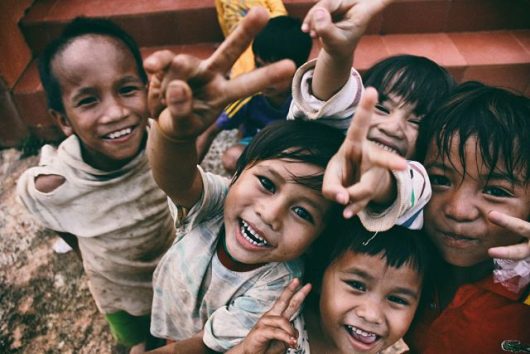
The task of defining poverty, multidimensional and complex, requires an evaluation of factors relating to a person’s access to basic human necessities. ‘Poverty’ is a widely interpreted term, and attempting to create a universal, encompassing definition remains a topic of debate for many leading experts in the field.
Defining Poverty
What is poverty? Poverty is not knowing where your next meal will come from, or if there will be the next meal. Poverty is a lack of education, not knowing how to read or write. Poverty is being sick and not having access to medical care, or knowing that your child will likely die due to lack of medication and proper treatment. Poverty is being unemployed, fearing what comes next and fearing the future.
Poverty’s many faces rear their heads in every aspect of life. Poverty is something from which one yearns to escape, and the range of experiences with poverty vary by location and place in time.
For these reasons, The Borgen Project’s approach to advocating for the global poor delves into wide-ranging topics from many different angles. Pervasive and convoluted, poverty affects people on more than an economic level. Lack of income and infrastructure in a nation leads to insufficient medical care, education, nutrition and other quality of life deficits.
The Cycle of Poverty
Poverty also functions as a cycle and continues generationally. Once an individual, family or community falls below a level of resource-access, events continue like dominoes to perpetuate their situation: “progressively lower levels of education and training leading to lack of employment opportunities, leading to criminal activity for survival, leading to addiction, shattered health, early death, and breakup of family, leading to even bleaker future for the next generation…. and so on.”
Someone, or something, must intervene and structurally change the systems to interrupt the cyclical nature of poverty. The common phrase perpetuated by American Dream ideology of “pulling yourself up by your bootstraps” is impossible when institutional structures ingrained in many societies prohibit those caught in this cycle from breaking out.
Poverty and Foreign Aid
Many U.S. citizens criticize provision of foreign aid, arguing that there are impoverished citizens within the U.S. that deserve support more than those abroad. This argument is valid; however, many Americans believe that 20 percent of the U.S. budget goes to foreign aid, which is blatantly false.
In fact, less than 1 percent goes to help the global poor, which is far less than many countries contribute. In addition, helping the world’s impoverished strengthens global stability and improves trade, which, in turn, benefits Americans. Poverty is relative; an American living in Appalachia who has classified as impoverished lives a much different lifestyle than one living in rural Romania in a hut without running water, electricity or access to nutritious food.
The fact that poverty exists and permeates groups so deeply is a call to action for every single person across the globe. It is the reason that advocacy organizations like The Borgen Project exist: so that one day, hopefully in the near future, every citizen of this planet will have access to basic necessities like having enough to eat, a roof over their heads, a place to learn, healthcare, protection from violent conflict and a voice that is heard in their communities.
Fighting Poverty
We can change the world for the better. A few small actions can cause waves of difference that will reshape the lives of many, and this influential process starts by calling on the U.S. government to change their foreign policy and provide more aid to countries with severe poverty. Calling and emailing your representatives may seem intimidating, but it is easier than you think.
Asking governmental officials to support bills like the International Affairs Budget, the Global Food Security Reauthorization Act, the Build Act and the Food for Peace Modernization Act can have an enormous impact. Phone calls and emails from constituents are simple, small actions that do make a difference. Contact Congress and make a difference to fight poverty today.
– Jilly Fox
Photo: Unsplash

10 Crucial Facts About Human Rights in Thailand
Thailand, a country in Southeast Asia with a population of approximately 68.8 million, is undergoing a human rights crisis. In May 2014, a military coup d`état occurred, signaling additional political instability and human rights violations within the nation. Here are top 10 facts about human rights in Thailand.
10 Facts About Human Rights in Thailand
Thai Progress in Human Rights
The Thai government agreed to ratify the Optional Protocol to the Convention against torture. This agreement was recorded by the Universal Period Review. The agreement is a step in the right direction.
Although the top 10 facts about human rights in Thailand are of great concern, future improvements can be seen through Thailand’s acknowledgment of recommendations by the Universal Period Review. In addition, Thailand’s poverty headcount ratio has since declined from 42.3 percent in 2000 to 10.5 percent in 2014, a fact geared towards a more optimistic future.
– Christine Leung
Photo: Flickr
How an Individual’s Impact on Poverty Reduction Can Make a Difference
The Borgen Project was started with one person who wanted to make a difference. Clint Borgen started his endeavor to create The Borgen Project after seeing the poverty and conflict during the genocide in Kosovo. When he returned, he moved to Alaska to join a fishing expedition in order to make money to start his organization. The Borgen Project started with one person’s bold ideas and passionate heart setting to eradicate global poverty. There are many other ambitious individuals, like Clint Borgen, that have started organizations focusing on reducing poverty. The following organizations show how an individual’s impact on poverty reduction can generate a movement leading to organizations that work toward a world with less poverty.
These organizations, founded by only one or two people, represent how an individual’s impact on poverty reduction by ordinary people can generate change in the world. Clint Borgen, Bono, Bobby Shriver, John and Kay O’Loughlin-Kennedy and Mildred Robbins Leet exemplify the possibility of how one person can make a huge impact. These individuals are a testament to grassroots movements and why each person should feel empowered to make a difference.
– Jenna Walmer
Photo: Flickr
Top 10 Facts about Human Rights in Mexico
Mexico has been in a state of violence for the past couple of years. Since former Mexican president Felipe Calderón initiated Mexico’s war on drugs, there have been considerable violations committed by soldiers and police. Many of these operations involved extrajudicial executions by the military. These 10 facts about human rights in Mexico will be informative about the degree of human rights violations people in Mexico have been experiencing in the past couple of years.
10 Facts About Human Rights in Mexico
These facts about human rights in Mexico serve to give a closer look at the variety of violations committed against its citizens. Besides the facts listed above. The government has made small strides in the prosecution process of holding accountable those responsible for the various crimes that violate human rights. In 2016, the U.S. Secretary of State confirmed that Mexico had made improvements in protecting human rights, earning its Mérida aid of nearly $155 million.
– Alyssa Hannam
Photo: Flickr
Top 10 Facts about Poverty in Greece
Although Greece may be known for its crystal clear blue waters, luxurious islands and fascinating ancient architecture, it is currently going through one of its greatest economic crises in Greek history. Here are the top 10 facts about poverty in Greece:
Top 10 Facts about Poverty in Greece
These top 10 facts about poverty in Greece are important to know in order to understand the impact economic crises has on its citizens. Although Greece is starting to recover from its crisis, they still have a long way to go.
Photo: Flickr
– Ariane Komyati
Five Creative Ways to Fight Human Trafficking
When one mentions the word ‘slavery,’ many people think back to the darker days of American history; they lament this tragedy and sigh with relief that slavery is over. But in reality, an estimated 27 million people are still enslaved today — this number surpasses the total number of slaves transported during 400 years of the trans-Atlantic slave trade. Human traffickers today coerce people of all shapes and sizes, men, women, and children, into all different types of slavery. To help end this ever-present problem, here are five creative ways to fight human trafficking.
Get educated with the book “Sold” by Patricia McCormick.
“Sold” by Patricia McCormick is the fictional story of a 13-year-old Nepali girl named Lakshmi who is sold by her family into sex slavery. McCormick captures both Lakshmi’s innocence and the horror of her circumstance in a beautifully written, verse novel. Despite the book’s heavy content, it is considered a children’s novel (recommended for ages 12 and up) as McCormick’s desire was to activate and inspire the next generation to act rather than scar.
Easy to understand, well-researched and heartbreaking, “Sold” is the perfect novel to read to better comprehend and empathize with victims of human trafficking.
Be an advocate for change with your political representatives.
Despite what many Americans believe, reaching out to political leaders is incredibly simple, and representatives really do want to hear from their constituents. Speak up and advocate on behalf of those who cannot for themselves by letting delegates know that they should fight against human trafficking and make it a priority.
Give them a call, send an email or schedule a meeting to show just how important this issue is and why it should be important to them.
Use social media to inform your circle of influence.
One of the simpler creative ways to fight human trafficking is to simply post on social media. Whether it be Facebook, Instagram, Twitter or any other myriad of social media outlets, sharing a helpful Ted Talk, graphic or simply reiterating some of the facts can get others involved.
Everyone has a sphere of influence, so utilize one of the best ways to connect with them by taking to social media.
Make a conscious decision to avoid products by some of the biggest companies in America.
Some of America’s biggest brands benefit from and exploit the use of slave labor in making their products. Nestle, Hershey’s, Walmart and H&M are all massive companies and some of the most notorious offenders. What will get the attention of these big businesses?
Stop using their products and frequenting their stores. Hit these companies where it will hurt the most – their profits. In a society that thrives in a competitive marketplace, consumers can demand ethical practices by simply refusing to buy anything from corporations that benefit from human trafficking.
Stay positive.
It is all too easy to become discouraged when fighting a human rights violation as widespread and horrific as human trafficking. Do not give up. As people continue to implement these small changes and make it clear that this kind of unethical behavior will not be tolerated, change will come. Look for the changes that are already happening and focus on what can be controlled and done to create change.
As the battle to end slavery rages on, these five creative ways to fight human trafficking can help make small, constructive changes for the good of others.
– Sarah Dean
Photo: Flickr
10 Facts About Poverty in Laos That Everyone Should Know
Laos, officially known as the Lao People’s Democratic, is the only landlocked country in Southeast Asia. Ranked as one of the most corrupt countries in the world by Transparency International, Laos also suffers from major poverty. To get a better understanding of the daily struggle in Laos, below are 10 facts about poverty in Laos.
10 Facts About Poverty in Laos
Hardship and Progress
These top 10 facts about poverty in Laos illustrate the struggles and hardships that Laos people face daily. However, despite being one of the poorest countries in Southeast Asia and the entire world, about half a million of Laos people have been lifted out of poverty thus far.
Fortunately, the United States and Laos continue to rebuild a relationship with each other with a goal of saving lives and rebuilding a better country for the Laos people.
– Kristen Uedoi
Photo: Flickr
Facts About Advancements in Agriculture in India
For decades, agriculture has played a key role in India’s socioeconomic growth. India is the second largest contributor of agriculture in the world with around 50 percent of people in India making their living from farming. But recently, farming has started to become less attractive, and more people are moving to big cities for different job opportunities. A decrease in water levels and poor crop yields have made it difficult to promote the growth of agriculture in India. Several organizations are stepping up to help turn things around and create new advancements in agriculture in India.
Advancements in Agriculture in India
Because of companies such as DuPont India and NSL, agriculture in India is able to continue to grow and be one of the largest farming contributors in the world. The entirety of India’s population is reliant on having a cohesive system of agriculture, whether it is their source of income or not. In fact, the whole world benefits from the advancements in agriculture in India; therefore, being educated in innovative, new technologies and changes in the field is incredibly important.
– Allisa Rumreich
Photo: Flickr
How FGM/C and Poverty Are Clearly Connected
Female Genital Mutilation/Cutting (FGM/C) is a practice that has occurred for generations — a female, often in childhood, is subjected to some form of cutting to her genitalia in the promotion of religious following and the detraction of desire for sexual interaction. Its purpose is to reduce sexual desire in women, thereby making them less likely to be interested in intercourse outside of marriage. It is also highly symbolic to many groups of people who practice it as a religious necessity; however, there is no known religion that demands this practice.
FGM/C and Poverty
FGM/C and poverty are connected in developing countries as the girls who undergo FGM/C are often from poor families who are then married as children, never continue their education and subsequently repeat the cycle of poverty. Recently, there has been a decline in FGM/C practitioners, which should lead to lower levels of extreme poverty on an individual basis.
Countries such as Burkina Faso, Egypt, Kenya, Liberia and Togo have experienced a decline in FGM/C prevalence, with Egypt reducing prevalence from 69 percent to 55 percent between ages of 2005 and 2014. As the correlation with lower education becomes more well-known, it can be inferred that the decline in FGM/C victims has led to a higher attendance rate for girls at school, which can, in turn, affect the poverty in the region.
Millennium Development Goals
The Millennium Development Goals (MDGs), a program designed to create social equality throughout the world, works to end poverty in developing countries. A primary focus of the organization is to work to end FGM/C and poverty because the list of side effects and results of the practice leave women often unable to contribute in their society because they are traumatized, physically incapacitated, unable to maintain strength and nutrition, and in some cases, do not survive the procedure.
When injuries or death result, the cost of caring for these women or paying for their funeral causes strain on family members and communities. Such a responsibility can, in turn, increase the poverty issues already at play. Disability due to the trauma from FGM/C can also lead to a woman’s decreased productivity level, thereby bringing in less money for the family and continuing the cycle of poverty.
The Beginning of the End
The decline of the practice is increasing in developing countries, with more people wanting FGM/C to end. In 2010, a Burkina Faso survey determined that 90.6 percent of women wanted FGM/C to end, a staggering increase from 75.1 percent in 1999. With such a trend beginning, countries should encourage education, discourage FGM/C and lower the poverty levels by introducing a new way of thinking.
FGM/C and poverty are both declining, but it can be agreed that the decline is not occurring quickly enough. More must be done to protect young girls from the sexual alterations that are often completed without consent.
By not cutting into perfectly healthy and innocent girls, developing nations can promote a stronger and healthier workforce. FGM/C and poverty are connected, and one cannot be reduced in isolation — it is imperative that both be tackled to end the other.
– Kayleigh Mattoon
Photo: Flickr
What is Poverty? Difficult and Complex
The task of defining poverty, multidimensional and complex, requires an evaluation of factors relating to a person’s access to basic human necessities. ‘Poverty’ is a widely interpreted term, and attempting to create a universal, encompassing definition remains a topic of debate for many leading experts in the field.
Defining Poverty
What is poverty? Poverty is not knowing where your next meal will come from, or if there will be the next meal. Poverty is a lack of education, not knowing how to read or write. Poverty is being sick and not having access to medical care, or knowing that your child will likely die due to lack of medication and proper treatment. Poverty is being unemployed, fearing what comes next and fearing the future.
Poverty’s many faces rear their heads in every aspect of life. Poverty is something from which one yearns to escape, and the range of experiences with poverty vary by location and place in time.
For these reasons, The Borgen Project’s approach to advocating for the global poor delves into wide-ranging topics from many different angles. Pervasive and convoluted, poverty affects people on more than an economic level. Lack of income and infrastructure in a nation leads to insufficient medical care, education, nutrition and other quality of life deficits.
The Cycle of Poverty
Poverty also functions as a cycle and continues generationally. Once an individual, family or community falls below a level of resource-access, events continue like dominoes to perpetuate their situation: “progressively lower levels of education and training leading to lack of employment opportunities, leading to criminal activity for survival, leading to addiction, shattered health, early death, and breakup of family, leading to even bleaker future for the next generation…. and so on.”
Someone, or something, must intervene and structurally change the systems to interrupt the cyclical nature of poverty. The common phrase perpetuated by American Dream ideology of “pulling yourself up by your bootstraps” is impossible when institutional structures ingrained in many societies prohibit those caught in this cycle from breaking out.
Poverty and Foreign Aid
Many U.S. citizens criticize provision of foreign aid, arguing that there are impoverished citizens within the U.S. that deserve support more than those abroad. This argument is valid; however, many Americans believe that 20 percent of the U.S. budget goes to foreign aid, which is blatantly false.
In fact, less than 1 percent goes to help the global poor, which is far less than many countries contribute. In addition, helping the world’s impoverished strengthens global stability and improves trade, which, in turn, benefits Americans. Poverty is relative; an American living in Appalachia who has classified as impoverished lives a much different lifestyle than one living in rural Romania in a hut without running water, electricity or access to nutritious food.
The fact that poverty exists and permeates groups so deeply is a call to action for every single person across the globe. It is the reason that advocacy organizations like The Borgen Project exist: so that one day, hopefully in the near future, every citizen of this planet will have access to basic necessities like having enough to eat, a roof over their heads, a place to learn, healthcare, protection from violent conflict and a voice that is heard in their communities.
Fighting Poverty
We can change the world for the better. A few small actions can cause waves of difference that will reshape the lives of many, and this influential process starts by calling on the U.S. government to change their foreign policy and provide more aid to countries with severe poverty. Calling and emailing your representatives may seem intimidating, but it is easier than you think.
Asking governmental officials to support bills like the International Affairs Budget, the Global Food Security Reauthorization Act, the Build Act and the Food for Peace Modernization Act can have an enormous impact. Phone calls and emails from constituents are simple, small actions that do make a difference. Contact Congress and make a difference to fight poverty today.
– Jilly Fox
Photo: Unsplash
The Growing Markets in Lagos, Nigeria
Nigeria is often associated with a stagnant economy riddled with corruption; however, Lagos, the country’s largest city, hosts business opportunities that are continually growing, making it one of Africa’s largest rising economies. Lagos is currently Africa’s seventh largest economy, and its rapid rise in GDP and population have the city projected to become the continent’s second largest market by 2035. The growing markets in Lagos have boosted Nigeria’s economy and have set an example in a continent full of market opportunities.
Economy and Population in Lagos
The GDP and population growth of Lagos, Nigeria are the most indicative factors of the rapidly growing market opportunities in the city. Economic growth first began in Lagos after the government moved the capital to Abuja in 1991, and then continued on after the government invested money in the growing oil industry in the area.
In addition to the oil industry, Lagos has also economically benefitted from Nigerian policy reforms that improve privatization of businesses. Many newly privatized companies are centralized in the Yaba district of Lagos, which has been financially supported by the state government, and infrastructure projects are constantly underway to reflect the rapid growth of the city.
This economic growth has led to a state output of $136 billion in 2017, comprising more than a third of Nigeria’s GDP. The strong economy of Lagos is projected to continue growing with a 4.5 percent GDP growth per year in 2035, a figure that rests significantly above the current global average of 2.9 percent.
Lagos’s growing economy and infrastructure largely work to support a rapidly increasing population. By 2035, the population is expected to reach 28.5 million people – significantly higher than the 2012 census population of just over 8 million people. Governor Akinwunmi Ambode claims that the population is a significant factor of the growing markets in Lagos, adding that the city has “the population and rise of an emerging class” and is “a new market, a new frontier to consider.”
New Businesses in Lagos
New business opportunities have shown off the increasingly prosperous markets in Lagos, and many successful Nigerian startups now have their offices in the city. Finance/technology, consulting, retail companies and startups like PayLater and Yellow Brick Road have historically dominated the economic environment of Lagos, and continue to host numerous companies that have caught investors’ attention.
Investment opportunities in Lagos are also important to the city’s markets and are some of the largest in all of Africa. According to the World Bank, an estimated $93 billion in investments in Africa is required annually, and Lagos requires at least a quarter of these investments.
Continued Expansion
Market opportunities in Africa continue to expand with economic growth, and these opportunities are only emphasized in Lagos, Nigeria. The city has become a thriving music, fashion and film hub throughout Africa, and growing markets in Lagos develop along with GDP and population.
Africa has immense economic potential, and Lagos is only one of several cities on the continent that showcases these realized business opportunities. With continued attention and proper investment, both the city and the nation should see a bright fiscal future.
–Matthew Cline
Photo: Flickr