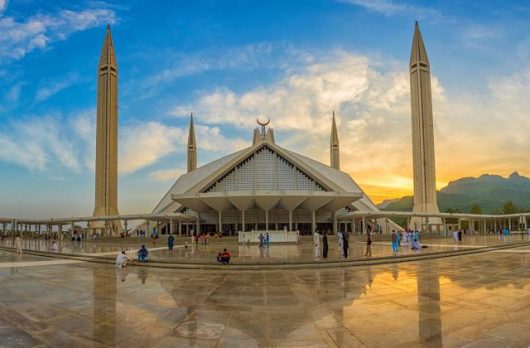
 In recent years, Pakistan has witnessed a surge in the number of tourists from around the world. This positive change is not only welcomed by the government agencies but also the private businesses and the local people. According to a CNN report in 2017, Pakistan saw in increase of around 200,000 more tourists this year than the year before, about 1.7 million foreigners. Moreover, the annual tourist arrival has tripled since 2013, as reported by The Pakistan Tourism Development Corp (PTDC).
The restoration of tourism in Pakistan will not only benefit the country’s overall economy but will also enhance its image in the eyes of the people who enjoy activities such as hiking in snow-capped mountains, walking on beaches, trying a variety of food and appreciating the rich historical heritage and diverse cultures.
The Ultimate Back-Packing Destination
Pakistan’s perception as a tourist destination has been marred by the political instability for a very long time. But professional tourists like Will Hatton are helping to change the image of the country and its people by their first-hand experiences. Hatton describes Pakistan as the “ultimate adventure back-packing destination” and Pakistanis as “the most hospitable, kind and welcoming people” he had encountered. The people always insisted on feeding him and showed him around their local towns like royalty.
He also recounts that Pakistanis are fiercely anti-Taliban and most locals can speak some English. They are highly protective and caring about their guests. The portrayal of Pakistan in the mainstream western media augments the misperception about the country as a war-torn region. However, in reality, the Pakistani armed forces are combatting the extremist militants in the border regions to keep the country, its inhabitants and its visitors safe.
The increased security and the ease of obtaining visas will undoubtedly attract more tourists from around the world and also within the region. Moreover, tourism in Pakistan can benefit from better branding and media coverage. In a report in The British Backpacker Society, Pakistan was ranked as the number one adventure travel destination for 2018 among 20 other countries. A lot of this has to do with aspects ranging from the hospitality of the people to the wildness of the Himalayan mountains.
Despite their rough terrains and lofty peaks (five out of 14 world’s highest peaks present in Pakistan), the mountainous regions are quite accessible due to expertly engineered roads and one of the world’s highest paved highways, the Karokoram Highway. The Karakoram connects China with Pakistan and gains an elevation up to 4,693 meters (15,397 ft) above the sea level.
History and Culture
Pakistan is not only the cradle ground from Indus Valley Civilization but it also consists of several relics from the Gandhara Civilization to the Mughal era. Among the greatest cultural treasures of Pakistan are the Gurdwaras – the sacred shrines of the Sikh religion. Pakistan is also the birthplace of Guru Nanak, the founder of Sikhism.
Since Pakistanis welcome thousands of Sikh pilgrims from India and other countries around the world every year, improved geopolitical relations between India and Pakistan and better perception about tourism in Pakistan can be immensely beneficial in supporting both the Pakistani locals and the Sikh communities from around the world.
Apart from its cultural allure, Pakistan also is a great destination for an economical trip. The transportation, food and accommodation are relatively inexpensive. According to Hatton, a weekly budget of $100 would suffice. The rich ancient sites, the mesmerizing natural landscapes and the remarkably amiable dwellers make Pakistan a great destination for many tourists around the globe.
Regaining Its Reputation as a Tourist Destination
In the 1970s, Pakistan was a tourist hotspot and until the mid-90s, hotels were booked a year in advance. All this had suffered due to instability in the region. The government and the local people, realizing the negative impact that the political volatility has had on tourism, are working hard to revive tourism in Pakistan.
The Pakistani tourism industry, partnered with security agencies and private companies, has improved greatly. According to Jovago, the top hotel booking and e-commerce site in Pakistan, hotel bookings have increased by 80-90 percent in 2017, compared to the bookings in the previous years. This not only means greater revenue for the hotels and other local businesses but also a significant contribution in the GDP of the country.
The World Travel and Tourism Council (WTTC) estimated that the total contribution of tourism toward Pakistan’s economy was about $19.4 billion or 6.9 percent of the GDP, in 2017. Within a decade, this is projected to rise to $36.1 billion.
Improving tourism in Pakistan is perhaps one of the most viable ways to bring about a more realistic perception of the country’s landscape and population. Pakistan has a lot to offer. It is a county of cultural riches ranging from Gandharan relics to tombs from the Mughal era. It is a country of raging rivers and vast lengths of serene deserts. But, probably most importantly, Pakistan is a country of generous and warm people, who would invite their guests into their homes and serve them with the best food and comfort they can provide.
– Fariha Khalid
Photo: Unsplash

Sustainable Agriculture in Tanzania
Integrated Production and Pest Management Programme
Two of the largest and most powerful supporters of sustainable agriculture in Tanzania are the Food and Agriculture Organization of the United Nations (FAO) and the European Union. With the help of the European Union, the FAO established the Integrated Production and Pest Management Programme (IPPPA) in Africa in 2001 and through their Farmer Field School Approach, they have been working hand in hand with local governments and NGOs to improve food security and economic stability of farming communities in Africa. The food security portion of the program helps by training farmers to mitigate the risks associated with climate change and limited water access.
Domesticated cereal grains is what kick-started civilization and we have been reliant on them ever since. In 2013, cereal grain production reached a peak but due to insects, climate change, and lack of new farming equipment, it has been hard to surpass the yield of this year. The IPPPA is trying to rectify the situation with sustainable agricultural practices in Tanzania.
European Union-Africa partnership on cotton
Cotton has become an important crop from the cash perspective. Unfortunately, cotton needs a lot of water and a lot of pesticides to make sure the crop produces a proficient yield. When done incorrectly water supplies can become poisonous or dry up which causes soil quality to degrade. In 2014 the IPPPA began to specifically support the cotton industry in Tanzania with the Support Programme for the Consolidation of the Action Framework under the EU-Africa Partnership on Cotton.
The program heavily favors the investors in the Tanzanian cotton industry but in the long run, will help sustainable agriculture in Tanzania. The plan is to increase support of sustainable farming to increase the stability of the cotton yield. The deal will include better education and better equipment for farmers. A deal like this can be good for the Tanzanian economy in total. Belgium is already one of the countries largest trading partners.
Sustainable Agriculture organization
There is an important NGO operating in Tanzania, called Sustainable Agriculture Tanzania (SAT). This organization has been in operation since 2011. It does exactly what it says on the label. It promotes sustainable agricultural practices in Tanzania through its multi-platform plan. Dissemination, research, application, and networking about the information about sustainable agricultural practices. It also runs farmer training centers where people from other NGOs and agricultural professionals can share ideas and learn new techniques.
Tanzania’s agricultural sector looks to be stable and heading in a right direction. This has a huge importance for the nation. Currently, all farmland is owned and leased on 99-year leases to farmers. There has been tension and disagreement over if this should change. The biggest fear is that foreign investors will buy the land and hold too much power over the Government, the people and the market. The current relationship is working for both Tanzania and their investors. Hopefully, this harmony will continue and sustainable agriculture in Tanzania will flourish.
– Nicholas Anthony DeMarco
Photo: Google
10 Facts About Hunger in Bangladesh
Compounded by inadequate arable land and recurrent natural disasters, Bangladesh has struggled immensely with food insecurity. Despite tripling its rice production, decreasing infant mortality rates, and programs combating malnutrition, 60 million people are still hungry even today.
List of Top 10 Facts About Hunger in Bangladesh
Since the year 2000, hunger has been cut by nearly half in Bangladesh. Experts site economic growth, improved agricultural productivity, access to markets for farmers and social safety nets for the most vulnerable as ways to end hunger. Bangladesh’s success in these areas, especially rice production, has helped cut hunger in half.
Yet these 10 facts about hunger in Bangladesh illustrate how several key challenges still remain as millions continue to battle undernutrition, transient food insecurity and hidden hunger every single day.
– Joseph Ventura
Photo: Flickr
Digital Education in Rural Schools
Already, $8.15 billion has been invested globally in the first 10 months of 2017 into edtech companies. Realizing the new opportunities made feasible by the advent of educational technology, communities in Africa have incorporated a new digital teaching system that changes education in rural schools.
Ligbron E-learning System (LES)
The rising Ligbron E-learning System facilitates an online network of mathematics and science lessons. Two South African schools, Jabavu and Thubalethu high schools, in the Eastern Cape recently joined the community that is growing close to 39,000 learners with 5,400 being in grade 12.
Since its inception in Mpumalanga in June 2015, 31 secondary schools have been supplemented with this system with great success. The overall pass rate of Umzimvelo Secondary School in Mpumalanga has increased from 38.3 percent in 2009 to 94.5 percent in 2016.
The system connects students in rural areas using live streaming and video technology in virtual real-time classes. Students can communicate with teachers using SMART boards, computers and laptops as well as audio equipment. Prior to each class, they would have full access to class notes and other learning materials via Dropbox.
This program provides teachers the resources for a full curriculum including daily lesson plans, pre-recorded video lessons and more. The live stream lessons can all be saved and replayed for convenience as well. Education in rural schools has suddenly become more exciting and achievable for students.
The productivity of the students and quality of the education have both undergone significant improvement courtesy educational technology. After analyzing this system in Mpumalanga, studies show that it was successful in contributing to the Department of Education’s mandate to increase education, particularly that of math and science.
The Coca-Cola Beverages South Africa (CCBSA) has been particularly interested in the mission of the Ligbron E-learning System and hopes for its success to materialize in the Eastern Cape as well. “We were very heartened when we partnered with LES on this initiative to hear that learners gain 34.5 percent more knowledge after a 40-minute e-learning maths class, with a 19 percent spike in knowledge after a science class,” said the Head of Community and Stakeholder Partnerships (CCBSA), Nolundi Mzimba, in his speech after the launch of the Ligbron E-learning System’s sponsorship.
The growth of education is inextricably linked to the growth of the economy. Increasing the level of education in Africa will increase the pass rate in important subjects. The community would then have opportunities to acquire the skills they need for better jobs.
The Ligbron Academy of Technology is adamant about being up-to-date with these educational technologies to prepare students and teachers in this new century of technological boom. Its staff members travel to speak with congresses in South Africa on a regular basis to keep the lines of communication open and active.
Africa can bring about a positive change in its education system, especially in rural schools, and eventually resolve the poverty crisis by taking advantage of educational technology.
– Alice Lieu
Photo: Google
Human Trafficking in Belarus
Good News
Solutions
While Belarus is still a 3rd Tier country, measures taken from the Government of Belarus and NGO’s will ensure a steady decline of human trafficking crimes for the years to come.
The National Human Trafficking Hotline is a national, toll-free hotline, available for calls, texts, and live chats from anywhere in the United States, 24 hours a day, 7 days a week, in more than 200 languages. If you are in need of assistance, call 1-888-373-7888 or text BeFree (233722).
– Lilly Hershey-Webb
Photo: Google
Four Examples of Anne Hathaway’s Humanitarian Work
However, Hathaway’s talents go beyond acting. She participates in 17 different charities and supports 24 various causes. Hathaway’s humanitarian work knows no boundaries. She supports several non-profit organizations and is fiercely dedicated to advocating for women’s rights.
Four Examples of Anne Hathaway’s Humanitarian Work
Beauty transcends physicality when it comes to Hathaway’s humanitarian work. She continues to spread her influence across multiple different organizations, always striving to use her celebrity status to advocate and give a platform to those without a voice.
– Alyssa Hannam
Photo: Flickr
Mashal Model School Increasing Access to Education
In Islamabad, the capital of Pakistan, there is a wide disparity in the education of youth. The city has a population of approximately 1.4 million with 88 percent of the population being literate. However, because it is a major city, there are still many areas with little to no opportunities to pursue a basic education.
The Mashal Model School
In the area of Bari Imam, Islamabad, many children must work in order to help support their families who are facing abject poverty. In order to provide for their families, in-need these youth typically must sell things on the streets of the city. Oftentimes, they are also subject to or involved in gang violence due to the poor conditions of life.
One school in Islamabad, the Mashal Model School, is working to change the fate of these youths by offering them a chance at education. The Mashal Model School is a non-profit organization that currently has four campuses across Islamabad, educating over 860 children ranging in age from nursery school to grade 10.
The school was established in December of 2008 and is located in the G-5 sector of Islamabad, better known as Bari Imam. The school is open to all students and has a more equitable ratio of male to female students than most other schools in the area.
The Curriculum at The Mashal Model School
Although the school follows the curriculum of both the Oxford University Press and The National Scheme of Studies of Pakistan, they take an unorthodox approach to educating their students. Because most of their students come to the school from difficult home lives and seemingly insurmountable obstacles in the way of their success, The Mashal Model School begins by educating their students about hygiene, health and protection from abuse.
The school works to create a safe learning environment for its students and teachers, and abuse of any kind is not tolerated. Once the students are accustomed to the school and the safety it provides, The Mashal School continues their quest to provide an individualized education.
In addition to a standard education, the school provides books, bags, uniforms, shoes, food items, library and medical insurance facilities as well as computer and science laboratories to its students. The school also offers its students life-enhancing courses such as art, sports, food preparation, painting and clay work in an effort to give the children a healthy outlet to work through the problems they face.
The school acts as an ally to its students and their families by ensuring that attending school does not become an additional burden on their lives. Tuition to attend the school is 50 to 100 rupees (50 cents to $1); however, over 40 percent of its students attend the school free of charge. To further its allyship, The Mashal Model School offers sewing and woodworking classes to the parents of the school’s students.
The school is currently a non-profit, registered trust that began with the funding of its founders and is funded today by donations from people all across the world as well as by educational grants from different embassies. By continuing to provide the best education possible while still managing not to create a financial burden to the students, The Mashal Model School is improving the lives of its students and the community in which it is located.
– Savannah Hawley
Photo: Flickr
Tourism in Pakistan: The Ultimate Destination
The restoration of tourism in Pakistan will not only benefit the country’s overall economy but will also enhance its image in the eyes of the people who enjoy activities such as hiking in snow-capped mountains, walking on beaches, trying a variety of food and appreciating the rich historical heritage and diverse cultures.
The Ultimate Back-Packing Destination
Pakistan’s perception as a tourist destination has been marred by the political instability for a very long time. But professional tourists like Will Hatton are helping to change the image of the country and its people by their first-hand experiences. Hatton describes Pakistan as the “ultimate adventure back-packing destination” and Pakistanis as “the most hospitable, kind and welcoming people” he had encountered. The people always insisted on feeding him and showed him around their local towns like royalty.
He also recounts that Pakistanis are fiercely anti-Taliban and most locals can speak some English. They are highly protective and caring about their guests. The portrayal of Pakistan in the mainstream western media augments the misperception about the country as a war-torn region. However, in reality, the Pakistani armed forces are combatting the extremist militants in the border regions to keep the country, its inhabitants and its visitors safe.
The increased security and the ease of obtaining visas will undoubtedly attract more tourists from around the world and also within the region. Moreover, tourism in Pakistan can benefit from better branding and media coverage. In a report in The British Backpacker Society, Pakistan was ranked as the number one adventure travel destination for 2018 among 20 other countries. A lot of this has to do with aspects ranging from the hospitality of the people to the wildness of the Himalayan mountains.
Despite their rough terrains and lofty peaks (five out of 14 world’s highest peaks present in Pakistan), the mountainous regions are quite accessible due to expertly engineered roads and one of the world’s highest paved highways, the Karokoram Highway. The Karakoram connects China with Pakistan and gains an elevation up to 4,693 meters (15,397 ft) above the sea level.
History and Culture
Pakistan is not only the cradle ground from Indus Valley Civilization but it also consists of several relics from the Gandhara Civilization to the Mughal era. Among the greatest cultural treasures of Pakistan are the Gurdwaras – the sacred shrines of the Sikh religion. Pakistan is also the birthplace of Guru Nanak, the founder of Sikhism.
Since Pakistanis welcome thousands of Sikh pilgrims from India and other countries around the world every year, improved geopolitical relations between India and Pakistan and better perception about tourism in Pakistan can be immensely beneficial in supporting both the Pakistani locals and the Sikh communities from around the world.
Apart from its cultural allure, Pakistan also is a great destination for an economical trip. The transportation, food and accommodation are relatively inexpensive. According to Hatton, a weekly budget of $100 would suffice. The rich ancient sites, the mesmerizing natural landscapes and the remarkably amiable dwellers make Pakistan a great destination for many tourists around the globe.
Regaining Its Reputation as a Tourist Destination
In the 1970s, Pakistan was a tourist hotspot and until the mid-90s, hotels were booked a year in advance. All this had suffered due to instability in the region. The government and the local people, realizing the negative impact that the political volatility has had on tourism, are working hard to revive tourism in Pakistan.
The Pakistani tourism industry, partnered with security agencies and private companies, has improved greatly. According to Jovago, the top hotel booking and e-commerce site in Pakistan, hotel bookings have increased by 80-90 percent in 2017, compared to the bookings in the previous years. This not only means greater revenue for the hotels and other local businesses but also a significant contribution in the GDP of the country.
The World Travel and Tourism Council (WTTC) estimated that the total contribution of tourism toward Pakistan’s economy was about $19.4 billion or 6.9 percent of the GDP, in 2017. Within a decade, this is projected to rise to $36.1 billion.
Improving tourism in Pakistan is perhaps one of the most viable ways to bring about a more realistic perception of the country’s landscape and population. Pakistan has a lot to offer. It is a county of cultural riches ranging from Gandharan relics to tombs from the Mughal era. It is a country of raging rivers and vast lengths of serene deserts. But, probably most importantly, Pakistan is a country of generous and warm people, who would invite their guests into their homes and serve them with the best food and comfort they can provide.
– Fariha Khalid
Photo: Unsplash
Ten Facts About Poverty in Azerbaijan
Azerbaijan is the country located in the South Caucuses at the crossroad between Eastern Europe and Western Asia. Humans have settled in this area in the Stone Age, and throughout the history, the country location was ideal for trade and commerce. Today, Azerbaijan, from the perspective of the capital city of Baku, has transformed itself into a polished country of luxury with glass skyscrapers and trendy malls. The country even began hosting a Formula One Grand Prix in 2017 and the European Games in 2015. But behind the glitz and glamour of the freshly paved streets of Baku, the country still deals with poverty. Here are ten facts about poverty in Azerbaijan.
These ten facts about poverty in Azerbaijan show that the country stands at both a physical crossroad and at a metaphorical one. Extreme poverty in the country has been drastically reduced, but a continuance of the country’s economic dependence on oil makes the country susceptible to the economic crashes, similar to the one that happened in 2015, and the potential for poverty increase again. The country must decide how to diversify its economy and carry out its progress further into the future.
– William Carlos Menchaca
Photo: Google
Internet Access in India: What You Need To Know
Problem background
Across the nation, urban and rural areas are lacking internet access in India and here is a quick look into why this void exists.
Why does it matter
As previously stated, there are over a billion people in India. Today’s world is mostly connected to the internet and those without access are being left behind which represents a huge disadvantage. With 75 percent of a billion people in one geographical location left unconnected, there is a huge untapped market that India and the rest of the world are being deprived of. In 2016, the U.S. gained 16 billion dollars from India’s digital buyer market. If more people had internet access in India, it is likely the economy would grow and poverty would decrease, resulting in improved international relationships as well.
The solution
Fortunately, the movement to provide more citizens with internet access in India is in motion. The Department of Telecommunications (DoT) is reducing the internet shutdowns that happen due to net neutrality thanks to the influence of the Telecommunication Regulation Authority of India (TRAI). The Government of India is making progress in providing access to more Indian citizens and is partnering with independent partners such as BharatNet is enhancing the internet infrastructure. India Accelerator is another organization doing the groundwork to raise funds for many internet start-up companies which encourages entrepreneurship.
Internet future in India
Moving forward, facts above mostly mean a brighter future for India in internet access. As the DoT and the TRAI work together to prevent unfair blocks to internet access in India, internet freedom is becoming a reality for many formerly oppressed people. According to Inc42 Media, India has a 50 billion dollars potential online commerce market. When millions of people gain access to this market backed by empowerment and funding, this has a power to change India economy in a positive direction. By launching new companies, creating more income and more jobs, the GDP will rise, significantly lowering the poverty rates and creating a more sustainable and stable India.
India currently lacks the power to provide its citizens with the means to send and receive electronic data, something many would consider a basic human right in today’s world. This is coming to an end as internet access in India is becoming a priority for the Government and for the people.
– Heather Marie Benton
Photo: Flickr
Top Facts About Human Rights in Taiwan
In August 2018, Taiwan was selected to host the Human Rights Forum. The Forum, according to the New York Times, is run by the New York-based Human Rights Foundation and has been held in Oslo every year since 2009. The Human Rights Foundation’s chief strategy officer Alex Gladstein explained that the forum’s goal is to inform activists around the world about Taiwan’s transition to democracy, which is an example of democracy in a Chinese society. As international human rights organizations recognize Taiwan’s unique position in Asia as an advocate for human rights and democracy, it is important to highlight several key facts about human rights in Taiwan.
Judiciary reform
According to the Taiwan 2017 Human Rights Report, there are no acknowledged instances of torture carried out against accused persons. Furthermore, to address issues of overcrowding in prisons, in June 2017, Taiwan’s Ministry of Justice gave prison inmates the right to maintain jobs outside the prison. The report indicated that 19 inmates had minimum monthly salaries of 690 U.S. dollars of which 60 percent was used as restitution to crime victims. Even more encouraging is that detention centers allowed both government and non-governmental inspections of the prisons. It is also important to note that prisoners have rights to legal counseling.
Also, arrests of individuals require warrants or summons. The report emphasized that all defendants are innocent until proven guilty. Regarding civil issues, an “impartial judiciary” is provided.
Freedom of speech
Freedom of speech and the press are observed in Taiwan, especially involving internet access. Taiwan also does not restrict academic freedom or cultural events.
In April 2018, the New York Times noted that Reporters Without Borders are going to open their first Asian bureau in Taipei, the Taiwanese capital. They decided to do so after considering, but rejecting Hong Kong. Taiwan’s selection over Hong Kong is tied with increasing pressure from the Government of China to Hong Kong, allowing Taiwan to surpass Hong Kong as the synonym for free speech in Asia.
Voting rights and protection of sexual assault victims
While Taiwan currently does not offer refugees protection, it does allow its citizens to migrate within its borders, emigrate from, and travel internationally. Such policies are not necessarily permanent, however, as Taiwan offers citizens the rights to elect government leaders through “secret ballot.” Suffrage is given to all citizens, including women.
Taiwan law prohibits rape, especially spousal rape, and domestic violence, but it is important to note that these crimes are often not reported. In addition, rape survivors are given protection in a way that they can endure their trials away from the public eye and the law permits a charge of rape even if the victim chooses not to press charges. This provision is one of the key facts about human rights in Taiwan, as charges for sexual assault can still be carried out, regardless of the social pressures that discourage victims to report. Also, the Sexual Assault Crime Prevention Act allows the use of one-way mirrors, video conferencing, or other practices to protect victims during questioning and trial.
In recent years, Taiwan became the front-runner of human rights in Asia, as seen through its shift toward judiciary reform, freedom of expression and increased protections for sexual assault victims. These key facts about human rights in Taiwan merit activists’ decision to host the upcoming Human Rights Forum and showcase Taiwan’s accomplishments and the path towards achieving even better results in the future
– Christine Leung
Photo: Google