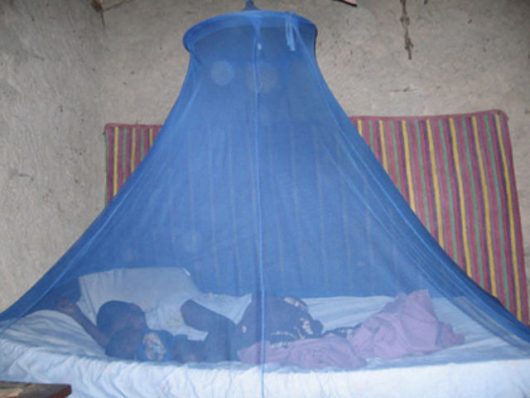
 Two weeks ago, The Lancet published a promising study on the effectiveness of a new type of mosquito net. After a two-year trial period in Burkina Faso, the researchers found the new mosquito nets, treated with two insecticides, decreased cases of malaria by 12 percent. These findings promise strong potential for lowering the risk of malaria worldwide with the implementation of these new mosquito nets.
This research is a collaboration among several institutions including Durham University, Burkina Faso’s National Center for Malaria Research and Training, Liverpool’s School of Tropical Medicine and the Swiss Tropical and Public Health Institute.
Malaria Worldwide
According to The World Health Organization, almost 50 percent of the world’s population was at risk of contracting malaria in 2016. While risk areas exist around the world, sub-Saharan Africa suffers the most cases of malaria each year.
In 2016, sub-Saharan Africa had 90 percent of the world’s malaria cases and 91 percent of the world’s malaria-related deaths. Though malaria-related deaths have declined significantly, from 440,000 in 2010 to 285,000 in 2016, malaria is still a great threat to health worldwide. Traditional, chemically-treated mosquito nets have helped to reduce the cases of malaria, however, as mosquitoes grow more resistant, these traditional nets have become less effective, leaving users more vulnerable to malaria infection.
The World Health Organization estimated there were five million more cases of malaria in 2016 compared to the total number of malaria cases in 2015. The above-mentioned study’s mosquito nets address this problem, by targeting insecticide-resistant mosquitoes that are causing these problems.
New Mosquito Nets
The older mosquito nets generally have a pyrethroid insecticide treatment, intended to kill mosquitoes on contact. This treatment has become less effective with time since the mosquitoes have developed a resistance to the insecticide. The new nets, presented in the research, combat this issue, by using a different insecticide.
The new insecticide is effective because it combines traditional pyrethroid treatment with another agent, pyriproxyfen. Pyriproxyfen works as an insect growth regulator, shortening the lifespan of mosquitoes and thus their ability to transmit disease, as well as reproduce.
According to professor Steve Lindsay, who worked on the study, this combination of chemicals has three main benefits: it kills more mosquitos, reduces the number of mosquito bites and decreases the likelihood that mosquitoes will develop resistance to the chemical mixture.
Results in Burkina Faso
A two-year trial, conducted in Burkina Faso, demonstrated the effectiveness of these new mosquito nets, treated with pyrethroid and pyriproxyfen. Burkina Faso was ideal for the study, due to the high number of malaria cases. Located in sub-Saharan Africa, Burkina Faso has more than 10 million cases of malaria every year. Mosquitoes in Burkina Faso were also ideal test subjects since they exhibit high resistance to pyrethroid treatment. According to Professor Lindsay, 80 percent of mosquitoes in Burkina Faso are so resistant to pyrethroid, they are no longer killed by it.
Researchers conducted the study in 91 villages throughout rural areas of the country. By switching traditional mosquito nets with nets treated with the new chemical blend, researchers saw a 12 percent decrease in malaria cases. Furthermore, the overall exposure to mosquitoes dropped by over 50 percent during the test period.
With these results, the researchers concluded the trial mosquito nets offer increased protection against malaria as opposed to standard pyrethroid-treated nets. They also recommended that these new nets replace standard nets in areas with high malaria transmission rates and high instances of insecticide resistance among mosquitoes.
Future Potential
Although 12 percent reduction in malaria cases may seem marginal, on a global scale and in real numbers, this decrease in malaria infection would be monumental. As Professor Lindsay noted, if the nets were used across all of Burkina Faso during the two-year trial, researchers would expect 1.2 million fewer cases of malaria in the population overall.
Dr. Alfred B. Tiono, who headed the field study, has great hope for the impact these new mosquito nets could have globally. He believes, if used correctly, the nets could prevent millions of malaria cases worldwide. It is still unclear how costly large-scale manufacturing of the dual-chemical nets will be. However, Professor Lindsay remains hopeful the manufacturing costs will not exceed the costs of producing traditional nets. If only one life is saved by applying the new nets, no price is too high to pay.
– Morgan Harden
Photo: Google

Fighting Malaria with New Mosquito Nets
This research is a collaboration among several institutions including Durham University, Burkina Faso’s National Center for Malaria Research and Training, Liverpool’s School of Tropical Medicine and the Swiss Tropical and Public Health Institute.
Malaria Worldwide
According to The World Health Organization, almost 50 percent of the world’s population was at risk of contracting malaria in 2016. While risk areas exist around the world, sub-Saharan Africa suffers the most cases of malaria each year.
In 2016, sub-Saharan Africa had 90 percent of the world’s malaria cases and 91 percent of the world’s malaria-related deaths. Though malaria-related deaths have declined significantly, from 440,000 in 2010 to 285,000 in 2016, malaria is still a great threat to health worldwide. Traditional, chemically-treated mosquito nets have helped to reduce the cases of malaria, however, as mosquitoes grow more resistant, these traditional nets have become less effective, leaving users more vulnerable to malaria infection.
The World Health Organization estimated there were five million more cases of malaria in 2016 compared to the total number of malaria cases in 2015. The above-mentioned study’s mosquito nets address this problem, by targeting insecticide-resistant mosquitoes that are causing these problems.
New Mosquito Nets
The older mosquito nets generally have a pyrethroid insecticide treatment, intended to kill mosquitoes on contact. This treatment has become less effective with time since the mosquitoes have developed a resistance to the insecticide. The new nets, presented in the research, combat this issue, by using a different insecticide.
The new insecticide is effective because it combines traditional pyrethroid treatment with another agent, pyriproxyfen. Pyriproxyfen works as an insect growth regulator, shortening the lifespan of mosquitoes and thus their ability to transmit disease, as well as reproduce.
According to professor Steve Lindsay, who worked on the study, this combination of chemicals has three main benefits: it kills more mosquitos, reduces the number of mosquito bites and decreases the likelihood that mosquitoes will develop resistance to the chemical mixture.
Results in Burkina Faso
A two-year trial, conducted in Burkina Faso, demonstrated the effectiveness of these new mosquito nets, treated with pyrethroid and pyriproxyfen. Burkina Faso was ideal for the study, due to the high number of malaria cases. Located in sub-Saharan Africa, Burkina Faso has more than 10 million cases of malaria every year. Mosquitoes in Burkina Faso were also ideal test subjects since they exhibit high resistance to pyrethroid treatment. According to Professor Lindsay, 80 percent of mosquitoes in Burkina Faso are so resistant to pyrethroid, they are no longer killed by it.
Researchers conducted the study in 91 villages throughout rural areas of the country. By switching traditional mosquito nets with nets treated with the new chemical blend, researchers saw a 12 percent decrease in malaria cases. Furthermore, the overall exposure to mosquitoes dropped by over 50 percent during the test period.
With these results, the researchers concluded the trial mosquito nets offer increased protection against malaria as opposed to standard pyrethroid-treated nets. They also recommended that these new nets replace standard nets in areas with high malaria transmission rates and high instances of insecticide resistance among mosquitoes.
Future Potential
Although 12 percent reduction in malaria cases may seem marginal, on a global scale and in real numbers, this decrease in malaria infection would be monumental. As Professor Lindsay noted, if the nets were used across all of Burkina Faso during the two-year trial, researchers would expect 1.2 million fewer cases of malaria in the population overall.
Dr. Alfred B. Tiono, who headed the field study, has great hope for the impact these new mosquito nets could have globally. He believes, if used correctly, the nets could prevent millions of malaria cases worldwide. It is still unclear how costly large-scale manufacturing of the dual-chemical nets will be. However, Professor Lindsay remains hopeful the manufacturing costs will not exceed the costs of producing traditional nets. If only one life is saved by applying the new nets, no price is too high to pay.
– Morgan Harden
Photo: Google
Photojournalism: Inspiring Action Around the World
The Inspiring Actions of Photo Journalists
Living on a Dollar a Day: The Lives and Faces of the World’s Poor by author Thomas A. Nazario is a book that features photography by Pulitzer Prize-winner Renee Byer. The photographs capture the lives and struggles of people from 10 different countries living in poverty on less than a dollar a day. Byer worked as a photojournalist for the Sacramento Bee for many years before becoming a Pulitzer Prize-winning photographer.
Inspired by the reaction of people viewing her photos for Living on a Dollar a Day before the book and exhibit were published, Byer created the Youbridge-it app. The app allows viewers of her photographs to donate to specific poverty-related causes as soon as they see the people in the photos and are inspired to help.
For Example, Intrahealth International is one of the foundations that viewers can donate to specifically through the Youbridge-it app. This organization provides treatment for women with obstetric fistula in Mali, which accounts for six percent of all maternal deaths every year and is preventable. With the Youbridge-it app, people can simply pull up the app at the exhibit or when looking through the book and donate.
Aside from helping women across the globe with her photography, Byer is “…asking people to imagine that reality as their reality.” Byer believes people are desensitized to photographs of people suffering, another reason why the app is so important and effective.
Her belief in the power of photography has served as a catalyst for change. It happens in real time, as people feel empathy while viewing the pictures; they can donate immediately on the app. Connections like these are essential to inspiring action that creates change by means of photojournalism.
The Dangers and Sacrifices of Photo Journalists
Not only are photojournalists opening doors to the ills of the world but they also often risk their lives in taking these photos. Chief photographer for Agence France-Presse in Kabul Shah Marai was killed in a suicide bombing in April of this year on the job. Marai had been documenting the war and lives devastated by corrupt government rule in Afghanistan since 1998. Over the course of 20 years, 18,000 photos taken by Marai had been published, educating the world on the horrors and realities of people living in war-ravaged Afghanistan.
In countries where media is controlled by corrupt governments, photojournalism speaks truths that inspire those globally to step in. Though Marai and other photojournalists are not necessarily directly linked to any charity organizations, their photos are inspiring action among those that are more fortunate.
Neither charity organizations nor the media would be quite as effective without the photographs of the truth to go along with them. As Byer said, putting oneself in a suffering person’s shoes inspires empathy, and that empathy is what creates change.
There are millions of suffering people in the world, and photojournalists are connecting the gap between us and them. The continued innovation of apps like Youbridge-it and the bravery of the photojournalists behind such projects will help people living in poverty around the world by inspiring action from the more fortunate.
– Hope Kelly
Photo: Flickr
The Importance of Female Entrepreneurs
The reasons for Fewer Female Entrepreneurs
Why are there still fewer amounts of businesswomen than men not just in developing but in developed countries as well? Although developing countries may advocate more for women’s economic development, little is actually being done to provide more opportunities to change it. Since women’s failure rates are not that significantly different from those of men, researchers believe that gender bias is at fault and, thus, inhibiting the growth of women in the economy.
There is evidence that suggests that there are many reasons for the differences in the attitude about gender in business. One reason is that women and men often have different socioeconomic characteristics. If economists were to reform education, wealth, family and work status, those differences would disappear.
The Obstacles for Female Entrepreneurs
Africa remains one of the most successful leaders for efforts regarding female entrepreneurs. But, even the most successful countries still lack leadership, capital and professionalism, not to mention the inability to find affordable solutions in regard to childcare.
Countries like Japan have taken these shortcomings and transformed them into positive aspects of the economy. Womenomics is the idea that the advancement of women and economic development are necessarily linked. This philosophy is becoming widespread among developing nations. In Japan, these sorts of reformations can be credited to Prime Minister Shinzo Abe. Since taking office, Abe has generated a larger female labor force rate than that of the United States.
Some other countries have also made several reformations propelling womenomics. Jordan has increased women’s enrollment in schools by 37 percent. Turning these rates into economic success, however, still remains a challenge. Many studies suggest that economic growth for women needs to be viewed as desirable and attainable for the majority of society.
Female entrepreneurs also struggle with the duality of a society that places more value on a familial lifestyle. For example, a woman may own a business, but her time at work is often limited by her duties at home. Data in developing countries assert that many women leave the business lifestyle to return to familial duties.
A study regarding the results of holding executive positions for women in Norway revealed that the majority of people believe there should be established quotas to include women in management in companies. The results of the pole were 74 percent in favor of those quotas. Later studies showed that as women in the workplace reach a certain age, the stigma associated with their work duties do too.
Curbing the Stigma
Shifting the thought process among thousands of different demographic structures isn’t easy, but it is clear that the majority of the world needs higher female entrepreneurial participation rates. Reforming education, wealth, family and work status are not projects that take only months to complete, rather they need a comprehensive and flexible government that is willing to take on the challenge for years to come.
There are several ways to start thinking about reforming the factors for female entrepreneurs. Creating workshops to propel female economic empowerment is a start. The United Nations Capital Development Fund (UNCDF) is doing just that. They are working to find projects for investment as well as provide training to work under the Women’s Economic Empowerment Index (WEEI).
By ending the stigma associated duties deemed appropriate for females, both developing and thriving countries can further increase the chances of positive economic outcomes. Education and awareness programs are important components to overcoming these gender-related stigmas.
Financial Inclusion
Governmental structure and large economic aid can advance female economic empowerment too. “We’ve known for a long time that access to financial services can be a powerful driver to help people lift themselves out of poverty. With a concerted push from governments, the private sector, and multilateral institutions including the World Bank Group, we believe we can close this gap,” said World Bank President Jim Yong Kim in a meeting attempting to accelerate the growth of women’s empowerment.
The World Bank also states that simple financial education can greatly increase the chances of creating female entrepreneurs. There are so many aspects that can improve. For example, according to the World Bank, fewer than 10 percent of women in developing countries own a bank account. Access to financial institutions is an essential part of a successful business, which is why the organization started the Women Entrepreneurs Finance Initiative. This initiative will provide financing opportunities for women who own businesses in developing countries.
Donations from the World Bank Group, education and female empowerment workshops to end stigmas are some of the best ways in which the women can become involved and empowered in the workforce. It won’t happen quickly, but when it does, the economic benefits will surpass previous stigmas surrounding women in business.
– Logan Moore
Photo: Flickr
10 Contributors to Turkey’s Rising Economy
Turkey has one of the fastest growing economies in the world today. Turkey’s rising economy came after the economic and banking crisis that occurred in 2001. Turkey’s economy is growing and will continue to improve over the next several years. The following are 10 aspects that have contributed to the Turkish economy’s growth:
Over the past 15 years, Turkish and African trading has increased over 600 percent to over $17 billion USD. Trading with Africa has brought a substantial amount of money into Turkey and has created countless jobs for the country’s rising economy.
Turkish Airlines has made a deal with Boeing to purchase 25 Boeing 787-9 Dreamliner aircraft, which will help Turkey meet demand in their country. M. İlker Aycı, Turkish Airlines’ Chairman of the Board and the Executive Committee, said, “We are pleased to finalize a landmark agreement that will bring significant benefit to Turkish Airlines and Turkey’s aviation industry.”
In the past several years, the size of Turkey’s middle class has doubled; it increased from 18 percent to just over 40 percent. This is one of the biggest contributors to Turkey’s rising economy. The growth of the middle class has helped Turkey strive toward becoming an upper-middle income economy.
In the past decade, travel to Turkey has increased tremendously. In 2017 Turkey was ranked the sixth most-visited country and was ranked ninth in income from tourism. Turkey is most visited by Europeans, and tourists frequently visit Antalya, Istanbul and Mugla. These areas make up 70 percent of the places visited in Turkey.
The government of Turkey has been attempting to privatize many sectors in the country. They aim to limit the role of the government to health, education, social security, national defense, and infrastructure. Increasing the size of the private sector has created a highly competitive market that has improved Turkey’s economy. From 1986 to 2003, the revenue for privatization reached only $8 billion; by contrast, revenue from 2004 to 2015 reached approximately $58 billion. In addition to creating a competitive market, privatization has created many jobs throughout the country.
1.5 million more people became employed from November 2016 to November 2017 in Turkey, and the labor participation rate of women increased to 33.8 percent. The unemployment rate for the youth in Turkey also decreased by 3.3 percent. This job growth has stimulated the economy and contributed to its growth.
The Sustainable Cities program consists of two parts. The first part was approved in 2016, and the second was approved in April of 2018. These programs provide investment financing and technical assistance. The investment financing is used for public projects such as municipalities for water, wastewater, solid waste, energy efficiency and street lighting. The goal of this program is to improve the economic, financial, environmental, and sustainability aspects of cities in Turkey. This will improve Turkish cities while also providing jobs for many people in Turkey.
Turkey’s exports have continued to increase over the past few years, and the increase is estimated to continue. In 2016, Turkey’s exports totaled $143 billion, and exports are estimated to reach $193 billion by the year 2019.
The construction sector in Turkey is one of the biggest in the world, just after China. The first foreign project took place in the 1970s, but such projects have increased greatly since then. From 2008 to 2017, Turkey engaged in more than 4,000 construction jobs abroad, equal to approximately $220 billion. This nine-year period accounts for 64 percent of all foreign contracting jobs taken by Turkey in 45 years. The cost of these projects has also increased. In 2008, the average project cost $37 million, but by 2017 this average had risen to roughly $79 million. Contracting abroad has greatly increased jobs and contributed to the rising economy in Turkey.
In 2017, the Turkish economy grew by 7.4 percent, meaning it expanded faster than both India and China. Turkey’s economy was ranked as the fastest-growing economy in the group of G-20 nations.
There are still many improvements to be made throughout the country. However, Turkey’s rising economy shows that the country has made great strides toward becoming an upper-middle income country. The people of Turkey have successfully reduced poverty, decreased unemployment and increased the overall living conditions in their country.
– Ronni Winter
Photo: Flickr
Mobile Banking in Thailand
Often in developing countries, banks and telecommunication infrastructure are scarce, while mobile phones are found in spades. This interesting dichotomy has led to the proliferation of mobile money and banking, which allows money to be transferred, deposited, and converted back into cash using only a mobile phone to do it.
Mobile Banking in Thailand on the Rise
According to the World Bank, as of 2016, Thailand’s rural population was 48.46%. With recent developments in mobile banking in Thailand, roughly 50% of the population will have increased opportunities to pay bills, conduct money transfers, and make everyday purchases electronically.
The role credits and loans have in the growth of developing countries’ economies cannot be overstated. Increased loan access is essential for allowing farmers, businesses, and consumers as well to utilize investment capital and help expand economic activity. As mobile banking in Thailand proliferates throughout the financial sector, it offers increased access to loans.
This past year (2017), Thailand has seen incredible growth in the mobile banking sector. The Bank of Thailand recently published data that illustrates a surge in the use of mobile internet banking in Thailand. Consumers’ increasing preference for digital transactions highlights the success of banks’ pivot toward more digital strategies.
The Benefits of Mobile Banking in Thailand
As Thailand continues to cement the transition to mobile banking, rises in employment, wages, GDP and productivity are expected. Consumers can expect to receive THB 3.3 billion in annual benefits, while businesses will see up to THB 72.9 in annual net benefits. Employment will rise by 1.6% and wages by 0.2%. THB is an abbreviation for Thailand Baht. In comparison, 1 USD equals 32.82 THB.
As the government and private sector continue to facilitate the growth of mobile banking in Thailand, electronic payments between consumers and merchants will become increasingly prevalent. The transition towards a cashless society and the advantages that come with it are many, one of them being the cost of transactions.
A study conducted by VISA predicts that the total benefits of Bangkok shifting to a cashless society will be approximately THBg 125 billion per year.
An Upward Trajectory
The Information and Communications Technology (ICT) Framework 2020 involves several strategies and goals that include universal broadband and a competitive ICT industry. With regard to the national broadband policy, the ICT Framework hopes to have 90% of the population connected by 2020.
Hopefully, as Thailand completes the transition to a more connected society, other southeast Asian countries will take notice and invest in better technological and banking infrastructure. In turn, these subsequent developments could make the region a burgeoning financial hub.
Since mobile banking is dependent on a strong broadband network, the future of mobile banking in Thailand looks bright, as the government prioritizes increased broadband coverage across the country.
– McAfee Michael Sheehan
Photo: Google
Top 10 Hunger Nonprofits
List of Top 10 Hunger Nonprofits
The top 10 hunger nonprofits all have a similar goal: to end world hunger. Stopping world hunger isn’t easy but these organizations have taken on the challenge and work tirelessly for a better future. We need more individuals and organizations to do the same.
– Michael Huang
Photo: Flickr
How Tourism Reduces Poverty in Peru
Machu Pichu is a premier tourist destination in the developing country of Peru. It is listed as one of the new seven wonders of the world, attracts over 1.2 million tourists each year and continues to be incredibly well preserved. Peruvian tourism authorities are restricting access to the Incan ruins to minimize the impact of the millions of visitors who journey to the ancient citadel each year. Efforts like these have preserved most of the city and its buildings that are over 500 years old. Machu Pichu is the “golden goose” of the Incan ruins that are spread throughout Peru and has shown that tourism reduces poverty.
Machu Pichu
The ancient citadel was built on a mountain ridge in the Cusco region for the Incan emperor Pachacuti around 1450. It was soon abandoned during the Spanish conquest, but its isolated location left it completely unnoticed by the conquistadors, who were responsible for the destruction of most Incan relics. Machu Pichu remained unknown to the outside world until 1911, when it was discovered by American historian Hiram Bingham. It was declared a World Heritage Site by UNESCO in 1983 and still features its famous astronomical clock, Temple of the Sun and Room of Three Windows that have given historians and tourists an accurate glimpse into Incan life.
Tourism in Peru
The astronomical growth in the popularity of Machu Pichu, from having around 800,000 visitors in 1980 to over 1.2 million in 2013, has made tourism an essential development tool in Peru. According to a guide for Akorn Destination Management, “tourism is the main industry in the region of Cuzco followed by mining and then agriculture.” Tourism reduces poverty in Peru by providing the government with tax revenue from restaurants, sales and income, in addition to the $6 million generated per year from Machu Pichu’s entrance fee.
The Peruvian people also benefit from the enormous popularity and interest in the ancient ruins, through a multiplier effect, a phenomenon whereby a given change in a particular input causes a larger change in output. The new money that is brought into the economy by tourists attracts new businesses and services that are highly labor intensive, which creates millions of jobs for Peruvians. Both the employment benefits for Peruvians and the tax dollars going to the government are having a positive impact on the overall economy.
The Economy in Peru
Peru is one of the world’s fastest growing economies with a GDP of 6.3 percent in 2011 and is classified as an upper-middle economy. According to the guide, “Peru has grown exponentially in the last decade.” This steady increase in GDP has been coupled with tourism in Peru, growing by an annual rate of 25 percent. Overall, travel and tourism contribute 10.1 percent to the country’s GDP and supports 1,366,500 jobs. Thus, Peru has the largest tourism sector in all of South America and is one of the leaders in the global tourism industry.
Tourism is responsible for 5 percent of the world’s GDP and over 235 million jobs. It is an important development tool for developing countries, which host several of the world’s wonders. Peru’s use of Machu Pichu as a tool for domestic progress is a prime example of how tourism reduces poverty.
– Anand Tayal
Photo: Unsplash
Harry Styles’ Reminder to “Treat People With Kindness”
Former One Direction band member Harry Styles, currently a solo singer, songwriter and actor, recently finished a nearly year-long tour for his debut album, “Harry Styles.” He toured across the globe, making nearly 90 stops including Paris, Bangkok, Buenos Aires and Mexico City. The tour took close to ten months to finish. At each of his concerts, Styles had a merchandise stand with products that bore his slogan “Treat People With Kindness.” All of the merchandise profits, as well as a portion of the ticket sales, went to various local charities from cities at his tour stops. His tour raised $1.2 million for 62 global charities. By supporting these global charities, Harry Styles sends a reminder to treat people with kindness. Here are several of the 62 global charities that Styles supported on his world tour:
The Munich Refugee Council: Munich, Germany
Styles’ concert in Munich supported the Munich Refugee Council, an organization that has been working for the rights of refugees in Munich and other cities. Their work includes sensitizing the public and politicians to the living situation of refugees and working with others for a more welcoming society. The council also operates a project called Infobus for Refugees, which provides native-language counseling on asylum procedures and prepares refugees for hearings before first admissions.
Help Refugees: London, England
Help Refugees is known as “one of the unsung heroes of the European refugee crisis.” By working with small but effective groups and organizations, Help Refugees responds where the need is greatest by providing food, clothing, shelter or funding. Some of the most needed items that the organization provides include socks, underwear, razors, blankets, kids shoes, rain ponchos and pants.
The Melbourne City Mission: Melbourne, Australia
Styles also toured in multiple cities in Australia. One of the Australian charities he supported was the Melbourne City Mission, which offers many services to support those in need in Melbourne and Victoria. The mission is Victoria’s largest source of homelessness services for those under the age of 24.
The Hub: Hong Kong, China
The mission of Hong Kong’s The Hub is to “give children in our society who are experiencing difficult circumstances an equal opportunity to become valuable members of the community.” The Hub is a support center that provides educational support, extracurriculars, counseling and health services to those who are most in need.
The Chile Fund Against Hunger and Poverty: Santiago, Chile
While touring in South America, Styles donated to a number of poverty charities, including The Chile Fund Against Hunger and Poverty in Santiago, Chile. This fund was established by the Government of Chile and the United Nations Development Program to combat hunger and poverty.
Forgotten Harvest in Detroit, Michigan
Styles toured in nearly 20 cities in North America. While in Detroit, Styles supported Forgotten Harvest, an organization dedicated to relieving hunger in metro-Detroit while preventing food waste. In 2017, approximately 589,000 people faced food insecurity in metro-Detroit. Rather than have food wasted, Forgotten Harvest receives food donations from 800 businesses and 250 emergency food providers. In 2016, this added up to 45.8 million pounds of food donated to those in need instead of ending up in a landfill.
Harry Styles’ merchandise mantra “Treat People With Kindness” has many meanings behind it. Making an extra effort each day to treat others with kindness can make a world of difference, especially for marginalized and impoverished people who rarely experience it.
After his final tour stop in Los Angeles last month, Harry Styles posted a photo on his Instagram with the caption, “Thank you for coming out to see us, it has been a pleasure playing for you all…Treat people with kindness. Goodbye for now. I love you all. H.”
– Ariane Komyati
Photo: Google
Sustainable Change Takes Hold in Uzbekistan
After Karimov’s 27-year rule, the U.S. is supporting sustainable change in Uzbekistan, partnering with the World Bank by loaning $500 million.
A Changing Economy
The Development Policy Operation’s goal is to switch from a privatized, government-ruled economy to a market economy. A strong market economy should translate into jobs being created for the youth. However, Uzbekistan’s 2017 Development Strategy also wants to make these economic changes sustainable while implementing social reform to protect less fortunate people.
So far, Uzbekistan’s government has committed to these transformations by “liberalizing its currency, lifting trade and investment barriers, reducing business regulations and opening markets to attract investment and boost imports and exports.” While these changes are already putting the country on a great trajectory, other projects like urban development are raising living standards for those who are less fortunate.
Modernization in Uzbekistan
The World Bank supported the modernization of the District Heating system at the beginning of 2018, which will provide 240,000 Uzbek residents new and improved heating and hot water services. By providing these services, the quality of life will go up for those dealing with harsh winters, reducing the risk of health-related issues caused by the cold. This will be great for young school children who sometimes go to school with no heat. Not only is this a health risk, but it is a distraction from learning. The new heating project will ensure kids have a brighter future in a healthy learning environment.
The District Heating Energy Efficieny Project will help people living in apartment building in Andijan, Bukhara, Chirchik, Samarkand and Tashkent. Government buildings like hospitals, schools and municipal offices also benefit from this project, and state-owned power companies will see a reduce number of power outages due to more networks being added. This project will also reduce CO2 and natural gas emissions in cities. With all added benefits aside from helping people stay warm and healthy, the District Heating Energy Efficiency Project is a sustainable change.
A Free Market
In addition to education, health and safety being increased by public works projects and foreign aid, Uzbekistan is celebrating a free market with the switch of power from a private market to a public one. Uzbekistan’s market formerly known as Abu Sahiy became Tashkent Silk Road in early December 2017. Because former President Karimov owned this market, trade bans were in place that didn’t allow merchants to import goods. Now, small businesses are thriving and buyers can buy everything from food to phones.
The new market is also inspiring trades between Kazakhstan, Turkmenistan, Kyrgyzstan, Tajikistan and Afghanistan. Opening the door to trade with neighboring countries will continue to boost the economy of Uzbekistan. Continued aid and progress of political reform is inspiring hope for Uzbekistan’s poor. A free market, foreign trade and the new government’s commitment to do good allows for sustainable change in Uzbekistan.
– Hope Kelly
Photo: Flickr
Infrastructure in Kenya: Current Developments
Projects Being Implemented for Infrastructure in Kenya
Through large investments like these, Kenya will soon become the center for trade in Africa because of its resources, as well as potential investors that are willing to contribute to the growing infrastructure in Kenya. However, delays and an increase in completion cost may take place as a result of legal issues. Limitations on the type of projects international firms can get involved in have been enacted because of legislative changes to the process. Before these restrictions can be addressed, global firms will have to form local partnerships in order for infrastructure projects in Kenya to be accepted. Once these obstacles are overcome, Kenya will hopefully become a center for trade for people throughout the continent of Africa.
– Megan Maxwell
Photo: Flickr