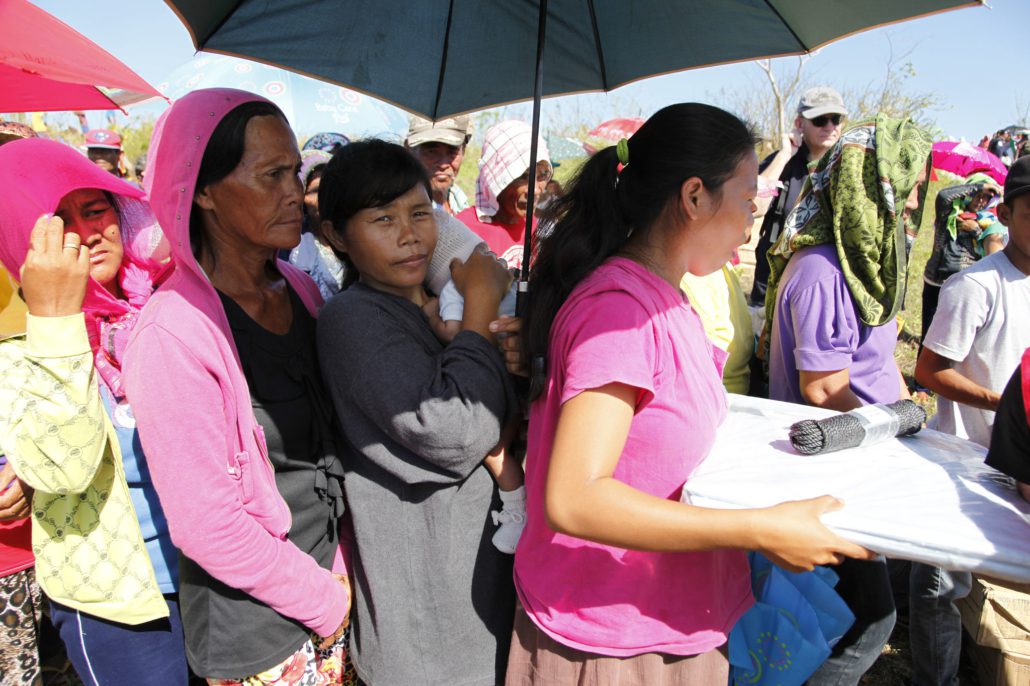
In the 16th century, Ferdinand Magellan claimed the islands of the Philippines as the property of Spain. For hundreds of years, colonizers exploited the people of the Philippines. Though the Philippines became an independent nation in 1946, the effects of long-term colonial rule are still clearly present. Today, many Filipino people, and in particular women, must become overseas domestic workers to provide for their families.
The Philippines in Numbers
The Philippines’ economy is highly dependant on the global market. Over a fifth of the country lives in poverty and one-third of children grew up with stunting from malnutrition. Though the government attempted to expand access to education, children in the Philippines only live to achieve 55 percent of their potential productivity, according to the World Bank’s Human Capital Index. Wealth in the Philippines also does not have equal distribution, and it is nearly impossible for those in lower classes to become financially stable. This leaves them desperate for any opportunity to pull themselves out of poverty.
Because of this bleak economic situation at home, millions of workers in the Philippines seek jobs elsewhere, then send the money they make to their impoverished loved ones at home. While the country celebrates this practice, the government endorses it and it may provide families with some economic security, this system leaves both overseas domestic workers and their families vulnerable to trauma. It also frequently perpetuates cycles of poverty.
The Horrific Treatment of Domestic Workers
In wealthier places like Kuwait, Hong Kong and Italy, domestic labor is in high demand. Millions of Filipino workers – mostly young, able-bodied women – travel thousands of miles from their homes to become maids, nannies or housekeepers for the foreign elite. These women often have a good education but lack the resources necessary to successfully navigate the global marketplace. They frequently find themselves vulnerable to exploitation and abuse at the hands of their privileged and well-connected employers.
A 2011 report from the Philippines’ Committee on Overseas Workers Affairs detailed the horrific treatment of domestic workers from the Philippines in Saudi Arabia. The report noted that physical abuse and rape of overseas workers was rampant in Saudi Arabia. Seventy percent of Filipino women working as domestic helpers in Saudi Arabia endure both physical and psychological violence. Despite this, until very recently, workers from the Philippines continued to enter the country as domestic servants. In January 2019, Saudi authorities executed a Filipino woman for killing her employer after he had allegedly attempted to rape her. After this event, both countries barred Filipino workers from employment in Saudi Arabia.
While the treatment of these women is absolutely deplorable, their families in the Philippines also suffer due to this system of labor. Mothers are often unable to return to their young children for several years. This leaves families with deep scars from which it is wildly difficult to recover. While many initially believed that this may lead to increased gender parity in parenting, with fathers being more involved in their children’s lives, the burden of childcare usually falls on poor female relatives, who must sacrifice their time and education to care for their younger siblings, cousins, nieces or nephews.
What to Do to Protect Workers and Their Families
Countries can enact legislation to ensure that workers have protection from abuse at the hands of their employers. In 2016, Singapore enacted the Employment of Foreign Manpower Act in order to protect the well-being of foreign employees. This law ensures that employers give them a salary, work hours and overtime, rest days, holidays, annual leave and sick leave.
Beyond legislation, non-governmental organizations can do plenty to ameliorate the lives of domestic workers. KAKAMMPI (the Association of Overseas Filipino Workers and Their Families) is one of these organizations. Its mission is to “empower Overseas Filipino Workers and their families through integrated services and programs such as organizing, advocacy, campaign, gender responsiveness and partnership projects.”
The organization provides workers with several different types of support. It provides counseling for those working through the stress from either themselves or their loved ones being overseas. It assists victims of abuse in acquiring legal services and welfare. KAKAMMPI also focuses on capacity building projects throughout the Philippines so that vulnerable people no longer feel that they have to jeopardize themselves to ensure the safety of their loved ones.
Ultimately, people have done little research on how effective overseas domestic workers from the Philippines are at lifting their families out of poverty. However, most accounts indicate that few actually succeed, and most have little money and psychological wounds at the end of it. The best way to prevent the trauma that workers feel after leaving their families for years while facing potentially brutal and abusive employers is to work toward bettering the economic status of the Philippines. Improving educational systems and health care in the nation are other important steps. If there are jobs and opportunities at home, families will not have to make the difficult choice to separate and put their safety at risk.
– Gillian Buckley
Photo: Flickr

How Access to Financial Services Fights Poverty
Types of Services
In the modern-day, digital services are becoming the standard. Digital services are integral to improving the ease of access to financial services on the whole, as it makes those services far more efficient. Such digital services as payments and transfers, insurance, savings, credit and securities are essential to uplifting impoverished people. According to the U.N., digital financial services uplift people in poverty by way of asset accumulation.
Access to devices that can support such services is equally important. Smartphones, for example, have a plethora of finance apps that can be used to level the economic playing field. There are also risks associated with introducing such technology, though it is worth acknowledging that lack of understanding of the technology introduces security risks. To mitigate this, the U.N. recommends not only providing access to these services but also educating the population on how to properly utilize them and manage any necessary risks involved.
Organizations Seeking to Help
A movement organized around how access to financial services fights poverty is no small feat. It takes a significant concerted effort by large groups to make it possible. Thankfully, there are several organizations that are paving paths forward to uplifting impoverished people.
The Bill and Melinda Gates Foundation has a program entitled Financial Services for the Poor (FSP). The FSP program provides funding for partners who are working to establish easily accessible low-cost digital financial services in various at-risk regions. The FSP program prioritizes countries with some of the largest impoverished populations, working in Bangladesh, India, Nigeria, Pakistan, Indonesia and East Africa.
The Grameen Foundation is also working to innovate and improve not only access to financial services to those in poverty but also to the platforms enabling those financial services themselves. The Grameen Foundation works to connect people, especially women (who are disproportionately negatively affected) with necessary technologies such as mobile phones. It also partners itself directly with banks and microfinanciers to provide those services directly to the people who need them. In Kenya, the Grameen Foundation partnered with the 100 percent cashless microfinance institution Musoni to launch a mobile-based agricultural loan known as Kilimo Booster, specifically for small-scale farmers who traditionally lacked access to financial services. Over a three year period ending in 2016, the partnership resulted in more than 6,000 loans and the disbursement of more than $2.2 million.
A Positive Trend for Financial Service Access
Overall, it is important to recognize the ways in which access to financial services fights poverty. Such services are extremely vital in ensuring economic empowerment, and a population of people who can really improve their economic situations. Things are looking up, with a wide array of different organizations all contributing to an improving trend of access to important fiscal services. An estimated 1.2 billion people have gained access to banking since 2011, in part thanks to the efforts of various organizations who are seeking to help. With these collaborations, financial services can be provided and poverty can be downsized significantly as a result.
– Jade Follette
Photo: Flickr
10 Facts About Poverty in Central America
Recent news has increasingly mentioned the Northern Triangle, which includes Honduras, El Salvador and Guatemala, and its migration crisis. Each of these countries have economic systems that have similar financial agreements with outside countries. These 10 facts about poverty in Central America will identify issues, solutions and trends that lead back to Central America’s poverty crisis.
10 Facts About Poverty in Central America
These 10 facts about poverty in Central America emphasize the point that poverty is a broad issue with a number of solutions. While situations in Central America may seem dire, the efforts by nonprofits like Wine to Water and legislation like the Global Fragility Act of 2019 should aid in improving the area’s conditions.
– Kimberly Debnam
Photo: Flickr
Can the African Union Passport Help Reduce Poverty?
Extreme Poverty Crisis
Africa is the world’s second-fastest-growing economic region. Economic growth usually leads to higher employment levels and overall standards of living. Despite recent improvements in Africa’s economy, extreme poverty levels have not decreased as expected. Instead, they have continued to rise. With an average poverty rate of 41 percent, sub-Saharan Africa is the region suffering the most from extreme poverty. The World Bank Group concluded that most of the global poor reside in sub-Saharan Africa. This region is made up of almost all the African countries except Algeria, Egypt, Libya, Morocco and Tunisia.
Despite a growing economy, many obstacles stand in the way of reducing poverty in Africa, including conflict and war and weak institutions.
Restricted Mobility
Another problem plaguing the African continent is a lack of regional mobility. African residents face stricter restrictions to travel across the continent compared to their European counterparts. In fact, the free movement of people, as well as goods, throughout the African continent, has been virtually nonexistent. For instance, a Nigerian businessman reported that he had to apply for 38 separate visas to conduct intra-regional business.
Regional mobility is a factor that generally drives economic development. The free movement of goods can boost a country’s GDP while the free movement of people can fill gaps in the labor market. Intra-regional movement accounts for a significant portion of Europe’s economy. Around 70 percent of all trade in Europe is intra-regional. In Africa, intra-regional accounts for less than 15 percent. As a result, Africa is missing various opportunities to boost its economy and reduce extreme poverty.
The Africa Visa Openness Index
In 2016, the African Development Bank had the vision to build a global market in Africa. The group believed regional mobility and intra-regional trade created more attractive markets. As a result, the African Development Bank began to track each African country’s visa entry requirements. The group also measured how freely African citizens were able to move through the continent. The Africa Visa Openness Index reports the group’s findings.
The Index ranks each of the 55 African countries in terms of visa openness. The following factors were used to determine the rankings: visa required (low openness ranking); visa on arrival (medium openness ranking) and no visa required (high openness ranking).
The Africa Visa Openness Index has influenced several African nations to make improvements to their trade and visa policies. For example, two years after ranking 28th on the Index in 2016, Benin’s President Patrice Talon announced that the country will no longer require visas for other Africans.
The launch of the African Passport will be the final stage in facilitating the free movement of people and goods across Africa. Africa’s entire population, approximately 1.2 billion people, will have an African Union Passport. This passport will serve as the key to freely move between African nations.
The idea for the African Union Passport is not new. The concept was proposed and approved by all 55 African nations decades ago. However, the dream of regional mobility became a reality after Rwandan President Paul Kagame and Chadian President Idriss Deby unveiled the prototype of the passport in 2016.
By 2020, all Africans will have an African Union Passport. The goal of the passport is to discourage regional isolation by increasing accessibility to intra-regional travel, tourism and trade. By working as a unit, Africa has the chance to boost economic development and end extreme poverty.
– Paola Nuñez
Photo: Wikimedia
Exploitation of Filipino Overseas Domestic Workers
In the 16th century, Ferdinand Magellan claimed the islands of the Philippines as the property of Spain. For hundreds of years, colonizers exploited the people of the Philippines. Though the Philippines became an independent nation in 1946, the effects of long-term colonial rule are still clearly present. Today, many Filipino people, and in particular women, must become overseas domestic workers to provide for their families.
The Philippines in Numbers
The Philippines’ economy is highly dependant on the global market. Over a fifth of the country lives in poverty and one-third of children grew up with stunting from malnutrition. Though the government attempted to expand access to education, children in the Philippines only live to achieve 55 percent of their potential productivity, according to the World Bank’s Human Capital Index. Wealth in the Philippines also does not have equal distribution, and it is nearly impossible for those in lower classes to become financially stable. This leaves them desperate for any opportunity to pull themselves out of poverty.
Because of this bleak economic situation at home, millions of workers in the Philippines seek jobs elsewhere, then send the money they make to their impoverished loved ones at home. While the country celebrates this practice, the government endorses it and it may provide families with some economic security, this system leaves both overseas domestic workers and their families vulnerable to trauma. It also frequently perpetuates cycles of poverty.
The Horrific Treatment of Domestic Workers
In wealthier places like Kuwait, Hong Kong and Italy, domestic labor is in high demand. Millions of Filipino workers – mostly young, able-bodied women – travel thousands of miles from their homes to become maids, nannies or housekeepers for the foreign elite. These women often have a good education but lack the resources necessary to successfully navigate the global marketplace. They frequently find themselves vulnerable to exploitation and abuse at the hands of their privileged and well-connected employers.
A 2011 report from the Philippines’ Committee on Overseas Workers Affairs detailed the horrific treatment of domestic workers from the Philippines in Saudi Arabia. The report noted that physical abuse and rape of overseas workers was rampant in Saudi Arabia. Seventy percent of Filipino women working as domestic helpers in Saudi Arabia endure both physical and psychological violence. Despite this, until very recently, workers from the Philippines continued to enter the country as domestic servants. In January 2019, Saudi authorities executed a Filipino woman for killing her employer after he had allegedly attempted to rape her. After this event, both countries barred Filipino workers from employment in Saudi Arabia.
While the treatment of these women is absolutely deplorable, their families in the Philippines also suffer due to this system of labor. Mothers are often unable to return to their young children for several years. This leaves families with deep scars from which it is wildly difficult to recover. While many initially believed that this may lead to increased gender parity in parenting, with fathers being more involved in their children’s lives, the burden of childcare usually falls on poor female relatives, who must sacrifice their time and education to care for their younger siblings, cousins, nieces or nephews.
What to Do to Protect Workers and Their Families
Countries can enact legislation to ensure that workers have protection from abuse at the hands of their employers. In 2016, Singapore enacted the Employment of Foreign Manpower Act in order to protect the well-being of foreign employees. This law ensures that employers give them a salary, work hours and overtime, rest days, holidays, annual leave and sick leave.
Beyond legislation, non-governmental organizations can do plenty to ameliorate the lives of domestic workers. KAKAMMPI (the Association of Overseas Filipino Workers and Their Families) is one of these organizations. Its mission is to “empower Overseas Filipino Workers and their families through integrated services and programs such as organizing, advocacy, campaign, gender responsiveness and partnership projects.”
The organization provides workers with several different types of support. It provides counseling for those working through the stress from either themselves or their loved ones being overseas. It assists victims of abuse in acquiring legal services and welfare. KAKAMMPI also focuses on capacity building projects throughout the Philippines so that vulnerable people no longer feel that they have to jeopardize themselves to ensure the safety of their loved ones.
Ultimately, people have done little research on how effective overseas domestic workers from the Philippines are at lifting their families out of poverty. However, most accounts indicate that few actually succeed, and most have little money and psychological wounds at the end of it. The best way to prevent the trauma that workers feel after leaving their families for years while facing potentially brutal and abusive employers is to work toward bettering the economic status of the Philippines. Improving educational systems and health care in the nation are other important steps. If there are jobs and opportunities at home, families will not have to make the difficult choice to separate and put their safety at risk.
– Gillian Buckley
Photo: Flickr
Building Schools Using Recycled Plastics
Education in Cote d’Ivoire continues to be a major challenge in the country which has had a literacy rate of 53.02 percent among 15 to 24-year-olds as of 2014. In fact, more than 2 million children are out of school due to a lack of infrastructure. Classrooms are often full beyond capacity with more than 100 students. Fortunately, West Africa is building schools using recycled plastics as a ground-breaking initiative to change the status quo.
The Fighting Women
Abidjan, a city in Cote d’Ivoire, produces about 288 tons of plastic waste every day. The country recycles only 5 percent of the waste, and when it is, it is usually women that do so informally. These women recover the waste and use it to make money.
A women’s group called The Fighting Women makes a living from collecting plastic and selling it for recycling. However, The Fighting Women is now a part of a project that will not only clean up the environment but will also help improve education. The Fighting Women is an organization of 200 women that collect plastic. A woman named Mariam Coulibaly runs the organization and she has been collecting trash for 20 years. Coulibaly’s organizational skills are what made the project possible. The plastic that these women collect go into bricks in order to build schools.
Conceptos Plasticos
UNICEF in Cote d’Ivoire has partnered with Conceptos Plasticos, a for-profit plastic recycling Colombian company that will turn plastic to bricks and build schools for children. This project will help reduce the issue of overcrowded classrooms and give children the opportunity to attend school.
In 2018, the first African recycled plastic classroom emerged in Gonzagueville. It only took five days to build this classroom as opposed to the nine months it would take to build traditional classrooms. In addition, within the first year, two small farming villages, Sakassou and Divo, constructed nine demonstration classrooms. These new classrooms included bricks that are cheaper and lighter than traditional ones, and also last longer.
Before the new plastic classrooms, children would go to school in traditional mud-brick and wood buildings. The mud-brick would erode from the sun and rain, and require repairs constantly. However, the newly built plastic classrooms are way better and longer-lasting. The classrooms are fire retardant and stay cool in warm weather. In addition, the classrooms are waterproof, have excellent insulation and can fight off the heavy wind. UNICEF and Conceptos Plasticos are planning to build 500 classrooms for more than 25,000 children with the most urgent need in the next two years.
Further Success of the Project
On July 29, 2019, a plastic converting factory opened in Cote d’Ivoire, which is also the first of its kind. This factory produces easy to assemble, durable and low-cost bricks others can use to build classrooms. The factory will solve a lot of major education challenges that children in West Africa face. According to UNICEF, kindergarteners from poor areas will be able to join classrooms with less than 100 students for the first time. Once the factory is fully functioning, it will recycle 9,600 tons of plastic waste a year and provide a source of income for women that collect trash. Moreover, there are plans to expand this project to other countries where there is a high percentage of children that are out of school.
Now, children are able to sit comfortably in classes that were once too overcrowded. This project of building schools using recycled plastics has not only constructed classrooms, but it has also reduced plastic waste in the environment. Although there is still a large number of children out of schools, this innovative project to help build schools in West Africa has been tremendously successful and has impacted the lives of many women and children.
– Merna Ibrahim
Photo: Flickr
The Process of Fixing China’s Regional Inequality
China’s regional inequality has historically been an issue. It is common for developed countries to have regional wealth and income disparity between rural and urban areas. Enormous wealth inequality exists between rural and urban regions of China with 90 percent of all poverty being rural poverty.
The Current State of Regional Inequality in China
Along with China’s regional poverty, an educational disparity has widened within China. The government has supported and subsidized education in urban centers but neglected to invest in opportunities for rural education. Since the 1950s, rural attendance at the Universities of Tsinghua and Peking has declined from over 50 percent to less than 20 percent in 2005 despite the rural population making up the majority of China’s population at that time. The lack of educational opportunities in rural communities in China has fed into the downward spiral of stagnation for such regions, as an educated populace is a crucial asset for creating economic growth.
Previous Efforts to Combat Regional Inequality in China
Recently, the Chinese government has recognized the need to address the growing problem of China’s regional inequality and has enacted a series of relatively new but ambitious policies to tackle the crisis.
China proposed the first of these in 1999. The Great Western Development Strategy is a $1 trillion (Chinese Yuan) development plan that aims at investing in development and growth in the inland Western Regions of the country. The plan slowly began in the early 2000s with spending on infrastructure projects in the west.
One of the most major projects was the construction of the West-East gas pipeline which began in 2002 and ended in 2005. This was a very ambitious project that created numerous jobs and revenue for the west while also benefitting the east coast. Other energy initiatives focused largely on the creation of hydropower plants throughout the region. Other infrastructure projects have focused on transportation. The Qinghai-Tibet Railway and the Southern Xinjiang Railway finished in the mid-2000s as a part of the strategy. These new railways employed many people and improved transportation substantially in their respective regions.
The Great Western Development Strategy also hopes to entice foreign investments in the region. The primary strategies for this objective are environmental conservation and improvement in educational opportunities. The plan has waived tuition fees for compulsory education in west China in hopes of improving the overall education of its citizens. Huge ecological conservation policies, such as Returning Grazing Land to Grassland seek to convert vast swaths of farmland into natural grasslands, as well as protect and expand forestry.
Recent Efforts to Combat Regional Inequality in China
The Northeast Revitalization Plan aims to rebuild traditional industries in the northeast, but with added economic and environmental regulations. The plan has also abolished taxes on agricultural workers and farmers, hoping this policy will be favorable towards the regions declining agricultural industry.
The new proposal, the Rise of Central China Plan, focusses on improving China’s agricultural heartland. Many often refer to Central China as “China’s Breadbasket.” The region has experienced only a fraction of the growth that coastal regions have undergone. As of 2002, the region’s real Gross Domestic Product (GDP) was only 75 percent the national average. The Rise of Central China Plan will promote investment in advancements in agricultural techniques and technology with the hopes of increasing farming efficiency and creating larger yields in the region.
This is especially important for China as the issue of food security has risen for the highly populated nation. The Rise of Central China Plan also focuses on the development of transportation infrastructure in central China. A huge reason for central China’s economic stagnation has been lack of sufficient transportation, which has stifled its growth despite the region’s abundance of natural resources such as coal and its massive population.
Regional inequality in China has deep roots in past policies. The rural-urban divide has prompted a wave of bold new reforms aimed at combatting rural poverty and though the effort has just begun, these programs are showing promising results.
– Karl Haider
Photo: Flickr
The Importance of Secondary Education
Secondary education is an important segment in every person’s life. It also serves as a means to potentially empower girls, raise a person’s economic status and reduce infant mortality rates as these listed facts will show. Here are the 10 facts about the importance of secondary education.
10 Facts About the Importance of Secondary Education
There are many issues regarding education and while there are many projects working to decrease these issues, the issue is still at large. There is a need for an international presence regarding the importance of secondary education, and education itself.
– Alex Cahill
Photo: Flickr
Improving Menstrual Hygiene for Refugees
While refugee camps make sure to provide food, shelter and clean water, many personal items are not provided. Too often, menstrual hygiene for refugees such as disposable products and private facilities not given adequate attention. In turn, many women and girls often have to rely on reusing rags or garbage, which can lead to infections. However, there are organizations working to improve access to menstrual hygiene for refugees.
Rwanda
In refugee settlements in Rwanda, more than 10,000 women and girls from Burundi struggle with maintaining menstrual hygiene. Plan International Rwanda is working to improve access to menstrual hygiene for refugees by providing 3,668 women and girls with underwear and sanitary pads. By providing them access to sanitary products, Plan International Rwanda allows girls to go to school, play with other children and feel more confident.
Uganda
The nation of Uganda has been attacking the problem of menstrual hygiene for refugees from multiple angles. The Danish Refugee Council (DRC), for example, has been distributing menstrual hygiene supplies such as reusable pads, buckets, soap, towels and undergarments. In addition, they are building latrines and carrying out community sensitization activities to destigmatize menstruation.
Reusable menstrual hygiene products have proven to be an important option for refugees. Just four reusable pads provided by the DRC can last a refugee a year. Another reusable option that has grown in popularity thanks to the NGO WoMena is the use of menstrual cups. These medical-grade silicone cups can be worn up to 12 hours at a time and are less likely to leak. One cup can also be reused for up to a decade. The organization provides training to teach refugees how to use them. This aids in destigmatizing misconceptions around its use and losing one’s virginity. Of those who decided to try these reusable cups, 81 percent reported satisfaction with the product.
Jordan
In Jordan’s Zaatari Refugee Camp, the U.K.-based non-profit, Loving Humanity has been working to not only provide sanitary products but also job opportunities. Jobs are being created by implementing 12 machines that assemble low-cost sanitary products in 2016. These machines were pioneered in India by Arunachalam Muruganantham after seeing his wife hoarding rags because she could not afford menstrual hygiene supplies. His design creates inexpensive pads by breaking down tree bark cellulose. It is very popular among rural women in India because it costs approximately 30 cents for a 10-pack of pads.
The cost of one machine is $2,000 and a month’s worth of materials is $360. This will produce 30,000 pads. In Zaatari, these machines aim to employ women in the community. This gives them a sense of empowerment and control over their bodies as well as a paycheck.
When it comes to disaster management, it is vital to include menstrual hygiene for refugees. While these methods have helped improve access to menstrual hygiene products, many refugees still have to choose between food and hygiene. Access to these supplies, though, opens a world of opportunities for girls. They can play with other kids and pursue their educations without the anxiety of stigmatization.
– Katharine Hanifen
Photo: Flickr
Womankind Worldwide Promotes Local Gender Equality Programs
To achieve its aims, Womankind Worldwide teams up with local organizations to create action plans that will help meet the local needs as well as follow cultural traditions. By partnering with local organizations and movements, it can quickly identify the needs of the community and strategies on how best to interact with the social and political climate.
Womankind Worldwide
Womankind Worldwide has finely tuned its approach over the past three decades based on what is most effective and what will create sustainable change. It currently works in Africa, Latin America and Asia, tailoring its plan of action to each country with the aim of meeting three universal goals.
The organization has found that the goals are best achieved through three approaches. First, in collaboration with local partners, it creates a variety of projects and services to support and uplift women. Not only does the organization create shelters for women in need but it also develops workshops to help women uncover new career paths.
Second, it believes supporting and strengthening existing local women’s rights movements is critical to creating sustainable change. It works to support the growth of local organizations through technical support, communications, shared learning, advocacy and funding opportunities. Lastly, Womankind Worldwide works on an international level to create change. As a leading authority on global women’s rights, it uses its influence and expertise to ensure women’s development is at the heart of international advancement work.
Challenging Initiatives
Part of its commitment to creating change on international levels is challenging initiatives that may be approaching the problem incorrectly. Womenkind Worldwide has continually argued that the Women Entrepreneurs Finance Initiative, launched in 2017 and managed by the World Bank, ultimately undercuts economic growth for women.
Through the initiative, the World Banks targets so-called “high-growth women,” which Womankind Worldwide argues will most likely not reach the poorest women. It also argues that it undermines women’s access to “decent work” and fails to address the structural issues causing the disparity. It continues to emphasize the importance of expanding the program and digging deeper into the roots of the problem.
Connecting Women
Womenkind Worldwide is currently focusing on strengthening Women’s rights movements across Africa by connecting them. It has partnered up with the African Women’s Development and Communication Network (FEMNET), the National Association for Women’s Action in Development (NAWAD) and local legal organizations to develop legislation promoting equality and access.
In 2017-18, Womankind Worldwide directly benefited 103, 705 women and indirectly supported more than 12.7 million women. It currently focuses on Ethiopia, Kenya, Uganda and Zimbabwe with smaller programs also in Tanzania Zambia, Ghana, Liberia and Sierra Leone. In Ethiopia, Womankind Worldwide has given more than 2,000 women business training, provided more than 3,500 women with legal aid and supported the education of 4,000 girls.
Womankind Worldwide believes that long-term collaboration is the most effective way to create lasting change, but small steps can make significant changes for individuals. For many women, the spaces created by Womankind Worldwide and their partners are the first time women are brought together and asked what difference they want to see. As many organizations look to implement short term solutions or projects for women, Womankind Worldwide is looking to change the way they interact with their world.
– Carly Campbell
Photo: Flickr
The Impact of Feed the Future in Kenya
As of 2018, the Republic of Kenya had a total population of around 51 million people with a growth rate of 2.6 percent. About 25 percent of the nation’s population lives in urban areas and major cities while the majority of Kenyans live in rural and sub-urban areas. Because of this, one would assume agriculture would provide a steady income for most families, but the agricultural sector in Kenya hosts a variety of challenges.
Kenya’s Employment Challenges
While agriculture does contribute one-third of the nation’s GDP, many issues prevent farmers from turning a decent profit. Aside from the fact that only 9.5 percent of Kenya’s total land area is arable, many Kenyans simply lack the monetary resources to expand their businesses. In fact, Oxford University’s poverty index finds that around 50 percent of Kenyans live below the poverty line.
Rural Kenyans, like citizens of many other African countries, rely on subsistence farming—meaning they farm just to feed themselves and their families. In times of crop failure, even simply feeding one’s household can be a challenge, much less producing viable crops to sell. In spite of this, Kenya’s entrepreneurial middle-class keeps growing, and many nonprofits and aid assistance programs are jumping at the chance to see that that growth continues.
Feed the Future in Kenya
One such organization is USAID’s Feed the Future program; the Feed the Future initiative, as described on their website, “brings together partners from across various sectors and the U.S. Government to use each of our unique skills and insights in a targeted, coordinated way to help countries that are ripe for transformation change the way in the way their food systems work.”
Nkamathi Farm Products
An example of how Feed the Future in Kenya has positively impacted the nation’s population can be found in the success of Nkamanthi Farm Products. The founder of the company, Lydia Kanyika, saw how poverty and low education limited opportunities for young people in her community to find meaningful work. Hoping to create positive change in her world, she applied to and won a Feed the Future business development grant. The grant is awarded to select businesses based on four key elements: their marketing plans, ability to create markets, ability to generate employment opportunities and their ability to increase productivity along the livestock value chain in Northern Kenya.
Kanyika used her grant to expand her small business by upgrading her wooden chicken house to a modernized coop. This simple change has not only allowed her to increase the number of chickens she kept from 300 to 2,500 but also grow her farm’s production by 243 percent. Perhaps most amazing of all is how contagious her success was on her community.
The Ripple Effects
Through the expansion of her company, Kanyika has mentored more than 50 young Kenyans and provided them with employment opportunities that help them support their families. One of her employees, Martin Mwenda, gladly shared his business success with representatives from Feed the Future in Kenya. When he first began earning income from distributing eggs from Kanyika’s chickens, he told the project that he only sold five cartons of eggs each day. As Nkamanthi Farm Products grew, so did his clientele; he now sells 25 cartons daily, which provides him with a steady and consistent revenue.
“I want to expand the egg business,” he told Feed the Future. “I will then use the business to create employment opportunities for fellow youth, especially those who have migrated from rural areas to Isiolo town to make ends meet, like I did.”
The Future of Agriculture
While Kenya’s middle class continues to struggle for more open markets and trade, investment and financial freedoms, aid programs like Feed the Future are slowly but surely helping Kenyans expand their personal businesses, which in turn spreads more employment opportunities across the country.
– Haley Hiday
Photo: Flickr