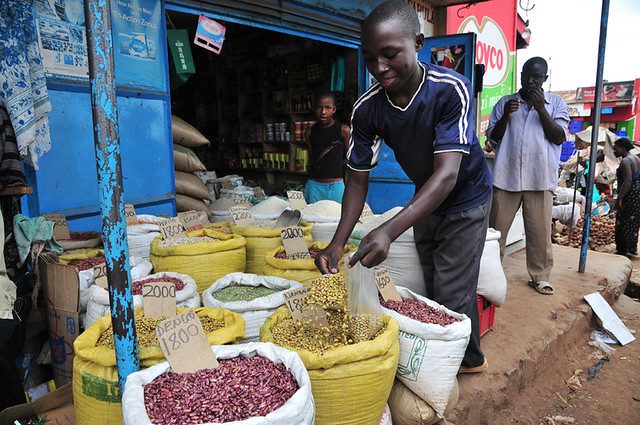
 Malnutrition, the state of nutrient over-consumption or under-consumption, plagues every nation in the world. Every day, one out of every nine individuals around the world goes hungry, while one out of every three is overweight. What causes this problem? The growth of the international food trade has stoked the flames of a malnutrition crisis that already disproportionately impacts impoverished countries. Nevertheless, governments and major firms in the international food trade can take simple steps to transform markets and reduce malnutrition all over the globe. Here are three ways that rethinking the international food trade can help impoverished regions deal with malnutrition.
Rethink Pricing Policies
It’s simple economics that when products drop in price, they become more widely purchased and distributed throughout the world. Unfortunately, many of the foods priced lowest in the international food trade fall into the category of “ultra-processed.” Consumption of these nutrient-poor foods is increasing due to their low price. In October 2019, sugar was priced at around $0.13 per pound, and its consumption was set to increase by 1.4%. Comparatively, meat saw a 1% decrease in production from 2018 to 2019 when its prices increased moderately.
With reduced national wealth, impoverished countries must often resort to purchasing these cheaper, unhealthy commodities. Driven by lower sugar prices, the consumption of sugar is expected to grow in Africa, the Middle East, Latin America and the Caribbean. Less wealthy countries will therefore continue to purchase “ultra-processed” foods linked to heart disease and diabetes. In doing so, they will provide their citizens with potentially harmful food that will only worsen the malnutrition crisis.
Rethinking trade policies can solve this issue of imbalanced prices. Many processed foods made with sugars or fatty oils have low international safety standards, which allows them to be sold within markets for low prices, whereas healthier fruits and vegetables have high international safety standards, which causes their prices to rise. This makes healthier foods less affordable for impoverished regions.
By applying high safety standards to sugar- and oil-based foods, the international food trade could equalize prices of healthy and unhealthy products. Healthy foods would then be more accessible to malnourished communities and help to reduce the impacts of malnutrition. Additionally, individual countries can redesign national trade policies to subsidize the production of healthier foods like fruits and vegetables so as to make them more affordable for impoverished countries.
Rethink Market Orientations
By 2022, the global fast food market is expected to grow by $188.4 billion. From 2018 to 2019, the international trade of oil crops reached an all-time high, and experts also expect the international market of sugar products to expand through 2020. Comparatively, the international market for healthier products like coarse grains may soon undergo a “sharp anticipated drop” in consumption and production.
The international food trade is therefore oriented toward distributing foods around the globe that contribute to the growth of obesity-related diseases and malnutrition. Given that the international food trade continues to prioritize markets for “ultra-processed foods,” it becomes even more likely that poor individuals will have to purchase and consume these foods. In turn, this will lead to poor regions eating increased amounts of refined foods linked to chronic diseases while consuming fewer natural foods that contain essential nutrients.
Such a market orientation stands to further deprive already starving individuals of the few nutrients remaining in their diet, thus worsening the global malnutrition crisis. In this case, governments and major food producers can help reduce malnutrition in impoverished countries by reorienting international food markets toward the production and consumption of healthier commodities like fruits, grains, vegetables and meats. These food groups currently make up only 11% of global food production.
By overhauling what gets sold within the international food trade and by emphasizing the commercialization of healthier foods, governments can work together to provide nutritious food to every country. These foods would help eliminate, not contribute to, cases of debilitating malnutrition.
Rethink Food System Investment
According to the WHO, 42 million children worldwide under the age of five are overweight or obese, while 50 million children are too thin for their height. Both of these conditions are associated with massive health risks as well as massive risks to the health of global economies. By 2030, the economic cost of diabetes, a disease linked to obesity and highly processed foods, could increase to $2.5 billion a year.
Through micro-financing and “multisectorial investments in nutrition,” governments and international food trade firms can grant increased buying power to communities with particularly high malnutrition levels. This type of investment could provide impoverished communities with food or direct cash grants that could help them reduce malnutrition and stimulate economic growth. Domestic financing has the potential to kickstart the economies of impoverished regions, which gives them the opportunity to purchase healthful foods crucial to reducing malnutrition rates.
Many current food systems lack any outside investment. For this reason, countries around the world would need $9 billion per year over the next five years to meet nutritional goals. By rethinking investment into international food markets and systems, the global community can come together to stimulate the economies of impoverished countries. This would give them a dignified way to access markets, purchase healthy foods and reduce malnutrition in the communities most in need.
Overall, although the current mechanisms of the international food trade foster malnutrition, countries can easily redesign them in ways that will actively help to reduce malnutrition worldwide. By rethinking trade policies, market orientations and community investments, governments and major firms in the international food trade can begin to address malnutrition and help provide impoverished individuals with the wholesome food crucial to lifelong health and happiness.
– Nolan McMahon
Photo: Flickr

The 5 Refugee Crises of our Time
Syria
Syria has 5.6 million refugees and is among the largest and most well-known refugee crises today. When the government cracked down on peaceful student protests, the Syrian Civil War started March 15, 2011 and has now killed 500,000 people. Bombing infrastructure destroys living conditions resulting in 6 million people being displaced. With 70% of Syrians living in extreme poverty, nearly 11 million Syrians need humanitarian aid. Due to conflict, aid groups are struggling to access the areas that need assistance.
One-fourth of the world’s refugees are from Syria. Turkey and Germany host many Syrian refugees. The neighboring country of Turkey hosts the most refugees in the world, totaling 3.6 million Syrian refugees. To handle the large influx of refugees in its country Turkey is working to improve refugee conditions. Germany hosts 1.1 million Syrian refugees. Germany recently obtained the EU presidency and plans on reforming the asylum rules so there will be a more equal number of refugees among EU states. The Syrian refugee crisis has lasted a decade and affects over 17 million people globally. If Turkey and Germany continue to work to adjust laws regarding asylum, more Syrian refugees will be able to find a safe haven in those countries.
Venezuela
Venezuelan refugees number 3.7 million. In 2014, oil prices fell and created an economic collapse. The current inflation rate of 15,000% has pushed 14 million Venezuelans to live in extreme poverty on less than $1.90 a day. Shortages of food, water, and medicine constantly threaten the health of Venezuelans. Hyperinflation and lack of resources drive refugees from this crisis into bordering countries such as Columbia.
Columbia hosts the second most refugees in the world with 1.8 million Venezuelan refugees. The Columbian government is working to include Venezuelan refugees economically by providing Special Stay Permits that allow more than 100,000 refugees to earn a living working in the country.
Afghanistan
Forty years of conflict following the Soviet invasion in 1979 created 2.7 million refugees from Afghanistan. Political uncertainty and conflict have led to 2 million people being displaced in Afghanistan. Natural disasters and attacks on aid workers prevent those displaced from receiving much-needed support. Pakistan and Iran host most of these refugees.
With one out of every ten refugees being from Afghanistan, this crisis needs immediate attention. Pakistan hosts 1.4 million Afghan refugees and is working with the UN to provide more schooling opportunities. However, if conditions improve in Afghanistan, it is possible that 60,000 refugees could return to Afghanistan.
South Sudan
Around 2.2 million refugees are from South Sudan. South Sudan is the youngest nation in the world after becoming independent from Sudan in 2011. In 2013, a civil war broke out causing 383,000 deaths due to violence and hunger. Meanwhile, 4 million people became displaced from their homes. Food insecurity caused by famines and war has left 5.5 million people hungry. Malnourishment greatly affects the development of children, who make up 63% of this refugee population. This is the largest refugee crisis in Africa, with most refugees fleeing to Ethiopia and Uganda.
Uganda hosts 1.7 million refugees and works to integrate them into society by providing them with land.
Currently, there is a mental health crisis among refugees. Suicides are on the rise, and COVID-19 puts an even bigger strain on the health of South Sudanese refugees. If Uganda gains more funding, it can improve the mental health of refugees by providing more support. Uganda’s progressive approach to refugees can help South Sudanese refugees start a new life.
Myanmar
The Rohingya Crisis has created 1.1 million refugees from Myanmar. Myanmar is a Buddhist country, but the Rohingya Muslims are a minority group. The Myanmar government refuses to recognize the Rohingya people as citizens, therefore they are a stateless people. In 2017 the Myanmar army burned up to 288 Rohingya villages and carried out mass killings. To escape persecution, over 700,000 people have fled to Bangladesh and now stay in the largest refugee camp in the world: Cox’s Bazar. In 2020 the United Nations International Court of Justice has called for an end to the violence against the Rohingya and for the government to recognize the Rohingya as citizens.
Future of Refugees
Conflict and poverty are creating refugees in 2020. Most refugees originate from Syria, but Venezuela’s numbers are beginning to rise to the same level. Host countries need to continue to reform government laws to include refugees in their communities. Millions of people, both refugees and host countries, are globally affected by the current refugee crises.
— Hannah Nelson
Photo: Flickr
House Resolution 654 – Supporting the United Nations Sustainable Development Goals
House Resolution 654 promotes governmental responsibility in addressing the U.N. Sustainable Development Goals, the program’s history of success and its strategies to fight global poverty. It also calls attention to other factors that inhibit a safe and sustainable way of life for poverty-stricken individuals and families.
House Resolution 654
House Resolution 654 expresses reasoning for the U.S. government’s support of the Sustainable Development Goals outlined in the U.N. 2030 Agenda. The resolution speaks to ideals of eradicating poverty, creating gender equality, providing accessible public health, improving the peace and prosperity of all people and protecting the planet.
The 17 Sustainable Development Goals are in line with many of the same ideals that U.S. citizens believe in promoting and that the U.S. government has proven to prioritize through its bipartisan support in past legislation under various presidential administrations. The U.S. provides strong leadership in the global community. The U.S. government choosing to uphold the goals posed by the U.N. Sustainable Development Goals is key in influencing other nations to reach the goals of the 2030 Agenda.
The Sustainable Development Goals pick up where the Millenium Development Goals left off. According to a 2015 report on the success of the Millenium Development Goals, the program proved to be the “most successful anti-poverty movement in history” due to its worldwide support. The world saw a 56% decline in extreme poverty in the years between 1990 and 2015, most of that improvement happening after the Millenium Development Goals were enforced in 2000. This resolution asks that Congress support the U.N. Sustainable Development Goals so that poverty eradication, food security, accessible education, environmental sustainability, gender equality and many other factors that hinder development can see further advancement and be implemented before 2030.
Sustainable Development Goals
At the 2015 United Nations General Assembly, 193 nations agreed to adopt the Sustainable Development Goals outlined in the 2030 Agenda for Sustainable Development. On January 1, 2016, those goals were officially enforced.
The 2030 Agenda for Sustainable Development calls upon the governments of these 193 nations to adopt a universal plan of action to improve global poverty. It also asks the nations to enact strategies that promote key human rights which affect extreme poverty levels. The U.N. Agenda recognizes that fostering sustainable development across the globe requires a multifaceted approach which each country can uniquely apply to the economic, environmental, and social situation of its respective nation.
The U.N. 2030 Agenda poses 17 Sustainable Development Goals along with 169 targets for nations to strive to meet by the year 2030. Listed are summaries of some of the 17 Goals:
These Goals, along with the other 12, build on the foundation provided by the previous Millenium Development Goals. The Sustainable Development Goals are set to achieve the goals that lacked completion by the Millenium Development Goals.
It is no coincidence that ending poverty is listed first in the Sustainable Development Goals. Global poverty eradication is crucial to achieving the other goals promoted by the 2030 Agenda. Today, the Coronavirus disproportionately affects those living in poverty and those vulnerable to falling below the poverty line. Now more than ever countries must collaborate in this global program which promotes accountable governments and economic strategies to fight global poverty.
Status Of the Resolution
House Resolution 654 was introduced in the House by Rep. Barbara Lee (D-CA) on October 24, 2019, and it has the support of 37 cosponsors. That same day, it was referred to the House Committee on Foreign Affairs. Currently, the resolution is still sitting in committee. About 25 percent of bills make it out of committee so there is hope for cosponsors and supporters of the U.N. Sustainable Development Goals that the resolution will receive congressional support.
The U.N. Sustainable Development Goals is an important and influential program in and of itself. It is equally important for legislation such as H.Res. 654 to continue to be proposed in Congress so that the U.S. government is kept aware of and responsible for supporting strategies that improve global poverty.
– Hanna Rowell
Photo: Flickr
7 Factors Affecting Poverty in Lesotho
Lesotho is a small, landlocked country surrounded by South Africa. Since gaining independence from the United Kingdom (U.K.) in 1966, political instability and slow economic development have plagued the country. A high HIV prevalence further complicates poverty reduction efforts in Lesotho. Here are seven factors affecting poverty in Lesotho:
Examining the causes of poverty in a country is essential in deciding how best to address the issue. Poverty in Lesotho will continue to be an issue for many years. However, the country is on the right track and will improve as education and economic opportunities increase.
– Jack McMahon
Photo: Wikimedia Commons
Updated: June 29, 2024
The Education Crisis in Syria
The Syrian Civil War began almost a decade ago and has effectively destroyed many aspects of governance and civilization throughout the historic Levant nation—including education. 5.8 million children from preschool to secondary school age were in need of education assistance in 2018, and about 3 million Syrian children—both in Syria and in surrounding countries as refugees—lack access to education altogether. Direct attacks on schools have been common since the conflict began, resulting in the damage or destruction of one-third of Syrian schools and the unemployment of almost 200,000 education workers. This situation has persisted for years, threatening an entire generation of Syrian children with a dire education crisis in Syria.
Dwindling Education Access within Syria
The general lack of access to education means that Syrians will have an increased difficulty enrolling in schools in later years. This domino effect will inhibit development and economic opportunities for millions of Syrians. A lack of development will perpetuate the country’s track record of conflict and humanitarian need. Poverty in Syria is a direct result of violent conflict. Poverty will only worsen as an increased number of uneducated Syrians enter the workforce. Although education is a fundamental right, it is becoming a rarity in Syria. Even those with access to schooling experience crowded classrooms, psychological trauma, curricula and language issues, poor teaching quality and lack of learning materials. These struggles associated with the education crisis in Syria have led nearly one-third of students to drop out before finishing primary school.
Over 6 million Syrians are internally displaced persons (IDPs), with about 50% of those IDPs being children. Fortunately, government bodies including the government of Syria, the opposition Syrian Interim Government and smaller local government bodies provide a semblance of education to IDPs. Non-Syrian government organizations are also involved, including Islamist groups, the U.N. and the Turkish government. There is very little coordination between these groups, though, endangering Syrian IDPs’ abilities to access reliable, standardized education.
Government structures and the Syrian economy incurred severe damage over the past decade. Many Syrian families deem it impractical to invest in education for their children, especially when that investment requires sacrificing food or shelter. Although this education crisis in Syria is certainly multifaceted, a lack of cohesion in the sector will worsen conditions. Families will increasingly turn to child labor and early marriage for financial stability.
Struggles for Syrian Refugees
The situation is just as dire for Syrian refugees in surrounding countries. About 1.5 million school-aged Syrians live in Turkey, Jordan and Lebanon, yet half do not have access to formal education. In these countries, the threat of child labor and language barriers are nearly insurmountable. However, the governments of those countries have made considerable efforts to provide education to Syrian refugees within their borders.
In spite of these government initiatives, Syrian refugees still face obstacles in obtaining a quality education. Only 25% of secondary school-aged children in Jordan are enrolled in school. Reasons for low enrollment are similar to those in Syria: poverty, lack of safe and affordable transportation and poor quality of education. For Jordanians, there is also little practical value in continuing education without reliable professional opportunities. Various administrative barriers exist to enrolling and there is a lack of accommodations for students with special needs.
The Jordanian government, with funds from foreign donors and NGOs, has a fairly successful primary education program, but international support has prioritized this program at the expense of valuable secondary school experience. As a result, this critical age group is neglected and left vulnerable to the implications of dropping out. Failing to enroll in secondary school undermines efforts to provide primary education, as students drop out after those first years.
Taking Action
Despite stark barriers for Syrian refugees throughout the region, international efforts provide some hope. UNICEF leads the response with a systematic approach, improving the capacity of the Syrian education system. They train teachers, rehabilitate schools, provide accelerated and self-learning programs and supply schools with essential learning resources.
On an international scale, UNICEF also works with Save the Children to target Syrian children in Syria, Turkey, Lebanon, Jordan, Iraq and Egypt by providing overall technical support. The NGO World Refugees School (WRS), backed by the internationally recognized City & Guilds, provides formal education to refugee and displaced children throughout the world. WRS has helped 6,000 students in northern Syria graduate in six pilot schools as of late 2019. It is also working toward its goal of expanding to 40 schools nationwide. WRS uses technology to compensate for poor access to materials. It focuses on the use of digitized textbooks, e-learning platforms and mobile classrooms to alleviate pressure on students and teachers.
The education crisis in Syria is severe and has gone unaddressed for years. The Syrian civil war has stolen an entire generation’s right to education. Even the multitude of government bodies and NGOs have struggled to form a cohesive system for Syrian children. However, the international community and humanitarian organizations provide hope for saving this generation from an endemic lack of formal education.
– Connor Bradbury
Photo: Wikimedia Commons
Jacinda Ardern: Childhood Poverty in New Zealand
Jacinda Ardern was born on July 26, 1980, in Hamilton, New Zealand, an island country in the South Pacific Ocean with a population of more than 4 million people. In 2017, at the age of 37, she became the third female leader of New Zealand. She is the youngest Prime Minister of the country in 150 years and the second world leader to have a baby while in office. She is a global icon in many regards but lacks publicity for her work in fighting childhood poverty in New Zealand. This article will explore her success in passing and implementing recent poverty-reduction policies, including those during COVID-19.
Families Package
According to Prime Minister Jacinda Ardern herself, one of her proudest achievements as Prime Minister is implementing the Families Package on July 1, 2018. The goal of this package is to provide families with more money to support their children. It aims to reduce childhood poverty in New Zealand while redirecting $2 billion to health, education and housing.
As of 2019, one year after the Families Package came into effect, it has helped 1 million New Zealanders. The package increases maternity leave from 18 to 22 weeks to 26 weeks. Additionally, it has provided $67NZ to over 36,000 families with newborns for the first three years of the child’s life. Additionally, the Families Package has increased financial aid to more than 13,500 families who care for orphans and foster children as well as enabled more than 1 million elderly to heat their homes during the winter with the Winter Energy Payment.
Well-Being Budget
New Zealand’s Well-Being Budget emerged in 2019 to reduce homelessness and childhood poverty in New Zealand, expand mental health services, combat family violence and protect and advance the rights of indigenous populations.
It added an additional $40 million to suicide prevention assistance and $455 million to mental health services. Expectations determine that this will help 324,000 New Zealanders by 2023 and 2024. This package will also benefit 2,700 homeless people by creating 1,044 shelters. It will also increase funding for education and hospital research. It prioritizes the preservation of Māori and Pacific languages and the fight against illnesses such as rheumatic fever as well.
The United Nations Sustainable Development Solutions Network tested the success of the Well-Being Budget. Citizens rated their happiness on a scale of one to 10, with one being the least happy and 10 the happiest. This scale found that New Zealand had the eighth happiest population in the world whereas the U.S. ranked 19. This speaks to the positive impact of New Zealand’s Well-Being Budget on the quality of life within the country.
Stimulus Package
In light of COVID-19, New Zealand’s government launched a stimulus package similar to many other countries. The difference is that New Zealand’s stimulus package is greater than Great Britain, Australia, Singapore, Ireland and several other countries as it represents 4% of the country’s total GDP. This stimulus package covers incomes for people who cannot work from home. It allows them to take care of a sick relative or self-isolate after contact with someone with COVID-19. It also helps businesses in terms of taxes and provides more social welfare and income to low-income families. The package also includes funding for the healthcare industry to ensure a timely and appropriate response to the virus. Not only does this stimulus package indirectly help children, but it is undoubtedly a contributing factor to why New Zealand was able to eradicate the virus completely from its country.
These initiatives demonstrate the progress under Prime Minister Jacinda Ardern in the fight against childhood poverty. Though the reality of COVID-19 hinders this, many agree that others can learn from Jacinda Ardern and her administrative action.
– Rida Memon
Photo: Flickr
How Ice Stupas Prevent Water Shortages in Ladakh
Melting Glaciers Causing Spring Water Shortages
Water shortages in Ladakh are worst in the springtime, when farmers, who make up roughly 80% of the Ladakhi population, need to sow their fields. During the spring, glacial streams have not begun to flow yet since most glaciers are located higher in the mountains where temperatures are lower. As glaciers continue to recede, streams start flowing later and the water shortages of spring become longer and more damaging. The later farmers have to wait to start sowing their fields, the lower their yields and profits become.
Ladakhis have highly organized water management systems that have been developed over thousands of years. They primarily rely on mud canals and dams to distribute and store water as well as strict water usage rules to ensure water is used efficiently. These systems have been successful in Ladakh for generations but have proven to be insufficient in handling the changing climate.
Storing Winter Water in Ice Reservoirs
Observing the intensifying water shortages in Ladakh, Chewang Norphel, a local civil engineer, set out to design a method of storing water during the winter so that it could be used in the spring. There are many stories of Ladakhis creating man-made ice structures to store water, but many were inefficient, and there were no scientific methods to the practice. Norphel created his first artificial glacier in 1986 by creating a series of embankments along a stream that slow the water and create shallow pools just a few inches deep to ensure the water freezes. Built in October, these ice reservoirs collect and store water that would otherwise be wasted throughout the winter months. In the spring, they begin to melt, providing water for farmers that need it for irrigation.
Since creating his first artificial glacier in 1986, Norphel has created 16 more artificial glaciers. Sonam Wangchuk, inspired by Norphel’s artificial glaciers, put together a team in the fall of 2013 to create an improved ice reservoir. Wangchuk and his team developed a prototype for the ice stupa, a large cone of ice that can store more water and melts slower than Norphel’s design. When the small-scale prototype provided water well into May, Wangchuk knew they had discovered an important solution.
Ice stupas, named after the Buddhist structures that are built to house sacred relics, can be complex projects to build but work based on simple concepts. Water runs through an underground pipe from higher elevation down to the site of the ice stupa where, due to natural water pressure, it rises up through a vertical pipe without any pump. The water sprays out of a sprinkler at the top of the pipe and freezes as it falls onto a conical shape of branches. The conical shape gives the ice stupas a large advantage over Norphel’s artificial glaciers, as direct sunlight hits less surface area, meaning that the stupas melt slower and provide water for longer. Throughout the winter, this water freezes into huge cones of ice that can reach 30 to 50 meters high.
Each of these ice stupas can store millions of liters of water, enough to support farmers through the crucial spring months until the summer when glacial streams start flowing. Many of the ice stupa projects to date have been designed to support poplar and willow tree fields, which are two of the most profitable crops to grow in the area and require large amounts of water.
A More Comprehensive Solution
As the glaciers continue to recede, the need for ice stupas and other innovative water management solutions will only keep increasing. Darren Clark, a member of the ice stupa project from 2014 to 2019, says the ice stupas have benefited communities and are important symbols that alert Ladakhis of the changing climate and increased water shortages. Many Ladakhis were skeptical of the ice stupa projects initially, but, as spring water shortages in Ladakh continue to worsen, ice stupas are becoming more essential each year.
Clark sees ice stupas as just part of the solution for the future of water management in Ladakh. He would like to see improved water infrastructure and plumbing systems that can collect more meltwater throughout the year and distribute it more efficiently. One system could create ice stupas in the winter months and act as regular water distribution throughout the spring, summer and fall. Clark views such a system as an essential adaptation for Ladakhis in future years as snowpacks continue to diminish and glaciers recede.
Issues of water shortages in high mountain deserts are a growing problem in mountain communities everywhere. Clark has helped design and build similar ice stupa systems in Peru and Switzerland and is currently in the process of writing a book on how improved water management systems could benefit high mountain desert communities around the world. With millions of people living in mountain deserts relying primarily on glacial melt for water, improved water management systems — including ice stupas — will be an essential part of combating climate change in years to come.
– William Dormer
Photo: Flickr
The Office of International Disability Rights Act, Explained
What Challenges Do People With Disabilities Face?
Disability intersects with a range of other issues, including education, poverty and health. Though 140 countries signed the Convention On The Rights Of The Child officially recognize the “the right of the child to education,” in practice this right often does not apply to children with disabilities.
Children with disabilities are less likely to have access to education than children without disabilities. This is because access needs for children with disabilities to understand educational materials, or even be able to navigate a school building, are not guaranteed in many nations. For example, unless children with physical disabilities have access to wheelchairs, ramps and accessible school rooms, they will be unable to fully participate in school. Without sufficient access to education, people with disabilities are disproportionately poor, are often unemployed and lack financial access to healthcare. According to the United Nations, 80% to 90% of working-age people with disabilities are unemployed.
Disability rights are particularly essential during the COVID-19 pandemic. According to the United Nations, “barriers such as physical accessibility, barriers to implementing basic hygiene measures, affordability of healthcare, limitations on health insurance, and discriminatory laws and stigma, can be life-threatening in the midst of a pandemic.” Ensuring equal access to healthcare resources can help reduce the impact of COVID-19 on disabled people, many of whom live in poverty. This is where The Office of International Disability Rights Act comes in.
What would The Office of International Disability Rights Act Do?
The office would serve multiple purposes, including acting as the State Department’s advisor on disability issues, representing the U.S. within international governance bodies on the topic of disability rights and making sure that the State Department itself is inclusive of disabled people. The Office of International Disability Rights would coordinate with civil society organizations as well as the U.S. government at large and other governments to advance disability rights around the world.
To make sure that State Department practices follow disability rights guidelines, the State Department will create disability inclusion training for personnel and develop a formal disability inclusion policy. The Office of International Disability Rights would also collaborate with other offices of the State Department to ensure that disability rights violations are properly recorded in annual reports on human rights.
If Congress passes The Office of International Disability Rights Act, the Secretary of State will brief the Committee on Foreign Affairs of the House of Representatives and the Committee on Foreign Relations of the Senate on progress made on the above efforts, as well as any recommendations for legislative actions to advance disability rights.
Why Should International Disability Rights Be A U.S. Priority?
This bill has both domestic and foreign policy precedents. In 2010, the U.S. first appointed the Special Advisor for International Disability Rights at the Department of State. The advisor helped incorporate awareness of disability rights as part of Department policies and annual Country Reports on Human Rights Practices and Trafficking in Persons report. Thirty years ago, the U.S. passed the Americans with Disabilities Act to protect the rights of disabled people within the U.S. to access basic services, education, healthcare, workplaces and other public spaces.
While neither of these past initiatives has solved every disability rights issue, each helped build institutional capacity and an important framework for disability rights at home and abroad. The Office of International Disability Rights Act would help build on these initiatives, in a time when the unmet needs of people with disabilities are a quickly growing international concern.
Photo: Flickr
3 Ways Rethinking the International Food Trade Can Help Impoverished Regions
Rethink Pricing Policies
It’s simple economics that when products drop in price, they become more widely purchased and distributed throughout the world. Unfortunately, many of the foods priced lowest in the international food trade fall into the category of “ultra-processed.” Consumption of these nutrient-poor foods is increasing due to their low price. In October 2019, sugar was priced at around $0.13 per pound, and its consumption was set to increase by 1.4%. Comparatively, meat saw a 1% decrease in production from 2018 to 2019 when its prices increased moderately.
With reduced national wealth, impoverished countries must often resort to purchasing these cheaper, unhealthy commodities. Driven by lower sugar prices, the consumption of sugar is expected to grow in Africa, the Middle East, Latin America and the Caribbean. Less wealthy countries will therefore continue to purchase “ultra-processed” foods linked to heart disease and diabetes. In doing so, they will provide their citizens with potentially harmful food that will only worsen the malnutrition crisis.
Rethinking trade policies can solve this issue of imbalanced prices. Many processed foods made with sugars or fatty oils have low international safety standards, which allows them to be sold within markets for low prices, whereas healthier fruits and vegetables have high international safety standards, which causes their prices to rise. This makes healthier foods less affordable for impoverished regions.
By applying high safety standards to sugar- and oil-based foods, the international food trade could equalize prices of healthy and unhealthy products. Healthy foods would then be more accessible to malnourished communities and help to reduce the impacts of malnutrition. Additionally, individual countries can redesign national trade policies to subsidize the production of healthier foods like fruits and vegetables so as to make them more affordable for impoverished countries.
Rethink Market Orientations
By 2022, the global fast food market is expected to grow by $188.4 billion. From 2018 to 2019, the international trade of oil crops reached an all-time high, and experts also expect the international market of sugar products to expand through 2020. Comparatively, the international market for healthier products like coarse grains may soon undergo a “sharp anticipated drop” in consumption and production.
The international food trade is therefore oriented toward distributing foods around the globe that contribute to the growth of obesity-related diseases and malnutrition. Given that the international food trade continues to prioritize markets for “ultra-processed foods,” it becomes even more likely that poor individuals will have to purchase and consume these foods. In turn, this will lead to poor regions eating increased amounts of refined foods linked to chronic diseases while consuming fewer natural foods that contain essential nutrients.
Such a market orientation stands to further deprive already starving individuals of the few nutrients remaining in their diet, thus worsening the global malnutrition crisis. In this case, governments and major food producers can help reduce malnutrition in impoverished countries by reorienting international food markets toward the production and consumption of healthier commodities like fruits, grains, vegetables and meats. These food groups currently make up only 11% of global food production.
By overhauling what gets sold within the international food trade and by emphasizing the commercialization of healthier foods, governments can work together to provide nutritious food to every country. These foods would help eliminate, not contribute to, cases of debilitating malnutrition.
Rethink Food System Investment
According to the WHO, 42 million children worldwide under the age of five are overweight or obese, while 50 million children are too thin for their height. Both of these conditions are associated with massive health risks as well as massive risks to the health of global economies. By 2030, the economic cost of diabetes, a disease linked to obesity and highly processed foods, could increase to $2.5 billion a year.
Through micro-financing and “multisectorial investments in nutrition,” governments and international food trade firms can grant increased buying power to communities with particularly high malnutrition levels. This type of investment could provide impoverished communities with food or direct cash grants that could help them reduce malnutrition and stimulate economic growth. Domestic financing has the potential to kickstart the economies of impoverished regions, which gives them the opportunity to purchase healthful foods crucial to reducing malnutrition rates.
Many current food systems lack any outside investment. For this reason, countries around the world would need $9 billion per year over the next five years to meet nutritional goals. By rethinking investment into international food markets and systems, the global community can come together to stimulate the economies of impoverished countries. This would give them a dignified way to access markets, purchase healthy foods and reduce malnutrition in the communities most in need.
Overall, although the current mechanisms of the international food trade foster malnutrition, countries can easily redesign them in ways that will actively help to reduce malnutrition worldwide. By rethinking trade policies, market orientations and community investments, governments and major firms in the international food trade can begin to address malnutrition and help provide impoverished individuals with the wholesome food crucial to lifelong health and happiness.
– Nolan McMahon
Photo: Flickr
Child Poverty in the Philippines During COVID-19
Child poverty is an immense issue the world over, and it has only become direr during the COVID-19 pandemic. Quarantine procedures mean that many people are no longer able to work. The effects of these procedures are pronounced in countries with high poverty rates. The high rate of child poverty in the Philippines means that the pandemic is affecting the most vulnerable.
Child Poverty and COVID-19
Poverty has a unique impact on children and can have long-lasting effects. UNICEF states that malnutrition, often due to poverty, can negatively impact children’s physical, social and emotional development. Poverty also increases the risks of children’s exposure to child marriages, violence, exploitation and abuse.
COVID-19 is increasing children’s vulnerabilities to these risks. According to the World Bank, 11 million people globally are at an increased risk of falling into poverty due to the economic shocks that the pandemic brought on. UNICEF and Save the Children claim that child poverty could potentially reach upwards of an alarming 700 million children globally if the world does not address the problem. Furthermore, children living in poverty may have increased risks from COVID-19 due to pre-existing conditions brought on by poverty, malnutrition and low-quality healthcare in poor communities, all of which can negatively impact their ability to recover.
What Does This Mean for Children in the Philippines?
The Philippines has made great strides in addressing poverty within the country in recent years. From 2015 to 2018, the country experienced a 5% decrease in its poverty rate. The World Bank suggests this decrease is unlikely to continue following economic shocks of the pandemic. The country is at risk of experiencing negative economic growth as a result.
Child poverty in the Philippines is significantly high at 31.4% in 2015. A rise in this figure could have potentially devastating impacts on the livelihoods of children in the country considering that 33% of Filipino children already suffer from malnutrition. In addition, 27% of the population lives in an urban setting. For those in poverty, this translates to cramped living spaces and a lack of access to clean water and sanitation. In 2011, 25% of the Filipino population lacked access to improved sanitation. These factors make social distancing and other health protocols to combat the spread of the disease increasingly difficult.
COVID-19 is also exacerbating a different crisis that Filipino children experience: cyber trafficking. Children in the Philippines are among those with some of the highest risks of cyber trafficking globally. With increasing risks of poverty in the Philippines, the online exploitation of children living in poverty will only grow. According to Senator Leila de Lima, former Justice Secretary for the Philippines, the vulnerability of online abuse for children is in part due to economic necessity. This relationship suggests a strong link between poverty and exploitation. COVID-19 prevention measures are also limiting activities to police this abuse. Lockdown measures have led to slowed investigations, the closing of courts and prosecutor’s offices. Human moderators of online abuse on social media platforms such as Facebook have also been being put on leave.
How to Help
UNICEF and Save the Children point to a need for increased services and programs for the poor, especially services or benefits that focus on children and families.
As poverty can reduce children’s resilience to combating the virus, aid relief is integral to increasing resilience and mitigating the potential increase in COVID-19 deaths due to child poverty within the Philippines. The Save the Children Philippines team, Building Urban Children’s Resilience against Shocks and Threats of Resettlement, is part of the response increasing children’s resilience to the virus. It distributes food relief packages and hygiene kits to poor families in Pasay City.
There are a number of actions one can take to support the reduction of child poverty in the Philippines. Calling one’s political leaders in support of the International Affairs Budget is one way a person could actively influence U.S. Foreign Policy to support the reduction of child poverty in the Philippines. Another option is to call in support of the Global Child Thrive Act which focuses on advancing early childhood development globally.
The Philippines receives $342,216,064 of U.S. Foreign Aid. However, only 25% of that goes to developmental food aid while a staggering 40% goes towards security. Making sure leaders are aware of the threat COVID-10 has on increased child poverty in the Philippines is one way to push them to support poverty reduction efforts.
– Leah Bordlee
Photo: Flickr
The 5 Worst Humanitarian Crises in 2020
The International Rescue Committee (IRC) ranks the world’s top 20 countries experiencing the worst humanitarian crises annually in order to identify and aid the countries that need it most. For the 2020 Watchlist, the top five countries experiencing the worst humanitarian crises are Yemen, Democratic Republic of the Congo (DRC), Syria, Nigeria and Venezuela. All five were also in the top 10 countries in 2018’s watchlist.
Top 5 Countries Experiencing the Worst Humanitarian Crises
Help on the Ground
There are many NGOs working to alleviate the situation in these countries. Organizations like the Red Cross, IRC and Doctors Without Borders among many others, have been working for years in conflict-heavy countries. For example, Doctors Without Borders set up mobile health clinics to provide maternal health, vaccinations and treat non-communicable diseases in Syria. The International Committee of the Red Cross increased its budget to $24.6 million in 2019 to ramp up efforts to improve “health, water and sanitation” in Venezuela. The International Rescue Committee brought health, safety and education to 2.7 million people in the Democratic Republic of Congo 2019. It provided healthcare, supplies and sanitation aid to the area.
David Miliband, the president and CEO of IRC, stated, “It’s vital that we do not abandon these countries when they need us most, and that governments around the world step up funding to these anticipated crises before more lives are lost — and the bill for humanitarian catastrophe rises.” These five worst humanitarian crises in 2020 show the world that there is much work still needed. With continued aid and funding from all governments, the U.N. and its agencies and NGOs, millions of people can receive the help that they so desperately need.
– Zoe Padelopoulos
Photo: Flickr