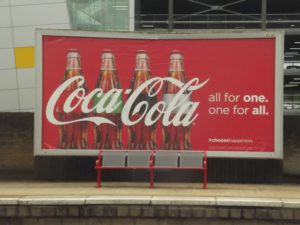
Multinational corporations (MNCs) have a global presence, even in developing countries. There are over 80,000 companies that drive the 21st-century economy. For example, Coca-Cola sells its product in nearly every country and has established over 900 bottling facilities worldwide. MNCs have propelled the GDP of their parent countries, most notably the United States, Japan, China and Western Europe, but how do their international operations affect developing countries?
It is difficult to say whether multinational corporations in developing countries are decidedly ‘good’ or ‘bad.’ One must consider many perspectives before making that judgment. However, researchers have identified a variety of positive and negative impacts applicable to most MNCs.
Individual Wellbeing
Multinational corporations in developing countries employ millions of people, but the quality of these jobs is often low. When Coca-Cola instituted a bottling facility in El Salvador, its supply chain hired sugar cane harvesters. El Salvador needed this hiring surge, as its poverty rate is 25.70%. However, an Oxfam study discovered that many workers receive less than the minimum wage. Additionally, harvesters face physical risks (burns, lacerations, exhaustion). This is because their work entails cutting cane stalks with a machete in chemically treated agricultural fields.
Perhaps the most notorious examples of worker exploitation in developing countries are sweatshops. These facilities in MNC supply chains provide employment with long hours, low wages and unsafe working conditions. An estimated 250 million children work in sweatshops worldwide, working over 16 hours a day to provide products for the clothing and toy consumer base.
Some experts argue that sweatshops are helpful to local populations because they provide job opportunities that would otherwise not be there. This defense, the “Non Worseness claim,” essentially states that sweatshops are better than nothing and that even if there were regulations on improved wages and working conditions, the jobs would be outsourced to a place where those restrictions do not exist. Defenders of MNC sweatshops often cite this controversial idea.
Economics
At first glance, it may be easy to claim that MNCs are unequivocally good for developing countries’ economies. After all, they provide jobs that were not present before, even if they are dangerous and pay low wages. Additionally, MNCs bring in capital flow to developing countries by building factories, which require construction workers and surrounding infrastructure, thereby stimulating economic development in host countries.
However, beyond the short-term benefits, the economic value of multinational corporations in developing countries becomes rather hazy. Most of the profit produced by an MNC subsidiary in a developing country goes to the company’s parent country. In the case of El Salvador, most profits generated by cane harvesters return to Coca-Cola’s executives in the U.S.
When multinational countries flood the economic landscape of developing countries, small businesses and local entrepreneurs find it difficult to compete. Thus, host countries develop a kind of dependency where they cannot break off from the MNCs’ influence in fear of rising unemployment. They also cannot compete with MNCs because of their established production methods.
Solutions
The Human Rights Watch and other humanitarian nonprofits have called for supply chain transparency in MNCs, particularly clothing and footwear industries, to publicize and improve working conditions in sweatshops across the globe. These corporations would have to provide specifics about factories manufacturing their products beyond the general tag: “Made in China.”
Additionally, the social inequities surrounding MNCs appear to be a result of their intentions. Paying low wages, building factories with unsafe working conditions, and outsourcing production relate to a key goal of MNCs: the corporate mantra, “maximize shareholder value.”
But MNCs do not need to operate according to this objective. At the very least, maximizing profits is not the only objective that they can strive for. Many MNCs, such as Ben and Jerry’s and Patagonia, have altered their practices to become benefit corporations. This role includes adding the goal of benefiting the public good to their company mission. Through this method, MNCs have a chance to reverse social injustices by redirecting their profits into improving the social, environmental and economic processes in developing countries.
– Christopher Orion Bresnahan
Photo: Flickr

3 Digital Tools Helping Low-Income Pakistanis
The COVID-19 pandemic has led to a major healthcare crisis in Pakistan and reversed years of efforts to eliminate poverty. The pandemic has also disproportionately affected low-income Pakistanis. The poverty rate in Pakistan declined from 64% to 24% in 2015 — after 20 years of progress. However, with the arrival of COVID-19, the International Monetary Fund (IMF) predicts that the poverty rate will increase to 40%, reversing years of progress.
Who is Most Vulnerable?
The IMF also expects Pakistan’s GDP growth slow by 3% as a result of the pandemic. Agriculture accounts for 20% of Pakistan’s GDP and 43% of its labor force. The continuation of lockdowns with no end in sight is negatively affecting transportation, labor and the consumer market — which in turn, affects the millions of people working in the agriculture industry.
Children and youth amounting to 17 million are missing important vaccinations for diseases such as polio. Moreover, the pandemic has increased the number of people that suffer from food insecurity by several million, bringing up the total to 43 million. Those most at risk are the people that already exist below the poverty line including women, children, senior citizens, the disabled and minorities.
As more and more of these people fall below the poverty line, Pakistan is coming up with different digital solutions that can cater to the millions of people experiencing multidimensional poverty. Here are three digital solutions helping low-income Pakistanis.
3 Digital Tools Helping Low-income Pakistanis
A Need for Non-Digital Solutions
Collectively, these digital solutions, as well as other solutions implemented by NGOs and separate companies, help many low-income Pakistanis gain access to the necessary resources and assistance they require. This assistance enables low-income Pakistanis to help themselves, specifically during this time of need. However, Pakistan cannot solely rely on digital solutions to combat their poverty crisis. Many of its population do not have access to the necessary digital devices to access these solutions. People who lack internet access, as well as computers and smartphones, are at an obvious disadvantage when it comes to accessing these digital resources. Therefore, Pakistan must also look toward digital-alternative solutions for people who are not able to access these digital ones.
– Abbas Raza
Photo: Flickr
The Mission to Provide Clean Water in Rwanda
On January 10, 2020, Zeke Delgado journeyed down a narrow dirt road to a rural Rwandan village, two hours from the capital city of Kigali. Delgado had visited the village of Ngenda once before. This time, he sought to improve access to clean water in Rwanda by building a $25,000 well.
Jean Hajabakiga acts as a liaison between U.S. native Delgado and the isolated African village. Following the Rwandan genocide of 1994, Hajabakiga relocated to Canada for several years before returning to his home country to mitigate extreme poverty. In 2017, Hajabakiga visited Twain Harte, California to share his story with Revive Warehouse Ministries, where he motivated Delgado to join a handful of other men on their first mission trip to Ngenda.
Challenges to Accessing Clean Water in Rwanda
Beyond spreading the Christian gospel, the mission trip aimed to promote clean water in Rwanda. In an exclusive interview with The Borgen Project, Delgado elaborated on the logistical barriers to sanitary drinking water. He explained that “It takes two to three hours to get water from a creek near the village. The water that they do get [from the creek] is dirty, and it’s difficult to burn out the bacteria by boiling it.”
The challenges regarding water access in Ngenda exist throughout the country. According to UNICEF, 43% of the Rwandan population lacks access to clean water within 30 minutes of their home. Consequently, children give up critical time in school to gather water for their families.
Beyond logistical problems, Delgado observed how contaminated water gives way to other complications related to health. He recounted, “Because of the dirty water, the kids’ stomachs were full of amoebas and parasites.” In fact, on a global scale, the World Health Organization (WHO) traces nearly half a million diarrhea-related deaths to unsanitary drinking water. It can also spread diseases such as cholera, typhoid and polio.
Removing Barriers to Sanitary Water
In 2018, Hajabakiga led his team in constructing a roof on his church that caught approximately 30,000 gallons of rainwater annually. The roof water proved beneficial to the villagers’ health and resolved the need to drink from the distant, contaminated creek. Yet, because the roof relied on rain, dry spells limited the consistency of a clean water supply.
In 2009, the Rwandan government confirmed the issue with climate-dependent water sources. The Rwanda State of Environment and Outlook Report state that “people’s livelihoods are vulnerable to climate variability,” especially in situations where water resources depend on rainfall.
Thus, Hajabakiga compelled his American missionaries to return to Rwanda in 2020 to drill a village well. The well enabled the installation of several toilets, eight showers and a steady source of drinkable water.
The Positive Impact of the Water Well
Delgado celebrates the success of the completed effort, asserting, “Water is life. That’s number one. If you don’t have water, you can’t live. With running water, they have access to showers, toilets, and clean water that improves overall hygiene.”
Though Rwanda continues to suffer from widespread poverty and limited water supplies, small-scale efforts by passionate individuals like Delgado and Hajabakiga offer sustainable solutions. In Delgado’s words, “It’s amazing that for $25,000 you can save so many lives.” He hopes to return to Ngenda every other year to continue promoting access to clean water in Rwanda.
– Maya Gonzales
Photo: Wikimedia Commons
Tourism in Africa Following COVID-19
Tourism has been a fundamental component of the African economy for years, with many countries depending on the industry as a primary source of revenue. In addition to supporting the economy directly through foreign currency, tourism in Africa has become a reliable source of income for many locals. Some of these individuals work as tour guides, while others own tourism-dependent businesses like hotels and cultural craft shops. As a result of the COVID-19 pandemic, the tourism industry has changed dramatically over the past year.
Economic Shifts
The World Bank reported that, in 2012, tourism in Sub-Saharan Africa (SSA) contributed $36 billion to the region’s GDP. The report also indicated that many countries in SSA were still working to develop their tourism facilities. Since 2012, these countries have improved security and provided better quality resources to attract tourists and tourism investors. However, COVID-19 disturbed this progress. Many countries established touristic travel bans to fight the pandemic, and many visitor attractions had to close. In total, the World Travel and Tourism Council has predicted that Africa’s resulting GDP loss could be $52.8 billion.
Unemployment
COVID-19 terminated many jobs, including tourism-related occupations like travel agencies and small businesses. The World Bank has reported that “one in twenty jobs in SSA is in travel and tourism.” According to a recent study from the African Union, an estimate of 2 million jobs directly or indirectly related to travel and tourism will disappear during the pandemic. These losses will affect all citizens in this region. For example, consumers will experience increased prices on commodities and higher taxes to compensate for the loss of tourism revenue.
Finding Solutions
However, countries typically reliant on tourism for economic stability are finding creative ways to adapt to the changes.
Many countries had no choice but to close borders in order to control the entrance and spread of COVID-19. Various policies implemented now encourage people to observe social distancing and wear masks in public places. To promote the industry amidst these new safety guidelines, the U.N. reported that Kenya and Zambia encouraged domestic tourism in the absence of foreign visitors. South Africa has donated approximately $11 million in relief aid to eligible tourism-related businesses, and the International Trade Centre reported that young Gambians who worked in community tourism became “COVID-19 first responders to awareness and prevention.”
These initiatives have helped people gain some income and retain access to basic needs. Additionally, countries have been conducting virtual tours in parks to continue engaging international tourists and increase chances of visitation following the pandemic. BBC reported that Kenya, Seychelles and Rwanda would open in August 2020 for international travelers; however, tourists would have to undergo different procedures to gain safe access to hotels and touristic sites.
Many African countries greatly profit from the tourism industry. This industry has been rapidly growing in Africa. In fact, the continent expected a consistent increase in the number of incoming international visitors over the next several years. However, in response to the recent surge of COVID-19, the continent is adapting to creatively compensate for these changes and continue protecting citizens’ health and safety.
– Renova Uwingabire
Photo: Flickr
Multinational Corporations in Developing Countries
Multinational corporations (MNCs) have a global presence, even in developing countries. There are over 80,000 companies that drive the 21st-century economy. For example, Coca-Cola sells its product in nearly every country and has established over 900 bottling facilities worldwide. MNCs have propelled the GDP of their parent countries, most notably the United States, Japan, China and Western Europe, but how do their international operations affect developing countries?
It is difficult to say whether multinational corporations in developing countries are decidedly ‘good’ or ‘bad.’ One must consider many perspectives before making that judgment. However, researchers have identified a variety of positive and negative impacts applicable to most MNCs.
Individual Wellbeing
Multinational corporations in developing countries employ millions of people, but the quality of these jobs is often low. When Coca-Cola instituted a bottling facility in El Salvador, its supply chain hired sugar cane harvesters. El Salvador needed this hiring surge, as its poverty rate is 25.70%. However, an Oxfam study discovered that many workers receive less than the minimum wage. Additionally, harvesters face physical risks (burns, lacerations, exhaustion). This is because their work entails cutting cane stalks with a machete in chemically treated agricultural fields.
Perhaps the most notorious examples of worker exploitation in developing countries are sweatshops. These facilities in MNC supply chains provide employment with long hours, low wages and unsafe working conditions. An estimated 250 million children work in sweatshops worldwide, working over 16 hours a day to provide products for the clothing and toy consumer base.
Some experts argue that sweatshops are helpful to local populations because they provide job opportunities that would otherwise not be there. This defense, the “Non Worseness claim,” essentially states that sweatshops are better than nothing and that even if there were regulations on improved wages and working conditions, the jobs would be outsourced to a place where those restrictions do not exist. Defenders of MNC sweatshops often cite this controversial idea.
Economics
At first glance, it may be easy to claim that MNCs are unequivocally good for developing countries’ economies. After all, they provide jobs that were not present before, even if they are dangerous and pay low wages. Additionally, MNCs bring in capital flow to developing countries by building factories, which require construction workers and surrounding infrastructure, thereby stimulating economic development in host countries.
However, beyond the short-term benefits, the economic value of multinational corporations in developing countries becomes rather hazy. Most of the profit produced by an MNC subsidiary in a developing country goes to the company’s parent country. In the case of El Salvador, most profits generated by cane harvesters return to Coca-Cola’s executives in the U.S.
When multinational countries flood the economic landscape of developing countries, small businesses and local entrepreneurs find it difficult to compete. Thus, host countries develop a kind of dependency where they cannot break off from the MNCs’ influence in fear of rising unemployment. They also cannot compete with MNCs because of their established production methods.
Solutions
The Human Rights Watch and other humanitarian nonprofits have called for supply chain transparency in MNCs, particularly clothing and footwear industries, to publicize and improve working conditions in sweatshops across the globe. These corporations would have to provide specifics about factories manufacturing their products beyond the general tag: “Made in China.”
Additionally, the social inequities surrounding MNCs appear to be a result of their intentions. Paying low wages, building factories with unsafe working conditions, and outsourcing production relate to a key goal of MNCs: the corporate mantra, “maximize shareholder value.”
But MNCs do not need to operate according to this objective. At the very least, maximizing profits is not the only objective that they can strive for. Many MNCs, such as Ben and Jerry’s and Patagonia, have altered their practices to become benefit corporations. This role includes adding the goal of benefiting the public good to their company mission. Through this method, MNCs have a chance to reverse social injustices by redirecting their profits into improving the social, environmental and economic processes in developing countries.
– Christopher Orion Bresnahan
Photo: Flickr
Africa Uses Polio Resources to Tackle COVID-19
Africa is using its polio resources to find creative solutions to the new pandemic. COVID-19 halted employment for many Africans and placed strains on international polio laboratories. These laboratories are members of the Global Polio Laboratory Network. Therefore, health organizations are now using polio resources to tackle COVID-19 in African countries. Already facing many challenges, these groups must balance fighting COVID-19 with continued administration of polio vaccinations.
Polio Eradication in Africa
Vast amounts of global research aid polio eradication in Africa. It is appropriate to alter these successful strategies now to fight COVID-19. In fact, expectations determined that Nigeria would be officially void of the disease between March and June 2020. The World Health Organization (WHO) announced in July 2020 that Nigeria was the last African country where polio was endemic, but that polio is no longer in African countries.
WHO’s Method of COVID-19 Mitigation
WHO is fighting COVID-19 through 16 polio testing facilities across 15 countries. To do so, it reconfigured machines that it originally used to display polio symptoms with COVID-19 data. These cell phone devices have the contact information of outreach teams, making data tracking easier. Another example of Africa’s use of polio resources is an outreach center developed in Brazzaville (2017). The research center assists countries with data-keeping technology to fight COVID-19.
COVID-19 Eradication in Sudan and Somalia
The WHO Polio Eradication Program provides training across 14 states of The Republic of Sudan. This training allows citizens of all seven localities of The Republic of Sudan (Khartoum, Ombada, Omdurman, Karary, Bahri, Sharq Elnil and Jabal Awliya) to assist potential COVID-19 victims. Recipients of the training are front line essential workers trained in healthy behaviors, COVID surveillance and COVID data interpretation. The training sessions empowered over 300 rapid response individuals, all of whom tested satisfactorily while demonstrating their competency.
Current difficulties such as social distancing and the minimal availability of face masks and gasoline make it difficult to continue to serve patients who need polio vaccinations. The short supply of resources also makes it difficult to provide diagnoses to individuals potentially affected by COVID-19. With Africa using polio resources to control COVID-19, polio vaccinations themselves had to take a back seat. These programs will re-obtain regular importance when possible. Many children still need vaccinations regularly to maintain Africa’s ‘eradicated’ polio status or they could be susceptible to the disease.
WHO training in Somalia empowers workers and allows staff to educate the community. Polio teams train and educate Somalians on the techniques and importance of reporting suspected COVID-19 cases. Polio Eradication Program associates can then continue sending feces samples labs for testing. These same techniques used for polio eradication allowed teams to hit the ground running in April of 2020.
The Reason Africa Must Continue to Monitor Polio and COVID-19
While techniques for testing polio and COVID-19 are similar, the diseases are not. Africa, while recently declared free of polio, must continue to monitor both diseases and refocus its attention on polio following the pandemic. Polio has numerous dangers: it attacks children, is highly contagious and leaves individuals paralyzed, all with a high risk of death. Continued vaccinations are the only hope of keeping Africa polio-free.
Polio laboratories need to increase efforts against COVID-19 to regain a singular focus on polio vaccinations. Nigerian President Mohammadu Buhari increased polio funding in 2016. His efforts highlight how ending disease allows a country to continue leveraging those resources. The COVID-19 pandemic is a major obstacle to Africa’s safety from polio.
– DeAndre’ Robinson
Photo: Flickr
Ainu Education and Restoration in Japan
Poverty and insufficient education are critical issues for many Ainu people, the indigenous minority of Japan’s population. The Ainu people endured years of historic discrimination. Their community faced impoverished living conditions after Japan took control of Hokkaido, the Ainu’s native island, in the 19th century. In 2019, however, the Japanese government recognized the Ainu as Japan’s indigenous people. The Ainu face numerous adversities during everyday life. However, the Japanese government is taking steps towards equal rights and opportunities for the Ainu population, beginning with education.
Japanese Education and the Inclusion of Ainu History
Japan’s school systems are primarily electronics-free, but the pandemic’s stifling presence is forcing school systems everywhere to change their methods. Now, student health and safety are both major priorities for the upcoming fall semester. Another priority for Japan’s school system is Ainu inclusion. After textbook and curriculum revisions, the Ainu are set to appear in nearly 40 Japanese junior high textbooks. By boosting the number of Ainu-related pages from 12 to 85, the country’s educational department hopes to teach students about Ainu culture and the value of cultural coexistence.
Ainu Education in Japan
While a younger generation of Japanese students will be learning about the Ainu in school, challenges for the indigenous Japanese population still remain. For instance, many Ainu students struggle to continue their education. In fact, only 33% of the total Ainu population enrolled in Japanese universities in 2017, and this number will most likely drop further with an increase in online education as a result of COVID-19.
But why is education less accessible for the Ainu? According to the executive director of the Ainu Association, Tadashi Kato, it may have to do with poverty. Kato stated that “the big problems [for the Ainu people] are poverty and education,” explaining “you can’t go to high school if you are poor and can’t make a living, even if you take high school examinations.” Another reason why Ainu students abandon higher education is discrimination. The Ainu have experienced discrimination for decades, and many Ainu students often conceal their lineages to avoid harassment at school. In 2019, the Japanese government recognized the unequal status of the Ainu and decided to take legislative action.
Ainu Promotion Act
The Ainu Promotion Act emerged to eliminate the unequal treatment of the Ainu population. Under the recently implemented Ainu Promotion Act, these indigenous citizens have more protections than ever before. The act officially declared the Ainu as Japan’s indigenous people and outlawed hostile sentiments and discrimination against them. The Act also aims to promote Ainu culture as well as industry and tourism throughout Japan. This will in turn draw global attention to the Ainu population. On top of potential foreign investments, the act provides subsidies for Ainu projects. The most notable of these projects is the National Ainu Museum, which opened July 12, 2020. The museum resides in Shiraoi, Hokkaido, Japan, and its exhibits educate visitors on six themes from the Ainu perspective: language, world views, lifestyle, history, work and exchange with surrounding people.
Although the Act is not perfect, these new laws are a strong foundation for Ainu restoration to build upon. Cultural understanding is critical for coexistence. In the past, most of the world misunderstood or did not hear the Ainu people. In Japan, the promotion of the Ainu people through education marks the beginning of a new era in which the Ainu do not have to live in the shadows but are instead celebrated openly as an essential component of Japan’s history.
– Maxwell Karibian
Photo: Wikimedia Commons
How SpinCycle is Helping Impoverished Populations
Richard Hewitt, a product design student at Sheffield Hallam University, devised the idea for the SpinCycle while volunteering at an orphanage in Burundi, Africa. Hewitt experienced how tedious and time-consuming it was to wash over 30 loads of children’s clothes by hand. He became dedicated to finding a more efficient solution. In 2010, Hewitt invented the SpinCycle: a bicycle-powered portable washing machine. He customized the machine to easily attach to the back of a bicycle so users could wash their clothes while also getting exercise, saving time and money. Another advantage of this bicycle-powered solution is that it can easily circulate throughout small communities to ensure that everyone’s laundry is washed quickly and affordably. Therefore, SpinCycle is also very beneficial for individuals who have mobile laundry services. Here are five facts demonstrating how SpinCycle is helping impoverished populations.
5 Facts About the SpinCycle
Richard Hewitt transformed a college project into a tangible invention that is helping the world’s poor. The SpinCycle is helping impoverished populations by saving time, water, energy and money. More importantly, though, this invention encourages innovation and growth in these poor, rural communities that could improve life in many societies for years to come.
– Ashley Bond
Photo: Wikimedia
How Honduras Uses US Foreign Aid
Maintaining Governance
Honduras uses U.S. foreign aid to maintain its governance. In 2018, Honduras spent $55 million on agencies that provide government assistance. These agencies encourage public participation in government and make sure governments maintain checks and balances and separation of powers. In short, these agencies keep the government ethical, honest and accountable to the people. USAID funded this entire sector of Honduras’ U.S. foreign aid. As a U.S. foreign agency, USAID works to strengthen democratic institutions and citizen participation in Honduras.
Human Rights
In 2018, Honduras spent about $6 million on preserving human rights under the law. Honduras uses U.S. foreign aid to fund many agencies that protect international human rights. Partially funded by USAID, Honduras’ human rights agencies ensure that all people find justice and fairness under the law. The U.S.-Honduras Bilateral Human Rights Working Group, a product of USAID, works to strengthen human rights institutions, citizen security and migration issues in Honduras. Without U.S. foreign aid funding human rights groups, vulnerable impoverished Hondurans, who are most susceptible to human rights violations, would have decreased legal resources.
Agriculture
Honduras spent $11 million on its agriculture industry in 2019 and $22 million in 2018. The country’s economy relies heavily on the international trade of its agriculture. The agricultural industry also employs 39% of the population in Honduras. With a large section of the population relying on agriculture as income, investing in agriculture is imperative to the country’s economy. Because of Honduras’ high poverty rate, a large part of the agriculture industry employs impoverished Hondurans. U.S. foreign aid is essential to the poverty-stricken portion of Honduras’ agriculture industry.
Education
Honduras uses U.S. foreign aid for considerable education development. In 2019, Honduras spent $24 million on basic education. This includes improving early childhood, primary and secondary education in Honduras. USAID largely funds this sector of Honduras’ foreign aid. USAID works with Honduras’ education systems on education reform, teacher training and alternative education for many children who can’t afford secondary school. Without U.S. foreign aid, impoverished children in Honduras could lose access to basic education and alternative education.
Minimizing Crime
Crime is a serious problem in Honduras. Honduras has one of the highest murder rates in the world. However, in 2012 Honduras began investing in crime prevention agencies, and investment has been increasing ever since. Honduras spent $25 million of U.S. foreign aid on crime-prevention agencies in 2019 compared to less than $300,000 in 2014. These agencies provide training to combat international crime and corruption while promoting international cooperation. In correlation with investments in crime-prevention agencies, homicide rates in Honduras dropped drastically in 2012. This portion of U.S. aid directly impacts Honduras’ impoverished communities where violence is prevalent.
Conclusion
The suspension of U.S. foreign aid to Central America created some doubt in the usefulness of foreign aid. However, Honduras uses U.S. foreign aid to fund agencies that work to better some of the most serious and significant problems affecting Hondurans. Many of these agencies help the most vulnerable and impoverished populations in Honduras.
– Kaitlyn Gilbert
Photo: Flickr
The Effect of Map Bias on Developing Countries
The map most people are familiar with looks something like the image above, having learned about it in school. But what if they learned that this map is wrong and that there is such a thing as map bias?
The Map Everyone Knows
The most common maps that people are familiar with are versions of the Mercator Projection Map. Flemish cartographer Gerardus Mercator created this map in 1569. Originally intended solely for ocean navigation, the map has found its way into the classrooms of many western schools including those in the United States. The Mercator Projection has many flaws and it is a prime example of how map bias can shape one’s world view.
As Gauss’ Theorem Egregium proved, it is mathematically impossible to translate a sphere onto a 2D plane without creating distortions in either the shape, size, distance or direction of points on that sphere. That is why creating maps of the world is so tricky. However, Mercator’s map is particularly flawed, and it is especially problematic when teaching young children basic geography.
The map compromises accurate landmass size in favor of accurate direction, in the hopes of being a better tool for navigation. By the north and south poles, landmasses are stretch beyond proportion while at the equator, countries shrink.
For example, the map shows Greenland as roughly the same size as the entire continent of Africa. However, in actuality, Africa is 14 times larger than Greenland. The European continent seems to be as large as South America when South America should really be twice its size. According to the Mercator map, the equator should run through Florida, not Indonesia, Brazil and the Congo. Additionally, the state of Alaska appears massive on the Mercator Projection, seemingly the size of half of the contiguous United States. However, its landmass is actually smaller than that of Mexico.
Map Bias and its Effects on our World View
With all these seemingly obvious flaws in the Mercator Map, it is difficult to understand its continued use in classrooms. However, when you analyze the Eurocentric bias in much of western education, the purpose of such a flawed map becomes clearer.
The Mercator Projection puts emphasis on Europe and North America. It both places them at the top, and enlarges them and shifts them downward to appear more central on the plane. Meanwhile, developing countries in Southeast Asia, South America and Africa appear minuscule in comparison, literally below the industrialized western nations.
This teaching of the Mercator Map is a prime example of what many know as map bias. Map bias can deeply affect the way people view the world and their inner sense of “importance.” When one sees their own country as larger, it may warp their views of the significance of other countries.
In a 2002 study that the Journal of Behavioral Decision Making published, an evaluation of 3-year-olds and adults showed that humans favor larger stimuli. Humans naturally gravitate to things that are larger and more centered. Another study from Kai Krause, a professor from the University of California Santa Barbara, showed that a majority of school children believe that the United States is the “largest country in the world.”
Therefore, people may unconsciously place the shrunken developing countries out of geographical importance, possibly affecting how much they see these countries as being “worthy” of support. The Mercator Map projects the message of colonialist superiority and reinforces the perceived inferiority of developing nations.
How to Change Map Bias
There has been much debate in recent years as to how to address issues of map bias. It is becoming increasingly clear that the education systems in place in western nations should stray away from imperialistically revisioned history including the way they teach geography.
The simplest solution is to start the widespread use of maps that do not discount developing countries. One example of this push came from the Boston Public Schools Board of Education in 2017. The school board voted in favor of adopting the Gail-Peters Projection to replace the Mercator Projection. It hopes to combat the diminished significance of southern-hemisphere continents on the latter map due to 86% of its students being students of color.
American schools should adopt maps that more accurately represent the planet. The Mercator Map is a colonial relic and schools should no longer use it to teach what the world looks like.
– Aidan Sun
Photo: Wikimedia Commons
Building Sustainable Healthcare In Developing Countries
Qualified and experienced medical professionals traveling to developing countries and providing necessary healthcare may seem not only harmless but sensible for communities in need. However, if the ultimate goal is to improve sustainable healthcare in these countries in the long-term, the benefits of professional volunteers can be short-lived.
Nurses International
Nurses International is a non-profit organization that aims to build sustainable healthcare in developing nations by providing resources and education to local nurses in order to become qualified healthcare workers. Some of its work includes:
Open Access
Nurses International also provides online courses intended to magnify the instruction for students in nursing programs. The courses may also act as preparation for those entering a nursing program. The online programs have been made available worldwide and include lectures, references for educators and students, assignments and assessments.
With all current courses relocated online due to COVID-19, there is a new course available for students to enroll in that discusses all aspects of the COVID-19 including testing, treatment and trajectory of the disease. Nurses International is also currently developing a teacher’s guide for Open Access and has the “worlds first Open Access BSN.”
Nurses International endeavors to do its work honing an anthropological perspective. Understanding and respecting the beliefs, values, traditions, and language of the patients and the community is at the heart of the organization’s work. Nurses International “respects and values multiple perspectives and finds that diversity allows them to their best work” towards building sustainable healthcare.
Nurses International’s productive efforts can be seen in Burundi, where volunteers teach students and develop learning materials while a new hospital is being built. Nurses International is making a teacher handbook and providing health checkups for women partaking in the program. In China, they are educating clinical instructors in the city of Quijing from 3 different nursing schools. In Egypt, Nurses International is providing a residency program for nurses to help them transition into clinical practice.
Challenges of Medical Tourism
Nurses International has an understanding that the demands of a developing country go far beyond the need for provisional healthcare. There is a growing interest from clinicians and medical students to travel to and temporarily practice in developing nations. The consequences of these visits can be damaging in multiple ways. For instance, countries hosting these international visitors must adapt resources that are already insufficient for their stay. Visitors often bring along supplies that are unnecessary or inapplicable. There is no evidence these missions create a stable healthcare model. By the end of their visits, substantial amounts of materials and money have been dedicated to solutions that are only temporary.
The Best of Both Worlds
Of course, volunteers can be helpful in developing countries. There is still a high demand for medical professionals and urgent care. The best solutions can come from an approach that is conscious of the community’s needs in both the short-term and the long-term. The Project Health Opportunities for People Everywhere (HOPE) and the Ghana Emergency Medicine Collaborative (GEMC) united in 2011 to accomplish this objective.
GEMC recognized the crucial need for specialization in emergency medicine since almost 6 million deaths around the world occur from injuries and acute illnesses. The collaborative realized that sending students away to developed countries for their training was ineffective in sustaining healthcare in the community because many students would remain in the developed countries that they were trained in, instead of returning home. To prevent such issues, GEMC brought emergency medicine specialists from the U.S and U.K. to Komfo Arioke Teaching Hospital (KATH) in Kumasi, Ghana.
The faculty coming from developed countries advise and train students who eventually graduate from the program and become qualified clinicians and instructors, allowing graduates from the local community to then lead the programs. Project Hope joined forces with GEMC’s methods by providing volunteers to perform direct and immediate health care services as needed at KATH, and also to strengthen a program with transitory medical volunteers. These programs work together to form an initiative to build sustainable healthcare in the community.
— Amy Schlagel
Photo: Pixabay