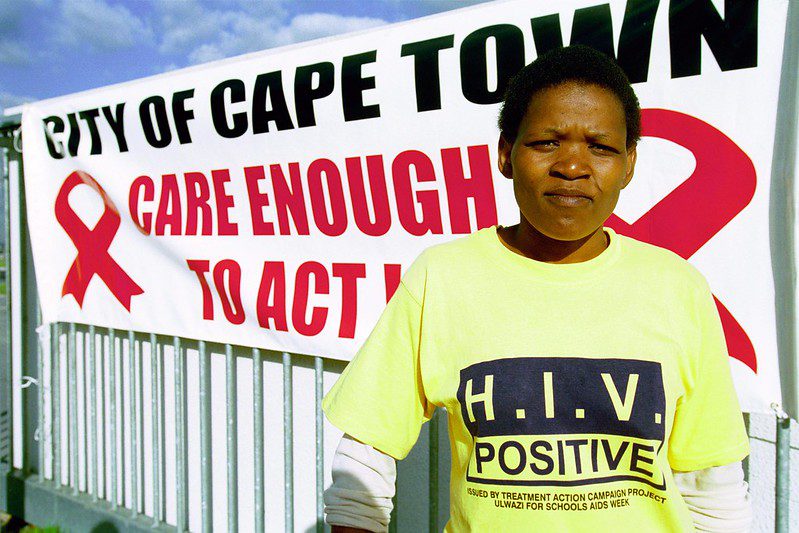
 According to the Joint United Nations Program on HIV/AIDS (UNAIDS), South Africa has the largest population of people infected with HIV globally. One of the first countries afflicted with the epidemic in the 1980s, South Africa holds one eighth of the world’s AIDS population. One in nine South Africans and one in four adults are infected. The civil society response to HIV in South Africa has been crucial in addressing the virus and encouraging the government to take action as well.
Government Inaction
South Africa’s HIV statistics are staggering, even in comparison to other countries with large numbers of infected people, like Brazil and India. The problem of HIV in South Africa results from the government’s inadequate response to the epidemic until 2008. Manto Tshabalala-Msimang, the nation’s health minister from 1999 to 2008, refused to promote efficacious treatments such as antiretroviral therapy (ART). He called the antiviral treatments, widely endorsed by the global scientific community, “poison.” Tshabalala-Msimang instead promoted unscientific and largely ineffective treatments such as vitamins, beetroot and garlic. None of these have been shown to protect the health of people who are fighting the effects of the virus.
The year 2002 marked a turning point for the civil society response to HIV in South Africa. AIDS activists and others pushed back against a government policy that attempted to stifle access to effective treatments. In a historic judgment that initiated the fall of Tshabalala-Msimang, the South African courts ruled in favor of the activists. The ruling forced the government to take a more proactive role in fighting the epidemic. Later in 2006, the South African government established a national policy addressing HIV/AIDS following court processes instigated by AIDS activists. This policy broadened the distribution of life-saving drugs such as ART, addressed the shortage of healthcare workers and improved the treatment of HIV in pregnant women.
HIV/AIDS Activism
The South African government’s policies of misinformation and its ill-advised public health approaches to the epidemic worked to downplay the virus as a pressing threat. Because of Tshabalala-Msimang’s respectability and position of power, his rhetoric only fueled AIDS deniers. Still, South African scientists, medical professionals and activists banded together to challenge the government’s deadly inaction with the civil society response to HIV in South Africa.
From the onset of the epidemic, NGOs, CBOs, faith-based groups and activist groups took action to promote the treatment and prevention of HIV/AIDS. This civil society response to HIV in South Africa effectively addressed the acute inadequacy of the government’s response. These groups understood the importance of comprehensive responses to HIV even before international agencies drew connections between the various moving parts associated with the virus. For example, they emphasized the importance of condoms, bringing a wide range of issues into the public eye. Additionally, the groups stressed information, education and communication (IEC) initiatives to stop the spread of HIV/AIDS.
AIDS Foundation South Africa
A large part of the civil society response to HIV in South Africa, AIDS Foundation South Africa (AFSA) was the first registered AIDS NGO in South Africa, and it is currently one of the largest. The organization recognizes the complexity of the virus and the need to address it in a comprehensive way. AFSA focuses on a combination of treatment, prevention, child protection, food security, education and access to basic services. Additionally, AFSA recognizes that different communities have different needs when it comes to AIDS treatment and prevention. As such, the organization serves as a liaison for smaller organizations that might require research, funding, strategies and general aid.
In 2012, for example, AFSA conducted a program in KwaZulu-Natal to engage in work that supported various community programs. These programs included AIDS education and testing, childhood development, community care programs and food security endeavors. The organization is currently on track to meet its 2020 goal of 90% of all people living with HIV to know their status. It also aims to have 90% of all people diagnosed with HIV receiving ART and 90% of people receiving ART having viral suppression, a sign of the treatment’s efficacy.
New Administration
The importance the civil society response to HIV in South Africa is especially clear with the resignation of President Mbeki as well as Tshabalala-Msimang. Elected in 2009 by a large majority, President Jacob Zuma ran on a campaign that acknowledged the urgency of stopping the spread of HIV/AIDS in South Africa. Once elected, Zuma appointed Dr. Aaron Motsoaledi as minister of health. Motsoaledi turned the government’s focus to HIV response.
During Zuma’s term, which ended in 2018, South Africa launched a massive national HIV counseling and testing campaign (HCT), and Zuma himself publicized his HIV test. This campaign also included large-scale medical male circumcision (MMC), which mitigates the spread of the virus in many cases. By the end of 2010, more than half of adults and a third of children eligible for ART were receiving the treatment. Furthermore, the average price of HIV drugs decreased by more than 40% between 2010 and 2014.
Moving Forward
South African society has made monumental strides in addressing HIV/AIDS. However, stigma against several groups particularly afflicted by the disease stands in the way of a truly holistic response. For example, transgender women in South Africa are two times as likely to have HIV than men who have sex with men, but they are routinely excluded from studies and comprehensive care. Additionally, HIV among sex workers is as high as 71.8% in Johannesburg. Because sex work is criminalized in South Africa, AIDS treatment and potentially life-saving health information are less accessible. To more fully address HIV/AIDS, South Africa will have to turn to these issues next.
– Kate Ciolkowski-Winters
Photo: Flickr

5 Ways the Garment Industry Can Help Asia’s Poor
The novel coronavirus, however, has brought the global economy to a halt. As demand for clothing has fallen, many retailers have canceled orders from factories, forcing many to shut down. For example, in Cambodia, more than 250 garment factories have suspended operations, putting more than 130,000 workers out of work. Myanmar has seen around 150 of its roughly 600 factories shut down. Despite COVID-19’s effect on the global economy and apparel market, the garment industry could be critical in restarting South and East Asian economies. Here are five reasons why the garment industry will help Asia’s poor recover economically from the COVID-19 pandemic.
5 Reasons Why the Garment Industry Will Help Asia’s Poor
The COVID-19 pandemic has brought the Asian garment industry to a standstill, with thousands of factories shut down and millions of workers kept from work and a source of income. However, the world’s largest markets still depend on Asia for apparel, and demand will surely increase as the global market recovers. The garment industry could provide jobs to millions in Asia who were pushed into poverty by the COVID-19 pandemic and potentially help to lift them out.
– Harry Yeung
Photo: Flickr
Civil Society Response to HIV in South Africa
Government Inaction
South Africa’s HIV statistics are staggering, even in comparison to other countries with large numbers of infected people, like Brazil and India. The problem of HIV in South Africa results from the government’s inadequate response to the epidemic until 2008. Manto Tshabalala-Msimang, the nation’s health minister from 1999 to 2008, refused to promote efficacious treatments such as antiretroviral therapy (ART). He called the antiviral treatments, widely endorsed by the global scientific community, “poison.” Tshabalala-Msimang instead promoted unscientific and largely ineffective treatments such as vitamins, beetroot and garlic. None of these have been shown to protect the health of people who are fighting the effects of the virus.
The year 2002 marked a turning point for the civil society response to HIV in South Africa. AIDS activists and others pushed back against a government policy that attempted to stifle access to effective treatments. In a historic judgment that initiated the fall of Tshabalala-Msimang, the South African courts ruled in favor of the activists. The ruling forced the government to take a more proactive role in fighting the epidemic. Later in 2006, the South African government established a national policy addressing HIV/AIDS following court processes instigated by AIDS activists. This policy broadened the distribution of life-saving drugs such as ART, addressed the shortage of healthcare workers and improved the treatment of HIV in pregnant women.
HIV/AIDS Activism
The South African government’s policies of misinformation and its ill-advised public health approaches to the epidemic worked to downplay the virus as a pressing threat. Because of Tshabalala-Msimang’s respectability and position of power, his rhetoric only fueled AIDS deniers. Still, South African scientists, medical professionals and activists banded together to challenge the government’s deadly inaction with the civil society response to HIV in South Africa.
From the onset of the epidemic, NGOs, CBOs, faith-based groups and activist groups took action to promote the treatment and prevention of HIV/AIDS. This civil society response to HIV in South Africa effectively addressed the acute inadequacy of the government’s response. These groups understood the importance of comprehensive responses to HIV even before international agencies drew connections between the various moving parts associated with the virus. For example, they emphasized the importance of condoms, bringing a wide range of issues into the public eye. Additionally, the groups stressed information, education and communication (IEC) initiatives to stop the spread of HIV/AIDS.
AIDS Foundation South Africa
A large part of the civil society response to HIV in South Africa, AIDS Foundation South Africa (AFSA) was the first registered AIDS NGO in South Africa, and it is currently one of the largest. The organization recognizes the complexity of the virus and the need to address it in a comprehensive way. AFSA focuses on a combination of treatment, prevention, child protection, food security, education and access to basic services. Additionally, AFSA recognizes that different communities have different needs when it comes to AIDS treatment and prevention. As such, the organization serves as a liaison for smaller organizations that might require research, funding, strategies and general aid.
In 2012, for example, AFSA conducted a program in KwaZulu-Natal to engage in work that supported various community programs. These programs included AIDS education and testing, childhood development, community care programs and food security endeavors. The organization is currently on track to meet its 2020 goal of 90% of all people living with HIV to know their status. It also aims to have 90% of all people diagnosed with HIV receiving ART and 90% of people receiving ART having viral suppression, a sign of the treatment’s efficacy.
New Administration
The importance the civil society response to HIV in South Africa is especially clear with the resignation of President Mbeki as well as Tshabalala-Msimang. Elected in 2009 by a large majority, President Jacob Zuma ran on a campaign that acknowledged the urgency of stopping the spread of HIV/AIDS in South Africa. Once elected, Zuma appointed Dr. Aaron Motsoaledi as minister of health. Motsoaledi turned the government’s focus to HIV response.
During Zuma’s term, which ended in 2018, South Africa launched a massive national HIV counseling and testing campaign (HCT), and Zuma himself publicized his HIV test. This campaign also included large-scale medical male circumcision (MMC), which mitigates the spread of the virus in many cases. By the end of 2010, more than half of adults and a third of children eligible for ART were receiving the treatment. Furthermore, the average price of HIV drugs decreased by more than 40% between 2010 and 2014.
Moving Forward
South African society has made monumental strides in addressing HIV/AIDS. However, stigma against several groups particularly afflicted by the disease stands in the way of a truly holistic response. For example, transgender women in South Africa are two times as likely to have HIV than men who have sex with men, but they are routinely excluded from studies and comprehensive care. Additionally, HIV among sex workers is as high as 71.8% in Johannesburg. Because sex work is criminalized in South Africa, AIDS treatment and potentially life-saving health information are less accessible. To more fully address HIV/AIDS, South Africa will have to turn to these issues next.
– Kate Ciolkowski-Winters
Photo: Flickr
Examining Women’s Rights in Azerbaijan
In 1919, Azerbaijan became the first Muslim majority country to grant the right of suffrage to its female population. Following this, the country experienced half a century of Soviet rule, which maintained the right of women to suffrage, as well as established government provisions to ensure representative equality. When the country became an independent republic in 1991, one of the greatest challenges was that though government rules guaranteed women’s rights in Azerbaijan and equality, social norms and rules still inhibited women from reaching their full potential.
Once independent, the first measure Azerbaijan took in 1998 to safeguard women’s rights was the implementation of the State Committee on Women’s Problems (SCWP). Moreover, shortly following in 2000, the president decided to enforce “state policy regarding women in the Republic of Azerbaijan.” These both identified which roles women could participate in regarding social and state administration. This marked a period of growth in female participation in Azerbaijan where women received easier access to running businesses, working in the government and participating in the military.
Women’s Rights in Azerbaijan Today
Today in Azerbaijan, female activists work diligently to change the attitudes of society and to increase the representation and safety of their country’s women. Most of these women operate through non-governmental organizations (NGOs), which people have come to know as the government’s “third sector.” This third sector is able to work on philanthropic policy that increases access to education, health care and women’s representation.
NGOs provide women access to the political field that societal prejudices usually exclude them from. In fact, men hold over 90% of all of the highest offices in the country (ministers, chairs, etc.) and around 80% of judicial positions, meaning that women lack the foundational representation in public office that would ensure that others hear their voices. Through the NGOs, women are able to affect policy without submitting themselves to a political process that is not yet ready to accommodate them.
Domestic Violence
Some of the larger issues these women are fighting against are domestic violence and access to reproductive healthcare for women. About 74.2 % of husbands beat their wives, and on average, women report only 44 rapes nationally per year though estimates have determined that there are many more that go unreported due to societal condemnations of victims of rape. To combat this violence against women, activists have worked to first change the attitudes of both men and women who traditionally see domestic violence and rape as just a part of gender relations.
As for reproductive health care, NGOs have primarily worked to establish more health care centers and women’s crisis centers because there is a severe lack of them throughout the country, specifically in rural areas. As they establish these centers, activists have worked to distribute education, hoping to establish generations of Azerbaijani citizens who recognize the necessity of women’s health care.
Women’s Association for Rational Development (WARD)
One of these NGO leaders, Shahla Ismayil, has been working since 1998 through her organization: Women’s Association for Rational Development (WARD). She stated that the mission of WARD “is based on the notion that full democracy, justice and development cannot be reached if there is any distinction, exclusion, or restriction made on the basis of gender, age, religion, ethnicity and affiliation.” One such way she has accomplished this is through her gender school, which exposes civil and academic society to the issues of women. Her organization has also established a maternity school, both as a way to ensure women remain safe in childbirth, while also encouraging other women to pursue careers as midwives.
Like many other nations on earth, there is still quite a bit that needs to occur to maintain women’s rights in Azerbaijan so that the country sees complete gender equality. However, due to the dedication of female leaders and policymakers, the country is seeing great strides in reaching equality.
– Mary Buffaloe
Photo: Flickr
COVID-19 and Yemen’s Healthcare System
For people across the globe, the battle against COVID-19 can feel hopeless. Developed countries like the U.S. have struggled to contain the virus; COVID-19 has infected over 5 million Americans since March 2020. However, extensive healthcare resources have helped developed immensely. Ventilators and ICU beds, access to proper sanitation, and the technology to work from home have left many unscathed and have allowed many to make a full recovery. Therefore, it is important to remember the countries that do not have these resources. For example, COVID-19 has been particularly devastating in Yemen, in part, due to Yemen’s healthcare system.
Conflict, Cholera and COVID-19
Yemen has been enduring a civil war for over five years. The main conflicts are between Houthi rebels and the government of President Hadi. In addition to claiming over 100,000 lives, the violence has exacerbated already daunting public health statistics. Currently, about 50% of the country’s medical facilities are nonfunctional. The U.N. has reported that Yemen is enduring the world’s worst humanitarian crisis with about 80% of the population (or 24.1 million people) in desperate need of humanitarian assistance. In addition, the country is enduring the worst modern-day cholera crisis, reporting approximately 110,000 cases in April 2020.
With the backdrop of the ongoing civil war, Yemen’s healthcare system is unable to support the country. Yemen has 500 ventilators and 700 ICU beds for a population of over 28 million. The Associated Press reported that there are no doctors in 18% of 333 Yemeni districts. Although the country has reported one of the lowest transmission rates in the Middle East, this is largely due to an inability to test. In fact, the country has processed fewer than 1,000 tests; this is about 31 tests per 1 million citizens. There is also evidence of purposeful under testing. The Houthi Ministry of Public Health and Population stated that reporting statistics have negative effects on the psychological health and immune systems of citizens.
Hospitals have seen a 40% mortality rate and have resorted to admitting patients based on age and odds of survival, reported Marc Schakal, Doctors Without Borders’ Deputy Operations Manager for Yemen. The country’s health system has “collapsed” according to the UNHCR. Lise Grande, the U.N. head of humanitarian operations in Yemen reported that the COVID-19 death toll could “exceed the combined toll of war, disease, and hunger over the last five years.”
COVID-19’s Impact Beyond the Healthcare System
The virus has also driven up the prices of food necessities, adding to the high toll of families that rely on aid to survive day-to-day. The U.N. has been attempting to help, but with a lack of funds, it is only possible to provide half-rations for the 8 million-plus hungry people. Hunger has hit women and children the hardest; over 2 million children under the age of 5 are suffering from acute malnutrition.
The lack of international aid in the face of such a tragedy is saddening. Millions of people are essentially being left to die. The United States cut $73 million of aid towards Yemen in March 2020, just as the virus was becoming a global issue. The statistics clearly show it will take a greater effort from the global community to improve Yemen’s outlook.
How to Help
As Sara Beysolow Nyant, UNICEF’s representative to Yemen, expressed, without urgent funding, “The international community will be sending a message that the lives of children in a nation devastated by conflict, disease, and economic collapse, simply do not matter.” Unfortunately, most countries have focused on containing the virus internally. Hopefully, some of the international community will turn its attention to the countries in the greatest need.
For individuals looking to help, donations to groups like UNICEF, Doctors Without Borders and Oxfam will provide aid. Additionally, calling and emailing Congress can also have a profound impact.
– Abigail Wilson
Photo: Flickr
3 Celebrities Who Grew Up Poor
Celebrities lead lavish, luxurious lives, and are often subjects of envy for many common people. However, some of them came from less than affluent backgrounds and never imagined that they would achieve the status and wealth they possess today. Here are three celebrities who grew up poor and how their past affects their philanthropy today.
Jennifer Lopez
Considered the most influential Latin performer in America, actress and singer, Jennifer Lopez has released a plethora of hit songs and acted in many movies. She is currently engaged to famous baseball player Alex Rodriguez and lives on a property worth $28 million. This is a far cry from her childhood, where she grew up sharing a bedroom with her two sisters in the Bronx. Her parents worked tirelessly to provide just enough for Jennifer and her sisters. She inherited a strong work ethic from them. Despite her fame, Lopez has not abandoned her roots. Her popular song “Jenny from the Block” is about how she has not forgotten her roots.
Perhaps due to her own difficult upbringing, Lopez pays specific attention to supporting children’s charities. She works as an activist for the ALAS, a program promoting early childhood development in Latin America, and has performed many concerts to raise donations and awareness for the cause. Lopez also participates in the Noche de Los Niños Gala hosted by the Children’s Hospital Los Angeles, raising funds for their patients.
Ralph Lauren
Fashion icon Ralph Lauren had dreamed of being rich since his high school days. However, he was anything but at the time. Lauren grew up in the Bronx, the youngest son in a Jewish immigrant family. He often fantasized about living a better life and loved watching movies to help him escape the feeling of poverty.
From a young age, his entrepreneurial instinct was prominent. Since he was a child, Lauren had an extravagant taste in clothing and sold handmade ties to children at school to pay for them. This consequently became the root of his extremely successful fashion career. Now, with a net worth of billions, Lauren is giving back. His Polo Ralph Lauren Foundation has donated millions to causes like education and cancer care. Lauren, who has not forgotten his life as a Jewish immigrant child, is a supporter of groups like the American Jewish Committee.
Jay-Z
Jay-Z is an award-winning songwriter and rapper who seems to have it all—success, a famous partner and several successful business ventures. However, the artist came a long way from the conditions he grew up in. Jay-Z was the fourth child in his family. Born into an impoverished neighborhood where drugs and violence were rampant, Jay-Z turned to rap as a way to cope with the issues surrounding him.
Now, he is passionate about helping others escape those same problems. Jay-Z has spoken out repeatedly against racial injustice, drug use and other problems he grew up dealing with. Additionally, his charity, the Shawn Carter Foundation, has donated millions to programs and scholarships for children growing up in difficulty. Jay-Z’s past is deeply intertwined in his career and philanthropic efforts. Therefore, he is one of the most notable celebrities who grew up poor.
Despite their fame and success, these celebrities have not forgotten the poverty they grew up in. These three hard-working philanthropists are now helping to fight the same problems they dealt with growing up. With the determination and influence of celebrities, the movement against poverty should greatly advance.
– Alison Ding
Photo: Flickr
Modern Business Opportunities in Africa
Over the next 10 years, Africa’s total populace could surpass 1.5 billion. Moreover, only 20% of the continent’s predicted population growth will transpire in rural areas. Therefore, an industrial transformation is occurring. International markets now have multiple modern business opportunities in Africa.
Online Finance Services
The demand for financial consulting is immense. Estimates have determined that 80% of Africa’s population does not have access to banking or financial services. Therefore, the evolution of the FinTech industry is underway. FinTech utilizes modern technology to improve the affordability and accessibility of financial services. Approximately 88% of sub-Saharan African countries now implement FinTech policies. Companies such as M-Pesa and Branch have successfully established their business strategies in these regions.
Branch is a digital financial service provider that capitalizes on the worldwide growth of smartphone usage to deliver financial consultation to those in need. The company operates in Tanzania, Kenya and Nigeria. Branch currently serves 3 million customers. Recently, Branch acquired over $150 million in funding to further pursue its initiative. The company hopes that providing small loans will stimulate economic development in low-income areas.
Virtual Healthcare
Providing equal access to affordable healthcare is an objective modern technology can accomplish. In sub-Saharan Africa, only one physician is available for every 5,000 people. In the U.S., there is one physician per 384 citizens. Generating digital platforms to further distribute healthcare in Africa is an under-crowded market. Companies such as Redbank and Lafiya Telehealth App now operate in this sector.
Lafiya Telehealth App incorporates smartphone application technology to provide healthcare to citizens of Nigeria. Lafiya focuses specifically on individuals living in isolated areas, who tend to be poorer. Lafiya’s programs aim to replace in-person medical examinations with voice calls, video calls and instant messaging. With wide and accessible reach, Lafiya is serving an enormous market.
United States Government Initiatives Promoting Commerce with Africa
The African Growth and Opportunity Act (AGOA) is a U.S. government initiative that provides African countries with access to thousands of American commodities. In order for countries to participate, they must launch programs to decrease poverty, protect individual rights, institute a criminal justice system and more. Currently, 38 African countries are eligible to engage in trade and investment with the U.S. AGOA has directly created over 100,000 American jobs, connected U.S. businesses with buyers and suppliers in Africa and generated over $1 billion in exports. Trade between the U.S. and African nations has grown by 300% since the Act came into effect. The U.S. government has extended this program to 2025.
The success of AGOA has prompted the creation of Prosper Africa. Prosper Africa is a U.S. policy with a design to further increase opportunities for trade between the United States and Africa. Prosper Africa increases Africa’s availability to U.S. digital and in-person services, supports commerce by advancing profit-making contracts and enhancing cooperation with African institutions to create healthy business environments. The completion of these objectives will produce profits for employees, businesses and stakeholders among both regions.
The U.N. Conference on Trade and Development recognized Africa as one of the most profitable regions in the world. The continent’s growing urban population, increase in consumer spending and largely untapped markets provide ample scenarios for international corporations. Modern business opportunities in Africa will continue to grow with the implementation of U.S. government initiatives to improve local economies, promote stable growth and persuade future business investments. These modern business opportunities in Africa will expand as wealthy nations share resources and generate economic growth in regions across the continent.
– John Brinkman
Photo: pxfuel
3 Agencies Improving Road Safety in Developing Countries
When people help developing countries — they usually support policies that provide food, medicine and machines that will prevent malnourishment. Perhaps all to ease the transition into a stable society. All those efforts certainly benefit people, as 50 million fewer children around the world are malnourished compared to 20 years ago. Yet, the sometimes overlooked policy area of improving road safety in developing countries is also very important.
Lesser Income Countries Are Most Affected
Even if we save the world from malnourishment — it would not help the 1.35 million that fall victim to road accidents, every year. Also, 93% of road fatalities occur in middle or low-income countries, which impedes growth and hurts regions already suffering from other effects of poverty. International agencies around the world are proposing solutions to stop preventable deaths due to traffic accidents. Here are three agencies working to improve road safety in developing countries and thus — save lives with tried and true methods.
3 Agencies Improving Road Safety in Developing Countries
Road Safety and Poverty?
These organizations use many of the same solutions — encouraging people to wear seatbelts, increasing enforcement and decreasing speed limits. All of these efforts are for the same end goals of road safety in developing countries. Reducing traffic deaths has many benefits that people may not initially realize and can directly reduce poverty. The GDP growth of many developing countries could happen faster if they did not have the burden of losing citizens to the roads. An estimate by the WHO states that developing countries miss out on 7–22% of their potential GDP increase, because of such deaths. Countries with higher productivity (measured by GDP) tend to have less poverty because they can participate more in international trade. These countries also tend to produce more resources like food and medicine.
With safe roads both coming from and encouraging a greater GDP, impoverished people can continue their ascent out of poverty as road safety in developing countries and GDP simultaneously improve.
– Michael Straus
Photo: Flickr
How NGOs Have Evolved in the Midst of COVID-19
Non-governmental organizations, or NGOs, have worked to assist those in the most need around the world. With the development of a global pandemic, COVID-19, however, multiple NGOs have had to reform multiple aspects of their organizations’ systems, changing elements from distribution of services to availability of staff around the world. Despite the coronavirus, however, many NGOs and large companies have collaborated in order to further their missions and goals, while still maintaining strict protocols for staff in order to minimize the development of the negative effects associated with COVID-19. This article will explain how NGOs have evolved amidst the COVID-19 pandemic.
What is an NGO?
According to the United Nations, a “non-governmental organization,” most commonly referred to as an “NGO,” is defined as, “a not-for-profit, voluntary citizen’s group that is organized on a local, national, or international level to address issues in support of the public good.” NGOs often aim to address certain issues faced by vulnerable individuals, including those who are living in poverty or are disabled. NGOs are crucial in international development, often receiving funding from individuals in relatively richer countries and bilateral development agencies as well. In addition, while some NGOs focus on pursuing an individual policy objective, others uphold a more multifaceted approach, promoting various policy objectives, such as homelessness eradication or the reduction of global hunger.
Changes to the Ford Foundation During the COVID-19 Pandemic
With the recent development of the prevalence of the coronavirus pandemic around the world, NGOs have evolved with both minor and drastic changes to the implementation of their services while also ensuring the safety of their processes. Elizabeth Knup, the regional director in China for the Ford Foundation, explained that staff has primarily been working from home as a result of the fact that the organization is deemed non-essential with regard to the maintenance of the economy. According to Knup, approximately 40% of what the Ford Foundation does includes getting together with grantees, paying visits to their locations and taking part in their events. However, much of the work of the Ford Foundation has experienced severe limitations due to the necessity to maintain social distancing and personal quarantining measures, along with the prevention of government events, during the COVID-19 pandemic.
Despite this, the Ford Foundation has decided to partner with one of its grantees to better promote volunteerism among individuals with white-collar jobs. Such a decision to pursue volunteerism has also involved the government making it increasingly possible for more and more individuals to partake in volunteering services. In addition, in this way, the government is working to enhance its ability to conduct effective organization of volunteers. The Ford Foundation has also been collaborating with one of its other grantees in order to enhance a platform for domestic Chinese foundations to fuse their particular resources and be stronger and more supported as a larger network. When questioned about the likelihood that civil society NGO roles would increase in the aftermath of the coronavirus pandemic, Knup explained that, in crises, NGOs have provided a large amount of aid to those in the most need, not only with regard to relief but also in the case of continued aid post-crisis.
Other NGOs
In addition to the Ford Foundation, however, other NGOs have evolved to further their missions with the aid of others. For example, the United Nations Office for the Coordination of Humanitarian Affairs, also known as OCHA, has been contributing funds to NGOs around the world in order to further the positive effects of their services. As a result of this funding, for example, CARE Sudan has been able to develop isolation centers in the South Kordofan State and provide training to about 150 volunteers to kickstart awareness campaigns regarding the coronavirus.
Meanwhile, the Humanitarian Fund in Yemen collaborated with the Abyan Youth Foundation in order to incorporate coronavirus education measures into its programs. In addition to making prevalent such information, however, the organizations have also worked to distribute hygiene kits to populations in the most need. The Kachin Baptist Convention in Myanmar has served as one of multiple NGOs that has consistently been working to ensure that individuals resulting in camps for internally displaced people (IDP) are able to access clean water in order to prevent themselves from contracting coronavirus. With such funding, the NGO has also ensured that over 2,400 vulnerable individuals would take the necessary hygiene protocols to minimize the prevalence of COVID-19.
Globally, COVID-19 has negatively impacted aspects of society, including increasing violence among workers, bringing about the sudden development of outbreaks as a result of missed vaccinations, global remittances getting squeezed as a result of business shutdowns and being observed to increase the number of individuals facing a food crisis dramatically. With these warnings in mind, however, NGOs like those previously mentioned, have evolved and are working tirelessly to enact positive change globally, bringing hope to those who need it most. From collaborating with other NGOs and companies to working independently with the aid of funding from other resources, NGOs have brought about massive reform to their structures of service in order to function more efficiently. Although the future of NGOs is uncertain as a result of the current global pandemic, it is evident that many are becoming increasingly aware of how to restructure in ways they most likely have never imagined. With this in mind, then, NGOs seem poised to emerge from this pandemic stronger than ever.
– Aprile Bertomo
Photo: Flickr
Continuing the Trend Against Infant Mortality in Côte d’Ivoire
When examining the whole of Africa, infant mortality is a matter of grave concern. The West African country of Côte d’Ivoire currently struggles in comparison with other countries in the same category. The World Bank recorded an infant mortality rate of 59.40 per 1,000 live births there in 2018. These deaths stem from several causes, with the primary issue being the lack of available infant care in the country. However, in recent years, these numbers have improved dramatically; the rate of infant mortality in Côte d’Ivoire is almost half of the 100.7 deaths recorded per 1,000 live births in 1998, according to the same source.
The Scope of the Problem
Despite the lower mortality rate, fundamental problems persist. A report by the Healthy Newborn Network (HNN) that used sources compiled from the WHO and the MCEE determined that skilled professionals attend only 74% of the country’s live births. Moreover, approximately 12% of children are pre-term (i.e. before 37 weeks of pregnancy). These issues are at the foundations of the nation’s present-day mortality numbers, which remain elevated.
Progress
Yet over the years, a variety of factors have contributed to the dramatic lowering of infant mortality in Côte d’Ivoire. One of the most important of these factors is the increased educational opportunities for medical professionals within the country. Côte d’Ivoire has a strict curriculum set for all aspiring midwives. A comprehensive U.N. report noted that the country’s standardized program requires graduation through the 12th grade and an additional three years of study, as well as other professional experiences in order to graduate.
A Look at the Numbers
Necessity accentuates the importance of these programs as events related to conception and preterm birth complications account for 58% of infant deaths. These include a lack of professional attention or postpartum care, both of which are very important to the large proportion of babies born preterm. The HNN report also points out other issues causing infant mortality, noting that either Tetanus or Sepsis causes an additional 21% of deaths. A notable similarity between these two issues is that many instances of them are avoidable. For example, tetanus issues typically stem from a lack of care regarding sanitation and the severing of the umbilical cord — which more professional, trained practice in various regions of the country would prevent.
Urban vs. Rural Births Pose a Problem
Côte d’Ivoire’s improvements, however, do not have even distribution throughout the country. According to previously mentioned U.N. statistics, while over 82% of urban births had a skilled birth attendant present, less than 50% of births in rural areas had the same professionals available. This problem extends further when considering that 2020 projections estimated that rural areas would account for nearly twice as many pregnancies as urban environments. While the report recorded over 6,000 trained physicians and midwives practicing within the country — few of these professionals practice in rural areas, where communities lack the resources to provide safe child-birthing to their populations.
Improvements Needed for Sustainable Population Growth
Although the country certainly has improved conditions for delivery in recent years, the fight against a rising infant mortality rate must persist. With sources like the World Population Review predicting the country’s population to double by 2050, the progressive improvement of infant care is essential for Côte d’Ivoire to continue its positive trend against high infant mortality.
– Joe Clark
Photo: Flickr
How EGPAF is Shaping the Future of Pediatric AIDS
The Elizabeth Glaser Pediatric Aids Foundation (EGPAF) strives for a future that prioritizes equal treatment, healthcare and research for children with HIV. It is playing a significant role in shaping the future of pediatric AIDS.
The Story Behind the Organization
In 1981, Elizabeth Glaser gave birth to her first child, Ariel. During labor, she contracted the AIDS virus through a necessary blood transfusion. Unknowingly, she then passed it to her daughter through breast milk and then to her son, Jake, in utero.
Due to the insufficient research-tested pediatric AIDS treatments, Ariel lost her life in 1988. Fearing for her son’s life in the wake of this tragedy, Glaser decided to put her fear and hopes into action. She soon joined her two friends, Susan DeLaurentis and Susie Zeegan, and founded the Pediatric AIDS Foundation. Their central aim has not changed since then: to fund research and provide treatment and care for children suffering from AIDS. These ideals were at the forefront of Glaser’s first visit to Capitol Hill.
At the 1992 Democratic Convention, two years before she lost her own battle with AIDS, Glaser presented a moving speech. Drawing on the loss of her daughter and her own experience with AIDS, Glaser’s speech called for change. More specifically, it called for a stronger response to pediatric AIDS. Glaser remarked that “this is not politics. This is a crisis of caring.” With this statement, she made it clear that this was not only about her life or her children. Rather, she wanted to prepare the nation to help children with HIV and shape the future of pediatric AIDS. Since then, EGPAF has become the leading nonprofit organization fighting against pediatric AIDS globally.
Recent Statistics
According to the World Health Organization (WHO), approximately 1,800,000 children under the age of 14 required treatment in Sub-Saharan Africa in 2011. Roughly 27% of those diagnosed received antiretroviral coverage.
HIV in children has two primary sources: mother-to-child transmission and infections in medical hospitals. Rates are higher in countries with few resources and little healthcare and regulation. Although it is the most common contraction method, mother-to-child transmission is preventable. If the mother has access to antiretroviral therapy, the chances of her passing the virus to her child via breastfeeding or delivery, or in utero, greatly decrease. As Glaser’s experience demonstrates, healthcare malpractice can also result in the transmission of the virus. In order to prevent this, healthcare workers must strictly regulate sanitation practices and blood transfusions.
By recognizing and addressing these means of contraction, the Joint United Nations Programme on HIV/AIDS (UNAIDS) and other organizations like EGPAF increased treatment to cover 70% of the affected population in Africa by the end of 2019.
The Impact
The steady advancements in global pediatric AIDS treatment are by no means a signal to slow down. At least for EGPAF, an organization committed to eliminating childhood HIV and AIDS completely, this is only a part of the journey. Focusing on countries in Sub-Saharan Africa, EGPAF treated 96,716 HIV-positive pregnant women to reduce the risk of mother-to-child transmission in 2019. By improving access to HIV services, it also tested over 8,000,000 individuals and facilitated treatment to approximately 86,537 children.
EGPAF’s in-house research division has also performed extensive work in the clinical and operational fields, strategizing and altering treatments. For example, The Kabeho Study was one of the first studies that assessed the implementation of lifelong antiretroviral therapy in pregnant women. Its findings suggested a decline in mother-to-child transmission when mothers receive proper treatment. Project Acclaim also showed that engaging community leaders led to the greater prioritization of newborn and child health.
From early congressional meetings and calls for change, EGPAF’s impact has grown immensely. As the organization continues to advocate for the cause and raise awareness, it simultaneously provides healthcare for children without the financial means – not only in the United States but also overseas.
– Samantha Acevedo-Hernandez
Photo: Flickr