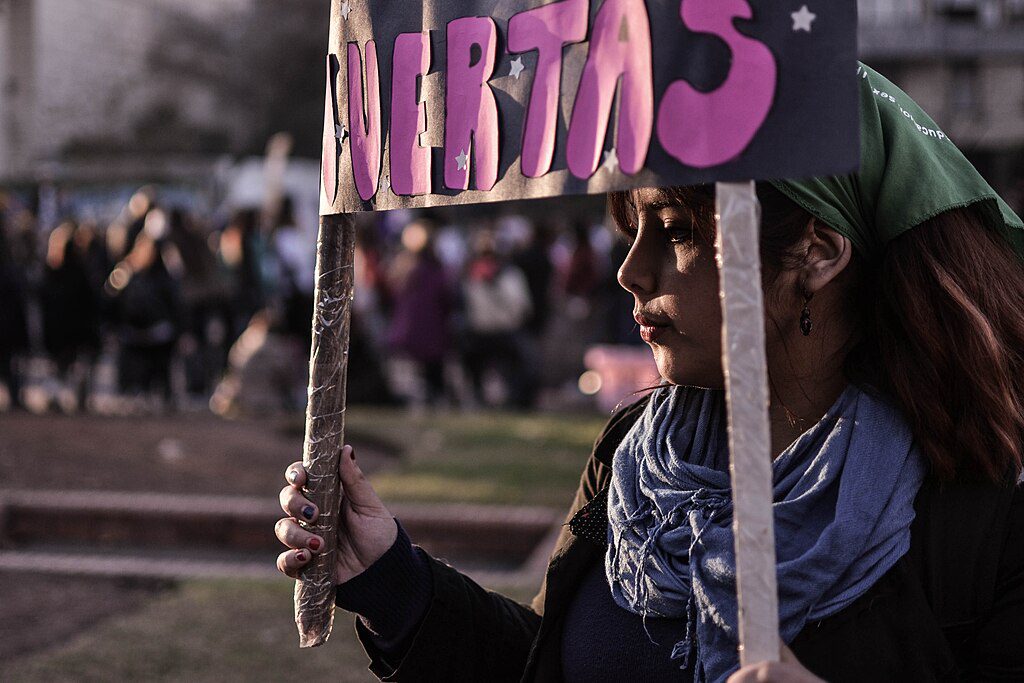
 Argentina has made significant progress in advancing gender equality, and according to the Sustainable Development Report, it is one of the few countries, not just in Latin America, but globally, that is on track to achieve SDG 5 by 2030. Argentina has implemented “100% of the legal frameworks under the SDG that promote, enforce and monitor gender equality.” This article dives into updates on SDG 5 in Argentina.
Sustainable Development Goal 5
In 2015, the Sustainable Development Goals (SDGs) replaced the Millennium Development Goals, aiming to transform the world. As part of the 2030 Agenda for Sustainable Development, all United Nations member states adopted the SDGs, which comprise 17 goals and 169 targets aimed at achieving development by 2030.
The fifth goal, or SDG ,5 aims to achieve gender equality and empower all women and girls. Its targets include ending all forms of discrimination, violence and harmful practices against women, among others. It also aims to ensure women’s equal representation in leadership at all levels of different spheres of life.
SDG 5 Progress in Argentina
The following section highlights recent updates on SDG 5 in Argentina, based on certain indicators of the goal. Among the indicators that the goal uses to measure progress, one focuses on the labor force participation of women by evaluating the ratio of female-to-male labor force participation. As of 2024, the rate was 73.73%, an increase from 67.59% in 2000, representing a slow but sustained rise.
Another indicator, measuring the ratio of the mean years of education that women and men aged 25 and older received, reached a peak of 104.92% in 2021. With relation to this indicator, the country has remained predominantly consistent over the last two decades, routinely surpassing the intended target of 100, demonstrating that, on average, women receive more years of education.
Meanwhile, a third indicator has shown a drastic improvement from the turn of the century. From holding less than 30% of seats in National Parliaments, the country, at its best, in 2024, witnessed nearly 45% of women leaders. There has been a slight dip in 2025, but so far it seems to be on track to achieve 50%.
Furthermore, the vulnerability of female employment in Argentina has also improved since 1991. As of 2023, the rates were 20.6% among women and 23.8% among men. In both cases, it is lower than the average rate in Latin America and the Caribbean. Lower vulnerable employment rates also have a relatively positive impact on poverty in the country, given that workers in vulnerable employment are more likely to fall into poverty.
Areas for Continued Growth
While Argentina has made notable progress in achieving SDG 5, certain areas require continued work to address necessary gaps. One such aspect that remains a challenge is physical and/or sexual violence. In 2018, among women aged 15-49 years, 4.5% reported that they had experienced physical and/or sexual violence by a current or former intimate partner in the previous 12 months.
With respect to labor, men spent 9.2% of their time on unpaid care and domestic work, while women and girls aged 15 and above spent more than 20%. The adolescent birth rate per 1,000 women aged 15-19 also rose to 0.9 in 2021. Though not a concerning figure, it was a slight increase from 0.8 in 2020.
Additionally, Argentina is working to close existing gender data gaps to fulfil its SDG 5-related commitments. A key area where data gaps exist is gender and poverty. Given that the female poverty rate is higher than the male poverty rate globally, this data could have a significant impact on empowering women and alleviating poverty in Argentina.
UN Women’s Initiative
Nonetheless, various initiatives have been and continue to be put in place to overcome these challenges. One such example is the Connected to the Future: The Potential of Digital Training to Accelerate Equality initiative, which U.N. Women launched in collaboration with Nokia aimed to bridge the digital divide. This multisector collaboration aims to enhance women’s access to employment in key sectors and to promote entrepreneurship through training and the development of local networks in Argentina.
As a part of the initiative, 80 women from across 52 municipalities in Puntos Mujer participated in the training surrounding cybersecurity, artificial intelligence, personal finance and digital violence, among others. The program also supports the U.N. Women Strategic Plan 2022-2025, particularly the digital inclusion strategy for Latin America and the Caribbean and encourages women’s economic empowerment in digital spaces, which is a feature critical for sustainable economic development in communities.
The Women’s Forum for Equal Opportunities
The citizens are also empowered, and they, too, are increasingly championing women’s rights throughout the country. For instance, indigenous and feminist women’s groups throughout Argentina are campaigning to stop racist sexual violence and femicide. The Women’s Forum for Equal Opportunities is one such organization. It has established women-led community networks by training local leaders on gender issues to assist survivors of violence. This has played a significant role in supporting survivors from regions with no access to telephone lines or the internet.
Looking Ahead
While Argentina faces some challenges in its path to achieving SDG 5, the programs and initiatives being implemented are working actively to bridge the gap by the end of the decade.
– Priya Doshi
Priya is based in Edinburgh, Scotland and focuses on Good News and Politics for The Borgen Project.
Photo: Wikimedia Commons

$28 Billion Pledge Boosts Childhood Anemia Prevention
Childhood Anemia: Effects on Health, Education and Poverty
Iron deficiency anemia is primarily caused by inadequate nutrient intake. Children in poverty-stricken countries are most at risk as food insecurity prevents balanced meals. Excessive blood loss associated with malaria, a disease currently found in 83 countries, is also a compounding factor of anemia in children. The link between poverty and anemia highlights why it is essential to understand its impact on children’s health, education and future potential.
Anemia causes fatigue, weakness, compromised immunity and, if left untreated, heart problems. Beyond health issues, affected children struggle with attention and memory problems, impacting learning as well as social interactions. The result is poor school performance and increased absenteeism, which affects their access to future educational and career opportunities, further perpetuating the cycle of poverty.
Why Previous Efforts Fell Short
Previous N4G Summits prioritized malnutrition and childhood anemia prevention. Global leaders pledged $23 billion in 2013 to address global malnutrition and $27 billion in 2021 to invest in anemia and food fortification. Sadly, these pledges fell short as a result of weak monitoring, insufficient funding and implementation delays. COVID-19 disruptions additionally prevented 2021 programs from fully reaching target communities.
Based on previous tracking reports, the 2025 Summit has new priorities. With a historic investment of $28 billion, the WHO and global leaders aim to turn commitments into tangible results. The efforts emphasize accountability, targeted interventions and measurable outcomes, supported by data systems to track progress. These changes set the stage for this initiative to make a real difference.
How $28 Billion Supports Childhood Anemia Prevention
Building from previous frameworks, the WHO, in partnership with UNICEF and the Anemia Action Alliance, has developed a comprehensive strategy to address childhood anemia. Their four primary areas for intervention include:
These efforts aim to create lasting systems that prevent childhood anemia rather than only treating it. When sustained, such progress improves health and boosts education, productivity and economic stability, helping break the cycle of poverty.
Turning Promises Into Progress: Why Transparency Matters
The impacts of anemia go beyond health; it impacts national growth, too. According to the World Bank, anemia in children reduces productivity and learning potential, costing low-income countries up to 4% of their GDP each year. To truly make a difference and reduce poverty across generations, commitments to improving health need to become actions.
That’s why the 2025 N4G Summit emphasizes trust and transparency. Past pledges faltered due to weak data collection and limited accountability. Organizations such as the U.N. and Global Nutrition Report are calling for stronger monitoring systems to ensure this doesn’t happen again. New tracking dashboards are in place to measure outcomes and ensure real progress is being made.
If governments and partners uphold their commitments, this unprecedented $28 billion pledge for childhood anemia prevention could finally create lasting change. It offers a once-in-a-generation opportunity to break the cycle of malnutrition and poverty for generations to come.
– Tina Kusal
Photo: Pexels
Everything To Know About Child Marriage in Nicaragua
Poverty
Poverty continues to affect a large portion of Nicaragua’s population. The United Nations reports that 48% of people live below the poverty line. Continual climate disruptions devastate the environment and worsen economic conditions. High levels of organized crime and human trafficking also contribute to insecurity. Many families marry off their children to ease financial hardship and improve their economic situation, resulting in increased levels of child marriage in Nicaragua
Furthermore, Nicaraguan society continues to enforce cultural and gender norms that pressure girls to marry young and bear children. These expectations limit and restrict their opportunities.
Lack of Education
A lack of access to education is both a cause and result of child marriage in Nicaragua. Families often pressure girls to leave school after marriage. Communities with poor access to education have higher levels of child marriage.
When families remove girls from education to marry, they face a greater risk of teenage pregnancy. Reports show that 30% of girls who marry or enter a union become pregnant within the first year. A 2019 UNFPA study highlighted the high correlation between early unions/marriage and pregnancy among girls in Nicaragua. Not only this, but teenage pregnancies pose a serious health risk for young mothers with increased maternal mortality rates.
Solutions in Place
The Nicaraguan government has implemented several measures to reduce child marriage and aims to end early and forced marriage by 2030. The government co-sponsored the 2013 and 2014 United Nations General Assembly resolutions on child, early and forced marriage. In 2013, as a member of the United Nations Economic Commission for Latin America and the Caribbean, Nicaragua adopted the Montevideo Consensus on Population and Development, which recognized the need to address the high levels of adolescent pregnancy and its associations with forced marriages.
The government also updated legislation under the Follow-up Mechanism to the Belem do Para Convention to ensure the minimum age of marriage was 18 for both men and women. During its 2019 Universal Periodic Review, the government agreed to review recommendations to combat all harmful practices against women and girls, including child marriage in Nicaragua.
Beyond legal reforms, the government and international organizations have focused on education and advocacy. Several non-governmental organizations (NGOs) and educational initiatives work to keep girls in education. For example, SOS Children’s Village, a charity dedicated to improving the lives of children living in poverty, has provided education to more than 2,630 children. Other global charities, such as UNAIDS, have partnered with UN Women, UNICEF and the World Health Organization in a joint initiative to eliminate child marriage and to ensure that governments meet the needs of women and girls in Latin American and the Caribbean. Due to the work of these initiatives and awareness brought to these issues, a number of communities now acknowledge the harm that child marriage in Nicaragua caused.
The Path Forward
There is still much more work to be done. There are still barriers to reform that need to be addressed and tackled with global organizations calling for stricter and better enforced policies, more access to education for girls, a change in cultural gender norms and continuing efforts to end poverty. However, the continued successes of government initiatives and charity organizations suggests a real progress for the improvement of women and girl’s rights and opportunities and for the reduction of child marriage in Nicaragua.
– Alys Gaze
Photo: Unsplash
5 Charities Operating in Mauritania
Five charities operating in Mauritania have helped improve access to education, health care and food assistance for vulnerable populations. International organizations such as the World Food Programme (WFP) provide food distribution and malnutrition services. The U.N. High Commissioner for Refugees (UNHCR) implements protection and inclusion programs for Malian refugees.
Progress in Mauritania comes from international and local organizations working together to improve health care, education and livelihoods. Both local and international charities operating in the country have positively impacted its development. Here is information about five charities operating in Mauritania.
1. World Vision Mauritania
World Vision is a global Christian humanitarian organization that began operating in Mauritania in 1983. The NGO originated in Nouakchott and focuses on improving the well-being of children and families in vulnerable communities. Its mission is to reduce poverty and improve access to education, health care, clean water and livelihoods through sustainable, community-driven programs. World Vision Mauritania has supported more than 230,000 children enrolled in various educational programs and established more than 300 preschool structures to promote early childhood learning. The charity has improved access to clean water by constructing 619 drinking water systems and 302 wells, benefiting more than 114,000 people. World Vision established 894 savings and loan groups with more than 17,000 participants, 98% of whom are women. Through its comprehensive and measurable initiatives, World Vision Mauritania continues to create lasting change by empowering communities and fostering sustainable development.
2. Médecins Sans Frontières (MSF)
Among the five charities operating in Mauritania, MSF began its operations in the country in 1992. In 2024, MSF returned to the Hodh El Chargui region in response to the increasing influx of refugees from Mali. The international organization provides basic health care, mental health support, sexual and reproductive care and treatment for malnutrition. MSF set up mobile clinics in many villages in Bassikounou to provide care to people arriving from Mali. It also collaborated with local organizations to improve emergency rescue efforts. MSF trained local officials in mass-rescue operations and first aid. In December 2024, it assisted migrants at the disembarkation point in Nouadhibou and supported three disembarkations and two land interceptions. Its work resulted in 2,590 outpatient consultations and 50 children admitted to outpatient feeding programs. By delivering essential health care and support services to vulnerable populations, MSF directly addresses critical gaps in Mauritania’s health care system.
3. Oxfam
Oxfam has been active in Mauritania since 1983, mainly in Brakna, Gorgol and Hodh el Gharbi. Between 2005 and 2006, Oxfam GB also spent about £616,641 on disaster response in Mauritania.
Between 2010 and 2012, Oxfam’s small-scale irrigation project in Boghé, implemented with the Mauritanian Red Crescent and Spanish Red Cross, benefited 957 farmers in 20 cooperatives and indirectly improved food access for more than 12,000 people.
From 2022 to 2023, Oxfam supported education projects through Education Out Loud, investing $196,511 USD to strengthen 20 member organizations in 15 regions to improve education inclusion and monitoring of SDG 4. Its programs strengthen resilience in communities facing food insecurity, limited land access and educational challenges, helping people build sustainable livelihoods.
4. Youth and Hope
Among the five charities operating in Mauritania, Houleye Thiam founded Youth and Hope in 2011. According to the organization, its mission is to eliminate barriers to education for young people in four targeted villages in rural areas of Mauritania. Youth and Hope delivers school sets to students twice a year, providing six notebooks and 12 pens. The sets are delivered by hand and the organization asks school teachers to confirm that the students have the basic supply needed to study. The local organization also operates in other villages that host former refugee populations returned from Senegal in 2011, like Gawdal, Diolly and Houdalaye. Youth and Hope’s work highlights the role of local initiatives in supporting vulnerable communities.
5. Care and Relief for the Young (CRY)
Since 1992, CRY has been an international charity that supports children and women in developing countries by providing education, shelter, feeding programs and micro-grants. Its work also includes helping orphans and street children through the provision of food, medicine, clothing and school fees, aiming to empower vulnerable groups through partnerships with local organizations. In Mauritania, where education access remains a major challenge, especially for children in rural and refugee communities, CRY’s work fills a crucial gap. In 2025, they launched the Child Development Centre in Mauritania, which supports more than 100 children and funds three feeding programs. The project provides direct assistance to orphans and street children and focuses on improving access to education, nutrition and health care.
The Bigger Picture
The work of these five charities operating in Mauritania makes a significant difference in the lives of Mauritanian people. The joint efforts of both local and international organizations support the most vulnerable groups, including children, women and refugees. Their programs provide direct assistance, such as food provisions, as well as grants and educational resources. Their mission is to help communities achieve sustainable livelihoods and build a better future for the country.
– Angela D’Avino
Photo: Flickr
The Gender Wage Gap in Guyana: Can It Improve?
The Gender Wage Gap in Guyana Exists
According to an Environmental Impact Assessment which was done for a government project, employment is less likely for women than it is for men. As of 2021, labor force participation was 64.9% for men and 38.7% for women. The employment-to-population ratio was 43.2%, with 56.3% being the rate for men and 31.3% being the rate for women. Additionally, as per the World Bank, women rank higher in education than men, yet labor market outcomes does not reflect this. This indicates that women face discrimination when it comes to employment. When women have employment, they do not receive as much pay as their male counterparts, regardless of working in similar positions.
The Reasons
The gender wage gap in Guyana exists due to gender role expectations and gender bias.
Benefits of Eliminating the Gender Wage Gap in Guyana
Of course, the elimination of the gender wage gap could lead to more gender equality, and ensure that women receive fair treatment and avoid lack of financial power and poverty for women. If women receive less pay and are unable to work, this increases poverty rates for the country as a whole. According to the World Bank, “Guyana’s poverty rate was among the highest in the Latin America and Caribbean (LAC) region.”
Improvements
While there is still room for improvement, a lot of progress has occurred in terms of gender equality in Guyana. Sources indicate that women in Guyana have started to have equal voices in political forums, and that Guyana has been improving significantly in terms of economic opportunities for women.
Additionally, the National Gender Equality and Social Inclusion Policy has been implemented. The goal of this policy is to provide women with equal rights and social inclusion, including within the workforce. Women’s participation in the workforce has increased since the activation of this policy. The country has also put other laws in place that prohibit gender discrimination and violence (in the workplace and in general), along with those that prohibit discrimination against women during pregnancy and after birth in the workforce.
While improvements have occurred, there is still room for more. Workplaces should continue to implement these laws and policies, and more steps are essential to addressing gender roles and biases in order to further reduce the gender wage gap in Guyana.
– Renata Hirmiz
Photo: Wikimedia Commons
Renewable Energy in Benin
A National Investment in Solar Power
Renewable energy in Benin is rapidly expanding with the government aiming to increase its share of renewables in the energy mix to 31% by 2030 and achieve 100% energy independence by 2050. Currently, much of the population’s energy is imported from neighboring nations such as Ghana and Nigeria in the form of fossil fuels. As these imports become more of a cost burden, the government is investing in locally generated energy sources. Benin’s recently enacted National Renewable Energy Development Policy (PONADER) supports various projects and strategies aimed at increasing energy security through renewable resources and reducing dependence on fossil fuels. This includes new investments in the private solar energy sector with Axian Energy and Sika Capital currently developing four large-scale solar power plants. These plants will fuel Benin’s centralized power grid; as a result, project developers expect 50,000 urban households to gain access to decarbonized power.
Electrifying Rural Areas
Rural populations often face numerous challenges that keep them in a cycle of impoverishment. However, energy security addresses many of these issues. Initiatives to increase energy access help communities build capacity by powering schools, health facilities, homes and businesses. In turn, this positively impacts educational, health and economic outcomes, all important determinants of poverty.
Bringing decentralized energy to Benin’s underserved rural areas, where only 17.4% of the population has access to electricity, has become a main focus in local government policy. Grid extensions and importing energy sources remain expensive, making local energy production more economically viable. Renewable energy in Benin expands further on the potential of solar power with the government establishing the Africa Minigrids Program. Implemented in partnership with the United Nations Development Programme (UNDP) and the Global Environment Facility, this program aims to bring clean energy to communities not connected to the central power grid using solar mini-grids. Such a program will help reduce existing energy inequalities in Benin, with current large disparities between urban and rural populations.
This program reinforces the work that private solar energy providers are already doing in rural Benin. The company ENGIE Energy Access, in partnership with the Beninese government, implemented Benin’s first solar mini-grid in 2024 and is in the process of building several more across the country. This project is anticipated to bring electricity to 30,000 people living in rural areas. ENGIE is also one of the main providers of in-home solar systems in West Africa, providing households with affordable and reliable access to electricity. Without this resource, people are currently depending on biomass to power their homes, a technique that is inefficient and produces pollutants.
Job Creation
Job creation and reducing underemployment will play a large role in poverty reduction in Benin. The World Bank found that in 2022, 72% of Benin’s workforce struggled with underemployment, while 90.1% worked jobs in the informal economy. Those who work in the informal sector or have inconsistent employment often see lower wages at irregular intervals, making job security difficult to achieve. These factors contribute to monetary poverty and a lack of access to basic necessities, highlighting a need for increased job opportunities.
Energy access is highly associated with economic growth and prosperity, empowering individuals to start businesses, diversify incomes and increase productivity. While electricity access enables individuals to engage in new income-generating activities, they will also be able to build upon existing ones. In developing countries like Benin, many rely on subsistence agriculture as a main source of income and to meet personal needs. With improved energy security, Benin’s farmers and the agricultural sector will benefit from more efficient farming practices.
Solar Electric Light Fund
Many communities are already seeing these benefits, with the nonprofit Solar Electric Light Fund establishing solar gardens across 10 villages in rural Benin. These gardens use solar power to operate water pumps and drip irrigation, making food production possible even during the long dry seasons. With a reliable harvest, these farmers generate consistent incomes and increase food security, contributing to their well-being and that of their families and communities.
An Increase in Green Jobs
There is also a rapidly growing demand for green jobs in Benin, as well as for the rest of Africa. These demands are beginning to be met in Benin through newly emerging programs that provide training and mentorship in renewable energy fields. Operating under the Economic Community of West African States (ECOWAS) and financed by the World Bank, the Regional Off-Grid Electricity Access Project (ROGEAP) is facilitating the growth of small-scale solar energy businesses and entrepreneurs in West Africa. Participants receive training in solar PV installation, maintenance and technology development, equipping them with the technical skills necessary to join the formal solar energy workforce. They are also trained in financial management and business strategies, helping them create startups and contribute to ongoing solar projects. ROGEAP also focuses on supporting youth and women-led enterprises, addressing gender inequality in the region.
A Future To Look Forward to in Benin
Renewable energy in Benin offers hope for its populations still living in energy poverty. Indeed, through the implementation of programs designed to increase energy security and strategic partnerships between the Beninese government and private solar power providers, the future for Benin’s energy sector looks bright. Building upon the capabilities of solar power will aid in the country’s prospective transition to energy independence and reduction of fossil fuel use.
– Quinlan Bohannon
Photo: Unsplash
Migration to Austria: Social Initiatives Making a Difference
Migration to Austria in the Second Half of the 20th Century
In the second half of the 20th century, Austria welcomed refugees from Europe and beyond, including those cast away from conflict in Uganda, Chile and Indochina amongst others. It has also offered a safe haven for persecuted groups.
Increased focus on guest-working programs that distributed manual labor amongst migrants coupled with conflicts in the Balkan region and Kosovo saw a rise in migration across the country in the second half of the century. Such initiatives saw potential for skill development in migrants who were severely limited due to poverty, lack of education and lack of access to basic human necessities. In line with the United Nation’s 2030 Sustainable Development Goals (SDGs), Austria has recognized how such migration benefits the development of the country as a whole and unlocked migrants’ potential by offering them employment and relieving them from poverty.
Thanks to its central location in Europe, stable economy and sympathetic attitude to refugees, it is easy to see why Austria is an obvious choice for many leaving their disadvantaged origins to create new lives abroad.
Attitudes to Migration to Austria Today
It is no secret that attitudes towards migration have soured Europe-wide, and Austria is certainly not immune. According to a 2016 integration barometer study, 60% more of participants judged the migration of Muslim persons and communities as a negative thing.
That is not to say that people view it negatively everywhere. The great metropolis of Vienna is predictably more welcoming to refugees and migrants. One empirical study conducted in 2023 revealed that Viennese people have a lot of social contact with people from migrant countries, with many also having family members from abroad. The city generally recognizes the positive impact of migrants on its economy, workforce and varied social landscape.
However, Vienna is somewhat its own microorganism. A study in October 2017 discovered that many Austrians lacked education surrounding issues of migration. Even if they were educating themselves about such issues, studies suggested biased news coverage that called for tougher border controls created unfounded fears and anti-migrant rhetoric.
Initiatives Fighting for Migrants’ Rights
Despite the rise of nationalist rhetoric across the country, social initiatives are still fighting for the lawful right of migration to Austria while also providing migrants with a framework that allows them to live and work in the country legally.
Megaphon, a street magazine based in Austria’s second-biggest city, Graz, just celebrated its 30th birthday. With it, it marked three decades of standing for social equality and migratory rights. Megaphon works specifically with migrants and asylum seekers from West Africa and Eastern Europe, offering them an empowering alternative to begging on the street by giving them the chance to sell the street magazine for double the amount they bought it for.
Many of the Megaphon vendors have unfortunately slipped through the cracks of the bureaucratic system in Austria, meaning that they often face work permit restrictions. Megaphon makes it possible for vendors to be self-employed without having the necessary documentation.
Social Initiatives Are the Future
Megaphon is just one example of an organization pushing back against the anti-migrant rhetoric that is gaining prevalence across the country. Such initiatives are more important than ever to fight for those on the fringes of society and ensure they do not end up in a life of poverty.
– Saroj Spickett
Photo: Pixabay
Updates on SDG 5 in Argentina
Sustainable Development Goal 5
In 2015, the Sustainable Development Goals (SDGs) replaced the Millennium Development Goals, aiming to transform the world. As part of the 2030 Agenda for Sustainable Development, all United Nations member states adopted the SDGs, which comprise 17 goals and 169 targets aimed at achieving development by 2030.
The fifth goal, or SDG ,5 aims to achieve gender equality and empower all women and girls. Its targets include ending all forms of discrimination, violence and harmful practices against women, among others. It also aims to ensure women’s equal representation in leadership at all levels of different spheres of life.
SDG 5 Progress in Argentina
The following section highlights recent updates on SDG 5 in Argentina, based on certain indicators of the goal. Among the indicators that the goal uses to measure progress, one focuses on the labor force participation of women by evaluating the ratio of female-to-male labor force participation. As of 2024, the rate was 73.73%, an increase from 67.59% in 2000, representing a slow but sustained rise.
Another indicator, measuring the ratio of the mean years of education that women and men aged 25 and older received, reached a peak of 104.92% in 2021. With relation to this indicator, the country has remained predominantly consistent over the last two decades, routinely surpassing the intended target of 100, demonstrating that, on average, women receive more years of education.
Meanwhile, a third indicator has shown a drastic improvement from the turn of the century. From holding less than 30% of seats in National Parliaments, the country, at its best, in 2024, witnessed nearly 45% of women leaders. There has been a slight dip in 2025, but so far it seems to be on track to achieve 50%.
Furthermore, the vulnerability of female employment in Argentina has also improved since 1991. As of 2023, the rates were 20.6% among women and 23.8% among men. In both cases, it is lower than the average rate in Latin America and the Caribbean. Lower vulnerable employment rates also have a relatively positive impact on poverty in the country, given that workers in vulnerable employment are more likely to fall into poverty.
Areas for Continued Growth
While Argentina has made notable progress in achieving SDG 5, certain areas require continued work to address necessary gaps. One such aspect that remains a challenge is physical and/or sexual violence. In 2018, among women aged 15-49 years, 4.5% reported that they had experienced physical and/or sexual violence by a current or former intimate partner in the previous 12 months.
With respect to labor, men spent 9.2% of their time on unpaid care and domestic work, while women and girls aged 15 and above spent more than 20%. The adolescent birth rate per 1,000 women aged 15-19 also rose to 0.9 in 2021. Though not a concerning figure, it was a slight increase from 0.8 in 2020.
Additionally, Argentina is working to close existing gender data gaps to fulfil its SDG 5-related commitments. A key area where data gaps exist is gender and poverty. Given that the female poverty rate is higher than the male poverty rate globally, this data could have a significant impact on empowering women and alleviating poverty in Argentina.
UN Women’s Initiative
Nonetheless, various initiatives have been and continue to be put in place to overcome these challenges. One such example is the Connected to the Future: The Potential of Digital Training to Accelerate Equality initiative, which U.N. Women launched in collaboration with Nokia aimed to bridge the digital divide. This multisector collaboration aims to enhance women’s access to employment in key sectors and to promote entrepreneurship through training and the development of local networks in Argentina.
As a part of the initiative, 80 women from across 52 municipalities in Puntos Mujer participated in the training surrounding cybersecurity, artificial intelligence, personal finance and digital violence, among others. The program also supports the U.N. Women Strategic Plan 2022-2025, particularly the digital inclusion strategy for Latin America and the Caribbean and encourages women’s economic empowerment in digital spaces, which is a feature critical for sustainable economic development in communities.
The Women’s Forum for Equal Opportunities
The citizens are also empowered, and they, too, are increasingly championing women’s rights throughout the country. For instance, indigenous and feminist women’s groups throughout Argentina are campaigning to stop racist sexual violence and femicide. The Women’s Forum for Equal Opportunities is one such organization. It has established women-led community networks by training local leaders on gender issues to assist survivors of violence. This has played a significant role in supporting survivors from regions with no access to telephone lines or the internet.
Looking Ahead
While Argentina faces some challenges in its path to achieving SDG 5, the programs and initiatives being implemented are working actively to bridge the gap by the end of the decade.
– Priya Doshi
Photo: Wikimedia Commons
Methods To Address Disability and Poverty in Myanmar
Community-Based Rehabilitation Programs
One of the most effective strategies in addressing disability and poverty in Myanmar has been the development of community-based rehabilitation (CBR) programs. The concept, supported by the World Health Organization (WHO), is simple yet powerful, as rehabilitation has become more accessible, local and inclusive rather than centralized in hospitals or distant clinics. CBR brings assistance directly to people’s homes and communities. In Myanmar, this method is particularly significant because many rural areas lack adequate medical infrastructure. Trained local volunteers and rehabilitation workers provide physiotherapy, mobility aids and counseling to individuals with disabilities. In addition, disability awareness training has been introduced within schools. These interventions help people regain independence, re-enter education or work and break cycles of dependency that perpetuate poverty. Furthermore, they raise community awareness and challenge traditional stigmas surrounding disability, which strengthens the success of such initiatives which are fighting disability and poverty in Myanmar.
Successes
A major success story comes from Kayin State, where the local NGO Karuna Mission Social Solidarity established CBR networks that have supported more than 10,000 people through small business grants, home-based therapy and caregiver training. This model shows that sustainable progress is possible when communities themselves are the drivers of change.
Similar initiatives are now spreading across Shan and Mon States, where CBR teams combine physical rehabilitation with livelihood projects such as livestock farming and handicrafts. By linking therapy with income generation, people regain independence and can help support their families. Reports from the Myanmar Independent Living Initiative and WHO show that CBR works best when it blends medical care with community empowerment. Local volunteers, often family members, are trained to assist with therapy and raise awareness about disability rights. This grassroots approach helps reduce stigma and builds understanding within villages.
The success of these programs also depends on cooperation between NGOs, local authorities and international partners. Together, they are turning disability inclusion into a shared social goal and helping to shape a more accessible future for Myanmar.
Social Protection and Financial Empowerment
In Myanmar, social protection programs are increasingly focusing on individuals with disabilities to reduce poverty and promote inclusion. The government has introduced initiatives like the Allowance for People with Disabilities Program, providing monthly stipends to eligible individuals, aiming to alleviate financial burdens and encourage community participation.
Additionally, organizations such as BRAC Myanmar have implemented the Financial and Social Inclusion Project, which offers vocational training, microloans and business development support to persons with disabilities. This holistic approach has led to improved financial literacy and increased community engagement among participants. These efforts are part of a broader strategy to create an inclusive social safety net in Myanmar, integrating marginalized groups into the economic mainstream and reducing poverty rates. Therefore, this is another part of the effort to reduce poverty and resulting disability in Myanmar.
Looking Ahead
Myanmar’s ongoing fight against disability and poverty shows that progress is possible even in challenging circumstances. Community-based rehabilitation, social protection programs and financial empowerment initiatives are helping individuals regain independence, access education and participate in their communities. While barriers such as limited resources and lingering stigma remain, these programs demonstrate that targeted support can create meaningful change. Contributions to NGOs and local organizations play a vital role in sustaining these efforts, providing the funding, expertise and resources needed to reach more people and expand life-changing services. Supporting these initiatives not only improves individual lives but also strengthens entire communities, paving the way for a more inclusive and equitable future.
– Toby Bowery-Taylor
Photo: Pixabay
Renewable Energy in Azerbaijan
The poverty rate in Azerbaijan has considerably declined in the past 20 years, dropping from 68.1% in 1995 to only 5.5% in 2023; however, with almost half the population living in rural areas, many residents continue to experience unreliable access to affordable energy. Some rural residents have access to electricity for only five to six hours a day, and poor insulation in outdated buildings further limits their ability to retain energy. Expanding renewable energy in Azerbaijan could close this gap by making power more accessible, while also improving public health and creating jobs.
Azerbaijan’s Renewable Energy Transition
According to the International Energy Agency (IEA), oil and natural gas control Azerbaijan’s energy supply, which together account for more than 90% of electricity generation. Renewable energy in Azerbaijan contributes about 6% of total electricity generation, but that share is set to rise as the government invests heavily in renewables such as solar, wind, hydropower and bioenergy.
The Ministry of Energy estimates Azerbaijan’s technical renewable potential at more than 135 gigawatts (GW) onshore and 157 GW offshore, with 27 GW considered economically feasible. This includes 3,000 MW of wind, 23,000 MW of solar, 380 MW of bioenergy and 520 MW from small rivers. Azerbaijan currently operates 65 hydroelectric plants, five wind farms, nine solar plants and several hybrid projects that produce around 1,829 MW, which is more than 19% of the country’s total power capacity.
These investments align with Azerbaijan’s commitment to host COP29, the 2024 United Nations Climate Change Conference, underscoring the country’s growing role in advancing world sustainability.
How Renewable Energy in Azerbaijan Can Reduce Poverty
Challenges and the Road Ahead
While Azerbaijan’s renewable energy growth is promising, challenges remain. The country’s energy infrastructure continues to depend primarily on fossil fuels, and scaling up renewables requires additional investment in transmission lines and modernized regulations. The Ministry of Energy notes that although the technical potential exceeds 135 GW, only a fraction is economically feasible today due to costs, outdated technology and limited participation from the energy private-sector.
Still, the government’s Law on the Use of Renewable Energy Sources in Electricity Production and the development of public-private partnerships represent crucial steps toward a more sustainable and inclusive future. If Azerbaijan continues its commitment to renewable energy expansion, it will foster not only a greener economy but also a more equitable one.
– Emily Salter
Photo: Pexels
AI Hub for Sustainable Development: A Transformative Step
According to the Center for Global Development, AI could widen the gap between high-and low-income countries due to three reasons: high-income countries are well equipped to benefit from AI, developing countries are less prepared to handle AI’s adverse effect on their labor markets, and AI is imposing pressure on labor-intensive service industries. At the same time, the absence of collective action is slowing down the development of AI in Africa. Thus, this AI Hub project is a significant step towards addressing these challenges and boosting sustainable development in Africa.
Why AI Hub Matters
The AI Hub’s main goal is to provide Africa’s innovators and start-ups with everything they need to build and run AI including, green compute, talent and data. The project aligns well with SDG9, which refers to the importance of promoting infrastructure, industrialization and innovation by strengthening AI infrastructure. It also aligns with SDG4, equitable quality education, by providing training and teaching AI skills for African talent.
Additionally, the hub’s goal fits with SDG17, global partnerships for sustainable development, since it is based on 25 partnerships between Africa’s innovators, the EU, G7, and Italian companies, and 14 African partner countries. Such partnerships could incredibly accelerate AI development across Africa.
Challenges Limiting AI Advancement in Africa
AI innovation is a part of multiple fields in Africa, but it is still encountering challenges, including,
The new AI Hub addresses these challenges to ensure that everyone can benefit from AI.
There is no doubt that this AI Hub will incredibly transform industries and foster sustainable development in Africa, but still, there is more effort necessary.
– Eiman Elsawy
Photo: Flickr