• Link to X
  • Link to Facebook
  • Link to Instagram
  • Link to TikTok
  • Link to Youtube
  • About
    • About Us
      • President
      • Board of Directors
      • Board of Advisors
      • Financials
      • Our Methodology
      • Success Tracker
      • Contact
  • Act Now
    • 30 Ways to Help
      • Email Congress
      • Call Congress
      • Volunteer
      • Courses & Certificates
      • Be a Donor
    • Internships
      • In-Office Internships
      • Remote Internships
    • Legislation
      • Politics 101
  • The Blog
  • The Podcast
  • Magazine
  • Donate
  • Click to open the search input field Click to open the search input field Search
  • Menu Menu

Tag Archive for: USAID

Information and news about mobile technology

Posts

Global Poverty

Improving Farming Methods in Central America

Farming Methods in Central America
Many Central American countries suffer from droughts and forest fires due to hot temperatures and inconsistent rainfall. Without adequate water, agricultural workers are unable to consistently produce adequate goods each year. They are often forced to rely on crops that don’t need as much water but are less nutrient-rich, such as corn.

Planting crops during the dry season, between December and April, is extremely difficult and even the rainy season between May and July presents a challenge, given inconsistent rainfall patterns. In addition, staple crops like corn do not yield the profits of higher-value crops such as squash, beans, zucchini and watermelon, which not only increase income and quality of life in the region but also improve the diets of farmers, families and locals. Fortunately, a number of local and international organizations are implementing programs aimed at improving farming methods in Central America.

USAID

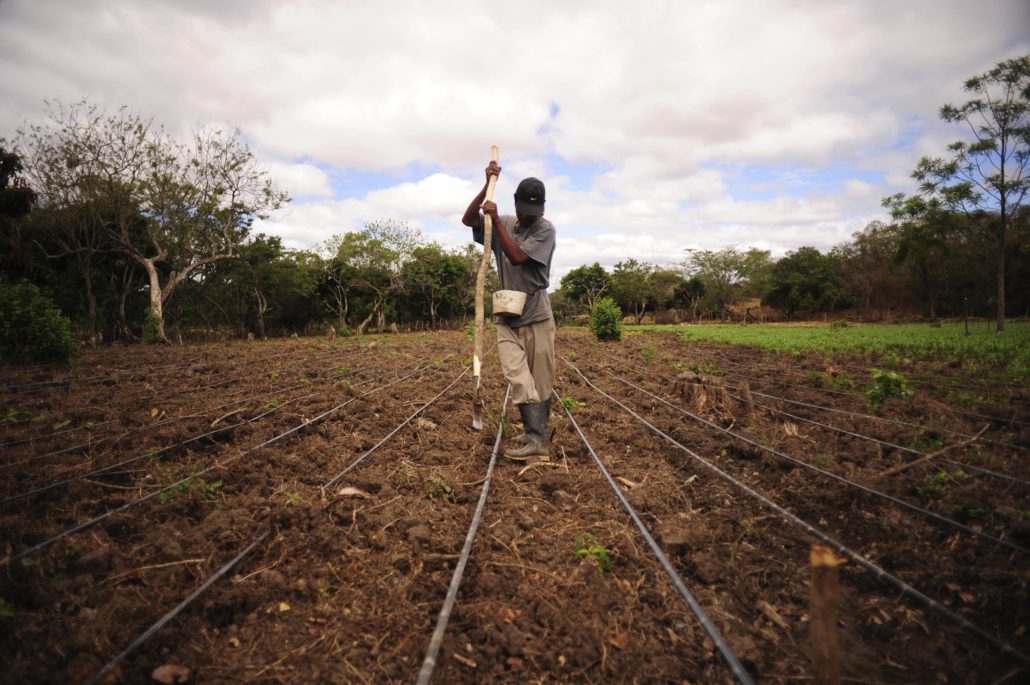
The United States Agency for International Development (USAID) has been combating unreliable, inconsistent weather patterns via a Honduras-based rainwater harvest program, aptly named Harvest. This consists of a reservoir that gathers rainfall in the winter, providing farmers with a backup water supply during dry months. Crops are watered through a low-pressure drip irrigation system, enabling farmers to plant and harvest three times a year instead of only once.

As a result, farmers have been able to grow and expand their repertoire of crops. Many other organizations have been involved in this initiative, including Development Innovation Ventures, Global Communities, SAG (Secretaría de Agricultura y Ganadería) and local governments.

AGRI

AGRI is a similar Honduras-based project under development that utilizes small drip irrigation systems spanning roughly 10 hectares. It works by locating surface-water sources that can be used for rainwater harvesting and uses water pipes to share water sources between various groups of farmers.

AGRI is also generating deforestation analyses using its terrain Digital Elevation Model (DEM) and other spatial analysis frameworks that analyze drainage basins and upstream areas. Its remote sensors can collect and predict weather patterns while enabling digital soil mapping and hydrologic analysis to estimate water runoff and water balance.

While AGRI hasn’t been formally introduced to Honduras, invest-H (Investment in Honduras) managers and the government are working to expedite its implementation. AGRI is supported by the U.S. initiative Feed the Future as well as Zamorano University, a Honduran university that is currently researching and refining the field validation of AGRI in preparation for its official launch.

MásRiego

MásRiego, meaning “more irrigation” in Spanish, is a Guatemala-based initiative that works to increase water supplies through drip irrigation, rainwater harvesting, reduced tillage, mulch use and diverse crop rotation. The project team provides training and partnerships to Guatemalan farmers to improve farming methods while offering access to microcredit financing and irrigation equipment. As rainfall patterns become more unpredictable, new methods of farming such as conservation and rainwater harvesting must be introduced. Conservation improves moisture retention, soil structure and soil health, while also reducing weeds, manual watering and preparation time.

MásRiego’s goal is to connect 9,000 rural Guatemalan households through these smarter farming methods. They also plan to use local schools to teach students about these new methods as well as inform them about agricultural job opportunities. As a result of unpredictable rainfall patterns and increased competition, farmers entering the field must be educated on the tools needed for success. MásRiego also focuses on helping women and youth grow high-value crops on smaller plots of land to increase the incomes of Guatemalan farmers and the nation as a whole. The program is supported by the U.S. government’s Feed the Future initiative.

Moving Forward

Using the latest farming methods, these organizations are helping to support Central American farmers’ incomes and improve quality of life. The diets of both the farmers and local communities are already being enriched as improved farming and irrigation methods allow for a broader variety of crops to be planted. The Harvest program has also found that more young people are choosing to remain in their countries as new and improved methods make farming a viable lifestyle.

With the technology that AGRI plans to introduce and the conservation methods that MásRiego is implementing, farming will become less of a financial and physical burden. These organizations and others like them will continue to improve farming methods in Central America, with an eye toward expanding into other arid regions in the future.

– Nyssa Jordan

Photo: Flickr
February 21, 2020
https://borgenproject.org/wp-content/uploads/borgen-project-logo.svg 0 0 Jennifer Philipp https://borgenproject.org/wp-content/uploads/borgen-project-logo.svg Jennifer Philipp2020-02-21 07:00:152024-06-06 00:32:51Improving Farming Methods in Central America
Global Poverty, Health, Sanitation, Water, Water Sanitation

10 Facts About Sanitation in Egypt

Facts About Sanitation in Egypt
In Egypt, approximately 8.4 million people do not have access to good sanitation, but the country has made many attempts throughout the years to improve sanitary conditions. As a result, many people and young children are enjoying a better quality of life. Here are 10 facts about sanitation in Egypt.

10 Facts About Sanitation in Egypt

  1. USAID Reforms: USAID has invested $3.5 billion to bring portable water and sanitation to Egypt. Starting in 1978, the organization has helped advance wastewater systems in Cairo, Alexandria and the three Suez Canal cities. This provided clean water to 25 million Egyptians.
  2. Health Impact: Drinking contaminated water can lead to very serious illnesses and, in some cases, death. In Egypt, diarrhea is the second-leading cause of death. This can be especially problematic for children under the age of 5. Statistics even show that about 3,500-4,000 children under 5 die each year.
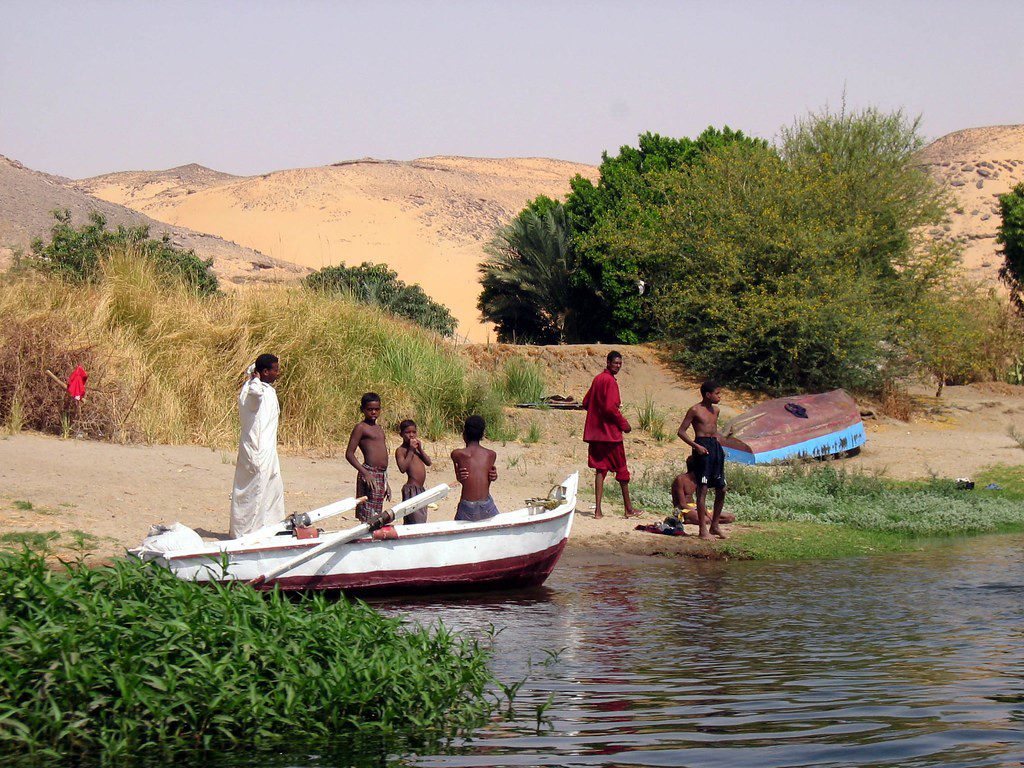
  3. The Water Crisis: Recently, water has become very scarce in Egypt. This is due to uneven water distribution and the mismanagement of resources. The pollution of the Nile River, the main source of water and agriculture, is also a big issue for water sanitation.
  4. Population Growth: Since the 1990s, Egypt has seen a 41 percent population growth, meaning that more and more people are crowding around water sources like the Nile River. Dr. El- Zanfaly with the American Institute of Science wrote that the crowding directly links to the “contemporary rural sanitation problem.”
  5. Toilet Troubles: Another sanitation issue for Egypt is access to clean toilets. The majority of the Egyptian people have toilets that either has bidet tubes or are squat toilets. With squat toilets, users require a hose and bucket to flush and wash their hands. Both types can become very unsanitary, especially public toilets.
  6. Sustainable Rural Sanitation Services Program: On September 21, 2018, The World Bank announced that it granted a $300 million loan to Egypt. The loan was to improve access to rural sanitation. As a result of the program, 833,000 Egyptians have gained access to local water and sanitation companies and additional financing will help 892,000 people in 178,000 households.
  7. North Sinai Initiative: USAID partnered with the Holding Company for Water and Wastewater. They work together to improve water sources by digging deep regulated wells and constructing desalination plants, reservoirs and portable water transmissions. Estimates determined that by 2019, the initiative should have provided clean drinking water to 300,000 of the 450,000 people living in the area. The total cost of the project was $50 million.
  8. Menstrual Hygiene: The lack of clean water can especially impact women. NCBI conducted a study with 664 girls aged 14-18. In this study, it found that on average the typical female Egyptian adolescent cannot bathe nor change her sanitary pad as frequently as she should. Not maintaining menstrual hygiene can cause frequent rashes and yeast infections. Unfortunately, there are little to no actions in place to fix these issues.
  9. Ancient Times: The Ancient Egyptians had revolutionary methods of staying hygienic and clean with in-home bathrooms and communal dumps. They would gather water from the Nile to do laundry and bathe. The communal dumps or irrigation canals caused vermin and diseases to grow and spread. As technology and resources evolved, so did Egyptian methods of sanitization.
  10. Impact on Schools: One in five schools in Egypt are unfit because of sanitation and contamination problems. Programs like the water, sanitation, hygiene interventions or WASH spread knowledge to teachers and students.

These 10 facts about sanitation in Egypt show that the country has made many attempts to better the quality of life of its people. With time and further resources, Egypt should increase the prevention of sanitation issues and reduce the spread of diseases.

– Sarah Mobarak
Photo: Flickr

February 20, 2020
https://borgenproject.org/wp-content/uploads/borgen-project-logo.svg 0 0 Lynsey Alexander https://borgenproject.org/wp-content/uploads/borgen-project-logo.svg Lynsey Alexander2020-02-20 04:30:522020-02-27 15:37:2010 Facts About Sanitation in Egypt
Gender Equality, Global Poverty

10 Facts about Gender Inequality in Haiti

10 Facts about Gender Inequality in HaitiHaiti is one part of the isle of Hispaniola and located in the Caribbean Sea. It was born out of imperialism and enslavement by European powers. Haiti won its independence from foreign powers in 1804 although it wouldn’t be officially recognized until several years later. Today, the women of Haiti make up the pillars of the Haitian economy, yet still, there is an undoubted disparity between men and women. Women in Haiti face gender-based discrimination and violence. Here are 10 facts about gender inequality in Haiti.
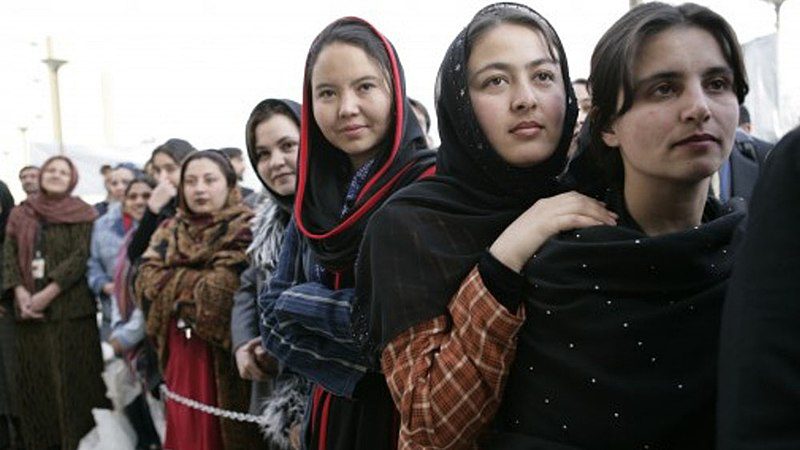
10 Facts about Gender Inequality in Haiti

  1. While women and girls stand at the heart of the Haitian economy and society, they still face much gender-based violence. Organizations like the U.S. Agency for International Development (USAID) are committed to creating gender equality in developing nations such as Haiti. One in three Haitian women ages between the ages of 15 to 49 has experienced some form of gender-based violence.
  2. For many Haitian girls ages 13 to 17, school was the second most common location where they reported some kind of sexual abuse.
  3. Due to a feeble judicial system in Haiti, there were no laws in place declaring rape and domestic violence a punishable offense until 2005. Furthermore, women and girls in Haiti are given far less legal protection than men. This results in no penalties for criminals who commit these atrocious acts.
  4. USAID supports the introduction of a gender-specific legal strategy that would grant women better access to quality legal protection. USAID’s Projustice Program has provided legal services and justice to at least 50,000 people between 2009 and 2016. Projects like the Projustice Project are crucial to the improvement of the lives of many Haitian women.
  5. Beyond Borders is an NGO with the goal of preventing violence against women in Haiti. It launched a project in June of 2010 called “Rethinking Power.” Rethinking Power is a project that works closely with five Haitian communities to reeducate the participants about violence against women. Rethinking Power uses mediums like theater and comic strips to convey the message that a man should not commit violence against women. As a result of this project, 94 percent of participants agreed that a man has no right to strike a woman when he is angry. Additionally, one in three community members has reported someone from his or her community who discusses Rethinking Power regularly.
  6. Women have a 20 percent higher chance to be unemployed than men, according to a 2015 World Bank report. Unfortunately, many employers in Haiti discriminate when it comes to sex. It favors men over women for employment, furthering gender inequality in Haiti.
  7. Women in Haiti often live in poor, low-quality housing. Many single mothers and women live on low wages with little means of social and economic advancement. Some women are forced to live with their parents to make ends meet.
  8. Only 22 percent of women are married in Haiti. In Haiti, a woman’s social standing is higher if there is a man in her life, especially for low-income women. Single women and single mothers are often frowned upon in society.
  9. Non-governmental organizations like the Pan American Development Foundation have helped fund 11 women-owned businesses through its LEAD program. This created 9,000 jobs. This is a crucial step in the rebuilding of Haiti, allowing women to attain better jobs in a male-dominated workforce.
  10. Most women in Haiti work in the informal sector. The informal sector often includes makeshift marketplaces and low-income jobs. An article in the 2010 MIT journal about the rebuilding of Haiti after the earthquake suggests that Haiti should be rebuilt with women at the forefront of the rebuilding process. Focusing and raising the power of the informal sector and the work the women of Haiti do should be an integral part of the rebuilding of the Haitian economy.

Despite the fact that the country that has been ravaged by gender inequality, it is arguably on a road to a better future for Haitian women. Many advocacy groups work to lessen the burden women face in Haiti. Groups like Rethinking Power and USAID have helped to change the violent, victim-blaming attitude men harbor toward women in Haiti. Organizations like these are working to change these 10 facts about gender inequality in Haiti.

– William Mendez
Photo: Flickr

February 20, 2020
https://borgenproject.org/wp-content/uploads/borgen-project-logo.svg 0 0 Kim Thelwell https://borgenproject.org/wp-content/uploads/borgen-project-logo.svg Kim Thelwell2020-02-20 01:30:562024-05-29 23:14:4910 Facts about Gender Inequality in Haiti
Global Poverty, Health

7 Health Improvements in Afghanistan

Health Improvements in Afghanistan
Conflict has torn Afghanistan apart. Like all conflicts, it is the innocent civilians that suffer the most. Afghanistan continues to face a great amount of insecurity within its borders. Yet, despite the harsh conditions that are an everyday reality for civilians, the country continues to make additional health improvements. Here are seven health improvements in Afghanistan.

7 Health Improvements in Afghanistan

  1. Increased Health Facilities: Readily available health facilities initiated health improvements in Afghanistan, according to the Senior Health Specialist at the World Bank, Ghulam Dastagir Sayed. As of 2003, there were only 500 health facilities available for Afghan civilians. As of 2018, that number skyrocketed to 2,500 facilities. These facilities are located all over Afghanistan, but USAID makes it clear that low-income populations and rural areas are the most important to reach.
  2. The International Midwife Association: NGOs in Afghanistan have trained over 4,000 community midwives around the country and provided them with the necessary information to provide anti-natal care, postnatal care,  deliveries and immunization services to the people of Afghanistan. The NGO International Midwife Association has helped women in Afghanistan. Before it provided this help, many women did not have the necessary knowledge and help to have a safe pregnancy.
  3. Infant Mortality Rate: Afghanistan has the highest infant mortality rate in the world. However, from the year 2003 to 2015 the number of children dying before their 5th birthday has dropped by a total of 34 percent. This has lowered deaths from 137 per 1,000 births to 91 per 1,000 births. Health services and a better health care system in Afghanistan have caused these numbers to drop.
  4. Pregnant Women: Health care available to pregnant women in the country has also been among the health improvements in Afghanistan. From 2010 to the year 2018, health professionals have seen pregnant women at an increase of 3.5 percent each year. Additionally, women’s use of contraceptives and the number of births that professionals aided increased by 2 percent during the same eight years. The Afghani government has launched effective national health campaigns that have educated Afghani women and led them to seek out professional help during pregnancy. Women in the country are benefiting greatly through these increased health services. From the year 2003 to 2015, the number of women dying per 100,000 births has reduced by 64 percent. Similar to the improved child mortality rate above, a better health care system that reaches and educates Afghan women about their health has caused these improvements.
  5. The Afghanistan Development Association (ADA): NGOs are working to contribute to health improvements in Afghanistan. Seventy-two percent of the NGOs in the country are Afghan and are on the front lines providing medical treatment. One such NGO is the Afghanistan Development Association. ADA provides development and humanitarian aid to the country of Afghanistan.
  6. Drug Availability: Drug availability has risen in the country. It rose from 13.8 percent in the years from 2004 to 2010 and an additional 0.6 percent in the years 2011 to 2016. The government established the National Medicine and Health Products Regulatory Authority (NMHRA) that regulates medicines and other health products. This is one such program that is helping medicinal drug availability. Many Afghans have had to resort to smuggling medicinal drugs from neighboring countries or rely on traditional medicine. While Afghanistan has improved this problem, it can only continue its progress through programs like the NMHRA.
  7. Patient Counselling: Patient counseling is an important part of health care. From 2004 to 2010, patient counseling saw an increase of 6 percent annually followed by an additional 1.3 annually between the years 2011 and 2016. Patient counseling is important in the realm of family planning and child services.

While Afghanistan is still a country with many problems, one cannot deny that the progress it is making deserves celebration. The Afghan government partly made many of these improvements by actively engaging NGOs to tackle the health issues within its borders.

– Jacob E. Lee
Photo: Wikimedia Commons


February 18, 2020
https://borgenproject.org/wp-content/uploads/borgen-project-logo.svg 0 0 Lynsey Alexander https://borgenproject.org/wp-content/uploads/borgen-project-logo.svg Lynsey Alexander2020-02-18 11:30:042020-02-18 11:43:527 Health Improvements in Afghanistan
Global Poverty, Health

Improving Public Health in Mali 

Public Health in Mali
Mali is a nation that has had both ups and downs in recent decades where public health is concerned. Food and waterborne diseases are particularly problematic within the country. The degree of risk for attracting some sort of major illness or infection within Mali is very high. Among the top 10 causes of death in Mali are neonatal disorders, malaria, malnutrition and lower respiratory infections. Many of the issues surrounding public health in Mali largely correlate with access to food and clean drinking water.

Centers for Disease Control and Prevention (CDC)

The CDC has been working in a close partnership with the country since 1996 in an effort to provide aid for public health in Mali. A CDC epidemiologist first began working with Mali on stopping diseases like smallpox and measles. However, its mission within the nation’s borders has expanded. One goal of the CDC’s current partnership with the nation is to improve public health in Mali. The CDC is expanding access to solutions for vaccine-preventable illnesses and other leading causes of death. Another goal is strengthening the country’s laboratory and workforce capacity to help it be more prepared for disease outbreaks.

The U.S. Agency for International Development (USAID)

Despite some serious achievements within the health sector of the country, public health in Mali still remains one of the largest concerns within its borders. The newest strategy under the U.S. Agency for International Development focuses heavily on development within the region in several different ways. It prioritizes the comprehensive packaging of high-impact health services at the community level and pushes for making said necessary health initiatives accessible to those who need it the most. Additionally, the organization supports the goals of the U.S. Government Global Health Initiative. The organization is continuously looking for ways to improve public health by making effective, quality health services to Mali’s citizens.

Prioritizing Mothers and Children

Even more specifically, Mali and initiatives must give special attention to mothers and children within the country as part of any approach to improving public health in Mali. Some organizations prioritize this above all else, like Mali Health. Its approach focuses on promoting financial health and stability. Mali Health removes financial barriers that stand in the way for many citizens of Mali. The thinking behind this approach is that with fewer financial barriers posing as obstacles for mothers, they will be able to seek out medical care for themselves and their children easier than it may have been previously to do so. Approaching public health in Mali primarily by tackling issues that heavily affect mothers and children first is an intuitive idea. Doing so means that healthier mothers are able to raise healthier children. The children will live and thrive past the years where certain illnesses can be particularly deadly. In addition, when more children survive and thrive, it leads to successes in Mali’s workforce, population growth and economic growth.

Clean Water in Mali

Another integral approach to solving the issues which plague public health in Mali is one that focuses primarily on clean water. Diarrheal diseases are especially lethal and often emerge out of a lack of access to clean and safe drinking water. One nonprofit organization, Medicine for Mali, has drilled 28 clean water wells within the country in hopes of providing cleaner water to its citizens. Solar even powers some of these wells and the organization has provided training within the villages it services so that users know how to maintain and repair the wells. It is through organizations like these that profound impacts are visible on public health in Mali. The implementation of health services and wells can change the lives of thousands of people all at once. This sparks a movement to help a nation on its path to growth.

Like many other countries, Mali still needs improvement in order to become substantially healthier. Public health in Mali still faces many issues. The real challenge lies in ensuring that clean drinking water, necessary medications and vaccinations and preventive health services are accessible throughout the country. The country should undoubtedly achieve this through the combined efforts of nonprofit organizations, its government, its citizens and foreign aid agencies in the U.S.

– Hannah Easley
Photo: Flickr

February 17, 2020
https://borgenproject.org/wp-content/uploads/borgen-project-logo.svg 0 0 Lynsey Alexander https://borgenproject.org/wp-content/uploads/borgen-project-logo.svg Lynsey Alexander2020-02-17 20:23:202024-05-29 23:12:49Improving Public Health in Mali 
Global Poverty, Women, Women and Female Empowerment

Empowering 50 million women

Empowering 50 million women
Women face many barriers when it comes to entering the workplace, especially in developing countries. Societal norms in developing countries often prevent girls and women from pursuing an education. When women do not have an education, they cannot enter the labor force as easily and help cultivate the economy. This cultural practice hinders a developing country’s ability to procure economic growth and reduce poverty rates. The Women’s Global Development and Prosperity Initiative is empowering 50 million women.

The Women’s Global Development and Prosperity Initiative

The Women’s Global Development and Prosperity Initiative (W-GDP) is an initiative committed to delivering tangible results concerning women in developing countries. The three pillars of the initiative are: women prospering in the workforce, women succeeding as entrepreneurs and enabling women in the economy. It has been proven that when women have economic empowerment, there is a multiplier effect throughout the region. They invest more in their families and communities, which then promotes economic growth.

United States President Donald Trump established the W-GDP Initiative in February 2019 as the first total government movement to promote the economic empowerment of women across the globe. Funding for the initiative began in July 2019.

14 W-GDP Projects

This introduced 14 new projects and around 200 private-public partnerships from across more than 20 countries. The partnerships consist of foreign governments, multilateral donors, non-government organizations, the private sector and universities. These partnerships will allow the W-GDP to influence more than 100,000 women. The 14 projects are throughout developing countries.

In Papua New Guinea, Cardno Emerging Markets leads its partners in working to grow 40 enterprises led by women. It also plans to reform any discriminatory laws in the region that affect some 50,000 businesswomen. In Indonesia, Cargill and its partners are working together to increase the salaries for 2,000 enterprises led by women.

In the Philippines, UPS and its partners are increasing the salaries of 3,800 women and are working to remove obstacles that block full economic participation. In Chile, Brazil, Peru, Mexico and Colombia, big-name companies such as Citi and Google have formed a partnership within the private sector in order to provide efficient training for some 8,700 women.

In Liberia, Zambia, Tanzania, Ethiopia and Mozambique, Landesa and its private sector partners work to change any laws that limit women’s property rights. In Côte d’Ivoire, the International Rescue Committee and partners work to give job training to around 750 women in the solar energy industry.

In Benin, the Management Sciences for Health and its partners work together to reintegrate more than 170 female victims of gender-based violence into the workforce. This is going to happen via entrepreneurship and employment opportunities.

Ivanka Trump and the U.S. Agency for International Development Administrator (USAID), Mark Green, are going to run the initiative. Green strongly supports investing in women. He will oversee that the resources of the U.S. government will go towards helping women as much as possible.

The Future

By 2025, the W-GDP wishes to help in empowering 50 million women in the developing world. The plan is to achieve this through a new fund, private-public partnerships and U.S. government activities. The W-GDP will focus its resources on these five main points.

  1. Traveling Freely: Limit restrictions on passports and movement for women.
  2. Accessing Institutions: Limit restrictions for women on legal documents.
  3. Removing Restrictions on Employment: Prohibit restrictions on women and their tasks, hours and jobs.
  4. Owning and Managing Property: Prohibit restrictions on women owning or managing property.
  5. Building Credit: Do not allow gender discrimination in accessing credit. Level the playing field for women including equal access and capital.

With these ambitious objectives, empowering 50 million women will be observable. It is propitious that in the coming years, women living in developing countries will enjoy abundant access to the economic sector.

– Nyssa Jordan
Photo: Wikimedia Commons

February 14, 2020
https://borgenproject.org/wp-content/uploads/borgen-project-logo.svg 0 0 Lynsey Alexander https://borgenproject.org/wp-content/uploads/borgen-project-logo.svg Lynsey Alexander2020-02-14 09:30:552024-05-29 23:14:47Empowering 50 million women
Global Poverty, Women

6 Facts About Women’s Health in Madagascar

Six Facts About Women’s Health in Madagascar
Madagascar is the world’s second-largest island country off the coast of East Africa. It is also among the poorest countries in the world with a poverty rate of over 75 percent. This poverty rate has inevitably affected the accessibility and quality of health care and the consequent overall health of Malagasy women. These are six facts about women’s health in Madagascar.

6 Facts About Women’s Health in Madagascar

  1. Maternal mortality rates are high. With 335 deaths per 100,000 live births, Madagascar falls well below the average among Sub-Saharan Africa, which stands at 534 deaths per 100,000 live births. On the other hand, it is well above the worldwide average of 211 deaths per 100,000 live births.
  2. Maternal health clinics often do not have adequate access to necessities or properly trained health professionals. Only 19 percent of health care providers in Madagascar have an education in the basics of emergency obstetric and neonatal care. Only 56 percent of primary health centers have electricity and only 53 percent have access to clean drinking water.
  3. Malnutrition is a problem among mothers in Madagascar. According to a study in 2018 by BMC Nutrition, 17 percent of Malagasy mothers between the ages of 18 and 45 suffered from maternal malnutrition and 38.3 percent of pregnant women suffered from anemia. More than 76 percent of Malagasy women have abnormally little weight gain during pregnancy.
  4. USAID is working to help. With its 12,000 volunteers armed with training and medical supplies, it works to provide for maternal health clinics in rural areas of Madagascar. It has even invested in mobile clinics or groups that travel to areas that have no easy access to health care to reach women and mothers with no other options.
  5. Another organization reaching out to women in Madagascar is Jhpiego, formerly the Johns Hopkins Program for International Education in Gynecology and Obstetrics. Across the 815 health clinics it supports, it has aided in more than 130,000 births and provided care to 679,000 new mothers.
  6. Female life expectancy in Madagascar is increasing. In 2019, the female life expectancy among Malagasy women was 68.68 years. While they still rank low in comparison to the 2019 worldwide average of 72.6 years, they have come a long way in the past few decades. With an average rate of increase of 0.83 percent each year, they have greatly improved their life expectancy which stood at 45.73 years in 1970.

These six facts about women’s health in Madagascar show that with one of the world’s worst poverty rates, women in Madagascar are struggling to maintain their health and find safe places to deliver their children. However, groups like the Jhpiego are working to reach out to the women who need help the most in Madagascar. As a result, many women are receiving prenatal and antenatal care for the first time as well as access to health clinics with experienced health care workers. Overall female health in Madagascar is improving and USAID and Jhpiego show no signs of stopping their aid to women’s health in Madagascar.

– Amanda Gibson
Photo: Flickr

February 10, 2020
https://borgenproject.org/wp-content/uploads/borgen-project-logo.svg 0 0 Jennifer Philipp https://borgenproject.org/wp-content/uploads/borgen-project-logo.svg Jennifer Philipp2020-02-10 01:30:382020-02-12 07:49:276 Facts About Women’s Health in Madagascar
Global Poverty, Water

The Securing Water For Food Program

Securing Water for Food
Water is the most basic necessity. Every living thing on this planet requires water in distinct quantities. Water as a diminishing resource seems like a distant nightmare for the great-great-grandchildren of this generation. However, in actuality, civilizations could be closer to having too little fresh water than they realize. People use approximately 70 percent of the world’s fresh water for agriculture and Dr. Ku McMahan stated that more than half of the world’s population could be without enough fresh water to meet basic needs like hygiene, growing food and having enough to drink by 2025. Luckily, the Securing Water For Food: A Grand Challenge for Development (SWFF) came into being to help solve this emerging problem.

At World Water Week in Stockholm in 2014, USAID and the Swedish International Development Cooperation Agency came together to pose crucial questions about how to grow more food while using less water and simultaneously supporting small farms. They determined the answer to be sustainable agriculture.

USAID and the Swedish International Development Cooperation Agency, along with the Foreign Ministry of the Kingdom of the Netherlands and the Republic of South African Department of Science and Technology, came together to launch an experimental program to help tackle the problem. Together they have gathered inventors and innovators working to improve farming and water usage with the resources and expertise to refine and test their inventions, help them reach more farmers and develop financially sustainable businesses.

The Program

SWFF is one of USAID’s 10 Grand Challenges. As of 2018, this program has in most cases exceeded the expectations of the program at its inception. According to the SWFFs semi-annual report in 2014, it expected the program to reach 3 million customers with sponsored innovators by 2018 (the original end-date of the program). Before the end of the program, SWFF innovators reached a combined 3.6 million smallholder farmers, their families and other customers.

SWFF’s 2017 annual report states how difficult it is to create financially sustainable enterprises while meeting the needs of extreme-poor and low-income households. Taking on the challenge of measuring poverty for specific innovations across an innovation portfolio, SWFF continues to make progress toward improving incomes and yields of farmers who are at or near their country’s poverty line. Estimates determine that 62 percent of innovation customers and end-users in the program at this time are at or near their country’s poverty line. SWFF more often focuses its efforts on assisting customers and end-users near the poverty line who could fall back into poverty easily with an economic shock or prolonged economic stressors.

Attention To Detail

Through research and attention to detail, the Securing Water For Food program was able to realize that 41 percent of its customers and end-users own their land and have multiple income streams. However, they have a very limited income overall, with little to spend on anything outside of their agricultural necessities. These low-income farmers caused a few difficulties within the experiment by selling the fish feed the program provided to them in order to make a quick profit.

To make its product more affordable, the SWFF innovator Water Governance Institute (WGI) introduced a prototype of its semi-commercial unit with an improved design. It has the same capacity as the older model at a 67 percent reduction in price. With this, WGI has helped generate nearly $30,000 in farmer income during the last two years.

The Result

SWFF innovators used every $1,000 of donated funds to impact 156 customers, produce 282 tons of crops, reduce water consumption by more than 832,000 liters and improve water management on 86 hectares of agricultural land, all while generating more than $200 in sales. They also used more than 2.4 million hectares of grazing lands and cropland under improved practices to help produce nearly 4 million tons of food. Expecting to reduce water consumption by 3.6 billion, the Securing Water For Food program outdid itself by tripling that amount and reducing 11.4 billion liters compared to traditional practices by the project’s target end date in 2018.

Sweden has more than a dozen ongoing water-related projects, including but not limited to its Less is More project focusing on the energy-efficient removal of micro-pollutants in wastewater and Aquanet, which studies the resistance and resilience of an ecosystem due to disturbances and environmental disturbances. Through SWFF’s partnership with the USAID, the Foreign Ministry of the Kingdom of the Netherlands and the South African Department of Science and Technology, it has been able to make strong, positive strides in producing sustainable agriculture.

– Janice Athill
Photo: Flickr

January 30, 2020
https://borgenproject.org/wp-content/uploads/borgen-project-logo.svg 0 0 Jennifer Philipp https://borgenproject.org/wp-content/uploads/borgen-project-logo.svg Jennifer Philipp2020-01-30 01:30:352020-01-27 08:57:02The Securing Water For Food Program
Global Poverty, Sanitation, Water Quality, Water Sanitation

10 Facts About Sanitation in Kenya

Sanitation in KenyaLike many regions of Africa, Kenya is a country that has a history of problems regarding sanitation and access to clean water. As of 2019, the levels of clean water and sanitation in Kenya are still critically low but efforts are being made to change the status quo. Water.org and other organizations are responsible for many of these improvements. Below are 10 facts about the sanitation and water crisis in Kenya.
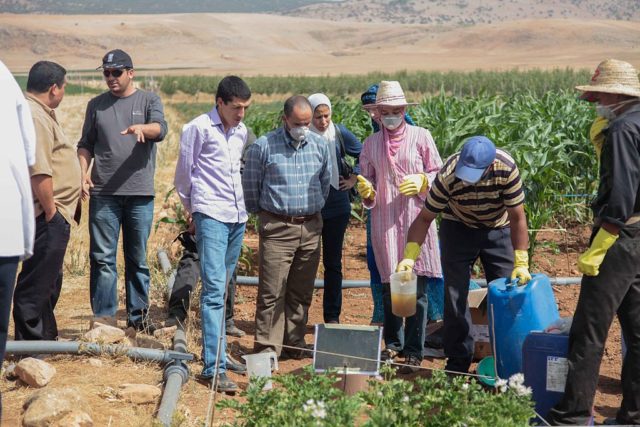

10 Facts About Sanitation in Kenya

  1. According to Water.org, 41 percent of people in Kenya rely on water sources such as ponds, rivers and wells. However, 71 percent use unimproved sanitation solutions. Water.org has also reported that only nine out of 55 public water services in Kenya have provided continuous access to water.
  2. In 2010, Water.org introduced a large-scale initiative known as “WaterCredit,” which provides small loans to enable greater access to clean water and sanitation services. Through this initiative, the organization partnered with microfinance and commercial financial institutions, managing to provide more than 425,00 Kenyans and Ugandans with access to clean water.
  3. The United Nations has classified Kenya as a water-scarce nation. This means the country has one of the lowest national water replenishment rates. Furthermore, only 56 percent of the nation’s citizens have access to clean water.
  4. In Kenya, 50 percent of people who check into a hospital due to preventable diseases suffer from illnesses related to sanitation and water.
  5. Approximately 50 percent of rural households in Kenya do not have toilet facilities. In addition, the ones that do have access are often known to be unhygienic.
  6. One program attempting to solve the issue of water and sanitation in Kenya is the Water and Environmental Sanitation program (WES). Their main goal is to increase the utilization of safe drinking water. They also aim to improve sanitation and hygiene practices in houses, schools and health facilities. The program has led to the adoption of the Hygiene and Sanitation policy.
  7. As of 2019, estimates show that less than 60 percent of people in Kenya have access to safe and basic drinking water. In addition, only 29 percent of Kenyans have access to safe and basic service sanitation.
  8. U.S. government agencies such as USAID have made various investments in Kenya to help solve the water and sanitation crisis. They utilize market-based models that aim to close financing gaps through sustainable business models, increased public funding and expanded market finance for infrastructure investments. These efforts will allow for universal access to water and sanitation in Kenya. By 2020, it is estimated that the USAID’s work will provide more than one million people in Kenya with access to basic water and sanitation supplies.
  9. Throughout 2018 and 2019, Kenya suffered from two seasons of poor rainfall. This resulted in deteriorating rates of water, hygiene and sanitation in Kenya’s arid and semi-arid areas. As a result, the Kenyan government reported worsening drought conditions in 20 ASAL counties. This also includes 15 counties in the Alert phase and 5 counties in the Alarm phase.
  10. Thanks to the organization, World Vision, it is estimated that around 15,000 people in Kenya have benefitted from clean water as a result of various boreholes, rainwater tanks and pipelines. Among these benefits includes the ability to shower and wash clothes.

A lack of access to clean water and sanitation in Kenya continues to affect much of the country. Thankfully, the efforts from organizations such as Water.org, USAID and World Vision are alleviating these problems. Like much of Africa, Kenya has a long way to go before reaching sanitation goals; however, hope remains a part of these organizations’ driving factors.

– Adam Abuelheiga
Photo: Flickr

January 29, 2020
https://borgenproject.org/wp-content/uploads/borgen-project-logo.svg 0 0 Kim Thelwell https://borgenproject.org/wp-content/uploads/borgen-project-logo.svg Kim Thelwell2020-01-29 15:00:092024-05-29 23:13:5410 Facts About Sanitation in Kenya
Global Poverty, Sanitation, Water Sanitation

10 Facts About Sanitation in Morocco

10 Facts About Sanitation in Morocco
Morocco has made significant progress in sanitation during the past decade. Although there are still many issues, improvements in water sanitation in Morocco are in the near future. Here are 10 facts about sanitation in Morocco.

10 Facts About Sanitation in Morocco

  1. H2O Maghreb: USAID and the United Nations Industrial Development Organization (UNIDO) implemented an activity called H2O Maghreb in order to help establish advanced and sustainable water management practices in Morocco. H2O Maghreb includes a two-year degree accredited by the government of Morocco. Furthermore, the H20 Maghreb activity provides training and job opportunities in waste management. About 80 percent of the students participating are women.
  2. The Douira Sea Water Desalination Plant: Morocco plans to build the world’s largest seawater desalination plant in the city of Agadir in 2021. The Douira Sea Water Desalination Plant will provide drinking water to the people of the Chtouka Ait Baha region in Morocco. Further, the Douira Sea Water Desalination Plant should be able to irrigate 15,000 hectares of land and produce up to 450,000 cubic meters of desalinated water every day.
  3. Dakhla’s Wasterwater Treatment Plant: Morocco is also building a wastewater treatment plant in Dakhla. The plant will help prevent wastewater from polluting groundwater resources. Additionally, the wastewater sludge can also act as a fertilizer.
  4. Improvements to the Wastewater Sector: During the past decade, Morocco has made many improvements in its wastewater sector. Of the 34 million people in Morocco, 25 percent of the people are not connected to the sewer network and 38 percent of the people are not connected to wastewater treatment plants.
  5. Leprosy: Leprosy is on the decline in Morocco. From 2000 to 2012, the number of leprosy cases decreased by 4.68 percent each year. In 2012, Morocco began a program to distribute rifampicin to help prevent the spread of leprosy. From 2012 to 2017, the number of cases of leprosy in Morocco decreased by 16.38 percent each year. The rifampicin program helped prevent leprosy and improved sanitation in Morocco
  6. Trachoma: Morocco eliminated trachoma in 2016. Trachoma is an infectious disease that causes blindness. Morocco implemented the World Health Organization-endorsed SAFE strategy in the 1990s. This included surgery for trichiasis, antibiotics to treat trachoma, facial cleanliness and environmental improvements to help prevent the spread of trachoma.
  7. Acid Mine Drainage: Acid mine drainage is an issue in Morocco. When people do not clean mine sites, the acid mine drainage at the mines can contaminate the land and the groundwater.
  8. Water, Sanitation and Hygiene in Schools (WinS): Morocco implemented the program Water, sanitation and hygiene in schools (WinS) in order to provide clean water and improve sanitary facilities in 19 primary schools in the country. Improving sanitary facilities at schools can help prevent water-related diseases and encourage children to stay in school and graduate.
  9. European Space Agency Technology: The University of Kenitra utilizes technology developed by the European Space Agency to clean groundwater so that it is safe for people to drink. The water treatment facility will provide water for 1,200 students.
  10. Safely-Managed Drinking Services: As of 2017, 70.266 percent of the people in Morocco have access to safely-managed drinking water services. This also means that as of 2017, 29.734 percent of the people in Morocco do not have access to safely-managed drinking water services.

These 10 facts about sanitation in Morocco show that the water supply is improving and will continue to improve. As technology and new initiatives increase the water supply, more people will gain access to safe drinking water.

– Frank Decapio
Photo: Wikimedia Commons

January 27, 2020
https://borgenproject.org/wp-content/uploads/borgen-project-logo.svg 0 0 Kim Thelwell https://borgenproject.org/wp-content/uploads/borgen-project-logo.svg Kim Thelwell2020-01-27 07:30:162020-01-27 09:12:4510 Facts About Sanitation in Morocco
Page 51 of 92«‹4950515253›»

Get Smarter

  • Global Poverty 101
  • Global Poverty… The Good News
  • Global Poverty & U.S. Jobs
  • Global Poverty and National Security
  • Innovative Solutions to Poverty
  • Global Poverty & Aid FAQ’s
Search Search

Take Action

  • Call Congress
  • Email Congress
  • Donate
  • 30 Ways to Help
  • Volunteer Ops
  • Internships
  • Courses & Certificates
  • The Podcast
Borgen Project

“The Borgen Project is an incredible nonprofit organization that is addressing poverty and hunger and working towards ending them.”

-The Huffington Post

Inside The Borgen Project

  • Contact
  • About
  • Financials
  • President
  • Board of Directors
  • Board of Advisors

International Links

  • UK Email Parliament
  • UK Donate
  • Canada Email Parliament

Get Smarter

  • Global Poverty 101
  • Global Poverty… The Good News
  • Global Poverty & U.S. Jobs
  • Global Poverty and National Security
  • Innovative Solutions to Poverty
  • Global Poverty & Aid FAQ’s

Ways to Help

  • Call Congress
  • Email Congress
  • Donate
  • 30 Ways to Help
  • Volunteer Ops
  • Internships
  • Courses & Certificates
  • The Podcast
Scroll to top Scroll to top Scroll to top