• Link to X
  • Link to Facebook
  • Link to Instagram
  • Link to TikTok
  • Link to Youtube
  • About
    • About Us
      • President
      • Board of Directors
      • Board of Advisors
      • Financials
      • Our Methodology
      • Success Tracker
      • Contact
  • Act Now
    • 30 Ways to Help
      • Email Congress
      • Call Congress
      • Volunteer
      • Courses & Certificates
      • Be a Donor
    • Internships
      • In-Office Internships
      • Remote Internships
    • Legislation
      • Politics 101
  • The Blog
  • The Podcast
  • Magazine
  • Donate
  • Click to open the search input field Click to open the search input field Search
  • Menu Menu

Tag Archive for: United Kingdom

Posts

Global Poverty, Government, Politics and Political Attention

What is a Parliamentary Democracy?

Parliamentary Democracy Government
There are several types of democracies, and here we will explain what a parliamentary democracy is by comparing it to a presidential democracy, which we have in the United States.

In short, a parliamentary democracy is a system of government in which citizens elect representatives to a legislative parliament to make the necessary laws and decisions for the country. This parliament directly represents the people.

In a presidential democracy, the leader is called a President, and he or she is elected by citizens to lead a branch of government separate from the legislative branch. If you remember back to government class, you will remember that the United States has three branches of the government: the executive, the judicial, and the legislative. The President leads the executive branch of government.


Role of Parliamentary Democracy


In a parliamentary democracy, you have a Prime Minister, who is first elected as a member of parliament, then elected Prime Minister by the other members of the parliamentary legislature. However, the Prime Minister remains a part of the legislature. The legislative branch makes the laws, and thus the Prime Minister has a hand in law-making decisions. The Prime Minister works directly with other people in the legislature to write and pass these laws.

In our presidential democracy, we still have a legislature, but we also have a president. He is separate from the legislature, so although he works with them, it is not as direct as if he were a Prime Minister. The laws that the legislature wants to pass must first go through the president; he can sign them into being or he can veto them. The President can go to the legislative branch and suggest laws, but they ultimately write them for his approval.

Furthermore, in parliamentary systems, the legislature has the right to dismiss a Prime Minister at any time if they feel that he or she is not doing the job as well as expected. This is called a “motion of no confidence,” and is not as much of a drawn out process. In the US, impeachment is an extensive, formal process in which an official is accused of doing something illegal.

Some countries with a parliamentary system are constitutional monarchies, which still have a king and queen. A few examples of these are the United Kingdom, Sweden, and Japan.

It is important to remember that both of these systems of government are democracies. Ultimately, the citizens who vote have the voice.

– Alycia Rock

Sources: Wise Geek, Scholastic, How Stuff Works
Photo: Joint Council for the Welfare of Immigrants


parliamentary democracy government

October 27, 2017
https://borgenproject.org/wp-content/uploads/borgen-project-logo.svg 0 0 Borgen Project https://borgenproject.org/wp-content/uploads/borgen-project-logo.svg Borgen Project2017-10-27 04:00:102020-01-10 12:32:02What is a Parliamentary Democracy?
Development, Global Poverty

The Poverty Rate in the United Kingdom

Poverty Rate in the United Kingdom

A recent study from the U.K.’s Office for National Statistics (ONS) has shown that the poverty rate in the United Kingdom fell slightly between 2014 and 2015, dropping from 16.8 percent to 16.7 percent. This rate puts the U.K. roughly in the middle of all E.U. member countries, and just below the E.U. average of 17.3 percent.

The report of a fall in the overall poverty rate in the United Kingdom also came with a reported rise in the persistent poverty rate. The persistent poverty rate is defined as being below the poverty line in the current year, as well as in 2 of the previous 3 years. The persistent poverty rate jumped from 6.5 percent in 2014 to 7.3 percent in 2015. The jump means that 700,000 more people were persistently poor in 2015 than 2014. However, this rate ties for the fifth-lowest in the E.U. and is well below the E.U. average of 10.9 percent.

The rise in the persistent poverty rate did lead to concern from different parties. Justin Watson, the head of the Oxfam U.K. Programme, welcomed the relatively low persistent poverty rate compared to the rest of the E.U. while expressing concern about the 4.6 million people experiencing persistent poverty. Others expressed concern about rising child poverty rates and a disparity between male and female persistent poverty rates.

Addressing the U.K.poverty rate will require more than employment expansion. Median earnings are down 5 percent in the U.K. since the 2008 global recession, even while employment is up 1.5 percent in that same period, hitting a record high in July 2017. A government official cited multiple steps being taken in addition to employment in the attempt to address the overall U.K. poverty rate. In fact, the government spends £90 billion a year  on working age benefits, the National Living Wage is rising and income tax is being lowered or eliminated for millions of people.

– Erik Beck

September 20, 2017
https://borgenproject.org/wp-content/uploads/borgen-project-logo.svg 0 0 Borgen Project https://borgenproject.org/wp-content/uploads/borgen-project-logo.svg Borgen Project2017-09-20 01:30:022024-05-28 00:16:30The Poverty Rate in the United Kingdom
Global Poverty, Human Rights

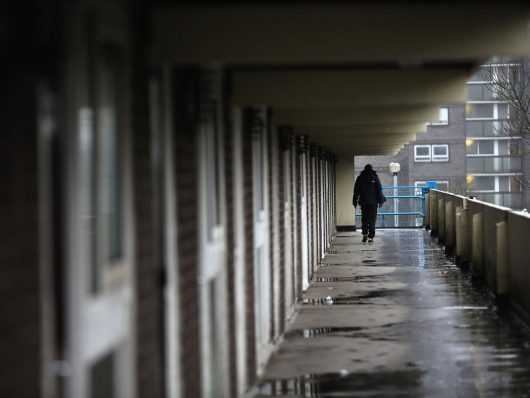
Nine Facts About Human Rights in the United Kingdom

Human Rights in the United Kingdom

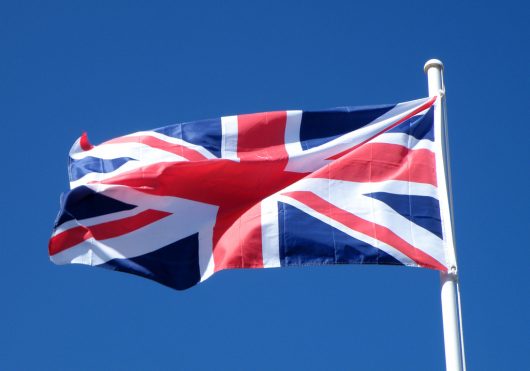
The United Kingdom of Great Britain is a constitutional monarchy with parliamentary democracy. A range of political parties participate in free and fair elections. Freedom of the press and human rights are, generally, constitutionally guaranteed and respected in practice.

However, in the recent past, reports on human rights in the United Kingdom show the development of some disturbing practices. Such trends were further complicated by Brexit U.K.’s vote out of the European Union (EU) and the victory of conservatives in the general election of June 2017, which changed the state of human rights in the country.

Here are nine of the most troubling facts about human rights in the United Kingdom that have gone unaddressed by the authorities.

  1. The new counter-terrorism policy seems to have trumped human rights and the freedoms of people. Prime Minister Theresa May, during her first party conference speech, said that left-wing human rights lawyers will no longer be allowed to pursue claims of victims of human rights by the British Armed Forces. Benjamin Ward from Human Rights Watch says “judging from the comments by Prime Minister May… you would think human rights are a dangerous and alien construct.”
  2. In 2015, the Royal Air Force of the United Kingdom killed three people, including one British citizen, in a drone strike in al-Raqqa, Syria. In May 2016, the Joint Committee for Human Rights published its inquiry which called on the government to clarify the use of drones for targeted killings.
  3. In 2004, the U.S. and Libyan governments —with the knowledge and cooperation of the U.K. government—had subjected two Libyan families to rendition, torture and other ill treatment. In June 2016, the Crown Prosecution Service, the principal public criminal prosecuting agency in England and Wales, decided not to bring any criminal charges relating to the allegations by the families.
  4. Abuse and mistreatment by the British Armed Forces also loomed large in reports on human rights in the United Kingdom. In September 2016, it emerged that between 2005 and 2013 the Royal Military Police investigated approximately 600 cases of alleged mistreatment of those in detention in Afghanistan. Similarly, the Iraq Historic Allegations Team had concluded investigations into 2,356 of 3,389 allegations received. These allegations were related to abuse of Iraqi civilians by British Armed Forces personnel.
  5. Following Brexit and the conservative victory in recent U.K. elections, there has been a substantial increase in hate crimes. Member of Parliament Jo Cox, who had campaigned vigorously on behalf of asylum seekers, was murdered. There was also a marked rise in xenophobia and arson attacks against EU citizens, particularly those from Eastern Europe.
  6. Despite some progress, the U.K. government has generally not been immigrant-friendly lately. It passed the Immigration Act into law in May 2016, which “extended sanctions against landlords whose tenants’ immigration status disqualifies them from renting while increasing landlords’ eviction powers…” The government continued to resist calls for hosting more refugees, although it announced its plan to resettle up to 3,000 refugees from the Middle East and North Africa by 2020.
  7. Violence against women and girls remains a serious concern. There is a lack of funding of specialized services for women who have undergone domestic violence and abuse. Research by Women Aid shows that shelters were being forced to turn away two out of three survivors due to lack of space and resources. The rate among women who are ethnic minorities was four out of five.
  8. In November 2016, the U.K. Parliament approved the Investigatory Powers Act (IPA). This has entrenched and broadened the State’s surveillance powers both at home and abroad. The IPA increased the powers of public authorities to interfere with private communications and information. It also permitted “a broad range of vaguely defined interception, interference and data retention practices” without adequate safeguards for protecting the right to privacy.
  9. The government continued to refuse to set up an independent inquiry into the 1989 killing of Patrick Finucane—an Irish politician—although it was previously acknowledged that there had been a “collusion” in the case. This is one of the historical and structural issues of injustice, abuse and torture of Northern Ireland that has been systematically neglected for decades.

– Aslam Kakar

Photo: Flickr

September 16, 2017
https://borgenproject.org/wp-content/uploads/borgen-project-logo.svg 0 0 Borgen Project https://borgenproject.org/wp-content/uploads/borgen-project-logo.svg Borgen Project2017-09-16 01:30:182020-06-29 17:12:48Nine Facts About Human Rights in the United Kingdom
Global Poverty, Health

Six Facts on the Most Common Diseases in the United Kingdom

Common diseases in the United Kingdom
According to the CIA World Factbook, the United Kingdom is home to 64,430,428 people, many of whom fall victim to various illnesses. The list of common diseases in the United Kingdom includes the following:

  1. Coronary heart disease causes nearly 74,000 deaths each year, which amounts to approximately 200 individuals dying every day from the disease. A significant amount of people with coronary heart disease are younger than 75, and, as such, additional health checks are being emphasized in the country.
  2. Respiratory diseases such as asthma and chronic obstructive pulmonary disease (COPD) are categorized as some of the most common diseases in the United Kingdom. In fact, England has one of the highest rates of asthma prevalence in the world. While the primary cause of COPD is smoking, a small percentage of cases are triggered by exposure to fumes, chemicals and dust at work.
  3. Stroke is the third leading cause of death in the United Kingdom and the leading cause of disability, with more than 150,000 people suffering from strokes every year.
  4. Cancer has become incredibly common, partly due to the fact that the United Kingdom falls behind other European countries in terms of accessible treatment and cancer survival. It is estimated that, by 2030, three million people in England will have had some form of cancer.
  5. The number of deaths from chronic liver disease in people under 65 has risen about 20% in England, while other European countries have seen improvement and a decrease in diagnoses.
  6. Health inequalities continue to play a role in poor health outcomes for those in the lowest socio-economic groups. Tuberculosis (TB) is one major infectious disease concentrated in the most deprived areas of the United Kingdom. In 2015, the rate of TB was 20.5 per 100,000 people in the 10% of the population living in the most deprived areas, compared to only 3.6 per 100,000 in the 10% in the least deprived areas.

With the pervasiveness of such diseases, immunization and cost-effective healthcare are highly prioritized in the U.K. Nevertheless, most common diseases in the United Kingdom are preventable, and individuals should consider taking the necessary steps and precautions to follow healthier lifestyles. According to a country profile health report conducted by the World Health Organization (WHO), a few adult risk factors responsible for contributing to the increase in common diseases in the United Kingdom include tobacco smoking, alcohol consumption, raised blood pressure and obesity.

– Mikaela Frigillana

Photo: Flickr

July 29, 2017
https://borgenproject.org/wp-content/uploads/borgen-project-logo.svg 0 0 Borgen Project https://borgenproject.org/wp-content/uploads/borgen-project-logo.svg Borgen Project2017-07-29 01:30:002024-05-26 23:09:36Six Facts on the Most Common Diseases in the United Kingdom
Global Poverty, Refugees

10 Facts About United Kingdom Refugees From Syria

10 Facts About United Kingdom Refugees
In response to the Syrian refugee crisis, the United Kingdom initially had a policy of offering a generous amount of humanitarian aid to Syria’s neighbors instead of accepting Syrian refugees in the U.K. The logic behind this policy is that it is safer for refugees to remain where they are instead of making dangerous trips across Europe. Here are 10 facts about United Kingdom refugees.

10 Facts About United Kingdom Refugees From Syria

  1. The U.K. government said in 2016 that it had contributed £1.1 billion since 2012 on food, tents and other humanitarian aid to Syria.
  2. The Syrian Vulnerable Person Resettlement Programme (VPRP) was established in 2014 to provide a route for chosen Syrian refugees to go to the U.K.
  3. Under the Syrian VPRP, the U.K. plans to resettle as many as 20,000 refugees by the end of the current Parliament.
  4. The U.K. committed to resettling approximately 3,000 vulnerable children currently in the Middle East and North Africa, as well as 350 unaccompanied children already in Europe. This number includes Syrian nationals.
  5. When first implemented, the VPRP gave priority to refugees that were elderly, disabled or victims of sexual violence or torture. No cap was set on the number, but several hundred refugees are expected in the U.K. in the next three years.
  6. In order to help refugees integrate into British society, a community sponsorship program was started in July 2016.
  7. Refugees resettled in the U.K. are provided with five years Humanitarian Protection status, along with permission to work and access public funds. By September 2016, under the VPRP, 4,414 people had been given Humanitarian Protection status.
  8. The U.K. will provide resettlement for approximately 3,000 vulnerable children and their families from conflict situations in the Middle East and North Africa.
  9. Section 67 of the Immigration Act 2016 requires the government to relocate and support an unspecified number of unaccompanied refugee children currently in Europe. As of Feb. 8, 2017, it was announced that the number of unaccompanied children under section 67 will be capped at 350.
  10. Syrians can claim asylum once they arrive in the UK. In 2016, Syrian nationals requesting asylum numbered 2,102. At least 86 percent of Syrian asylum applications were granted in 2016 — more than any other nationality.

These 10 facts about United Kingdom refugees demonstrates that the country has one of the best refugee policies. Additionally, the U.K. is the second-largest donor to the Syrian refugee crisis with a commitment of £2.3 billion.

– Mary Barringer

Photo: Flickr

April 30, 2017
https://borgenproject.org/wp-content/uploads/borgen-project-logo.svg 0 0 Borgen Project https://borgenproject.org/wp-content/uploads/borgen-project-logo.svg Borgen Project2017-04-30 01:30:112024-12-13 17:57:5410 Facts About United Kingdom Refugees From Syria
Food & Hunger, Food Security, Global Poverty, Hunger

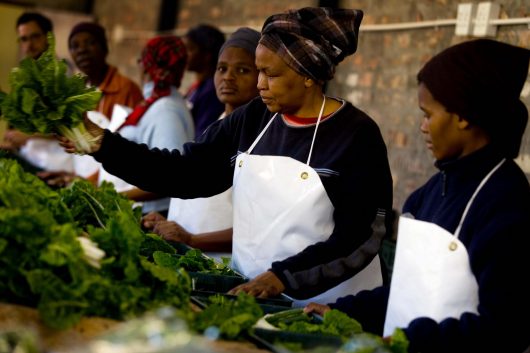
Averting Global Food Shortages with New Fertilizer

Food
A team of scientists from Sri Lanka and the United Kingdom recently collaborated to study nanotechnology-based fertilizer delivery to crops. What they discovered has the potential to revolutionize farming worldwide, reduce environmental impact and mitigate future global food shortages.

The study, which was published in the Jan. 25, 2017 edition of American Chemical Society Nano (ACSNano), acknowledges that fertilizer prices in developing countries are substantial, and the costs often negatively impact food supply. Scientists determined that developing technology to reduce fertilizer costs was necessary, and began testing a trial fertilizer on rice farms in Sri Lanka.

The results were nothing short of impressive. Initial trials showed a 20% increase in production using about half the amount of fertilizer. These findings are a boon for future generations. The United Nation’s Food and Agriculture Organization estimates that crop production needs to increase by approximately 60% by 2050 in order to supply the world’s population and avoid global food shortages.

The Science Behind the Results

The scientists in this study didn’t reinvent the wheel. They focused their attention on urea, a common fertilizer. Although urea has been used for decades, it has major weaknesses. When urea comes in contact with water, it breaks down prematurely and cannot be efficiently absorbed by crops. Farmers then have to use more fertilizer — if they can afford it. Calling this issue a “major challenge for global agriculture” that “threatens future food security,” the team settled on a nanotechnology-based principle for fertilizer delivery. This method has wide applications in pharmaceutical delivery, and the scientists thought it showed promise.

The team combined Hydroxyapatite nanoparticles with urea to create nanohybrids. Then, they applied the mixture to crops at test farms. It pleased them to discover that the nanohybrid fertilizer decomposed the urea at a slower rate than urea alone. The scientists reported that they reduced the amount of fertilizer application by 50% while increasing crop yield by more than nine percent.

Larger Harvests with a Smaller Footprint

Money isn’t the only thing saved when nanohybrids are in play. Less fertilizer applied to crops means that less washes away into bodies of water, avoiding unnecessary pollution. Gehan Amaratunga, one of the scientists on the team, says “this goes a long way to reducing the environmental footprint of agriculture…It is a Green Revolution.”

– Gisele Dunn

Photo: Flickr

February 25, 2017
https://borgenproject.org/wp-content/uploads/borgen-project-logo.svg 0 0 Borgen Project https://borgenproject.org/wp-content/uploads/borgen-project-logo.svg Borgen Project2017-02-25 01:30:372024-12-13 17:56:40Averting Global Food Shortages with New Fertilizer
Education

Xavier Project: Refugee Education in Kenya and Uganda

Refugee Education in Kenya and Uganda: Xavier Project Takes the Lead
Education is the most neglected sector when it comes to humanitarian response on a global level. It is the most underfunded, yet continues to be one of the most important. The Xavier Project works to provide safe, educational opportunities to refugee children living in urban areas of Kenya and Uganda.

Founded in 2008 by an ambitious young university student in the United Kingdom, the Xavier Project first took off after a 400-person shindig raised 1,500 pounds to help support refugee education in Kenya and Uganda. Since then, the project continues to offer a sustained and individually tailored education program through financial sponsorship, outside support and mentoring.

The project sets its focus on three crucial areas: education, livelihood and media. The education department of Xavier Project aims to increase access to a good formal education for refugee children in Kenya and Uganda. The “Tamuka department” aims to make vocational and life-long learning available to all refugees even in emergency situations.

The education department helps to increase access to education in Kenya and Uganda through sponsorship of refugee children. The sponsorship provides extra-curricular courses and camps, school visits with mobile libraries and teacher training programs, and runs activities to promote the education of refugee girls. Through access to libraries and mobile phone learning opportunities, the project provides refugees with ways of enhancing their learning from home and outside of school.

By paying school fees and through other support Xavier Project is giving 996 refugee children the opportunity to go to school. In Kenya, that is 65 in early childhood development, 592 primary school students and 159 secondary school students. In Uganda, that is 154 primary school students and 26 secondary school students.

Tamuka is the program designed to handle the media side of things within Xavier Project. It is the platform to give refugees an audible voice and let them speak out about the realities of their lives. Refugees are able to publish, learn from and interact with unbiased information anonymously and without necessarily having access to the internet.

The goal of Tamuka is that through an open media, refugees will be able to bring about social change in their host country or country of origin in a gradual and democratic way. Xavier Project wants refugees to be able to tell the rest of the world about their personal experiences. Voicing their stories could lead the international community to question processes and existing policies that they take for granted.

In 2015 Xavier Project’s consolidated income was 350,000 pounds of which 38 percent was unrestricted funding. Since 2008 Xavier Project’s income has increased by at least 50 percent every year. Their initiative to move the gauge forward when it comes to refugee education in Kenya and Uganda has been anything short of successful.

– Keaton McCalla

Photo: Flickr

November 4, 2016
https://borgenproject.org/wp-content/uploads/borgen-project-logo.svg 0 0 Borgen Project https://borgenproject.org/wp-content/uploads/borgen-project-logo.svg Borgen Project2016-11-04 01:30:222020-05-22 17:00:19Xavier Project: Refugee Education in Kenya and Uganda
Global Poverty, Health

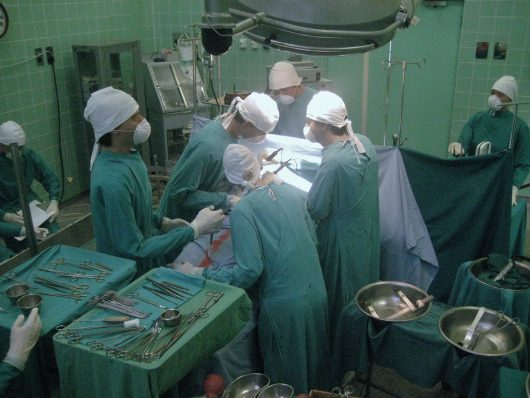
How Poverty Exacerbates Illegal Organ Trading

How Poverty Exacerbates Illegal Organ Trading
Unfortunately, it is not uncommon for extremely poor families around the world to go through extreme measures in order to make money. Some households have resorted to the unusual tactic of organ trading on the black market to afford food and other necessities.

The issue also affects the Western world as a 2014 piece in the Sunday Post highlights the prevalence of black market organ selling in the United Kingdom. Though it is highly illegal, those desperate for both money and organs often turn to social media to plan their transactions.

Jeff Powell from the U.K.-based anti-poverty charity aptly named War on Want says, “It is shocking that people are so poor that they would be willing to sell a kidney for cash. This level of desperation is a direct result of governments… and the interests of the rich over the fight against poverty and inequality.” At the time of publication, 10,000 people in the U.K. were in need of an organ transplant, leaving many opportunities for potential sellers.

Multiple instances of illegal organ trades in Iraq have made the news recently. Since over 22 percent of the Iraqi population lives in poverty, families sometimes take desperate measures to make money. In Iraq, gangs offer up to $10,000 for a kidney on the black market.

In Iraq, it is only legal to donate organs to relatives, but illegal traders find ways (ie forging documents or signatures) around this rule. A surgeon in Baghdad explains that healthcare workers are not held responsible for illegal donations because “… in some cases, we have doubts, but this is not enough to stop the surgery because without it people will die.”

An Iraqi human rights lawyer feels sympathy for those who turn to selling organs saying, “Picture this scenario: an unemployed father who does not have any source of income to cater for his children. He sacrifices himself. I consider him a victim and I have to defend him.”

Illegal organ trading is also prevalent in Bangladesh, where many poor citizens are faced with repaying loans from non-governmental organizations that they cannot afford. Some individuals grow tired of dodging debt collectors and see the organ black market as their only option.

A University of Michigan anthropology professor explains that these exchanges are often done under sub-par conditions. “There is no safeguard as to where the organs are coming from and how safe they are, and on the other hand, the seller’s health deteriorates after the operation. That has a huge impact on their earning capacity because they cannot go back to their old physically demanding jobs.”

Although it is not foolproof, Iran seems to have found a possible solution to illegal organ trading: legalization. Iran has the only government-supported program involving trading organs for monetary compensation, but the terms vary by district. However, some Iranian markets favor the recipient, meaning that sellers may not be compensated as much as they would like. Those who do sell their organs also receive a free year of health insurance from the government and are not required to enlist in the usually mandatory military service.

Sigrid Fry-Revere, an American bioethicist is the president of the American Living Organ Donor Network and believes the US and other countries around the world should be following Iran’s example. Their arrangement allows those in poverty to make money and decreases those waiting for much-needed transplants.

Though Iran’s organ transplant programs are far from perfect, they seem to be one step ahead of many countries around the world. A legalized procedure almost guarantees safe surgery conditions for both recipients and sellers, and works to provide a mutually beneficial trade.

– Carrie Robinson

Photo: Flickr

September 27, 2016
https://borgenproject.org/wp-content/uploads/borgen-project-logo.svg 0 0 Borgen Project https://borgenproject.org/wp-content/uploads/borgen-project-logo.svg Borgen Project2016-09-27 01:30:192024-05-27 23:53:35How Poverty Exacerbates Illegal Organ Trading
Education, Global Poverty

UK Students Sign Up to “Send My Friend to School”

send_my_friend_to_school
Since the United Nations’ decision to focus on education in 2000, approximately 58 million more children have been able to attend school thanks to various governments and organizations like Send My Friend to School banding together.

While this number seems large, that still leaves 58 million children out of school. And that doesn’t account for all of the dropouts that have taken place since.

In developing countries, there are still many obstacles getting in the way of a primary education for all children. Disability, cost, work, distance, conflict and a lack of teachers are only a few of the struggles that are still being addressed.

In the United Kingdom, the Global Campaign for Education began a program entitled “Send My Friend to School” in order to help the remaining 58 million children that are currently unable to receive a primary education.

This campaign focuses on allowing the children of the U.K. to participate in the solution. According to the campaign website, “over 10,000 schools and youth groups, and millions of children, have been involved so far in the U.K.”

The focus for these children is to band together and speak out for everyone’s right to an education. By speaking with and reminding leaders about their promise to get every child in school, they are able to keep education a priority.

According to Oxfam, an educational resource site, “Send My Friend to School is asking UK pupils to imagine that they were a world leader and tell politicians what crucial decisions they would make to get every child worldwide into school now.”

Since the campaign’s start in 2005, success stories have built up showing how much these children are capable of.

After the Southfield School campaign targeting MP Philip Hollobone and David Cameron, the two leaders expressed, “I am very impressed by the concern you have shown for the education of children in developing countries. Your colourful drawings demonstrate this as well as your enthusiasm for the campaign.”

Other such success stories have flooded the U.K. news.

The Send My Friend to School campaign has consistently shown that children are excellent advocates for global education needs. When organizations and direction are in place, children are able to accomplish much good.

– Katherine Martin

Sources: Send My Friend, Oxfam, Southfield School
Photo: Flickr

October 19, 2015
https://borgenproject.org/wp-content/uploads/borgen-project-logo.svg 0 0 Borgen Project https://borgenproject.org/wp-content/uploads/borgen-project-logo.svg Borgen Project2015-10-19 01:30:362024-05-27 09:28:10UK Students Sign Up to “Send My Friend to School”
Global Poverty, Health

Poverty and Engagement in Arts, Culture and Leisure

artsLast year, the U.K. Department of Culture, Arts and Leisure published a literature review that summarized research regarding poverty and its impact on people’s engagement with culture, arts and leisure. While it drew some fairly obvious conclusions, other findings were insightful and thought-provoking.

The first object of research was measuring how much poverty impacts people’s participation in sports. It found that adults who lived under the poverty line played fewer sports for far less time. These findings replicated those in similar studies in Canada and Australia. The lack of involvement in sports is believed to increase health risks such as obesity that are already present in lower income groups.

Some people blamed the lack of sports facilities provided in their neighborhoods. Financial and logistical barriers are a constraint. Sports equipment and transportation to and from facilities may cost extra money that the family cannot afford to spend. Moreover, parents who work more than one job find it difficult to take the time out to supervise their children, especially if their neighborhood is perceived as unsafe.

Another reason for poorer people’s reluctance to take part in sports is that they are simply not interested in them, as a study in Ireland concluded. Research in Australia demonstrated that even with ease of access to facilities and training, lower income children and adults were still less likely to play sports than their middle and upper income counterparts.

The second objective of the research was to determine how poverty impacts people’s engagement with arts, libraries and museums. Unsurprisingly, people living under the poverty line were less likely to be interested in or involved in their community’s culture. Even libraries, which are free and open to the public, see lower levels of engagement from poorer people. Children living in poverty are more likely to use the computer or TV for entertainment.

In addition to the obvious barriers of transportation costs and time constraints (for adults), poorer people frequently voiced the view that arts were for “other people and not for them.” They reported feeling out of place and uninterested. In their daily lives, art was perceived as being completely irrelevant.

To fight the main barriers to engagement in sports and culture — a dearth of facilities, extra costs and a lack of interest — the literature review recommends a few solutions: community-based solutions, personal and trusting relationships between mentors and participants, and lower costs.

– Radhika Singh

Sources: UK Department of Culture, Arts and Leisure, Art Council of Wales
Photo: PxHere

July 29, 2015
https://borgenproject.org/wp-content/uploads/borgen-project-logo.svg 0 0 Borgen Project https://borgenproject.org/wp-content/uploads/borgen-project-logo.svg Borgen Project2015-07-29 07:16:062020-07-07 14:33:46Poverty and Engagement in Arts, Culture and Leisure
Page 2 of 41234

Get Smarter

  • Global Poverty 101
  • Global Poverty… The Good News
  • Global Poverty & U.S. Jobs
  • Global Poverty and National Security
  • Innovative Solutions to Poverty
  • Global Poverty & Aid FAQ’s
Search Search

Take Action

  • Call Congress
  • Email Congress
  • Donate
  • 30 Ways to Help
  • Volunteer Ops
  • Internships
  • Courses & Certificates
  • The Podcast
Borgen Project

“The Borgen Project is an incredible nonprofit organization that is addressing poverty and hunger and working towards ending them.”

-The Huffington Post

Inside The Borgen Project

  • Contact
  • About
  • Financials
  • President
  • Board of Directors
  • Board of Advisors

International Links

  • UK Email Parliament
  • UK Donate
  • Canada Email Parliament

Get Smarter

  • Global Poverty 101
  • Global Poverty… The Good News
  • Global Poverty & U.S. Jobs
  • Global Poverty and National Security
  • Innovative Solutions to Poverty
  • Global Poverty & Aid FAQ’s

Ways to Help

  • Call Congress
  • Email Congress
  • Donate
  • 30 Ways to Help
  • Volunteer Ops
  • Internships
  • Courses & Certificates
  • The Podcast
Scroll to top Scroll to top Scroll to top