• Link to X
  • Link to Facebook
  • Link to Instagram
  • Link to TikTok
  • Link to Youtube
  • About
    • About Us
      • President
      • Board of Directors
      • Board of Advisors
      • Financials
      • Our Methodology
      • Success Tracker
      • Contact
  • Act Now
    • 30 Ways to Help
      • Email Congress
      • Call Congress
      • Volunteer
      • Courses & Certificates
      • Be a Donor
    • Internships
      • In-Office Internships
      • Remote Internships
    • Legislation
      • Politics 101
  • The Blog
  • The Podcast
  • Magazine
  • Donate
  • Click to open the search input field Click to open the search input field Search
  • Menu Menu

Tag Archive for: Startups

Posts

Economy, Entrepreneurship and Business, Global Poverty

Estonia’s Startup Ecosystem Supports Economic Growth

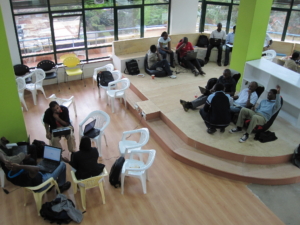
Estonia's startup ecosystemThe startup ecosystem in Estonia has become a key driver of economic growth and innovation in recent years. Known for its advanced digital infrastructure and business-friendly policies, Estonia has created an environment where startups can develop and scale efficiently. These efforts have contributed to job creation, increased foreign investment and a more diversified economy. 

As a result, Estonia is often recognized as one of the most digitally advanced countries in Europe. Government initiatives and public-private partnerships play a central role in supporting startups. By combining digital governance with entrepreneurial support programs, Estonia has built a system that encourages innovation while reducing barriers to entry for new businesses.

Startup Estonia

One of the primary initiatives supporting Estonia’s startup ecosystem is Startup Estonia. This government-backed program aims to develop the country’s startup sector by connecting entrepreneurs with funding, mentorship and global markets.

Startup Estonia works to attract international investors while also supporting local entrepreneurs through networking opportunities and training programs. The initiative has helped foster a collaborative environment where startups can grow and access global resources. By strengthening connections between businesses, investors and policymakers, the program supports long-term economic development.

E-Residency Program

Another major contributor to Estonia’s startup ecosystem is the e-Residency program. This initiative allows individuals from around the world to establish and manage businesses in Estonia entirely online. Through e-Residency, entrepreneurs can access Estonia’s digital services, including company registration, banking and tax filing. 

This program has attracted thousands of international business owners, increasing foreign investment and expanding Estonia’s economic reach. By reducing administrative barriers, e-Residency enables startups to operate efficiently in global markets.

Digital Infrastructure and Innovation

Estonia’s digital infrastructure plays a central role in the success of its startup ecosystem. Platforms such as X-Road allow secure data exchange between government institutions, reducing bureaucracy and improving efficiency.

Digital ID systems also enable citizens and entrepreneurs to access services quickly, from signing contracts to filing taxes. These systems reduce the time and cost associated with starting and running a business. As a result, startups can focus more on growth and innovation rather than administrative processes.

Investment and Economic Impact

The Estonian startup ecosystem has attracted significant investment from both domestic and international sources. Venture capital funding and accelerator programs provide startups with the financial resources needed to scale their operations.

These investments have contributed to job creation in sectors such as technology, finance and logistics. As startups expand, they create employment opportunities and contribute to economic diversification. This growth can also benefit low-income Estonians by opening up new pathways to stable employment, particularly for young people and job seekers looking to enter emerging industries. 

Over time, a stronger, more diversified economy can help reduce poverty by increasing household incomes and expanding access to economic opportunities.

The Big Picture

The Estonian startup ecosystem demonstrates how targeted policies and digital innovation can drive economic growth. Programs such as Startup Estonia and e-Residency, combined with strong digital infrastructure, create an environment where businesses can thrive.

As Estonia continues to invest in entrepreneurship and innovation, its startup ecosystem offers insights for other countries seeking to promote economic development. By reducing barriers to entry and supporting small businesses, the startup ecosystem in Estonia contributes to long-term economic stability and opportunity.

– Jason Hill

Jason is based in Fullerton, CA, USA and focuses on Business and Technology for The Borgen Project.

Photo: Unsplash
April 17, 2026
https://borgenproject.org/wp-content/uploads/borgen-project-logo.svg 0 0 Lynsey 2 https://borgenproject.org/wp-content/uploads/borgen-project-logo.svg Lynsey 22026-04-17 01:30:352026-04-16 10:39:07Estonia’s Startup Ecosystem Supports Economic Growth
Economy, Global Poverty, Innovations

Transforming Waste Into Opportunity: Recycling Startups in Africa

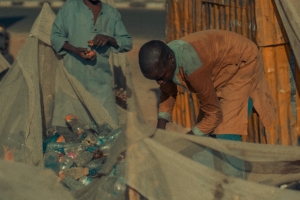
Recycling Startups in AfricaRecycling startups transforming waste into opportunity are not just a concept; it is a growing movement across Africa tackling plastic pollution while creating jobs and fostering economic resilience. Since 2019, innovative and locally led enterprises have proved that waste can become valuable resources. These startups transform discarded plastic into sustainable products, reducing environmental damage and creating livelihoods for underprivileged communities.

The United Nations Development Project (UNDP) reports that if circular economic models scale up, global employment could increase by 0.1% by 2030, potentially generating millions of new jobs worldwide. This work demonstrates that the fight against plastic pollution can go hand-in-hand with poverty reduction and community development.

EcoPost in Kenya

The circular economy comes to life through EcoPost in Kenya, where the company converts plastic waste into durable lumber. EcoPost replaces plastic waste with recycled fencing posts and paving blocks. Since 2019, EcoPost has recycled more than 13 million kilograms of plastic, creating 102 direct jobs and more than 10,000 indirect income opportunities for local waste collectors and suppliers.

These jobs targeted marginalized groups, especially women and youth, who face high unemployment. Using plastic waste as a resource, EcoPost has protected 4,300 acres of forest, supporting rural livelihoods that depend on forest ecosystems for food, water and climate stability. Thus, replacing timber has reduced deforestation while giving locals a stable income. Job creation reduces poverty as families are guaranteed stable incomes, while forest protection sustains rural livelihoods dependent on natural resources.

Gjenge Makers: Innovation Turning Waste Into Building Materials

Another stellar example of circular economy in action is Gjenge Makers, led by Kenyan engineer Nzambi Matee. Gjenge Makers turns plastic waste into strong, affordable paving blocks. This lowers infrastructure costs for small businesses and community projects. Since 2019, it has recycled 20 tonnes of plastic and produced blocks cheaper than regular bricks.

Cheaper, high-quality building materials help underserved communities afford improvements that attract investment, generate commerce and create ripple effects in local economies. Moreover, Gjenge Makers employs more than 110 people, mostly women and youth from marginalized backgrounds. This, in turn, strengthens local economies through jobs and economic resilience.

Innovative Recycling in Nigeria: Salubata

In Nigeria, Salubata, founded in 2018, repurposes plastic waste into customizable, modular shoes. This illustrates how the circular economy can spark social and environmental transformation. By transforming plastic pollution into stylish footwear, Salubata extends the concept of sustainable products from plastic beyond utility into everyday fashion. The brand also directs some of its profits to uplift vulnerable groups, combining entrepreneurial innovation with poverty reduction.

Since its founding, Salubata has developed unique, patented shoe designs from recycled plastic. The company donates 5% of profits from every sale to programs that feed children and empower women in underprivileged communities. Additionally, Salubata collaborates with about 50 waste collectors, many women, to source recycled plastic. By turning pollution into profit, Salubata creates job opportunities for women and youth, channels resources back to the community and fights poverty with style and purpose.

Conclusion

The circular economy demonstrates that environmental solutions and economic development can work together effectively. Recycling startups in Africa like EcoPost and Salubata show this by converting waste materials into valuable products while creating jobs for disadvantaged communities. These examples prove that addressing environmental problems and reducing poverty do not have to be separate efforts, but can be achieved simultaneously through well-designed initiatives.

We can accelerate progress toward environmental sustainability and economic opportunity by supporting and expanding these community-based enterprises. We can create a future where environmental responsibility and shared economic prosperity support each other.

– Anagha Rajithkumar

Anagha is based in Charlottetown, Prince Edward Island, Canada and focuses on Business and Technology for The Borgen Project.

Photo: Pexels

August 30, 2025
https://borgenproject.org/wp-content/uploads/borgen-project-logo.svg 0 0 Lynsey 2 https://borgenproject.org/wp-content/uploads/borgen-project-logo.svg Lynsey 22025-08-30 03:00:312025-08-29 13:51:11Transforming Waste Into Opportunity: Recycling Startups in Africa
Development, Global Poverty, Technology

How AI Upskilling Is Creating Jobs in Africa: The Case of Zindi

ZindiAccording to a report by Deloitte, African rural regions are currently experiencing a lack of digitalization essential for potential economic growth. Many African rural communities struggle with limited access to critical internet infrastructure, which is necessary for sustaining small businesses and education.

However, promising AI startups are rising to address these challenges through innovative solutions. Among them, Zindi stands out with its modern approach and rapid growth by upskilling the AI jobs market in Africa.

Digitalization in Sub-Saharan Africa

According to the World Bank, sub-Saharan Africa faces significant challenges for development due to the lack of affordable digital infrastructure. Additionally, low engagement with community-owned digital access and difficulty using digital platforms hinder progress. This lack of access to digital technologies impacts not only educational and business systems but also prospects for job creation, employment and career growth for local populations.

As digitalization challenges persist, the world’s largest companies are investing heavily in solutions. Over the past 10 years, the World Bank has contributed approximately $731.8 million to 11 Digital Development Projects. It has also committed $2.8 billion across 24 active Digital Development projects in sub-Saharan Africa.

However, large corporations aren’t the only ones tackling Africa’s digital growth challenges. Startups like Zindi are taking a broader approach by focusing on both digital solutions and their impact on education and the economy. They offer rural communities accessible internet and AI innovations. They also drive employment through youth training, AI career development and digital upskilling initiatives, laying the foundation for long-term prosperity.

About Zindi

Zindi, one of Africa’s most impactful AI startups, began its mission to tackle the region’s digital challenges in 2018. Driven by the belief that data can tell stories, drive innovation and improve lives, Celina Lee founded Zindi (a platform where 70,000 data scientists develop AI-driven solutions to pressing challenges) in Cape Town, South Africa. Zindi is committed to bridging gaps in tech access, skills and employment across rural and urban communities.

Zindi Impacts

  • Data Farming. One of Zindi’s key initiatives is data farming, which applies AI and machine learning to agricultural challenges in rural Africa. Zindi deepens the use of data science to tackle agricultural challenges, particularly in precision agriculture, including crop yield prediction, pest detection and fertilizer optimization. This focus is critical, as agriculture remains a vital economic pillar for most rural communities across Africa. Additionally, Zindi enhances accessibility for local farmers and business owners through low-tech solutions, such as basic mobile apps, enabling seamless communication with workers whenever needed.
  • Health Care Systems. Zindi has also made a notable impact on health care systems. Using AI, the company tackles major health challenges like malaria and COVID-19. In 2024, Zindi hosted competitions to model malaria spread in Southern Africa, enabling data-driven resource allocation. That same year, it supported telemedicine by partnering with organizations like FruitPunch AI to develop SMS-based algorithms that connect rural patients to doctors, especially in areas with limited health care access.

Final Remarks

As Zindi AI expands across Africa, it prioritizes local talent through its employment and training initiatives. By offering free AI upskilling programs, such as hackathons, it provides underrepresented individuals with affordable, practical learning to solve local challenges and gain hands-on experience.

Despite its niche approach to digital solutions, Zindi’s focus on employment and rural digitalization centers on people and their stories. It empowers not only the technical side of digital transformation but also supports the individuals behind it.

– Liubov Linnyk

Liubov is based in the United Kingdom and focuses on Business and Technology for The Borgen Project.

Photo: Flickr

May 15, 2025
https://borgenproject.org/wp-content/uploads/borgen-project-logo.svg 0 0 Lynsey 2 https://borgenproject.org/wp-content/uploads/borgen-project-logo.svg Lynsey 22025-05-15 01:30:082025-05-15 00:38:37How AI Upskilling Is Creating Jobs in Africa: The Case of Zindi
Business, Economy, Global Poverty, Social Enterprises

Levant Startups Drive Innovation Amid Instability

levant startups Levant startups are reimagining how innovation can emerge in crisis-prone economies. Despite widespread poverty and instability, entrepreneurs in Jordan, Lebanon, Syria, and Palestine are launching ventures that tackle problems in education, finance and basic services. These efforts are fostering grassroots economic resilience and drawing attention to a region long underestimated by global observers.

Background

As of 2024, poverty in the Levant region remained high. Poverty affects 44% of Lebanese, 69% of Syrians, 24.1% of Jordanians and around 74% of Palestinians. Many countries in the Levant region also struggle with acute food insecurity, including 13 million out of 25 million Syrians and 91% of Palestinians. Meanwhile, Lebanon faces widespread malnutrition because of constant shortages of essential food items.

Debt, inflation, wars and unemployment significantly contribute to poverty in the Levant. Female economic participation is still a challenge in the region. In Jordan, the female unemployment rate rose to 33%, standing 11% higher than the overall unemployment rate. However, entrepreneurship in the Levant is helping to alter these statistics.

The region has faced ongoing pressures from citizens who are unable to afford necessities and governments with overwhelming amounts of debt. Soaring unemployment and inflation have exacerbated the crisis and rendered many countries unable to rebuild after wars and conflicts. Yet amid these challenges, new startups are tackling local problems by offering practical solutions to problems in the education, finance and food delivery industries, and laying the groundwork for broader economic transformation.

Notable Startups in the Levant

Founded in 2016 by Siroun Shamigian and Nisrine El Makkouk, Kamkalima in Lebanon is an education technology startup that provides a digital curriculum companion for Arabic language education. It offers e-learning modules and assessments for students in grades 4-12. The service also enables teachers to track student progress using advanced data analytics. The founders noticed that Lebanon’s Arabic education system lacked the digital tools needed to bolster students’ Arabic grades, which were consistently low. Kamkalima empowers teachers with data analytics tools to enhance lessons and track students’ progress, while providing students with interactive tools to aid their writing, reading, and listening skills in Arabic.

Large enterprises struggle with transparency, efficiency and data accuracy in a region where invoicing processes are often manual, error-prone, and non-compliant with evolving regulations. A Jordan-based team of seasoned FinTech professionals founded InvoiceQ, an SaaS-based digital invoicing platform that meets the needs of businesses in Saudi Arabia, Jordan and Oman. InvoiceQ offers real-time, automated invoicing, with approval workflows, API integrations and two-way customer/vendor integration. The platform enables enhanced decision-making, reduces human error and turns invoicing into a strategic financial tool.

In Syria, infrastructure for digital services like food delivery, e-commerce and mobility was virtually nonexistent until Malek Al-Muzayen established Bee Order. It began as Syria’s first food delivery app. Before Bee Order, restaurants lacked delivery drivers, online ordering was unfamiliar and economic instability made tech development risky. Al-Muzayen built and scaled a local fleet of 150 delivery vehicles, introduced mobile-based ordering, and later launched a ride-hailing app called Wasilni to meet transportation needs.

Levant Startups: Innovation in the Face of Instability

Despite entrenched economic hardships, startups across the Levant are helping communities adapt and thrive. From enhancing Arabic education through Kamkalima, to digitizing financial operations with InvoiceQ, to launching the region’s first food delivery and ride-hailing services via Bee Order and Wasilni, entrepreneurs are responding to local needs with scalable, tech-driven solutions. These ventures reflect a broader shift; young founders are tackling systemic issues with creativity and resourcefulness, even in the context of conflict and economic instability.

Other promising ventures include Tajir.Store, a Syrian e-commerce platform helping businesses to automate their online store operations, and Rocheta, a health care app that connects patients with pharmacies to have medications delivered to their homes. Together, these startups are weaving a grassroots foundation for more inclusive economic participation and long-term resilience in the region. As they continue to grow, they are not only meeting immediate needs but also laying the groundwork for broader transformation in education, finance, commerce and mobility.

– Haley Parilla

Haley is based in Cape Coral, FL, USA and focuses on Business and Politics for The Borgen Project.

Photo: Flickr

May 12, 2025
https://borgenproject.org/wp-content/uploads/borgen-project-logo.svg 0 0 Naida Jahic https://borgenproject.org/wp-content/uploads/borgen-project-logo.svg Naida Jahic2025-05-12 07:30:522025-05-11 12:49:00Levant Startups Drive Innovation Amid Instability
Global Poverty

Impact Hub Helps Serbian Youth Unemployment

Serbian YouthBelgrade is Serbia’s capital, with a population of over 1.7 million people. With a 40% youth unemployment rate, large numbers of Serbs were forced to leave the country and search for work elsewhere. Unemployment in Serbia is significantly higher than the European average and one of the country’s significant economic challenges is the need for private-sector job creation. In the last 12 months, Serbia has had 62 startups with $0 in total funding. More than ever, the country is in need of a program like Impact Hub to help Serbian youth.

Impact Hub

Impact Hub was founded in London in 2005 and now has over 7,000 members in more than 60 locations, one of which is Belgrade. The program is funded by USAID and assists young innovators in accessing the tools they need to connect with investors because unsuccessful funding is the biggest obstacle for startups. On Impact Hub’s website, online visitors can become “Impact Angels” and invest in a startup in minutes.

Impact Hub assists in the development of new products and business models. The program focuses on technological innovators and entrepreneurs and the future of their businesses. The organization provides collaborative workspaces, program support, an inspirational environment and diversity.

Impact Hub Belgrade offers young entrepreneurs resources such as acceleration and connections to grow their business. It is both a community center and a business incubator. The program encourages the sharing and building of a community and the space in which the project operates is used to organize events, from arts and culture to entrepreneurship.

Guiding Young Entrepreneurs

Impact Hub founders believe talent allows for growth and production. Since many young people know how to code, design and create innovative solutions, Impact Hub aims at helping  Serbian youth grow their startups. The program secures investments and teaches young people about using money in competitive markets. Impact Hub wants to get young entrepreneurs out of their comfort zone to expand their network. There are two different paths that Impact Hub employees guide entrepreneurs through. The first is “Core Competence for Market Validation,” in which individuals learn how to get the first buyer, expand their customers and make financial projections. The second is “Growth Readiness” and focuses on profiling a buyer, expanding traction and creating revenue models.

Impact Hub Belgrade implemented an initiative called We Founders, in which startup teams, founders, leaders and business developers can connect and work to improve their businesses. Impact Hub helps form partnerships to allow people to share the risks and prepare together for possible losses.

Impact Hub is Positively Impacting

Participants of Impact Hub raised $230,000 in investments from the Serbian public sector and private investors, not including a $100,000 investment from Dubai’s Innovation Impact Grant Program.

Alongside USAID, Impact Hub Belgrade gives Serbian youth the chance to see their innovations and ideas come to life. Outside of Belgrade, Impact Hub is available worldwide to allow individuals the opportunity to receive education regarding the tools and skills necessary for creating a business.

– Rachel Durling
Photo: Flickr

January 14, 2021
https://borgenproject.org/wp-content/uploads/borgen-project-logo.svg 0 0 Yuki https://borgenproject.org/wp-content/uploads/borgen-project-logo.svg Yuki2021-01-14 00:51:302024-05-30 07:55:41Impact Hub Helps Serbian Youth Unemployment
Global Poverty

MindRocket: An App for the Illiterate and Deaf

App for the Illiterate and DeafApproximately 5.3 percent of the world’s population lives with hearing loss. That amounts to 360 million people across the globe. The disability is more prevalent in developing countries, where most of the deaf population is also illiterate. MindRocket, a startup company in Jordan, seeks to improve the deaf community’s engagement in society by developing an app for the illiterate and deaf.

In developing nations, most deaf and hearing-impaired children rarely receive formal schooling. Those who do usually don’t advance past third or fourth grade level and struggle with reading. This lack of schooling paired with communication struggles creates a gap between the deaf and hearing communities. This resulted in a high unemployment rate among the deaf. A higher percent of those with hearing loss work low-grade jobs compared to those in the hearing workforce.

There are some resources that translate spoken word into written word instantly, yet these apps do not help the deaf that cannot read. MindRocket’s founder, Mahmood Darawsheh, noticed this unfair disadvantage and felt compelled to help. He started his company aiming to create technologies to assist the deaf. Their first product, Mimix 3D, is a mobile app that translates written or spoken English into American Sign Language acted out by an avatar. The app is available for both iOS and Android.

The company also developed an Arabic version for Android called Turjuman, which has reached 10,000 users. This app was more challenging to develop due many different dialects spoken in the Middle East and North Africa. It currently understands the Gulf countries and the Levant dialects.

The app allows for a hearing-enabled person to speak or write a message that the avatar will immediately act out. The deaf participant can reply through a sign language keyboard that will translate the symbols into written text. MindRocket plans to develop a web plug-in where website content can be translated through avatar hand symbols appearing on screen. They are looking doing the same for movies as well.

Darawsheh believes that his app for the illiterate and deaf should be free for those who require its assistance as well as those who wish to learn sign language. He hopes that products will help integrate deaf communities into the public and private sector,as well as improve their engagement and independence in society.

– Hannah Kaiser
Photo: Flickr

August 11, 2017
https://borgenproject.org/wp-content/uploads/borgen-project-logo.svg 0 0 Borgen Project https://borgenproject.org/wp-content/uploads/borgen-project-logo.svg Borgen Project2017-08-11 07:30:192024-05-28 00:15:19MindRocket: An App for the Illiterate and Deaf
Global Poverty, United Nations

15 Innovative and Ecofriendly Startups

Innovative and Ecofriendly Startups
This year’s UN High-Level Political Forum came with more than just talks. Some of the most innovative and ecofriendly startups of the year gained recognition and further development opportunities. The theme for 2017 was “Eradicating poverty and promoting prosperity in a changing world.” The SWITCH Africa Green-SEED partnership granted the awards.

SEED itself is a byproduct of the 2002 World Summit on Sustainable Development in Johannesburg. It works to promote social and environmental entrepreneurship at the local level for sustainable development and poverty reduction.

SWITCH Africa Green is a multi-country project, working in Burkina Faso, Ghana, Kenya, Mauritius, South Africa and Uganda. They push for sustainable development through a greener economy in the private sector. SEED’s national project partners alongside the United Nations put these plans to action, and the EU funds them.

A jury of independent international experts select the SWITCH Africa Green-SEED award winners. Additionally, they must operate within agriculture, manufacturing, tourism or waste management as innovative and eco-friendly startups. 2017’s winners are as follows:

Burkina Faso

Coopérative Sahel Vert, of the Sahel region, is the first enterprise to construct efficient biodigesters that release biogas and organic fertilizer from human and animal excrement. This allows households to gain additional income.

Lagazel produces and markets two types of sustainable solar lamps of robust and high-quality nature for urban and rural regions with no electricity. Its production strategy allows local employment. In addition, the lamps address climate change mitigation and encourage eco-friendly lifestyles.

TECO2 develops resistant school benches made from plastic waste and other locally sourced inputs. They also mitigate deforestation and environmental pollution in substituting the use of wood as a raw material.

Ghana

Recfam creates biodegradable and affordable self-titled PRIDE pads out of banana and plantain fibers for schoolgirls and women without access to proper menstrual hygiene products. Women are included in the manufacturing process and personal health education for young girls is provided.

WASHKing supplies and installs biodigester toilets, built locally using available materials, for low-income urban households. It incorporates a biodegradable powder developed in India, and the system is able to separate effluent and turn it into nontoxic water for agriculture or landscaping.

Kenya

Horizons Business Ventures Limited processes essential oils from local seeds and leaves. They employ women in collection groups and creating biodiverse commercial products from existing natural resources. By-products are redeveloped into animal feed and organic pesticides.

ICOSEED Enterprises found an alternative for costly sisal in leftover banana stem fibers from harvests and integrates them into fabrics for marketable items. Farmers gain additional income for the fibers and stitching, and slurry returns from fiber extraction go to manure or biogas usage.

Kencoco Limited produces long-lasting and high heat reaching charcoal briquettes made of coconut shells and husks. Targeting rural Kenya, it saves households money long-term compared to alternative fuels that damage the environment, and makes use of coconut waste and charcoal dust.

Mauritius

Walali Company Limited, located on Rodrigues Island, fashions an agro-processing chain that utilizes retort pouch technology to package native octopus and red beans. The goods are perishable and add value to these culturally significant and organic products. Contracts granted to individual suppliers ensure warranted prices and a secure market.

South Africa

Ekasi Energy manufactures natural biomass pellets from compressed wood waste, alongside clean cooking appliances, for homes with little or no grid power. The product further reduces health threats caused by burning wood or other energy sources and reduces greenhouse gas emissions.

iThemba Phakama allows voluntary waste pickers no-cost lease agreements to use specialty manufactured tricycles equipped for waste transport. Salvaged waste can then be recycled and sold by members, and the enterprise is financed through advertisements put on the tricycles’ sides.

Umgibe Farming Organics and Training Institute supports more than 41 local farmer cooperatives with a sustainable and organic food growing system. Umgibe allows small-scale or urban farmers to build up capacity and earn more income to become commercial businesses.

Uganda

Brent Technologies transforms sourced motor oil waste into diesel fuel or fresh motor oil. Wastes from the process create roofing asphalt shingles, forming an eco-friendly supply chain.

Gorilla Conservation Coffee prevents small-holder farmers bordering Bwindi National Park from damaging the forest with poaching or wood chopping. It buys premium coffee and processes it to sell as a branded roasted coffee. This benefits the farmers, and the organization donates funds upon purchase to the protection mountain gorillas in the region.

Masupa Enterprises is the last of these innovative and eco-friendly startups. It offers affordable briquettes made from dry leaves, peels, paper and other wastes, sold in conjunction with cooking stoves. Women are employed in production and marketing. Otherwise necessary negative health and environmental effects are avoided.

These 15 innovative and eco-friendly startups have come to accomplish much in terms of sustainable development, reducing poverty and improving livelihoods in their locales, and stand as global examples for all other entrepreneurs and those in the fight against poverty.

– Zar-Tashiya Khan

Photo: Flickr

July 29, 2017
https://borgenproject.org/wp-content/uploads/borgen-project-logo.svg 0 0 Borgen Project https://borgenproject.org/wp-content/uploads/borgen-project-logo.svg Borgen Project2017-07-29 07:30:162024-05-28 00:03:2815 Innovative and Ecofriendly Startups
Global Poverty, Technology

Mapping Startup Helps Identify Unmapped Areas

mapillaryIn spite of modern digital services like Google Street View, many locations in developing countries, such as Dar es Salaam in Tanzania, remain inaccessible to much of the world.


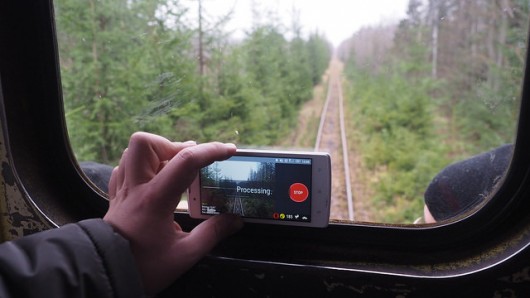
Swedish startup Mapillary and the World Bank have teamed up to solve this problem. Mapillary enables individuals to map their own streets by collecting street level photos simply by using their smartphones.

Such maps can help cities anticipate and recover from natural disasters, track traffic congestion, distribute resources to the impoverished communities that need them and build public transportation systems.

Mapillary CEO Jan Erik Solem told NPR News, “Dar es Salaam has really poor map data. The reason is that the mapping companies need people on the ground or in the local area to create the actual map.”

Maps that detail roads, homes, rivers and terrain may help kickstart city planning.

“In order for it to flourish into the metropolitan city [Dar es Salaam] has the potential to become, we began a community-based mapping project called Dar Ramani Huria (Swahili for “Dar Open Map”),” states a blog post from the World Bank, “to bring disaster prevention and response to previously unmapped areas, training the local community to create highly-accurate maps by the residents who know their city best.”

25 wards have been charted so far in Dar es Salaam with Mapillary. The task was accomplished by attaching a camera to a local Tanzanian rickshaw and by using photos taken by a motorist. These photos were then uploaded to Mapillary and constructed in 3D. A blog post by the World Bank on Mapillary’s website says that this information allows them to “pinpoint troubled areas” and to map out the routes locals often use.

As these maps are developed, they are run through software that develops natural disaster scenarios to help citizens improve planning and preventive efforts.

NPR reports that more than 260 citizens have volunteered to take photos for the mapping project. Locals have taken around 23,000 photos, which will map 300 miles of road.

“Sparking the community’s interest in mapping has the potential to truly transform Dar es Salaam into a prosperous city with the infrastructure to prevent floods, bring awareness to the need for flood prevention and risk reduction, and arm its citizens with the right tools and skills to build a better city,” states the same blog post.

– Kaitlyn Arford

Sources: NPR, Mapillary, World Bank
Photo: Flickr

March 26, 2016
https://borgenproject.org/wp-content/uploads/borgen-project-logo.svg 0 0 Borgen Project https://borgenproject.org/wp-content/uploads/borgen-project-logo.svg Borgen Project2016-03-26 01:30:012024-06-04 01:03:14Mapping Startup Helps Identify Unmapped Areas
Activism, Advocacy, Development, Global Poverty

Startups Ending Poverty

Startups
As successful businesses began springing out of Silicon Valley like a garden first introduced to fertilizer, entrepreneurs started to wonder how they could profit from filling the holes in market demands.

According to Business Dictionary, a startup is the “early stage in the life cycle of an enterprise where the entrepreneur moves from the idea stage to securing financing, laying down the basic structure of the business, and initiating operations or trading.”

But what do startups have to do with global poverty? While many businesses, including most startups, are looking to meet the demand of customers who will shell out enough cash to generate their owners and employees increasing incomes, some ventures are looking to fulfill a different demand.

Below are three for-profit startups that are using their business plans in one way or another to help alleviate poverty. These companies differ from nonprofits because they function as a business instead of an organization. While both work towards bettering the lives of others, they do so in distinctly different ways.

Nuru

Nuru provides training-based poverty solutions for local leaders in poor communities. Their leadership programs are intended to create profitable businesses owned and run by local entrepreneurs.

Nuru staff train and equip their counterpart local teams and in return part of that business’s profit is returned to Nuru where it is distributed to shareholders and reinvested in other development projects.

Instead of reaching into markets with foreign goods or services, Nuru allows locals to provide their own communities with desired and necessary products in a self-sustaining manner. Once Nuru implements their programs they withdraw their staff and allow local leaders to become self-reliant and continue making their own difference.

BioLite

BioLite was created by two camping enthusiasts and sells portable, clean energy stoves, kettles and LED lights. The profits made from their western markets help offset the costs required to make their other product. In addition to camping equipment, BioLite produces a cheaper stove to sell in developing nations.

Since most people living in poverty use open fires for cooking and heating purposes, the demand for inexpensive and safe stoves is high.

This company offers a desired product to untapped markets in developing countries for an affordable price due to their other successful profit earning products. Their business plan is sustainable because they do not rely on donations to continue their work.

Good Cloth

An online clothing store that sells exclusively ethically crafted goods. They’ve divided their products into several categories including recycled, sustainable, organic, made in the U.S. and one titled “Trade Not Aid.”

Good Cloth helps companies who design and create goods without exploiting workers, sell their products. Good Cloth and the brands they sell work to eradicate poverty by pushing against the norm of cheap labor.

They want to help companies who treat their employees fairly and pay them a just wage be successful.

Nuru, BioLite and Good Cloth are only three examples of for-profit business models that are working towards alleviating poverty. While nonprofits play an undeniably imperative role in the fight on global poverty, there is also a place for solutions that include profits.

Businesses have a high interest and investment in their success; in order to eradicate global poverty there needs to be a high interest and investment in finding successful solutions. If incorporating business models and profit as a motivation will lead to poverty reduction, why would we not use it?

– Brittney Dimond

Sources: Business Dictionary, The Good Trade, MIC, Nuru International

Photo: Pixabay

September 30, 2015
https://borgenproject.org/wp-content/uploads/borgen-project-logo.svg 0 0 Borgen Project https://borgenproject.org/wp-content/uploads/borgen-project-logo.svg Borgen Project2015-09-30 10:09:172024-12-13 18:05:09Startups Ending Poverty
Development, Global Poverty, Health, Technology

CNNMoney’s Upstart 30 Project

upstart
CNNMoney launched its Upstart 30 Project in late June. It profiles 30 young innovative startups and their respective founding entrepreneurs and investors.

The list is broken down into five categories: the idealists, the funders, the simplifiers, the playmakers and the futurists. All of which comprise individuals from a variety of fields.

To take part, startups must be established in the United States, be no younger than five-years-old, and harness technology in hopes of making the world a better place. After a series of tests, the Upstart 30 Project was formed. The list is diverse in geography, gender, race, and industries.

Whether it is a solution to the current archaic U.S. school system, an agricultural phenomenon in a box, or an ingenious medical tool, Upstart 30 spotlights visionaries that are making serious headway, all before the age of 40.

While many of the startups tackle commonplace inefficiencies, several address national and global issues, and have the potential of reducing global poverty in unlikely ways.

BioBots brings personalized medicine tools. According to its profile on CNNMoney, the startup’s first product was a 3D printer for building cells, tissues and organs. BioBots’ printer is uniquely small and inexpensive. It can fit on a desktop and is priced at around $5,000. For now, the bio printer is for research. CEO Danny Cabrera, 22, said that his two co-founders and him are hoping to broaden their client base to include pharmaceutical companies who could use their products for testing cancer drugs. BioBots has a bright future in the United States, but could do wonders internationally.

Freight Farms is a farm in a box. Founders, Brad McNamara and Jonathan Freidman, created the boxes out of old shipping containers. The insulated, camera-equipped devices use LED lights and advanced monitors to regulate weather conditions, nutrient intake and carbon dioxide levels, all without soil. The startup launched in 2011, and already made $5 million. At $76,000 apiece, restaurants, schools, and hotels have mainly bought the boxes. While this is very expensive, the payoffs are incredible: each container produces 4,000 to 6,000 plants a week according to Shawn Cooney, a small business owner testing the Freight Farm. This is nearly 80 times more than Cooney would have gotten from a conventional farm space. The high cost keeps Freight Farms away from the developing world but, if ever brought down, Freight Farms could increase food security around the world.

uBiome scans a person’s body and micro biome. uBiome kits locate where diseases take root, and how they escalate. According to CNNMoney, uBiome completely changes the ways we examine anxiety, diabetes and heart disease. The $79 kits test bacteria, analyze results, and compare data to other profiles. This quick and cutting-edge device could easily help millions of people in developing nations.

Plangrid is a paper-saving blueprint alternative for construction engineers. By using a tablet to alter and share blueprints, Tracy
Young, Ryan Sutton-Gee, Ralph Gootee and Kenny Stone are making sure buildings are drawn from reliable sources. So far, Plangrid has been a success since it began only three years ago. The app helped build over 90,000 projects worldwide. Plangrid, however, has a long way to go until it can reach rural populations most in need of new buildings.

– Lin Sabones

Sources: PlanGrid, CNN
Photo: CNNMoney

August 21, 2015
https://borgenproject.org/wp-content/uploads/borgen-project-logo.svg 0 0 Borgen Project https://borgenproject.org/wp-content/uploads/borgen-project-logo.svg Borgen Project2015-08-21 10:23:502024-12-13 17:54:01CNNMoney’s Upstart 30 Project
Page 1 of 212

Get Smarter

  • Global Poverty 101
  • Global Poverty… The Good News
  • Global Poverty & U.S. Jobs
  • Global Poverty and National Security
  • Innovative Solutions to Poverty
  • Global Poverty & Aid FAQ’s
Search Search

Take Action

  • Call Congress
  • Email Congress
  • Donate
  • 30 Ways to Help
  • Volunteer Ops
  • Internships
  • Courses & Certificates
  • The Podcast
Borgen Project

“The Borgen Project is an incredible nonprofit organization that is addressing poverty and hunger and working towards ending them.”

-The Huffington Post

Inside The Borgen Project

  • Contact
  • About
  • Financials
  • President
  • Board of Directors
  • Board of Advisors

International Links

  • UK Email Parliament
  • UK Donate
  • Canada Email Parliament

Get Smarter

  • Global Poverty 101
  • Global Poverty… The Good News
  • Global Poverty & U.S. Jobs
  • Global Poverty and National Security
  • Innovative Solutions to Poverty
  • Global Poverty & Aid FAQ’s

Ways to Help

  • Call Congress
  • Email Congress
  • Donate
  • 30 Ways to Help
  • Volunteer Ops
  • Internships
  • Courses & Certificates
  • The Podcast
Scroll to top Scroll to top Scroll to top