• Link to X
  • Link to Facebook
  • Link to Instagram
  • Link to TikTok
  • Link to Youtube
  • About
    • About Us
      • President
      • Board of Directors
      • Board of Advisors
      • Financials
      • Our Methodology
      • Success Tracker
      • Contact
  • Act Now
    • 30 Ways to Help
      • Email Congress
      • Call Congress
      • Volunteer
      • Courses & Certificates
      • Be a Donor
    • Internships
      • In-Office Internships
      • Remote Internships
    • Legislation
      • Politics 101
  • The Blog
  • The Podcast
  • Magazine
  • Donate
  • Click to open the search input field Click to open the search input field Search
  • Menu Menu

Tag Archive for: Small and Medium Enterprises

Posts

Global Poverty

Improving Credit Access in Myanmar

Credit Access in MyanmarThere is a great need to expand Myanmar’s financial sector. Seventy percent of the country’s adults have no formal access to credit, insurance or other financial services. This leaves many of Myanmar’s citizens reliant on unregulated providers with higher costs or family and friends. However, efforts are being made to improve credit access in Myanmar.

Myanmar had credit cards more up until the country’s banking crisis in 2003. As one of the 21 banks that are Myanmar Payment Union members, Kanbawza Bank announced in May 2015 that it will be Myanmar’s first domestic bank to offer credit cards once again. “We have to manage the services within limits, and that will probably not meet the customers’ wants in the initial stage,” says U Mya Than, Myanmar Payment Union’s chairman.

Another concern is that only a few Myanmar shop owners know how to use point-of-sale machines and will often reject credit cards as a method of payment. Many Myanmar shops accept cash only, a mindset that U Mya Than believes needs to change. “People need to get used to not carrying cash and instead putting money onto their cards. Their habits may change if they can get credit,” he says.

Co-operative Bank Ltd. (CB Bank) plans to issue only secure credit cards in its first stage of helping to improve Myanmar’s credit access. CB Bank also proposed policies and procedures for its credit card program to the Central Bank of Myanmar (CBM). The policies require the bank customer to have the same amount of money on their credit card as they do in their deposit account. CB Bank managing director U Pe Myint says the program will begin once the CBM approves it.

In October 2015, Myanmar’s government announced a goal for 40 percent of the country’s people to have financial services access by 2020 and for 15 percent to use more than one financial services product. The government believes that mobile phones coupled with agent cash-in and cash-out services can accelerate Myanmar’s development toward this goal. Myanmar was also reported to be the third fastest-growing mobile market in the world after India and China. Myanmar’s government is working to ensure that the right business models are put in place to allow mobile operators and subsidiaries to provide financial services.

In December 2016, the World Bank’s board of executive directors approved a $100 million credit to support Myanmar in improving access to financial services for families and small and medium-sized businesses. Myanmar’s Financial Sector Development Project aims to promote the development of a stable financial sector, including reforms to increase the provision of banking services, improved credit access in Myanmar and other financial products across the country.

“Improved access to credit will mean higher incomes and more jobs,” says Ulrich Zachau, the World Bank country director for Southeast Asia. The credit will come from the International Development Association, including credit terms for a maturity of 38 years, a six-year grace period and a 0 percent interest rate. Myanmar’s farmers, small businesses and low-income households will also benefit.

In May 2017, the International Finance Corporation (IFC) successfully supported the CBM in developing a regulation for credit reporting. The CBM also issued a regulation that provides the basis for credit reporting companies’ operations and establishment. This served as a key step toward improving credit access in Myanmar, along with helping the country’s small and medium enterprises.

“With an effective enabling environment that the enactment of this regulation brings, we hope to see the very first credit bureau come online soon,” says DawKhin Saw Oo, the CBM’s deputy governor. The IFC plans to continue supporting the CBM in strengthening its supervisory capability over credit reporting services providers. The IFC will also help the CBM educate Myanmar’s people on credit information sharing and financial consumer protection.

These efforts and others will continue to work toward making credit access in Myanmar possible. Improving the country’s financial services will play a key role in providing Myanmar’s citizens with credit access and other financial benefits. Myanmar’s growing mobile market can also help strengthen the country’s financial stability, helping more Myanmar residents have access to financial services as well.

– Rhondjé Singh Tanwar

Photo: Flickr

February 7, 2018
https://borgenproject.org/wp-content/uploads/borgen-project-logo.svg 0 0 Borgen Project https://borgenproject.org/wp-content/uploads/borgen-project-logo.svg Borgen Project2018-02-07 01:30:262019-11-07 04:25:05Improving Credit Access in Myanmar
Global Poverty

Increasing Financial Inclusion and Credit Access in Thailand

credit access in ThailandThailand, a country in Southeast Asia which borders the Andaman Sea and the Gulf of Thailand, is interestingly the only country in the region to not have been colonized by a European power. Generally speaking, during the last few decades, Thailand has been able to reduce poverty and bolster economic growth with low levels of unemployment and inflation and increased government spending. Credit access in Thailand has become relatively widespread.

A 2013 study conducted by FinScope revealed that 74 percent of the adult population had access to a bank account, with 23 percent using other formal financial services and only 1 percent using informal services. Thus, credit access in Thailand is considered to be quite inclusive and available. However, there are still improvements that can be made in regard to broadening financial access for the remaining 1 percent. Thus, financial inclusion and widespread accessibility do not necessarily account for the whole adult population spanning across all levels of incomes.

Thailand was highly affected by the Asian financial crisis in 1997 and this caused the Bank of Thailand and the Ministry of Finance to largely invest in stable, low-risk bank operations while tightening lending regulations, which evidently excluded the low-income populations working in the informal sector who were considered to be high-risk. Thus, the United Nations Capital Development Fund argues that the main area for improvement could be through widening access for insurance and credit products for various groups of individuals working within this informal sector.

There are several challenges to widening financial inclusion and credit access in Thailand, which include:

  • Limited access to credit for individuals living in rural communities due to proximity
  • The pervasiveness of informal credit services that are available
  • Individuals lacking the necessary documentation to comply with formal financial institutions, especially with an estimated 2.5 million undocumented migrants living in Thailand
  • Lack of literacy and financial knowledge

This has resulted in individuals and small businesses in Thailand having to resort to less credible and desirable forms of money lenders. Another major barrier seems to stem from the laws that surround commercial banks acquiring credit information. Currently, the law prohibits banks to inquire about a guarantor from the National Credit Bureau (NCB) even with consent, but instead, the guarantor must go to the NCB and then submit their credit information to the bank, which is inefficient and time-consuming for both parties.

The Asia-Pacific Financial Inclusion Summit held in October of 2015 outlined some policy recommendations to improve credit access in Thailand, which include:

  • Increasing options for distributing micro-insurance
  • Raising public awareness and support for the improvement of low-income households to interact with financial services through community-level financial education
  • Improving and shaping public policy in regards to financial inclusion.

Although credit access in Thailand has been steadily broadening, there is a portion of the population, albeit small, that is falling outside of this growing financial inclusive sphere. But with ongoing research by various institutions and an increasing awareness of this issue throughout the country, credit access will hopefully become available for everyone in Thailand.

– Miho Kitamura

Photo: Pixabay

February 5, 2018
https://borgenproject.org/wp-content/uploads/borgen-project-logo.svg 0 0 Borgen Project https://borgenproject.org/wp-content/uploads/borgen-project-logo.svg Borgen Project2018-02-05 07:30:592019-11-08 02:02:46Increasing Financial Inclusion and Credit Access in Thailand
Global Poverty

Facilitating Credit Access in Yemen Amid Conflict

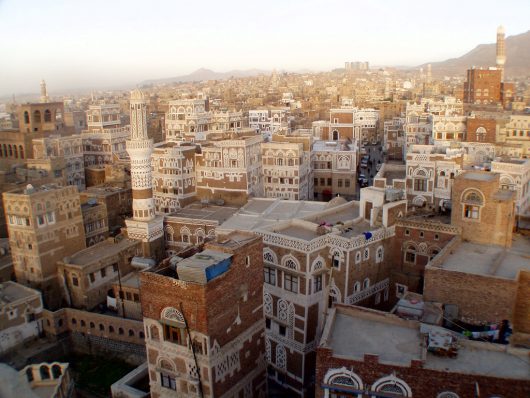
credit access in YemenIn 2015, the SANAD Fund for Micro-, Small and Medium Enterprises (MSME) and Al Amal Microfinance Bank signed into effect a loan of $3 million. This loan provided the opportunity for new and small enterprises to develop in Yemen. As SANAD’s first investment in Yemen, this loan allowed a greater possibility for the country’s poor to gain credit access in Yemen for small business ventures.
This loan was a collaborative effort. Al Amal is a microfinance bank in Yemen and MSME was funded by KfW Development Bank, with the German Ministry for Economic Cooperation and Development and the European Union providing the financial support for the loan.

The purpose of this loan was to strengthen the financial market through the development of micro-, small and medium enterprises and practicing principles of responsible finance for new entrepreneurs. Loans such as these allow for small enterprises to prosper by gaining credit access in Yemen.

However, in 2016, because of conflict in the nation, credit access in Yemen decreased on a large scale. Credit access for food cargoes and supplies for civilians in extreme poverty weakened. Lenders became disincentivized to offer lines of credit because of the civil war between the government, the Houthi militia and al Qaeda that is still ongoing.

International banks have declined to process lines of credit due to the instability in the country. This leaves traders to supply a full shipment of cargo without pay until arrival, an extreme risk to the trader.

Yemen’s central bank worsened the situation by stopping reasonable exchange rates for local traders purchasing rice and sugar for import. Yemen relies heavily on imports, and with these less than ideal circumstances, many individuals are left lacking basic necessities.

Government aid is working to combat the effects of poor credit access in Yemen. USAID funded over $100 million to supply roughly 400,000 people with food, water, shelter, healthcare and education.

The Yemeni government received four rehabilitated schools in Abyan and Aden because of USAID funding and a projected 13 more schools will be completed for use in southern Yemen.

Investing and providing credit access in Yemen seems risky, but through foreign aid and private investments to smaller enterprises, conflict may be driven down and local enterprises and trade may be allowed to grow in the country.

– Bronti DeRoche

Photo: Flickr

January 19, 2018
https://borgenproject.org/wp-content/uploads/borgen-project-logo.svg 0 0 Borgen Project https://borgenproject.org/wp-content/uploads/borgen-project-logo.svg Borgen Project2018-01-19 07:30:002024-05-29 22:30:19Facilitating Credit Access in Yemen Amid Conflict
Global Poverty

Credit Access in Rwanda Leads All African Nations

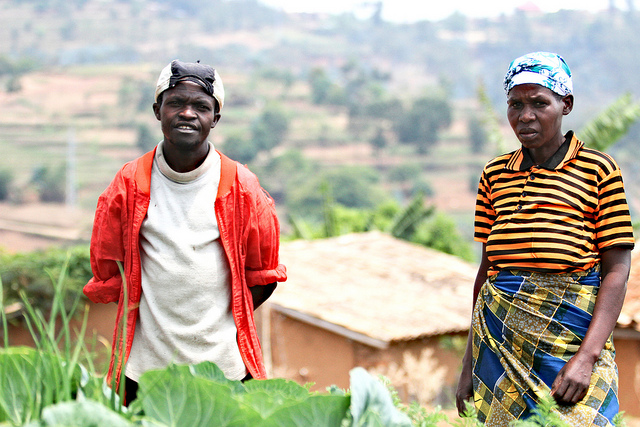
credit access in RwandaRwanda has seen great improvement in political and economic areas since the 1994 genocide and civil war. Credit access in Rwanda has made a considerable leap in the landlocked country.

A lack of credit access is a challenge in developing countries, as access to credit is an important tool to help people to manage their lives and plan ahead. Developing financial literacy is essential for people to make proper financial decisions. Limited access to credit also impedes growth and innovation. When Rwandans see their potential with credit access, they can not only improve their living conditions but also boost the untapped economy and market towards economic sustainability.

Credit access in Rwanda is expanding, and entrepreneurs have found it useful in growing their startups. The biggest improvement in access to credit is protecting minority investors with reforms that have grown Rwanda’s economy. Investing in people with ideas and innovation opens doors in the global market, moving Rwanda up the economic ladder and away from poverty and instability.

According to African Markets, Rwanda leads all African nations in ease of credit access. Rwanda has been proposing and establishing reforms in order to promote and simplify access to credit during the past seven years. Credit access in Rwanda is making waves with investors and potential businesses, and the progress will benefit Rwandans and improve their living conditions.

Partly due to improved credit access in Rwanda, the country has become a progressive example for African nations. Post-genocide Rwanda has witnessed substantial progress, prospering in innovation and stability. Starting a business is relatively easy in Rwanda and faces little to no barriers.

The gender gap is decreasing in Rwanda, another benefit of the improvements being made in the country. Credit access in Rwanda is readily available to women, though they still face some obstacles. To address this issue, the Women Guarantee Fund (WGF) ensures women have access to credit in Rwanda. WGF intends to financially support women who plan to establish income-generating businesses. WGF has also assisted Rwandan women in entrepreneurship training. Combined with credit access, women and all Rwandans will see prosperity in their lives and in the country.

Access to credit has played a crucial role in Rwanda’s economic prosperity and sustainability. With innovation and financial potential, Rwanda will continue to rise to the top and support its citizens’ developmental endeavors.

– Jennifer Serrato

Photo: Flickr

January 17, 2018
https://borgenproject.org/wp-content/uploads/borgen-project-logo.svg 0 0 Borgen Project https://borgenproject.org/wp-content/uploads/borgen-project-logo.svg Borgen Project2018-01-17 01:30:542019-12-26 17:11:35Credit Access in Rwanda Leads All African Nations
Global Poverty

Credit Access in China Receives Strong Government Support

The banking system in China went through great reforms in the mid-1990s and 2000s. The Bank of China, Industrial and Commercial Bank of China, China Construction Bank and Agricultural Bank of China are the big four, and rank among the largest banks in the world.
Consumer credit has experienced rapid growth since the market economy began in-depth reforms in 1998. It is common for individual home buyers to seek extended mortgage loans, which are currently among the best assets in commercial banks of China. The use of credit cards is also increasingly popular. However, for national banking systems and policy regulators, there are quite a few challenging issues for improving credit access in China.

In 2015, the World Bank reported that about 79 percent of adults in China had at least one bank account. Central bank credit information systems have information on more than 21 million entrepreneurs and nearly a billion customers. Bank loans are becoming more popular among rural families. Due to the considerably high rate of account penetration in China, financial infrastructure urges fast development.

Furthermore, China is expected to continue reducing financial leverage. The Central Bank has a series of loans and bonds for poverty alleviation, which also provide financial support to the rural disadvantaged groups. For banks of China, reforming rural credit cooperatives and developing new types of financial organizations should be strongly supported, as they are a significant force for inclusive finance.

While China has made substantial progress in inclusive finance, some issues still require further concern. Central Bank governor Xiao-Chuan Zhou has expressed his worries on three systematic financial risks: the credit risk in micro-finance, the high-leveraging ratio and liquidity in the economy and the cross-market and cross-regional shadow banking associated with financial crimes.

Last but not least, some financial exclusion issues caused by de-risking cannot be ignored. For instance, a few large cross-nation banks closed some outlets in Africa due to insufficient support on operations in those regions, which could cause some negative impacts. Advancement of digital technology on credit access in China may help to mitigate the derisking pressures.

While improving credit access in China received strong governmental support, the national banking systems and financial regulations are still far from perfect. Besides the nationwide scheme on “social credit” by 2020, a variety of other measures to promote investment and reduce risks on financial products must also be regulated.

– Xin Gao

Photo: Flickr

January 15, 2018
https://borgenproject.org/wp-content/uploads/borgen-project-logo.svg 0 0 Borgen Project https://borgenproject.org/wp-content/uploads/borgen-project-logo.svg Borgen Project2018-01-15 07:30:412024-12-13 17:58:33Credit Access in China Receives Strong Government Support
Global Poverty

Credit Access in Afghanistan

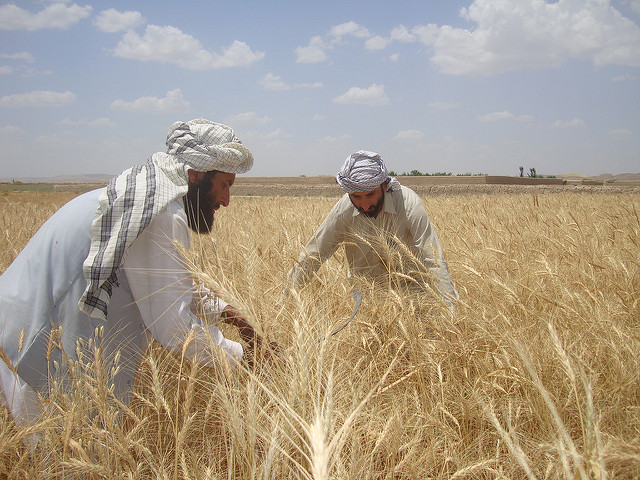
Credit Access in AfghanistanWith rural poverty accounting for 84 percent of overall poverty nationwide, Afghanistan is one of the poorest countries in the world. In rural areas, there is not a lot of access to credit. With 77 percent of Afghans residing in these rural areas, this proves to be problematic. Improvements are being made to ensure citizens in these rural areas have better credit access in Afghanistan.
Islamic Investment and Finance Co-operatives (IIFC)

The IIFC is a group of credit unions that aims to help people in rural areas gain better access to capital. Currently, there are 34 IIFCs in Afghanistan. The group provides loans, thus creating thousands of jobs for Afghans. According to Mahir Momand, founder of the IIFC Group, these loans have created 175,012 jobs, assisting more than 700,000 Afghans.

IIFCs also provide job opportunities in areas where it is difficult for the government to create employment. Momand explains that these credit unions not only help decrease poverty but also give Afghans knowledge on democratic principles. IIFCs enable local people to understand how they can have a say in their economic affairs.

Additionally, IIFCs want to tackle other issues with their programs, such as women’s inequality and youth unemployment. IIFCs have empowered women by making 13 percent of their members include women from Afghanistan. They believe it is important to giving women the opportunity to get involved in economic activities.

In addition to providing loans to youth, the IIFC hired 12 class graduates. This internship initiative improves unemployment among youth.

USAID Agricultural Credit Enhancement Phase-II Project (ACE-II)

Another development has been made to increase credit access in Afghanistan through the help of USAID. This project is specifically for female farmers and women operating agriculture-related businesses in Afghanistan. The project seeks to expand agriculture-related credit to improve agriculture business for women and the agricultural economy.

Unfortunately, many women do not understand the benefits of using credit to expand their business. Therefore, the United States Agency for International Development (USAID) has created the Agricultural Credit Enhancement Phase-II project to create women’s awareness about agricultural credit that could help their businesses.

In November 2017, USAID assembled three events called Women’s Agriculture Credit Shuras in Herat to gather women and raise awareness for the cause. They were one-day events, and they had microfinance institutions from Afghanistan participate along with financial experts to share their economic knowledge with women who came.

The event also provided practical training for women on how to apply for credits and how to properly manage them. Additionally, the event made women aware of their economic rights and the types of credits available to them.

This project aims to increase the growth of Afghanistan’s agricultural sector. Allowing women the opportunity to learn more about credit access in Afghanistan will ensure continued growth for the agricultural sector as well as allow women to increase their business prospects and better their lives in the process.

– McCall Robison

Photo: Flickr
 

January 12, 2018
https://borgenproject.org/wp-content/uploads/borgen-project-logo.svg 0 0 Borgen Project https://borgenproject.org/wp-content/uploads/borgen-project-logo.svg Borgen Project2018-01-12 01:30:452024-05-29 22:30:18Credit Access in Afghanistan
Global Poverty

Increased Credit Access in Iran Boosting Infrastructure Growth

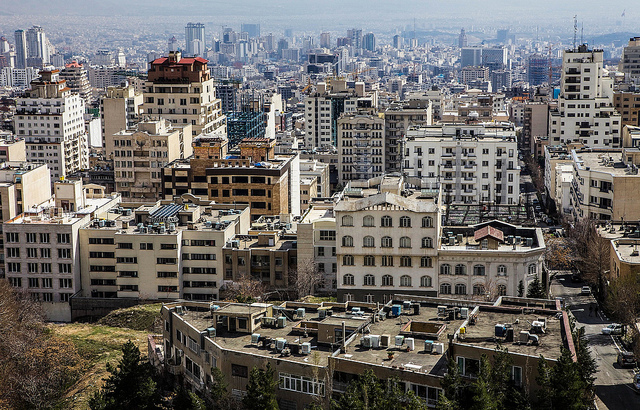
credit access in IranIran has had a long list of sanctions against it since its revolution in 1979 when hostages were held in the U.S. embassy in Tehran. Since then, Iran has had several restrictions imposed by the United Nations, the European Union and some individual countries like Japan and South Korea.

Due to this, the country has had limited access to the outside world, including its financial and banking sector, which has affected credit access in Iran. In January 2016, most of the sanctions were lifted after Iran met the obligations of the nuclear deal signed in April 2015. The prolonged sanctions and recession have affected small-scale domestic businesses, as they could not secure funding from banks and financial institutions due to high-interest rates.

With the lifting of the sanctions, various government organizations and international banks are eager to sign agreements with the country. China, South Korea, Austria and Denmark are among the notable countries that are taking steps to facilitate financial transactions with Iran.

Iran is building relationships with small foreign banks that are not hindered by the restrictions imposed on the country. The Central Bank of Iran (CBI) said that about 200 small to medium-sized banks have started correspondence with Iranian banks, helping to revive business with foreign countries.

In August 2017, a $9.4 billion deal was signed by the heads of the Korea Export Import Bank and the Export Development Bank of Iran. The credit access provided is considered an important agreement between the two countries and will be spent on various Iranian projects, both in the government and the private sector.

About 12 Iranian banks acting as agent banks have been chosen to utilize the credit. These banks will help support businesses in various sectors like health, transport and energy. This agreement is an important step in boosting credit access in Iran.

China is Iran’s biggest customer in oil trade and has provided $10 billion to fund water, energy and transport projects, which consist of electrifying a 926 km railroad from Tehran to Mashad. China has also committed another $25 billion, of which $15 billion will be spent on infrastructure and production projects.

In September 2017, Austria’s Oberbank and Denmark’s Danske Bank signed an agreement with Iran. Oberbank had business dealings with Iran long before the sanctions, and they were keen to re-establish a relationship with Iran.

Oberbank will extend its credit line of €1 billion to 14 different Iranian banks, which will help increase business in healthcare, infrastructure and green power. Danske Bank has also signed an agreement for €500 million with 10 different banks in Iran, ensuring no conflict with U.S. and EU-imposed sanctions.

In 2017, CBI cut the interest rate of lending to 18 percent and launched a dedicated finance market known as Iran Fara Bourse, making finance easily available and affordable to small and medium-sized businesses.

The partial removal of sanctions and the investments made by foreign banks will definitely boost the economy, help businesses grow and improve credit access in Iran. This will be of great help to Iranian citizens, both in terms of infrastructure improvements and increased income from businesses.

– Mahua Mitra

Photo: Flickr

January 11, 2018
https://borgenproject.org/wp-content/uploads/borgen-project-logo.svg 0 0 Borgen Project https://borgenproject.org/wp-content/uploads/borgen-project-logo.svg Borgen Project2018-01-11 07:30:382019-11-11 22:54:10Increased Credit Access in Iran Boosting Infrastructure Growth
Global Poverty

How the Mobile Lending Boom Affects Credit Access in Kenya

In any country, access to loans and lines of credit is a sign of a strong, healthy economy and an indicator of future growth. Stronger growth helps lift more people from poverty as opportunities for employment rise, so close attention to credit access is crucial to monitoring the fight against poverty.

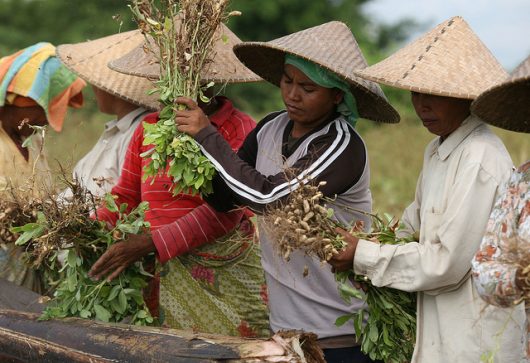
Many ordinary citizens have struggled to get credit access in Kenya, but new technologies are narrowing the gap. This points to a better future for finance in the East African nation.

Lack of Credit Access in Kenya

By some measurements, the Republic of Kenya’s economy has the largest GDP in East and Central Africa, owing no small part to its capital city, Nairobi, a regional commercial hub. But the nation suffers from its poor formal credit access for poor rural and urban populations, and small- and medium-sized businesses (SMEs).

As recently as 2009, only 39.6 percent of Kenya’s adult population had access to credit. As the costs of living have risen in Kenya, this lack of access can accelerate poverty levels. But the good news is, recently, the growth of new options like mobile lending have boosted credit access in Kenya.

The Mobile Lending Boom

According to Kenyan newspaper Business Daily Africa, lending via mobile phones has boosted credit access in Kenya six times over the past seven years. This conclusion comes from research done by the Standard Investment Bank.

The number of persons or households with loan accounts rose to 7.2 million between 2010 and 2016. The expansion of credit comes as mobile phone banking solutions have reached those who were left out of banking services due to their lack of traditional credit histories.

Warning Signs and Course Corrections

Although increased credit access is in many ways a good development, Business Daily Africa writes that defaults on loans rose 42.4 percent in 2016, likely the result of a softening job market in the country. A second Kenyan paper, the Daily Nation, suggests that the inability of entrepreneurs and SMEs to get loans via traditional banks is playing a role in this issue.

If Kenyan banks can correct their courses and find a way to make the traditional system work in a responsible way for the nation’s rural and urban poor, the loan system will hopefully stabilize, and non-performing loans will shrink as a percentage of total loans in Kenya.

– Chuck Hasenauer

Photo: Flickr

January 10, 2018
https://borgenproject.org/wp-content/uploads/borgen-project-logo.svg 0 0 Borgen Project https://borgenproject.org/wp-content/uploads/borgen-project-logo.svg Borgen Project2018-01-10 07:30:482019-11-11 23:01:01How the Mobile Lending Boom Affects Credit Access in Kenya
Global Poverty

The Impact of Improved Credit Access in Kosovo

Access to credit is an obstacle to economic development in many countries, and this is true in Kosovo as well. Some of the factors inhibiting credit access in Kosovo are unique. Since 1989, property rights in Kosovo has been a highly contentious issue, and the war in the late 1990s only made this worse.

Following 1989, the privatisation of public property in Kosovo caused many land disputes that were only exacerbated by the ethnic conflict. As people fled their homes before and during the war, property became de facto owned by people that did not have the legal right to it. The destruction of property during the war created further disputes that authorities have struggled to fully resolve.

The tumultuous history of property rights over the last 30 years has had a lasting impact on credit access in Kosovo. Given that property is an important form of collateral that is not plentiful in Kosovo, access to credit is very difficult. Many individuals and would-be entrepreneurs lack sufficient collateral to secure a loan, and banks continue to withhold credit from people who ostensibly have the necessary collateral because of legal uncertainty.

This lack of credit access in Kosovo is a major obstacle to economic development and is trapping banks in cycles of what amounts to economic contraction. This situation makes Kosovo a good candidate for aid from the United States in order to improve credit access.

Recently, USAID launched a project to help improve credit access in Kosovo by establishing the Kosovo Credit Guarantee Fund, which has pledged to back 50 percent of the value of loans given to small and medium-sized businesses. The first guarantees for these loans were issued by USAID in just September 2016, but they are already having a major positive impact on Kosovo’s business environment.

Beneficiaries report being able to secure financing that they could not have done without the help of the credit guarantees. This financing turns into investment elsewhere in Kosovo, multiplying the impact of this one small step to improving credit access.

These improvements to the economic situation as a result of improved credit access in Kosovo have a positive impact that stretches well beyond Kosovo’s borders. Kosovo is widely regarded as a good location for U.S. investment, and these improvements to the economy are sure to help the country attract more investment.

Improved economic forecasts also mean that Kosovo is fast becoming a valuable market for U.S. exports. This has the potential to benefit not only the people of Kosovo but of the United States as well. Despite lingering challenges, Kosovo is becoming a poster child for the success of this kind of foreign aid.

– Michaela Downey

Photo: Flickr

January 7, 2018
https://borgenproject.org/wp-content/uploads/borgen-project-logo.svg 0 0 Borgen Project https://borgenproject.org/wp-content/uploads/borgen-project-logo.svg Borgen Project2018-01-07 01:30:422024-05-29 22:30:02The Impact of Improved Credit Access in Kosovo
Aid, Aid Effectiveness & Reform, Global Poverty

Job Programs Versus Payouts for the Poor

All the foreign aid in the world could be useless if not implemented well. The Borgen Project seeks to help third-world countries join a global market and become self-sufficient. Among the many ways for developing governments to reach this goal, there is a common debate over whether it is better to have foreign aid creating jobs for the unemployed, or to simply give would-be entrepreneurs cash directly. In the debate of job programs versus payouts, each tactic has its own valuable strengths.

Technology reduces access to good entry-level jobs

Supporting a work program would equip workers with what they need for a good job in a competitive world. The World Economic Forum predicts that five million jobs will be lost around the world by 2020. For first-world nations, this loss can be offset by an increase in productivity and wealth. For third-world nations, artificial intelligence means low-wage workers will lose their competitive cost advantage in a global market.

The Financial Times predicts that 85 percent of all Ethiopian jobs are at risk due to automation. Corporations do not wish to pay human employees more in exchange for less efficient work. A job program, for nations striving to reach industrialization, can teach citizens skills that machines cannot learn. And that system will help developing countries keep pace with their richer neighbors.

Each country’s difficulties are best solved through their own workforce

The World Bank examined how small and medium enterprises (SMEs) contributed to the growth of almost 100 developing countries. Its research concluded that SMEs do more than provide the most employment for states. SMEs help developing nations even more than the biggest firms, in contrast to the U.S. economic system. SMEs bring in more than 80 percent of job creation even in countries with net job loss.

Some of a starting business’s greatest obstacles include lack of finances and burdensome taxes. Helping people help themselves would be an efficient use of money. As The New York Times notes about job programs versus payouts, human capital “could catalyze more business investment and activity in low-income neighborhoods, which would further promote economic growth.”

Emerging nations need money invested in its entrepreneurs, not its corporations.

The World Bank admitted that to claim “SMEs provide productivity growth” is dubious. If job programs only train developing nations to be cogs in a global machine, then ultimately only large corporations will benefit.

The USAID website, similar to the World Bank, agrees that entrepreneurs in developing nations need help to get started. But USAID notes that investors don’t contribute to high-risk yet promising early enterprises. If cash only flows to what’s proven to work in an economy, then no startup will escape a global corporation’s shadow. Through several nonprofits and systems, USAID “efforts focus on directly strengthening individual, high potential entrepreneurs.”

The debate of job programs versus payouts may never be solved. Artifical Intelligence will not be the last technology to threaten jobs, and corporations will ultimately never be the only factor taking a nation to greatness. USAID, the World Bank and the Financial Times can all agree on one thing: investment in the poorest among us is the key to our brighter future.

– Nick Edinger

Photo: Flickr

January 5, 2018
https://borgenproject.org/wp-content/uploads/borgen-project-logo.svg 0 0 Borgen Project https://borgenproject.org/wp-content/uploads/borgen-project-logo.svg Borgen Project2018-01-05 01:30:062024-05-29 22:29:59Job Programs Versus Payouts for the Poor
Page 4 of 512345

Get Smarter

  • Global Poverty 101
  • Global Poverty… The Good News
  • Global Poverty & U.S. Jobs
  • Global Poverty and National Security
  • Innovative Solutions to Poverty
  • Global Poverty & Aid FAQ’s
Search Search

Take Action

  • Call Congress
  • Email Congress
  • Donate
  • 30 Ways to Help
  • Volunteer Ops
  • Internships
  • Courses & Certificates
  • The Podcast
Borgen Project

“The Borgen Project is an incredible nonprofit organization that is addressing poverty and hunger and working towards ending them.”

-The Huffington Post

Inside The Borgen Project

  • Contact
  • About
  • Financials
  • President
  • Board of Directors
  • Board of Advisors

International Links

  • UK Email Parliament
  • UK Donate
  • Canada Email Parliament

Get Smarter

  • Global Poverty 101
  • Global Poverty… The Good News
  • Global Poverty & U.S. Jobs
  • Global Poverty and National Security
  • Innovative Solutions to Poverty
  • Global Poverty & Aid FAQ’s

Ways to Help

  • Call Congress
  • Email Congress
  • Donate
  • 30 Ways to Help
  • Volunteer Ops
  • Internships
  • Courses & Certificates
  • The Podcast
Scroll to top Scroll to top Scroll to top