• Link to X
  • Link to Facebook
  • Link to Instagram
  • Link to TikTok
  • Link to Youtube
  • About
    • About Us
      • President
      • Board of Directors
      • Board of Advisors
      • Financials
      • Our Methodology
      • Success Tracker
      • Contact
  • Act Now
    • 30 Ways to Help
      • Email Congress
      • Call Congress
      • Volunteer
      • Courses & Certificates
      • Be a Donor
    • Internships
      • In-Office Internships
      • Remote Internships
    • Legislation
      • Politics 101
  • The Blog
  • The Podcast
  • Magazine
  • Donate
  • Click to open the search input field Click to open the search input field Search
  • Menu Menu

Tag Archive for: Poverty In Guatemala

Posts

elderly poverty, Global Poverty, Nonprofit Organizations and NGOs

Organizations Helping Guatemala’s Elderly Population

Guatemala’s Elderly PopulationGuatemala has among the highest poverty rates in Latin America and Guatemala’s elderly population is among the most vulnerable. In Guatemala, poverty was estimated at 55.1% of the population in 2023. According to the most recent data, Guatemala has serious public health issues. A third of the population suffers from health problems, such as chronic illnesses, malnourishment and limited access to health care. Nearly 1 million people in Guatemala are 60 years of age or older and a sizable percentage of them experience health issues.

Furthermore, more than 60% of the elderly population in Guatemala live in poverty. These staggering numbers are particularly alarming given the lack of a comprehensive social security system that provides financial stability to the country’s older people. Recognizing this struggle, several organizations and local communities have stepped up to create programs and initiatives that address the economic, medical and emotional needs of older people in Guatemala.

The Pan American Health Organization

In 2018, under the “Take Control of Your Health Initiative,” Don Manuel and other adults from San Jose la Communidad, Mixco, attended weekly health workshops led by trainers trained by the Pan American Health Organization (PAHO). The initiative aims to help participants manage chronic illnesses like hypertension and diabetes. Participants are taught how to control their blood pressure, eat healthier, exercise more, and maintain strong social connections.

World Health Organization (WHO) and PAHO representative Oscar Barreneche noted that the “program empowers older adults to take control of their health and prevent life-threatening complications.” More than 2,000 patients have graduated from the initiative since it started in 2015.

International Volunteers HQ

International Volunteers HQ is another noteworthy organization that has been making a difference since 2007. It stresses the importance of community involvement in supporting elderly individuals. The organization works closely with local leaders and volunteers to identify needy elderly citizens and provide them with tailored support.

One of its essential programs is a home visitation service, where volunteers visit elderly individuals in their homes. The visitors offer companionship, assistance with daily tasks and monitoring their health. This initiative ensures that older people are cared for while strengthening community bonds as younger generations learn the value of caring for older people. In 2023, the organization’s volunteers dedicated 111,149 hours to care for seniors in 27 countries, including Guatemala.

A Brighter Future for Guatemala’s Elderly

Although the challenges facing older adults of Guatemala are significant, the solutions emerging across the country offer hope. Organizations like the PAHO and International Volunteers HQ are leading the way in providing essential services and advocating for the rights of older people. Moreover, local communities are also showcasing that even small grassroots initiatives can substantially impact the lives of older people.

These efforts are not just about providing immediate or short-term relief. They restore dignity, foster a sense of community and ensure that all elderly in Guatemala can live their final years with care, dignity and respect. As these programs continue to expand, they inspire others to follow suit, increasing the prospects of a brighter future for Guatemala’s elderly population.

– Irtija Ahmad

Irtija is based in Slough, UK and focuses on Global Health for The Borgen Project.

Photo: Flickr
August 30, 2024
https://borgenproject.org/wp-content/uploads/borgen-project-logo.svg 0 0 Hemant Gupta https://borgenproject.org/wp-content/uploads/borgen-project-logo.svg Hemant Gupta2024-08-30 01:30:232025-02-11 04:01:05Organizations Helping Guatemala’s Elderly Population
Developing Countries, Global Poverty, Nonprofit Organizations and NGOs

How FUNDAP Is Improving Women’s Education in Guatemala

Women’s Education in GuatemalaAs a strongly patriarchal society, Guatemala has made progress toward gender equality in the past years. This is partially due to work done by the Foundation for the Integral Development of Socioeconomic Programs (FUNDAP). This nonprofit organization uses six different programs (education, health, microcredit, handicraft, agricultural and environmental) to educate women. FUNDAP is elevating and empowering women to cultivate growth in various impoverished regions of Guatemala.

What Is FUNDAP?

FUNDAP is a nonprofit organization established in 1981 that focuses on improving the lives of people (specifically women) in rural areas of the Republic of Guatemala. It is dedicated to moving forward with respect for people’s dignity and culture, avoiding the patriarchy to empower local women.

How Does FUNDAP Work toward Empowering Women?

FUNDAP operates by first monitoring at-risk and poverty-stricken areas and then evaluating the best ways to assist the residents. Following the evaluation, it implements various changes, which often involve creating job opportunities, offering financial support to local women and developing tools for sustainable environmental use.

After these changes are enacted, FUNDAP will focus specifically on individual women, limiting its view from the wider community to the impoverished woman. It will help the women learn important habits (like hygiene, nutrition, literary and financial literacy), develop their sense of self (through self-confidence) and then educate those women until they are qualified workers in a specialized field.

Like many patriarchal societies, Guatemala holds a deep cultural belief in specific gender roles and biases. These cause great difficulties for women trying to achieve financial stability or even financial independence, as many locals do not support women’s businesses. This is not to say that women entrepreneurs do not exist in Guatemala. In fact, they make up the majority of lower-level businesses. The problem lies in the fact that they lack access to the necessary tools and are being denied opportunities to enhance their businesses and progress to the next level.

FUNDAP assists women in advancing to the next level by providing them with the education that has been denied to them due to their gender. The organization also works with them to cultivate self-confidence and affirm gender equality. By teaching women how to save, invest in equipment smartly and handle their finances, the organization allows local women to feel confident and secure in their businesses.

FUNDAP Improves Women’s Education in Guatemala

FUNDAP offers six programs that Guatemalan women can join. The programs focus on providing specialized training to make women highly qualified in areas such as education, healthcare, microcredit, handicrafts, agriculture and the environment. These programs are designed to educate and empower women to excel in specific fields of their interest.

Impacts

While many international programs and nonprofits have focused on education, FUNDAP provides diverse opportunities for women’s education in Guatemala. According to the World Bank, in 1980, only 17% of Guatemalan women were enrolled in secondary education. However, by 2022, that number had risen to 47%. These programs are effective and although they take time, they often achieve their goals.

In 2023 alone, FUNDAP helped more than 181,000 people with its programs, with more than 83% of those beneficiaries being women. FUNDAP is an organization with a wide reach throughout Guatemala. It identified a problem and took active steps to address it by providing education and empowerment to women.

– Paige Tamasi

Paige is based in Los Gatos, CA, USA and focuses on Global Health and Politics for The Borgen Project.

Photo: Unsplash

July 7, 2024
https://borgenproject.org/wp-content/uploads/borgen-project-logo.svg 0 0 Hemant Gupta https://borgenproject.org/wp-content/uploads/borgen-project-logo.svg Hemant Gupta2024-07-07 01:30:162024-07-06 23:55:19How FUNDAP Is Improving Women’s Education in Guatemala
Developing Countries, Global Poverty, NGOs

Alleviating Poverty in Guatemala City Garbage Dump

Guatemala City Garbage DumpGuatemala is characterized by its diverse and vibrant landscapes and equally rich cultural mosaic. However, with an estimated 55% of the population surviving on less than $6.85 a day, poverty frequently drains the color from everyday life there. According to the World Bank, limited access to services and opportunities is one reason why Guatemala’s steady economic growth, which has made the Guatemalan economy the largest in Central America, has yet to lead to significant poverty reduction. The poverty rate is the third highest in Latin America and the Caribbean and nowhere is the issue more visible than in the community surrounding the Guatemala City garbage dump.

Life in Landfill

A country of rolling mountain ranges and lush tropical forests, Guatemala is known as the Land of Eternal Spring. The Guatemala City garbage dump is an open-air landfill. An estimated 60,000 people live in extreme poverty along the periphery of the 40-acre landfill. According to a recent article by the environmental magazine Mongabay, underdeveloped infrastructure allows for build-ups of methane gas that ignites deadly fires, for waste to amass into mountains that shift underfoot. The surrounding neighborhood is rife with dangers and devoid of opportunity. Many inhabitants survive by scavenging through hazardous mounds of waste in search of materials for resale.

How Safe Passage Is Clearing Pathways Out of the Dump

Safe Passage is a nongovernmental organization (NGO) that helps families in this community free themselves from cyclical poverty. With the average adult resident having yet to progress beyond the fourth grade, the organization works towards long-term development. This is achieved by providing children with free quality education.

Within its full-day school, Safe Passage employs an experimental methodology called “Expeditionary Learning,” which integrates off-site activities into an immersive curriculum focusing on life skills and citizenship as well as traditional academic disciplines. Creating experiences away from the dump shows students how the knowledge they gather at school can be applied to real life. With this approach designed for maximum engagement, 90% of the organization’s students graduate in the ninth grade. In contrast, the national retention rate between the sixth and 10th grades is estimated at 42%.

Students navigating the transition between school and adult life can access vocational guidance, support with university and job applications, and training and employment opportunities with Safe Passage’s partner organizations through the “Próximo Paso” program. In 2023 alone, 32 students started vocational training and 14 began the university enrolment process. Furthermore, with Guatemalan schools opening for just four hours a day. The “Oportunidades” program offers students from other institutions the opportunity to participate in various extracurricular activities. This, in turn, provides a refuge from the chaos of life in the neighborhood and from the grip of its gangs.

Forging Futures with Creamos

Creamos was established in 2008 as an entrepreneurial initiative when a group of women began selling jewelry made from upcycled materials and were able to leave a life of scavenging in the dump behind them. It has since evolved into an NGO that helps others surmount the systemic barriers facing the community. Although its services extend to all in need of them, Creamos focuses especially on the neighborhood’s women. The women are subject to the converging forces of poverty and gender-based inequalities and violence. On a national level, Guatemala’s female labor force participation rate is the lowest in Latin America and the Caribbean at just 32% as of 2018. Similarly, the femicide rate is among the highest in the world, with 1.6 deaths per 100,000 women in 2021.

In 2020, Creamos introduced its Accelerated Education Program. It steers adult learners, many of whom were forced out of school and into work at the dump by a lack of resources, through a compressed academic curriculum and toward a high-school diploma. It also offers flexible scheduling and free childcare. As of 2022, an incredible 434 individuals had re-enrolled in education with Creamos. Furthermore, in 2022, the organization implemented its Workforce Development Program, through which students can access vocational training courses and internships with numerous partner organizations. They can specialize in various sectors, all selected to match current labor trends. In 2022 alone, the program served 250 people.

Holistic Approaches

In alignment with their shared mission of personal and community development, Safe Passage and Creamos provide various health care services. Safe Passage operates an on-site infirmary that treats health complaints and fosters long-term community well-being through education. It also has a social services team and offers pastoral care and a support program for at-risk families.

Epidemic levels of gender-based violence plague the community surrounding the Guatemala City garbage dump. To help address this, Creamos seeks to create safe spaces for vulnerable women. This includes providing a range of emotional care services operated by licensed psychologists, such as specialized support groups and a program designed to fortify family dynamics.

Looking Ahead

Guatemala has a human capital index of 0.46. This indicates that children born there today are projected to attain just 46% of their lifetime potential. However, organizations like Safe Passage and Creamos are working determinedly to equalize access to resources. Safe Passage is guiding children from the fringes of society inward.

Creamos, meaning “we create” in Spanish, began as a jewelry-making initiative but now strives to provide marginalized people with the tools they need to manufacture a life for themselves. Both organizations are creators at their cores: creators of safe spaces, opportunities and hope for a future where all of its people can feel Guatemala’s vitality.

– Leila Powles

Leila is based in Cheltenham, Gloucestershire, UK and focuses on Global Health for The Borgen Project.

Photo: Flickr
July 5, 2024
https://borgenproject.org/wp-content/uploads/borgen-project-logo.svg 0 0 Hemant Gupta https://borgenproject.org/wp-content/uploads/borgen-project-logo.svg Hemant Gupta2024-07-05 07:30:502024-07-04 04:13:55Alleviating Poverty in Guatemala City Garbage Dump
Economy, Global Poverty, Inequality

Guatemala’s Economic Growth and Equality

Guatemala’s Economic GrowthIn the past three decades, Guatemala has experienced a steady economic growth trajectory, yet this progress has not translated into significant reductions in poverty or inequality. Since the signing of the 1996 peace accords, which ended a 36-year civil war, the Guatemalan economy has grown at an average annual rate of 3.5%. This period of economic expansion saw the gross domestic product (GDP) growth rates of 4.1% in 2022 and 3.6% in 2023​.

However, these figures mask a deeper issue: the benefits of this growth have not been evenly distributed across the population. Urban areas, particularly Guatemala City, have seen substantial investment and development, while rural and indigenous communities continue to lag. This disparity highlights the challenge of achieving inclusive growth that benefits all segments of society.

Key Drivers of Economic Growth

Guatemala’s economy is largely driven by the private sector, which contributes approximately 85% of the country’s GDP. The services sector is the largest, accounting for 68% of GDP. This includes a wide range of activities such as banking, tourism, retail and telecommunications. The manufacturing sector, contributing 14%, is also a vital component, with industries such as food processing, textiles and pharmaceuticals playing significant roles​​.

Agriculture, though comprising only 10% of GDP, remains a critical sector, employing a substantial portion of the population and producing key exports like coffee, sugar and bananas. Additionally, remittances from Guatemalans living abroad, particularly in the United States (U.S.), are a crucial economic lifeline, contributing significantly to household incomes and foreign exchange reserves​.

Persistent Poverty and Inequality

Despite Guatemala’s economic growth and stability, poverty and inequality remain pervasive issues. As of 2023, approximately 55.1% of Guatemala’s population lives in poverty, with indigenous and rural communities bearing the brunt of this economic hardship​​. These communities often have limited access to education, health care and employment opportunities, perpetuating a cycle of poverty.

The informal sector is a substantial part of the economy, accounting for 49% of GDP and employing 71.1% of the workforce​. This sector is characterized by low wages, job insecurity and lack of social protections, which further exacerbate economic disparities. The country faces significant human capital challenges, with high rates of child malnutrition and limited access to basic services such as clean water, sanitation and electricity​.

Efforts and Challenges

Various initiatives have been undertaken to address these socioeconomic challenges. The U.S. Agency for International Development (USAID) has been active in Guatemala, implementing programs aimed at improving financial management, fostering innovation and supporting entrepreneurship. These programs are designed to create a more conducive environment for business growth and to empower local entrepreneurs.

However, the effectiveness of these initiatives is often undermined by systemic issues such as corruption and governance weaknesses. Corruption remains a significant problem, affecting public trust and the efficient allocation of resources.

Potential for Future Growth

Guatemala has considerable potential for future growth, thanks to its rich natural resources, cultural heritage and strategic geographical location. The country is rich in minerals such as gold, silver and nickel, which present opportunities for the mining sector. Its cultural heritage and natural beauty make it an attractive destination for tourism, which can be a significant source for Guatemala’s economic growth. 

– Sofia Reynoso

Sofia is based in Tampa, FL, USA and focuses on Business and New Markets for The Borgen Project

Photo: Pexels

July 2, 2024
https://borgenproject.org/wp-content/uploads/borgen-project-logo.svg 0 0 Hemant Gupta https://borgenproject.org/wp-content/uploads/borgen-project-logo.svg Hemant Gupta2024-07-02 03:00:272024-07-01 09:14:31Guatemala’s Economic Growth and Equality
Aid, Developing Countries, Global Poverty

USAID Programs in Guatemala

USAID Programs in GuatemalaDespite being the largest economy in Central America, Guatemala has the highest poverty and inequality rates in Latin America and the Caribbean. As of 2023, an estimated 55.1% of the population is affected by poverty, with a child malnutrition rate of 47%, among the 10th highest in the world. However, the United States Agency for International Development (USAID), a nongovernmental organization (NGO), has been running programs to alleviate poverty in Guatemala since the ’80s. The programs aim “to address the drivers of irregular migration to the United States, including high levels of violence and insecurity, pervasive poverty and chronic malnutrition.”

Factors Affecting Poverty in Guatemala

Hurricanes Eta and Iota in 2020 severely damaged infrastructure, leading to losses of 0.56% of gross domestic product (GDP) and 0.20% GDP of agriculture-related losses. The COVID-19 pandemic further disrupted Guatemala’s economy by straining the health care system, disrupting education due to lockdowns and increasing food insecurity by disrupting food supply chains, leading to greater malnutrition and loss of livelihoods.

On February 2, 2021, President Biden Signed an Executive Order calling for Addressing the Root Causes of Migration in Central America. The order intends to work alongside USAID to implement programs to alleviate poverty in Guatemala, hoping that, as a result, it will also reduce migration to the United States (U.S.).

The Root Cause Strategy in Guatemala

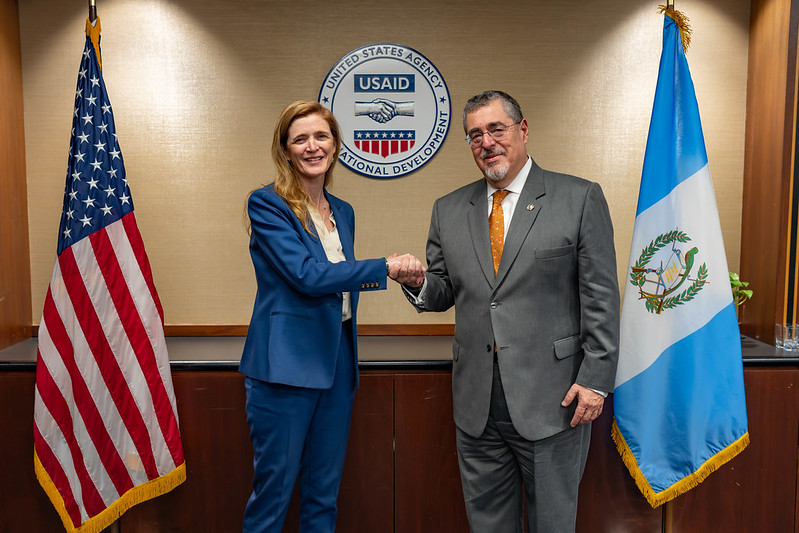
Vice President Kamala Harris met with Guatemalan President Bernardo Arévalo on March 25, 2024, to encourage bilateral relations as part of the Biden Administration’s ongoing commitment. She announced the planned investment of $135 million in USAID alongside $170 million intended to aid development, economic health and security assistance for Guatemala.

USAID Programs Involvement in the Root Cause Strategy

The funding provided by the Biden Administration is planned to implement the following USAID Programs in Guatemala:

  1. Anti-corruption Task Force: Guatemala has long been riddled with corruption among governing and police officials, ranking 13 out of 15 Latin American countries in its ability to detect, punish and prevent corruption. The USAID task force aims to build public trust in democracy as a system that works in its interest by implementing U.S. law enforcement officials and prosecutors to work on and investigate corruption cases.
  2. Central American Service Corps (CASC): The program was announced in 2022 and, after a successful run, is set to expand in May, funded by USAID. In the next five years, it aims to reach 25,000 Guatemalan youth at risk of migrating by engaging them in volunteer work, training and employment opportunities in Guatemala.
  3. Feed the Future Programme: USAID intends to support research capacity, education and advice on “Climate Smart” agriculture and build opportunities to scale agricultural technologies. In turn, it will bolster food security, which affects 4.6 million Guatemalans and aid economic development by fostering rural entrepreneurship.
  4. Guatemala Biodiversity Conservation: USAID will implement this program to strengthen the Guatemalan System of Protected Areas, focusing on the Maya Biosphere Reserve, Sierra de las Minas Biosphere Reserve and areas of ecological importance along the Pacific Coast. Conservation efforts often create opportunities for ecotourism, allowing Guatemala to create job sectors to generate ecotourism activities.
  5. Boosting Education: Due to a lack of funding and inefficient education systems, approximately 3% of Guatemala’s GDP is spent on education. Therefore, USAID intends to support the Government of Guatemala in establishing an educational foundation for children and youth to provide an alternative to migration. It has already reached nearly 69,000 learners in high-out-migration municipalities.

Looking to the Future

The Root Cause Strategy’s efforts to increase USAID funding and implement new programs in Guatemala offer a hopeful future. With consistent support, USAID can continue to alleviate poverty by boosting the agricultural economy, combat malnutrition by enhancing food security and address educational deficits with increased funding.

– Fatima Naqavi

Fatima is based in London, UK and focuses on Good News for The Borgen Project.

Photo: Flickr
May 20, 2024
https://borgenproject.org/wp-content/uploads/borgen-project-logo.svg 0 0 Hemant Gupta https://borgenproject.org/wp-content/uploads/borgen-project-logo.svg Hemant Gupta2024-05-20 07:30:512024-05-20 00:35:50USAID Programs in Guatemala
Foreign Aid, Global Poverty, Humanitarian Aid

Successful Programs From Foreign Aid to Guatemala

Foreign Aid to GuatemalaWhile Guatemala is home to the largest economy in Central America, 55.2% of Guatemalans lived in poverty in 2023. Because of the country’s high poverty rate, foreign aid to Guatemala is essential to reducing instability and providing Guatemalans with the resources to establish essential services and agricultural production. Guatemala’s high poverty rate could be due to natural disasters, such as hurricanes and droughts, causing agricultural setbacks. Additionally, political instability and violence have hindered Guatemala’s otherwise decent economy. The country is still recovering from a civil war that lasted for 36 years between 1960 and 1996. Without major investments in education, health and agriculture, Guatemalans continue to live in poverty.

US Foreign Aid to Guatemala

According to the Brookings Institute, foreign aid  “aims to support security, as well as the economic, social and political development of recipient countries and their people.” The United States spends about 1% of the annual federal budget on foreign aid. Additionally, the United States is the top contributor of foreign aid to Guatemala, alongside Spain, South Korea and the European Union.

In 2022, the United States provided $117.9 million in foreign aid to Guatemala per a Congressional report. Much of that funding was dedicated to development assistance. In 2023, the United States provided $121.3 million in foreign aid to Guatemala with a focus on humanitarian needs. President Biden has requested $164.5 million in foreign aid to Guatemala for 2024, according to Congressional Research Service.

Foreign aid to Guatemala funds programs aiming to improve the livelihood of Guatemalans and reduce poverty.

World Bank Country Partnership Framework (CPF)

The World Bank’s Country Partnership Framework (CPF) is a project that aims to increase human capital, resilience to natural disasters and climate change, and improve job opportunities in Guatemala. Over four years from 2024 through 2027, the World Bank’s CPF program will spend $2.5 billion to address Guatemala’s wide-ranging issues, according to the World Bank. These initiatives include infrastructure development, greater access to basic services, improved responses to natural disasters and greater access to economic opportunities in urban and rural areas.

Project Concern International (PCI) and USAID

Barrio Mio, a collaboration between Project Concern International (PCI) and USAID aims to reduce disaster risk in Guatemala by “improving urban infrastructure, housing and livelihoods.”

USAID and PCI launched a prototype of the project between 2012 and 2015 with great success. This included safeguarding homes against landslides through structural changes. The project also identifyed high-risk neighborhoods throughout Guatemala to reduce “vulnerability to crises before they happen.” In phase one alone, Barrio Mio improved nearly 3,000 shelters and provided clean water and sanitation for nearly 800 individuals.

While the first phase of Barrio Mio was launched in 2012, the project’s third phase concluded in 2020 with the expansion of the program in Guatemala City. A goal of the third phase was to increase the effectiveness of responses to urban emergencies, according to the ALNAP case study. Guatemala’s government adopted Barrio Mio’s methodology for emergency response and urban upgrading policy for communities that lacked stable infrastructure and essential services, Global Communities reports.

UN Guatemala Humanitarian Response Plan

The United Nations’ 2023 Guatemala Humanitarian Response Plan (HRP) targeted 2.3 million people. The plan focused on protection, food security and nutrition. The HRP targeted four primary groups including children affected by malnutrition, Indigenous and rural families facing food insecurity, people “in situations of human mobility” and people with disabilities.

Of the 4.6 million Guatemalans facing food insecurity in 2023, the HRP targeted roughly 500,000. Additionally, under the HRP, 117 schools were refurbished, allowing over 20,000 children to attend school with “improved educational conditions.” The plan also developed health services across Guatemala.

The Takeaways

Guatemala has faced several setbacks that have negatively affected its population, including climate-related disasters, political instability and economic mismanagement. Foreign aid has greatly helped Guatemalans facing food insecurity, malnourishment and a lack of health and education services.

– Marley Wilson
Photo: Flickr

March 8, 2024
https://borgenproject.org/wp-content/uploads/borgen-project-logo.svg 0 0 Kim Thelwell https://borgenproject.org/wp-content/uploads/borgen-project-logo.svg Kim Thelwell2024-03-08 01:30:282024-03-07 01:41:10Successful Programs From Foreign Aid to Guatemala
Charity, Global Poverty, Nonprofit Organizations and NGOs

5 Charities Operating in Guatemala

Charities Operating in GuatemalaAlthough Guatemala has experienced continued economic stability, this has not yet translated to robust poverty reduction. The country’s poverty and inequality rates are among the highest in the Latin America and Caribbean region. In addition, Guatemala has a large and underserved population that is primarily rural, Indigenous and unemployed. 

In 2023, the World Bank estimated that in Guatemala’s population of about 17 million people, 55.2% could be considered poor. Many efforts and programs to improve the living conditions of the country’s poor have arisen from its abhorrent circumstances. Poverty in Guatemala is estimated to increase by three or four times without the intervention of charities and organizations. These are 5 charities operating in Guatemala that work tirelessly to fill this need. 

Charities Operating in Guatemala

  1. Many Hopes: Many Hopes is a global community of volunteers and fundraisers committed to rescuing and raising children away from the influence of injustice. Thomas Keown established the organization in Boston and started it as a rescue home for girls in Kenya. The charity has grown significantly and has partnered with local leaders in six countries in Africa and Latin America, one of which is Guatemala. Its mission is to equip children to become adults who break cycles of injustice and poverty. The organization runs an onsite elementary school that educates 160 students; it also provides vocational training opportunities and college scholarships. They also provide medical care, food and holistic mental and emotional support to children under its care. 
  2. Creamos: This innovative organization is centered around women’s empowerment and has been active since 2008. Creamos focuses specifically on supporting the thousands of women who live in communities surrounding the Guatemala City Landfill (RSCG). According to the organization’s website, women living on the periphery of the RSCG experience the effects of poverty at a more extreme level. Many compete for scarce resources, have a low education level and experience historical employment discrimination because of where they live. The organization’s goal is to empower the community in three main ways. Firstly, it provides these women with a safe work environment where they can make a livable wage by sewing or making jewelry sold on the website. Creamos also provides the community with psychological support and offers adult education programs. This gives women the flexibility to complete their studies so they can spend more time with their work and families. Creamos has created 151 jobs and has more than 600 active participants supported by the organization’s programs. 
  3. SOS Children’s Villages: Since 1976, SOS Children’s Villages has supported youth without parental care or who are at risk of losing it in Guatemala. Its goal is to assist children impacted by poverty and violence and to support them on their way to independence. The organization currently provides housing for 260 children and young people. In addition, it provides thousands of children and families with nutritious food. Further, SOS Children’s Villages gives many Guatemalan children a space to learn in kindergarten and offers opportunities for further education. 
  4. Water For People: Since 1997, Water For People has helped Guatemalan communities access water, sanitation and hygiene. However, due to the high poverty level in El Quiché, it has mainly focused its efforts there since 2007. The organization works with the district government to build piped water supply systems and to train communities to maintain the systems. It also encourages a system that provides families with the products and services they need to build better bathrooms, as well as loans to finance the improvements. In addition, Water For People treats schools in Guatemala as part of the wider community. So, not only are children taught good hygiene practices in school, but the lessons are combined with education. This reinforces the practices at home and promotes sanitation in the community.
  5. Organization for the Development of the Indigenous Maya (ODIM): ODIM is a charity that started providing humanitarian assistance in the aftermath of Hurricane Stan, in 2005. The organization works on the belief that “compassionate, competent and comprehensive medical care and education” are needed in even the poorest of places. ODIM provides access to affordable primary and preventative healthcare for impoverished communities and Indigenous people. There are two clinics from which the organization runs, and combined, they provide a total of 3,000 treatments each year. ODIM also promotes education and integrative and preventative care that the communities would not have access to otherwise. 

A Vision for the Future

With 66% of the population living on less than $2 per day, poverty is a constant reality for most Guatemalan citizens. These 5 charities operating in Guatemala have sparked meaningful change. From empowering women in impoverished communities to breaking cycles of injustice and poverty, these organizations provide critical and indispensable support by addressing various issues that many Guatemalans face daily.

– Danielle Schaafsma
Photo: Unsplash

March 1, 2024
https://borgenproject.org/wp-content/uploads/borgen-project-logo.svg 0 0 Jennifer Philipp https://borgenproject.org/wp-content/uploads/borgen-project-logo.svg Jennifer Philipp2024-03-01 01:30:032024-02-29 03:12:355 Charities Operating in Guatemala
Global Poverty, USAID

USAID in Guatemala: Growth, Education and Food Security

USAID in GuatemalaGuatemala has enormous potential as a nation, yet as of 2023, 55.2% of its population lives in poverty. Numerous factors contribute to the high percentage of poverty. Those are frequent natural disasters, limited possibilities and ongoing gaps in access to essential services.

However, Guatemala is in a position of significant potential, being rich in natural resources and biodiversity, to capitalize on its proximity to the U.S. for trade, tourism and resource opportunities. Guatemala has yet to reach its full potential for wealth, nevertheless. There are signs of progress, such as the country’s Gini Index Coefficient reduction over the last few decades.

Furthermore, the United States Agency for International Development (USAID) in Guatemala has been present for some time and has far-reaching benefits in education, food security and economic growth. This article will provide a broad overview of how USAID in Guatemala is helping the Guatemalan authorities to alleviate poverty and how current and scheduled programs will build on this.

Education

The Puentes Project “aims to improve skills and abilities for work and access to employment or entrepreneurship opportunities for young people between 15 and 29 years of age.” This type of program is arguably one of the most important since Guatemala is struggling with a staggering 29.6% of its youth population not in education, employment or training. The project aims to enhance opportunities, employment scope, entrepreneurship prospects and adolescent access to social support.

The story of Irma Torres highlights the success of this program. After participating in the Puentes Project, she gained technological knowledge and skills such that she is now a teacher empowering the next generation, significantly improving her income.

Food Security

Like education, food security projects are also essential since rural Guatemalans face some of the most challenging conditions: “Families living in poor rural communities often eat only one meal a day.” This landscape makes it nearly impossible for rural Guatemalans to seek higher living standards and, unfortunately, is estimated to have driven “1.5 million Guatemalans to emigrate in the last 20 years.”

The “Feed the Future” program collaborates with many institutional agents and regional players within Guatemala to reduce poverty through sustainable rural development and increase private sector investment and job creation. The broadness of this initiative has led to several successes, such as the generation of 75,000 jobs since 2017. Further, more than 145,000 small-holder farmers have received help and more than 53,000 people have adopted new technologies for more efficient farming.  Guatemalans who have participated in “Feed the Future” activities have been less likely to return to poverty and more likely to escape growth stunting due to malnutrition.

Economic Growth

Guatemala had a strong recovery from the COVID-19 Pandemic, with GDP growth of 8% in 2021 and 4.1% in 2022. Still, most development depended on the country’s reliance on remittances. A lack of valued opportunity is the most significant driver behind the exodus of Guatemalans over the years. So, USAID in Guatemala seeks to form partnerships with the private sector to strengthen small and growing businesses and remove obstacles to access to finance, markets and large-scale foreign direct investment.

By working with the private sector directly, USAID in Guatemala can strategically provide training for jobs already identified, meet demand and support local economic prosperity.

The organization has heavily invested in manufacturing sectors to incentivize production at home for Guatemala to take advantage of the U.S. market and its benefits through the Dominican Republic-Central America FTA (CAFTA-DR) trade agreement.

Conclusion

The poverty rate among indigenous groups in Guatemala is as high as 79% and it is still a severe worry. USAID is leading several promising initiatives in the country and these efforts have already yielded some good results. Continued success will hinge on the ability of USAID and the Guatemalan authorities to carefully pinpoint decisive geographical and economic areas of the country where socioeconomic development is feasible and sustainable.

– Arshiya Eslamdoust
Photo: Unsplash

February 27, 2024
https://borgenproject.org/wp-content/uploads/borgen-project-logo.svg 0 0 Hemant Gupta https://borgenproject.org/wp-content/uploads/borgen-project-logo.svg Hemant Gupta2024-02-27 15:00:302024-02-27 03:11:16USAID in Guatemala: Growth, Education and Food Security
Children, Global Poverty

Fotokids: Helping Children in Guatemala

Children in GuatemalaFotokids, originally known as “Out of the Dump,” is a nonprofit that has been working to help vulnerable and at-risk children for the last 30 years. Founded in 1991 by the award-winning, former Reuters news service photographer Nancy McGirr, the organization began by teaching basic photography skills to children from Guatemala. It has evolved into teaching other classes, such as “digital imaging, computer-generated graphic design, video, creative writing, theater, advertising, ecology and English.”

History of the Organization

While conflict-stricken areas undoubtedly give rise to vulnerable populations, children become the most highly affected by this vulnerability, demanding special attention to protect them from spiraling into poverty. In 1991, Fotokids began with only six children from the garbage dump in Guatemala City. Intending to break the cycle of poverty through training children in visual arts and technology, the organization expanded in 1996 to include communities outside of Guatemala, such as the areas covered under the “Children in Conflict” program. Over the years, Fotokids grew and evolved even further, providing services to children from poverty and violence-stricken areas around the world.

The Program

The organization has focused on developing monetizable and employable skills among the children. They teach them to use photography, writing and computers to better their lives and bring them to par with the rest of the globalized and digitalized world. The goal is to help “small groups of Central American young people from the poorest of barrios.”

Fotokids is an integrated program that mandates enrolled children to attend schools, offering full or partial scholarships to support their education while simultaneously learning essential skills provided by the program. Upon entering, each student is given a camera and taught the basic skills of black-and-white photography, which then evolves and develops into teaching them newer and more complicated skills. Throughout this process, the program relies highly on long-term teacher-student relationships as a means of learning and guidance.

Impact

Since its inception, the organization has helped more than a thousand children escape their state of poverty and desolation, impacting the lives of more than 500 families. Students from the program have gone on to give back to the organization, assuming roles in program management. About 14 of the program graduates have become a part of the Fotokids’ Guatemalan staff, playing a pivotal role in extending assistance to children in Guatemala.

Exhibitions and Galleries

The work done by the organization and its children has been exhibited in various museums and galleries over the years: Colombia, France, the Netherlands, the United Kingdom and the United States of America, among others. Additionally, due to its work and impact, Fotokids has also been featured in numerous lectures held at Harvard University, Bowdoin College and Boston University in the U.S. Further, it has been presented at international conferences in countries like Brazil, Guatemala, Japan, Spain and the U.S.

With its wide-ranging and highly positive impact, Fotokids continues its program today, still working to provide an alternate life to children from six different communities in Guatemala and the farms of the Central Valley of California.

– Manasvi Kadian
Photo: Flickr

February 16, 2024
https://borgenproject.org/wp-content/uploads/borgen-project-logo.svg 0 0 Hemant Gupta https://borgenproject.org/wp-content/uploads/borgen-project-logo.svg Hemant Gupta2024-02-16 01:30:282024-02-15 03:26:33Fotokids: Helping Children in Guatemala
Child Soldiers, Global Poverty

Child Soldiers in Guatemala

Child Soldiers in GuatemalaMilitary groups worldwide recruit children and although the U.N. has put measures in place to prevent this, the issue is still prevalent. Their roles are not restricted to only soldiers or gunmen, but spies, messengers, sex slaves and suicide bombers. The U.N. receives regular “reports of children as young as 8 or 9 years old associated with armed groups”. When discussing child soldiers in Guatemala in the present day, separating state and non-state armed groups is essential. Guatemala’s gangs and guerrilla groups rely on child recruitment and, as these are not state institutions, these groups are harder to study or control.

Child Soldiers in the Civil War

From 1960 to 1996 Guatemala stood as a site of internal conflict. The leftist guerrilla movement Unidad Revolucionaria Nacional Guatemalteca (URNG) fought against the Guatemalan Government in the Civil War. In this 36-year war, it was “common practice” for both the national army and the guerrilla groups to recruit children. There is a lack of information on the exact number of child soldiers involved in the war. However, the U.N. estimates that out of the 3,000 members of the URNG, 214 were under the age of 18. Unfortunately, this lack of data meant that, after the war, child soldiers in Guatemala did not receive compensation, or benefit from any reintegration programs.

Progress

In 1992, the U.N. wrote the Convention on the Rights of the Child (UNCRC) to tackle issues of child safety and exploitation. This states that parties cannot recruit anyone under the age of 15 into the armed forces and pushes the State to take preventative measures.

In 2000, the Optional Protocol to the CRC that focuses on the involvement of children in Armed Conflict (OPAC) raised the age from 15 to 18. Guatemala signed both of these documents, however, there is no evidence of progress.

Military Schools

Guatemala’s military schools are a key example of how the state is still subjecting children to violence and ignoring the concerns raised in the CRC and OPAC. Children in these military schools take part in combat training and weapons handling. Many of these military schools do not meet the government’s educational standards and there are numerous complaints of the use of corporal punishment. Child Rights International Network (CRIN) revealed that in 2016 at least three students reported rape by soldiers at the military school Adolfo V Hall.

Even if these children are not legally members of the armed forces until they are adults, they are still victims to and witnesses of violence at such a young age. In these cases, differentiating voluntary and coerced enlisting is extremely difficult.

Child Soldiers in Gangs

Maras are a type of gang in Guatemala and the 2023 CRIN report shows that recruitment is hard to regulate as maras control large residential areas.

The Maras specifically target children on their way to and from school. These children are coerced and threatened into becoming spies or gunmen and many children have been murdered on their way to school for refusing to take part. According to a 2023 CRIN report “Save the Children reports that children as young as 6 are recruited to transport guns…and have been coerced into homicides as young as 13.” This has had a detrimental impact on education. School is no longer a space of safety and learning but “a site of recruitment.” This creates a vicious cycle, as with lower access to education more children turn to gang activity.

Schools of Peace

Save the Children has worked with Guatemalan families suffering from poverty since 1999. In the last year,  Save the Children positively impacted 201,000 young people. Aside from alleviating poverty, Save the Children has created a Schools of Peace project. This project results from education and child protection services working together to prevent any disruption to the education of young people. The initiative interrupts the process of gang recruitment and ensures that schools in Guatemala have the right protection from any danger due to armed conflict.

Save the Children tells the story of 16-year-old Estrella, a daughter of a gang leader. Her life was wrapped in violence and her education was sacrificed until Schools of Peace intervened. She is doing very well at school and works as a youth leader near Las Canoas to help others who have suffered like her.

Toybox

Toybox is a charity that provides young people with safe spaces and communities outside of school. The organization works in the country’s capital, Guatemala City and provides counseling and therapy to young children. It has provided children across the world with psychosocial support. Toybox identified that 10% of annual births in Guatemala are undocumented. This reduces the amount of protection the state can provide in conflict situations.

In 2022, Toybox helped 2,794 children around the world obtain legal identity documents. The charity also holds weekly sports activities to develop and maintain trusting relationships between staff and children. It is setting up a support network for these young people, while also demonstrating that other, more constructive, paths are still viable to children who live under gang rule.

A 2023 CRIN report identifies that poverty exacerbates non-state violence and increases child recruitment. It suggests treating the root cause of poverty to see a drastic difference in the levels of child soldiers in Guatemala. Initiatives such as these are important to show that there is a path out of the violence that dominates their lives.

– Liz Johnson
Photo: Flickr

February 9, 2024
https://borgenproject.org/wp-content/uploads/borgen-project-logo.svg 0 0 Borgen Project https://borgenproject.org/wp-content/uploads/borgen-project-logo.svg Borgen Project2024-02-09 01:30:002024-02-08 22:41:41Child Soldiers in Guatemala
Page 3 of 41234

Get Smarter

  • Global Poverty 101
  • Global Poverty… The Good News
  • Global Poverty & U.S. Jobs
  • Global Poverty and National Security
  • Innovative Solutions to Poverty
  • Global Poverty & Aid FAQ’s
Search Search

Take Action

  • Call Congress
  • Email Congress
  • Donate
  • 30 Ways to Help
  • Volunteer Ops
  • Internships
  • Courses & Certificates
  • The Podcast
Borgen Project

“The Borgen Project is an incredible nonprofit organization that is addressing poverty and hunger and working towards ending them.”

-The Huffington Post

Inside The Borgen Project

  • Contact
  • About
  • Financials
  • President
  • Board of Directors
  • Board of Advisors

International Links

  • UK Email Parliament
  • UK Donate
  • Canada Email Parliament

Get Smarter

  • Global Poverty 101
  • Global Poverty… The Good News
  • Global Poverty & U.S. Jobs
  • Global Poverty and National Security
  • Innovative Solutions to Poverty
  • Global Poverty & Aid FAQ’s

Ways to Help

  • Call Congress
  • Email Congress
  • Donate
  • 30 Ways to Help
  • Volunteer Ops
  • Internships
  • Courses & Certificates
  • The Podcast
Scroll to top Scroll to top Scroll to top