Alleviating Poverty in Guatemala City Garbage Dump
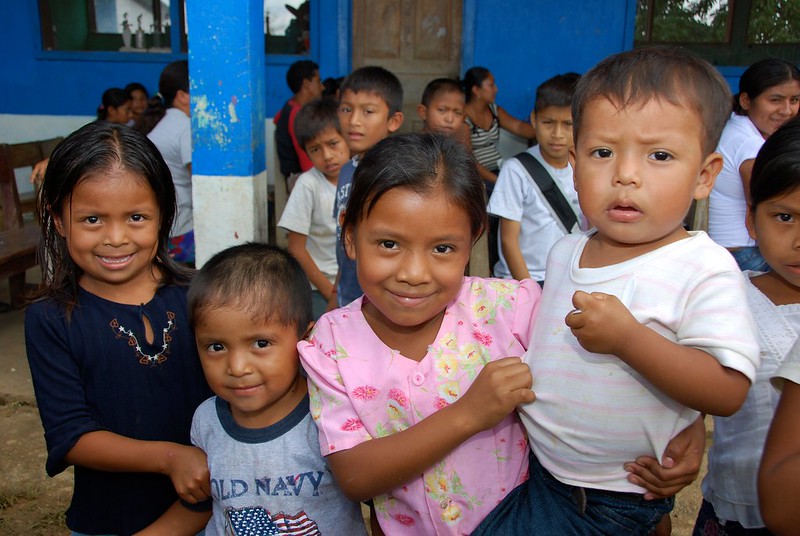 Guatemala is characterized by its diverse and vibrant landscapes and equally rich cultural mosaic. However, with an estimated 55% of the population surviving on less than $6.85 a day, poverty frequently drains the color from everyday life there. According to the World Bank, limited access to services and opportunities is one reason why Guatemala’s steady economic growth, which has made the Guatemalan economy the largest in Central America, has yet to lead to significant poverty reduction. The poverty rate is the third highest in Latin America and the Caribbean and nowhere is the issue more visible than in the community surrounding the Guatemala City garbage dump.
Life in Landfill
A country of rolling mountain ranges and lush tropical forests, Guatemala is known as the Land of Eternal Spring. The Guatemala City garbage dump is an open-air landfill. An estimated 60,000 people live in extreme poverty along the periphery of the 40-acre landfill. According to a recent article by the environmental magazine Mongabay, underdeveloped infrastructure allows for build-ups of methane gas that ignites deadly fires, for waste to amass into mountains that shift underfoot. The surrounding neighborhood is rife with dangers and devoid of opportunity. Many inhabitants survive by scavenging through hazardous mounds of waste in search of materials for resale.
How Safe Passage Is Clearing Pathways Out of the Dump
Safe Passage is a nongovernmental organization (NGO) that helps families in this community free themselves from cyclical poverty. With the average adult resident having yet to progress beyond the fourth grade, the organization works towards long-term development. This is achieved by providing children with free quality education.
Within its full-day school, Safe Passage employs an experimental methodology called “Expeditionary Learning,” which integrates off-site activities into an immersive curriculum focusing on life skills and citizenship as well as traditional academic disciplines. Creating experiences away from the dump shows students how the knowledge they gather at school can be applied to real life. With this approach designed for maximum engagement, 90% of the organization’s students graduate in the ninth grade. In contrast, the national retention rate between the sixth and 10th grades is estimated at 42%.
Students navigating the transition between school and adult life can access vocational guidance, support with university and job applications, and training and employment opportunities with Safe Passage’s partner organizations through the “Próximo Paso” program. In 2023 alone, 32 students started vocational training and 14 began the university enrolment process. Furthermore, with Guatemalan schools opening for just four hours a day. The “Oportunidades” program offers students from other institutions the opportunity to participate in various extracurricular activities. This, in turn, provides a refuge from the chaos of life in the neighborhood and from the grip of its gangs.
Forging Futures with Creamos
Creamos was established in 2008 as an entrepreneurial initiative when a group of women began selling jewelry made from upcycled materials and were able to leave a life of scavenging in the dump behind them. It has since evolved into an NGO that helps others surmount the systemic barriers facing the community. Although its services extend to all in need of them, Creamos focuses especially on the neighborhood’s women. The women are subject to the converging forces of poverty and gender-based inequalities and violence. On a national level, Guatemala’s female labor force participation rate is the lowest in Latin America and the Caribbean at just 32% as of 2018. Similarly, the femicide rate is among the highest in the world, with 1.6 deaths per 100,000 women in 2021.
In 2020, Creamos introduced its Accelerated Education Program. It steers adult learners, many of whom were forced out of school and into work at the dump by a lack of resources, through a compressed academic curriculum and toward a high-school diploma. It also offers flexible scheduling and free childcare. As of 2022, an incredible 434 individuals had re-enrolled in education with Creamos. Furthermore, in 2022, the organization implemented its Workforce Development Program, through which students can access vocational training courses and internships with numerous partner organizations. They can specialize in various sectors, all selected to match current labor trends. In 2022 alone, the program served 250 people.
Holistic Approaches
In alignment with their shared mission of personal and community development, Safe Passage and Creamos provide various health care services. Safe Passage operates an on-site infirmary that treats health complaints and fosters long-term community well-being through education. It also has a social services team and offers pastoral care and a support program for at-risk families.
Epidemic levels of gender-based violence plague the community surrounding the Guatemala City garbage dump. To help address this, Creamos seeks to create safe spaces for vulnerable women. This includes providing a range of emotional care services operated by licensed psychologists, such as specialized support groups and a program designed to fortify family dynamics.
Looking Ahead
Guatemala has a human capital index of 0.46. This indicates that children born there today are projected to attain just 46% of their lifetime potential. However, organizations like Safe Passage and Creamos are working determinedly to equalize access to resources. Safe Passage is guiding children from the fringes of society inward.
Creamos, meaning “we create” in Spanish, began as a jewelry-making initiative but now strives to provide marginalized people with the tools they need to manufacture a life for themselves. Both organizations are creators at their cores: creators of safe spaces, opportunities and hope for a future where all of its people can feel Guatemala’s vitality.
– Leila Powles
Leila is based in Cheltenham, Gloucestershire, UK and focuses on Global Health for The Borgen Project.
Photo: Flickr
