• Link to X
  • Link to Facebook
  • Link to Instagram
  • Link to TikTok
  • Link to Youtube
  • About
    • About Us
      • President
      • Board of Directors
      • Board of Advisors
      • Financials
      • Our Methodology
      • Success Tracker
      • Contact
  • Act Now
    • 30 Ways to Help
      • Email Congress
      • Call Congress
      • Volunteer
      • Courses & Certificates
      • Be a Donor
    • Internships
      • In-Office Internships
      • Remote Internships
    • Legislation
      • Politics 101
  • The Blog
  • The Podcast
  • Magazine
  • Donate
  • Click to open the search input field Click to open the search input field Search
  • Menu Menu

Tag Archive for: Poverty in Ethiopia

Posts

Aid, Global Poverty, Nonprofit Organizations and NGOs

How Innovations for Poverty Action Is Helping Fight Poverty

Innovations for Poverty ActionInnovations for Poverty Action (IPA) was founded in 2002 and works to find tested and proven solutions to fight poverty. The organization has offices and projects in 20 countries and four continents. Through research and evidence, the IPA has implemented programs in many of these countries to help poverty-stricken areas.

Innovations for Poverty Action in Colombia

IPA first came to Colombia in 2010 and has since completed much research regarding poverty in the country. It has worked in various capacities, including education and migration. One of IPA’s major projects in Colombia, ConsultIPA, came from researching the effects of different programs and their impact on areas facing poverty.

ConsultIPA is an initiative that aims to help small, local nonprofit organizations develop programs. This branch of IPA works out of Colombia and provides support for these nonprofits in their commitment to the right monitoring, evaluation and learning (MEL) system. So far, ConsultIPA has helped multiple nonprofits start their foundations and implement working strategies. Two of the bigger nonprofits that IPA has helped are Fundación Iguaraya and Planeta Rural. Both of these organizations have impacted their local communities and led to bigger initiatives and practices.

Fundación Iguaraya focuses on sustainability in Colombia and promoting a greater quality of life for its residents. Its initial mission regarded local communities and their involvement in conservation efforts to achieve greater biodiversity. Over time, the mission has evolved into learning more about the local communities and how to best amplify their voices as it relates to the cultural heritage of the people. The initiative has also provided jobs, specifically as tour guides for people traveling to these local spots.

Planeta Rural has also developed into a very important organization in Colombia. The nonprofit works with young people in the rural countryside to provide help for those in need. Planeta Rural has established programs to help the more impoverished areas grow food and explore newer technologies in support of these areas.

IPA in Ethiopia

IPA has also started developing more programs in Ethiopia. Although the group does not have a base in the country, it has partnered with local groups to provide training and support for the Ethiopian people. One of its major programs has been helping the “ultra-poor” through a graduation process. The IPA took a sample group of 925 households and divided them in half: one group would receive the program’s benefits and one would not.

After the households were picked, the project was based on five components: an asset, a training program, a support program, a savings program and home visits. Each component provided the households with much-needed support and had long-lasting impacts on these homes. The impacts of this study have been overwhelming for these families. Exit surveys have shown that the families reported economic impacts, including better saving methods. Families also said that they had enough food daily after the program. Another benefit of this program has been an increase in revenue as more families have been able to find jobs and profit from the new livestock provided during the IPA program.

Looking Forward

IPA continues to provide increasing support for areas affected by poverty and will continue pursuing new evidence and results in the fight against poverty.

– Dorothy Howard

Dorothy is based in Greensboro, NC, USA. and focuses on Good News and Technology for The Borgen Project.

Photo: Pexels

June 24, 2024
https://borgenproject.org/wp-content/uploads/borgen-project-logo.svg 0 0 Lynsey 2 https://borgenproject.org/wp-content/uploads/borgen-project-logo.svg Lynsey 22024-06-24 03:00:382024-06-23 13:24:38How Innovations for Poverty Action Is Helping Fight Poverty
Africa, Economy, Global Poverty

Circular Economy Innovations and Poverty in Ethiopia

Poverty in EthiopiaEthiopia is a country with a cultural heritage and natural wealth. Yet, it faces high rates of poverty and environmental challenges. Even in this adversarial backdrop, innovative approaches toward a circular economy are emerging as one of the transformative solutions. These efforts shed light on how zero-waste initiatives, resource recovery programs and upcycling enterprises are not only mitigating environmental degradation but also creating economic opportunities and combating poverty in Ethiopia.

Poverty in Ethiopia

Ethiopia is among many African countries that face pervasive poverty. According to estimates by the World Bank, more than 20% of Ethiopia’s population lives below the poverty line and has little access to clean water, education and health facilities. Furthermore, rapid population growth and climatic changes raise the difficulty of the already existing challenges, making sustainable development a matter of high priority.

The principles of circular economies stress the use of resources in ways that are more regenerative, wasting little and reaping full value. It is within this argument that the circular economy opens a promising pathway for poverty alleviation in Ethiopia by inspiring economic growth while at the same time protecting the environment.

Zero-Waste Initiatives

Zero-waste initiatives aim to eliminate waste through redesigning production, reusing and promoting responsible consumption. In Ethiopia, organizations like the Zero Waste Ethiopia project pioneered such waste management strategies, with the core of reuse and recycling. By diverting waste away from landfills and incinerators, these initiatives effectively reduce environmental pollution while creating employment opportunities in the waste collection and recycling sectors.

An example of this progress is the Addis Ababa Waste-to-Energy Facility, which commenced operations in 2018. This facility converts municipal solid waste into electricity, offering a sustainable energy source to the capital while reducing methane emissions at landfill sites. In addition, community-based initiatives like the “Clean and Green Ethiopia” campaign encourage citizen participation in waste segregation and recycling, promoting environmental stewardship and community empowerment.

Resource Recovery Programs

Resource recovery programs tap into innovative technologies that release value from waste materials. Such initiatives in Ethiopia include producing biogas from organic waste and wastewater treatment plants, reducing environmental pollution and producing renewable energy and organic fertilizers. These programs empower locals by providing them with access to clean energy sources and enhanced agricultural productivity for poverty reduction.

With the support of international organizations, the Ethiopian Biogas Program began in 2009 and has since installed more than 42,000 biogas digesters in rural households, substituting traditional sources of biomass fuels and hence improving indoor air quality. The same applies to the wastewater treatment plant of the Hawassa Industrial Park, which recycles and treats industrial effluent to prevent water pollution of Lake Hawassa, sustaining the industrial development of the region in an environmentally friendly way.

Upcycled Ventures

Upcycled ventures give otherwise discarded material a high-value new life, creating a circular economy where waste represents a valuable resource. In Ethiopia, social enterprises like Sabahar and SoleRebels typify transformational potential through upcycling. Sabahar produces exquisite textiles from recycled materials, which gives artisans sustainable livelihoods while preserving traditional weaving techniques. Similarly, SoleRebels transforms old tires into fashionable footwear, offering opportunities for employment among marginalized groups while reducing waste in landfills.

These businesses not only help reduce poverty but also promote social inclusion and cultural conservation. These enterprises combine traditional craftsmanship with innovation in design, projecting cultural heritage to the world while generating income for their local communities.

Final Remark on Poverty in Ethiopia

The impacts of circular economy innovations extend into environmental sustainability dimensions, such as social and economic benefits, by creating new markets for recycled materials, employment opportunities and efficiency in resource use that contribute to poverty reduction and inclusive economic growth. However, such scaling up would involve a collaborative partnership among government, private sector and civil society stakeholders, coupled with investment in research, infrastructure and capacity building.

For a country like Ethiopia, which faces huge challenges regarding poverty and environmental issues, embracing circular economy innovations could show the way toward sustainable and inclusive development. The potential of zero-waste initiatives, resource recovery programs and upcycling enterprises can secure resilience in communities, protect natural resources and uplift the most vulnerable populations in Ethiopia. 

– Honorine Lanka Perera

Honorine is based in Highland, NY, USA and focuses on Business and Technology for The Borgen Project.

Photo: Flickr

June 3, 2024
https://borgenproject.org/wp-content/uploads/borgen-project-logo.svg 0 0 Lynsey 2 https://borgenproject.org/wp-content/uploads/borgen-project-logo.svg Lynsey 22024-06-03 01:30:072024-06-01 13:31:34Circular Economy Innovations and Poverty in Ethiopia
Gender Equality, Global Poverty, Women's Empowerment

Give a Future: Fighting for Gender Equality in Ethiopia

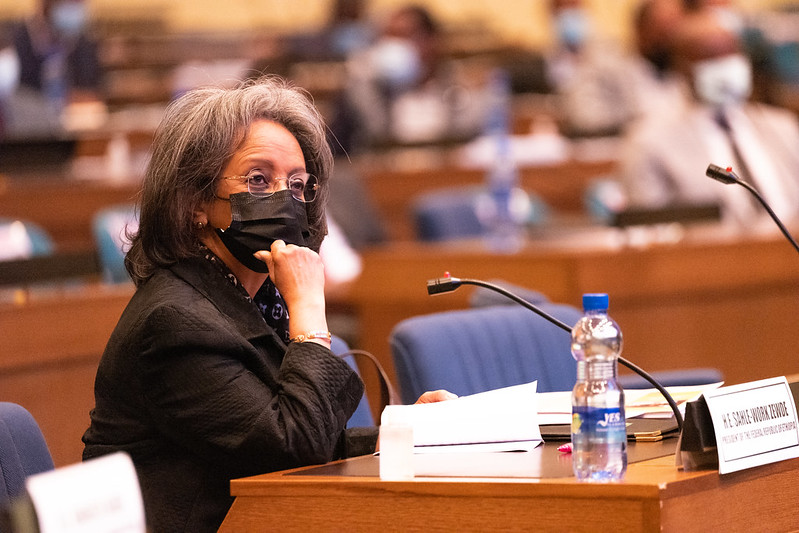
Gender Equality in EthiopiaEthiopia is a landlocked country located in the Horn of Africa. It is Africa’s oldest independent country and holds the second-largest population on the continent, with a population of 113.6 million. It has sentiments of a Marxist past, with highly restrictive media environments and tensions within the government. Notably, in October 2018, Sahle-Work Zewde was elected as president, marking a historic milestone as Ethiopia’s first female head of state since Empress Zawditu. With her inauguration came a pledge to champion gender equality in Ethiopia, aiming to translate rhetoric into tangible progress.

Gender Equality in Ethiopia

Ethiopia has committed to improving gender equality, especially with Zewde, who made women hold half of the positions in her cabinet. Nevertheless, when it comes to female education, the improvement does not seem so drastic. Similarly, despite women’s significant contribution to the agricultural sector in rural regions of Ethiopia, their contributions often go unrecognized and they face restrictions in accessing resources and community participation.

Recent findings by the United States Agency for International Development (USAID) found that one in three women experience physical, emotional, or sexual violence and only 50% of girls who enroll in primary schools ever make it to grade five. This seems to be an issue in Ethiopia, where many girls are unable to transition to secondary and tertiary school due to distance, personal security and economic challenges. Women often face more constraints in regard to less access to credit and limited market access and 30% of Ethiopian women do not make decisions on individual and family issues such as birth control methods.

Give a Future and Gender Equality

Give A Future is a nonprofit run by a group of dedicated individuals who believe in sustainable change through cost-effective programs. It was founded almost 20 years ago by Stephanie Ferrario and her team. The initiative started with homes for street children, which then turned into many homes, three schools, a large scholarship fund for girls, a large microfinance program for women and family programs to help families with their responsibilities. Its ethos builds upon providing knowledge, training and access to credit to create changes that last a lifetime and carry on into the next generations. As they say, “Educated women make the world a better, safer, more resilient place and are good for business.”

All of Give A Future’s programs are run by Ethiopians who are motivated to make their country a better place. Recognizing the vital role education plays in shaping the future, particularly for girls, Give A Future emphasizes the classroom as a sanctuary, providing not just learning opportunities but also a haven of safety and empowerment. The Borgen Project spoke with founder Ferrario, who highlights that “education is the one thing nobody can ever take away from you” and it is always the way to build the foundations for a better life. Therefore, Give A Future provides support for girls and women who want to finish university and supports women in its microfinance program, enabling them to create and run small businesses.

This has a ripple effect and contributes toward dismantling gender inequality once and for all, one woman at a time. The small number of women in business and politics, which Ferrario tells us has remained relatively the same since Zewde was appointed head of state, is a testament to this and highlights the importance of increasing female representation and empowerment at a higher level.

Impact

Recently, Give A Future created shecan.world. On this platform, women have a voice and can tell their stories to others, creating a plethora of role models for women who have overcome challenges and tackled the obstacles in front of them. Ferrario explains how this began during lockdown by telling Ethiopian women’s stories and has now grown into a large online library of women role models with more than 400 women, 100,000 listeners and 600,000 views. The aim is to inspire other women and create a log of powerful and incredible women.

What Can We Do?

When asked what people in the Global North could do to help combat poverty not only in Ethiopia but in the Global South as a whole, her response was insightful. Central to Ferrario’s approach is the cultivation of trust, a vital component in empowering local communities to drive their own development trajectories. Rather than imposing external solutions, she advocates for investing in understanding the root causes of poverty and collaborating closely with local stakeholders and organizations. By prioritizing local expertise and perspectives, interventions can be tailored to address the specific needs and challenges faced by communities, fostering sustainable, long-term change.

– Cordelia Moore

Cordelia is based in Exeter, UK and focused on Good News for The Borgen Project.

Photo: Flickr
May 14, 2024
https://borgenproject.org/wp-content/uploads/borgen-project-logo.svg 0 0 Lynsey 2 https://borgenproject.org/wp-content/uploads/borgen-project-logo.svg Lynsey 22024-05-14 01:30:362024-05-14 00:58:23Give a Future: Fighting for Gender Equality in Ethiopia
Agriculture, Aid, Global Poverty

The Work of the FAO in Ethiopia

Supporting Ethiopia: The Work of the FAOEthiopia remains one of the poorest countries globally despite significant reductions in its poverty rates, from 44% in 2000 to 30% in 2011. However, the World Bank notes that Ethiopia’s economy has experienced some of the strongest growth rates in the region. With continued improvements planned by its government, Ethiopia aims to reach lower-middle-income status by 2025. The Food and Agriculture Organization (FAO) in Ethiopia supports these efforts.

Barriers to Economic Progress

To achieve lower-middle-income status by 2025, Ethiopia must overcome several challenges, according to the World Bank. These include recovering from the COVID-19 pandemic, which has left high urban unemployment and an overall increase in poverty levels. Additionally, environmental and natural crises, such as locust invasions and adverse weather conditions, have driven food price inflation. The World Bank also notes that the 2022 drought, the worst in half a decade, has contributed to severe food insecurity affecting an estimated 20 million people as of 2023.

Furthermore, expansion of the labor market, reducing learning poverty which remains high at 90% and preventing the impact of further conflict within the nation are crucial to the continued growth of its economy. To encourage these circumstances, overseas aid is of vital importance and one such provider is the Food and Agriculture Organization of the United Nations (U.N.) or the ‘FAO’. 

The Country Programming Framework (CPF)

A subdivision of the FAO, the CPF has worked in Ethiopia providing the government with priority areas to focus on. The FAO’s website cites that the CPF was realized after a series of consultations with departments such as the Ministry of Agriculture and Natural Resources and the Ministry of Livestock and Fisheries Resources, among others. Together, these departments devised a four-year plan to take effect between 2022 and 2025. The priority areas to be focussed on during the plan are as follows: 

  1. Innovation for sustainable agriculture production
  2. Nutrition for the most vulnerable and safe food for everyone
  3. Natural Resource management and agricultural production system
  4. Promotion of inclusive economic growth and reducing inequalities
  5. Addressing cross-sector issues

Sustainable Agricultural Practices

To address the first three priority areas, the CPF is promoting new agricultural methods to produce sustainable crops and encouraging the development of sustainable livestock and fishery approaches. In this way, it aims to create climate-resilient systems to strengthen and grow food security and improve overall nutrition. This includes continued research into how to utilize drylands and ensure better drought resilience. To address the fourth priority area, the CPF outlines its aim to provide support to households to develop alternative sources of income, such as eco-tourism and support small and medium-scale businesses such as milk, hides, skins and grain enterprises.

Success Stories from the FAO

The work of the FAO has had particular success in the agricultural sector of Ethiopia. Supporting programs such as fruit nurseries across the nation, its website highlights Aleje as a beneficiary of such initiatives. The nursery sought to increase local farmers’ stock by growing and distributing seedlings of highland fruit. The nursery received 20,844 Italian rootstocks and 24,160 grafted seedlings in total. Beyond this, the nursery also provides opportunities for local workers, with 437 farmers being trained on its practices like irrigation and sustainable planting methods. 

Priest Habte Yiheyis was one such farmer. After participating in training given by the nursery, he received seedlings of apricots, plums, almonds and apples. Habte has since begun to harvest the yield, generating 7,500 Ethiopian Birr. The FAO notes that this gave him the opportunity to “cover all necessary expenses such as school stationary and uniform for his children, health care and other needs of his family.” He has since passed on his training and knowledge to an additional 35 local farmers, demonstrating the positive impact of the FAO in his case.

Looking Ahead

Ethiopia’s strategic partnership with the FAO and ongoing efforts in sustainable agriculture and economic diversification offer a promising pathway to achieving its lower-middle-income status by 2025. These initiatives continue to empower local communities and lay the foundation for a resilient, inclusive economy.

– Kayleigh O’Brien

Kayleigh is based in Leeds, UK and focuses on Good News and Technology and Solutions for The Borgen Project.

Photo: Unsplash

April 29, 2024
https://borgenproject.org/wp-content/uploads/borgen-project-logo.svg 0 0 Precious Sheidu https://borgenproject.org/wp-content/uploads/borgen-project-logo.svg Precious Sheidu2024-04-29 01:30:522024-04-29 00:23:31The Work of the FAO in Ethiopia
Africa, Global Poverty

Poverty Reduction in Ethiopia

Poverty Reduction in EthiopiaEthiopia is Africa’s oldest independent country and is the second most populous country in Africa. With a growing population of 128 million as of 2024, the United Nations estimates that more than 68% of all Ethiopians live in poverty. Poverty reduction in Ethiopia is difficult due to prolonged drought in the Horn of Africa has left 13 million Ethiopians to experience acute food insecurity. Due to damage to agriculture and El Niño’s effects, Ethiopia has a significant humanitarian risk.

Additionally, the issue of poor housing poses an urgent danger to the health and sanitation of many Ethiopians, as 70% of houses require total replacement. These staggering numbers emphasize the urgency for assistance in Ethiopia, where the public health crisis is worsening. However, significant efforts have been made internationally to combat poverty in Ethiopia and the public health crisis.

The Productive Safety Net Program

One major catalyst for poverty in Ethiopia is food insecurity, which affects millions of Ethiopians. Food insecurity is rapidly growing in the nation due to a drastic increase in droughts since 1999. Ultimately, this impacts Ethiopia’s crop and livestock production, which accounts for nearly 60% and 25% of the Ethiopian agricultural income.

The Productive Safety Net Program (PSNP), implemented by the Government of Ethiopia in 2015, targets households without secure access to food, providing short-term relief and long-term solutions. For example, financial opportunities through cash transfers, reducing food insecurity and increasing resilience to a crisis in Ethiopia.

As a safety net, it prevents starving Ethiopians from selling important assets to overcome food shortages. Since 2015, there have been clear improvements to poverty in Ethiopia; statistics of Ethiopians who live below the poverty line have reduced by 21% and there is a significant reduction in food insecurity.

International Humanitarian Support

The U.S. and the U.K. are continuously making significant efforts to provide vital humanitarian assistance to the people of Ethiopia. They are funding millions to protect their health and improve the quality of life for Ethiopians who are affected daily by poverty.

As the largest single-country provider of Ethiopia, the U.S. has funded more than $331 million in humanitarian assistance towards the country’s poverty crisis in 2023. The funding supports Ethiopians affected by droughts and food insecurity, providing life-saving support such as food, shelter, sanitation and safe drinking water.

In addition, the U.K. has funded £100 million (approximately $126 million) since 2023, focusing on ending preventable deaths targeted at children as well as pregnant women. The U.K.’s objective is to help around three million individuals. Additionally, 75 health centers will be aided in tackling malnutrition and deadly diseases such as malaria and cholera.

Improvements to Sanitation and Housing

Addressing the difficult living conditions generated by poverty in Ethiopia is important. Poorly built housing has a major impact on the public health of Ethiopians, where a staggering 70% of houses require complete replacement. The houses are made of wood and mud with cracked walls, dirt floors and unstable roofs, which are at risk of leaks. Further, only 28% of homes have access to sufficient sanitation facilities, 38% of Ethiopians have no toilet facilities and 48% use open pits or latrines.

Habitat for Humanity has been assisting vulnerable Ethiopians living in poverty since 1993, providing safe homes with water facilities and access to sanitation. Multiple projects provide different objectives to improve the health of Ethiopia, such as the urban slum upgrading project, the water and sanitation project and the Resilience Building Assistance Network (RBDC). Statistics show that since 2022, Habitat for Humanity has been serving more than 97,000 struggling Ethiopians, building more than 65 new homes and improving more than 96,000 homes in need of urgent repair.

Poverty Reduction in Ethiopia

Over the years, Ethiopia has shown remarkable progress. Ethiopians living below the poverty line have decreased by 21% as a result of many factors, including international support and PSNP. However, poverty persists due to natural disasters and extreme population growth, which pose a serious risk to the lives of many. Poverty in Ethiopia is complex and requires continuous support and sustainable solutions for a lasting impact.

– Emily Whatley
Photo: Flickr

March 31, 2024
https://borgenproject.org/wp-content/uploads/borgen-project-logo.svg 0 0 Jennifer Philipp https://borgenproject.org/wp-content/uploads/borgen-project-logo.svg Jennifer Philipp2024-03-31 07:30:452024-03-30 11:09:08Poverty Reduction in Ethiopia
Africa, Global Poverty, Water

“Water Life” in Ethiopia

Water LifeAida Muluneh is an Ethiopian photographer and cultural entrepreneur. Born in Addis Ababa, Ethiopia, she works as an educator “developing projects with local and international institutions in Ethiopia and Côte d’Ivoire.”

Shining Light on Water Poverty

In 2018, alongside WaterAid and the H&M Foundation, Aida created a series of works focusing on the scarcity of safe water. WaterAid is an NGO established in 1981 to provide clean water and sanitation to people around the world. Its mission is to “transform the lives of the poorest and most marginalized people by improving access to safe water, sanitation and hygiene.”

Founded in 2013, the H&M Foundation is an NGO based in Stockholm, Sweden that uses “philanthropic resources to find, fund and facilitate disruptive innovations, initiatives and research that enable a socially inclusive and planet positive textile industry.” Its website states “We believe that change is best achieved when a diverse group of people join forces and commit to a common agenda to solve complex challenges.”

WaterAid gave Aida “complete artistic freedom” and provided her with “information about the issues around water security, especially in Ethiopia.” The Water Life exhibition developed from a conversation about the pairing of art and advocacy, the issues of access to safe water and the impact that water scarcity had on women and children in Africa.

For the Water Life exhibition, Aida photographed the women in the Afar region in Northern Ethiopia, “one of the hottest and driest places on Earth.” Her goal was to address the issue of water scarcity without the clichés that mainstream media and aid organizations often represent, stating that she realized that “art can be a form of advocacy,” Canon reports.

Water Scarcity

Water scarcity is the lack of sufficient clean water to meet daily demands. Access to fresh drinking water dwindles due to both human factors and extreme weather conditions. Globally, 785 million people do not have access to clean drinking water. Each day more than 800 children die from preventable diseases that poor water causes in many communities around the world. The scarcity of safe water supplies can cause families and their communities to become locked in poverty for generations.

In the past 20 years, “Ethiopia has made remarkable strides in ensuring access to safe drinking water,” USAID reports. However, it continues to “face challenges in overall water, sanitation and hygiene and WASH coverage.” According to USAID, “in Ethiopia, diarrheal disease is the second cause of hospital admission and death among children under 5 years of age.”

Water scarcity affects women and children the most. According to World Vision, children are “more vulnerable to diseases of dirty water” and women and girls ” often bear the burden of carrying water for their families for an estimated 200 million hours each day.”

In Conclusion

Access to safe water and sanitation is a precondition to life and a declared human right. Water is vitally important to sustainable development – from health and nutrition to gender equity and economics. The artistic perspective of Aida Muluneh transitioned from a conversation into a vibrant artistic advocacy addressing the global issue of water scarcity.

Aida intended to create images that showed the challenges of water scarcity and emphasize the strength and resilience of the women who face these daily difficulties framed by the beauty, heritage and culture of the continent. “I could not stop thinking about the time it takes to collect water. Today, and every day, girls and women will spend more than 200 hours walking for water. If a young girl must spend three hours transporting water, whether for cooking feeding, bathing or drinking, that is three hours she could have been in school, getting an education,” Aida wrote for WaterAid.

– Pamela Fenton
Photo: Flickr

March 11, 2024
https://borgenproject.org/wp-content/uploads/borgen-project-logo.svg 0 0 Jennifer Philipp https://borgenproject.org/wp-content/uploads/borgen-project-logo.svg Jennifer Philipp2024-03-11 15:00:012024-12-13 18:03:07“Water Life” in Ethiopia
Global Poverty

AI for Ethiopia: Harnessing Technology to Combat Poverty

AI for EthiopiaEthiopia, a nation steeped in history and brimming with cultural wealth, grapples with a stark reality: poverty grips a significant portion of its population. Around one-third of Ethiopians struggle below the national poverty line. However, amidst this hardship, a flicker of hope shines through – a burgeoning internet user base. Today, one in five Ethiopians is connected to the digital world, opening doors to utilize cutting-edge technologies like artificial intelligence (AI) to tackle the country’s most pressing challenges and pave the path towards poverty eradication by harnessing technology to combat poverty.

AI Powered Tools for Ethiopia

Imagine AI-powered tools analyzing weather patterns and advising farmers on optimal planting times and crop selection, maximizing yields and mitigating the drought risk – a frequent threat in Ethiopia. This potential is not merely hypothetical. A project by the International Crops Research Institute for the Semi-Arid Tropics (ICRISAT) uses AI to analyze satellite imagery and provide farmers with personalized agricultural advice, leading to a 20% increase in yields for participating farmers.

Business Analysis With AI

Beyond agriculture, AI can empower financial inclusion. Ethiopia boasts a young population, many needing access to traditional banking services. AI-powered mobile banking platforms can bridge this gap, offering secure and convenient financial services to millions, fostering entrepreneurship and driving economic growth. For instance, the AI-powered mobile money platform M-PESA has revolutionized financial inclusion in Kenya, increasing financial access for millions and boosting overall economic activity.

Growth of Ethiopian Heath Care With AI

The potential of AI extends even further. In health care, AI improves public health outcomes and reduces treatment costs. According to the Novartis Foundation and Microsoft, post-COVID-19 artificial intelligence plays a crucial role in Africa. The study “Reimagining Global Health through Artificial Intelligence: The Roadmap to AI Maturity” examines how adopting AI-based health solutions can help low-income countries overtake high-income ones. Compared to conventional techniques, artificial intelligence in health care offers numerous advantages:

  • AI systems are capable of analyzing vast volumes of data. They can comprehend patients’ conditions more thoroughly than a human physician.
  • Using AI lowers error rates while performing surgery or administering medication to patients.
  • AI algorithms can analyze medical data to diagnose diseases at early stages.

According to the 2020 Partech report, $189 million in funding was given to African companies in the health technology space in 2019. This sum is equivalent to a 969 % increase over 2018 and represents 9.3% of the total amount granted to entrepreneurs operating in Africa. As a result, the health technology industry is raising substantial capital and expanding.

Improvising Teaching Methods With AI

AI-powered tutors can personalize learning experiences, catering to individual student needs and enhancing educational attainment. Of course, harnessing AI effectively as a technology to combat poverty requires careful consideration. Ethical concerns surrounding data privacy and potential job displacement must be addressed with comprehensive regulations and responsible implementation. Additionally, digital literacy initiatives are crucial to ensure equitable access and prevent exacerbating existing inequalities.

Conclusion

Ethiopia’s burgeoning internet user base presents a unique opportunity to leverage AI technology to combat poverty and promote sustainable development. By embracing this technology responsibly and inclusively, Ethiopia can unlock a brighter future for its people, transforming challenges into opportunities and paving the way for a more prosperous and equitable society.

– Vincenzo Marino
Photo: Wikimedia Cpmmons

February 21, 2024
https://borgenproject.org/wp-content/uploads/borgen-project-logo.svg 0 0 Lynsey 2 https://borgenproject.org/wp-content/uploads/borgen-project-logo.svg Lynsey 22024-02-21 07:30:192024-02-20 03:15:48AI for Ethiopia: Harnessing Technology to Combat Poverty
Global Poverty

The Great Green Wall and Its Impact in Ethiopia

Great Green WallTrees may hold the key to addressing Africa’s challenges of food insecurity, economic difficulties and climate vulnerability, as demonstrated by the inception of the Great Green Wall initiative in 2007. The ambitious project, initiated by the African Union (AU), aims to restore 100 million hectares of land, capture 250 million tons of carbon and generate 10 million jobs by creating a living green wall of trees across Africa. AU has implemented the program in 22 African countries, including Ethiopia.

Ethiopia, a low-income country grappling with severe deforestation, became a participant in the Great Green Wall initiative in 2011. This engagement reflects the nation’s commitment to reforesting and addressing challenges such as desertification and land deterioration. While work remains, the Great Green Wall in Ethiopia has had many successes in the years since.

Achievements of the Great Green Wall in Ethiopia

The efforts of the Great Green Wall in Ethiopia focus on 58 woredas or districts, stretching across the north of the country. The initiative has generated five billion plants and seeds. Approximately one million hectares of land have been restored, including more than 150,000 hectares of forests. Efforts have also resulted in 240 hectares of multifunctional gardens, plots of land where many plant species grow.

Another success of the initiative in Ethiopia is creating 91 kilometers of windbreaks or rows of trees or shrubs. By reducing wind speed, windbreaks improve soil quality, promote agricultural growth and protect people and animals. Efforts also significantly improved watershed management. Watersheds are land areas that drain water and their management supports land restoration and agriculture.

The creation of employment opportunities is partially attributed to the newly planted trees. Specifically, the cultivation of Boswellia papyrifera, a native plant known for producing frankincense, allows communities to sell frankincense and earn income. Importantly, the process of harvesting frankincense does not entail tree felling, promoting the sustainable maintenance of forests.

The Future 

In 2021, nearly 15 years after the Great Green Wall’s initiation, officials announced its next phase, called the Great Green Wall Accelerator. In the next phase, which runs through 2030, stakeholders hope to improve their coordination with one another and increase their impact. The focus narrowed to creating landscapes in 11 countries, including Ethiopia.

The Alliance of Bioversity International and the International Center for Tropical Agriculture published a review of the milestones and challenges of the Great Green Wall in Ethiopia in January 2023. The report calls for increased organization and monitoring of the nation’s restoration projects. It also highlights the need for financial communication, as funding sources and allocations are not transparent to all parties. These improvements can help implement the knowledge gained thus far and scale up future efforts.

– Kelly Carroll
Photo: Unsplash

February 18, 2024
https://borgenproject.org/wp-content/uploads/borgen-project-logo.svg 0 0 Lynsey 2 https://borgenproject.org/wp-content/uploads/borgen-project-logo.svg Lynsey 22024-02-18 03:00:132024-02-17 08:29:07The Great Green Wall and Its Impact in Ethiopia
Global Poverty

Blooming Prosperity: Floriculture in Ethiopia

Floriculture in EthiopiaEthiopia, often associated with its rich history, diverse culture and stunning landscapes, is also making a name for itself in the global floriculture industry. This emerging sector has not only created jobs and economic opportunities but has also played a significant role in poverty alleviation in Ethiopia. 

The Growth of Floriculture in Ethiopia

Floriculture, the cultivation of flowers and ornamental plants for commercial purposes, is a burgeoning industry in Ethiopia. The country’s favorable climate, with mild temperatures and plenty of sunshine, makes it an ideal location for year-round flower production. Ethiopia has become one of the leading African exporters of cut flowers, with roses being the primary export. The floriculture industry in Ethiopia has grown significantly over the past two decades. Between the years 2021 and 2022, Ethiopia exported $541 million worth of flowers. 

The nation’s proximity to Europe, one of the largest markets for cut flowers, has been a key advantage. Moreover, the Ethiopian government has actively promoted the sector by offering incentives to investors and flower growers, including tax breaks and land leases at competitive rates, providing a vital route to poverty alleviation in Ethiopia. 

Job Creation and Economic Impact 

One of the most notable impacts of the floriculture industry in Ethiopia has been the creation of employment opportunities. Thousands of people, particularly women and youth, have found jobs in flower farms across the country. These jobs range from farm laborers to skilled positions in flower production, grading, packaging and logistics. This influx of employment has provided a lifeline for many Ethiopians living in poverty, offering a source of stable income and the chance to improve their living conditions. 

In addition to job creation, the floriculture industry has contributed significantly to Ethiopia’s economic growth. It has become a major export earner, generating foreign exchange revenue that supports the country’s balance of payments. Floriculture generates about 80% of Ethiopia’s earnings from horticulture. 

This influx of foreign currency has allowed Ethiopia to finance vital imports and investment in other sectors, which, in turn, has a positive ripple effect on the economy and the livelihoods of its citizens. 

Smallholder Flower Farming 

While large commercial flower farms dominate the floriculture industry in Ethiopia, there is also room for smallholder participation. Small-scale flower farming has provided opportunities for rural households to supplement their income. These small-scale farmers, often women, cultivate flowers alongside traditional crops, helping diversify their sources of income and reduce their vulnerability to economic shocks and climate variability.

Challenges and Concerns 

Despite the positive impact of the floriculture industry on poverty alleviation, there are concerns that must be addressed. One of the main challenges is the potential environmental impact. The intensive cultivation of flowers requires significant amounts of water and energy, which could strain local resources and contribute to environmental degradation if not managed sustainably. 

It is crucial for the Ethiopian government and the industry to prioritize environmentally friendly practices. Moreover, labor conditions and workers’ rights have been a subject of concern in some flower farms. There have been reports of long working hours and inadequate wages, particularly for women laborers. Ensuring fair labor practices and protecting the rights of workers must remain a priority for the floriculture industry’s sustainable development.

Conclusion

Ethiopia’s floriculture industry is a shining example of how agriculture-based economic sectors can be a catalyst for poverty alleviation in Ethiopia. The growth of this industry has created jobs, boosted exports and contributed to economic development. However, it is essential to strike a balance between economic growth and sustainability, ensuring that the industry benefits both investors and the communities it operates in. 

As the floriculture sector in Ethiopia continues to expand, it presents an opportunity for the government, investors and stakeholders to collaborate on building a robust and sustainable industry that not only enhances the country’s economic prosperity but also helps lift more Ethiopians out of poverty. By addressing environmental concerns and labor issues while promoting inclusive growth, Ethiopia can make the most of its floral bounty in the years to come.

– Genevieve Martin
Photo: Flickr

October 26, 2023
https://borgenproject.org/wp-content/uploads/borgen-project-logo.svg 0 0 Yuki https://borgenproject.org/wp-content/uploads/borgen-project-logo.svg Yuki2023-10-26 09:40:352023-10-28 05:09:37Blooming Prosperity: Floriculture in Ethiopia
Global Poverty

Creating Affordable Plastic Houses in Ethiopia

Plastic Houses in EthiopiaA new company called Kubik has developed a smart and ecological way to help build affordable plastic houses in Ethiopia and Africa more broadly. Kubik uses recycled plastic waste to create more sustainable and inexpensive building materials that can be used to create homes, schools, factories and more. Kubik recently received a combined investment of $3.34 million to expand their plastic houses business into Ethiopia, where there exists an enormous housing crisis. Hence, Kubik has the potential to go a long way in helping alleviate the housing crisis in Ethiopia and beyond while at the same time helping to create a more sustainable and ecological way of living. 

The Housing Crisis in Ethiopia

Ethiopia, like much of Africa, is facing rapid urbanization, which means that populations in large cities like Addis Abbas are growing at high rates. At the same time, as more and more people move into cities, there is an increasing demand for housing in these cities because people need to find a place to live. 

However, in Ethiopia, the rate at which people are moving into large cities per year far exceeds the rate at which new affordable houses are being built. More specifically, the housing demand is currently estimated to be more than 1 million in Ethiopia with current rates projecting an estimated net of 200,000 more houses needed each year to account for the growing population. Because of this, there is an ongoing housing crisis in which many people are forced to live in small government-owned houses made of mud and wood that leave people susceptible to dangerous diseases and other health problems or in some cases, force people into homelessness. 

Kubik’s Solution

Started by Kidus Asfaw and Penda Marre after seeing how school classrooms were made from plastic materials in Côte d’Ivoire, Kubik was initially founded with the intention of helping create more classrooms in Côte d’Ivoire. However, after seeing the potential that plastic had to be used as a building material, Afshaw and Marre soon shifted the focus of Kubik to providing cheap building materials that could be used to build affordable plastic houses and other important infrastructure such as public bathrooms, schools and eco-friendly factories. 

More specifically, Kubik accomplishes this goal by selling the plastic building materials it makes to real estate developers who use its plastic building materials to build houses at a less expensive cost. In fact, plastic building bricks are often around 40% cheaper than cement of which most ordinary housing bricks are made. 

Ecological Benefit

Although the primary benefit of Kubik’s plastic building materials is its ability to provide more affordable houses in places that urgently need them, they also offer a number of ecological benefits that contribute to protecting the planet as well as improving people’s overall health. First, Kubik’s plastic building materials emit approximately 500% less carbon dioxide than traditional building materials such as cement. Hence, houses made from Kubik’s plastic materials will help significantly in the effort to halt global warming. 

Additionally, Kubik is helping contribute to solving a significant plastic waste problem that is present in many African countries including Ethiopia which produces almost 400,000 tons of plastic waste annually. However, 96% of existing plastic waste does not get recycled. Not only can large amounts of plastic waste significantly disrupt ecosystems and harm marine animals, but because plastic takes so long to decay, plastic waste is often burned to release incredibly harmful chemicals into the air that can cause numerous associated health risks including respiratory problems. 

Kubik helps to reduce the amount of plastic waste and the problems associated with it by focusing on solely using plastics that would not otherwise be made into recyclable products in the production of their building materials. 

Conclusion

Ethiopia faces an ongoing affordable housing crisis as well as a crisis in the rapidly increasing build-up of plastic waste that can damage the environment and people’s health. Although Kubik cannot completely solve either of these two issues alone, the efforts go a long way in mitigating the effects of both by providing an innovative and creative way to turn unused plastic waste into materials used to make affordable plastic houses in Ethiopia. Furthermore, Kubik may serve as an inspiration to future entrepreneurs to develop creative methods that will help solve societal problems such as affordable housing and excessive plastic waste. 

– Athan Yanos
Photo: Unsplash

September 2, 2023
https://borgenproject.org/wp-content/uploads/borgen-project-logo.svg 0 0 Lynsey Alexander https://borgenproject.org/wp-content/uploads/borgen-project-logo.svg Lynsey Alexander2023-09-02 07:30:402023-08-30 02:10:18Creating Affordable Plastic Houses in Ethiopia
Page 5 of 7«‹34567›»

Get Smarter

  • Global Poverty 101
  • Global Poverty… The Good News
  • Global Poverty & U.S. Jobs
  • Global Poverty and National Security
  • Innovative Solutions to Poverty
  • Global Poverty & Aid FAQ’s
Search Search

Take Action

  • Call Congress
  • Email Congress
  • Donate
  • 30 Ways to Help
  • Volunteer Ops
  • Internships
  • Courses & Certificates
  • The Podcast
Borgen Project

“The Borgen Project is an incredible nonprofit organization that is addressing poverty and hunger and working towards ending them.”

-The Huffington Post

Inside The Borgen Project

  • Contact
  • About
  • Financials
  • President
  • Board of Directors
  • Board of Advisors

International Links

  • UK Email Parliament
  • UK Donate
  • Canada Email Parliament

Get Smarter

  • Global Poverty 101
  • Global Poverty… The Good News
  • Global Poverty & U.S. Jobs
  • Global Poverty and National Security
  • Innovative Solutions to Poverty
  • Global Poverty & Aid FAQ’s

Ways to Help

  • Call Congress
  • Email Congress
  • Donate
  • 30 Ways to Help
  • Volunteer Ops
  • Internships
  • Courses & Certificates
  • The Podcast
Scroll to top Scroll to top Scroll to top