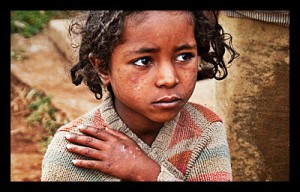
Ethiopia once had some of the highest poverty rates in the world. Since 2000, the poverty level in Ethiopia has been steadily decreasing due to agricultural and economic growth and education.
Although progress is being made towards creating a secure and sustainable future for a majority of Ethiopians, 34 percent of Ethiopians are still living in poverty and facing challenges such as having adequate food to feed their families. Thankfully, organizations such as USAID in Ethiopia and various programs are positively providing solutions to the poverty cycle.
Productive Safety Net Program
Based on the successes of the Graduation with Resilience to Achieve Sustainable Development program (GRAD) that ran from 2011 to 2016, the government of Ethiopia continues to address food insecurity through the fourth phase of the rural Productive Safety Net Program (PSNP 4).
Through USAID’s Feed the Future Ethiopia program, Livelihoods for Resilience is a program that supports PSNP 4 by addressing farming, agricultural and other non-work-related problems keeping Ethiopians without a secure food source.
Livelihoods for Resilience
Livelihoods for Resilience is another five-year program that’s been in existence from 2016 to 2021. The goal is to continue the successes of GRAD by educating communities on finance, business, agriculture, climate change and gender equality.
With a $48 million budget, Livelihoods for Resilience is led by CARE, a U.S.-based charity organization that partners with local organizations to implement the most effective strategies for positive change in communities. These efforts can then lead to a secure and sustainable future for those working their way out of poverty.
The VESA Model
The foundation for GRAD and Livelihoods for Resilience is a community-based education model — Village Economic and Social Associations (VESAs). Through VESAs, communities are educated in finance, business and agricultural trainings.
The VESA model allows a large number of people to be helped and educated at a low cost. With the goal of increasing sustainable skills and income, VESAs proved successful as 80 percent of GRAD participants graduated from government-sponsored safety net programs.
Financial security and savings are a new and foreign concept to many families living in poverty. Livelihoods for Resilience makes sure financial and business education are at the core of VESAs to ensure families possess a secure and sustainable future.
Nature and Crop Loss
The unpredictable nature of Ethiopian weather can wipe out entire crops and ruin farmer’s income in an instant. By providing half of all participants with new agricultural training and better seeds and working with agro-dealers to provide families with the inputs necessary to make lucrative changes, GRAD reduced weather-related crop loss by 40 percent.
By distributing seed vouchers with women’s names on them after El Nino hit, women were able to easily replant crops after droughts wiped out their previous ones.
Saving through VESAs is a safe, low-risk way for poor families to invest. Gradually, families pay off loans as they make more money from small businesses or farming while they continue to invest financially in a secure and sustainable future.
Benefits of the GRAD Program
GRAD participants’ savings increased by 12 percent and their assets doubled by increasing family savings and building the family’s assets. Income for family’s using the GRAD program went up on average of $353 a year. In fact, some family’s incomes rose by nearly $1,000.
In addition to business and farming tips, families also learn how to safely feed infants, and about gender equality and food insecurity. Also, 77 percent of GRAD participants were able to save their money in VESAs and get access to loans. Livelihoods for Resilience supports 5,000 VESAs and 350 youth VESAs.
Promoting and Possessing Gender Equality
Gender equality is a key factor in Livelihoods for Resilience. By promoting gender equality, GRAD empowers women to make the same wages as men. GRAD believes that poverty reduction processes cannot be truly made until women are providing just as much income and decision-making as the men in the house. Not only does gender equality raise the income for the family, but it also creates a community built upon respect and understanding.
In addition to women leadership training, men are taught how to be respectful and change behaviors damaging to the family and themselves. Not only were women able to make more decisions in the house by seven times what they previously had, but the number of women who were able to make a living increased by ten times its prior.
USAID in Ethiopia
Programs like GRAD and Livelihoods for Resilience give poor communities the reigns for creating a secure and sustainable future. By educating communities on gender equality, smart agriculture and livestock practices and business, families now have the tools they need to become independent from government assistance — no matter what the future holds.
Although families and communities continue to graduate from government assistance programs like PSNP 4, the importance of USAID in Ethiopia will remain until all families have the tools necessary to sustain their lives out of poverty.
– Hope Kelly
Photo: Flickr
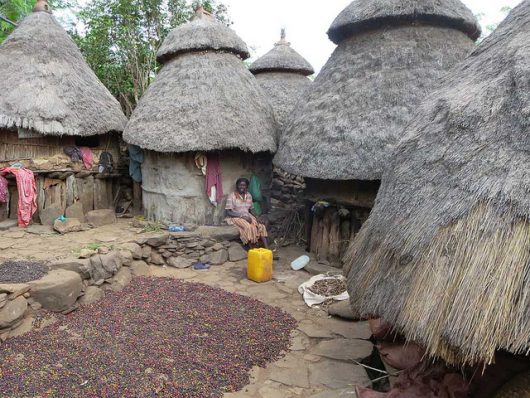

 Ethiopia is the second most populous country in Africa, with 94.1 million people. Poverty has long been an issue for Ethiopia, and while many remain under