• Link to X
  • Link to Facebook
  • Link to Instagram
  • Link to TikTok
  • Link to Youtube
  • About
    • About Us
      • President
      • Board of Directors
      • Board of Advisors
      • Financials
      • Our Methodology
      • Success Tracker
      • Contact
  • Act Now
    • 30 Ways to Help
      • Email Congress
      • Call Congress
      • Volunteer
      • Courses & Certificates
      • Be a Donor
    • Internships
      • In-Office Internships
      • Remote Internships
    • Legislation
      • Politics 101
  • The Blog
  • The Podcast
  • Magazine
  • Donate
  • Click to open the search input field Click to open the search input field Search
  • Menu Menu

Tag Archive for: Nelson Mandela

Posts

Activism, Development

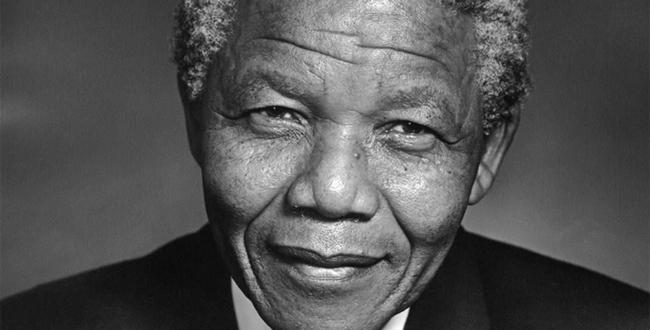
10 Quotes from Nelson Mandela

quotes from nelson mandela
This month the international community celebrated Nelson Mandela International Day, the first time the day has been celebrated since the former South African President’s death.

Nelson Mandela Day, celebrated on July 18, the day of the former South African President’s birthday, was approved in 2009 by the United Nations. The day was created to inspire others to carry on the Nobel Peace Prize recipient’s legacy and to honor the beloved leader himself. On July 18, people around the world are encouraged to offer 67 minutes of their day to those less fortunate. After dedicating 67 years of his own life to working for social justice, Mandela passed away in his home in 2013 at the age of 95.

This year, a foundation spokeswoman from the Nelson Mandela Foundation estimated that 126 countries participated in Mandela Day, as over 1,200 positive deeds were registered on the foundation’s website.

“We have been heartened by the number of sustainable projects still thriving. At the same time it has been inspiring to see the range of innovative new projects to emerge,” said spokeswomen Danielle Melville.

Below are a collection of 10 quotes from Nelson Mandela himself, ranging from his time as prisoner 4664 on Robben Island to the occasion of his many accomplishments and rewards:

1. “There will always be good men on earth, in all countries, and even here at home.” -From a letter to his former wife Winnie Mandela, written in Robben Island, 1970

2. “These countless human beings, both inside and outside our country, had the nobility of spirit to stand in the path of tyranny and injustice, without seeking selfish gain. They recognized that an injury to one is an injury to all and therefore acted together in defense of justice and a common human decency. Because of their courage and persistence for many years, we can, today, even set the dates when all humanity will join together to celebrate one of the outstanding human victories of our century.” -From his Acceptance Speech at the Nobel Peace Prize Ceremony, Norway, 1993

3. “We understand it still that there is no easy road to freedom. We know it well that none of us acting alone can achieve success. We must therefore act together as a united people, for national reconciliation, for nation building, for the birth of a new world. Let there be justice for all. Let there be peace for all. Let there be work, bread, water and salt for all. Never, never and never again shall it be that this beautiful land will again experience the oppression of one by another and suffer the indignity of being the skunk of the world. Let freedom reign.” -From his Inauguration as President of South Africa, South Africa, 1994

4. “I learned that courage was not the absence of fear, but the triumph over it. I felt fear myself more times than I can remember, but I hid it behind a mask of boldness. The brave man is not he who does not feel afraid, but he who conquers that fear.” -From his book, Long Walk to Freedom, 1994

5. “If I were to be granted one wish on this occasion, it would be that all South Africans should rededicate ourselves to truing this into the land of our dreams; a place that is free of hatred and discrimination; a place from which hunger and homelessness have been banished; a safe place for our children to grow into our future leaders.” -From his 80th Birthday Celebration, South Africa, 1998

6. “My inspiration are men and women who have emerged throughout the globe, and who have chosen the world as the theatre of their operations and who fight socio-economic conditions which do not help towards the advancement of humanity wherever that occurs. Men and women who fight the suppression of the human voice, who fight disease, illiteracy, ignorance, poverty and hunger. Some are known, others are not. Those are the people who have inspired me.” -From a speech at London School of Economics, England, 2000

7. “What counts in life is not the mere fact that we have lived. It is what difference we have made to the lives of others that will determine the significance of the life we lead.” -From Walter Sisulu’s 90 Birthday Celebration, South Africa, 2002

8. “One of the most important lessons I learned in my life of struggle for freedom and peace is that in any conflict there comes a point when neither side can claim to be right and the other wrong, no matter how much that might have been the case at the start of the conflict.” -From a Video Message for the Signing of the Geneva Accord, 2003

9. “As I am former prisoner number 46664, there is a special place in my heart for all those that are denied access to their basic human rights. We urge countries to make the policy changes that are necessary to protect the human rights of those who suffer from unfair discrimination.” -From the Closing Ceremony of the XV International AIDS Conference, Thailand, 2004

10. “We are in some ways reminded today of the excitement and enthusiasm I our own country at the time of our transition to democracy. People, not only in our country, but around the world, were inspired to believe the through common human effort, injustice can be overcome and that together a better life for all can be achieved.” -From a letter to President Barack Obama on the occasion of his Inauguration, 2009

– Blythe Riggan

Sources: Citizen, Mandeladay.com, All Africa, NelsonMandela.org, New York Times, USA Today, Nelson Mandela by Himself
Photo: Telegraph
August 1, 2014
https://borgenproject.org/wp-content/uploads/borgen-project-logo.svg 0 0 Borgen Project https://borgenproject.org/wp-content/uploads/borgen-project-logo.svg Borgen Project2014-08-01 09:35:142024-12-13 17:51:0310 Quotes from Nelson Mandela
Global Poverty

10 Quotes on Poverty


poverty quotes and sayings


“Poverty is relatively cheap to address and incredibly expensive to ignore.”

– Clint Borgen, President of The Borgen Project


In June of 1998, all heads of the U.N. agencies signed a statement defining the term “poverty.” The statement read,“Fundamentally, poverty is a denial of choices and opportunities, a violation of human dignity…It means not having enough to feed and clothe a family, not having a school or clinic to go to…It means insecurity, powerlessness and exclusion of individuals, households and communities. It means susceptibility to violence, and it often implies living on marginal or fragile environments, without access to clean water or sanitation.”

After the World Summit on Social Development in Copenhagen in 1995, the U.N. recognized the need to reduce “overall” poverty, as 117 member-states adopted a declaration and program of action dedicated to this cause.

What is significant about this concept of overall poverty is the idea that the U.N. considers it present in all countries, whether it exists as “mass poverty in many developing countries,” “pockets of poverty amid wealth in developed countries” or “the utter destitution of people who fall outside of family support systems, social institutions and safety nets.

Poverty has made itself a presence in everyone’s lives, whether it is in the form of a classmate, colleague, a friend in the neighborhood or a friend in a neighboring country. Below are several quotes on poverty from past and present prominent leaders, defining what poverty looks like to them.


Best Poverty Quotes


  1. “We think sometimes that poverty is only being hungry, naked and homeless. The poverty of being unwanted, unloved and uncared for is the greatest poverty. We must start in our own homes to remedy this kind of poverty.” — Mother Teresa, Missionary and Saint.
  2. “These days there is a lot of poverty in the world, and that’s a scandal when we have so many riches and resources to give to everyone. We all have to think about how we can become a little poorer.” — Pope Francis, current Head of the Catholic Church.
  3. “Wars of nations are fought to change maps. But wars of poverty are fought to map change.” — Muhammad Ali, Professional Boxer.
  4. “People…were poor not because they were stupid or lazy. They worked all day long, doing complex physical tasks. They were poor because the financial institution in the country did not help them widen their economic base.” — Muhammad Yunus, Author of “Banker to the Poor: Micro-Lending and the Battle against World Poverty.”
  5. “Where you live should not determine whether you live, or whether you die.” — Bono, Singer and Philanthropist.
  6. “If human beings are perceived as potentials rather than problems, as possessing strengths instead of weaknesses, as unlimited rather than dull and unresponsive, then they thrive and grow to their capabilities.” — Barbara Bush, former First Lady of the U.S.
  7. “Overcoming poverty is not a gesture of charity. It is an act of justice. It is the protection of a fundamental human right, the right to dignity and a decent life.” — Nelson Mandela, former President of South Africa.
  8. “Just because a child’s parents are poor or uneducated is no reason to deprive the child of basic human rights to health care, education and proper nutrition.” — Marian Wright Edelman, Founder and President of the Children’s Defense Fund.
  9. “If poverty is a disease that infects the entire community in the form of unemployment and violence, failing schools and broken homes, then we can’t just treat those symptoms in isolation. We have to heal that entire community.” — President Barack Obama, 44th and current President of the U.S.
  10. “Poverty is not only about income poverty, it is about the deprivation of economic and social rights, insecurity, discrimination, exclusion and powerlessness. That is why human rights must not be ignored but given even greater prominence in times of economic crisis.” — Irene Khan, former Secretary-General of Amnesty International, 2010.

– Blythe Riggan

Sources: BBC, Brainy Quote 1, Brainy Quote 2, Goodreads, OHCHR, Standford, The Book of the Poor
Photo: Bio

June 20, 2014
https://borgenproject.org/wp-content/uploads/borgen-project-logo.svg 0 0 Borgen Project https://borgenproject.org/wp-content/uploads/borgen-project-logo.svg Borgen Project2014-06-20 09:23:242024-06-11 02:17:5610 Quotes on Poverty
Global Poverty

12 Quotes about Humanity

quotes about humanity
War. Poverty. Crime. Hunger. With all of the injustices that exist in today’s world, it can be easy to lose faith in humanity. We may ask ourselves, “Why should we care if no one else does? Nothing ever seems to change or get any better, so we might as well accept the world as it is.”

Although it is important to acknowledge the existing injustices and view them as serious issues that need to be resolved, it is equally important for us to realize our own part in seeing those solutions become part of reality. The following quotes about humanity may explain and hopefully inspire us:

  1. “You must not lose faith in humanity. Humanity is an ocean; if a few drops of the ocean are dirty, the ocean does not become dirty.” – Mahatma Gandhi
  2. “To deny people their human rights is to challenge their very humanity.” – Nelson Mandela
  3. “Love and compassion are necessities, not luxuries. Without them, humanity cannot survive.” – Dalai Lama
  4. “An individual has not started living until he can rise above the narrow confines of his individualistic concerns to the broader concerns of all humanity.” – Martin Luther King, Jr.
  5. “What is tolerance? It is the consequence of humanity. We are all formed of frailty and error; let us pardon reciprocally each other’s folly – that is the first law of nature.” – Voltaire
  6. “World belongs to humanity, not this leader, that leader or that king or prince or religious leader. World belongs to humanity.” – Dalai Lama
  7. “When freedom does not have a purpose, when it does not wish to know anything about the rule of law engraved in the hearts of men and women, when it does not listen to the voice of conscience, it turns against humanity and society.” – Pope John Paul II
  8. “One way or another, we all have to find what best fosters the flowering of our humanity in this contemporary life, and dedicate ourselves to that.” – Joseph Campbell
  9. “The sole meaning of life is to serve humanity.” – Leo Tolstoy
  10. “During bad circumstances, which is the human inheritance, you must decide not to be reduced. You have your humanity, and you must not allow anything to reduce that. We are obliged to know we are global citizens. Disasters remind us we are world citizens, whether we like it or not.” – Maya Angelou
  11. “The purpose of human life is to serve, and to show compassion and the will to help others.” – Albert Schweitzer
  12. “The greatness of humanity is not in being human, but in being humane.” – Mahatma Gandhi

As these quotes about humanity reveal, it can be difficult to explain human nature, but that does not mean we should lose faith or hope in ourselves or others. The Borgen Project promotes the idea that we each have the power within ourselves to change the world, which is one of the most beautiful abilities of humanity.

– Meghan Orner

Sources: Brainy Quote, Good Reads
Photo: Flickr

June 5, 2014
https://borgenproject.org/wp-content/uploads/borgen-project-logo.svg 0 0 Borgen Project https://borgenproject.org/wp-content/uploads/borgen-project-logo.svg Borgen Project2014-06-05 20:18:442024-06-05 01:57:2912 Quotes about Humanity
Global Poverty

Top Humanitarian Quotes

It’s important that we remember and memorialize the great humanitarians that have left their marks. Here are some great humanitarian quotes: 

  • “Overcoming poverty is not a gesture of charity, it is an act of justice.” – Nelson Mandela
  • “Do your little bit of good where you are.  It’s those little bits of good put together that overwhelm the world.” – Desmond Tutu
  • “Happiness is when what you think, what you say, and what you do are in harmony.” – Mahatma Gandhi
  • “I think we all want justice and equality, a chance for a life with meaning. All of us would like to believe that if we were in a bad situation, someone would help us.” – Angelina Jolie
  • “True Heroism is remarkably sober, very undramatic.  It is not the urge to surpass all others at whatever cost but the urge to serve others at whatever cost.” – Arthur Ashe
  • “We always overestimate the change that will occur in the next two years and underestimate the change that will occur in the next ten. Don’t let yourself be lulled into inaction.” – Bill Gates
  • “Everyone needs to be valued. Everyone has the potential to give something back. – Princess Diana
  • Don’t look for big things, just do small things with great love….The smaller the thing, the greater must be our love.” – Mother Teresa
  • “Philanthropy is commendable, but it must not cause the philanthropist to overlook the circumstances of economic injustice which make philanthropy necessary.” – Martin Luther King Jr.
  • “Therefore I feel that the aforementioned guiding principle must be modified to read: If you desire peace, cultivate justice, but at the same time cultivate the fields to produce more bread; otherwise there will be no peace.” – Norman Borlaug

These humanitarian quotes will hopefully inspire you to become a more active member of society while always staying mindful of those less fortunate. If each of us plays our part, our journey toward harmonious peace will be accelerated.

– Sunny Bhatt

Sources: Brainy Quote, Brainy Quote The Givers
Photo: ZA News Network

April 10, 2014
https://borgenproject.org/wp-content/uploads/borgen-project-logo.svg 0 0 Borgen Project https://borgenproject.org/wp-content/uploads/borgen-project-logo.svg Borgen Project2014-04-10 16:50:062024-06-05 01:57:21Top Humanitarian Quotes
Activism, Advocacy, Developing Countries, Global Poverty, Inequality

South Africa After Mandela

Life_After_Mandela
Nelson Mandela’s legacy looms large over South Africa. Everyone agrees that his death will mean something significant to the country, but few agree on what that will be. Mandela’s death on December 5 left behind a country still rife with painful inequalities, an African National Congress no longer bolstered by their famed leader and a new generation of “born frees” who have never known the pain of apartheid though they live its aftermath every day.

South Africa’s Persistent Inequalities

Though it has made huge strides since the end of apartheid, South Africa continues to be plagued by massive racial inequalities.

Between 2001 and 2011, the annual income of black households nearly tripled while percentages of the adult black population who have completed high school have grown and are continuing to do so. There has even been an increasing, if only by a tiny amount, segment of the black population going to college. These numbers seem to represent real progress, until they are compared to the statistics for whites. In 2001, white households earned an average of $17,000 more than black households, a disparity that grew to $30,000 by 2011. And while a national increase in high school education for blacks certainly represents some positive change, this is a barrier most whites, who have also attended college at higher rates than blacks since apartheid ended, will never face. Unemployment among young black people is, furthermore, at an all time high. Such statistics make it clear that there is much more work to be done.

ANC at the Polls

With the loss of its most beloved leader, the ANC may be facing its most competitive election yet. The party, which came to power in 1994 with Mandela’s election, has lost its “biggest link to its glorious past,” says William Gumede, the author of numerous articles and a book concerning the ANC.

Despite his retirement from politics, many believed Mandela to still be involved in the decision-making of the party which allowed the ANC to enjoy the electoral bump that the legend provided for many years. Now, without him, the party is forced to confront the staggering economic and social inequalities that they have done little to eradicate. Not only are allegations of corruption abound, but the party has been unable to both alleviate unemployment and reduce crime rates.

Moreover, it is likely than many disillusioned ANC supporters will accept how far the party has fallen from its revolutionist ideals now that Mandela has died. Some predict that the weakened party will splinter and fall out of favor. As the ANC is proving, in many ways, to be an inadequate leader of South African democracy, perhaps a change is necessary.

Born Frees: The Next Generation of South Africans

The “born frees,” as the generation born at the end or after apartheid are called, make up about 40% of South Africa’s population according to census data. As one of the largest population segments, their views on the future of the country have the potential to change much of it.

Many born frees feel that the best way to honor Mandela is to focus on the future of South Africa instead of dwelling in the past. They often resent the frequent references to apartheid from their elders, wanting instead to address the problems currently facing the country. Such focus tends to cause tension with older generations, who often feel born frees are too distanced from the harsh realities of apartheid to fully understand the importance of political involvement.

“It’s not a matter of not understanding apartheid; it’s just a matter of us having different challenges,” Akhumzi Jezile, a 24-year-old producer, television personality and speaker, told the New York Times. Jezile cited youth-run efforts to reduce drug use, crime and HIV rates as evidence of changing priorities.

A 2012 Reconciliation Barometer report revealed changes in the born free generation that may hint at a changing social and political landscape for South Africa. The report found that born frees were more likely than older generations to be friends and socialize with people of a different race. The report also found that they were less likely to trust political leaders.

– Sarah Morrison

Sources: The Guardian, New York Times: A Test at the Polls, New York Times, New York Times,Real Truth

January 15, 2014
https://borgenproject.org/wp-content/uploads/borgen-project-logo.svg 0 0 Borgen Project https://borgenproject.org/wp-content/uploads/borgen-project-logo.svg Borgen Project2014-01-15 17:16:542024-05-26 23:00:43South Africa After Mandela
Human Rights

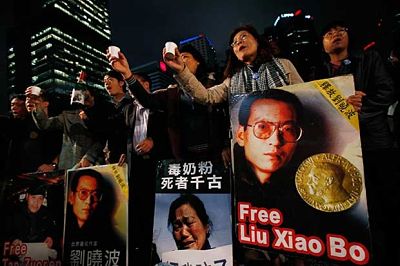
Liu Xiaobo: The Nelson Mandela of China

liu_xiaobo
For the last five years, Nobel Peace Prize laureate and Chinese dissident Liu Xiaobo has been detained and serving a sentenced term in prison.

In 2008, Liu was confined for participating in Charter 08, which was a manifesto that called for democratic reforms in China. Due to this, Liu is now serving an 11 year sentence “for inciting subversion of state power.”

In light of Liu’s fifth anniversary of imprisonment, the world also experienced a devastating loss with the passing of Nelson Mandela. Coincidentally, Liu has been dubbed the moniker of “The Nelson Mandela of China.”

Both individuals earned prison time for the same efforts that also landed them their Nobel Peace Prizes. The Chinese government became highly uncomfortable at the similarities of these two individuals, and at the timing of the events.

No different than the rest of the world’s media, China aired coverage of the funeral of Nelson Mandela in South Africa. The coverage was censored, however, and excluded any “sensitive topics” that would have correlated directly to human rights and democracy or South Africa’s close diplomatic relationship with Taiwan.

United States Secretary of State John Kerry honored the anniversary of Liu’s imprisonment by providing a statement, prodding China to release Liu from prison, and his wife from her house arrest. Chinese foreign ministry responded by saying that Kerry “had no right to comment on the fate of Mr. and Ms. Liu.”

Chinese foreign ministry also went on to say that “China’s 1.3 billion people have the best right to talk about the country’s human rights.” Although various parts of the world consider Liu to be the “Mandela of China,” Chinese government abhors the comparison between the two individuals.

An editorial in Global Times was quoted saying, “Mandela was a Nobel Peace Prize laureate for leading African people to anti-apartheid victory through struggles, tolerance, and efforts to bridge differences. However, awarding a Chinese prisoner who confronted authorities and was rejected by mainstream Chinese society derides China’s judiciary system.”

Yet at one point in time, South African authorities also considered Mandela a “prisoner who confronted authorities and was rejected by ‘mainstream’ society.”

As of November of this year, Liu’s lawyer released a statement saying that “the dissident intends to ask for a retrial.”

Retrials are not common, but with so much pressure from western countries, there may be an interesting turn of events. Nicholas Bequelin of Human Rights was quoted saying that the chances of winning a retrial were small, but nonetheless, worth a shot with new leadership in place.

Liu Xia, the wife that is on house arrest, is believed to be suffering from severe depression. She has been denied any private medical care, and was financially dependent upon her brother until he too was jailed in 2011.

Xia and her brother have yet to be charged with an actual crime, other than the support of Liu and his efforts. Chinese officials have yet to acknowledge that Xia is even being detained. As the U.S continues to build a relationship with China, they hope to see progress made for Liu and his loved ones.

– Samaria Garrett

Sources: The Guardian, The Guardian, US News

January 14, 2014
https://borgenproject.org/wp-content/uploads/borgen-project-logo.svg 0 0 Borgen Project https://borgenproject.org/wp-content/uploads/borgen-project-logo.svg Borgen Project2014-01-14 21:47:292017-03-20 13:13:04Liu Xiaobo: The Nelson Mandela of China
Activism

Nelson Mandela Quotes on Love and Life

nelson mandela quotes love
Nelson Mandela will forever have a place in the hearts of those who follow him. His words will guide his followers through life trials and tribulations and bountiful celebrations. Let us remember a month after his passing Nelson Mandela’s quotes on love and coming together as one.

1. “No one is born hating another person because of the color of his skin, or his background, or his religion. People must learn to hate, and if they can learn to hate, they can be taught to love, for love comes more naturally to the human heart than its opposite.”
2. “Let there be justice for all. Let there be peace for all. Let there be work, bread, water and salt for all. Let each know that for each body, the mind, and the soul have been freed to fulfill themselves.”
3. “You will achieve more in this world through acts of mercy than through acts of retribution.”
4. “A nation should not be judged by how it treats its highest citizens, but its lowest ones.”
5. “Overcoming poverty is not a task of charity; it is an act of justice. Like slavery and apartheid, poverty is not natural. It is man-made and it can be overcome and eradicated by the actions of human beings. Sometimes it falls on a generation to be great. You can be that great generation. Let your greatness blossom.”
6. “What counts in life is not the mere fact that we have lived. It is what difference we have made to the lives of others that will determine the significance of the life we lead.”
7. “A good head and a good heart are always a formidable combination.”
8. “I hate race discrimination most intensely and in all its manifestations. I have fought it all during my life; I fight it now and will do so until the end of my days.”
– Amy Robinson

Sources: Salon, BrainyQuote, UN Foundation, USA Today
Photo: Giphy.com

January 11, 2014
https://borgenproject.org/wp-content/uploads/borgen-project-logo.svg 0 0 Borgen Project https://borgenproject.org/wp-content/uploads/borgen-project-logo.svg Borgen Project2014-01-11 16:40:072024-05-26 23:03:56Nelson Mandela Quotes on Love and Life
Activism

5 Amazing Things About Nelson Mandela

Mandela
Last month, one of the greatest inspirational figures this world has ever seen died. Nelson Mandela, the first black president of South Africa, and long-time sufferer and activist to end South Africa’s apartheid, died on Thursday after a battle with lung infection. People across the world are mourning Mandela’s death and honoring his long life and incredible achievements. Below are five amazing things about the life of Nelson Mandela.

1. Nelson Mandela broke the rules in order to bring peace In 1943 Mandela became a member of the African National Congress. Five years later, when apartheid laws were instituted across Africa Mandela began an intense defiance campaign against the apartheid system. In 1956 Mandela and over a hundred other political activists were charged with treason. Four years later the African National Congress was banned, and Mandela formed an underground military group called The Spear of the Nation. After leading a guerilla movement, Mandela was arrested and sentenced to five years in prison, but went on the run.

2. Mandela was sentenced to life in prison, but remained politically active After Mandela was recaptured after fleeing from his five-year imprisonment sentence, he was tried for treason and sabotage and sentenced to life in prison. Mandela began his sentence at age 46, and spent the next 27 years in prison. During his imprisonment Mandela was often forced into labor, which consisted of breaking rocks into gravel. While in prison he was only allowed one visitor a year and could only write or receive a single letter every six months. Despite Mandela’s harsh imprisonment conditions he remained significant in leading the movement against apartheid. He was able to organize protests from his prison cell, and help rally activists to make gains in ending apartheid.

3. Mandela received the Nobel Peace Prize Mandela was released from prison in 1990. After the ban from the African National Congress was lifted, Mandela joined and became the president. In 1993 Mandela and Frederik Willem de Klerk received the Nobel Peace Prize.

4. Mandela was elected as South Africa’s first black president After huge political gains were made in the fight to end intense racial segregation, Mandela was elected as the first black President of South Africa. Mandela stressed peace and unity, encouraging Africans to forgive the white governments that had treated them so brutally.

5. Mandela extended peace to whites, including his prison guards On the 20th anniversary of his prison release Mandela partook in a huge celebration held in his name. Even Mandela’s former prison guard was included in the celebration. At the age of 91 Mandela took this day to celebrate and further emphasize his message of peace to both blacks and whites.

– Chante Owens

Sources: Nelson Mandelas, BBC, The Daily Beast, ABC News

January 1, 2014
https://borgenproject.org/wp-content/uploads/borgen-project-logo.svg 0 0 Borgen Project https://borgenproject.org/wp-content/uploads/borgen-project-logo.svg Borgen Project2014-01-01 18:12:082024-12-13 17:49:505 Amazing Things About Nelson Mandela
Advocacy, Developing Countries, Development, Economy, Foreign Aid, Foreign Policy, Global Poverty, Government, Human Rights

More than Moved

cars white background
In the midst of international mourning for Nelson Mandela and in an attempt to drive home the message of International Human Rights Day, a Brazilian NGO posed a provocative question on Tuesday, December 10.

A billboard designed by Conectas Human Rights, featured an image of Nelson Mandela and the question, “Do you feel moved by his legacy?” The text then urged the Brazilian population to act upon their emotions and “Do more than be moved.”

This campaign is driven by recent public opinion polls that reveal a negative feeling toward human rights issues in Brazil and support for more stringent laws and regulations.

Respondents to surveys administered across 134 municipalities in June 2013, support the reduction of maximum crime penalties from 18 years of age to 16, based on a belief held by 60% of the sample population that criminality is the result of ‘bad character.’

Moreover, the Datafolha Research Institute released data that reveal 26% of self-identified conservative-leaning respondents believe that homosexuality must be discouraged by society as a whole, whilst 33% believe that poverty is the result of laziness.

These emerging public opinions are linked to a reduction in funding for human rights groups, namely through foreign aid.

Brazil is widely considered to be an emerging market, the country’s role as 2014 World Cup host is evidence of this image but it disguises the fact that a growing economy does not automatically address human rights issues as seen through the need of foreign aid in assisting structural development.

It is estimated that 60% of the country’s NGOs relied on foreign aid for 80% of their budgets in 2003. Between 2008 and 2009 this aid decreased by 30% and again by another 49% in 2010 alone.

Executive Director of the Brazil Human Rights Fund, Ana Araújo, reminds us that Brazil was marked by dictatorship as recently as 30 years ago, a type of legacy that differs greatly from the one being celebrated across the globe on International Human Rights Day 2013.

Araújo argues that domestic support for human rights groups is the next, though not imminent, step, suggesting that emerging powers require more support, not less, to ensure that their emergence is ‘just.’

– Zoë Dean

Sources: Global Voices Online, Universo Online: CNT, Universo Online: Rightist Leanings, Open Democracy

December 22, 2013
https://borgenproject.org/wp-content/uploads/borgen-project-logo.svg 0 0 Borgen Project https://borgenproject.org/wp-content/uploads/borgen-project-logo.svg Borgen Project2013-12-22 14:16:582024-06-04 03:01:13More than Moved
Global Poverty

15 Nelson Mandela Quotes

1. “If you want to make peace with your enemy, you have to work with your enemy. Then he becomes your partner.”

2. “Education is the most powerful weapon which you can use to change the world.”

3. “Like slavery and apartheid, poverty is not natural. It is people who have made poverty and tolerated poverty, and it is people who will overcome it. And overcoming poverty is not a gesture of charity. It is an act of justice. It is the protection of a fundamental human right, the right to dignity and a decent life.”

4. “I learned that courage was not the absence of fear, but the triumph over it. The brave man is not he who does not feel afraid, but he who conquers that fear.”

5. “Difficulties break some men, but make others. No axe is sharp enough to cut the soul of a sinner who keeps on trying, one armed with the hope that he will rise even in the end.”

6. “For to be free is not to merely to cast off one’s chains, but to live in a way that respects and enhances the freedom of others.”

7. “A fundamental concern for others in our individual and community lives would go a long way in making the world the better place we so passionately dreamt of.”

8. “Real leaders must be ready to sacrifice all for the freedom of their people.”

9. “I was called a terrorist yesterday, but when I came out of jail, many people embraced me, including my enemies, and that is what I normally tell other people who say those who are struggling for liberation in their country are terrorists. I tell them that I was also a terrorist yesterday, but, today, I am admired by the very people who said I was one.”

10. “To deny people their human rights is to challenge their very humanity.”

11. “I hate race discrimination most intensely and in all its manifestations. I have fought it all during my life; I fight it now, and will do so until the end of my days.”

12. “No one is born hating another person because of the color of his skin, or his background, or his religion. People must learn to hate, and if they can learn to hate, they can be taught to love, for love comes more naturally to the human heart than its opposite.”

13. “It always seems impossible until it’s done.”

14. “It is now in the hands of your generations to help rid the world of such suffering.”

15. “Man’s goodness is a flame that can be hidden but never extinguished”

– Stephanie Lamm

Sources: Dose.Ca, USA Today, Quartz
Photo: BBC UK

December 14, 2013
https://borgenproject.org/wp-content/uploads/borgen-project-logo.svg 0 0 Borgen Project https://borgenproject.org/wp-content/uploads/borgen-project-logo.svg Borgen Project2013-12-14 02:09:592024-05-25 00:54:3815 Nelson Mandela Quotes
Page 3 of 41234

Get Smarter

  • Global Poverty 101
  • Global Poverty… The Good News
  • Global Poverty & U.S. Jobs
  • Global Poverty and National Security
  • Innovative Solutions to Poverty
  • Global Poverty & Aid FAQ’s
Search Search

Take Action

  • Call Congress
  • Email Congress
  • Donate
  • 30 Ways to Help
  • Volunteer Ops
  • Internships
  • Courses & Certificates
  • The Podcast
Borgen Project

“The Borgen Project is an incredible nonprofit organization that is addressing poverty and hunger and working towards ending them.”

-The Huffington Post

Inside The Borgen Project

  • Contact
  • About
  • Financials
  • President
  • Board of Directors
  • Board of Advisors

International Links

  • UK Email Parliament
  • UK Donate
  • Canada Email Parliament

Get Smarter

  • Global Poverty 101
  • Global Poverty… The Good News
  • Global Poverty & U.S. Jobs
  • Global Poverty and National Security
  • Innovative Solutions to Poverty
  • Global Poverty & Aid FAQ’s

Ways to Help

  • Call Congress
  • Email Congress
  • Donate
  • 30 Ways to Help
  • Volunteer Ops
  • Internships
  • Courses & Certificates
  • The Podcast
Scroll to top Scroll to top Scroll to top