• Link to X
  • Link to Facebook
  • Link to Instagram
  • Link to TikTok
  • Link to Youtube
  • About
    • About Us
      • President
      • Board of Directors
      • Board of Advisors
      • Financials
      • Our Methodology
      • Success Tracker
      • Contact
  • Act Now
    • 30 Ways to Help
      • Email Congress
      • Call Congress
      • Volunteer
      • Courses & Certificates
      • Be a Donor
    • Internships
      • In-Office Internships
      • Remote Internships
    • Legislation
      • Politics 101
  • The Blog
  • The Podcast
  • Magazine
  • Donate
  • Click to open the search input field Click to open the search input field Search
  • Menu Menu

Tag Archive for: Malawi

Posts

Aid Effectiveness & Reform, Foreign Aid, Foreign Policy, Global Poverty, Government, Politics and Political Attention

Corruption Stifles Aid in Malawi

Corruption_Stifles_Aid_Malawi
In the wake of the recent corruption scandal known as “Cashgate,” the British Department for International Development (DfID) has frozen aid to Malawi. Experts on foreign aid are concerned the freeze might prove catastrophic for both the health and education sectors in the small country.

In November 2013, it was discovered that governmental officials in Malawi had taken aid dollars for themselves to the tune of $250 million. After the failed assassination, Budget Director Paul Mphwiyo—who was thought to be a whistle blower—and the region’s police force found money stashed in the homes of several members of the government.

Nations responsible for supplying Malawi with foreign aid promptly suspended all funds that had gone to support the Malawian government directly. Additionally, The Guardian reports “the DfID went a step further” by freezing funds that affect healthcare and education.

Malawi receives nearly half of its budget from foreign sources, meaning that its people will soon be without essential services, experts warn. To make matters worse, the United Kingdom is the largest donor to Malawi.

The breakdown, however, illustrates a difficult challenge for all donor nations, not just the U.K. For example, amid rampant and violent corruption it is difficult to rationalize making contributions to a developing nation. Likewise, pulling the plug on necessary programs creates internal instability and hardship for the people who rely on those donations.

Most Malawians survive through subsistence farming, and nearly three-quarters live on $1.25 per day or less.

Malawi is now making attempts to be more transparent with donor money, and is trying, yet again, to inspire donor confidence. However, this latest breach of trust was, for the DflD, a point of no return.

The head of the Malawi branch of the DflD, Sarah Sanyahumbi, was quoted as saying, “This is not business as usual. As far as we are concerned, the line has been crossed, so once the line has been crossed you cannot go back to what you had before.”

For many of Malawi’s most vulnerable, this is unfortunate news. The future for the young and ill in Malawi remains unclear as of yet. However, it seems unlikely it will be good without a new agreement between nations.

– Chase Colton

Sources: The Guardian, International Business Times, The Borgen Project
Photo: Mideast Posts

January 24, 2014
https://borgenproject.org/wp-content/uploads/borgen-project-logo.svg 0 0 Borgen Project https://borgenproject.org/wp-content/uploads/borgen-project-logo.svg Borgen Project2014-01-24 15:44:072024-05-26 23:06:07Corruption Stifles Aid in Malawi
Activism, Advocacy, Nonprofit Organizations and NGOs

5 TED Talks in 5 Minutes

5 TED Talks in 5 MinutesTED Talks have become a breeding ground for ingenuity, passion, ideas and intelligence. A meeting place of the world’s best, bravest and most forward-thinking minds, TED talks offer the entire world the ability to listen and participate in the global conversation on how we better the world. Here, for those who have little time, are 5 Ted talks that offer a powerful punch of inspiration in less than 5 minutes.


Asher Hassan’s Message of Peace from Afghanistan – Asher Hassan

In this short but potent TED talk, Asher Hassan manages to obliterate our image of the now ravaged Pakistan as a place of poverty, misery and Islamic fundamentalism to show a hopeful, resilient and entirely human face to the country. Through a series of striking photographs, showing vendors selling bags, a displaced internal refugee child, spools of brightly colored rainbow spools of thread. Hassan’s subjects are the individuals who get lost in Pakistan sold to us by the media, and the ones who are most affected by our action or inaction in their country.


Selling Condoms in the Congo – Amy Lockwood

Amy Lockwood needs four minutes and seventeen seconds to illustrate an all-too-important phenomenon that causes aid programs to fail: not targeting efforts towards the group, but focusing on the feelings on the donor. In the Congo, sex workers use very few of the free condoms that aid agencies provide but would use the generic, priced ones sold. Lockwood, as a marketing professional, asked herself why. Her talk offers a simple but powerful tweak in the way we approach aid that could make a world of difference.


Photos That Changed the World – Jonathan Klein

The man at the head of Getty Images, the industry’s largest and most quality bank of photography and imagery, gives a short talk on the power of photographs in provoking action. Using iconic images from history like the Hindenburg explosion, ‘Kissing the War Goodbye’ and mass graves of the Holocaust to today’s most controversial photographs, such as torture in Abu Ghraib, military war injuries and slaughtered gorillas lying crucified on bamboo poles, Klein illustrated how a picture can be worth more than a thousand words in an age full of discourse and short on action.


Escaping the Khmer Rouge – Sophal Ear

Not a big ideas talk, but a heartfelt personal story, Sophal Ear speaks of his escape from Cambodia during the country’s horrific political turmoil. Today, Ear leads research on post-conflict countries and assists in the development, reinforcing the fact that refugees are more than statistics, but brave, resilient lives worth saving.


How I Built a Windmill – William Kamkwamba

One of the most inspiring talks on TED, this talk is a Q&A session with William Kamkwamba, from a small village in Malawi. At 14, he saw how to build a windmill in a library book. In his words, “I tried it, and I made it.” Prompted along by TED speaker, William’s unassuming ingenuity in attempting to improve his village’s access to electricity and water is heartwarming and incredible.

– Farahnaz Mohammed

Sources: TED

July 22, 2013
https://borgenproject.org/wp-content/uploads/borgen-project-logo.svg 0 0 Borgen Project https://borgenproject.org/wp-content/uploads/borgen-project-logo.svg Borgen Project2013-07-22 04:00:542020-07-06 23:13:545 TED Talks in 5 Minutes
Food & Hunger, Food Aid, Global Poverty, Health

“Nutrition for Growth” and Hunger Alleviation

Nutrition for Growth
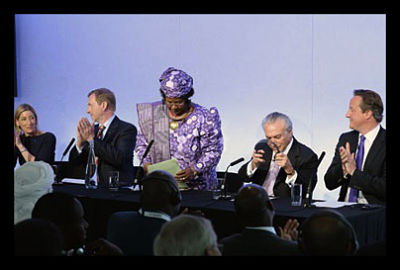
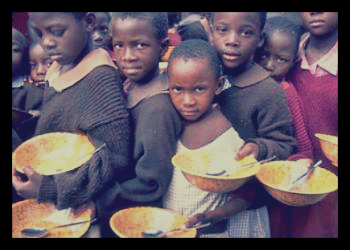
With last month’s G8 Summit, and the ‘Nutrition for Growth’ summit hosted in London before that, a lot of the focus has been on large amounts of international aid earmarked to combat global hunger and malnutrition.

Small-scale, localized projects play just as large a role as international aid efforts, and possibly more beneficial. The original Green Revolution increased crop yields dramatically, but at no small environmental cost. If this large-scale intervention played its role, multiple small-scale projects could produce the same results.

One such project fighting food insecurity is the Soil, Food, and Healthy Communities (SFHC) program in Malawi. This program began ten years ago with efforts to educate local farmers and diversify their crops. The original aim of the project was to improve the health, food security, and soil fertility of poor households in Northern Malawi. This goal was additionally tied into participatory research, testing legume systems and looking at more sustainable approaches to achieving greater food security.

By introducing a variety of different legume options, as well as agricultural techniques, the quality and quantity of food can both be increased, as well as improving soil quality through organic input. This Ecohealth approach, focusing on the health of the entire system and humans’ interaction with it, can be simultaneously beneficial to the communities’ short-term needs, as well as allowing for longer-term sustainability.

Ten years on from the initiation of the project there have been many encouraging signs of success. The introduction of semi-perennial rotation systems, and the diversification of crops, led in some cases to annual return yields double that of the previous system. In addition to these straightforward agricultural benefits, a further goal of SFHC was to educate the local populace regarding nutrition.

The introduction of diverse legumes into the crop rotation system improves soil quality and yield, and also diversifies the local diet. This additional food production can then directly influence the health of the children of the community. As a result of this project, child malnutrition has been reduced by two-thirds over the past ten years in a hospital catchment area serving about 70,000 people and covering 600-square kilometers. This is largely due to farmers now producing soybeans, groundnuts, and other legumes, and incorporating them into the local diet.

– David Wilson

Sources: The Guardian, Winnipeg Free Press

July 15, 2013
https://borgenproject.org/wp-content/uploads/borgen-project-logo.svg 0 0 Borgen Project https://borgenproject.org/wp-content/uploads/borgen-project-logo.svg Borgen Project2013-07-15 05:16:442020-06-26 14:34:18“Nutrition for Growth” and Hunger Alleviation
Development

3 Ways Fashion Design Is Encouraging Economic Development in Africa

3 Ways Fashion Design Is Encouraging Economic Development in Africa
Everyone loves to wear clothes that accomplish more than the utilitarian purpose of covering the body. From the posh window displays on Rodeo Drive to the highly rated network programs like Project Runway and Fashion Star, people love to wear clothes that are both artistically-creative and well-fitting. The same is true for many developing countries in Africa, where extremely talented fashion designers are looking to sell their products both at home and abroad. These African designers highlight the opportunities that fashion has created for many individuals living in poverty stricken areas. Here are 3 ways that fashion design encourages economic development in Africa.

1. It encourages entrepreneurship – For many business-minded entrepreneurs trying to overcome severe financial constraints, fashion design encourages economic development in Africa by allowing anyone with an eye for fashion an opportunity to generate income both locally and – via the internet – internationally. The market for well-designed clothes is unique based upon the simple fact that despite a global economic slowdown, consumers will always have a need for clothes. Furthermore, if a particular market for clothing is lower than usual, innovative entrepreneurs can take advantage of previously untapped overseas and emerging markets as a means of increasing sales.

2. It stimulates the local economy – For Malawian designer Lilly Alfonso, her company Lillies Creations employs 7 people from a region currently plagued with severe currency devaluation and financial strain. Fashion design encourages economic development in Africa through the employment of talented tailors, textile artists, aspiring models, and support staff necessary for the operation of large design studios; along with the resulting sales opportunities for local fabric retailers and production facilities. Fashion designers help to bolster African economies by the infusion of capital both from the sales and expansion of their small businesses into new markets.

3. It serves as a sustainable business model – Fashion design encourages economic development in Africa due to the inherent sustainability of the clothing and apparel industry. Through the local farmers providing the raw materials, the weavers who construct the fabrics, and the merchants who sell the fabrics in local markets, fashion is an industry that employs many people whose entire economic well being is contingent upon the quarterly sales of the designers. The sustainability of fashion design allows for most of the profits and accompanying investments to go back into the community, along with the eco-friendly methods of cultivation practiced by many African farmers.

In regards to how fashion design encourages economic development in Africa, designer Lilly Alfonso optimistically advises “if you know that you can do it, don’t stop it.”

–Brian Turner
Source: BBC

May 1, 2013
https://borgenproject.org/wp-content/uploads/borgen-project-logo.svg 0 0 Borgen Project https://borgenproject.org/wp-content/uploads/borgen-project-logo.svg Borgen Project2013-05-01 10:00:502020-06-17 01:08:473 Ways Fashion Design Is Encouraging Economic Development in Africa
Global Poverty

Poorest Countries Showing Greatest Commitment to Combating Hunger

Poorest Countries Showing Greatest Commitment to Combating Hunger
Poverty is no match for combating hunger and undernutrition, something that some of the world’s poorest countries are proving to be true according to data collected by the Hunger and Nutrition Commitment Index. Some of the poorest countries are staying true and strong to their political commitment to tackle the issue, which many economically strong countries are failing to do. These countries have the funds and means to address the issue, yet they fail to put forth the initiative to adequately address it.

Hunger and undernutrition affect people all across the world, in nations poor and rich. Thus, it is necessary for governments and people to be completely committed and put forth an effort to combat hunger, saving lives, improving quality of life, and allowing people to fully reach their capacities – both socially and economically.

The Hunger and Nutrition Commitment Index (HANCI) “ranks governments on their political commitment to tackling hunger and undernutrition… to provide greater transparency and public accountability by measuring what governments achieve, and where they fail, in addressing hunger and undernutrition,” according to their website. Its data comes from 45 countries located across the globe and, according to the lead HANCI research, Dr. Dolf te Lintelo, the point is to “shine a spotlight on what governments are doing, or failing to do, towards addressing hunger and undernutrition.”

African countries, such as Malawi and Madagascar, were amongst the top countries showing “high commitment” to solving the problem of hunger. Yet, many African countries with robust economies, such as Nigeria and South Africa, showed very little commitment, bringing into question what seems to be the motive behind improving their economies as there has been little done to help those that are under-nourished and hungry.

The HANCI website goes into great detail as to which countries have high commitment and which countries fail in their commitment efforts, as well as interactive tools that allow people to explore the data. Visit it here: https://www.hancindex.org/.

– Angela Hooks

Sources: AllAfrica, HANCI
Photo: Hunger and Nutrition Blog

April 19, 2013
https://borgenproject.org/wp-content/uploads/borgen-project-logo.svg 0 0 Borgen Project https://borgenproject.org/wp-content/uploads/borgen-project-logo.svg Borgen Project2013-04-19 10:36:122020-06-12 20:43:40Poorest Countries Showing Greatest Commitment to Combating Hunger
Global Poverty

The End of a 50-Year Debate: Lake Malawi Mediation Begins in March

The End of a 50-Year Debate: Lake Malawi Mediation Begins in MarchA border dispute between Malawi and Tanzania that has remained unresolved for almost fifty years should be resolved within the next three months, according to government officials of both countries. The dispute involves ownership of Lake Malawi, also known as Lake Nyasa in Tanzania and Lago Niassa in Mozambique.

Lake Malawi is located in the southeastern region of Africa between Malawi, Mozambique, and Tanzania. It is Africa’s third-largest and second-deepest lake and is the ninth-largest lake in the world.

The lake is an extremely valuable resource for the region’s inhabitants. Besides being home to thousands of types of fish and other plants and wildlife, Lake Malawi is the primary source of income, food, transportation, and other basic needs for about 1.5 million Malawians and 600,000 Tanzanians. Local residents report that they are unable to cross freely between the countries because of tension, and even mistreatment, at the border.

The dispute over Lake Malawi ownership began in 1963 with the reaffirmation of the Heligoland Agreement, which stated that the national border lay on the Tanzanian side of the lake. Since that time, the countries have, tried twice to resolve the problem, to no avail. Malawi claims ownership of the lake as a stipulation of the treaty, while Tanzania claims the treaty is flawed and that the boundary should be redrawn down the lake’s center.

The dispute has come to a head recently due to the Malawian government reports that Lake Malawi holds rich mineral and oil deposits beneath its floor. Over the last eight months, Malawi has awarded oil exploration licenses to oil companies based in the United Kingdom and South Africa, which has increased tensions between the countries. Officials are hopeful that with the help of an objective third party, the Forum for Former African Heads of State and Government, the dispute will finally be resolved.

– Kat Henrichs

Source: All Africa
Photo: Real Malawi Travel

March 13, 2013
https://borgenproject.org/wp-content/uploads/borgen-project-logo.svg 0 0 Borgen Project https://borgenproject.org/wp-content/uploads/borgen-project-logo.svg Borgen Project2013-03-13 11:03:552020-05-24 23:10:24The End of a 50-Year Debate: Lake Malawi Mediation Begins in March
Global Poverty

Perspectives of Poverty

Rich Edward KabzelaIn 2008, Duncan McNicholl did a fellowship in Malawi. Upon returning home, he reacted strongly to photos of organizations that depicted a rather distorted version of people living in rural Africa. In 2010, he returned to Malawi to work with the Water and Sanitation team and came up with an idea for a photography project called Perspectives of Poverty with the goal of showing the people of rural Africa in a different light.

By taking two different photos of the same person, one as the symbol of poverty and the other at their finest, McNicholl wanted to change the way we perceived the people who lived in rural Africa. Organizations, in pursuit of funding, tend to depict those living in these areas as the typical symbol of poverty, “a teary-eyed African child, dressed in rags, smothered in flies, with a look of desperation.” Having had firsthand experience living in these regions, McNichol “felt lied to” finding these photos incomplete, inaccurate and outrageous.

“How had these photos failed so spectacularly to capture the intelligence, the laughter, the resilience and the capabilities of so many incredible people?” he writes.

Pictured above is Edward Kabzela, an area borehole maintenance mechanic of the Chagunda Village in Malawi. Besides being an area mechanic, Kabezla also takes part in other business ventures such as growing tobacco and owning a basket weaving business. McNicholl writes that Kabzela is “a great example of how little a thatched roof says about someone’s livelihood.” Upon hearing about how some photos portrayed his village of Chagunda, he commented that when NGOs come they take pictures of “only people who are dressed poorly.”

McNicholl is unsure of what Perspectives of Poverty will look like when it is done and will continue taking photos like these to possibly put on exhibit.

– Rafael Panlilio
Source: Water Wellness

February 15, 2013
https://borgenproject.org/wp-content/uploads/borgen-project-logo.svg 0 0 Borgen Project https://borgenproject.org/wp-content/uploads/borgen-project-logo.svg Borgen Project2013-02-15 07:17:112020-04-08 19:57:37Perspectives of Poverty
Page 6 of 6«‹456

Get Smarter

  • Global Poverty 101
  • Global Poverty… The Good News
  • Global Poverty & U.S. Jobs
  • Global Poverty and National Security
  • Innovative Solutions to Poverty
  • Global Poverty & Aid FAQ’s
Search Search

Take Action

  • Call Congress
  • Email Congress
  • Donate
  • 30 Ways to Help
  • Volunteer Ops
  • Internships
  • Courses & Certificates
  • The Podcast
Borgen Project

“The Borgen Project is an incredible nonprofit organization that is addressing poverty and hunger and working towards ending them.”

-The Huffington Post

Inside The Borgen Project

  • Contact
  • About
  • Financials
  • President
  • Board of Directors
  • Board of Advisors

International Links

  • UK Email Parliament
  • UK Donate
  • Canada Email Parliament

Get Smarter

  • Global Poverty 101
  • Global Poverty… The Good News
  • Global Poverty & U.S. Jobs
  • Global Poverty and National Security
  • Innovative Solutions to Poverty
  • Global Poverty & Aid FAQ’s

Ways to Help

  • Call Congress
  • Email Congress
  • Donate
  • 30 Ways to Help
  • Volunteer Ops
  • Internships
  • Courses & Certificates
  • The Podcast
Scroll to top Scroll to top Scroll to top