• Link to X
  • Link to Facebook
  • Link to Instagram
  • Link to TikTok
  • Link to Youtube
  • About
    • About Us
      • President
      • Board of Directors
      • Board of Advisors
      • Financials
      • Our Methodology
      • Success Tracker
      • Contact
  • Act Now
    • 30 Ways to Help
      • Email Congress
      • Call Congress
      • Volunteer
      • Courses & Certificates
      • Be a Donor
    • Internships
      • In-Office Internships
      • Remote Internships
    • Legislation
      • Politics 101
  • The Blog
  • The Podcast
  • Magazine
  • Donate
  • Click to open the search input field Click to open the search input field Search
  • Menu Menu

Tag Archive for: Malawi

Posts

Education, Global Poverty

Malawi: Education Over Marriage

Malawi: Education Over Marriage
A minute is all it takes for 28 young girls around the world to be married off as child brides, adding up to 15 million underage brides per year. One of the main reasons for young marriage is to relieve the bride’s family of having to support her, which some struggle to do. As a result, the cycle of poverty continues with those girls having to abandon school and years later, their own underage daughters get married.

A child’s place is at school learning, making friends and playing. They are usually emotionally and physically unprepared for marriage, making them susceptible to domestic abuse and life-threatening pregnancies and births.

Until Feb. 2015, Malawi had one of the highest rates of child marriage, with 50 percent of girls being married before the age of 18. This changed in Feb. 2015, when President Peter Mutharika signed a law raising the marriage age from 15 to 18. To show the commitment to enforcing the law, 300 child marriages were annulled and kids were sent back to school earlier this month. Despite the progress, there is a loophole where parents can provide consent for 16-year-old girls to marry.

The fight to pass this law has been a process with Malawi’s Stop Child Marriage campaign beginning in 2011 by Girls Empowerment Network (Genet) and Let Girls Lead. They trained 200 girls in the Chiradzulo District of southern Malawi to become advocates. The advocates lobbied 60 village chiefs to change laws and establish by-laws to protect teen girls from marriage and sexual initiation practices.

The bylaws force men who marry girls under 21 to give up land and pay a fee of seven goats, a major economic penalty in the region. The bylaws also imposed social sanctions such as three months of janitorial service in a local health clinic for parents who marry their underage daughters.

Genet had hoped the election of the first woman president, Joyce Banda, would raise the marriage age, but she didn’t. Then in 2014, when Peter Mutharika was elected, Genet advocated extensively with his minister of gender, Patricia Kaliati. Fortunately, President Mutharika believes in the empowerment of financially independent women and signed the law.

Although it is difficult to break cultural beliefs and traditions, especially in rural areas, progress is being made at the government level. The local education campaigns will play a key role in educating and spreading the word about the new law, especially in places where people may be less educated regarding the law.

One strong advocate, Memory Banda, 18, was able to finish school, but her younger sister wasn’t as lucky. Memory’s younger sister was married at 11 to a man in his early 30s. This led her to speak up and help in leading the campaign to pass the law. Memory’s sister is now 16 with three children. In March, Memory spoke at the U.N. Commission on the Status of Women for herself, her sister and the 70 million girls married as kids.

– Paula Acevedo

Sources: Global Citizen, The Guardian
Photo: Flickr

August 28, 2015
https://borgenproject.org/wp-content/uploads/borgen-project-logo.svg 0 0 Borgen Project https://borgenproject.org/wp-content/uploads/borgen-project-logo.svg Borgen Project2015-08-28 08:19:252024-12-13 18:04:51Malawi: Education Over Marriage
Global Poverty

Memory Banda: Champion for Girls in Malawi

girls_in_malawi
Girls not Brides reports that “over 700 million women alive today were married as children” and that “1 in 3 girls in the developing world are said to be married before 18.” Malawi is the worst offender for child marriage as one in two girls in Malawi are married before 18, many of them married even well before the age of 15.

Such young marriages are a cultural custom, but it is at the expense of the girls involved. When girls become pubescent, they are sent to cleansing ceremonies where girls as young as nine are taught how to sexually please a man, even being forced to engage in sex with an older man to become cleansed from their “childhood dust.” Many girls often leave the ceremonies infected with HIV/AIDs, or even pregnant.

Since pregnancy and marriage are forced on girls at such a young age, most girls drop out of school and remain uneducated. If a girl becomes pregnant at the ceremony, it is normal for that girl to be forced into a marriage immediately. Divorce is also quite high; it is not uncommon for a 16 year-old to have several children and a divorce or two as well.

Such is the story of Memory Banda’s sister and many other girls in her country of Malawi, but not for Memory herself. She was determined not go to a cleansing ceremony, but, rather, to finish her education. She not only finished her education, but also went on to become a champion for girls’ rights in Malawi.

She was part of a writing workshop for girls, where the girls shared their experiences of the cultural practices they faced. The Girls Empowerment Network Malawi (GENET) compiled and published these accounts as “I Will Marry When I Want To!” Memory recently gave a TedTalk in May 2015, describing the culture she grew up in and the challenges that young girls face in Malawi, as described above.

Memory has also specifically lobbied her government for new laws regarding child marriage and has spoken at a UN event. Her platform, in conjunction with GENET, focuses on bringing awareness to the dire women’s rights’ issue in Malawi and has helped legislation change in Malawi.

In early 2015, an official law was made that raised the legal marrying age to 18. In a country where child marriage is a cultural norm and abuse against women often goes unreported in an effort for families to save their reputations, this ruling is a monumental achievement. Girls, and their education and well-being, are being given the recognition and respect that they deserve in the legal system.

There is a stipulation in the new law that children aged 15-18 may still marry with parental consent, and there is worry that illegal marriages will still take place. Also, now the police force must enforce the law, a fact that could meet resistance in areas. But legislation is starting to move the issue in the right direction; girls are being given a fighting chance to have a life of their own.

Memory Banda and the girls brave enough to stand with her are taking back their rights to choose marriage when they are ready. Those girls who have suffered through a child marriage, like Memory’s sister, are ready to give their own children a different fate. Ripples of change are moving through Malawi culture thanks to Memory Banda and those who stand for women’s rights.

– Megan Ivy

Sources: GENET, Girls not Brides, Genet Malawi, KBIA, TedTalk
Photo: Girls Learn International

July 24, 2015
https://borgenproject.org/wp-content/uploads/borgen-project-logo.svg 0 0 Borgen Project https://borgenproject.org/wp-content/uploads/borgen-project-logo.svg Borgen Project2015-07-24 19:34:582024-05-27 09:26:08Memory Banda: Champion for Girls in Malawi
Global Poverty, Health, Women & Children

How Malawi’s Male Champion Model Program is Fighting HIV

Male Champion Model
Worldwide, 34 million people are living with HIV, including 3.3 million children. In the African nation of Malawi, 910,000 citizens out of a population of 15.9 million have HIV. Around 170,000 are children, and children account for 16,000 new infections annually. It is the leading cause of death among adults in Malawi and contributes to the country’s low life expectancy of 54.8 years.

Each year, thousands of babies in Malawi contract HIV through mother-child transmission. This can occur during pregnancy, labor, delivery or breastfeeding. Children with HIV get sick more often and more severely than children without HIV, and they struggle to fight common pediatric infections. In developing countries, they have a higher risk for tuberculosis, diarrhea and respiratory illnesses, all of which can be a death sentence if they lack access to effective healthcare.

A baby born to a mother who is HIV positive has a 15% to 45% chance of contracting HIV if there is no medical intervention. However, this rate drops to 5% with intervention. Malawi’s Ministry of Health must encourage expecting parents to get tested before the mother gives birth in order to provide appropriate care and prevent the baby from contracting HIV.

In 2012, the Ministry of Health worked with UNICEF to launch the Male Champion Model (MCM) program. Before the MCM, it was incredibly rare for men to be involved in their wives’ healthcare, even if she was pregnant. Furthermore, many women avoided being tested for HIV out of fear of being abandoned by their husbands or discriminated against in society if the results were positive. The MCM trains “male motivators” to reach out to other men in their communities to encourage them to accompany their wives to get tested.

So far, the program has trained 3,400 “motivators” in six districts of Malawi. They visit households in their villages each day to discuss the importance of HIV testing with couples. Now it is increasingly common for couples to get tested together, and in one year, the country has seen a huge jump, from 0% to 86%, in men participating in antenatal services. When women know their status, their healthcare providers can give them anti-retroviral drugs to reduce the risk of transmitting HIV to their child.

Over the past decade, Malawi’s government has focused on decreasing the nation’s HIV rates, and the MCM is just one part of these efforts. They have expanded voluntary HIV testing and counseling, promoted condom use, increased the distribution of condoms, started a mass media campaign to raise awareness about prevention and educating young people about HIV.

These initiatives have led to some progress. In 2003, 14% of the population had HIV, and by 2011 that number had dropped to 10%. Also in 2003, 100,000 new infections were occurring annually, but that number had dropped to 46,000 new infections by 2010. Clearly, there is still a long way to go toward stamping out HIV in Malawi, but the MCM program has spared many children from the struggles of surviving with HIV.

– Jane Harkness

Sources: Avert, Elizabeth Glaser Pediatrics Foundation, Huffington Post, NAM, UNICEF, WHO
Photo: UNICEF

July 9, 2015
https://borgenproject.org/wp-content/uploads/borgen-project-logo.svg 0 0 Borgen Project https://borgenproject.org/wp-content/uploads/borgen-project-logo.svg Borgen Project2015-07-09 08:26:432024-12-13 17:51:39How Malawi’s Male Champion Model Program is Fighting HIV
Education, Gender Equality, Global Health, Global Poverty

Cash Incentive Improves Malawian Girls’ School Attendance

girls_school_attendance

Global poverty is connected to the lack of access to education that many young girls face. In Malawi, a program offers cash incentives to young girls and their families in order to encourage school attendance. The results have exceeded expectations of the girls’ school attendance, and there are also additional health benefits for these young women.

Young girls are often not encouraged to attend school because their parents do not understand the value of education for girls or would prefer for them to help out at home. A recent extreme case in Pakistan is a clear example. A father strangled his three girls to death because he did not want to “waste money” on their education and felt that the girls were a burden to his family.

While stories such as this one are shocking, the conditional cash transfer program in Malawi works to help alleviate the barriers to education for young girls and their families. On the other hand, the father of the young girls in Pakistan refused to provide them with any money, and their school fees had to be paid for by their maternal grandparents.

The Zomba Cash Transfer program in southern Malawi offers girls and young women aged 13 to 22 and their parents up to $15 per month if the girls attend school regularly. An additional group in the study received the money without conditions, and a control group did not receive any money.

Improvements in school attendance were observed after 18 months. There was no significant difference between the two groups that received the cash payments, suggesting that education can be valued without forced restrictions if families can afford to send their children to school.

In addition to the increased school attendance, there were changes in the sexual behavior of these young girls. Girls had less sex and chose safer, younger partners. Child marriage and teenage pregnancy were also reduced. Most significantly, the International Center for Research on Women states that there was a “reduction by 60 percent of HIV prevalence rate and [a decrease of the] HSV2 (herpes simplex virus) infection.”

The program targeted 23,561 households in seven of Malawi’s districts and has the potential to be scaled up even further. In addition to sending their children to school, families used the money to buy food, medicine and farming supplies, and to travel to the hospital to buy antiretroviral drugs to treat HIV/AIDS. The money can help lift families out of poverty and empower young girls. With proper education, these girls can then participate fully in society and help break the devastating cycle of poverty for their own children.

David Bull, Executive Director of UNICEF U.K., believes that investing in education for girls benefits everyone in society. Girls will specifically benefit from the obtainment of skills to participate in society and protect themselves. However, businesses will also be able to hire more qualified women and broaden their customer base. When half of a country’s population is prevented from participating fully in the economy, economic growth will be stunted.

Global health and development, as well as the protection of human rights for girls, are central global goals. While conditional cash transfer programs need to be further evaluated to understand their sustainability and long-term effects, there is promise for great improvements in gender equality.

– Iliana Lang

Sources: Boston University, Daily Mail, The Guardian, International Center for Research on Women, National Center for Biotechnology Information, University of North Carolina at Chapel Hill
Photo: Camfed

July 4, 2015
https://borgenproject.org/wp-content/uploads/borgen-project-logo.svg 0 0 Borgen Project https://borgenproject.org/wp-content/uploads/borgen-project-logo.svg Borgen Project2015-07-04 07:02:132024-12-13 17:51:35Cash Incentive Improves Malawian Girls’ School Attendance
Global Poverty

Zambia, Malawi, and Mozambique’s Growth Triangle

In 2000, leaders of Zambia, Malawi, and Mozambique joined together to enhance national economic development objectives in the economically depressed regions of the three countries. Followed by a signing of the Memorandum of Understanding in 2003, the “Growth Triangle,” as it has been commonly referred to, was formalized and finalized in late 2014.

The objective of the Zambia/Malawi/Mozambique Growth Triangle (ZMMGT) is to incorporate the border areas encompassing eastern provinces in Zambia, the Tete province in Mozambique and the central and northern regions of Malawi. Representatives originally hoped to harness the natural resources of the area and, through infrastructure improvement, create jobs with the goal of eliminating poverty.

According to a 2014 United Nations report covering economic development in Africa, economic activities and production as well as social sectors have increased steadily between 2003 and 2011.

The three countries banning together create an interesting investment. Zambia, Malawi, and Mozambique are all member states of both the Southern African Development Community (SADC) and the Common Market for Eastern and Southern Africa (COMESA), two key trade regional economic bodies. Therefore, investors in these three countries enjoy preferential market access to a bigger, tripartite regional market of just over 600 million people, ranging from tip of South Africa in the south, to the northern tip of Egypt in the north.

The African Business Review states that “perhaps the most important business reform that the ZMMGT is set to initiate will be the simplification of border relations…which will [remove] any limits placed on conducting cross-border commercial activity…The immediate effect of this will be the streamlining of business transactions across the triangle.”

A railway line that spans the three countries is also due to be completed and will facilitate the transport of goods across Zambia and Malawi, to the port of Nacala in Mozambique.

Investment and infrastructure are key concepts for any country to grow. Three African countries agreeing to enhance the economy is a positive sign of growth in Africa overall.

– Alaina Grote

Sources: African Business Review, Africa Strictly Business, UNCTAD
Photo: Flickr

April 4, 2015
https://borgenproject.org/wp-content/uploads/borgen-project-logo.svg 0 0 Borgen Project https://borgenproject.org/wp-content/uploads/borgen-project-logo.svg Borgen Project2015-04-04 16:00:072024-05-27 09:23:31Zambia, Malawi, and Mozambique’s Growth Triangle
Global Poverty

Child Brides Fight Back

Child Brides Fight Back - The Borgen Project
In recent years, a number of young women have rebelled against the husbands they were forced to marry. In April, a 14-year-old in Kano, Nigeria, murdered her 35-year-old husband with rat poison at their wedding celebration. Another, Zeinabou Moussa, ran away from her husband’s home on at least four separate occasions. After a final incident, her husband divorced her. Her parents say she will not be forced to marry again.

Zeinabou is one girl of many millions who are forced to marry early and become a child bride. In West Africa, around half of girls under the age of 18 are forced to marry. In regions of Chad and Niger, that number is around 70 percent. Girls under 15 in these countries are more likely to be wed than anywhere else in the world.

There are a number of reasons practices like this are kept in place. The first is poor education. Parents will often send their young boys to school because a higher value is placed on men. Many of the families who send their daughters to be child brides are often very poor and can expect that they will get a dowry in return from these educated men. Additionally, parents do not feel that it is appropriate for their daughters to engage in promiscuous activity out of wedlock, which is another reason early marriage is so prominent.

The practice is part of a vicious cycle. Adolescence, as well as education, is cut short, and this leads to an increase in teenage pregnancy and deaths during births. The spread of HIV is also adding to the problem.

Although there is some rebellion beginning against this tradition, many are not optimistic about the outcome. The Ford Foundation from New York conducted a study that showed that, on the whole, the trend in West African countries is headed toward even younger child brides.

Still, small pockets of land are getting better. In Nigeria and Niger, girls are learning about the potential risks of early marriage in special schools provided by the U.N. Population Fund. By the year 2018, over 150,000 girls will have completed this education.

The battle against child marriage is also being fought on the legal front. In countries like Malawi, girls can be forced to wed as young as 15 if they have their parents’ consent; however, upcoming legislation will attempt to bump it to 18, the legal age of consent in the country.

Such laws will play a big role in curbing the rising number of child brides, and all of the complications that accompany early marriages. The laws are prompting traditional chiefs to speak out against these marriages. Regarded for their community influence, these chiefs can spur campaigns that give girls the power to say “no.”

– Andrew Rywak

Sources: New York Daily News New York Times, The Economist
Photo: Girls Not Brides

September 27, 2014
https://borgenproject.org/wp-content/uploads/borgen-project-logo.svg 0 0 Borgen Project https://borgenproject.org/wp-content/uploads/borgen-project-logo.svg Borgen Project2014-09-27 04:00:152024-06-05 01:58:10Child Brides Fight Back
Activism, Advocacy, Global Poverty

Building Financial Security in Malawi

Banks and similar “formal financial services” are common means of protecting and investing money in the developed world, but they are scarce in developing nations. Financial security in Malawi, however, is becoming a more prevalent phenomenon.

Having access to formal financial services is important, especially in impoverished communities; it gives people a reliable means of saving that protects them from economic fluctuation. The ability to amass funds over time is crucial to establishing a stable financial future, and gives farmers and entrepreneurs alike a source of funding for new ventures.

Interventions orchestrated by the American nonprofit, Innovations for Poverty Action, show that when farmers in Malawi were given access to savings services, not only did their yields increase in the fields, but also their families had the capital to spend on necessary healthcare and adequate food provisions. Savings accounts accessible to even just one person managed to positively affect entire families.

Farmers are especially in need of formal financial services, as they often earn large sums of money in semiannual increments based on the harvest season, and have no place to store money during the lean periods between harvests. Formally storing money allows farmers to prioritize long-term investments rather than short-term spending and family borrowing, which are common in poor communities.

Banking is highly correlated with education in countries worldwide, suggesting that, like education, it could be a means to escaping poverty. It makes sense, considering that banks provide an easy way to manage income. Humanitarian organizations in the poverty-elimination business would be wise to turn to banking as a means of sustainable development. Savings accounts have already been successful in Malawi, and are sure to be as successful elsewhere in the developing world.

– Elise L. Riley

Sources: Innovations for Poverty Action, The Gates Foundation, The Economist
Photo: World Agroforestry

August 21, 2014
https://borgenproject.org/wp-content/uploads/borgen-project-logo.svg 0 0 Borgen Project https://borgenproject.org/wp-content/uploads/borgen-project-logo.svg Borgen Project2014-08-21 11:22:382024-06-05 01:58:04Building Financial Security in Malawi
Food & Hunger, Food Security, Malnourishment

Hunger in Malawi

It will prove to be (and has already been) a tough year for one of the poorest countries in the world, as more than 1.5 million people in Malawi will experience the adverse effects of food insecurity. Rural and refugee households are most at risk of the hunger and malnutrition caused by the alternating periods of drought flooding that periodically sweep through this landlocked African nation. Of Malawians, 90 percent live on less than the equivalent of U.S. $2 per day; this extreme poverty compounded by other social troubles such as rampant disease and a high illiteracy rate make hunger hard a difficult problem to fight.

It’s a problem that needs to be fought, though, and many aid organizations have turned their focus to Malawi since 2002, the year the country’s maize production decreased by nearly half. Malawi’s economy is highly dependent on agriculture and its primary crop is the grain plant, whose stalks grow in fields across Malawi. In 2002, though, budgetary cuts recommended by the International Monetary Fund forced the government to eliminate their seed and fertilizer distribution programs. The maize harvest has not yet recovered.

Though the feeding programs established in Malawi have the short-term goal of reducing hunger wherever it occurs in a nation of more than 16 million people, humanitarian organizations also aim to collaborate with the Malawian government to rebuild the country’s agricultural sector in a sustainable fashion. Efforts to achieve this goal include reinstalling fertilizer and seed programs, replenishing soil that has been drained of all nutrients after seasons and seasons of overuse, and encouraging farmers to diversify their harvest to include beans and nuts.

Other efforts to reduce hunger in Malawi include global health programs targeting the prevalence of AIDS and malaria in Malawi, as well as successful microfinance initiatives to get local entrepreneurs up and running. The combination of these programs has so far been successful, reducing rates of both hunger and illness. There is much to be done yet, but that fewer people are hungry in Malawi today than they were 10 years ago is promising.

Even more promising? The drive of Malawian farmers, who are determined to bounce back from natural disasters and diversify their fields. In fact, many people in Malawi – not just farmers – are bent on eliminating hunger in their country, so much so that they’ve sparked a movement called “the right to food.” Begun in response to the 2002 fertilizer crisis and subsequent famine, proponents of the movement urge their government to commit to feeding its people. Malawi’s government has now codified its obligation to ending hunger.

If progress continues at this pace, Malawians can expect to enjoy much more food in their stomachs in the coming years.

– Elise L. Riley

Sources: Global Post, UNWFP
Photo: CRS

July 17, 2014
https://borgenproject.org/wp-content/uploads/borgen-project-logo.svg 0 0 Borgen Project https://borgenproject.org/wp-content/uploads/borgen-project-logo.svg Borgen Project2014-07-17 16:10:242024-05-27 09:18:43Hunger in Malawi
Education, Global Poverty

The Need for Education in Malawi

education in malawi
This week marks Malawi’s 50-year anniversary of independence from Britain. While this is quite a milestone, the country is still in desperate need of improvements, including education.

Malawi is considered to be one of the least developed countries in the world. Up to 40 percent of the country’s budget is funded by donors and outside sources. The United Kingdom is their main sponsor, funding programs for social development, health, education and agriculture.

According to UNICEF, 61 percent of Malawi’s population lives below the poverty line of less than $1.25 per day. Malawi has fallen behind its neighboring countries, as many of them have moved from the low-income bracket to middle-income.

However, Malawi has seen some improvements over the past few years. In 2008, Malawi had the second-fastest growing economy in the world. In 2009, the economy recorded a 9 percent annual growth. Despite these few victories, the country as a whole is still declining.

The largest barrier for Malawi in continuing its growth and  development is the country’s lack of education.   Only in recent years has education become a focus for the government. During the 2012-2013 fiscal year, 24 percent of Malawi’s budget was allocated specifically for education. Within this percentage, over half of it was set aside for progress in primary education.

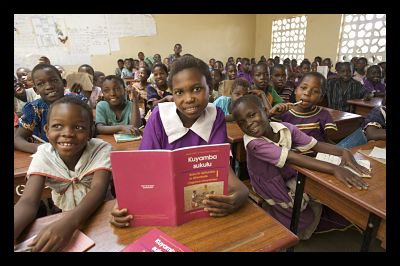
A lack of resources, however, makes it difficult for the money to go toward a good use. Schools are lacking in qualified teachers, and classrooms are filling up with 100 students at a time. Education standards are impossible to keep high when there are no sufficient resources.

Increasing education in Malawi will be a huge step toward improving the country’s development. Having an education can increase a person’s income significantly, thus allowing families to help bring themselves out of poverty.

Additionally, education can change major life outcomes, especially for women. UNESCO reports that if all women in sub-Saharan Africa completed primary education, the maternal mortality rate could drop by up to 70 percent. Education also encourages women to wait until a later age to be married, which increases their potential for success.

Malawi would benefit immensely from increasing its education system. It is the key to reducing poverty and spurring developmental growth for the country. Without education, Malawi will be at the same state when the country celebrates its 100-year anniversary of independence.

– Hannah Cleveland

Sources: The Guardian, Al Jazeera
Photo: GOAL Malawi Education

July 8, 2014
https://borgenproject.org/wp-content/uploads/borgen-project-logo.svg 0 0 Borgen Project https://borgenproject.org/wp-content/uploads/borgen-project-logo.svg Borgen Project2014-07-08 12:00:332024-05-27 09:18:17The Need for Education in Malawi
Global Poverty

The Knowledge Drive to Africa’s Future

course_hero_knowledge_to_drive_africa's_future
Embedded within southeastern Africa, Malawi is a developing nation that borders Zambia, Mozambique and Tanzania. As a country that is already lacking resources and electricity, it should come as no surprise to know that schools are also a rarity in the nation’s public infrastructure.

During a famine in 2002, three-quarters of the population of Malawi (over seven million people) were on the brink of starvation. Such difficult times affected many, a prime example being a boy named William Kamkwamba who was living in Malawi with an impoverished family of nine, knowing full well that school was not a viable option for him at the time. He was merely 14, however, when he traveled to a nearby library, which changed everything.

Motivated by his curiosity, William dove into a book on energy and articulated a plan to build a windmill to power his home—and surprisingly, he was successful in doing so. Currently, William is 22 years old and is working to not only refine his own windmill model, but to build more of them to power other communities.

On the other side of the world, a Cornell University student named Andrew Grauer founded the company Course Hero in 2008. Andrew’s purpose was to allow greater access to educational resources in an affordable and universal manner. He was able to compile a substantial amount of academic resources and promoted the website at various universities.

Course Hero eventually went on to expand throughout campus communities across America and has now become one of the leading online learning platforms. Some key investors in Course Hero include the founders of YouTube, StubHub, Google AdSense as well as some of the earlier investors of Twitter, Foursquare and PayPal.

In November 2010, Course Hero partnered with Books for Africa to establish The Knowledge Drive and invest in the future of Africa’s youth.

As a result, Course Hero decided to donate one book to Books for Africa for every 10 academic documents that are uploaded to the website. With the help of the academic community across the globe, they have been able to donate over 100,000 books—and are continuing to do so.

Access to education is a human right though millions of people across the globe are still left out. Although there are many people working to make an educated world a possibility, there is still much to accomplish.

Course Hero is an exceptional example of what is possible when the values of universal and affordable education are spread. After all, a book is much more than it seems to be—it allows for the power to positively influence communities as in William Kamkwamba’s case, which is something that the nation of Malawi and Africa needs altogether.

– Jugal Patel

Sources: Moving Windmills, Course Hero Knowledge Drive, BBC
Photo: Foctha

January 27, 2014
https://borgenproject.org/wp-content/uploads/borgen-project-logo.svg 0 0 Borgen Project https://borgenproject.org/wp-content/uploads/borgen-project-logo.svg Borgen Project2014-01-27 04:00:192018-07-31 12:44:26The Knowledge Drive to Africa’s Future
Page 5 of 6«‹3456›

Get Smarter

  • Global Poverty 101
  • Global Poverty… The Good News
  • Global Poverty & U.S. Jobs
  • Global Poverty and National Security
  • Innovative Solutions to Poverty
  • Global Poverty & Aid FAQ’s
Search Search

Take Action

  • Call Congress
  • Email Congress
  • Donate
  • 30 Ways to Help
  • Volunteer Ops
  • Internships
  • Courses & Certificates
  • The Podcast
Borgen Project

“The Borgen Project is an incredible nonprofit organization that is addressing poverty and hunger and working towards ending them.”

-The Huffington Post

Inside The Borgen Project

  • Contact
  • About
  • Financials
  • President
  • Board of Directors
  • Board of Advisors

International Links

  • UK Email Parliament
  • UK Donate
  • Canada Email Parliament

Get Smarter

  • Global Poverty 101
  • Global Poverty… The Good News
  • Global Poverty & U.S. Jobs
  • Global Poverty and National Security
  • Innovative Solutions to Poverty
  • Global Poverty & Aid FAQ’s

Ways to Help

  • Call Congress
  • Email Congress
  • Donate
  • 30 Ways to Help
  • Volunteer Ops
  • Internships
  • Courses & Certificates
  • The Podcast
Scroll to top Scroll to top Scroll to top