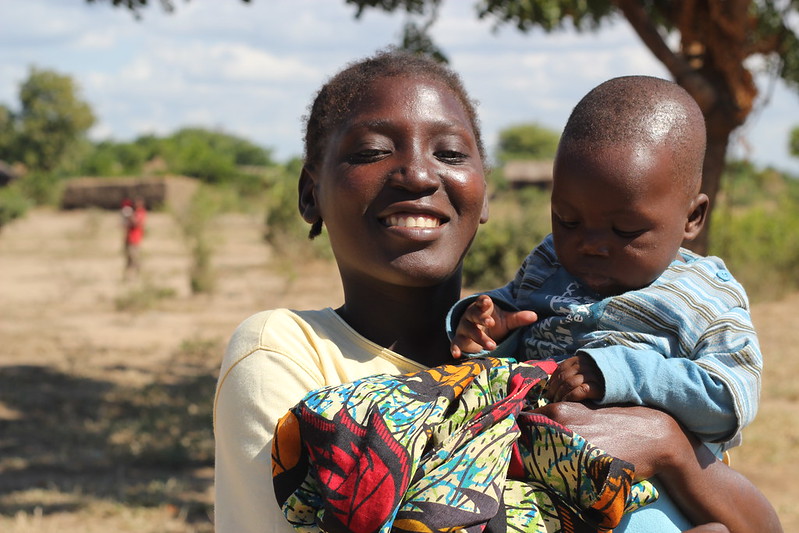
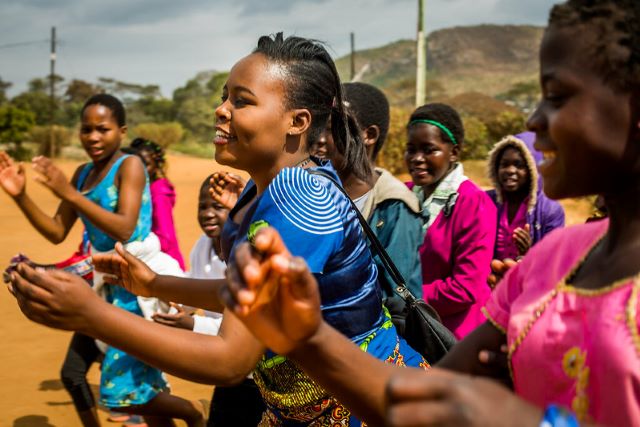
 Malawi is a landlocked country in southern Africa known for its beautiful highlands and expansive lakes. Occupying territory next to the East African Rift Valley, Malawi, a predominantly agricultural society, relies heavily on cash-crop agriculture, including tea and tobacco production. Despite the country’s great strides in development, gender inequality remains pervasive amongst the population. U.N. Women report that the average birth rate among girls aged 15 to 19 is 137.6 per 1,000 women since 2015. Additionally, 42.1% of women aged 20 to 24 were married before their 18th birthday and 16.6% of women older than 15 years old reported incidents of physical or sexual violence at the hands of their male partners in 2018. Overall, the prevalence of gender-based discrimination and violence has prompted several local community groups to lead initiatives in Malawi supporting women’s rights.
United Nations Population Fund (UNFPA) Malawi
UNFPA Malawi is a U.N. agency initiated by the United Nations Development Assistance Framework, which is a planning process offering financial and technical assistance to support Malawi’s development. UNFPA Malawi’s Gender Equality and Women Empowerment program is currently supported in 13 districts, working alongside the Malawi Government and nongovernmental organizations to empower young girls and women.
UNFPA’s Sexual and Reproductive Health and Rights program advocates for increased access to reproductive and health care services for women in Malawi. The program introduced Basic Emergency Obstetric and Newborn Care within multiple community health services, an initiative aimed at reducing maternal mortality rates among young women.
Girls Not Brides Malawi
A recent roundtable discussion saw Amal Clooney, Melinda French Gates, Michelle Obama, representatives from Girls Not Brides Malawi and a high court judge from the Women’s Lawyers’ Association speak about forced child marriage in Malawi. Mrs. Clooney presented several advocacy routes with the help of Girls Not Brides Malawi to aid the country’s legislation in ending child marriages and allocate financial resources within the Government of Malawi’s national budget.
Following the roundtable, President Chakwera’s announced an increase in his efforts to end forced child marriage. President Chakwera plans to work with the Minister of Gender and the Minister of Justice to adjust laws not in accordance with the minimum marriage age. Furthermore, Mrs. Clooney met with President Chakwera to standardize domestic legislation in accordance with the standards upheld by the SADC Model Law on Eradicating Child Marriage and Protecting Children Already in Marriage.
Mlirima Development Network
The Mlirima Development Network is a UNFPA-supported group that combats gender-based violence and child marriage across Malawi. The network trains community leaders on the importance of advocating for gender equality through UNFPA’s Safeguard Young People program. Currently, the program empowers survivors of child marriage and domestic violence while raising awareness of the dangers of brutality against women in each district.
The network has rescued 30 girls from child marriage, using resources at their disposal to finance the girls’ education and enroll them in schools. Group Village Heads such as Group Village Head Fraiton Pintu in Chikwawa work alongside the network to dismantle harmful traditions hindering the future of young girls in their communities. Presently, Group Village Head Pintu is implementing bylaws to reform traditional initiation ceremonies by choosing progressive young women to teach the next generation of girls.
Community Action Groups
Community Action Groups are cohorts created to counter domestic and sexual violence against women in Mangochi, a township in southern Malawi. The absence of efficient reporting systems prompted UNFPA and the Embassy of Iceland in Malawi to support 44 CAGs across three traditional villages in Mangochi: Chowe, Lulanga and Makanjira. Furthermore, the establishment of CAGs encourages more women to speak out against their abusers, with 208 cases of violence reported through the groups since 2022.
A Look Ahead
Local communities continue to build on the initiatives in Malawi conducted by the UNFPA, advocating for the rights of women and girls across the country. On the other hand, the importance of this work is not lost upon the citizens of Malawi, many of whom recognize gender equality as a human right and strive to empower the next generation of young people willing to fight for women’s freedoms.
– Megha Gupta
Photo: Flickr
 Villages in Partnership is an organization that has assisted Malawi in its fight against poverty.
  The appeal of artificial intelligence has skyrocketed in recent years – with its impressive ability to mimic human intelligence and
  In high-rise corporate buildings and individual cubicles, a barrier unfolds in the lives of many people who work in air-conditioned offices toward the difficulties of a career in agriculture. Small changes in the weather or environmental conditions impact entire communities. The emergence of the collaboration between new, innovative technological solutions and the farms of Malawi shed light on the future of farming.
 “The [human trafficking] situation was much worse than we first envisaged,”
  In 2020, the Joint United Nations Program on HIV/AIDS (UNAIDS) undisclosed its
  Iceland, located in the North Atlantic Ocean, has a population of fewer than 400,000 people. The small Nordic island is home to some of the most sought after natural landmarks and tourist attractions such as the northern lights. Although small, the country has provided big backing to countries triple its size through its foreign aid programs. In 2008, Iceland experienced what economists considered to be the most
  Despite the enactment of the
 Female education has been an ongoing challenge for the East African country of Malawi. With 50.7% of the population living below the poverty line, the nation is one of the poorest in the world, and a large percentage of the poor are women. A significant reason why is that girls often fall behind early in their education especially in areas like math and reading and end up dropping out. Also, the average elementary classroom in Malawi has 76 students meaning faculty are frequently overburdened and unable to address the delicate situation many young women find themselves in. The London based nonprofit organization Onebillion has developed the Onecourse technology that is closing the education gender gap in Malawi.