• Link to X
  • Link to Facebook
  • Link to Instagram
  • Link to TikTok
  • Link to Youtube
  • About
    • About Us
      • President
      • Board of Directors
      • Board of Advisors
      • Financials
      • Our Methodology
      • Success Tracker
      • Contact
  • Act Now
    • 30 Ways to Help
      • Email Congress
      • Call Congress
      • Volunteer
      • Courses & Certificates
      • Be a Donor
    • Internships
      • In-Office Internships
      • Remote Internships
    • Legislation
      • Politics 101
  • The Blog
  • The Podcast
  • Magazine
  • Donate
  • Click to open the search input field Click to open the search input field Search
  • Menu Menu

Tag Archive for: Global Poverty

Inflammation and stories on global poverty

Posts

Education, Global Poverty

Innovative Ways Universities are Fighting Poverty

fighting poverty
Many university presidents and college students alike have taken it upon themselves to help fight for those less fortunate than them. From creating chapters of organizations like ONE and conducting research for the benefit of medicine, universities have played a major role in shifting the scale of poverty over the years.

The Economist once said Africa was the “hopeless continent,” but after years of innovation, the same magazine has deemed it “Africa Rising.” One way colleges and universities play a significant role in this is by partnering with global nonprofits.

Universities originally began creating partnerships to support low-income students and help them carve a secure pathway to college, but in doing so, they also managed to foster relationships with these nonprofits that have blossomed into much bigger roles.

Much of the research conducted by students and professors has also contributed to aiding those living in poverty. Many universities, such as Stanford, UC Davis and Columbia University have designated research departments for research on global poverty.

Columbia University has The Earth Institute, which focuses on a magnitude of projects ranging from agricultural sustainability and global poverty mapping to economic growth in underserved communities.

Their Millennium Villages Project, led by The Earth Institute, United Nations Development Programme and the Millennium Promise, a charity dedicated to fighting poverty, focuses their efforts on reducing global poverty by helping rural African villages become more economically and agriculturally sustainable.

The Center for Poverty Research at the University of California at Davis dedicates their time to training scholars to combat poverty. Their research net encompasses topics like health, education and the intergenerational transmission of poverty, which studies how poverty can be transferred from parent to child.

The Center is one of three poverty research facilities focused on using this research net to decrease poverty. The other two centers are comprised of the University of Kentucky and the University of Wisconsin.

In February of 2014, Stanford launched a new research facility focused on ending global poverty called the Stanford Institute for Innovation in Developing Economies (SEED).

SEED’s initiatives focus on using entrepreneurship, economics and business innovation to help create new markets and job opportunities in underdeveloped communities to help them rise out of poverty.

The program grants researchers at Stanford sums of money to conduct interdisciplinary research focused on poverty. SEED is housed in Stanford’s graduate school of business and has so far dedicated over ten million dollars to its research.

Lastly, universities contribute to fighting poverty through action-based organizations that use their efforts to create awareness, raise money and advocate for the alleviation of poverty.

For example, universities around the world continue to use their resources to end poverty, and with their efforts can help Africa go from “Africa Rising” to an economically and agriculturally stable continent.

– Julia Hettiger

Sources: University of California, Davis, Columbia University, Stanford University

Photo: Flickr


September 30, 2015
https://borgenproject.org/wp-content/uploads/borgen-project-logo.svg 0 0 Borgen Project https://borgenproject.org/wp-content/uploads/borgen-project-logo.svg Borgen Project2015-09-30 13:32:092024-05-27 09:28:05Innovative Ways Universities are Fighting Poverty
Activism, Advocacy, Development, Global Poverty

Startups Ending Poverty

Startups
As successful businesses began springing out of Silicon Valley like a garden first introduced to fertilizer, entrepreneurs started to wonder how they could profit from filling the holes in market demands.

According to Business Dictionary, a startup is the “early stage in the life cycle of an enterprise where the entrepreneur moves from the idea stage to securing financing, laying down the basic structure of the business, and initiating operations or trading.”

But what do startups have to do with global poverty? While many businesses, including most startups, are looking to meet the demand of customers who will shell out enough cash to generate their owners and employees increasing incomes, some ventures are looking to fulfill a different demand.

Below are three for-profit startups that are using their business plans in one way or another to help alleviate poverty. These companies differ from nonprofits because they function as a business instead of an organization. While both work towards bettering the lives of others, they do so in distinctly different ways.

Nuru

Nuru provides training-based poverty solutions for local leaders in poor communities. Their leadership programs are intended to create profitable businesses owned and run by local entrepreneurs.

Nuru staff train and equip their counterpart local teams and in return part of that business’s profit is returned to Nuru where it is distributed to shareholders and reinvested in other development projects.

Instead of reaching into markets with foreign goods or services, Nuru allows locals to provide their own communities with desired and necessary products in a self-sustaining manner. Once Nuru implements their programs they withdraw their staff and allow local leaders to become self-reliant and continue making their own difference.

BioLite

BioLite was created by two camping enthusiasts and sells portable, clean energy stoves, kettles and LED lights. The profits made from their western markets help offset the costs required to make their other product. In addition to camping equipment, BioLite produces a cheaper stove to sell in developing nations.

Since most people living in poverty use open fires for cooking and heating purposes, the demand for inexpensive and safe stoves is high.

This company offers a desired product to untapped markets in developing countries for an affordable price due to their other successful profit earning products. Their business plan is sustainable because they do not rely on donations to continue their work.

Good Cloth

An online clothing store that sells exclusively ethically crafted goods. They’ve divided their products into several categories including recycled, sustainable, organic, made in the U.S. and one titled “Trade Not Aid.”

Good Cloth helps companies who design and create goods without exploiting workers, sell their products. Good Cloth and the brands they sell work to eradicate poverty by pushing against the norm of cheap labor.

They want to help companies who treat their employees fairly and pay them a just wage be successful.

Nuru, BioLite and Good Cloth are only three examples of for-profit business models that are working towards alleviating poverty. While nonprofits play an undeniably imperative role in the fight on global poverty, there is also a place for solutions that include profits.

Businesses have a high interest and investment in their success; in order to eradicate global poverty there needs to be a high interest and investment in finding successful solutions. If incorporating business models and profit as a motivation will lead to poverty reduction, why would we not use it?

– Brittney Dimond

Sources: Business Dictionary, The Good Trade, MIC, Nuru International

Photo: Pixabay

September 30, 2015
https://borgenproject.org/wp-content/uploads/borgen-project-logo.svg 0 0 Borgen Project https://borgenproject.org/wp-content/uploads/borgen-project-logo.svg Borgen Project2015-09-30 10:09:172024-12-13 18:05:09Startups Ending Poverty
Food & Hunger, Global Poverty, Health

Reducing Food Loss, Waste and Meat Consumption Could End World Hunger by 2030


The United Nations has called for the end of world hunger by 2030 in its Sustainable Development Goals (SDGs). In Goal 2, of 17, the UN outlines the need for the promotion of sustainable agriculture that will improve food security and nutrition while protecting the ecosystem and fighting climate change. Although a tall order, the United Nations Food and Agriculture Organization (FAO) along with the Austrian think tank, International Institute for Applied Systems Analysis, believes that the goal is attainable.

“I don’t think it’s all that ambitious to eliminate hunger,” said Jomo Sundaram, assistant director-general of the UN’s Food and Agriculture Organisation (FAO). He told Reuters he attributes his optimism to rising incomes in much of the world, improvements in the transportation of food, and new technologies that are keeping yields of many key crops on an upward trend.

But in order to achieve the goal of eliminating world hunger, food waste and the inefficiencies of the livestock industry need to be addressed.

Despite the fact that there is currently enough food produced globally to end world hunger, much loss and waste occur postharvest. According to the World Resources Institute (WRI), about 24 percent of all calories currently produced for human consumption are either lost or wasted.

The WRI reports that by reducing postharvest losses there will be more food available to farmers and communities, making food more affordable and accessible to the poor and food insecure. This can be done, the group states, through attainable solutions for developing nations such as pest-resistant packaging and cooling-cellar storage.

Changing dietary habits is another important solution to ending global hunger, particularly shifting from raising cattle as a source of protein to growing fruit, grain, and vegetables. According to the FAO, the amount of human-edible protein that goes into raising livestock is higher than the human-edible protein yielded from livestock. The group estimates that 26 percent of the world’s land that is being used for livestock grazing could produce better and more nutritionally valuable yields if converted to growing plant-based food for human consumption.

In addition to increasing the yield of protein-rich crops, reducing the number of grazing livestock, particularly cows, will also lower annual greenhouse gas emissions. According to the FAO, “Livestock contributes both directly and indirectly to climate change through the emissions of greenhouse gases such as carbon dioxide, methane and nitrous oxide.” The FAO estimates that 18 percent of global greenhouse gas emissions come from livestock.

By implementing better waste prevention systems and simply eating less meat from grazing animals, the fight against global food insecurity could indeed be attainable.

– Claire Colby

Sources: Food and Agriculture Organization 1, Food and Agriculture Organization 2, Huffpost Impact, The Physics Factbook, The World Bank, The World Factbook 1, The World Factbook 2, The World Factbook 3, World Resources Institute
Photo: fao

September 29, 2015
https://borgenproject.org/wp-content/uploads/borgen-project-logo.svg 0 0 Borgen Project https://borgenproject.org/wp-content/uploads/borgen-project-logo.svg Borgen Project2015-09-29 03:14:442024-05-27 09:27:58Reducing Food Loss, Waste and Meat Consumption Could End World Hunger by 2030
Economy, Global Poverty

Global Peace Index Offers Critical Poverty Insights

Global Peace Index Offers Critical Poverty Insights
The Institute for Economics and Peace, or IEP—a think tank with offices in New York, Mexico City and Sydney—has released the ninth edition of their Global Peace Index. The Index makes use of 23 qualitative and quantitative indicators in an effort to illustrate the levels of peace around the world, highlight trends and inform policymakers.

Safety and security in society, the extent of domestic and international conflict, and the degree of militarization are the three facets that the IEP uses to gauge where global peace stands.

IEP views peace as a prerequisite to solving the major issues facing humanity. “It is a cross-cutting facilitator of progress, making it easier for individuals to produce, businesses to sell, entrepreneurs and scientists to innovate and governments to effectively regulate.”

Therefore, they study what makes societies peaceful in order to contribute to the debate on meeting the challenges facing a 21st century world.

They have identified eight pillars that are hallmarks of peaceful societies. A sound business environment, good relations with neighbors, high levels of human capital, acceptance of the rights of others, low levels of corruption, good governance, free flow of information and an equitable distribution of resources all help to establish peaceful societies. These pillars have complex interactions and “are both interdependent and mutually reinforcing, such that improvements in one factor would tend to strengthen others and vice versa.”

So, how is the world doing? The overall trend since the first edition, in 2008, has been a downward one. Although external conflict has significantly dropped, refugees and internally displaced persons, internal conflict, terrorism and violent demonstrations have more than taken up the slack, setting the stage for a less peaceful world.

Since last year, 81 countries have become more peaceful while 78 states have slipped. European countries continued their peaceful trajectory, while peace levels in the Middle East and North Africa have deteriorated significantly. The United States ranks 94 behind 21 African nations, and Iceland is the most peaceful country.

What is more shocking is that, by IEP calculations, violence cost the world $14.3 trillion in 2014, or 13.4 percent of global GDP. This cost has increased by 15.3 percent since 2008.

If the world was able to decrease violence by a meager 10 percent, enough money would be freed up to decuple (multiply by 10) the current level of official development assistance. This is important because IEP has also identified how closely aligned the Sustainable Development Goals are with the eight pillars of peace, implying that an increase in official development assistance would further reduce violence, putting into motion a virtuous cycle.

Although the idea that peace is beneficial for societies does not offer a radical new insight, IEP and their reports help quantify and illustrate just what type of violence is happening where, and why that may be.

For instance, IEP has found that high income inequality is associated with an increase in violence in urban environments, and that murder rates and urbanization are inversely correlated. These findings lay out a roadmap for policymakers to properly respond to and develop interventions that can help make the world a safer place.

– John Wachter

Sources: Vision of Humanity 1, Vision of Humanity 2
Photo: Visionofhumanity

September 10, 2015
https://borgenproject.org/wp-content/uploads/borgen-project-logo.svg 0 0 Borgen Project https://borgenproject.org/wp-content/uploads/borgen-project-logo.svg Borgen Project2015-09-10 10:53:592020-06-30 09:17:43Global Peace Index Offers Critical Poverty Insights
Activism, Global Poverty, Poverty Reduction, United Nations

UN Report: Overall Global Poverty Has Dropped Dramatically

z1-thumbs up
The U.N.’s 2015 Millennium Development Goals Report, which was released earlier this month, has published findings that show a sharp improvement in overall global poverty.

The U.N.’s report highlights the progress that has been made since their Millennium Development Goals were first established in 2000. This plan, which set targets and timeframes for how to make an impact in global poverty by 2015, has ultimately been remarkably successful.

“What the goals did, by prioritizing and focusing, was actually put together major international donors, civil society partners on the ground, national governments focusing on the same sets of issues,” Mark Suzman, a U.N. official, told NPR. “And that allowed for a focusing of both policy change and resources and attention.”

The report highlights a number of significant changes that have been made since its inception over a decade ago. According to the report, the amount of people living in extreme poverty has dropped to less than half of what it was in 1990, from 1.9 billion to 836 million. The report also points out that overall primary school enrollment in developing regions has reached 91 percent.

“The report confirms that the global efforts to achieve the goals have saved millions of lives and improved conditions for millions more around the world,” said U.N. Secretary General Ban Ki-moon.

The report doesn’t shy away from the work that still needs to be done, however. The report’s findings also include the fact that around one billion people still defecate in the open and 28 percent of children in South Asia younger than five can be classified as “moderately or severely underweight.”

“These successes should be celebrated throughout our global community,” Ki-moon added. “At the same time, we are keenly aware of where we have come up short.”

– Alexander Jones

Sources: Aizenman, Economic Times, Sengupta

September 7, 2015
https://borgenproject.org/wp-content/uploads/borgen-project-logo.svg 0 0 Borgen Project https://borgenproject.org/wp-content/uploads/borgen-project-logo.svg Borgen Project2015-09-07 01:30:482020-06-30 18:45:11UN Report: Overall Global Poverty Has Dropped Dramatically
Global Poverty

Six Instagram Accounts to Follow for a Glimpse of Global Poverty

instagram

Instagram is a social media outlet that allows users all around the world to share photos. The social network has more than 300 million monthly active users in a world that is captivated by visuals. Although Instagram can serve as an announcement for what’s for dinner, it has been influential in allowing people across continents a glimpse into one another’s lives.

An important aspect of Instagram is its ability to make those whom we will never meet relatable to us. This aspect can be applied to A-list celebrities such as Taylor Swift and Hugh Jackman, as well as to the poor villagers in North Africa. Instagram can humanize the poor and mobilize the able.

Listed below are a few Instagram accounts that do an excellent job showing the beauty as well as the tragic poverty of developing countries.

1. Lynsey Addario @lynseyaddario

American Photo Magazine named Lynsey Addario, currently living in London, one of the five most influential photographers in the past 25 years.

2. Marcus Bleasdale @marcusbleasdale

Marcus Bleasdale is a documentary photographer working in the Central African Republic. His coverage of poverty-stricken conflict zones has earned him the Amnesty International Award for Media 2014.

3. Andrew Quilty @andrewquilty

Andrew Quilty is an Australian documentary photographer working in Afghanistan.

4. Phil Moore @philmoorephoto

Phil Moore is a British freelance photographer documenting life in Burundi.

5. Everyday Africa @everydayafrica

Everyday Africa is a project started by Peter DiCampo and Austin Merrill to show what life in Africa is really like. The account features many African and non-African photographers in their daily lives.

6. Everyday Asia @everydayasia

Everyday Asia is based after Everyday Africa, showing what life in different parts of Asia is like.

– Iona Brannon

Sources: Global Insider, Lynsey Addario, Marcus Bleasdale, Andrew Quilty, Phil Moore, Everyday Africa
Photo: Everyday Africa

September 6, 2015
https://borgenproject.org/wp-content/uploads/borgen-project-logo.svg 0 0 Borgen Project https://borgenproject.org/wp-content/uploads/borgen-project-logo.svg Borgen Project2015-09-06 08:39:442024-12-13 18:04:56Six Instagram Accounts to Follow for a Glimpse of Global Poverty
Advocacy, Global Poverty

Hash-Tagging to Raise Awareness for The Global Goals

global_goals
Trending hashtags can sometimes be confusing and pointless. Usually, hashtags accompany a picture on Instagram or a tweet on Twitter and sometimes they are associated with different challenges. But, every once in a while, a hashtag will emerge and correlate with a worthy cause, and using it on social media will raise awareness for that cause.

The hashtag, #DizzyGoals, is raising awareness for The Global Goals one video at a time. #DizzyGoals requires a person to spin as quickly as possible around a soccer ball 13 times and then attempt a penalty shot. Many professional soccer players have accepted the challenge, including Gareth Bale of Real Madrid, whose video featured some of his friends and teammates.

Less than a month away, the Global Goals launch on September 25 in New York City with 193 world leaders in attendance, and the campaign is doing everything in its power to raise international awareness and support of the goals. The Global Goals are dedicated to ending global poverty, fighting injustice and correcting climate change through a set of 17 initiatives for the next 15 years.

Before world leaders commit themselves to the goals, however, citizens around the world must know about them. World leaders listen to citizens to understand what needs to be done; the more people that know about the goals, the more likely the world leaders are to support them.

Therefore, it is imperative that the Global Goals become famous amongst world citizens and #DizzyGoals is one entertaining way to do that.

Many of the videos that accompany the hashtag feature professional soccer players spinning rapidly around a soccer ball, and then stumbling to kick the next ball, where the inevitable dizziness usually results in an epic fall to the grass. Nonetheless, the stars of the challenge are sure to mention their support for the Global Goals and provide links to goals’ website.

The Global Goals have the power to positively change the world. Share a #DizzyGoals video to inform more people about the Global Goals, or grab a soccer ball and take the challenge!

– Sarah Sheppard

Sources: Global Citizen, Global Goals, Twitter,
Photo: Express

September 5, 2015
https://borgenproject.org/wp-content/uploads/borgen-project-logo.svg 0 0 Borgen Project https://borgenproject.org/wp-content/uploads/borgen-project-logo.svg Borgen Project2015-09-05 07:30:172024-12-13 17:54:08Hash-Tagging to Raise Awareness for The Global Goals
Global Poverty

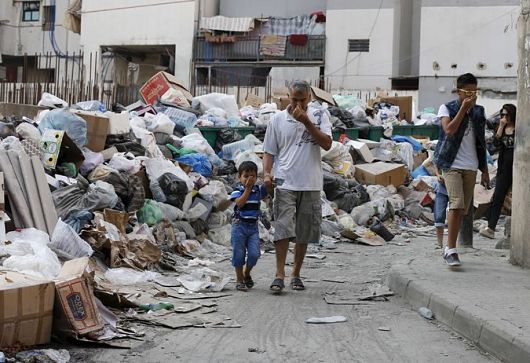
Garbage Crisis in Lebanon

crisis_in_lebanonIn Lebanon, crucial civil services have been shut down as a result of political gridlock. For a few weeks, many businesses and households have been left with intermittent access to electricity and water. As if conditions were not difficult enough, a garbage crisis has emerged as trash collection has been halted.

Additionally, amid concerns of overfilling, the government has closed the country’s largest landfill and has not established any coping measures. As a result, the streets of Lebanese cities have been riddled with trash and waste.

The politics of Lebanon is based on a power-sharing structure amongst the various religious sects. While representative of the population, the country is susceptible to situations such as this as consensus can be difficult to achieve.

The capital of Beirut is home to over half the total Lebanese population and is the epicenter of the waste buildup. The situation has gotten so out of hand that citizens have begun burning trash in the streets. The fumes from burnt trash can contain toxic chemicals and create their own set of serious health concerns.

Calling the situation a “major health disaster,” The country’s Health Minister, Wael Abu Faour, has called for the government officials to end the gridlock and fix the escalating garbage crisis in Lebanon.

Citizens have begun to mobilize and take to the streets to voice their objections to the trash as well as the government. Movements have adopted the slogan “You Stink” as a literal and figurative metaphor for the government and the situation they have created.

“You Stink” organizers have begun using social media outlets to pass information and spread the word on protests. Recently, a protest of over 20,000 civilians took place in Beirut. However, police suppressed the protestors with billy clubs and fire hoses. A litany of footage documenting police violence has been uploaded to Twitter, Facebook and Youtube.

“You Stink” protesters hope that the utilization of the internet and social media will raise awareness to the international community. With the added attention, organizers hope their Lebanese government will face mounting pressure to proactively solve this crisis.

The protests and concerns have certainly caught the attention of Prime Minister Tammam Salam. In a televised speech, he stated, “The trash issue was the straw that broke the camel’s back, but the story is larger, much larger than this straw, and it is the story of the political trash in the country.”

– The Borgen Project

Sources: New York Times 1, Huffington Post, New York Times 2, LA Times
Photo: New York Times

September 5, 2015
https://borgenproject.org/wp-content/uploads/borgen-project-logo.svg 0 0 Borgen Project https://borgenproject.org/wp-content/uploads/borgen-project-logo.svg Borgen Project2015-09-05 01:30:342022-01-19 00:35:39Garbage Crisis in Lebanon
Economy, Global Poverty

How Economists Are Using Social Programs to Fight Global Poverty

Social ProgramsEncouraging immunization has long been a major focus for development organizations working to improve conditions in poor regions. But for households in many communities, a lack of time and money can pose major obstacles, making it difficult for families to send their children to health clinics.

In an effort to combat this trend, economists are testing incentive programs to see whether or not communities can be encouraged to immunize on a larger scale.

Across the Indian subcontinent, scientists and economists are using randomized controlled trials (RCTs) as part of a massive trial, testing whether incentives such as food can increase the “stubbornly low” immunization rates for children in impoverished areas. As part of the experiment, 70 local health clinics in the Indian state of Haryana provide parents with a free kilogram of sugar if a child begins a standard series of vaccinations and a free liter of cooking oil if they complete it.

Researchers randomly assigned clinics in the seven Haryana districts with the lowest immunization rates to either provide incentives or not. While initial results of the experiment are not expected until next year, similar experiments suggest that results are likely to be positive. In a study conducted in India and published in 2010, monthly medical camps caused vaccination rates to triple, and offering incentives increased the rate of vaccination by six times.

“We have learned something about why immunization rates are low,” said Massachusetts Institute of Technology economist Esther Duflo, who notes that for families in poor communities, sending their children on a trek to a faraway clinic can carry high opportunity costs. “And you can balance that difficulty with a little incentive.”

According to a 2011 study on vaccination rates in India, the country is home to one-third of the world’s unimmunized children, despite being a leading producer and exporter of vaccines. Nearly half of Indian children do not receive the full schedule of immunizations.

Among the leading causes of the vaccine deficit are “little investment by the government; a focus on polio eradication at the expense of other immunizations; and low demand as a consequence of a poorly educated population and the presence of anti-vaccine advocates.”

The implementation of RCTs has come at a time when people are raising doubts as to the efficacy of foreign development aid provided by countries like the United States. While some $16 trillion of aid has flowed to the developing world since World War II, there is little empirical data as to whether, and to what extent, that money has improved recipients’ lives. Scientists see these tests as the answer to that question and hold that such studies will help development organizations better target areas of need in developing countries.

Research organizations are primarily interested in implementing tangible policy changes and hope to do so by demonstrating empirical research regarding development aid. Such is the aim of the Global Innovation Fund, which offers funding for organizations looking to conduct similar tests.

The fund has received nearly 2,000 applications for projects in 110 countries, and it will announce the first wave of grant recipients later this year. The amount of funding provided by such organizations, however, is tiny, and even at major lending institutions, the portion of investments backed by rigorous and empirical research is small.

The World Bank started a Development Impact Evaluation division in 2005, and the number of projects receiving “formal impact evaluations”—by means of RCTs, for example—increased from 20 in 2003 to nearly 200 in 2014. But that only accounts for 15 percent of the bank’s projects. This is largely because of the up-front costs of such evaluations, which carry average funding requirements of nearly $500,000.

While expensive and time-consuming, the more empirical research is conducted on social programs and development aid, the more effective those initiatives will become in remedying the conditions that drive global poverty rates. As this information is presented to donor governments in the developed world, and as aid allocation becomes more transparent, development experts will be better able to target areas of need in poor and developing countries.

– Zach VeShancey

Sources: Nature, NIH
Photo: Nature

September 4, 2015
https://borgenproject.org/wp-content/uploads/borgen-project-logo.svg 0 0 Borgen Project https://borgenproject.org/wp-content/uploads/borgen-project-logo.svg Borgen Project2015-09-04 08:20:462020-07-01 10:21:18How Economists Are Using Social Programs to Fight Global Poverty
Development, Global Poverty, Health, Technology

CNNMoney’s Upstart 30 Project

upstart
CNNMoney launched its Upstart 30 Project in late June. It profiles 30 young innovative startups and their respective founding entrepreneurs and investors.

The list is broken down into five categories: the idealists, the funders, the simplifiers, the playmakers and the futurists. All of which comprise individuals from a variety of fields.

To take part, startups must be established in the United States, be no younger than five-years-old, and harness technology in hopes of making the world a better place. After a series of tests, the Upstart 30 Project was formed. The list is diverse in geography, gender, race, and industries.

Whether it is a solution to the current archaic U.S. school system, an agricultural phenomenon in a box, or an ingenious medical tool, Upstart 30 spotlights visionaries that are making serious headway, all before the age of 40.

While many of the startups tackle commonplace inefficiencies, several address national and global issues, and have the potential of reducing global poverty in unlikely ways.

BioBots brings personalized medicine tools. According to its profile on CNNMoney, the startup’s first product was a 3D printer for building cells, tissues and organs. BioBots’ printer is uniquely small and inexpensive. It can fit on a desktop and is priced at around $5,000. For now, the bio printer is for research. CEO Danny Cabrera, 22, said that his two co-founders and him are hoping to broaden their client base to include pharmaceutical companies who could use their products for testing cancer drugs. BioBots has a bright future in the United States, but could do wonders internationally.

Freight Farms is a farm in a box. Founders, Brad McNamara and Jonathan Freidman, created the boxes out of old shipping containers. The insulated, camera-equipped devices use LED lights and advanced monitors to regulate weather conditions, nutrient intake and carbon dioxide levels, all without soil. The startup launched in 2011, and already made $5 million. At $76,000 apiece, restaurants, schools, and hotels have mainly bought the boxes. While this is very expensive, the payoffs are incredible: each container produces 4,000 to 6,000 plants a week according to Shawn Cooney, a small business owner testing the Freight Farm. This is nearly 80 times more than Cooney would have gotten from a conventional farm space. The high cost keeps Freight Farms away from the developing world but, if ever brought down, Freight Farms could increase food security around the world.

uBiome scans a person’s body and micro biome. uBiome kits locate where diseases take root, and how they escalate. According to CNNMoney, uBiome completely changes the ways we examine anxiety, diabetes and heart disease. The $79 kits test bacteria, analyze results, and compare data to other profiles. This quick and cutting-edge device could easily help millions of people in developing nations.

Plangrid is a paper-saving blueprint alternative for construction engineers. By using a tablet to alter and share blueprints, Tracy
Young, Ryan Sutton-Gee, Ralph Gootee and Kenny Stone are making sure buildings are drawn from reliable sources. So far, Plangrid has been a success since it began only three years ago. The app helped build over 90,000 projects worldwide. Plangrid, however, has a long way to go until it can reach rural populations most in need of new buildings.

– Lin Sabones

Sources: PlanGrid, CNN
Photo: CNNMoney

August 21, 2015
https://borgenproject.org/wp-content/uploads/borgen-project-logo.svg 0 0 Borgen Project https://borgenproject.org/wp-content/uploads/borgen-project-logo.svg Borgen Project2015-08-21 10:23:502024-12-13 17:54:01CNNMoney’s Upstart 30 Project
Page 24 of 40«‹2223242526›»

Get Smarter

  • Global Poverty 101
  • Global Poverty… The Good News
  • Global Poverty & U.S. Jobs
  • Global Poverty and National Security
  • Innovative Solutions to Poverty
  • Global Poverty & Aid FAQ’s
Search Search

Take Action

  • Call Congress
  • Email Congress
  • Donate
  • 30 Ways to Help
  • Volunteer Ops
  • Internships
  • Courses & Certificates
  • The Podcast
Borgen Project

“The Borgen Project is an incredible nonprofit organization that is addressing poverty and hunger and working towards ending them.”

-The Huffington Post

Inside The Borgen Project

  • Contact
  • About
  • Financials
  • President
  • Board of Directors
  • Board of Advisors

International Links

  • UK Email Parliament
  • UK Donate
  • Canada Email Parliament

Get Smarter

  • Global Poverty 101
  • Global Poverty… The Good News
  • Global Poverty & U.S. Jobs
  • Global Poverty and National Security
  • Innovative Solutions to Poverty
  • Global Poverty & Aid FAQ’s

Ways to Help

  • Call Congress
  • Email Congress
  • Donate
  • 30 Ways to Help
  • Volunteer Ops
  • Internships
  • Courses & Certificates
  • The Podcast
Scroll to top Scroll to top Scroll to top