• Link to X
  • Link to Facebook
  • Link to Instagram
  • Link to TikTok
  • Link to Youtube
  • About
    • About Us
      • President
      • Board of Directors
      • Board of Advisors
      • Financials
      • Our Methodology
      • Success Tracker
      • Contact
  • Act Now
    • 30 Ways to Help
      • Email Congress
      • Call Congress
      • Volunteer
      • Courses & Certificates
      • Be a Donor
    • Internships
      • In-Office Internships
      • Remote Internships
    • Legislation
      • Politics 101
  • The Blog
  • The Podcast
  • Magazine
  • Donate
  • Click to open the search input field Click to open the search input field Search
  • Menu Menu

Archive for category: Women’s Empowerment

Global Poverty, Women's Empowerment, Women's Rights

Things to Know About Haiti’s Gender Wage Gap

haiti's gender wage gapRanked 163rd out of 170 countries on the UNDP’s Gender Inequality Index in 2021, Haiti’s gender wage gap is categorized as the largest of any Latin American or African state. Many factors interact to maintain this level of income inequality, with traditional ideas around a woman’s role, gender-based violence and a disproportionate number of female workers in the informal sector reinforcing this harmful cycle. There are several attempts to eradicate these gender inequalities in the labor market, but more work is still necessary.

Haiti’s Gender Wage Gap and Unemployment

On average, female salaries are around 32% lower than their male counterparts in Haiti. About a third of this wage difference “can be explained by factors such as age, number of children, education, and industry of employment,” according to the International Monetary Fund (IMF). However, the rest of Haiti’s gender wage gap has no explanation, pointing towards a culture of gender discrimination. In rural areas, this manifests itself as more women living in poverty; households headed by women are more likely to live below the poverty line (62% compared to 54% of male-led households).

In 2017, women in Haiti were 20 percentage points more likely to be out of work than their male equivalents This was exacerbated during the COVID-19 pandemic, with women more likely to be unemployed or leave their positions, “reflecting a pattern of low labor market attachment among women that was already present and that expanded during the pandemic.” Although female unemployment has reduced slightly in the post-lockdown era, it still stood at 17.78% in 2023, compared to 11.79% for men.

Women and the Informal Sector

The informal sector contributes around 60% of Haiti’s GDP. Haitian women tend to dominate in this informal economy, partially due to a lack of opportunities or education, but also because Haitian women have “traditionally carried the brunt of family responsibilities” and the society sees them as “poto-mitan” – or backbone- of their families and wider communities. Thus, many women become informal merchants to earn money and juggle domestic responsibilities, contributing to Haiti’s gender wage gap. Women tend to work more in this informal sector which “small production units with low-profit margins” define, including a lack of protections and security for workers (10), which further disadvantages women in terms of pensions and rights, making job progression more difficult.

Traditional Gender Roles and Violence

Around half of Haitian homes, according to the May-June 2020 Haiti Gender Assessment, claimed that chores like cooking, cleaning and child-rearing were a woman’s responsibility in the home. This significant domestic burden inevitably places women at a disadvantage when looking for employment in comparison to men, who tend to have fewer if any domestic tasks.

Also, women have much less access to “productive resources” like land and financial tools, with only 8% of women in rural Haiti owning their own land, compared to 20% of rural men, according to the World Bank. Although only a third of Haitians have a bank account, the gender gap is around 5 percentage points, with much less women having access to these services.

An acute problem with gender-based violence could also be contributing to the persistence of Haiti’s gender wage gaps, given that violence against women “has profound implications for women’s [labor] market participation, driving economic and workplace barriers that erode financial independence and restrict access to meaningful employment opportunities.” In just the first quarter of 2024, there were 1,793 reports of GBV 94% of which came from women and girls, according to the Center for Strategic and International Studies (CSIS). Combatting chauvinist ideas and domestic violence towards women is key to empowering and integrating them into the workplace.

Education Gap Reversing

Despite a lack of progress regarding women’s involvement in the workforce, there has been progress in improving female education and attendance rates. Gender gaps have “closed or even reversed at the secondary and tertiary levels” with more girls between 15-24 years attending school than boys in rural areas, the World Bank reports.

However, gender gaps persist in lower stages of the education system, and men are still more likely to have graduated from secondary and higher education institutions than their female counterparts. This persisting gender gap in higher education attainment is inevitably worsening this gender pay gap, given that many women in Haiti have not been provided with the same level and quality of education as their male peers.

Solving Haiti’s Gender Wage Gap

The Haitian government has tried to make progress regarding the country’s marked gender wage gap, signing international accords addressing women and gender equality. It also has a Ministry for the Status of Women and Women’s Rights (MCFDF) and a Gender Equality Office for the Parliament, established in 2013, “to foster gender equality on the legislative level and women’s participation in formal politics.”

However, implementation has been slow, considering institutional weakness, political instability and a lack of funding for the MCFDF. Quotas for female representation in government have not had major success within these bodies, with women making up less than the constitutional requirement in both houses of the Haitian Parliament (less than 30%). Compared to its neighbors, Haiti is underperforming regarding the promotion of gender quality and equal opportunities, according to the World Bank.

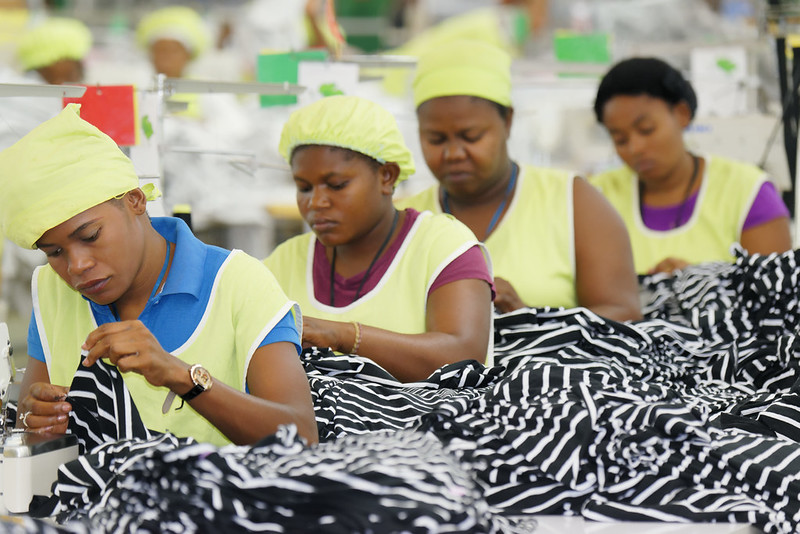
USAID has also attempted to empower women and girls and combat Haiti’s gender wage gap. They have focused on programs intermingling economic factors and improvements to health and sanitation provision with measures to reduce poverty and gender-based violence. USAID initiatives to reduce poverty and stimulate growth have created 27,000 permanent jobs since 2011, 53% of which employed women, in sectors like construction and manufacturing.

Final Notes

Haiti is a country with a young population and much potential but has suffered at the hands of dictators, natural disasters, and political instability. The country’s gender pay gap has been fed by and worsened female participation in the labor market and the lack of employment opportunities for women. Despite great efforts by the Haitian government and USAID, the 32% gender wage gap persists, and women still find themselves without work, or limited to employment within more informal sectors without workplace protections.

– Ciara Howard

Ciara is based in Brighton, UK and focuses on Good News and Global Health for The Borgen Project.

Photo: Flickr

January 1, 2025
https://borgenproject.org/wp-content/uploads/borgen-project-logo.svg 0 0 Naida Jahic https://borgenproject.org/wp-content/uploads/borgen-project-logo.svg Naida Jahic2025-01-01 07:30:042024-12-31 03:24:23Things to Know About Haiti’s Gender Wage Gap
Global Poverty, Women's Empowerment, Women's Rights

Everything You Need to Know About Women’s Rights in Kiribati

Women’s Rights in KiribatiKiribati is an island country formed in 1979 that is located in Oceana. Despite having a smaller population compared to its neighbors, Kiribati has been steadily growing in its economic power ever since its inception. One can attribute this partly to women’s rights in Kiribati, which have been prominent ever since the country’s inception.

Within the Law

Women have always had the right to vote in Kiribati, as that was codified when the country was first granted independence. Despite this strong foundation for women’s rights, women only make up 6.67% of representation in national parliament in Kiribati, compared to a global average of 25.09%. 

The Kiribati constitution does not protect individuals from discrimination based on gender. However, certain protections for women have recently been passed. Violence against women, namely sexual assault, is treated as a crime and prosecuted accordingly. The punishment for this includes a maximum life sentence of life in prison for rape specifically, though the mean amount of jail time rests around four years.

In 2018, the Kiribati Women and Children’s Support Center was opened and launched a 24-hour hotline for survivors of sexual violence and domestic abuse. This marked a turning point for women’s rights in Kiribati, and contributed to broader efforts of spreading awareness about sexual assault in the region.

Inside the Schools

Literacy rates for women are above average at 98.61% ( the world average is 82.03%). One can attribute this to the universal education for youth Kiribati provides. Girls are actually more likely to complete their primary education than boys, and this emphasis of literacy and education allows for women in Kiribati to attain economic empowerment. Furthermore, the Education Act of 2013 solidified education for all by codifying protections against women and girls by outlawing refusal of enrollment based on sex.

Unfortunately, girls’ attendance in school drops exponentially after primary education. Only 87% of girls go on to complete junior secondary education, and then just 63% complete senior secondary education. This is for a variety of factors, but poverty is the main reason. Often, parents will pull their children out of school following primary or junior secondary school in order for them to help earn enough money to put food on the table. The wealthiest children in Kiribati have a 71% chance of completing their education, while the poorest have only a 35% chance. 

Women and Poverty

While women in Kiribati tend to have more education than men on average, this does not necessarily mean that their quality of life or financial standing is any better. In fact, the unemployment rate for women in Kiribati was up to 12.4% in 2020, almost 2% more than men. The labor force participation rates contain similar disparities, with men having a 54.4% labor force participation rate, and women only reaching 40.5%. There are a variety of factors behind this, but gender gaps and a lack of supportive policies to help combat unfair hiring practices are often cited as main reasons. Due to this, women in Kiribati are at a higher likelihood of living in poverty. 

Despite this, there are concerted efforts from various organizations within Kiribati to help women and girls fight poverty. One of the most prominent organizations in the area is called Teitoiningaina, which is the National Catholic Women’s Association of Kiribati. This organization focuses on improving the lives of women in Kiribati by offering family health care, offering programs to help women in Kiribati get an education and providing classes on business. 

Looking Ahead 

Although the rate of violence against women in Kiribati is proportionally high, new government programs help provide support to survivors and further criminalize violence against women. Not only that, but the rate of literacy for women exceeds the standard for the region by far and gives women the opportunity to have more economic power and autonomy than they otherwise might not have. While there is still work to be done for women’s rights in Kiribati, the region is on the path to success.

– Mackenzie Scott

Mackenzie is based in Indianapolis, IN, USA and focuses on Good News for The Borgen Project.

Photo: Flickr

December 19, 2024
https://borgenproject.org/wp-content/uploads/borgen-project-logo.svg 0 0 Jennifer Philipp https://borgenproject.org/wp-content/uploads/borgen-project-logo.svg Jennifer Philipp2024-12-19 01:30:532024-12-17 23:55:24Everything You Need to Know About Women’s Rights in Kiribati
Aid, Global Poverty, Women's Empowerment

Women’s Empowerment International: Disrupting Poverty

Women’s Empowerment International: Disrupting Cycles of Poverty More than 10% of women worldwide are trapped in extreme poverty due to structural barriers such as inadequate education and vocational training, limited financial resources and prevailing patriarchal social structures that hinder their mobility out of poverty. Women’s Empowerment International (WE) is actively disrupting these cycles. WE funds small business loans, education, training and other strategies to alleviate poverty through partnerships with high-impact, nonprofit organizations. This support equips women with the necessary resources and tools to improve their livelihoods and enhance their lives.

WE Organization’s Focus

WE focus on regions where women are in dire need and lack adequate social support from states or governments. The organization carefully selects nonprofit partners to deliver tailored programs for women in need. These partners develop and run high-impact programs aimed at improving the livelihoods of women below the poverty line. The programs address key issues such as violence against women’s sustainability and ensure regular and responsive communication among all participants.

WE measure the progress of its programs using the ‘WISE: Women’s Impact Sustainability and Empowerment Project’ data metric. This tool evaluates improvements in financial literacy, shifts in provider roles, changes in decision-making and business sustainability to ensure that women are the primary beneficiaries. WE’s expansive reach includes impactful work in Guatemala, San Diego, Haiti, Honduras, Uganda and El Salvador. Each program is specifically tailored to the goals of the women in each locale and the resources available to maximize success.

Honduras

In Honduras, 70% of the population lives in poverty, with half of the population in some areas surviving on less than $1.25 per day. Rural illiteracy rates are as high as 40% and child malnutrition exceeds 60%. Residents of these areas, often isolated with no transportation or access to clean water, primarily rely on subsistence farming, logging and livestock raising for income. Since 2007, WE has collaborated with the Adelante Foundation to offer small business loans to 2,100 women in these impoverished rural communities. It also provides educational resources, achieving a loan repayment rate of 94.4%. Women receiving loans support each other as guarantors, creating solidarity groups that foster collective success. These entrepreneurs have launched ventures ranging from local stores and bicycle repair shops to greenhouses, using their profits to educate their children and reinvest in their communities.

Guatemala

In Guatemala, WE has formed a partnership with Multicolores. The organization assists women in creating sustainable sources of income independent of formal education or long-term external aid. Based in rural villages, Multicolores supports Indigenous Mayan women through the ‘Stitching New Narratives’ program, which enhances their traditional stitching and design skills. This initiative not only celebrates their indigenous heritage but also enables them to produce garments that foster economic prosperity, helping to elevate them from poverty. The program supports these artists in their creative and economic development, which in turn improves their living conditions, health, well-being, and social mobility.

Uganda

Uganda has been severely affected by the AIDS epidemic, which has left many children orphaned. Thousands of grandmothers have become primary caregivers, often supporting up to six children single-handedly. In 2024, WE partnered with the Nyaka AIDS Orphans Foundation to launch the Nyaka Granny Microfinance Project. This initiative provides loans to grandmothers to start small businesses, generating income to support their families. More than 7,000 grandmothers have benefited from the program, engaging in activities such as animal husbandry, handicrafts, produce cultivation and crop sales. By earning an income, these grandmothers can improve their living conditions. Additionally, they can ensure their grandchildren receive an education, thus breaking cycles of poverty and empowering women across generations.

Driving Change

Women’s Empowerment International have made incredible strides in empowering women in areas of high poverty. Its programs enable women to develop the tools and infrastructure needed for sustainable economic progression. Furthermore, by providing initial assistance and resources, the organization allows women to drive their success rather than remaining dependent on external aid.

– Rebecca Barry

Rebecca is based in Manchester, UK and focuses on Good News and Technology for The Borgen Project.

Photo: Flickr

December 15, 2024
https://borgenproject.org/wp-content/uploads/borgen-project-logo.svg 0 0 Precious Sheidu https://borgenproject.org/wp-content/uploads/borgen-project-logo.svg Precious Sheidu2024-12-15 07:30:522024-12-14 12:50:04Women’s Empowerment International: Disrupting Poverty
Global Poverty, Women's Empowerment, Women's Rights

Financial inclusion for women in South Asia

Financial inclusion for women in South AsiaFinancial inclusion for women in South Asia is emerging as a powerful tool to foster empowerment in a region where gender disparities persist, particularly in education, employment and economic independence. As financial literacy programs and access to banking services become more accessible, women are not only gaining greater control over their finances but also starting businesses that contribute to the growth of local economies and communities. In countries like India, Bangladesh and Pakistan, financial inclusion initiatives are reshaping the lives of women, helping them break free from traditional barriers and boosting their confidence as entrepreneurs.

The Importance of Financial Literacy for Women

Financial literacy is an essential skill that enables individuals to make informed decisions about budgeting, saving and investing. However, in many South Asian countries, women have traditionally had limited access to financial services and education. Societal norms often discourage women from engaging in economic activities outside the home. In some cases, women have little control over household finances, making it difficult to save, invest or manage money effectively.

Programs aimed at financial inclusion for women in South Asia are helping to close this gap. In particular, initiatives that educate women on personal finance and entrepreneurship are proving to be transformative. These programs equip women with the necessary knowledge to manage their money and budget and understand financial products like loans, insurance and investments. By providing this essential education, women in South Asia are empowered to take charge of their financial futures and pursue entrepreneurial endeavors.

Case Studies From South Asia

Several countries in South Asia have made significant strides in promoting financial inclusion for women. India, for example, has seen remarkable progress through government-backed initiatives like the Pradhan Mantri Jan Dhan Yojana (PMJDY), which aims to provide access to banking for all citizens, including the unbanked, particularly women. Since its launch in 2014, millions of women have opened bank accounts and gained access to financial services. This initiative has helped women build savings, secure loans and improve their financial literacy, enabling them to take control of their lives and make financial decisions without relying solely on male family members.

In Bangladesh, organizations like the Grameen Bank have pioneered the concept of microfinance and microloans, specifically targeting women in rural areas. These small loans have empowered women to start small businesses, such as selling goods or providing services, thus promoting economic independence. The success of microfinance has not only helped women become entrepreneurs but also created a ripple effect in their communities. Women who benefit from microloans are often able to support their families better, improve access to education for their children and contribute to the overall economic development of their villages.

Pakistan, too, has seen an increase in financial inclusion initiatives aimed at women. The State Bank of Pakistan introduced the “First Women Bank Limited” (FWBL), which provides services tailored to women’s financial needs. The bank offers microcredit loans, savings accounts and other financial services to women in rural and urban areas alike. The bank’s mission is to empower women by providing them with the financial resources needed to build businesses and support their families. Along with microfinance, Pakistan has also seen an expansion of mobile banking services, which have helped bridge the financial inclusion gap for women in remote areas.

Impact on Women’s Lives, Families and Communities

The impact of financial inclusion for women in South Asia extends beyond the individual. When women are financially empowered, their families and communities benefit as well. Studies have shown that when women control financial resources, they are more likely to invest in their children’s education, health and well-being. This creates a positive feedback loop where empowered women uplift entire communities.

Furthermore, financial inclusion programs for South Asian women play a crucial role in reducing poverty. By helping women access loans, savings accounts and financial education, these programs provide the tools necessary to lift families out of poverty and increase overall economic stability. With greater access to financial resources, women can start businesses, create jobs and contribute to the broader economy.

Investing in Women’s Financial Education

The evidence is clear: investing in financial inclusion for women in South Asia is crucial for sustainable development and poverty reduction. By providing women with the knowledge and tools to manage money, start businesses and access financial services, financial inclusion programs are breaking down the barriers that have traditionally kept women from reaching their full potential. As more women in South Asia gain access to financial resources, they are not only improving their own lives but also contributing to the economic growth and development of their countries.

Empowering women through financial inclusion is a key step toward creating a more equitable and prosperous future for South Asia. With continued investment in women’s financial education, the region is on the path to creating a more inclusive and sustainable economy.

– Alaya Laila

Alaya is based in Abuja, Nigeria and focuses on Technology and Solutions for The Borgen Project.

Photo: Flickr

December 2, 2024
https://borgenproject.org/wp-content/uploads/borgen-project-logo.svg 0 0 Hemant Gupta https://borgenproject.org/wp-content/uploads/borgen-project-logo.svg Hemant Gupta2024-12-02 07:30:412024-12-02 01:18:17Financial inclusion for women in South Asia
Global Poverty, Women's Empowerment, Women's Rights

Radio Begum: A Lifeline for Afghan girls 

Radio BegumSilence is the most powerful instrument of oppression. After regaining control of Afghanistan in 2021, the Taliban have silenced Afghan women and girls in almost every aspect of life: enforcing a systematic attack on women’s rights. This has made Afghanistan virtually unlivable for women and girls, with the situation representing the world’s most severe women’s rights crisis. Within this critical context, Afghan journalist Hamida Aman founded Radio Begum, which provides a lifeline of hope for Afghan women and girls.

The “Gender Apartheid” in Afghanistan

The Taliban are “methodically and intentionally‘” enforcing a system of gender-based segregation – which Afghan activists, like Dr Sima Samar, describe as a “gender apartheid.”

Dr Samar, who witnessed the collapse of the Taliban’s previous regime in 2001, never imagined seeing such extreme violations of women’s rights reoccur just two decades later. Yet, over the last three years, the Taliban have enacted numerous laws banning girls from going to secondary school, accessing employment, the justice system and even public spaces. Most recently, the oppression of women has reached a new extreme, with a ban prohibiting “women’s voices from being heard in public.”

A female teacher in Afghanistan said:  “In my province, we had girls that could be singers, professors, athletes and politicians. Now we have nothing left. All of those talents are in jail, left the country or now live in hiding. Families rush to marry their daughters because they are afraid the Taliban may take them for marriage. Most girls are forced to marry. This is a nightmare I never imagined to happen.”

The Power of Radio to Educate

Radio is a powerful tool in resisting the Taliban’s oppression of women and girls. It provides one of the main sources of information for Afghans, with 72% of the population having access to a radio, as of 2015. This widespread accessibility allows the radio to serve as an important educational platform for Afghan girls.

Recognizing this, Radio Begum emerged in 2021 to support, empower and educate Afghan women and girls. Its daily radio broadcasts currently provide remote schooling and educational support to 5.9 million Afghan girls.

However, Radio Begum is just one part of the wider mission led by its founder, Hamida Aman. Her NGO, The Begum Organization for Women (BOW), brings together a network of social activists, health professionals and journalists who produce broadcasts from Paris to more than 19 provinces in Afghanistan. With support from UNESCO, BOW even extends its support beyond education, producing content dedicated to women’s mental health, gender-specific healthcare and domestic violence, according to UNESCO.

Additionally, with funding from the International Programme for the Development of Communication (IPDC),  BOW has further expanded its reach by integrating radio, satellite TV and internet broadcasting to ensure more girls across Afghanistan can access education for free. Whilst Radio Begum cannot put a stop to the oppression of women and girls, Hamida Aman emphasizes that “by keeping our radio on, by keeping our voices loud, we are resisting,” UNESCO reports.

The Need for International Support

Radio Begum offers a critical lifeline for Afghan women and girls. Despite significant obstacles, BOW’s work exemplifies Afghan women’s resilience and resistance to the Taliban, as they continue to develop innovative ways to support and empower Afghan girls. However, BOW must secure further international funding to ensure Radio Begum continues to provide Afghan women and girls with access to education, employment and leadership opportunities.

Yet, despite the severity of the situation, the international community has failed to take sufficient action. Indeed, Amnesty International and activists, like Sima Samar, continue to call for the establishment of an independent international accountability mechanism to hold the Taliban accountable for their crimes under international law.

– Georgia Wells

Georgia is based in London, UK and focuses on Good News and Technology for The Borgen Project.

Photo: Flickr

November 30, 2024
https://borgenproject.org/wp-content/uploads/borgen-project-logo.svg 0 0 Jennifer Philipp https://borgenproject.org/wp-content/uploads/borgen-project-logo.svg Jennifer Philipp2024-11-30 01:30:032024-11-29 09:29:01Radio Begum: A Lifeline for Afghan girls 
Education, Global Poverty, Women's Empowerment

The Impact of the Girls’ Education Challenge in Ghana

Girls’ Education Challenge in GhanaIn Ghana, digital literacy has become essential for students aiming to thrive in the modern workforce. However, girls in rural areas face particular challenges in accessing digital tools, often due to economic barriers and traditional gender roles. Recognizing this gap, the U.K.’s Foreign, Commonwealth and Development Office (FCDO), through the Girls’ Education Challenge (GEC), has partnered with local nongovernmental organizations (NGOs) to empower girls in rural Ghana. Programs like the Discovery Project, implemented by Impact(Ed) International, alongside Worldreader, equip young girls with digital literacy skills to help them succeed in school and beyond.​

The Digital Divide in Rural Ghana

In rural Ghana, the digital divide poses a significant barrier to girls’ education, limiting their future career opportunities. Girls often have less access to technology than boys due to household responsibilities and cultural expectations. This gap restricts their learning opportunities and potential to gain the digital skills essential for today’s job market. Targeted interventions focused on girls’ digital literacy are crucial to breaking this cycle and empowering girls to overcome these barriers.

How GEC Is Bridging the Gap

The GEC, managed by FCDO, supports education initiatives specifically designed to improve access and outcomes for girls in rural areas. The GEC provides digital resources such as tablets, e-books and online learning platforms through projects like the Discovery Project. By focusing on girls’ education, the project seeks to close the digital divide, equipping young girls with the tools and confidence to participate fully in a technology-driven economy.

Partnerships With Local and International NGOs

U.K. Aid collaborates with organizations like Impact(Ed) International and Worldreader to bring digital literacy tools to rural Ghanaian schools. Impact(Ed) International, formerly Discovery Learning Alliance, provides digital educational content and teacher training to improve digital literacy in rural Ghana. Through the Discovery Project, supported by U.K. Aid, the nonprofit empowers girls with literacy, numeracy and life skills while providing access to digital learning resources. It focuses on gender-inclusive education, reaching thousands of girls across rural Ghana​.

Similarly, Worldreader’s partnership with FCDO has expanded access to reading materials for girls through e-readers loaded with educational content in local languages. These digital libraries are especially impactful in rural regions with limited access to books​.

Transforming Lives Through Digital Literacy

The Discovery Project in northern Ghana has successfully empowered girls with digital literacy skills. Since its inception, the project has reached more than 104,000 girls and established 448 Girls’ Clubs across 800 schools in 11 districts. These Girls’ Clubs provide a safe environment for girls to develop literacy, numeracy and life skills while building their confidence and ambition. Through engaging content like the “My Better World” video series, which features relatable role models, the project encourages girls to envision a future beyond traditional roles.

Evaluations of the program revealed a 3.7-point increase in self-efficacy among participating girls, who reported greater confidence, better classroom participation and stronger peer relationships. Digital literacy is more than just an educational tool—it’s a pathway out of poverty. By equipping young girls in rural Ghana with digital skills, U.K. Aid programs prepare a generation for modern careers. This empowerment not only benefits individual girls but also strengthens their communities. Girls who achieve digital literacy are more likely to secure higher-paying jobs, contribute to household income and drive local economic growth.

Conclusion

U.K. Aid is closing the digital literacy gap for girls in rural Ghana through the Girls’ Education Challenge and partnerships with Impact(Ed) International and Worldreader. These initiatives improve educational outcomes and equip girls with the skills needed to participate fully in the digital economy, contributing to long-term poverty reduction and gender equality. By providing digital resources and fostering girls’ empowerment, U.K. Aid is helping to shape a brighter future for Ghana’s next generation of women leaders.

– Safa Musa

Safa is based in London, UK and focuses on Good News for The Borgen Project.

Photo: Flickr

November 1, 2024
https://borgenproject.org/wp-content/uploads/borgen-project-logo.svg 0 0 Hemant Gupta https://borgenproject.org/wp-content/uploads/borgen-project-logo.svg Hemant Gupta2024-11-01 01:30:042024-11-01 02:01:00The Impact of the Girls’ Education Challenge in Ghana
Global Poverty, Women, Women's Empowerment

UNDP Support Women in Afghanistan Working in Small Businesses 

Women in AfghanistanThe United Nations Development Programme (UNDP) supports international development sustainably and structurally, aiming to eradicate poverty and provide countries with knowledge and resources to foster development. The UNDP has focused its efforts on supporting women in Afghanistan through the current economic climate. The organization is supplying women with vocational skills and financial knowledge to boost female employment. Due to the Taliban Administration, the UNDP operates within areas where exceptions to the constraints on women apply or where locally informed solutions exist.

The Situation in Afghanistan

Since August 2021 the Afghan economy has been in decline. In 2022, the number of households not having income to meet basic necessities rose from 16% to 36%. Policies under the Taliban Administration have had an especially limiting impact on women in Afghanistan, with restrictions imposed on education and employment.

In response to the situation, the UNDP adapted its programs to an integrated local development effort – Area-Based Approach to Development Emergency Initiatives (ABADEI). To prevent further economic breakdown, this program applies solutions at a community-based level. Grants are provided to small businesses, with a focus on supporting female-run organizations. Maintaining these local economies supports keeping structure and purpose within Afghan communities. The funds are supplied from U.N. contributions, in combination with the “Special Trust Fund for Afghanistan.” This fund coordinates support from UNDP agencies and non-government organizations.

Supporting Women in Afghanistan

In their support of female-owned businesses, UNDP aims to reboot the Afghan economy by supporting job creation and basic social services. Applying a “women for women” approach, it supplies the financial and technical support to women required to create employment. The UNDP supported 8,728 Micro, Small and Medium Enterprises through in-kind and cash support, 49.2% of these were female-led, according to its website.

An area whereby the ABADEI programme has successfully implemented its goal is expanding community kitchens. Partnered with Care Afghanistan, these kitchens feed families and provide a source of income for those who work there.

Tamana Akbari

As a single mother, before these kitchens, Tamana Akbari had no source of income. In joining she has developed new relationships aiding in growing her confidence and social skills. The benefits are not just social, Tamana now has also fostered new culinary skills and is earning a salary of her own. She now acts as the sole breadwinner for her family.

Across five provinces there are a total of 47 community kitchens, these kitchens have provided 153,000 hot meals, feeding over 86,870 people. Organizations like these, foster social cohesion whilst also providing empowerment for women like Tamana, who prepare the meals. Fifteen female-run kitchens have supplied food for thousands. In Herat, alongside three men, 147 women distributed 2,200 free meals a day.

Local communities have embraced this initiative, and supported by UNDP’s ABADEI program, women in Afghanistan are being inspired to start similar projects of their own.

– Amelia Short

Amelia is based in Bradford, UK and focuses on Good News for The Borgen Project.

Photo: Flickr

October 31, 2024
https://borgenproject.org/wp-content/uploads/borgen-project-logo.svg 0 0 Jennifer Philipp https://borgenproject.org/wp-content/uploads/borgen-project-logo.svg Jennifer Philipp2024-10-31 01:30:022024-10-31 00:14:51UNDP Support Women in Afghanistan Working in Small Businesses 
Global Poverty, Women's Empowerment, Women's Rights

Women’s Rights in Vanuatu

Women’s Rights in VanuatuVanuatu is located in the South of the Pacific Ocean, about 1750 km (1087.4 miles) east of Australia. This island is known for its rich cultural heritage and beautiful nature; nevertheless, behind this beauty, women in Vanuatu are in a constant struggle, facing significant challenges in their fight for equal rights. Despite considerable progress in recent years, women’s rights in Vanuatu remain challenged by numerous obstacles, including early marriage, domestic violence and limited access to education, as they strive for equality.

Access to Education

Women’s rights are significantly impacted by limited access to education, with a noticeable gender disparity favoring boys. Cultural norms often prioritize boys’ education, leading to higher dropout rates among girls. Economic constraints force families to choose which children to send to school, usually favoring boys.

Additionally, early marriage and domestic responsibilities further limit girls’ ability to continue their education. Efforts by the government and nongovernmental organizations (NGOs) aim to address these disparities through policies and programs promoting girls’ education. Still, community awareness and involvement are crucial in changing attitudes and ensuring equal opportunities for all children.

Early Marriage Among Girls

In Vanuatu, girls can marry with their parents’ consent at the age of 16. As a result, it is common to see early marriages, especially in remote areas. In some regions, traditions suggest that a girl is ready for marriage and intercourse as soon as she begins menstruating. Girls who marry at a young age often lack the maturity and resources to assert their rights, making them more vulnerable to abuse. Early marriages can perpetuate cycles of poverty and dependency, which can lead to increased domestic violence.

Domestic Violence

The majority of women in Vanuatu, 60%, have experienced sexual and physical violence in their lives. These women also face emotional abuse, often worsened by traditional gender roles that disregard such violence. A strong movement is emerging as women join forces to end domestic violence in Vanuatu. Rallying under the slogan “In unity, our advocacy becomes a chorus,” these committed women are working relentlessly to fight domestic violence and advance gender equality.

Their united efforts involve raising awareness, supporting victims and advocating for stronger legal protections. By standing together, they amplify their voices and become a powerful force for change, aiming to create a safer and more just society for all women on the Island.

Organizations Addressing the Issues

The Vanuatu Women’s Center (VWC) is working on several projects, including the Family Protection Unit, which provides legal aid and counseling to survivors of domestic violence. It also conducts community education programs that aim to raise awareness about women’s rights and gender-based violence. In 2022, the organization hosted a workshop with 17 participants from eight villages across the Island, educating them about gender, discrimination, sex, gender equality and stereotypes.

Furthermore, the Department of Women’s Affairs (DWA) is involved in initiatives like the Gender Equality and Women’s Empowerment Policy, which aims to improve women’s access to education, health care and economic opportunities. It also supports local women’s groups to promote gender equality. International organizations like the United Nations Development Programme (UNDP) and the United Nations Children’s Fund (UNICEF) are also backing projects such as the Girls’ Education Project, which focuses on increasing school enrollment and retention rates for girls. They also support programs that aim to delay early marriages by educating communities about the importance of keeping girls in school.

Conclusion

While Vanuatu faces significant challenges regarding early marriage, education and domestic violence, there is a growing movement toward positive change. Efforts by local and international organizations are beginning to bear fruit, with increased awareness and advocacy leading to more educational opportunities for girls and stronger protections against domestic violence. As the community continues to unite to support women’s rights, there is hope for a brighter, more equitable future for all women in Vanuatu.

– Maria Urioste

Maria is based in Maspeth, NY, USA and focuses on Good News for The Borgen Project.

Photo: Flickr

October 16, 2024
https://borgenproject.org/wp-content/uploads/borgen-project-logo.svg 0 0 Hemant Gupta https://borgenproject.org/wp-content/uploads/borgen-project-logo.svg Hemant Gupta2024-10-16 07:30:072024-10-16 02:04:13Women’s Rights in Vanuatu
Education, Global Poverty, Women's Empowerment

How School Meal Programs Keep Girls in School

School Meal ProgramsAccording to the United Nations Children’s Fund (UNICEF), an estimated 122 million girls of primary and secondary school age are not enrolled in school worldwide. Many are pulled out to take on domestic roles or are married off as young as 14 to alleviate financial pressures on their families, such as food. Girls are particularly disadvantaged in impoverished countries and regions affected by fragility, conflict and violence (FCV), where they are 2.5 times more likely than boys to be out of school.

School Meal Programs

School meal programs in countries where girls face disproportionate barriers provide a strong incentive for families to send their daughters to school and keep them enrolled. This will, in turn, delay marriage and pregnancy as well as empower young women. A study conducted by the Frontiers of Public Health proved this, finding that completing ninth grade considerably increases the chances of girls delaying marriage until 18 and pregnancy until 20.

The strong correlation between education and child marriage stresses the urgency of prioritizing female education and enrollment in low- and middle-income countries. Implementing school meal programs is a sustainable and effective way to do so. It has been shown to cause a significant increase in female enrollment and school completion. Addressing the issue of child pregnancy is imperative, as the leading cause of death among adolescent girls is maternal mortality.

In developing countries where women and girls are often last to eat, many experience malnourishment, which is exacerbated by the intense physical and nutritional demands of breastfeeding and pregnancy. This malnutrition, combined with the fact that their bodies are not fully developed to endure the stress of pregnancy, puts pregnant adolescents at a higher risk of having low-birthweight babies and facing maternal mortality. However, this cycle can be broken by keeping girls in school and improving their nutrition through school meal programs.

Further Benefits

Moreover, students better focus in class when getting the nutrition they need; thus, eating at school boosts their academic performance and motivates them to go to school and participate. With the improvement of children’s physical health through school meal programs, they are less likely to miss school due to illness. A study in South Africa found that among the many positive spillover effects of school meal programs, families of students benefiting from them recorded less health spending than of the latter. In addition, the study found that the programs had a more pronounced impact on girls and rural communities.

School meal programs also stimulate local economies by creating business opportunities for smallholder farmers who source the meals and by creating jobs for those organizing and distributing them. They also reduce the financial stress on vulnerable families, allowing them to save about 10% of their income. In fact, according to an analysis done by the World Food Programme (WFP), communities saw a $9 economic return for every $1 allocated to school meals. Similarly, it found that 1,400 jobs were created with every 100,000 children fed, which translates to around four million jobs spanning 85 countries.

Solely through school meals, we can not only encourage families to prioritize education for their children, especially daughters but indirectly strengthen local economies and contribute to the fight against global poverty.

Progress

Figures from the WFP have shown that globally, school meal programs can boost enrollment rates by an average of 9%, with a 12% increase specifically for girls. These programs have also been linked to an 8% improvement in attendance. Notably, in Pakistan, before school meal programs were implemented, 48% of households did not send any girls to school. Five years after the program started, the WFP found that all households educated at least one daughter.

Currently, there are school meal programs in 161 countries and daily meals are provided to more than 418 million children worldwide. The WFP allocates $48 billion annually to support these programs and hopes to transition the ownership of such programs to national governments. To date, 50 countries have made this transition. More than 80% of all programs have been encompassed into national policies in some way and others are expected to follow.

With school meal programs operating in almost every country, the scale of impact varies by region. For instance, India has immense coverage, feeding 130 million children daily. Similarly, Brazil feeds 50 million. Even in impoverished countries with smaller budgets, these programs are making a meaningful difference by prioritizing children from the most vulnerable families.

Looking Forward

With 73 million children in 60 different countries still left vulnerable and with no access to school meals, there is still work to be done. The WFP continues to work with governments globally, especially in regions where girls are more vulnerable, to support school meal programs and reaffirm its commitments as per the School Meals Coalition. Its goal is for “every child to have access to a daily, healthy meal in school by 2030.”

– Rebecca Aziz

Rebecca is based in Middleton, WI, USA and focuses on Business and Global Health for The Borgen Project.

Photo: Flickr

October 7, 2024
https://borgenproject.org/wp-content/uploads/borgen-project-logo.svg 0 0 Hemant Gupta https://borgenproject.org/wp-content/uploads/borgen-project-logo.svg Hemant Gupta2024-10-07 01:30:082024-10-07 00:45:38How School Meal Programs Keep Girls in School
Gender Equality, Global Poverty, Women's Empowerment

UN Women Empowering Women in the Caribbean

Women in the CaribbeanThe Caribbean is known for its vibrant culture and beautiful landscapes. However, there is also a hidden persistence in its struggles against poverty and inequality. This is particularly the case in terms of gender, specifically for women. About 2.2% of women and girls in the Caribbean live in poverty at the $1.90 poverty line. Additionally, for every 100 men living in poverty, there are approximately 113 women, highlighting the gender disparity in economic hardship.

The United Nations (U.N.) Women is an organization dedicated to collaborating with Caribbean communities on initiatives aimed at addressing poverty and promoting female empowerment. Additionally, it focuses on promoting gender equality, economic empowerment, leadership and ending violence.

Causes of Gender Poverty in the Caribbean

Numerous factors contribute to the poverty faced by women and girls in the Caribbean. One key factor is education. While girls often outperform boys in school, many women struggle to transition to higher education or the workforce. This is due to unequal family responsibilities, early pregnancies and societal expectations. According to the World Bank, “one in three young women are not engaged in education, employment or training and are constrained due to their unequal role in family responsibilities, early pregnancy and gender norms that relegate them to the domestic sphere.”

The second factor is social norms and gender roles. In the Caribbean, traditional gender roles often confine women to the domestic sphere. This limits their opportunities for economic advancement and reinforces the cycle of poverty. Additionally, a significant contributor to women’s poverty is the prevalence of female-headed households. In many families, women are seen as the primary providers, which increases dependency and places significant financial strain on these households.

About UN Women’s Work in the Caribbean

The U.N. Women is actively engaged in several key areas to promote gender equality and empower women in the Caribbean. The purpose of the organization in the region and also globally is to advance gender equality and women’s empowerment. Some of the key areas it focuses on include:

  1. Leadership and Political Participation: U.N. Women supports initiatives to increase women’s participation in political and public life.
  2. Ending Violence Against Women: The organization offers several programs, including awareness campaigns, support services and policy advocacy, to fight gender-based violence against women.
  3. Economic Empowerment: It focuses on enhancing women’s economic opportunities by providing training, resources and support to help them enter and thrive in the workforce.

Successful Programs in the Caribbean

The U.N. Women has implemented highly successful programs that have been instrumental in empowering women in the Caribbean. Some of these include:

  1. Joint Program to Empower Women and Youth in Agri-Fisheries: Launched in 2020 in collaboration with the Government of Japan and other U.N. agencies, this program supported more than 162,000 people in the Caribbean, particularly women and marginalized youth. It focuses on enhancing livelihoods in agriculture, fisheries and small business sectors across countries like Antigua and Barbuda, Barbados and Dominica.
  2. Women leadership: The organization has also supported the implementation of the Caribbean Institute for Women in Leadership (CIWiL), which fosters training programs for women aspiring to take a political or leadership role. This helps women in terms of reputation and participation in decision-making.
  3. Economic Empowerment: The nonprofit has also partnered with the International Labor Organization (ILO) to strengthen the rights of domestic workers in the Caribbean. In Jamaica, U.N. Women helped the Household Workers Association to become a formal union, providing a platform to promote the rights of more than 50,000 workers in the country.

Final Remarks

With the ongoing support of U.N. Women, there is hope that women and girls in the Caribbean will one day achieve lasting success and break free from the cycle of poverty. Indeed, by providing resources, education and opportunities, these efforts are paving the way for a brighter, more equitable future for the region’s women and girls.

– Destiny Cobos

Destiny is based in Brooklyn, NY and focuses on Good News for The Borgen Project.

Photo: Flickr

September 23, 2024
https://borgenproject.org/wp-content/uploads/borgen-project-logo.svg 0 0 Hemant Gupta https://borgenproject.org/wp-content/uploads/borgen-project-logo.svg Hemant Gupta2024-09-23 07:30:092024-09-22 23:17:55UN Women Empowering Women in the Caribbean
Page 8 of 54«‹678910›»

Get Smarter

  • Global Poverty 101
  • Global Poverty… The Good News
  • Global Poverty & U.S. Jobs
  • Global Poverty and National Security
  • Innovative Solutions to Poverty
  • Global Poverty & Aid FAQ’s
Search Search

Take Action

  • Call Congress
  • Email Congress
  • Donate
  • 30 Ways to Help
  • Volunteer Ops
  • Internships
  • Courses & Certificates
  • The Podcast
Borgen Project

“The Borgen Project is an incredible nonprofit organization that is addressing poverty and hunger and working towards ending them.”

-The Huffington Post

Inside The Borgen Project

  • Contact
  • About
  • Financials
  • President
  • Board of Directors
  • Board of Advisors

International Links

  • UK Email Parliament
  • UK Donate
  • Canada Email Parliament

Get Smarter

  • Global Poverty 101
  • Global Poverty… The Good News
  • Global Poverty & U.S. Jobs
  • Global Poverty and National Security
  • Innovative Solutions to Poverty
  • Global Poverty & Aid FAQ’s

Ways to Help

  • Call Congress
  • Email Congress
  • Donate
  • 30 Ways to Help
  • Volunteer Ops
  • Internships
  • Courses & Certificates
  • The Podcast
Scroll to top Scroll to top Scroll to top