• Link to X
  • Link to Facebook
  • Link to Instagram
  • Link to TikTok
  • Link to Youtube
  • About
    • About Us
      • President
      • Board of Directors
      • Board of Advisors
      • Financials
      • Our Methodology
      • Success Tracker
      • Contact
  • Act Now
    • 30 Ways to Help
      • Email Congress
      • Call Congress
      • Volunteer
      • Courses & Certificates
      • Be a Donor
    • Internships
      • In-Office Internships
      • Remote Internships
    • Legislation
      • Politics 101
  • The Blog
  • The Podcast
  • Magazine
  • Donate
  • Click to open the search input field Click to open the search input field Search
  • Menu Menu

Archive for category: Water Sanitation

Water Sanitation

How the Media Misrepresents Burkina Faso

media misrepresents Burkina Faso
Oftentimes, the media misrepresents Burkina Faso, a landlocked country in western Africa. Major journalist outlets like the New York Times or the Guardian usually only take note of terrorist or militia attacks in the country or diplomatic exchanges like when Burkina Faso most recently tied itself to China after renouncing connections to Taiwan.

How the Media Misrepresents Burkina Faso

The New York Times’ website portrays how the media misrepresents Burkina Faso, with articles that carry headlines like “Militants Carry Out Deadly Attacks in Burkina Faso” or “Gunmen Kill 18 at Restaurant in Burkina Faso.” This is not to say that the Times only report these negative events, as it also has an article titled “U.S. Pledges $60 Million for Antiterrorism Force in Africa” with Burkina Faso being cited as one of the beneficiaries.

In the past year, the Times published three articles about violence, two neutral-leaning articles about diplomacy with China and Taiwan and only 1 positive article, which was about France returning artifacts to the country. Overall, the media misrepresents Burkina Faso through its tendency to post negative articles.

The Death Penalty

Another way the media misrepresents Burkina Faso is by not covering the improvements the country has made, especially about humanitarian issues. As of June 1, 2018, Burkina Faso outlawed the death penalty with Justice Minister Rene Bagoro stating that the passing of the new law allows for “more credible, equitable, accessible and effective justice in the application of criminal law.”

While the country’s last known execution was in 1988, Burkina Faso hasn’t used the death penalty for 30 years. However, the passing of the law strengthens the country’s humanitarian resolve. This new parliamentary decision has been applauded by groups ranging from Amnesty International to the Catholic Church, which demonstrates that human rights movements are progressing in the country.

Clean Water Access

Another way the media misrepresents Burkina Faso is with the country’s access to clean water. In 2015, UNICEF reported 76 percent of the rural population and 97 percent of the urban population had access to clean drinking water, meeting or exceeding the country’s water-related millennium goals. Compared to neighboring country Ghana’s 66 percent rural access and 88 percent urban access, Burkina Faso is a leader in the region.

Access to clean water is one of the biggest problems in Saharan and Sub-Saharan Africa, where North African countries lead the charge with 92 percent safe water coverage in 2014 as reported by the U.N. However, 40 percent of the 783 million people in Sub-Saharan Africa go without clean drinking water. This is a major problem for Africa, but one Burkina Faso has been ahead of the curve on.

This improvement can be heavily attributed to the National Office for Water and Sanitation (ONEA), which is a state-run utility company that began operating in the 1990s. According to the World Bank, it is a “capable state company with the ability to absorb external funding effectively.” The World Bank also says Burkina Faso is a model country in Francophone West Africa in regards to its water capabilities.

Despite how the media misrepresents Burkina Faso, there have been improvements in the small West African country, as shown in humanitarian and clean water improvements. While there is a still a long way to go for Burkina Faso in regards to humanitarian efforts and overall infrastructure, it is still important to acknowledge the progress that has already been made.

– Dylan Redman
Photo: Flickr

July 1, 2018
https://borgenproject.org/wp-content/uploads/borgen-project-logo.svg 0 0 Kim Thelwell https://borgenproject.org/wp-content/uploads/borgen-project-logo.svg Kim Thelwell2018-07-01 07:30:022024-12-13 17:58:50How the Media Misrepresents Burkina Faso
Global Poverty, Water Sanitation

Spreading Influence: The Progression of Water Sanitation in Malawi

The Progression of Water Sanitation in MalawiWater sanitation in Malawi is improving a great deal, but unfortunately not enough to sustain the growth of the population. In Malawi, it is estimated that 2.4 million people lack safe water and roughly 47 percent of the population must travel 30 minutes or more to obtain clean water. Malawi possesses access to water, though, and is rich in sources such as: large lakes, rivers and aquifers. However, there are critical factors that make these large water sources dangerous to consume.

Water Contaminants

While water may be abundant, the natural resource is not free of dangerous microorganisms or industrial and organic contaminants. For example, Cholera is one of the most dangerous and life-threatening microorganisms found in water sources of Malawi and many other countries.

These water sources are also compromised by fluctuation in rainfall that has decreased over the years. In fact, studies have shown that only about six percent of the population has access to proper water sanitation in Malawi.

Pump Aid

Pump Aid is an organization that works toward changing water sanitation in Malawi, and numerous other African countries, by working with local authorities to install elephant pump technology. Pump Aid was established in 1998, and has since delivered over 4,230 pumps to improve water sanitation in Malawi. Pump Aid has been successful in improving the quality of water all over Africa.

Elephant pumps are made from concrete casting and supply clean water through a rope and washer system. As the pump handle turns, the water is drawn up by plastic washers secured to a rope. The elephant pump then lifts water from up to 50 meters deep and can produce one liter of water every second. These pumps are designed to be easily maintained by the local villages.

Spreading Influence

Pump Aid tested the first elephant pump in Zimbabwe and has since installed many more throughout Africa. Pump Aid manually digs the wells of the water sources, and never uses machinery to install the pumps for sustainability purposes. The manual labor creates jobs while also training villagers how to mechanically maintain the pump. Also, using machinery would dramatically increase the cost of the installation, and the harsh landscape will not always allow access for large machinery.

Pump Aid has had great influence over water sanitation in Malawi, and plans to continue making a difference all over Africa. The organization has found a cost-effective way to improve the water sanitation in Malawi and reduce infant death dramatically. The clean, electrolyte rich water has decreased water borne illness and allowed for food crop growth. Therefore, improving the water sanitation in Malawi has also improved the nutritional status of many children.

In addition to lowering deaths, Pump Aid has also provided jobs via the installation of water pumps. These tools provide economic growth, and Pump Aid plans to continue these improvements into the future.

– Kristen Hibbett
Photo: Flickr

May 12, 2018
https://borgenproject.org/wp-content/uploads/borgen-project-logo.svg 0 0 Borgen Project https://borgenproject.org/wp-content/uploads/borgen-project-logo.svg Borgen Project2018-05-12 01:30:052024-05-29 22:42:24Spreading Influence: The Progression of Water Sanitation in Malawi
Global Poverty, Sanitation, Sustainable Development Goals, Water, Water Quality, Water Sanitation

Clean Water and Sanitation: Evaluating Sustainable Development Goals

Clean Water and Sanitation
The Sustainable Development Goals, better known as the SDGs, are the United Nations’ pride and joy. The SDGs are a continuation of the previous Millennium Development Goals (the MDGs), but are more inclusive in scope and size.

In 2015, the United Nations came up with “17 goals to transform our world.” The goals cover a lot of ground and aim to reduce poverty and hunger, address inequality, protect the environment and encourage peace among a variety of other things. The United Nations hopes to achieve its goals and this sustainable development agenda by the year 2030.

There is one goal in particular that proves essential to the success of nations with impoverished citizens — SDG #6, ensuring access to water and sanitation for all.

Clean Water and Sanitation

Ensuring access to clean water and sanitation for all is a lofty goal, but a great deal is being done to achieve it. Since the 1990s, strides have been made to improve the quality of drinking water around the world, but 663 million people are still without access.

Additionally, at least 1.8 billion people around the world use a source for drinking water that is in some way fecally contaminated, and 2.4 billion people do not have access to basic sanitation facilities. These numbers are extremely high and represent a larger portion of the population than those living in extreme poverty.

In the first set of U.N. goals — the MDGs — this goal was not included, thus making it difficult to target aid and progress made in ensuring clean water and sanitation. By including this goal in the SDGs, much more progress has been made since 2015, and creative ways to solve the problem are being developed and implemented around the world.

Very recently, on March 22nd, the United Nations launched the International Decade for Action: Water for Sustainable Development 2018-2028. This initiative calls for increased cooperation, partnership and capacity development to achieve all water-related SDGs by the set target year, 2030. This agenda focuses on the importance of water-related goals and will further their progress and solution implementation.

WASH

WASH United is an organization dedicated to solving issues of water and sanitation. The acronym WASH stands for Water, Sanitation and Good Hygiene. The organization and its partners works with primarily children in Sub-Saharan Africa and South Asia to promote proper WASH behaviors.

The organization also focuses heavily on educating girls about proper menstrual hygiene. The organization initiated menstrual hygiene day, which now takes place every 28th of May.

WASH focuses on changing personal attitudes and behaviors related to sanitation for the people it serves. The organization puts an emphasis on working with people and their passions so as to best connect with its advisees emotionally and pass on their message. WASH also does a lot of advocacy work and has helped facilitate national policy changes related to sanitation.

WASH works in tandem with SDG #6, and hopes to achieve clean water and sanitation for all by the year 2030. With WASH and other organizations dedicated to achieving the goal, success seems to be imminent.

– Sonja Flancher

Photo: Flickr

April 10, 2018
https://borgenproject.org/wp-content/uploads/borgen-project-logo.svg 0 0 Borgen Project https://borgenproject.org/wp-content/uploads/borgen-project-logo.svg Borgen Project2018-04-10 01:30:172019-11-10 10:44:01Clean Water and Sanitation: Evaluating Sustainable Development Goals
Charity, Global Poverty, Sanitation, Water, Water Sanitation

Togo Charity Works to Help Rural Villages Out of Poverty

Togo Charity Works to Help Rural Villages Out of PovertyTogo has struggled to lift its citizens, especially those in rural areas, out of poverty and to ensure adequate access to necessities such as sanitation and drinking water.
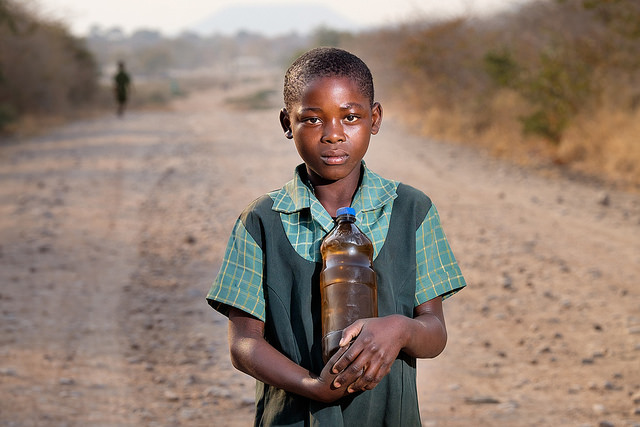
A report by the International Monetary Fund found that in 2011, the percent of the rural population that lived below the poverty line was 73.4 percent. In urban areas, the rate was 44.7 percent.

Water Sanitation and Access to Clean Water

Specifically in regards to water sanitation and drinking water, work has been done by various organizations to improve access to these necessities, and as a result, help rural villages out of poverty.

The Water Governance Facility (WGF), backed by the United Nations Development Programme (UNDP), stated on its website that in 2015, 63 percent of Togo’s urban population had access to drinkable water, while in rural areas only 44 percent had access. The same report found that only 11 percent of Togo’s population benefited from water sanitation facilities.

These statistics were reported as part of a larger program called Governance, Advocacy and Leadership in Water, Sanitation and Hygiene that was implemented by the WGF in conjunction with the UNDP from 2014 to 2017.

The Power of Local Aid Groups

However, assistance has also come from organizations closer to home, which strive to help rural villages out of poverty and address its accompanying effects.

Recently, the Togo charity Christian Charity for People in Distress (CCPD) was awarded the Kyoto World Water Grand Prize for the work it has done to help a village of 290 people improve its water sanitation.

CCPD is based in Kpalimé, Togo and was created in April 2004 as a nonprofit Christian charity. The organization’s mission statement declares that its goal is to help rural villages out of poverty by further developing water access, sanitation and hygiene, as well as improving agricultural development, the environment and education.

On its website, CCPD lists four main objectives it seeks to accomplish through its charity work:

  • Protecting the rights of women and children.
  • Assisting the rural population of Togo in obtaining decent education and healthcare, and providing access to drinking water and sanitation.
  • Helping to economically develop rural areas by working alongside farmers to generate more income.
  • Facilitating food self-sufficiency in rural areas of Togo.

Making a Difference

Since 2006, CCPD’s water, sanitation and hygiene programs have aided more than 6,000 people. These programs usually involve the construction of wells, latrines and ECOSAN toilets, which is a waterless toilet designed to save water in countries that do not have water security. In addition, CCPD has worked to help rural villages out of poverty by providing school supplies to primary and secondary school students, aided in the construction of new schools and improved computer skills in adults and children.

The charity is the second African organization to win the Kyoto World Water Grand Prize, which will not only improve sanitation and water conditions, but will also decrease deaths related to illnesses such as cholera that are caused by poor sanitation.

CCPD has been aiding impoverished, rural areas of Togo since its creation, and does far more than just water and sanitation work. The charity’s efforts in regards to education, agricultural development, business development and environmental protection have all impacted communities in Togo and given them the help they need to transition out of poverty.

– Jennifer Jones

March 1, 2018
https://borgenproject.org/wp-content/uploads/borgen-project-logo.svg 0 0 Borgen Project https://borgenproject.org/wp-content/uploads/borgen-project-logo.svg Borgen Project2018-03-01 07:30:102024-05-29 22:39:35Togo Charity Works to Help Rural Villages Out of Poverty
Global Poverty, Water, Water Quality, Water Sanitation

The Water Crisis and the Top 10 Clean Water Solutions

top 10 clean water solutionsWorldwide, 844 million people do not have access to clean water, meaning that one in nine people are living with water unsafe for human consumption. This is referred to as The Water Crisis.

The Water Crisis surpasses its effect on global health by affecting children, education, economics and women. Every 90 seconds, a child dies from a water-related disease. Children are often tasked with collecting water for their families, taking time away from education opportunities. School attendance increases with increased access to clean water.

Globally, there is a $260 billion deficit each year due to lack of basic water and sanitation. With the provision of clean water, time and effort previously spent collecting water can refocus on other opportunities. Universal access to basic water and sanitation could result in a $32 billion reduction in healthcare costs.

Women are disproportionately affected by The Water Crisis, as they spend an estimated six hours collecting water every day; this time could be spent on education, family life and work.

The water crisis and its detrimental effects can be resolved with the provision of basic water and sanitation; this resolution can be reached with the top 10 clean water solutions.

Top 10 Clean Water Solutions:

  1. Educate: Educate the population to change consumption and lifestyle habits.
  2. Innovate and Conserve: Water sources, such as aquifers and rainwater, are prone to evaporation and unpredictability. The invention of new water conservation techniques will counteract this issue.
  3. Recycle: Recycling wastewater decreases water imports and encourages self-sufficiency in developing countries.
  4. Agriculture and Irrigation: Approximately 70 percent of the world’s fresh water is used for agriculture. Improving agriculture and irrigation practices can appropriately distribute clean water for human consumption.
  5. Water Catchment and Harvesting: Areas without clean water rely on water catchment systems. Efforts to establish water harvesting systems provide independent control of resources.
  6. Infrastructure: Poorly managed infrastructure devastates the economy by wasting resources, increasing costs, diminishing quality of life and facilitating the spread of water-related diseases. Improved infrastructure conserves resources and enhances quality of life.
  7. Water Credit: The Water Credit Initiative utilizes microfinancing to provide affordable loans to those who require additional help in establishing clean water solutions.
  8. Water Equity: Water Equity relies on social impact investing to increase funds for water and sanitization loans.
  9. New Ventures: New Ventures funds research and development of new approaches to The Water Crisis.
  10. Global Engagement: Global Engagement is the foundation for lasting change on local and international levels

Although these are the top 10 clean water solutions, they are not the only solutions to The Water Crisis. Clean water access improves health, education and work opportunities for families across the world.

– Carolyn Gibson

Photo: Flickr

January 17, 2018
https://borgenproject.org/wp-content/uploads/borgen-project-logo.svg 0 0 Borgen Project https://borgenproject.org/wp-content/uploads/borgen-project-logo.svg Borgen Project2018-01-17 01:30:562019-11-11 22:25:12The Water Crisis and the Top 10 Clean Water Solutions
Water Quality, Water Sanitation

Water Quality in Austria Among the Highest in the World

Water Quality in Austria

Water quality is important to any community, as it prevents illness, promotes the economy and ensures that citizens are healthy. Austria is considered one of Europe’s most water-wealthy countries, and the water quality in Austria is excellent. Austria witnesses on average 1,100 mm of precipitation each year. 50 percent of the drinking water in Austria comes from groundwater and the other 50 percent comes from springs.

Austria is ranked number one in the Environmental Performance Index (tied with 21 other countries) for water and sanitation. 100 percent of people in Austria have access to drinking water and sanitation. Drinking water sources are improved, meaning they are protected from outside contamination, in 100 percent of both urban and rural areas.

Despite already having high rankings for water and sanitation, Austria has also implemented efforts to improve its environment and water quality. One of these is The Environmental Impact Assessment Act of 2005, which assesses the effects that planned projects will have on the environment and its inhabitants, both humans and animals. The program has resulted in the water quality of Austrian lakes to rise to commendable levels.

Austria also implemented the EU Water Framework Directive, amending the preexisting Austrian Water Act. Meant to ensure quality water for EU citizens, the directive is meant to set specific environmental goals regarding groundwater and and surface waters, analyze the characteristics of river basins and the effect that human activity has on them and prevent further deterioration of aquatic ecosystems. The goal of these actions is to make access to quality water secure and sustainable, maintain and restore the near-natural state of bodies of water and to prevent contamination of water.

Along with stellar water and sanitation levels, Austrians also enjoy a ranking of eight out of 178 countries for overall Environmental Performance Index with a score of 78.32 out of 100. With its already good conditions and continued commitments to improve them, Austria is a model to the world of how to provide clean water to a country’s citizens.

– Téa Franco

Photo: Flickr

November 5, 2017
https://borgenproject.org/wp-content/uploads/borgen-project-logo.svg 0 0 Kim Thelwell https://borgenproject.org/wp-content/uploads/borgen-project-logo.svg Kim Thelwell2017-11-05 01:30:472024-06-05 23:55:33Water Quality in Austria Among the Highest in the World
Water, Water Sanitation

Nine Facts About Water Quality in Papua New Guinea

10 Facts About Water Quality
As more than 80 percent of the population lives in remote areas with little to no modern facilities, Papua New Guinea struggles with poor water quality and a lack of awareness about basic human health necessities. With very little access to clean water, sanitation is poor and disease is rampant.

As access to safe water and sanitation are vital to the basic health needs, the population in this area is at risk. Poor hygiene leads to poor health and illnesses such as cholera and diarrhea, which kill people every day.

Here are nine facts about water quality in Papua New Guinea:

  1. Papua New Guinea has the poorest level of access to clean water in the world, with more than 60 percent of the population living without access to clean water.
  2. Since 1990, access to clean water has only gone up by six percent and improved sanitation coverage actually dropped by one percent.
  3. Of the 15 developing Pacific Island nations, Papua New Guinea has the lowest water and sanitation access indicators.
  4. The average cost of 50 liters of water (the minimum amount of water necessary for human sanitation and well-being) in Papua New Guinea’s capital is £1.84 per day, which is half the average daily salary (£3.61). The average cost of 50 liters of water in the U.K. is £0.07 per day.
  5. Approximately 4.8 million people in Papua New Guinea do not have access to clean water and 6.2 million people do not have a basic toilet.
  6. More than 200 children in Papua New Guinea die of diarrhea each year due to lack of sanitation and clean water.
  7. Because 85 percent of the population lives in rural areas, education about sanitation and the importance of clean water is scarce.
  8. According to Oxfam New Zealand, contaminated water in Papua New Guinea kills 368 people every six weeks.
  9. Papua New Guinea launched the National Water, Sanitation and Hygiene (WaSH) policy in 2015.

These nine facts about water quality in New Guinea reveal a serious issue that extends beyond just access to water. With little to no progress being made toward access to water and sanitation since 1990, Papua New Guinea must look to its foreign donors and its domestic leaders to address this issue.

– Tucker Hallowell

Photo: Flickr

September 17, 2017
https://borgenproject.org/wp-content/uploads/borgen-project-logo.svg 0 0 Borgen Project https://borgenproject.org/wp-content/uploads/borgen-project-logo.svg Borgen Project2017-09-17 04:30:572020-06-29 16:58:51Nine Facts About Water Quality in Papua New Guinea
Nonprofit Organizations and NGOs, Water Sanitation

Matt Damon’s Water.org Leads the Fight Against the Global Water Crisis

Matt Damon and Water.org
Over the course of two decades, Matt Damon has built quite the resume, with acting achievements and accolades that aspiring actors can only dream of receiving. Damon entered the Hollywood spotlight after his break through film “Good Will Hunting,” which he starred in and co-wrote with close friend Ben Affleck, eventually winning the Oscar for best writing in 1998. Following his historic debut, Damon has gone on to star in highly-praised films such as “Saving Private Ryan,” “The Departed” and the Bourne trilogy.

Damon has since devoted his time to provide underdeveloped countries in Africa, Latin America and South Asia with access to clean water through his foundation, Water.org.

According to Water.org, 663 million people lack access to safe drinking water, 2.4 billion lack access to improved sanitation, and one million are killed by tainted water or other poor sanitation-related diseases each year. One in three people lacks access to a toilet, and every 90 seconds, a child dies from a water-related disease–including diarrhea, the third leading cause of death among children.

Damon decided he could no longer ignore the suffering of millions of people on a daily basis, considering that lack of sanitary water is preventable. Damon addressed his discontent with the ongoing water crisis to CNN, saying, “You know, imagine if we cure cancer tomorrow and in 100 years, three-and-a-half million people a year are still dying of it. I mean it’s just unconscionable.”

Using his celebrity platform, Damon created a nonprofit that provides affordable access to safe water and proper lavatory facilities through microfinance loans. Damon and White met at the Clinton Global Initiative and discovered that both had similar organizations that focused on clean and safe water (Damon with H20 Africa Foundation, and White with Water Partners).

Damon and White agreed to merge their charities, and in 2009, Water.org was born. Water.org has since provided more than six million people with access to safe and sanitary water while implementing programs in 14 different countries across the globe, including Ethiopia, Cambodia and Brazil.

One of the main goals of Water.org is to give women and children a life where they do not have to work hours on end to obtain water. Water.org suggests that women suffer the most from the water crisis, due to the fact that women and children spend close to six hours a day collecting water. By providing access to clean water, Matt Damon’s Water.org believes women can use the extra time saved to pursue work and school.

One of the countries most impacted by the efforts of Matt Damon’s Water.org has been Ethiopia, where 43 million people don’t have access to safe water and 71 million lack access to improved sanitation. Through the contributions made by Water.org, 149,000 Ethiopians have been reached with improved water, sanitation and hygiene. As recently as 2015, Water.org launched WaterCredit programs, which the organization expects to bring 40,000 people access to safe water over five years.

Matt Damon’s Water.org has not slowed down its efforts. In the beginning of 2017, Water.org partnered with Stella Artois to further their pursuit of clean and sanitized water. If you buy a pint or bottle in various bars in the U.K and the U.S., Artois will personally fund a month of clean water for someone in the developing world.

Damon told CBS, “We’re going to try reach over the next four years 3.5 million more people with clean water solutions through Stella.” Through programs such as WaterCredits and the partnership with Stella Artois, Matt Damon and Water.org will keep fighting to provide accessible clean and sanitized water for all.

– Patrick Greeley

Photo: Flickr

August 27, 2017
https://borgenproject.org/wp-content/uploads/borgen-project-logo.svg 0 0 Borgen Project https://borgenproject.org/wp-content/uploads/borgen-project-logo.svg Borgen Project2017-08-27 07:30:062017-08-26 16:10:17Matt Damon’s Water.org Leads the Fight Against the Global Water Crisis
Global Poverty, Water Sanitation

Initiatives on Water Quality in Portugal

Water Quality in Portugal
With the passage of the European Drinking Water Directive 98/83/CE by the European Commission (E.C.) in 1998, Portugal has aimed to make 99% of its drinking water safe for human consumption. This has been done in order to protect human health from the adverse effects of water contamination as originally envisioned by the Directive.

It may seem like an ambitious plan, but water quality in Portugal has seen steady improvements. Prior to the directive, drinking water regulations in Portugal were controlled with laws that also governed the usage of both urban water and industrial water.

Today, a so-called “integrated risk analysis” approach is utilized to control the levels of pesticide in tap water, taking into account variables such as agricultural practices and type of water source that affect the presence of pesticides in drinking water.

Non-compliance with drinking water quality in Portugal is corrected by requiring the drinking water suppliers to not only register the causes for the possible health risks but also incorporate remedial actions with verification analyses.

This way, the Water and Waste Services Regulation Authority, known as ERSAR, and pertinent health authorities can apparently evaluate the water with greater immediacy. ERSAR was created in 1990 as a national regulatory agency to monitor water efficiency and ensure compliance.

However, this aim to make drinking water completely safe has not been dutifully followed in the past. Portugal initially failed to follow some of the parameters of the Directive in managing urban wastewater in 2007, forcing the E.C. to refer Portugal to the European Court of Justice (ECJ).

As an example, the E.C. noted that although Portugal had taken some steps to improve water treatment plants, almost 50% of water supply zones did not comply with the limits on total coliforms, while 20% of the zones did not comply with the fecal coliforms parameter.

Portugal’s water sources mainly include the rivers of Tagus, Douro, Guadiana and Minho. More than half of these water sources have significant levels of pollution.

In 2015, the director of ERSAR’s water quality department referred to the annual Quality Control of Water for Human Consumption report, stating that “we continue to be able to drink tap water in Portugal without worry and, despite already being close to perfection, the safe water percentage continues to rise, from 98.2% in 2013 to 98.4% in 2014.”

In the 1990s, Portugal could only guarantee about 50% of its water to be safe for human consumption. Even that came at a great disparity between rural and urban areas.

According to a report by European Environmental Agency in 2013, Portugal was one of the eight European countries listed as having an “excellent” water quality with 87% of the country’s bathing waters meeting environmental standards.

Luís Simas, the head of Drinking Water Quality Department at ERSAR summarized in a Regulatory Model Report that ensuring good water quality in Portugal in the future can be accomplished through “the national implementation of the water safety planning approach and the application of a certification scheme for all products in contact with drinking water.”

– Mohammed Khalid

Photo: Flickr

August 10, 2017
https://borgenproject.org/wp-content/uploads/borgen-project-logo.svg 0 0 Kim Thelwell https://borgenproject.org/wp-content/uploads/borgen-project-logo.svg Kim Thelwell2017-08-10 07:30:042024-05-28 00:15:17Initiatives on Water Quality in Portugal
Water Quality, Water Sanitation

Water Quality In Belgium Key to Prosperity

Water Quality In Belgium
A key indicator of the economic prosperity of a nation is the water quality. In first world countries such as the U.S., Canada and most of Western Europe, citizens can drink tap water without any concerns about getting a water-borne illness. One must contrast this to many developing nations where drinking water from their water systems without purification first could potentially be fatal.

Originally a part of the Netherlands, Belgium gained its independence in 1830. Currently, Belgium is a federal constitutional monarchy, which also utilizes a parliamentary system to deal with the day-to-day legislation of running the country. Due to its parliamentary system allowing citizens to have input in what the government does, the water quality in Belgium is very high compared to even first world countries such as the U.S.

A majority of the 589 municipalities in Belgium have programs in place run by their local governance responsible for maintaining the water supply and water quality. Also, Belgium has more than 62 water supply utilities throughout the country.

On top of this, Belgium also has 100 small municipalities that are privately owned that help improve the water supply. This combination of private and public water sanitation allows for the free market to help lower prices for clean water without forgoing having a governmental backup in case the free market fails. All three of these programs is one reason for the high water quality in Belgium.

Although the water quality in Belgium is high enough for its citizens to drink tap water without any ill health effects, the wastewater treatment in the country has lagged behind. In fact, wastewater sanitation did not start to get addressed within the country until 2007 after the European Court of Justice forced the Belgian government to make changes in 2004.

Wallonia, a region of Belgium, supplies 55% of the national need for water while it only contains 37% of the countries population. This fact becomes an issue due to the fact that Flanders and Brussels both rely on water from Wallonia. Flanders and Brussels rely on receiving clean water from Wallonia, 40%, and 98%, respectively.

Although there are present issues with wastewater sanitation in the country, the Belgian government has made strides in the past decade in improving its water supply after the court ruling in 2004.

The high water quality in Belgium is one reason why living in the nation is so desirable. One other reason is that the Belgian sanitation departments in the Belgian government recognize the importance of the fundamental right to water.

To help all citizens be able to achieve access to clean water, the Walloon and Brussels regions have set up a program to provide economic support for individuals who have trouble obtaining drinking water. This fund is called The Social Funds for Water, and through this organization, citizens in those regions of Belgium have had their access to water increase dramatically. In addition to this program, every citizen in Flanders has the right to a supply of 15 cubic meters of water per person per year in the country.

The high water quality in Belgium is something the international community should applaud. Every citizen has a right to access clean water, and both the private and public sectors strive to make sure this can happen. Although the country has issues with wastewater sanitation, great strides have been made to improve the water sanitation systems in the country better since the court ruling in 2004. The water quality in Belgium is something all nations strive to achieve, not only due to its quality but because every citizen has the right to drink clean water.

– Nick Beauchamp

Photo: Flickr

August 10, 2017
https://borgenproject.org/wp-content/uploads/borgen-project-logo.svg 0 0 Borgen Project https://borgenproject.org/wp-content/uploads/borgen-project-logo.svg Borgen Project2017-08-10 01:30:532024-06-05 04:52:26Water Quality In Belgium Key to Prosperity
Page 15 of 16«‹13141516›

Get Smarter

  • Global Poverty 101
  • Global Poverty… The Good News
  • Global Poverty & U.S. Jobs
  • Global Poverty and National Security
  • Innovative Solutions to Poverty
  • Global Poverty & Aid FAQ’s
Search Search

Take Action

  • Call Congress
  • Email Congress
  • Donate
  • 30 Ways to Help
  • Volunteer Ops
  • Internships
  • Courses & Certificates
  • The Podcast
Borgen Project

“The Borgen Project is an incredible nonprofit organization that is addressing poverty and hunger and working towards ending them.”

-The Huffington Post

Inside The Borgen Project

  • Contact
  • About
  • Financials
  • President
  • Board of Directors
  • Board of Advisors

International Links

  • UK Email Parliament
  • UK Donate
  • Canada Email Parliament

Get Smarter

  • Global Poverty 101
  • Global Poverty… The Good News
  • Global Poverty & U.S. Jobs
  • Global Poverty and National Security
  • Innovative Solutions to Poverty
  • Global Poverty & Aid FAQ’s

Ways to Help

  • Call Congress
  • Email Congress
  • Donate
  • 30 Ways to Help
  • Volunteer Ops
  • Internships
  • Courses & Certificates
  • The Podcast
Scroll to top Scroll to top Scroll to top