Five Things to Know About the Bosnian War
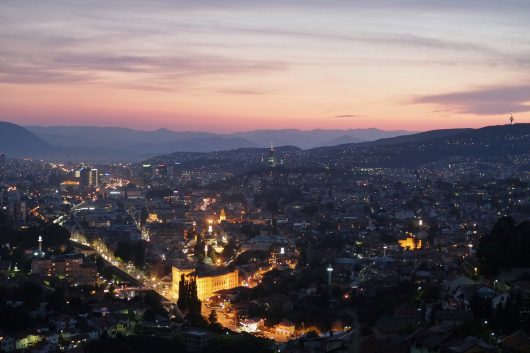
Between the years of 1991 and 1992, the country of Yugoslavia suffered mass chaos as nationalism in six different regions of the country began to surge. This was due in large part to growing perceptions of ethnic distinctions and a faltering economy. This time gave rise to intense violence and ethnic cleansing throughout the region, resulting in the Bosnian War. Here are five things to know about the Bosnian War:
-
- On March 3, 1992, Bosnia (now Bosnia-Herzegovina) declared its independence from Yugoslavia, following in the footsteps of neighboring Croatia, Slovenia and Macedonia from the previous year. The official beginning of the Bosnian War is typically marked as April 6, 1992, when Bosnian Serb forces invaded the capital of Sarajevo.
- Three primary ethnic groups were embroiled in the conflict: the Bosniaks, Bosnian Muslims who comprised more than 44% of the population; the Bosnian Serbs, who predominately practiced Eastern Orthodox Christianity (31% of the population) and Bosnian Croats, a Catholic minority who comprised 17% of Bosnia’s populace at the time.
- Reelected to the Serbian presidency in 1992, Slobodan Milošević encouraged rising nationalist sentiments within the region and backed the attacks on Sarajevo, as well as the siege on Srebrenica on July 11, 1995. Serbian forces invaded the town, which had previously been designated a safe haven by the U.N., and separated the Muslim Bosniaks from the rest of the population. The women and girls — many of them raped and sexually assaulted — were bussed to nearby villages, while the remaining 8,000 Muslims were murdered and left in mass graves.
- By the end of 1993, Bosnian Serbs controlled 70% of the country, and most Bosnian Croats had fled. The term “ethnic cleansing” arose, a painful euphemism for the thousands that had been expelled, tortured, raped and murdered at the hands of Serbian forces. Many were forced into concentration camps, while vestiges of Bosniak culture, including places of worship and sites of cultural importance, were destroyed.
- In May 1993, the U.N. created the first war crimes tribunal since the Nuremberg Trials in 1945-1946, which indicted Nazi officials for crimes against humanity. The International Criminal Tribunal for the Former Yugoslavia (ICTY) charged more than 160 individuals for their participation in the violence, including Slobodan Milošević, who was tried and convicted in 2002 of war crimes, crimes against humanity and genocide. He was found dead in his prison cell in The Hague in 2006 following a heart attack.
From 1992 to 1995, the Bosnian War claimed the lives of roughly 100,000 people, 80% of whom were Bosniak — the worst act of genocide since the Holocaust. To date, almost 120,000 of the original 2.2 million people displaced by the conflict still live in bleak conditions in refugee centers far from their homes.
– Emily Marshall
Photo: Flickr
