10 Disturbing Facts About the Somali Civil War
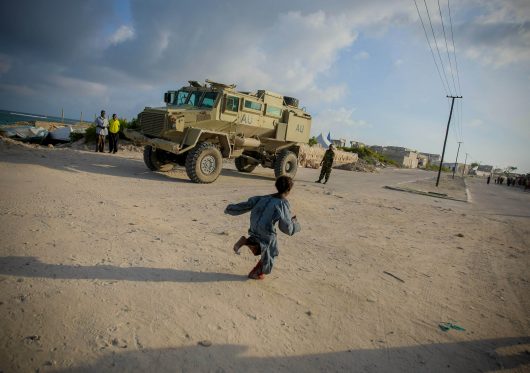 The Federal Republic of Somalia, located on the eastern horn of the African continent, has had a complicated and tumultuous past rooted in extensive European colonialization. In the last few decades, the people of Somalia have endured extended periods of upheaval, uncertainty, and violence, as well as unprecedented political instability. Here are 10 things to know about the Somali civil war.
- In 1950, the U.N. established a protectorate state in the southern region of the country, known then as Italian Somaliland under the Italian government’s supervision. Six years later, the fledgling country was granted autonomy and renamed Somalia, followed by its first democratic elections.
- In July 1960, the northern region of the country, known as British Somaliland, was granted independence and merged with Somalia in the south the create the United Republic of Somalia. With a governmental framework in place and leaders in position, Somalis ratified a constitution the following July.
- On 15 October 1969, Somali President Abdirashid Ali Shermarke was assassinated by a member of his own presidential guard. Major General and Commander of the Army Mohamed Siad Barre utilized this coup d’état to take control of the Somali government and declared it a socialist state.
- After 22 years in power, Barre was forced to flee when warring clan leaders embarked on a bloody campaign to overtake the country. Early in 1991, Ali Mahdi Muhammad overtook the palace in the capital of Mogadishu, declaring himself the new president of the republic and establishing control of southern Somalia. Splitting the country even further, rival clan leader Mohamed Farah Aideed of the Somali National Movement took control of the northern region, formerly British Somaliland, and declared it the Independent Somali Republic. This shift in power marked the beginning of the Somali civil war.
- As the Republic of Somalia and the Somali Republic continued to clash, the worst drought to hit Africa in the 20th century descended upon the region, causing a famine that took the lives of almost 300,000 people. Warlords exacerbated the conflict by using food as a weapon against those who opposed them.
- In response to this crisis, the U.N. Security Council approved Operation Restore Hope, part of the U.S.-led United Task Force (UNITAF), which sought to protect humanitarian efforts and food supplies from warlords in the southern portion of the embattled country. Between late 1992 and early 1993, it is estimated that 100 thousand people were saved as a result of Operation Restore Hope.
- In early October 1993, the Battle of Mogadishu brought the Somali civil war into the limelight when 18 U.S. Army Rangers and hundreds of Somali civilians were killed and two U.S. Black Hawk helicopters were shot down above the capital.
- As the violent conflict raged on, conditions within the country deteriorated. In 2001, U.N. peacekeeping missions pulled all staff from the country, unable to guarantee their safety amid threats of kidnapping and violence. Three years later, Somalia established a transitional government for the fourteenth time since 1991, although deep divisions among its members remained. Civilians continued to suffer as food shipments intended for aid were hijacked.
- Conflict continued in 2006 when Ethiopian troops entered to oppose the institution of an Islamic state, creating a massive refugee crisis and the emergence of Al-Qaida and Al-Shabaab in the country. Somali pirates regularly patrolled the coast, capturing hostages and demanding ransoms for shipping vessels. By 2008, 3.5 million Somalis were suffering from the results of the famine wrought by droughts and compounded with ongoing violence.
- Humanitarian concerns persist in Somalia as the country finds itself at the mercy of yet another drought. Up to one million Somalis face hunger as a result, and a total of 4.7 million people, 40 percent of the population, are in need of humanitarian aid.
Somalia continues to work through its tumultuous past toward a brighter future, but scars of the Somali civil war remain. However, programs such as the United Nations Assistance Mission in Somalia (UNSOM) continue to push forward and are dedicated to the idea of a peaceful and stable country.
– Emily Marshall
Photo: Flickr
