Humanitarian Aid and Peace Talks in Sudan
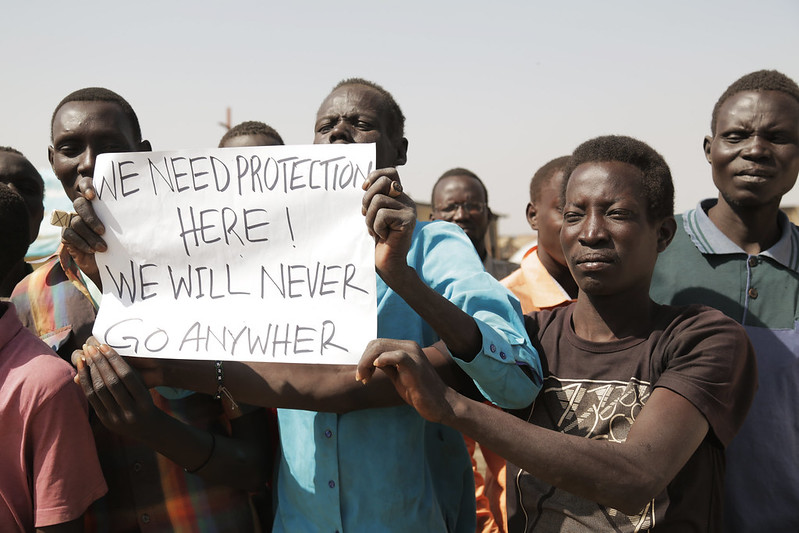 Peace talks aimed at ending the prolonged civil war in Sudan concluded without a ceasefire, but negotiators achieved a significant breakthrough by securing humanitarian aid routes, offering hope to millions of civilians in desperate need. Mediators from the United States (U.S.), Saudi Arabia and Switzerland, along with other international partners, gathered in Geneva to discuss ways to alleviate the suffering caused by the 16-month war between the Sudanese Armed Forces (SAF) and the paramilitary Rapid Support Forces (RSF).
Aid Routes Open Amid Crisis
While a ceasefire remains elusive, the Sudan peace talks have successfully opened two major humanitarian corridors: the Adré border crossing with Chad, facilitating aid into Darfur and Dabbah Road, connecting Port Sudan to regions experiencing severe food shortages. “Aid trucks are on the road to provide famine relief in Zamzam Camp and other parts of Darfur,” said negotiators. “These routes must remain open and safe so we can surge aid into Darfur and begin to turn the tide against famine.” The World Food Programme (WFP) estimates that more than 25 million people, more than half of Sudan’s population, urgently need assistance. The newly opened routes are expected to deliver much-needed relief to areas that have been difficult to reach due to the conflict.
A Nation At War
The war in Sudan, which started in April 2023, stems from a power struggle between the SAF, led by General Abdel Fattah al-Burhan and the RSF, commanded by General Mohamed Hamdan Dagalo, known as Hemedti. This conflict has roots in the legacy of former dictator Omar al-Bashir, who established the RSF as a counterinsurgency force to suppress rebellions, particularly in Darfur. After al-Bashir was ousted in 2019, efforts to establish a democratic government faltered, ultimately leading to violent clashes between these rival military factions. Since the conflict began, the humanitarian toll has been devastating, with the United Nations (U.N.) estimating nearly 20,000 fatalities. Approximately 8 million people have been displaced within Sudan, while another 2 million have fled to neighboring countries, all facing hunger and lacking access to medical care.
Humanitarian Progress Despite Setbacks
International mediators view the agreement on aid access as a critical step forward. The RSF has pledged to ensure safe passage for humanitarian convoys, previously hindered by both factions. The reopening of the Adré and Dabbah routes should alleviate suffering in famine-stricken regions. “The humanitarian crisis in Sudan is so severe that we could do four of these [negotiation rounds] and still be barely scratching the surface of what Sudanese people deserve,” stated U.S. Special Envoy Tom Perriello. However, the absence of the Sudanese Armed Forces (SAF) from the peace talks curtailed the potential for a broader peace agreement. General Burhan, from Port Sudan, criticized the negotiations, claiming they favored the RSF.
Aid as a Lifeline
For many in Sudan, the newly opened aid routes are a lifeline. In Darfur, where ethnic violence has surged, the reopening of the Adré crossing is expected to help thousands displaced by fighting. Hawa Zakariya, a refugee who fled to Chad with her two children, described the dire conditions: “I don’t know if my family is alive or dead.” Her child has contracted malaria and food supplies in their camp are running low. International aid organizations, including the WFP, are preparing to ramp up efforts with the new access routes. The WFP has classified Sudan as a Level 3 emergency, its most severe designation, reflecting the magnitude of the crisis. Aid groups are urging both the Sudanese Armed Forces (SAF) and the Rapid Support Forces (RSF) to permit unhindered delivery of supplies nationwide.
International Pressure
While the Sudan peace talks failed to secure a ceasefire, there is hope that the humanitarian progress achieved could lead to broader negotiations. Perriello noted, “We hope that this will be a source of momentum for much bigger steps down the road,” although he acknowledged the road to peace remains challenging. Currently, international efforts are focused on ensuring aid reaches those in desperate need. Given Sudan’s severe humanitarian crisis, one of the worst of the 21st century, sustained international pressure and support are crucial for the nation’s recovery.
– Georgia O’Keeffe
Georgia is based in London, UK and focuses on Technology and Politics for The Borgen Project.
Photo: Flickr
