• Link to X
  • Link to Facebook
  • Link to Instagram
  • Link to TikTok
  • Link to Youtube
  • About
    • About Us
      • President
      • Board of Directors
      • Board of Advisors
      • Financials
      • Our Methodology
      • Success Tracker
      • Contact
  • Act Now
    • 30 Ways to Help
      • Email Congress
      • Call Congress
      • Volunteer
      • Courses & Certificates
      • Be a Donor
    • Internships
      • In-Office Internships
      • Remote Internships
    • Legislation
      • Politics 101
  • The Blog
  • The Podcast
  • Magazine
  • Donate
  • Click to open the search input field Click to open the search input field Search
  • Menu Menu

Archive for category: Nonprofit Organizations and NGOs

Information and stories about nonprofit organizations and NGOs

Global Poverty, Nonprofit Organizations and NGOs

The Impact of Mission Work in African Communities

Impact of Mission Work in African CommunitiesFor many years, churches and organizations alike have conducted mission trips to various countries. Africa is home to many of those countries that host the majority of mission trips. These trips are ways for Christians to serve the world around them by building the community up in places most in need. Mission work in poverty-ridden African communities mainly focuses on helping provide access to clean water, health care and education. Missionaries have organized mission trips for years, with hundreds of people using their time and resources to help underdeveloped communities with humanitarian aid and the gospel. 

Mission Trips

There are many aspects that go into a mission trip to Africa. The Christian faith-based mission trips impact the community by combining spiritual outreach and practical aid. Using humanitarian work with evangelism, these organizations work to make a difference. Evangelism is sharing the gospel message with those who have not heard it before or may not fully understand it. Organizations primarily visit the most underdeveloped communities in Africa. Many African areas have limited access to basic needs. Safe drinking water, electricity and quality health care are only some of the needs that these communities struggle to meet.

Mission trips involve people coming together to help build things for those in need and distribute things like food and water. These are acts of service that not only help in practical ways, but they are also a way of showing demonstration of God’s love. Many organizations participate in constructing homes, schools, food drives and many other ways to build and replenish the community.

Mission trips are multifaceted and aim to extend a hand through community service and evangelism. There are many ways to spread the gospel through mission trips, from one-on-one conversations to larger-scale communion. Helping physically provide for these communities is an important aspect of these trips, but providing faith and hope is a need that not many realize.

African Missions

Mission work in poverty-ridden African communities mostly emphasizes the connection between faith-based efforts and humanitarian development. Daingerfield Church of Christ is one of the many churches to have members go on mission trips to Africa. Founded in 1922, the Daingerfield church serves to dedicate Christ through worship, fellowship and services to others. The church partners with Pine Tree Church of Christ to conduct these mission trips. The members pay their own way and fundraise for the trips. One of their long-time members, Chuck Lee, who has gone on 17 African mission trips, spoke with the Borgen Project. “We plant churches, baptize and then disciple them in partnership with our African team,” Lee said. “We go back to encourage, strengthen and help appoint leaders.”

According to Lee, they have built more than a thousand churches and a core team of fewer than ten people has baptized tens of thousands. “10 years ago, the organization and its members spent less than $200 thousand a year in Ghana,” said Lee. “Within the last two years, it has increased to more than $1 million a year.” With this dramatic rise in funding, the amount of trips, resources and effort into preaching and aiding has made a large difference for the communities in Ghana and Togo. According to Lee, these mission trips have led to 600 churches built in Ghana and nearly 500 in Togo. The church group was able to create several schools, orphanages, a hospital and acquire a water drilling rig to help with a better water supply. 

Long-Term Impacts

Mission trips in Africa and several other countries have the potential to create a long-term impact. Churches and water systems, like the ones the church of Christ built, have been sustainable for years because of the leadership within the community. The mission members come to the community with the tools and help build, while the community residents are the ones who really keep things running. 

The impact of mission work in African communities can spark long-term change and create viable futures. The true success lies in the continuation of trips and relationships. Many mission sites are places the organization has previously visited. While mission work in poverty-ridden African communities brings short-term relief, long-term sustainability requires empowering local relationships. The repetition builds a foundation for relationships within the community and creates a reasonable outlook for the future.

Looking Ahead

Building consistent partnerships within underprivileged communities helps create a foundation for long-term success. Mission work aims to rebuild communities while teaching self-sufficiency and cooperation. Long-term relationships allow projects and missions to be monitored and adjusted where improvement is needed. Over time, these partnerships build sustainability that supports lasting progress in areas such as education, health care and finances. The impact of mission work in African communities can spark long-term change and create viable futures.

– Emily Herlehy

Emily is based in Denton, TX, USA and focuses on Good News for The Borgen Project.

Photo: Flickr

September 12, 2025
https://borgenproject.org/wp-content/uploads/borgen-project-logo.svg 0 0 Precious Sheidu https://borgenproject.org/wp-content/uploads/borgen-project-logo.svg Precious Sheidu2025-09-12 07:30:202025-09-12 10:35:25The Impact of Mission Work in African Communities
Global Poverty, Nonprofit Organizations and NGOs

Fighting Poverty With Vibe Teaming: Five Tools, One Mission

Vibe TeamingThe International Poverty Line (IPL) gauges the number of people living in extreme poverty worldwide, on less than $3 a day. Despite constant efforts in recent decades by the United Nations (U.N.) and numerous countries to diminish extreme poverty, around 808 million people—roughly 10% of the world population—still live below the IPL.

Between 1990 and 2015, extreme poverty rates dropped from 43.6% to 13.3% worldwide. However, progress has become relatively stagnant in the past 10 years as extreme poverty continues to ravage low-and low-middle-income countries globally. Poverty-fighting organizations and governments have focused on innovative solutions to build on the progress seen in past decades.

Vibe Teaming

With the help of Artificial Intelligence, the Brookings Institution has developed a comprehensive blueprint for eradicating extreme poverty. According to the Institution, the “Vibe teaming” model applies proven poverty reduction strategies within a modern, scalable framework that can be used worldwide to fight extreme poverty.

The Vibe teaming blueprint features five poverty reduction programs that have already improved living standards where implemented. These include: global scale-ups of unconditional digital transfers, resilient Rural Opportunity Zones (ROZs), community-delivered employment guarantees, nutrition and vaccine top-ups in fragile settings and enterprise enablement grants.

Below is a deep dive into a few highlighted strategies and how they will be implemented and funded according to the Vibe-Teaming framework.

Scale-Ups of Unconditional Digital Transfers

Unconditional digital cash transfers are the principal aspect of the Vibe teaming blueprint. It accounts for 40% of the projected $300-400 billion investment to fund the five strategies. However, this is for good reason; offering unconditional cash transfers has caused substantial improvements in the standard of living across multiple countries.

For example, a study in Kenya illustrated that one-time $1,000 cash transfers to families reduced infant deaths by 48%. The transfers allowed Kenyan women to afford prenatal care and avoid overworking themselves late in pregnancy. It also improved the health of both infants and their mothers.

ROZs

ROZs are development projects that provide investment and aid to impoverished rural areas through government implementation. ROZ accounts for 20% of the total Vibe teaming blueprint investment estimation. These would be funded primarily through Multilateral Development Banks and the International Fund for Agricultural Development.

In early 1984, a ROZ project began in Niger’s Keita region, which focused on expanding the amount of arable land and strengthening infrastructure. By 2003, Keita saw 34,483 hectares of agricultural land reclamation, 18 million trees planted, 708 wells excavated and 28,000 square meters of rural buildings erected. These improvements allowed for the production of more cash crops and product diversification.

Community-Delivered Employment Guarantees

Community-delivered employment guarantees focus on implementing locally administered public works projects. This creates a demand for unskilled manual laborers, which can help to lower unemployment rates in impoverished areas. Employment guarantees represent 15% of the overall investment under the Vibe teaming framework.

In 2005, the Government of India passed the Mahatma Gandhi National Rural Employment Guarantee Act (MGNREGA). MGNREGA guaranteed work for adult members of rural households who could perform manual labor. By 2025, MGNREGA had surpassed its goal of providing 10 million work days to rural laborers, delivering 11.8 million days instead.

Despite stalled progress in recent years, innovative and scalable strategies like those outlined in the Vibe teaming blueprint offer renewed hope in the global fight against extreme poverty. By combining proven interventions—such as unconditional digital cash transfers, ROZs and community-delivered employment guarantees—this framework presents a practical roadmap to uplift millions.

– Jordan Venell

Jordan is based in Edina, MN, USA and focuses on Good News and Technology for The Borgen Project.

Photo: Flickr

September 12, 2025
https://borgenproject.org/wp-content/uploads/borgen-project-logo.svg 0 0 Lynsey 2 https://borgenproject.org/wp-content/uploads/borgen-project-logo.svg Lynsey 22025-09-12 01:30:592025-09-11 10:41:08Fighting Poverty With Vibe Teaming: Five Tools, One Mission
Global Poverty, Innovations, Nonprofit Organizations and NGOs

5 Oxfam Innovations Fighting Poverty

Oxfam is a global organization focused on ending poverty and inequality. It provides emergency relief during crises, like natural disasters or conflicts, while also working on long-term solutions such as fair wages, gender equality and climate action. For more than 80 years, Oxfam has partnered with communities around the world to promote dignity and opportunity, while also pressing governments, corporations and financial institutions to create fairer systems. Here are 5 Oxfam innovations fighting poverty:

SuperAdobe

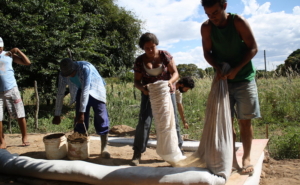
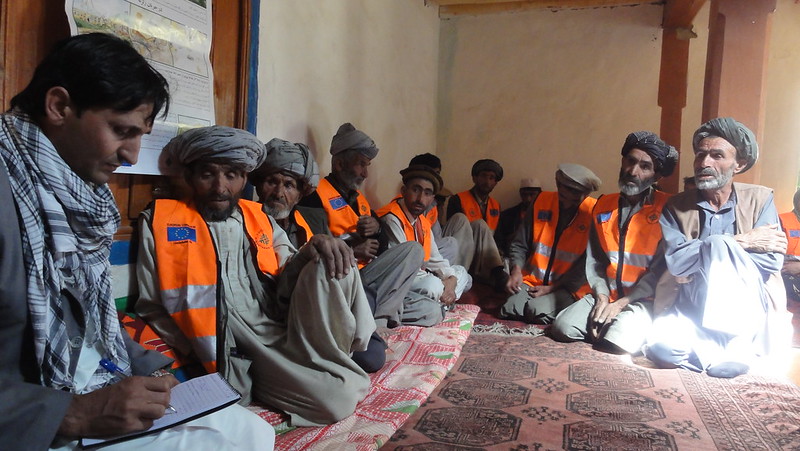
Oxfam introduced a new type of shelter, called SuperAdobe, in Jordan’s Za’atari refugee camp. Built from basic, low-cost resources like sand-filled bags and barbed wire, these structures provide a practical alternative to the metal caravans many refugees currently live in. SuperAdobe homes are built to stay cool during scorching summers and retain heat through the cold winter months.

The construction method behind SuperAdobe relies on layering sand-filled bags, stacked in either circular or elongated forms. Between each row, barbed wire is laid to strengthen the walls and hold them in place. To improve durability, materials like lime, cement or asphalt can be blended into the soil. The technique mirrors the way clay coils are shaped together in pottery; only here is it used on a larger scale to form entire buildings.

This versatile system can be adapted to create rounded designs such as domes, arches and vaults, as well as traditional rectangular structures. Beyond housing, the approach is also suited for practical applications, including silos, water storage systems, erosion control and even infrastructure projects like roads or bridges.

BlocRice

In Cambodia, an Oxfam initiative called BlocRice is changing how rice farmers engage with global markets. The program is designed to strengthen farmers’ ability to advocate for fair compensation by giving them a stronger voice in price negotiations. At its core, the project introduces digital contracts that directly link members of farming cooperatives with international exporters and European buyers.

By formalizing these agreements through technology, the system not only ensures transparency but also provides farmers with tools that enhance both their economic security and their social standing. Through the BlocRice system, buyers agree to purchase rice at the going market rate with an additional premium, giving farmers both a steady outlet for their harvest and greater financial predictability.

The program also establishes a shared digital platform where all parties involved can track agreements in real time. For some farmers, the additional premium translated into close to $100 in extra income.

TWB Glossary App

In Bangladesh’s Cox’s Bazar, where close to a million Rohingya refugees have sought safety, aid workers struggled to overcome language barriers. Although the Rohingya language shares similarities with local dialects, the differences often made communication difficult, especially when it comes to ensuring refugees could voice their own concerns.

To bridge the gap, a multilingual Glossary App was developed through a collaboration between Oxfam, Translators Without Borders and UNICEF. Covering five languages spoken in the camps, Bangla, Burmese, Chittagonian, English and Rohingya, the tool is now helping humanitarian organizations improve outreach and better respond to community needs.

Hydroponics

Survival in the Algerian Sahara is a daily battle against extreme conditions; temperatures soar past 122 degrees, sandstorms sweep the land and farming is virtually impossible. Sahrawi refugees have endured life in five camps near Tindouf, where one in four struggles with chronic malnutrition.

While international food aid provides some relief, it cannot solve the crisis alone. Oxfam innovations in fighting poverty created a more sustainable option through a hydroponics initiative. By cultivating plants without soil, the program supplies feed for the goats that many families rely on for meat, milk and income. Each greenhouse produces around 132 pounds of fresh feed daily, enough to sustain 20 goats, marking a promising step toward greater food security in the camps.

Led by Sahrawi refugee and Oxfam engineer Taleb Brahim, the initiative turns simple structures, like mud-built domes or repurposed shipping containers, into small-scale greenhouses for livestock feed. Inside, rows of shelves hold shallow trays where barley seeds are spread and kept moist until they sprout. They are then transferred into larger tubs and irrigated daily through a solar-powered pumping system. This low-cost, sustainable method transforms barren spaces into reliable sources of fresh feed.

Sanitation

Oxfam faced a pressing challenge in Bangladesh: how to manage human waste when a sudden surge of people in temporary shelters overwhelmed existing latrines. Rohingya camps experienced outbreaks of severe diarrhea, alongside respiratory illnesses and skin conditions such as scabies, all stemming from inadequate hygiene and sanitation.

To address the growing problem, the Oxfam team established a large-scale centralized sanitation facility capable of safely handling the waste of up to 150,000 individuals. The system operates with zero environmental harm, marking the first successful implementation of such a large-scale waste management solution in a refugee camp.

Final Remarks

Oxfam innovations are fighting poverty. From sustainable housing, effective communication and the cultivation of small-scale greenhouses, Oxfam is empowering communities to build a better future. With continued support and innovation, a more equitable world is within reach.

– Gabriella Luneau

Gabriella is based in Raleigh, NC, USA and focuses on Good News and Global Health for The Borgen Project.

Photo: Flickr
September 11, 2025
https://borgenproject.org/wp-content/uploads/borgen-project-logo.svg 0 0 Lynsey 2 https://borgenproject.org/wp-content/uploads/borgen-project-logo.svg Lynsey 22025-09-11 07:30:442025-09-11 01:21:535 Oxfam Innovations Fighting Poverty
Advocacy, Global Poverty, Nonprofit Organizations and NGOs

How Partners of the Americas is Fighting Global Poverty

How Partners of the Americas is Fighting Global Poverty Partners of the Americas is bridging gaps in opportunity and access across borders and cultures. This organization has dedicated decades to empowering communities in countries like Bolivia and Mexico through education, economic development and public health initiatives. The organization’s people-to-people partnerships have developed sustainable change for individuals in developing countries. It continues to connect volunteers, experts and funding to fight and promote equality, with various local leaders serving as the driving force behind it all.

About Partners of the Americas

Partners of the Americas is a nonprofit, nonpartisan organization made up of volunteers and development officials committed to serving people in developing countries. It was founded in 1964, inspired by the Alliance for Progress initiative launched by the United States (U.S.) President John F. Kennedy. The organization’s reason behind forming partnerships is to “create opportunity, foster understanding and solve real-life problems” for those in need. It has established international offices across the globe to achieve those results, with offices opening in regions like the Caribbean and Central America.

Partners of the Americas Projects

Partners of the Americas performs several initiatives across the globe to help empower communities in developing countries. These initiatives focused on strengthening agricultural productivity and sustainability, empowering people and institutions to create sustainable solutions to meet local needs, promoting education in developing countries and strengthening labor rights abroad to ensure fair competition for workers and businesses.

These initiatives have proved effective, each with success stories in countries across the globe. Examples include the Empowering Women in the Mexican Workplace project, which seeks to improve labor conditions for women in Mexico and the 100,000 Strong in the Americas Innovation Fund, which aims to expand opportunities for higher education institutions to launch innovative student exchange and training programs.

The organization also conducts lobbying initiatives, aiming to educate the Members of Congress and the executive branch on its work and impact across the Americas. Partners of the Americas worked with Bridge Consulting in 2024 to achieve this feat and properly educate the Members of Congress and the executive branch.

The Impact

Partners of the Americas has made a notable impact in empowering communities across the globe for nearly six decades. Its wide-reaching programs have supported thousands of individuals in gaining access to education, food security, economic opportunity and fair labor practices, all while centering the voices and leadership of local partners. The organization continues to make an impact worldwide through its 60 chapters established in more than 30 countries. It brings together communities, individuals, organizations and volunteers across borders to serve people in developing countries. 

Getting Involved

Partners of the Americas is actively creating ways for individuals to become involved in its organization. The organization has volunteer opportunities for those who want to get involved, hosting events to engage with their members and stakeholders and even has internship positions for those wanting to make a change in the Americas. With a legacy rooted in service and collaboration, Partners of the Americas remains a beacon of hope for communities striving toward a better future. Its work continues to prove that lasting impact begins with people coming together across borders to create meaningful change.

– Jaden Hartfield

Jaden is based in Charlotte, NC, USA and focuses on Good News for The Borgen Project.

Photo: Flickr

September 11, 2025
https://borgenproject.org/wp-content/uploads/borgen-project-logo.svg 0 0 Precious Sheidu https://borgenproject.org/wp-content/uploads/borgen-project-logo.svg Precious Sheidu2025-09-11 03:00:302025-09-11 01:05:45How Partners of the Americas is Fighting Global Poverty
Entrepreneurship and Business, Global Poverty, NGOs, Nonprofit Organizations and NGOs

Maya Pedal: Bikes Transforming Lives in Guatemala

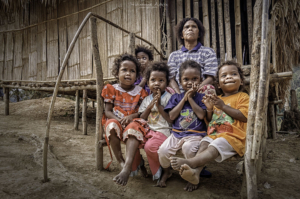
maya pedalIn a small, rural and predominantly Indigenous town in Guatemala, one NGO has found a new way to generate electricity whilst keeping costs low and fitness levels high. Maya Pedal began in 1997 in San Andrés Itzapa, 50 kilometres from Guatemala City, and takes old bikes which have been donated from the US and Canada and either sells them or repurposes them into bicimaquinas (bike machines). Local people and businesses then use these machines as makeshift water pumps, corn degrainers and blenders, among other things.

The name refers to the significant Indigenous population in Guatemala, who are primarily of Mayan descent, whilst ‘pedal’ has the same meaning in English. Mayans made up just under half of the national population, but studies suggest they remain one of the poorest and most oppressed groups in the country.

Local Projects

Not only do the bicimaquinas save local people money, time and effort, they also help some of the poorest and most vulnerable people in the area by providing work and a sense of purpose.

Women for Development in Action is a local organization that enables women to grow their own aloe plants before using the bicimaquina as a blender and producing shampoo. As Ana María Guch explains, “First, we cut the aloe, then we take off the skin, cut it into little pieces and put it in the blender. Next, we pedal!” The profits they make from selling their shampoo go towards supporting their families and funding their reforestation project.

Another organisation, Women’s Group for AZUCENA, supports women as they produce their own animal feed by using the bicimaquina as a corn degrainer. Aside from their agricultural projects, the organisation also runs Spanish literacy classes for Indigenous women, giving them a better chance of integrating into society and improving their social mobility, Maya Pedal reports on its website.

Mario Juarez, Director of Maya Pedal, also explains the environmental benefits of creating the bicimaquinas: “I believe with what we do we contribute a little to reduce the damage that as human beings we do to the planet.”

International Impact

Maya Pedal has received international acclaim for its innovative bicimaquinas – as Carlos Enrique Marroquin, Head of Maya Pedal, outlines: “We do not have to do any advertising, because the machine speaks for itself – and as such, the NGO receives volunteer engineers, translators and bike mechanics from all over the world.”

It has also made its machine designs free and available to download anywhere in the world, so that anyone can access them and learn to build and use them themselves, creating a brighter, more environmentally friendly future for everyone, starting with the Maya community in San Andrés Itzapa.

– Elsa Tarring

Elsa is based in London, UK and focuses on Good News and Global Health for The Borgen Project.

Photo: Flickr
September 5, 2025
https://borgenproject.org/wp-content/uploads/borgen-project-logo.svg 0 0 Naida Jahic https://borgenproject.org/wp-content/uploads/borgen-project-logo.svg Naida Jahic2025-09-05 03:00:472025-09-05 03:10:04Maya Pedal: Bikes Transforming Lives in Guatemala
Global Poverty, HIV/AIDS, Nonprofit Organizations and NGOs

Jars of Clay and Blood:Water Aid To Africa

Jars of ClayIn the early days of their shows, the three-time GRAMMY-winning band Jars of Clay encouraged audiences to support the humanitarian organization World Vision by citing statistics about AIDS in Africa. Youth group members and parents would visit the tables and sign up, creating what Jars of Clay singer Dan Haseltine described as a movement of “activists for a day.” Haseltine was trying to turn his concern for global issues into tangible action. 

In 2002, Haseltine took a 10-day trip to South Africa, Malawi and Zimbabwe, where he witnessed the devastation caused by the water crisis as well as the AIDS epidemic. That experience led him to start the company Blood:Water, which has now been around for more than 20 years and has raised $45 million to address the water crisis and the HIV/AIDS epidemic in more than 12 African countries, supporting more than 1 million people in their fight for clean water and good health.

Blood:Water’s Local Aid Policy

One of the things that sets Blood:Water apart is that while most nongovernmental organizations (NGOs) and charitable organizations only allow 14% of funding from international donors to go to local organizations in Africa, the organization prioritizes working locally. Over the last 20 years, it has funded 33 partner organizations. As Jake Smith, executive director of Blood:Water, explains, “At Blood:Water, we’ve learned over time that the best way to create lasting change in communities, whether here at home or across the world, is to begin with the people closest to the issues themselves.”

Another factor that has made Blood:Water a successful and reputable organization is its model for action. To remain faithful to the communities it serves, the organization maintains an eight-year funding commitment. It seeks out, vets and partners with organizations in East and Southern Africa, providing long-term organizational strengthening and flexible financial support. In particular, Blood:Water applies a specific Institutional Developmental Framework (IDF) to ensure grants are directed where they can best support the health and growth of both the organizations and the people they serve.

The Progress So Far

Since its inception in 2004, Blood:Water has witnessed major advances in technology surrounding both clean water and the AIDS epidemic in Africa. “Unprecedented investment in the HIV/AIDS sector has transformed the nature of the disease from a death sentence to a chronically manageable illness. Water has grown into a robust sector, integrating hygiene and sanitation and is now one of many available interventions that impact the quality and length of life for a person living with HIV/AIDS.”

While much of what Blood:Water set out to accomplish has been achieved, the organization remains committed to the growth of Southern and Eastern Africa through strategic partnerships. Along with the United Nations Programme on HIV/AIDS (UNAIDS), Blood:Water is aiming to reduce new HIV infections by 90% by 2030.

Looking Ahead

Jars of Clay and Dan Haseltine began a journey at the turn of the century not just as musicians sharing their dreams and concerns with listeners, but by putting action to their concern for the world’s most vulnerable people. After more than 20 years, they are still going strong with their organization Blood:Water, which has provided nearly 1 million people with access to safe water, trained more than 1 million people in hygiene and sanitation practices and supported at least 700,000 people with HIV treatment or prevention services.

– Gregory Walker

Gregory Walker is based in York, PA, USA and focuses on Celebs for The Borgen Project.

Photo: Flickr
September 3, 2025
https://borgenproject.org/wp-content/uploads/borgen-project-logo.svg 0 0 Precious Sheidu https://borgenproject.org/wp-content/uploads/borgen-project-logo.svg Precious Sheidu2025-09-03 03:00:092025-09-02 14:04:57Jars of Clay and Blood:Water Aid To Africa
Child Poverty, Global Poverty, Nonprofit Organizations and NGOs

Solidarity Christmas Campaign for the Children of São Paulo

Solidarity Christmas CampaignThe Associação Restauração or Restoration Association, has launched the 15th edition of its “Solidarity Christmas” campaign to raise funds for children living in poverty in São Paulo.

The Restoration Association

The Restoration Association is a Christian nonprofit, founded in 1989. It serves marginalized adolescents and children living in social vulnerability in the communities of São Paulo. The nonprofit’s “main reach or the focus of [the] ministry is to reach kids of the favelas, which is the Portuguese word for slums in São Paulo, Brazil,” said Isabella Hutchison, a volunteer with the Restoration association, during an interview with The Borgen Project.

The Solidarity Christmas Campaign

The “Solidarity Christmas” campaign began in 2011. It aims to sponsor children in social vulnerability through thoughtful gifts and meals to make a difference during the holiday season. The association works in five communities across São Paulo: Iguatemi, Promorar (Jd. Rio Claro), Vila Júlia (Sapopemba), Vila Rosa and Tolstoi.

Last year, the campaign’s 14th edition hosted two Christmas parties featuring music, games, a play about Christmas and a feast for more than 300 children. Funds raised went toward the celebrations and the gifts for the children, including shoes, a toy and clothes.

This year, the association aims to raise R$30,000 (about $5,457) by October to organize a Children’s Day celebration and Christmas event for approximately 380 children between the ages of 3 and 12. The celebrations brighten the children’s Christmas and allow them to connect with children from other Favelas (slums) who are in similar social circumstances.

The association operates several community projects throughout the year, including sports classes, music workshops, home visits, educational programs and even spaces to support women in the community dealing with drug abuse or domestic violence.

Community Activities for Kids

The group holds “agitas,” or community activities, that promote citizenship and social support twice a week. At the end of these activities, the kids are given little goodie bags, usually filled with a snack, to incentivize them to return.

The programs and activities provide structure and relief for families through educational or recreational activities.

“The sad reality is that most of these kids don’t have adequate food at home,” Hutchison said. “They may not have eaten all day, so this provides some nutrients for them.”

“All the parents want their kids to go to camp,” Hutchison said. “It takes some stress off their hands for the week and the unfortunate reality of it is a lot of these kids don’t eat three meals a day, so they think, OK, well, if nothing else, my kids are gonna eat three meals a day and have enough to eat for this weekend.”

Holiday Events To Inspire Hope

Funds raised this year will go toward the Children’s Day and Christmas events. Indeed, the organization aims to celebrate the holidays and offer hope and support to children growing up in difficult circumstances so they may have a brighter future than the one they were born into.

– Sahana Shastry

Sahana is based in Newtown Square, PA, USA and focuses on Good News for The Borgen Project.

Photo: Wikimedia Commons

September 3, 2025
https://borgenproject.org/wp-content/uploads/borgen-project-logo.svg 0 0 Lynsey 2 https://borgenproject.org/wp-content/uploads/borgen-project-logo.svg Lynsey 22025-09-03 01:30:222025-09-02 13:54:57Solidarity Christmas Campaign for the Children of São Paulo
Global Poverty, Nonprofit Organizations and NGOs, War

Reducing Poverty in Ukraine: From Nonprofits to IKEA

Poverty in UkraineWith ongoing humanitarian threats and a national focus redirected toward wartime efforts following Russia’s illegal 2022 invasion, Ukraine is experiencing a rise in poverty.

Poverty in Ukraine

Despite recent negative trends, Ukraine’s national poverty decreased from 2016 through 2021, with poverty levels of 51.1% declining to 20.6%, according to the United Nations Economic Commission for Europe. With the help of sustained economic growth, increased income, improvements in the labor market and government policies, Ukraine ensured a reduction in poverty.

Once the war began in 2022, government policies and initiatives, including the Household Budget Surveys (HBS), were canceled because of disruptions and the need to consolidate funds. According to the Ministry of Economy of Ukraine, the government implemented a program to modernize state statistical methods and initiatives, including the HBS, reinforcing Ukraine’s commitment to the United Nations’ Sustainable Development Goals through 2030.

With these and other poverty-reducing policies now on hold, continued international support and donations are imperative to help reduce poverty in Ukraine.

National Organizations Supplying Donations

  1. Razom for Ukraine. This is a nonprofit that uses international donations to reduce poverty in Ukraine and support those affected by the war. Its goals include delivering supplies to medics and civilians and promoting education and advocacy to build public support for international policies backing Ukraine. Donations have provided hygiene and first aid kits for families in war-devastated areas, supplies for field medics and repair kits for damaged homes. According to Razom for Ukraine, these items, together with broader support programs, help communities facing violence hold onto hope for a future with reduced poverty and recovery from the impact of Russia’s invasion. Razom for Ukraine partners with other nonprofits and organizations to deliver humanitarian aid across multiple sectors. One example is its collaboration with Building Ukraine Together, highlighted by CEO Dora Chomiak in an interview with Columbia University’s “Journal of International Affairs.” This partnership helps physically and figuratively rebuild households so Ukrainians can improve living conditions despite large-scale destruction. Through international donations, Razom for Ukraine reduces poverty by strengthening communities and expanding access to jobs and education.
  2. Nova Ukraine. Another nonprofit that sends international donations to reduce poverty in Ukraine and improve Ukrainians’ well-being is Nova Ukraine. Nova Ukraine shares similar goals with Razom for Ukraine, focusing on humanitarian aid and raising awareness. Its volunteers work on supplying resources and aid, running outreach programs and supporting refugee initiatives, with some volunteers based in Ukraine.Like Razom for Ukraine, Nova Ukraine partners with other organizations to extend aid to those in need. One such partnership is with UNICEF USA, which focuses on supporting children and families in Ukraine. Helping families directly and supporting children from devastated communities enables current and future generations to persevere. This creates stronger ties and a unified front in rebuilding Ukraine during and after the war.

IKEA’s Humanitarian Aid for Ukraine

IKEA, a Swedish furniture and home goods company, has taken steps, along with partners, to address the humanitarian issues that arise from the war. After Russia’s initial invasion in 2022, IKEA halted exports and imports to Russia and Belarus. Additionally, IKEA and its partners have donated millions of dollars to aid organizations, hoping to support services and individuals in Ukraine impacted by the war.

These donations also support medical organizations and allow medics and doctors in Ukraine to receive modern equipment, improving the country’s medical system. These supplies benefit civilians, enlisted military and members of international aid organizations near and at the frontlines, maintaining direct humanitarian aid for Ukraine.

Within IKEA, the Ingka Group, a retail partner, donated furniture, toys and other goods for displaced families and Ukrainians fleeing the nation at the start of the war. The donations were crucial for supplying UNICEF with the necessities of housing and caring for individuals and added humane relief for children. IKEA and its partners help reduce poverty in Ukraine by supporting organizations that assist refugees while creating and preserving jobs and livelihoods for Ukrainians in need.

– Avery Kachmarsky

Avery is based in Los Angeles, CA, USA and focuses on Business and Politics for The Borgen Project.

Photo: Flickr
September 2, 2025
https://borgenproject.org/wp-content/uploads/borgen-project-logo.svg 0 0 Lynsey 2 https://borgenproject.org/wp-content/uploads/borgen-project-logo.svg Lynsey 22025-09-02 01:30:452025-09-01 11:23:51Reducing Poverty in Ukraine: From Nonprofits to IKEA
Global Poverty, Humanitarian Aid, Nonprofit Organizations and NGOs

Arukah Network: Uplifting Communities Through Collaboration

Arukah NetworkIn the Himalayan Mountains of India during the early 2000s, community members worked passionately in small groups to cultivate community health and humanitarian programs. Some of their efforts were successful, but there was a problem: the groups usually worked in isolation. After noticing the need for a solution to boost the effectiveness of organizations through partnerships, Dr. Ted Lankester co-founded Arukah Network in 2004.

The Arukah Network Model

Arukah Network aims to help establish and nurture independent local groups or “Clusters” that collaborate to serve their communities by improving health and well-being. Clusters are teams of people with diverse skills and backgrounds from a common geographical or themed interest. Arukah Network’s broader organization creates and supports Clusters by connecting with, supporting, mentoring, training and encouraging local community leaders to equip them with tools to be advocates for their communities.

In effect, Cluster leaders educate and support local members by building relationships, mobilizing resources, developing support networks, conducting training and hosting events. Some groups have improved sanitation and maternal health, provided emergency aid, reduced sexual violence, increased disability inclusion and promoted community reconciliation.

A Different Kind of Aid

When nongovernmental organizations (NGOs) come into communities, they often decide what the people need and fund those projects, said Brian Wainana, Arukah Network’s Communications & Network Engagement Lead, in an interview with The Borgen Project. Because that approach rarely leads to sustainable solutions, Arukah Network chose a different method.

The organization believes communities know more about their needs and possible solutions than most outsiders. Therefore, Arukah’s aid model emphasizes the need for people to identify their challenges and devise solutions as a community. Due to this framework, Clusters can be self-sufficient and sustain operations through entrepreneurship, fundraising and sourcing grants. For instance, after the Ekari Cluster in Malawi created a farmer co-operative to restore community confidence and cultivate resources, the Cluster received $85,000 from a U.S. government grant in 2024.

The Arukah Network uses the Support and Stimulate, Appreciate, Learn and Transfer (SALT) approach to help transformative community conversations occur. SALT visits, where a team of people visit a community to speak with local people about their experiences, lead to discussions about ways to address relevant challenges in that region. “So, it’s much more than a way of working: it’s a way of thinking and being that values the strengths hidden within a neighborhood,” said Wainana.

A benefit of this model is that it allows civilians to collaborate with local governments, Wainana said. Arukah believes that the government’s primary responsibility is to support its citizenry’s health systems and public health priorities, along with preventative and curative care. In resource-poor areas, where government services are under strain, Clusters have worked to cultivate partnerships with their governments to amplify social safety institutions.

Arukah Network’s Multinational Operations

Arukah Network has 15 Cluster organizations throughout Tanzania, Zambia, Kenya, Rwanda, Malawi, the Democratic Republic of Congo (DRC) and India. Each Cluster works in response to the health and humanitarian needs unique to that area.

Clusters in India work mainly to improve access to health care and advocate for disability inclusion. In contrast, the Cluster in Tanzania prioritizes human rights. Clusters in Kenya, Zambia, Malawi and Rwanda focus primarily on agriculture. Wainana said additional areas of interest to most Clusters include entrepreneurship, mental health, women’s empowerment and creative arts.

Arukah Network’s Crisis Response

A clear example of a Cluster group offering effective humanitarian support during times of need is the one operating in Goma, DRC. Although the Cluster in Goma was disempowered after the M23 rebel group captured the city in early 2025, Arukah Network members still stepped up. They supported 47 unaccompanied children in refugee camps each week and ran conflict awareness campaigns.

The Cluster in Goma is supporting child-led families who lost their parents in the war, training other groups on “the Arukah model of collaboration” and continuing a chicken-raising project that helps sustain the group, Wainana said. The group also raised funds to provide school supplies for orphans and food for older people. At one point, communication lines were cut and rebels were committing violence against civilians. “Despite safety concerns, the Cluster has kept going, seeking to help those around them,” said Wainana.

The Future of Arukah

After the Goma Cluster proved the impact of its training and community engagement, a new Cluster was launched more than 300 kilometers away in Uvira, DRC. The Uvira Cluster aims to support survivors of gender-based violence in the region. Arukah Network receives funding from yearly trust grants and monthly donations. However, due to decreased funding, Arukah Network’s ability to provide quick emergency relief funds to needy Clusters, such as the Goma Cluster, is affected.

“We think global priorities are shifting, hence the decrease in funding,” Wainana said. In addition, worldwide inflation results in higher bills and decreased people’s likelihood to donate to charity.

USAID officially ceased operations in July 2025, while the U.K. is reducing its aid output to focus on defense spending. These cuts are beginning to harm nonprofit humanitarian organizations like Arukah Network. Increased investments in global public health are necessary to sustain groups like Arukah Network and their ability to provide support to communities in need.

– Erin Hellhake

Erin is based in Old Bridge, NJ, USA and focuses on Global Health and Politics for The Borgen Project.

Photo: Unsplash

August 29, 2025
https://borgenproject.org/wp-content/uploads/borgen-project-logo.svg 0 0 Lynsey 2 https://borgenproject.org/wp-content/uploads/borgen-project-logo.svg Lynsey 22025-08-29 03:00:362025-08-29 02:05:23Arukah Network: Uplifting Communities Through Collaboration
Global Poverty, Government, Nonprofit Organizations and NGOs

Combating Poverty in Mexico

Combating Poverty in Mexico Mexico has seen a decline in poverty in recent years. At its peak, the rate reached 43.2% in 2016 but fell to 36.3% by 2022. These signs of progress show that the country is tackling poverty in a positive way. Yet, one problem is that the population living in extreme poverty has gone up in recent years, with additional factors like access to health care and education also rising. Many organizations have stepped up to address this issue, helping families in rural areas of Mexico gain access to clean water, education and health care.

Policies and Governmental Strategies

Recent efforts to combat poverty in Mexico focus on inclusive and sustainable growth, according to the World Bank. Its analysis shows several areas for improvement in long-term poverty reduction. The first is female employment. Increasing the employment rate for women in the workforce contributes to economic development for the country.

Rural development is also a key factor in combating poverty. Improving rural infrastructure, education and health care services is essential to address regional disparities. Additionally, social protection is another element the government can tackle to help improve the situation. Strengthening benefits with worker protections can make economic growth more inclusive. As the World Bank notes, “social assistance reforms can redesign some programs to increase their progressivity and sufficiency,” enhancing effectiveness in combating poverty.

An overlooked aspect of why poverty is so complex in Mexico is the major climate events across the country. According to the World Bank, about 33% of poverty in Mexico is correlated with severe weather events. Hurricanes, droughts and floods affect those living in vulnerable conditions, further worsening their situations. Investing in more resilient infrastructure, such as durable housing and clean water systems, is a priority.

Organizations Addressing Poverty in Mexico

Several nongovernmental organizations (NGOs) are working to combat poverty in Mexico through multiple projects and initiatives. Esperanza Contigo focuses on children living in poverty, more specifically in rural areas. According to a report by the organization, more than 20 million children in Mexico live below the poverty line. This is due to reasons such as the minimum wage for a worker in Mexico being about $8.50 a day and rural schools being under-resourced, both of which fuel the cycle of poverty in the country.

Esperanza Contigo works to raise awareness, provide resources and advocate for change to improve the lives of children living in poverty. The organization has seen results in its work throughout Mexico, including helping abandoned children in the city of Tijuana. There, it provides foster care and offers shelter, education and health care programs. The organization states that “the best way to tackle child poverty is to be prepared.” 

CHOICE Humanitarian carries out locally led projects that address poverty in Mexico, mainly in rural areas. Its work includes increasing livestock and promoting agricultural sustainability. The organization helps families build stable food sources and income through efforts such as constructing wells and water filters. By doing so, CHOICE Humanitarian teaches communities the skills needed to continue these practices on their own. The organization’s activities support economic development, with the goal of combating poverty in this way.

In its 2024 annual report, the United Nations Children’s Fund (UNICEF) outlined efforts to improve child nutrition, access to early childhood education and social inclusion. In cooperation with the Mexican government, UNICEF and the legislative branch are working to integrate child-centered initiatives into national planning. The organization has already reported progress in key areas such as nutrition, well-being and inclusion. 

Looking Ahead

Combating poverty in Mexico remains a challenge. It is not just one aspect that must be addressed, but multiple dimensions of poverty at the same time. This complexity has drawn many organizations to take part in tackling the problem. With projects underway to support people in need and with cooperation from the national government, Mexico is laying the groundwork for progress in combating poverty.

– Pablo Roque

Pablo is based in McAllen, TX, USA and focuses on Good News and Politics for The Borgen Project.

Photo: Flickr
August 21, 2025
https://borgenproject.org/wp-content/uploads/borgen-project-logo.svg 0 0 Precious Sheidu https://borgenproject.org/wp-content/uploads/borgen-project-logo.svg Precious Sheidu2025-08-21 07:30:232025-08-20 16:32:24Combating Poverty in Mexico
Page 6 of 60«‹45678›»

Get Smarter

  • Global Poverty 101
  • Global Poverty… The Good News
  • Global Poverty & U.S. Jobs
  • Global Poverty and National Security
  • Innovative Solutions to Poverty
  • Global Poverty & Aid FAQ’s
Search Search

Take Action

  • Call Congress
  • Email Congress
  • Donate
  • 30 Ways to Help
  • Volunteer Ops
  • Internships
  • Courses & Certificates
  • The Podcast
Borgen Project

“The Borgen Project is an incredible nonprofit organization that is addressing poverty and hunger and working towards ending them.”

-The Huffington Post

Inside The Borgen Project

  • Contact
  • About
  • Financials
  • President
  • Board of Directors
  • Board of Advisors

International Links

  • UK Email Parliament
  • UK Donate
  • Canada Email Parliament

Get Smarter

  • Global Poverty 101
  • Global Poverty… The Good News
  • Global Poverty & U.S. Jobs
  • Global Poverty and National Security
  • Innovative Solutions to Poverty
  • Global Poverty & Aid FAQ’s

Ways to Help

  • Call Congress
  • Email Congress
  • Donate
  • 30 Ways to Help
  • Volunteer Ops
  • Internships
  • Courses & Certificates
  • The Podcast
Scroll to top Scroll to top Scroll to top