Whooping Cough Outbreak In South Korea: Vaccination Efforts
 In 2024, the Korean Disease Control and Prevention Agency (KDCA) reported a 54.5% rise in non-COVID-19 infectious diseases in South Korea, driven by an increase in respiratory illnesses among children. Pertussis, colloquially known as whooping cough, was the most significant contributor, increasing from 293 cases in 2023 to 48,048 cases in 2024. Between January and April 2025, reported cases increased by 770% compared to the same period the previous year. Despite the country’s 90% vaccination rate among children, a rate that exceeds that of most countries, the acellular pertussis (DTaP) vaccine’s failure to provide long-lasting immunity continues to underscore the effectiveness of vaccination efforts.
Whooping Cough Outbreak In South Korea
Pertussis, or the whooping cough, is a vaccine-preventable infectious disease caused by the Bordetella pertussis bacterium. This infectious disease begins with cold-like symptoms that can develop into more severe symptoms such as a prolonged, uncontrolled cough and vomiting. The cough can last anywhere from a couple of weeks to several months, earning it the nickname “the 100-day cough.”
The KDCA warns that one individual could infect up to 70 others, due to its highly transmissible nature via respiratory droplets. The DTaP vaccine is included in South Korea’s National Immunization Program (NIP), currently scheduled at 2, 4 and 6 months; between 15 and 18 months; between 4 and 6 years; for children aged 11-12; and for all pregnant women, as of 2015. However, immunization efforts have not been able to slow the outbreak, as immunity wanes after two to four years with the current DTaP vaccine.
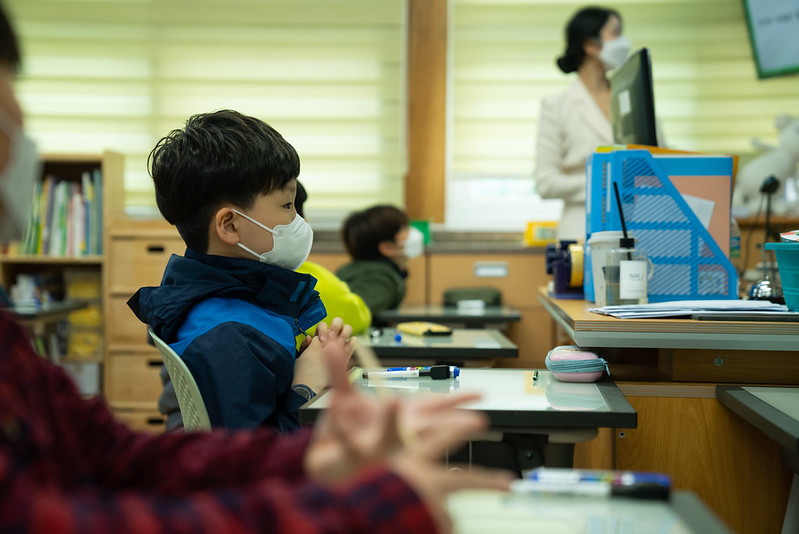
The 2023 whooping cough outbreak in South Korea began in Gyeongsang Province, primarily linked to transmission in kindergartens, elementary schools and high schools.
Screening and Vaccination Efforts
The KDCA implemented a nationwide screening program for individuals with persistent coughs. In 2024, cases began to surge in four additional regional hotspots. By November 2024, Korea reported its first pertussis-related death since 2011, involving an infant under two months old. In 2025, children and adolescents aged 5–19 accounted for 70% of cases, as pediatric clinics across the country struggled to cope with an overwhelming number of patients. The KDCA currently encourages boosters for children aged 11-12 and all adult/elderly guardians; however, uptake has been low, as the measure has not been fully implemented in the NIP, with only 83% of 11-12 children and less than 2% of adults receiving the booster shot in 2024.
South Korea Rebuilds Health Care System
The whooping cough outbreak comes at a time when the South Korean health care system is under stress from the pandemic, an aging population and the recent medical student strike, which has worsened the current understaffed pediatric and emergency care fields. In February 2024, 10,000 medical students and residents stopped attending classes or submitted resignations to hospitals in protest of the previous administration’s plan to increase medical school admissions from 2,000 to 5,000 as of 2025.
The previous Yoon Suk Yeol administration ordered all medical personnel to resume their duties and medical students to return to classes, threatening penalties for non-compliance. At the time, 8,305 students faced academic consequences and medical staff who continued to strike faced license revocation on the basis of negligence. The 18-month standoff led to procedure postponements and patient backlogs, prompting a mass deployment of military doctors and nurses across the region to fill vacancies.
The drastic increase in admissions, aimed at addressing South Korea’s low doctor-to-patient ratio, was deemed insufficient by the medical students and staff, as it could not address the shortage of doctors in less lucrative fields, such as emergency medicine and pediatrics, or the number of overworked and underpaid doctors across the nation. They further argued that this drastic increase in cohorts would affect the level of schooling received, due to a lack of personnel to teach the additional students.
End of Strike Action
The end of the strike, as of July 2025, occurred under the new Lee Jae Myung administration, where he promised that students and residents could return to school without penalties and re-establish the number of student admissions to its annual target of 3,000 for Fall 2025. On Sept. 4, 2025, the new administration passed the Special Act on Essential and Regional Health Care and the Regional Doctor Training Act, which aim to reform the current health care system. Under the Regional Doctor Training Act, the government would fully cover the tuition of newly admitted medical students, with the promise of employment in a public health institution post-licensure for a specified period.
South Korea Expands Immunization Efforts
In 2020, South Korea joined the Coalition for Epidemic Preparedness Innovations (CEPI), aiming to accelerate the development of vaccines for infectious diseases to prevent a pandemic situation. In 2017, CEPI launched at the World Economic Forum in Davos in response to the 2014–2016 West Africa Ebola outbreak. Its major contributors include more than 30 national governments, the Bill & Melinda Gates Foundation, the Wellcome Trust, the European Commission and private sector partners. CEPI 2.0, part of the 2022-2026 plan, features the 100 Days Mission to develop vaccines against the next Disease X threat within 100 days.
In 2020, the KDCA and the International Vaccine Institute (IVI) joined CEPI’s Centralized Laboratory Network, which entails the collaboration with 20 labs worldwide to evaluate vaccine candidates under uniform protocols. IVI is a U.N.-founded nonprofit, headquartered in Seoul, South Korea, that focuses on developing and delivering vaccines for low- and middle-income countries, with an emphasis on research, training and global collaboration. Since collaborations began, CEPI has allocated roughly $350 million to South Korean institutions, with the government contributing $51 million, strengthening research, international cooperation and South Korea’s infectious disease response systems.
Looking Ahead
The whooping cough outbreak in South Korea highlights the ongoing challenges this and other infectious diseases present, but recent reforms and expanded vaccine research signal progress. The implementation of strengthened health care policies and global collaborations points toward hope for a more resilient country where populations get more protection from outbreaks.
– Elsa van Blokland
Elsa is based in Gatineau, Quebec, Canada and focuses on Global Health and Politics for The Borgen Project.
Photo: Flickr
