Democracy, Monarchy and Dictatorship: Types of Government Systems
Aristotle was the first to define three principal types of government systems in the fourth century B.C. These consisted of monarchy, aristocracy and polity. Since then, many more have been formulated, but the main themes and ideas have remained. Today, the five most common government systems include democracy, republic, monarchy, communism and dictatorship. This list details what to know about each.
Five Types of Government Systems
- Democracy
A democracy can be defined as a government system with supreme power placed in the hands of the people. It can be traced back to as early as the fifth century B.C. In fact, the word democracy is Greek for “people power”. While most use the United States as an example of a democratic government system, the United States actually has what is called a representative democracy. The difference lies in the method of civilian participation. In a direct democracy, every citizen is given an equal say in the government. In a representative democracy, citizens elect representatives who make the law. The difference is significant when put into action. Other examples of democratic states include Aruba, Bulgaria, Canada, Costa Rica and the Dominican Republic. - Republic
In a republic government system, the power also rests with the people, as they are in charge of electing or choosing the country’s leader, instead of the leader being appointed or inheriting power. Broadly defined, a republic is a government system without a monarch. A republic may be governed by a group of nobles, as long as there is not a single monarch. Some examples of countries with a republic government system include Argentina, Bolivia, Czech Republic and France. - Monarchy
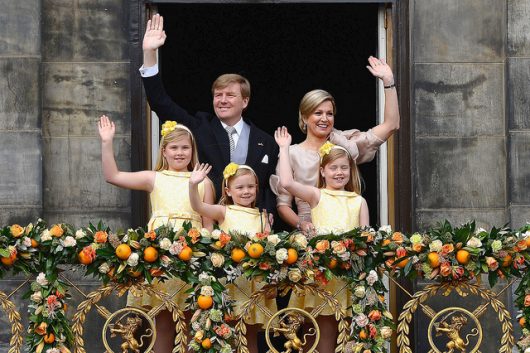
In a monarchy, state power is held by a single family that inherits rule from one generation to the next. In a monarchy, an individual from the royal family holds the position of power until they die. Today, the majority of monarchy governments have transitioned to constitutional monarchies, where the monarch is head of state but only performs ceremonial roles and does not have state power. Only a few countries still have systems where the monarch retains control; these include Brunei, Oman, Saudi Arabia and Swaziland. - Communism
A communist government system is usually based on a particular ideology of communism taught by Karl Marx or Vladimir Lenin. A single party or group of people usually runs communist states. In some cases, citizens of a communist state are given certain jobs or life duties in an effort to obtain collective citizenship for the state. Examples of communist states include China, Cuba and Vietnam. - Dictatorship
In a dictatorship, a single person, a dictator, has absolute power over the state. It is not necessarily ruled by a theology or belief. It is an authoritarian form of government where one person is in charge of enforcing and enacting the law. Aspects often include military organizational backing, unfair elections (if any) and various human rights violations. A dictator does not usually inherit their power like a monarch does; they either seize control of the state by force or through (usually unfair) elections. Dictators are not held accountable for their actions and thus are free to do as they please, including limiting citizens’ rights. Burundi, Chad, Equatorial Guinea and North Korea are contemporary examples of countries run by a dictator.
While these types of government systems all vary, they have at least one similarity: the allocation of power. Whether it be the allocation of power to a single person, a group of people, or evenly distributed to everyone, power is the shared theme of all types of government systems.
– Haley Hine
Photo: Flickr
