Strengthening the Democratic Governance in Libya
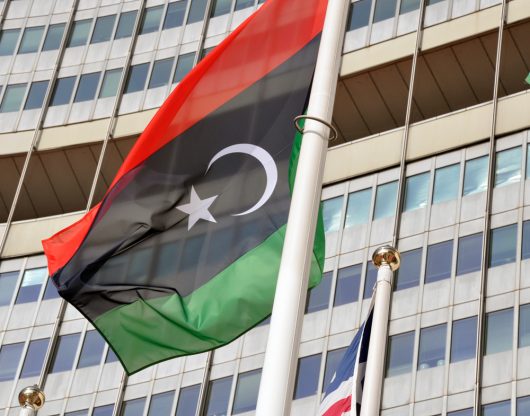
There has been a battle over national governance in Libya ever since the dismantling of the Muammar Gaddafi authoritarian regime in the 2011 Arab Spring. A majority of Libyans are hopeful for a unified democratic governance in Libya; unfortunately, the Fragile State Index has listed Libya in the top 25 most fragile states in the world.
Political History in Libya
Dr. Federica Saini Fasanotti, a fellow at the Brookings Institution, described that “Libya has never been (truly) unified.” In a conversation on October 6, 2017 at the Center for Strategic and International Studies (CSIS) headquarters, Dr. Fasanotti described the historical significance of conflicts and changes of power in relation to rule of law in Libya.
Throughout the history of Libya, the state had many different rulers, contributing to the divided government. Up until 1911, the country was an autonomous territory under the rule of the Ottoman Empire. After 1911, Libya was controlled by the Italians in the western world’s quest for colonies. Then, in 1951, the Allied powers of World War II granted Libya independence, and the state created a federal constitution and monarchy; in 1969, Muammar Gaddafi led a coup d’état of the monarch.
Local, Regional and Strategic Issues
Dr. Fasanotti described the three fundamental issues to democratic governance in Libya. The local issue is the many internal divisions caused by the history of political upheavals and usage of tactics like Gaddafi’s ‘divide and rule’ concept — a tactic where different ethnicities and tribes are pitted against one another. The regional issue is the absence of current leadership to direct the country on the path of democratic governance. The strategic issue is the presence of terrorism, troublesome migration patterns and economic beneficial resources.
Alice Hunt Friend, a Senior Fellow with the International Security Program at the CSIS, stated,“It is very hard to take these complex, contingent situations and hundreds of years of history and translate it into prescriptive policies.”
Civil Society Formation by USAID
The United States Agency for International Development (USAID) supports the project of Libya Elections and Governance Support Program to create effective practices for sub-national governance. The duration of the program is from October 2012 to September 2019.
The goal of creating municipal governments in Libya has served as an attempt to fill the national governance void. In the southern desert city of Sabha, the USAID assisted in the formation of a community center to provide the citizens the opportunity to engage in the decision-making process.
Uniting Communities
The community center attempts to create partnerships between people of different ethnicities and tribes to form ideas out of mutual interest. The additional partnership between local leaders and citizens assists in creating transparency and credibility with the government.
To have local municipalities work together to create a stable national government — like the community center in Sabha — is the goal of the civil society formation by the USAID; local authorities’ soft power has extremely high value.
Democratic governance in Libya has a formulation in municipalities and initiatives at the local level that once implemented, can reach national proportions.
– Andrea Quade
Photo: Flickr
