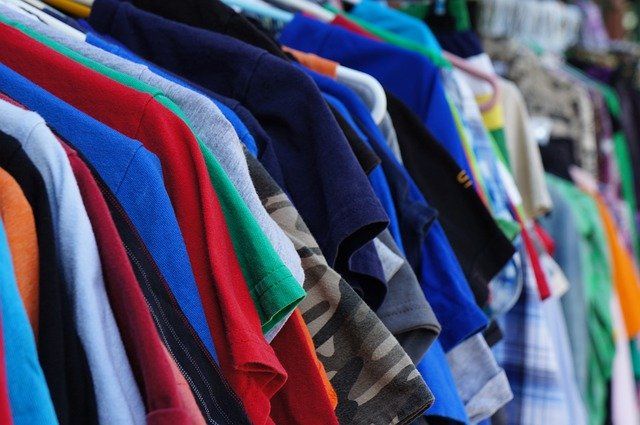
 “My favorite part of Helping Hand packing days is seeing everyone work together. The entire group helps each other with deciding which category an item should go into and where to find that category’s box.” In an interview with The Borgen Project, Bisma Ahmed talked about her experience participating in the packing events organized by Helping Hand for Relief and Development (HHRD). “It makes me feel great knowing that children in need across the world will be wearing the very clothes I am packing.”
Helping Hand for Relief and Development
Helping Hand for Relief and Development (HHRD) is a nonprofit organization that fights global poverty by improving access to clean water, feeding the hungry, providing healthcare and rebuilding places affected by natural disasters. In addition to emergency relief, it also has long-term development programs. These include efforts to promote education and literacy, orphan support campaigns and rehabilitation and disability programs. In the 15 years that it has been in service, Helping Hand has worked in more than 85 countries across the globe.
Focusing on the Vulnerabilities of Asia and Africa
The main areas that Helping Hand addresses are countries in Asia and Africa as most of the 689 million people living below the poverty line are in these two continents. A few notable countries that have benefited from Helping Hand’s work include Pakistan, the Philippines, Bangladesh, Lebanon, Somalia, Tunisia, Kenya and Haiti. The organization also provides benefits to refugees including the refugees of Rohingya, Syria and Palestine.
In 2019, through the long-term empowerment program, Helping Hand assisted 6,140 vulnerable people with skills development training in Pakistan, Jordan, Afghanistan and Kenya. In 16 different countries, 19,100 children, including orphans and refugees, received an education through Helping Hand scholarships and education programs. The organization also provided daily healthcare to 160,900 Rohingya refugees and benefited 1.2 million people through its water, hygiene and sanitation programs.
The organization’s recent campaigns include the Beirut Relief Fund, the HHRD COVID-19 Crisis Response, and most recently, Global Winter Revisions, a campaign allowing donors to send winter packages to places where they are needed most.
Packing Day: The Mid-Atlantic Region
Every year, the U.S. regions of Helping Hand set a goal for how many containers of clothes to send as aid overseas. The 2020 goal was to send 10 40-foot containers.
Now and then, the U.S. Mid-Atlantic region of Helping Hand has packing days where volunteers come together and sort donated clothes for shipment to the needy all around the world. Naveed Ahmed, the regional manager for Helping Hand’s Mid-Atlantic area, explained the benefit of the Helping Hand packing days. “The purpose is many, in my opinion. We’re engaging the local community and we’re opening our doors to show what Helping Hand is all about.” According to Naveed Ahmed, most of the success of the packing days comes from the organization’s personal connections with local donors, including large businesses and companies.
Helping Hand packing days have been going on in all of its U.S. regions since its founding in 2005. In 2019 alone, the $55 million worth of clothing items or in-kind gifts benefited 12 million people in 10 different countries.
The clothing items go wherever the team believes the need is. Helping Hand holds offices in Jordan, Pakistan, Afghanistan, the Philippines, Haiti and Kenya, making the organization fully part of the clothes distribution process. The teams in those areas inform the U.S. national team of the amount and types of clothing that are needed. The U.S. regions then start collecting, packing and sending the clothes out.
Typically, the packing events surround a specific global issue or national relevance. For example, the last packing event that the Mid-Atlantic region had was for Giving Tuesday. The packed donations went toward the Helping Hand Winter Relief Campaign. A week later, they had another packing event, this time dedicated to loading the boxes into the containers.
Packing for Martin Luther King Jr. Day
The Mid-Atlantic region has a packing day for Martin Luther King Jr. Day in January. “We usually like to have a day of service on that day,” Naveed Ahmed said. “Usually, students and volunteers from all over the state will come out and be part of the packing day. It is a great day to show appreciation to a great leader like MLK and for us all to do the part of service he and many others have done over decades.”
The efforts of Helping Hand give hope for the future, ensuring that the lives of struggling people around the world are made a little easier.
– Maryam Tori
Photo: Flickr
 The 2017 film, Wind River, based on actual events, riveted the public with its reported death rate of Native American women on American reservations. Writer-producer Taylor Sheridan aimed to raise awareness of the overlooked death rate and has succesfully done so since.
 Although six African states issued legislation to prohibit female genital mutilation, the north African state of Sudan was lagging behind in these efforts. Female genital mutilation ( FGM) was illegal in some Sudanese states but the bans were widely ignored. Under the leadership of Omar al-Bashir, parliament rejected recommendations to ban the practice.
 Before the COVID-19 pandemic, the poverty rate was expected to
  When Alfin Nur was 11 years old, he lost his mother, father and one of his siblings in the 2004 Indian Ocean tsunami. Two years later, the GiveLight Foundation found Alfin and began to invest in his life. He studied at a boarding school in Banda Aceh, Indonesia, which GiveLight fully sponsored, while also providing him with love and emotional support. In 2015, he graduated from Al-Azhar University in Cairo.
 In recent years, Mexico has become an increasingly significant place of asylum. More than 70,000 refugees have submitted asylum applications in 2019, and despite an initial drop in applications in 2020 due to the pandemic, COVID-19 claims for asylum in December 2020 hit a record high. The well-being of child refugees in Mexico is of particular concern.
 Fact or fiction, books are a great way to create empathy and understanding of the real-life experiences of other people. An experience that is not uncommon yet unique to each individual who has lived it, is the global refugee struggle. There are many books that tell the stories of refugees and contemporary fiction books are only one example of a genre that can raise awareness through storytelling. Raising awareness about the struggles of refugees through books and literature helps encourage more humanitarian efforts directed at helping refugees.
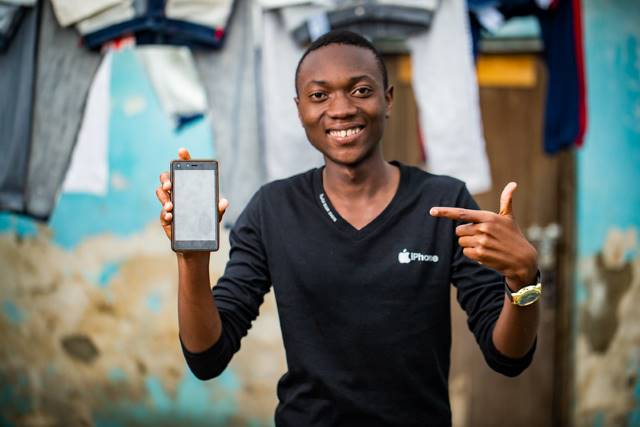 Over the last two decades, cellphone ownership has steadily increased, with

