
In 2020, poverty in Israel increased as the COVID-19 pandemic spread throughout the world. At the beginning of 2021, at least 2 million Israelis were living below the poverty line. Israel’s poverty rate increased from 22.4% in 2019 to 23% in 2020. In addition, Israel’s economy took a 2.4% contraction in 2020, resulting in high unemployment. The wealth divide became more evident during the pandemic as poverty in Israel continued to grow. However, as poverty devastated the economy, there have been significant efforts for recovery. This article explores the relationship between poverty and COVID-19 in Israel along with some organizations’ efforts to provide aid.
The Poverty Rate in Israel
Before the pandemic began, many Israeli citizens were already living in poverty. At least 1.8 million people lived under the poverty line in 2018, with 841,000 of those being children. Their standard of living dipped significantly throughout 2020 as well. Fortunately, government handouts and unemployment benefits have helped reduce poverty rates for many low-income and middle-class people. Thus, government aid played an instrumental role in reducing poverty rates and helping Israelis during the COVID-19 pandemic.
The beginning of 2021 saw some growth in the economy. In December 2020, Israel began its vaccination drive, hoping to vaccinate at least 60,000 people a day to combat the coronavirus.
Economy in Israel
With the Israeli economy reopening and most citizens having received the COVID-19 vaccine, there were only around 400 active infections at the end of March 2021, the lowest since June 2020. Serious infections also hit a three-month low. As of early July 2021, around 5.2 million people received both doses of the COVID-19 vaccine. With most of its vulnerable population vaccinated, Israel emerged from its third national lockdown in February 2021.
While Israel’s economy is starting to recover and lockdowns and restrictions are slowly starting to ease, the pandemic plunged 15% of its middle class plunged into poverty. The need for financial aid rose to 70% in the wake of the COVID-19 outbreak.
Despite the surge in poverty, however, there is still hope for Israelis suffering from the pandemic. Various organizations are currently implementing solutions to aid impoverished communities in Israel. An Economic Survey of Israel has identified solutions that can help Israel recover from the pandemic. The presented measures and reforms in the survey included upgrading infrastructure, improving educational outcomes, supporting the poor, simplifying taxes, reducing economic distortions and reducing health risks by improving the environment.
IMPROVATE Innovative Conference
Israel is currently using Israeli technology to help it get out of its COVID-19 crisis. An IMPROVATE Innovative conference occurred in early 2021 where Israeli Innovative and Technology companies met to discuss how their companies can assist Israelis in the aftermath of the COVID-19 crisis. IMPROVATE launched in September 2020 to connect world leaders in the advancement of global progress. With these meetings taking place, it seems as if technological advances will play a role in helping to reshape Israel after its economic crisis.
Latet
Nonprofit organizations have also stepped in to help with the economic disaster. Latet has been the leading NGO fighting poverty in Israel for the past 24 years. It is continuing to help the people of Israel by assisting its most vulnerable populations that the pandemic devastated. Latet believes the Israeli government should be doing more to combat inequality and improve access to resources in Israel.
The nonprofit launched an emergency response during the pandemic to help Israel’s elderly population. With help from volunteers, Latet has provided packages including food, hygiene products and entertainment items to the homes of older people to reduce the spread of COVID-19. The nonprofit has also launched a hotline for populations that need assistance with food or other necessities. Latet has distributed 45,000 emergency packages in addition to its regular program, which helps 60,000 families in need.
Hope for the Future
While COVID-19 has increased poverty in Israel, hope still exists for economic recovery. Millions of Israelis are receiving vaccinations, the economy is slowly reopening and technology companies and NGOs are willing to help the nation deal with the aftermath of COVID-19. While some economic progress for Israel has occurred, the push for further progress must continue.
– Jose Ahumada
Photo: Flickr

 Founded in 1970, Sephora is an international makeup retailer providing cosmetic products to people around the world. These cosmetic products range from perfumes and lotions to makeup and hair care products. As a beauty empire, Sephora currently employs people in 35 countries and makes upwards of $4 billion in revenue every year. Considering
  Female genital mutilation is one of many forms of violence that women face all over the world. In Guinea, according to UNICEF, 97% of women aged 15 to 49 have been
 In 2012 and 2014,
  Ceuta and Melilla are two enclave coastal Spanish cities in North Africa. They have often been the final stage for thousands of migrants, refugees and asylum seekers looking to reach Europe. Migrant numbers have been increasing recently, resulting in a humanitarian crisis in Ceuta and Melilla.
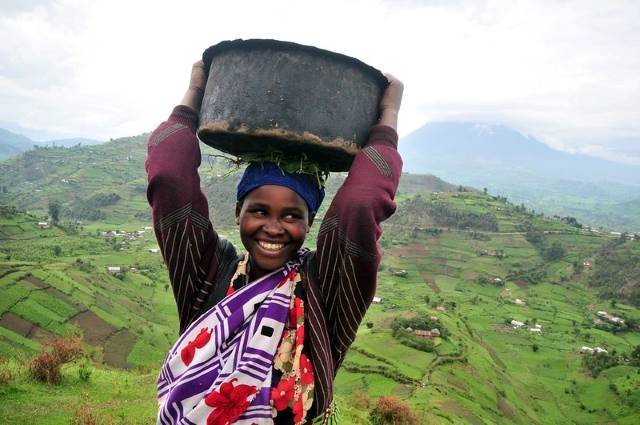 Hunger in Africa is an ever-present concern. The issue was heightened in 2020 when climate change and unusual rainfall patterns caused locust swarms to infest East Africa. The area had not experienced such an extreme locust plague in many years. Kenya’s
 Between 1915 and 1923, thousands of Armenians were massacred in the Armenian genocide. Many Armenian communities now live around the world, with a significant presence in the United States. Committed to remembering the Armenian genocide, the Armenian Rugs Society has dedicated itself to supporting Armenians on a global scale. Through exhibitions of traditional woven arts and the implementation of social programs, the Society has been able to spread awareness of Armenian culture and educate the public on Armenian history.