• Link to X
  • Link to Facebook
  • Link to Instagram
  • Link to TikTok
  • Link to Youtube
  • About
    • About Us
      • President
      • Board of Directors
      • Board of Advisors
      • Financials
      • Our Methodology
      • Success Tracker
      • Contact
  • Act Now
    • 30 Ways to Help
      • Email Congress
      • Call Congress
      • Volunteer
      • Courses & Certificates
      • Be a Donor
    • Internships
      • In-Office Internships
      • Remote Internships
    • Legislation
      • Politics 101
  • The Blog
  • The Podcast
  • Magazine
  • Donate
  • Click to open the search input field Click to open the search input field Search
  • Menu Menu

Archive for category: Global Poverty

Key articles and information on global poverty.

Global Poverty, Malnourishment

Drought Increases Malnutrition in Kenya

Out of the 8.5 million people facing crisis and emergency food security conditions in East Africa, more than 1.3 million live in Kenya, reported the World Food Programme. These crisis conditions are expected to worsen as the drought in the country continues, exacerbating current hunger and malnutrition in Kenya.

This June, the European Union (EU) granted Kenya $6.5 million for drought crisis preparedness, in an attempt to push back against further crisis and famine from severe droughts across East Africa. “It is designed to deliver a quick response from the Agency to Counties in the lead up to and in the event of an official drought being declared in order to mitigate its destructive effects,” the EU said in a press release. This emergency money will be used to dig new and rehabilitate existing wells, build food storage and educate Kenyans against starvation-driven conflict.

“Drought and the impact on food supply is a real and increasing problem for hundreds of thousands living in the arid areas of Kenya,” said Erik Habers, Head of Development at the European Union in Kenya, in the release. Hunger in parts of Kenya, especially amongst the pastoral tribes, will likely reach a crisis-point before September, as crops grown before the drought begin to run out. “Well below average March to May long rains in the southeastern and coastal marginal lowlands are likely to lead to a below average maize harvest,” reads a report by Famine Early Warning Systems Network.

As the food crisis escalates, Kenyan deaths and illness associated with malnutrition will likely increase. Recent pre-crisis numbers, reported in the Star, indicate that 41 percent of children in urban areas and 35 percent of children in rural areas experience stunted growth from malnutrition. “The nutritional status of children in urban areas in Kenya is worse than that of rural areas,” said Elizabeth Kimani, a public health specialist with the Africa Population Health Research Centre.

These escalating food shortages not only impact Kenyan impoverished people, but also paint a bleak future for the thousands of South Sudanese refugees fleeing from violence and starvation into the Turkana region of northern Kenya.

Drought-stricken Kakuma, Kenya, is facing further crisis, now, as 20,000 Sudanese refugees have joined then 110,000 residents of a refugee camp already thousands past official capacity, local health official Robert Ewoi told NBC News. “The hunger situation has been growing from bad to worse as water pans have dried up, relief supplies diminished and local residents left to fend for themselves,” said Ewoi. Even areas without a constant stream of refugees remain in a fragile, near-crisis state. “What you are seeing is that people are being knocked off their feet by one shock and not quite able to get back on their feet before the next one hits”, said Nicholas Cox, of the Office of US Foreign Disaster Assistance, to The Lancet.

Because the original vulnerability that left those people in famine remains ignored, Cox said, they fall into crisis with the next shock, be it famine, war or political instability.

-Sally Nelson

Sources: StarAfrica, The Lancet, The Star, United Nations Children’s Fund, World Food Programme
Photo: EarthTimes

July 11, 2014
https://borgenproject.org/wp-content/uploads/borgen-project-logo.svg 0 0 Borgen Project https://borgenproject.org/wp-content/uploads/borgen-project-logo.svg Borgen Project2014-07-11 16:00:292024-06-05 01:57:44Drought Increases Malnutrition in Kenya
Disease, Global Poverty, Health

All About Dengue Fever

Dengue Fever
Though similar to malaria in its mode of transmission, dengue fever is its own monster. With up to 400 million people infected every year, dengue has been a leading cause of illness and death worldwide since the 1950s. According to the World Health Organization (WHO), 2.5 billion people around the world are at risk of contracting dengue fever.

Dengue is spread through the bite of a female Aedes aegypti mosquito, a species that seeks out prey during the daytime. The mosquito has recently spread to areas in North America and Europe, though it typically resides in tropical areas. Its presence in tourist destinations like Puerto Rico have caused a global spread, and put more people at risk.

Upon contracting dengue, symptoms present in a manner similar to the flu with high fever, headache, aches and pains and vomiting. The secondary symptoms require immediate treatment to ensure that dengue runs its course without escalation.

However, in developing countries where adequate medical care is unavailable, dengue fever escalates to dengue hemorrhagic fever, which is characterized by more extreme symptoms including hemorrhaging. This can then lead to dengue shock syndrome, and in 50 percent of shock cases there is a fatality.

There is no vaccine or treatment for dengue fever, but there are many preventative measures that can be taken to minimize infection. Insecticide can prevent transmission of the virus, as can mosquito nets and clothing that covers exposed skin. Additionally, proper disposal of waste and trash can cut down on mosquitoes.

While in developed countries dengue fever is very survivable, usually lasting between two and seven days, this virus hits the developing world much harder. Not only is there a higher prevalence in many impoverished tropical areas, they are also least equipped to prevent and handle dengue fever when it occurs.

The presence of such a debilitating and sometimes fatal disease worsens the poverty conditions in a country, in which a community needs resources and money to better protect themselves from the disease. Before that can happen, they need to be able to establish a healthy community to begin the transition out of poverty. This vicious cycle is difficult to overcome, making organizations like the World Health Organization instrumental in keeping these countries afloat.

The WHO assists in minimizing the burden of dengue fever by supporting “countries in the confirmation of outbreaks through its collaborating network of laboratories,” providing “technical support and guidance to countries for the effective management of dengue outbreaks,” and a slew of other helpful measures.

Raising awareness about the causes of dengue fever, as well as how to prevent it in the first place, is the first and most important step toward minimizing outbreaks, especially in the developing world. With the assistance of humanitarian organizations and the training of medical professionals to better respond to the virus, dengue fever will become a more manageable virus with fewer fatalities.

— Maggie Wagner

Sources: CDC, WHO, MedicineNet.com, National Institute of Allergy and Infectious Disease
Photo: NY Times

July 11, 2014
https://borgenproject.org/wp-content/uploads/borgen-project-logo.svg 0 0 Borgen Project https://borgenproject.org/wp-content/uploads/borgen-project-logo.svg Borgen Project2014-07-11 14:19:322018-01-08 11:14:06All About Dengue Fever
Global Poverty

New Fish Drying Method Feeds Burundi

A new fish drying method pioneered by a tiny U.N. Food and Agricultural Organization project in Burundi has had tremendous results. Instead of laying the sardine-like ngagala in the hot sand, raised racks were implemented to dry the fish. This simple strategy has cut fish waste by half, created employment for hundreds of Burundians and caused a boost in the economic prospects of fishing.

Ndagala have been a staple of the Burundian diet for centuries. With some 60 percent of Burundians currently lacking the essential amount of protein in their diets, the nutrients from ndagala are a precious commodity.

However, before the FAO project, the ndagala drying process was wasteful, inefficient and extremely physically taxing.

The old method of drying the fish took place on the shores of Lake Tanganyika in Burundi. Women laborers would lay the ndagala on the sand to dry in the sun, where they were easy targets for animals and ran the risk of being trampled and contaminated.

According to the FAO, around 15 percent of the fish catch was lost or spoiled during the drying process.

But 10 years ago, with the help of Burundi’s Fisheries and Aquaculture Department, FAO launched a project in a village called Mvugo. This project installed 48 cheap wire-mesh racks suspended a meter above the ground, offered training and distributed leaflets on how to build the racks.

The benefits of this tiny project were almost immediately apparent.

This new method reduced drying time from three days, to only eight hours. The racks protect the fish from animals, and can be covered from the rain to prevent spoilage. Workers need not bend over to spread and turn the fish, reducing the physical toll of the labor.

The overall quality of the fish improved. According to rack owner Domitien Ndabaneze, “Our fishes are of a good quality without small gravel or stones and they are dried in hygienic conditions. With our products, customers are no longer concerned with eating sandy fish.”

The price of fish has more than doubled, from 4,000 Burundian francs in 2004 ($2.5/kg), to 9000 ($6/kg) in 2013. The increasingly lucrative trade has attracted more men workers, and the total acreage dedicated to fishing on the shores of Lake Tanganyika has expanded dramatically.

Manufacturers of the racks have sprung up on the coastline, and thanks to the increased shelf life of the fish they can be transported inland to feed other Burundi villages.

This impactful project is an example of how small-scale solutions can have large-scale benefits. The FAO plans to continually promote and strengthen the use of drying racks in countries such as Kenya, Uganda and Zambia, in hopes that more villagers will experience the life-improving benefits of this simple invention.

–Grace Flaherty

Sources: FAO, UN
Photo: UN

July 11, 2014
https://borgenproject.org/wp-content/uploads/borgen-project-logo.svg 0 0 Borgen Project https://borgenproject.org/wp-content/uploads/borgen-project-logo.svg Borgen Project2014-07-11 13:33:222024-06-05 01:57:45New Fish Drying Method Feeds Burundi
Global Poverty, Hunger

Hunger in Tajikistan

hunger in tajikistan
Hunger in Tajikistan is a major challenge. The World Food Programme reports one third of the country is affected by food insecurity, while the World Bank casts Tajikistan as the poorest former Soviet country in the Central Asian region. Only seven percent of the land in Tajikistan is capable of producing food, and that number is reduced by consistently harsh winters. Low-income combined with reduced access to food means thousands in Tajikistan go hungry.

After achieving independence from the Soviet Union, Tajikistan fell into civil war in the 1990s and the result was high levels of hunger and poverty that permeate the country to this day. AnneMarie van den Berg is the Deputy Country Director in Tajikistan for the WFP. She explains the WFP sponsored school feeding programs which combat hunger in Tajikistan.

“Tajikistan is a landlocked country and a net importer of food, which means that the country has been particularly hard hit by the high food and fuel prices,” AnneMarie describes why Tajikistan is suffering.

The WFP program provides hot meals for primary school children in the areas hardest hit by the food crisis. Beginning in 1999, 5,000 school children were served meals. By the 2007-2008 academic year, that number had increased to 265,000 primary school children. Another program was also implemented which rewards attendance for secondary school girls with food to take home to their families, 105,000 girls were able to take advantage of that in the 2007-2008 school year.

The effect has not only been higher nourishment levels among the children, but also higher concentration and school performance. Many children come to school without having had anything to eat, and find it difficult to maintain focus throughout the day. Both teachers and parents agree the hot meals provided by the WFP improve the children’s education quality.

The school feeding program directly impacts the lives of children such as Matona, age 10, and her brother Hofiz, age 9. Matona and Hofiz live in Kalai-Sheikh, a village in eastern Tajikistan. On March 21 the children, with the rest of the country, celebrate Navruz, the Central Asian New Year. They are particularly excited about the traditional Navruz dish, Sumalak. In school, Matona and Hofiz water wheat seeds on metal plates and watch as they grow into green shoots.

“The greatest joy of all for Mastona and Hofiz on this holiday is the return of their father, Firuz Bekov, from Moskow. Firuz is one of the half-million Tajik migrants in Russia working as laborers to send money home to their families,” writes the WFP.

— Julianne O’Connor

Sources: The Examiner, World Food Programme 1, World Food Programme 2, Global Voices
Photo: The Feed

July 11, 2014
https://borgenproject.org/wp-content/uploads/borgen-project-logo.svg 0 0 Borgen Project https://borgenproject.org/wp-content/uploads/borgen-project-logo.svg Borgen Project2014-07-11 10:23:572024-06-04 03:01:21Hunger in Tajikistan
Activism, Advocacy, Global Poverty, Nonprofit Organizations and NGOs

Top 10 Global Poverty Nonprofits

Top 10 Global Poverty Nonprofits
Let’s begin with the obvious, all of us at The Borgen Project… are big fans of The Borgen Project. Our bias aside, below is a list of 10 of the top global poverty nonprofits and their commendable work.


Top Global Poverty Nonprofits


1. The Borgen Project – The Borgen Project has taken the plight of the world’s poor to the political level. With access to most members of Congress and an advocacy network of volunteers in every state, The Borgen Project is considered one of the most politically influential organizations fighting for the world’s poor.

2. ONE Campaign – ONE Campaign uses grassroots and advocacy to raise awareness and money to help put a stop to global poverty. They mainly focus their attention on those living in impoverished conditions in Africa.

3. Global Giving – Global Giving is a charity fundraising web site that gives nonprofits from anywhere in the world a chance to raise the money that they need to improve their communities. Since 2002, the project has raised $114,889,647 from 392,257 donors and has supported 10,252 projects.

4. UNICEF – UNICEF is one of the largest nonprofit organizations and it is dedicated to helping children in need. UNICEF does so much for children around the globe, all while promoting education for girls and better health for pregnant women.

5. Partners in Health – Partners in Health is another nonprofit much like Shot@Life, which is geared towards providing a better quality of living and preventing disease. Partners in Health partners with doctors and health institutions across the globe to provide much needed relief for people who would otherwise be unable to afford health care.

6. GiveWell – GiveWell is a combination of several top rated charities all over the world. Most, if not all, of these charities provide relief for impoverished people in every nation.

7. CARE – CARE wants to cut poverty off at its roots. This nonprofit provide tools for people who are at a higher risk of falling into poverty and they help them to be successful and rise above the poverty within their nations.

8. Life in Abundance – Life in Abundance is a Christian-run organization that mobilizes churches and missionaries alike to provide relief for those who are suffering. This nonprofit wants to provide a healthier lifestyle to those who are living in poverty.

9. International Rescue Committee – The International Rescue Committee responds to the world’s worst humanitarian crises and helps people to survive and rebuild their lives to prevent global poverty. The nonprofit was founded in 1933 due to a request from Albert Einstein himself. The IRC has since offered lifesaving care and life-changing assistance to refugees forced to flee from war or disaster.

10. Shot@Life – Shot@Life, while not primarily putting an end to global poverty, is trying to eradicate one facet of it. Shot@Life is a nonprofit that provides vaccinations for those less fortunate so they will not be plagued by preventable diseases.


Sources: About.com, CARE, GiveWell, Global Giving, International Rescue Committee, Life in Abundance, Partners in Health, Philanthropedia, The Borgen Project, UNICEF
Photo: The Guardian

July 11, 2014
https://borgenproject.org/wp-content/uploads/borgen-project-logo.svg 0 0 Borgen Project https://borgenproject.org/wp-content/uploads/borgen-project-logo.svg Borgen Project2014-07-11 10:19:542024-12-13 17:50:24Top 10 Global Poverty Nonprofits
Global Poverty, Refugees and Displaced Persons, Water

Water for South Sudan Inc.

Spearheaded by founder and former “lost boy” Salva Dut, Water for South Sudan Inc. is dedicated to providing the people of South Sudan with “access to clean, safe water and to improving hygiene practices in areas of great need.”

After the Sudanese civil war in 1985, millions of people were displaced. Salva Dut was able to lead 1500 “lost boys” to Kakuma, a refugee camp in Kenya. He was able to move to the U.S. in 1996, and founded Water for South Sudan Inc. in 2003 in an attempt to help those still living in Sudan.

While Salva holds dual citizenship between the U.S. and South Sudan, he spends most of his time in South Sudan supervising drilling expeditions. He also travels throughout the U.S. in order to fundraise for this non-profit organization.

Becoming a country in 2011, South Sudan is the world’s newest country—and it’s also one of the poorest. In an effort to help this developing nation, as of May 2014, 217 borehole wells have been successfully drilled by Water for South Sudan Inc. These wells are responsible for providing thousands of people with clean water in South Sudan. The drilling teams work west and east of the White Nile River in villages in the two surrounding areas. (The White Nile River is a river that bisects Sudan.)

Water for South Sudan operates on the basic principle that “the ethical and moral way to create lasting change is to respect and empower people’s capacity to transform their own lives.”

The effects of the wells are enormous. Having greater access to water means that children can go to school instead of searching for water, women are not forced to spend days journeying long distances to bring back water for their families, and that businesses have a greater chance of being successful.

– Jordyn Horowitz

Sources: Water for South Sudan, Social Work and Society International Online Journal, Global Giving
Photo: Global Giving

July 11, 2014
https://borgenproject.org/wp-content/uploads/borgen-project-logo.svg 0 0 Borgen Project https://borgenproject.org/wp-content/uploads/borgen-project-logo.svg Borgen Project2014-07-11 09:44:142024-12-13 17:50:24Water for South Sudan Inc.
Global Poverty

Soil Pollution in China

Part of China’s industrial landscape spans the Yixing area, and while the chemical boom has made the area one of China’s richest “country-level towns,” it has also caused an immense amount of damage to China’s third largest fresh water lake, Lake Tai.

Moreover, the area of increased industrialization is also located near agricultural fields, and consequently, vegetables are being planted in soil polluted by cadmium, mercury, lead and other disease-causing metals.

Although air and water pollution are widely discussed, soil pollution in China is not as widely addressed.  Only in February of 2013 did the Ministry of Environmental Protection declare that the villages around Lake Tai and the Fenshui and Zhoutie areas are considered “cancer villages.”

Although many factories have been closed in an attempt to reduce the pollution of Lake Tai, much of the damage has already been done, as the harmful chemicals remain in the soil.  Villager Zhang Junwei told a Guardian reporter that cancer rates had risen in the past ten years, and although farmers are aware of the harmful affects their crops have on the buyers, they have no choice but to plant in the polluted soil.

Dingshu has been one of the main areas of pollution, and although in 2011 there was a large effort to shutdown many ceramic factories, by 2013 only 300 had been completely closed.

Guardian reporter He Guangwei writes that “the area’s problems illustrate the high price China is paying for 30 years of rapid economic development and the risks China’s increasingly serious soil pollution poses to its food.”

In April 2014 the Ministry of Land and National Bureau of Statistics released a report saying that “16.1 percent of China’s soil and 19.4 percent of farmland were contaminated.” These results are forcing government officials to take more immediate action against the increasing pollution.  Legislation increasing fines for polluters and ensuring that economic growth is not the sole factor in giving promotions to local officials is being developed in response to the environmental damage.

-Jordyn Horowitz

Sources: The Guardian, eWater
Photo: The Guardian

July 11, 2014
https://borgenproject.org/wp-content/uploads/borgen-project-logo.svg 0 0 Borgen Project https://borgenproject.org/wp-content/uploads/borgen-project-logo.svg Borgen Project2014-07-11 09:35:382024-05-27 09:18:13Soil Pollution in China
Global Poverty, Women and Female Empowerment

Convoy of Hope

Convoy of Hope - Borgen Project
Convoy of Hope, founded in 1994 by the Donaldson family, is dedicated to helping those in need. It’s a simple and ambitious goal. To meet it, efforts concentrate on six areas of interest.

Community Events

In the United States, the organization partners with local businesses to provide the community’s poor with a “poverty-free day.” What is a poverty free day? A day which people receive free meals, access to health and dental care, job-placement services and family portrait sittings. The services depend on three things: the input of the partners, the needs of the community and the skills of available volunteers. In 2013, volunteers served more than 120,000 “guests-of-honor”.

Rural Compassion

Like in many places around the world, rural communities in the United States are hit hardest by poverty. By training pastors and community leaders, Convoy helps to spur on positive change.

Children’s Feeding

Convoy of Hope feeds more than 145,000 children in 11 different nations across Africa, Central America and the Philippines. Aware that the meal they provide is the only one some children get, every attention is paid to nutrition. The Convoy carefully monitors the health of each child enrolled in the program. Trying to create healthy living environments, Convoy teaches proper hygiene and sanitation. By collecting and purifying water, and distributing filtration systems, they hope to promote water security.

Agricultural Development

A relatively new Agricultural Initiative is being piloted in Haiti. There, nearly 3,000 farmers trained in applicable agricultural science and crop management, according to their economic and geographic situation. Crop yield has increased among Convoy-trained farmers exponentially. Black bean planting, in particular, is up by 100 percent.

Disaster Services

Working with over 200 partners, Convoy of Hope’s Disaster Response Team aids in both domestic and international disaster relief. They determine relief effort needs and assess the efficacy of Convoy volunteers on the field. These volunteers, grouped in teams, unload supplies from shipments made by their World Distribution Center. Convoy commits to the total recovery of communities, so feet remain on the ground for months, sometimes years.

Women’s Empowerment

Nearly 70 percent of people living in poverty are women. Giving them the chance to earn an income is a significant step towards reducing that poverty. So Convoy provides training to women in Ethiopia, Tanzania, El Salvador, Honduras, Nicaragua and the Philippines. With financial and educational support provided by Convoy, women can start their own businesses. Those in the “Mother’s Clubs” attend sessions on nutrition, health and literacy. Younger girls have access to programs on relevant topics like self-esteem and gender based violence.

By the sheer number of functioning programs run by Convoy, it is obvious that the organization is well established. Volunteers with a multitude of skills serve in many different capacities. Still, their purpose remains to aid those struggling, whenever and wherever they need help.

– Olivia Kostreva

Sources: Convoy of Hope Community Events, Convoy of Hope Children’s Feeding, Convoy of Hope Disaster Services, Convoy of Hope Agriculture, Convoy of Hope Women’s Empowerment, Convoy of Hope Rural Compassion, Charity Navigator, FeedOne
Photo: Dew Foundation

July 11, 2014
https://borgenproject.org/wp-content/uploads/borgen-project-logo.svg 0 0 Borgen Project https://borgenproject.org/wp-content/uploads/borgen-project-logo.svg Borgen Project2014-07-11 09:16:242024-05-27 09:17:53Convoy of Hope
Advocacy, Children, Education, Global Poverty, Women, Women & Children, Women and Female Empowerment

5 Reasons to Invest in Educating Women

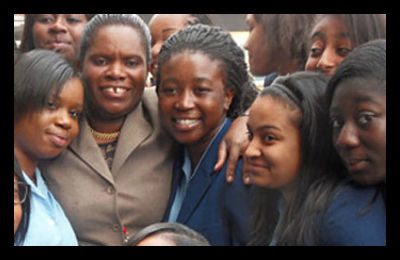
Education is the single most impactive weapon to empower women and save them from the cycle of poverty. While the gender gap in primary education has decreased over the past two decades, significant inequalities still remain. With women comprising two thirds of the illiterate population, and 2.6 million more girls out of school compared to boys around the world, now is not the time to deny females the right to a decent education.

That’s why USAID recently launched Let Girls Learn, an effort to give girls around the world access to quality education, backed by $230 million in new programs.

Based on statistics from USAID and the World Bank, here are five reasons why an investment in a girl’s education is an investment in a better world:

1. Educating Women Saves Lives
According to USAID, 99 percent of maternal deaths occur in the developing world. However, based on data from the World Bank, child mortality is reduced by 18 per thousand births with each additional year of female education. Giving young women access to education will decrease birth related deaths, as well as safeguard the health of all families. Women who complete primary school education are more likely to ensure their children are immunized, meet their children’s nutritional requirements and practice better sanitation.

2. Educating Women Increases GDP
Family earnings are increased when a wife has received an education. Educated women are better able to provide for their families, and help make smarter financial decisions. USAID reports show that one extra year of primary school boosts a girl’s future wage 10 to 20 percent. On the larger scale, USAID data reveals that when 10% more girls go to school, a country’s GDP increases on average by 3 percent.

3. Educating Women Limits Overpopulation
Investing in women’s education keeps girls in school longer. In the developing world, 1 in 7 girls will marry before they are 15. If a girl stays in school for seven or more years, on average, they will get married four years later and have two fewer children. Additionally, when women are educated about birth control, they are equipped to practice safe family planning.

4. Educating Woman Decreases Disease
Women make up nearly 52 percent of the global total of people living with HIV. A girl who completes a basic education is 3 times less likely to contract HIV/AIDS.

5. Educating Women is the right thing to do
The bottom line is: every child deserves the right to a quality education, and girls are no exception. With programs that ensure safe, quality and empowering education –like those implemented by USAID and Let Girls Learn –the world is one step closer to being a more just and equitable place.

– Grace Flaherty

Sources: USAID, USAID 2, USAID 3, World Bank
Photo: Colorado Chamber of Commerce

July 11, 2014
https://borgenproject.org/wp-content/uploads/borgen-project-logo.svg 0 0 Borgen Project https://borgenproject.org/wp-content/uploads/borgen-project-logo.svg Borgen Project2014-07-11 04:00:042024-05-27 09:18:095 Reasons to Invest in Educating Women
Global Poverty, Health

Lead Poisoning in Kenya

Kenya has had quite the year. From a recent plane crash to a raid by al-Shaabab earlier in June, the citizens are looking for some good news. Unfortunately, Human Rights Watch cannot offer such consolation, but their news does show Kenyans that someone is on their side.

A low-income area outside of Mombasa is facing a serious health threat: lead poisoning originating from the toxic waste of a nearby battery recycling plant. The Human Rights Watch has released a film entitled “Kenya: Factory Poisons Community,” which details the resulting health and environmental damage and calls for change.

The plant in question opened in the Owino Uhuru district in 2007. The plant has been in operation almost continuously for seven years. There are no precautions to protect the surrounding local community from contamination, and as a result, the waste that leaks out of the plant has infected the water sources. In addition, workers inside the lead smelter receive no protection and are often left to handle the toxic batteries with bare hands. The result? Massive exposure in the workers and community at large to seriously dangerous toxic lead.

Toxic poisoning is no light matter. It affects some 125 million people worldwide each year, usually in the form of waste from various industries. According to the WHO, high levels of lead exposure can cause damage in vital organs including the brain, liver and kidneys, as well as intellectual and developmental disabilities for the next generation.

So far, three workers in the plant in Owino Uhura have died due to exposure to unhealthy amounts of lead, and the community of 3,000 is also showing signs of ill health. Blood tests performed on children back in 2009 showed unsafe and unusually high levels of lead in the blood, and children often suffer from fainting spells, seizures and intense chronic pain.

Little has been done to stop this tragedy. The plant was briefly shut down in 2009, but allowed to reopen shortly after, despite the health and environmental report that showed significant risk to the local community. However, since the smelter project was intended to stimulate foreign investment, officials are reluctant to end it completely.

That being said, some progress has been made, and the smelter was successfully moved from Owino Uhura earlier this year. However, this does little to alleviate the damage it has already caused and will only serve to infect another community with the same levels of lead poisoning. No citizens of the Owino Uhura district have received medical treatment or further testing. Compensation has not been given to the workers or patients either.

Phyllis Omido is a local within the community and a former employee of the smelter. When her son fell ill in 2009, she began a campaign to rally her fellow citizens and call for government action. Phyllis has organized letter drives and peaceful rallies. Although she has been arrested for her efforts, she does not plan to stop until the government helps her community. “We want them to clean up and to help remove the lead from the blood of our children,” says Phyllis.

The Human Rights Watch blames government inaction for the tragedy, but it is not the laws that are the problem. The Environmental Management and Coordination Act was ratified in 1999 and states that it is illegal for industry to release toxic substances into the air or water. Kenyan law also requires an environmental impact assessment before plants like the Owino Uhura smelter can open, but the plant in question did not go through the process. In short, the laws are in place, but are rarely followed.

Kenya is also a member of several esteemed communities that advocate for human rights and the environment. These range from the African Commission on the Human and People’s Rights, the Convention on the Rights of Children and the International Labor Organization. Kenya’s association with such groups means that it is obligated to take care of its people.

However, even though these laws are on the books and Kenya attends conferences on human rights, this obligation is often ignored. This illuminates not a flaw in the country’s laws, but in its government. The Human Rights Watch holds the Kenyan government accountable for the health tragedy in Owino Uhura and calls on it to remedy its toxic lead problem. Jane Cohen of the Human Rights Watch says, “This is an urgent and on-going crisis that needs immediate government action.”

So far, the Kenyan government has not released a statement, but is in attendance at the 2014 Environmental Assembly meeting, which has toxic poisoning on the agenda.

How Kenya will react to this recent call for action remains to be seen, but the seriousness of the situation is clear. Kenyan citizens are being put at risk by their government’s failure to abide by its own laws and protect its people. It is time for the Kenyan government to be held accountable for the health issues of its people caused by its industry.

— Caitlin Thompson

Sources: Huffington Post, Human Rights Watch, NCBI, Think Progress, RTT News, International News
Photo: Human Rights Watch

July 10, 2014
https://borgenproject.org/wp-content/uploads/borgen-project-logo.svg 0 0 Borgen Project https://borgenproject.org/wp-content/uploads/borgen-project-logo.svg Borgen Project2014-07-10 17:51:222024-06-05 01:57:42Lead Poisoning in Kenya
Page 1995 of 2162«‹19931994199519961997›»

Get Smarter

  • Global Poverty 101
  • Global Poverty… The Good News
  • Global Poverty & U.S. Jobs
  • Global Poverty and National Security
  • Innovative Solutions to Poverty
  • Global Poverty & Aid FAQ’s
Search Search

Take Action

  • Call Congress
  • Email Congress
  • Donate
  • 30 Ways to Help
  • Volunteer Ops
  • Internships
  • Courses & Certificates
  • The Podcast
Borgen Project

“The Borgen Project is an incredible nonprofit organization that is addressing poverty and hunger and working towards ending them.”

-The Huffington Post

Inside The Borgen Project

  • Contact
  • About
  • Financials
  • President
  • Board of Directors
  • Board of Advisors

International Links

  • UK Email Parliament
  • UK Donate
  • Canada Email Parliament

Get Smarter

  • Global Poverty 101
  • Global Poverty… The Good News
  • Global Poverty & U.S. Jobs
  • Global Poverty and National Security
  • Innovative Solutions to Poverty
  • Global Poverty & Aid FAQ’s

Ways to Help

  • Call Congress
  • Email Congress
  • Donate
  • 30 Ways to Help
  • Volunteer Ops
  • Internships
  • Courses & Certificates
  • The Podcast
Scroll to top Scroll to top Scroll to top