• Link to X
  • Link to Facebook
  • Link to Instagram
  • Link to TikTok
  • Link to Youtube
  • About
    • About Us
      • President
      • Board of Directors
      • Board of Advisors
      • Financials
      • Our Methodology
      • Success Tracker
      • Contact
  • Act Now
    • 30 Ways to Help
      • Email Congress
      • Call Congress
      • Volunteer
      • Courses & Certificates
      • Be a Donor
    • Internships
      • In-Office Internships
      • Remote Internships
    • Legislation
      • Politics 101
  • The Blog
  • The Podcast
  • Magazine
  • Donate
  • Click to open the search input field Click to open the search input field Search
  • Menu Menu

Archive for category: Global Poverty

Key articles and information on global poverty.

Global Poverty, Human Rights

Hack North Korea: Hackathon to Deliver Info

From Aug. 2-3, 2014 the Human Rights Foundation will host a two-day hackathon in San Francisco to devise methods of delivering info to North Korea. The event entitled ‘Hack North Korea’ will utilize the expertise of Silicon Valley’s brightest to create solutions to break down the knowledge barriers of one of the world’s most closed societies.

Attendees will include various well known North Korean defectors who will give talks on current methodology for information distribution into the country, such as dropping CDs, DVDs, USB sticks, shortwave radios, and leaflets from balloons.

Following the presentations, participants will divide into teams and begin exploring the ways in which to effectively supply knowledge to North Korea’s 25 million inhabitants.

Safety is an important issue to consider when proposing schemes to dispense information in North Korea. The North Korean penal code considers listening to unauthorized foreign broadcasts and the possession of sectarian publications “crimes against the state.” These infractions can result in severe castigation such as hard labor, life prison sentences, and the death penalty.

The main goal of Hack North Korea is not to promote the access of classified data, but rather to encourage solutions for disseminating information and promoting freedom of knowledge to a region that is highly restricted from utilizing common communication portals such as the Internet.

According to The World Bank, North Korea has the lowest Internet usage in the world. The country’s leadership does permit Internet access to a few selected member of its regime. The total number of users is estimated to be in the hundreds.

Although ownership of a personal computer in North Korea is formally banned, close to 4 million computers have been distributed to a minority of its citizens. These individuals have gained the right to access a few closed-off intranets that are heavily monitored and utilize a government-controlled operating system, “Red Star.”

Additionally, the country has only one Internet café, which is located in the capital and is primarily used by foreigners.

HRF president Thor Halvorssen considers the efforts behind the Hackathon as an “information lifeline to ordinary North Koreans, who have no means to learn about the world beyond the lies of their government.”

A study by the research group, the Korea Institute for National Unification (KINU,) revealed that nearly half of North Korea’s population of 25 million lives in extreme poverty. Yet, as the United Nations (UN) continues to promote access to information technology as a means to alleviating the world’s poor, the HRF’s hackathon may prove to be helpful solution to breaking the cycle of poverty in the region.

HRF remains hopeful that as more North Koreans gain access to information, they will be empowered to defy and conquer the oppressive nature of the current dictatorship and improve the lives of its citizens.

– Talia Langman

Sources: CNBC, Freedom House, PBS NewsHour, The Guardian, United Nations, US News
Photo: Boing Boing

July 28, 2014
https://borgenproject.org/wp-content/uploads/borgen-project-logo.svg 0 0 Borgen Project https://borgenproject.org/wp-content/uploads/borgen-project-logo.svg Borgen Project2014-07-28 11:18:212024-06-05 01:57:51Hack North Korea: Hackathon to Deliver Info
Global Poverty

Venezuela Evicts Residents of the Tower of David

Slum. Shantytown. Gang haven. Shelter for squatters. Whatever you want to call it, the Tower of David in Caracas, Venezuela, will no longer offer a roof to the poor families that currently call it home. On June 22, Venezuelan soldiers, officials and authorities began removing families from a 45-story building notorious for offering shelter to poverty-stricken families and gang members.

The Tower of David got its name from the original owner and investor of the building, David Brillembourg. The building is currently the third highest skyscraper in the country and was initially designed to be a banking center that would signify the new and prosperous future for Venezuela.

However, the building stopped construction in 1993 after Brillembourg’s death and was quickly abandoned. It wasn’t until a housing crisis in 2007 that homeless people and gangs moved in, which quickly led to the building gaining a reputation as the world’s tallest slum. But this new effort from the Venezuelan government looks to change that.

This recent move is designed to give those who live in the building better accommodations and to help clear the longtime symbol of poverty and lack of law. Those who currently live in the building, numbering around 3,000 residents, are being given new homes in the town of Cua, south of the capital city of Caracas. More than 100 families have already been relocated, and it is estimated that more than 1,150 families will leave the tower by the end of the process. As of this writing, there is no timetable for removing all of the residents from the tower.

Ernesto Villegas, the minister for the revolutionary transformation, made it clear during an official statement that this move is “…a coordinated operation, in harmony with the community in the tower.” This attitude is reflected by many of those who were relocated, who recognized that as residents of the building, which had erratic water and power supplies and was a consistent target of police raids, they needed a more stable and all-around better living environment. Hopefully this symbolic act of clearing the Tower of David will help spark further reforms to help increase the standard of living for many Venezuelans who find themselves in poverty.

– Andre Gobbo

Sources: BBC, Al Jazeera, The Atlantic
Photo: National Post

July 28, 2014
https://borgenproject.org/wp-content/uploads/borgen-project-logo.svg 0 0 Borgen Project https://borgenproject.org/wp-content/uploads/borgen-project-logo.svg Borgen Project2014-07-28 11:13:392024-12-13 17:51:01Venezuela Evicts Residents of the Tower of David
Developing Countries, Global Poverty

Poverty and Depression in the Developing World

In 2003, psychiatrists Vikram Patel and Arthur Kleinman suggested that there is a correlation between poverty and depression, as well as other common mental illness, in developing countries. They argued that the “experience of insecurity and hopelessness, rapid social change and the risks of violence and physical ill-health” explain why impoverished people are so vulnerable to mental illnesses such as depression.

In the United States, as of 2011, 30.9 percent of people in poverty are depressed. While this isn’t a global statistic, it does illuminate the relationship between the global depression phenomenon and global stressors, such as insecurity, violence, etc. These external factors are crucial to the development of depression, but so are internal or hereditary ones; a combination of the two is what neuroscientists now believe causes the neurological disorder.

Studies of the neurology of depression center around the neurotransmitter serotonin, a chemical messenger found in the brain associated with feelings of well-being, mood regulation, memory and cognition. Neurons release serotonin into the synaptic cleft, the space in-between neurons, and receptors on adjacent neurons receive it.

Different receptors have specialized effects. The two most important serotonin receptors in depression research are 5-hydroxytryptamine receptor 1A (5HT1A) and 2A (5HT2A.) The former is associated with increased activity, while the latter is associated with decreased activity.

One theory is that depression is caused by an uneven ratio of 5HT1A to 5HT2A receptors, with an excess of 5HT2A. This is an hereditary occurrence that leaves one more prone to depression, though not necessarily depressed. If there is insecurity, violence, etc. in this person’s environment, however, he or she is likely to develop symptoms of depression.

Another theory suggests that people suffering from depression naturally produce less serotonin than those who do not. This is, again, genetic and will only ever make one vulnerable to depression; it’s most likely a combination of genetic predisposition and external influences from one’s environment that cause this mental illness.

To counteract genetic predispositions to depression, neurologists, commonly use an antidepressant medication called selective serotonin re-uptake inhibitor (SSRI) drugs. They block what is called re-uptake, a process during which neurotransmitter transporters limit the amount of a neurotransmitter – in this case serotonin – in the synaptic cleft by taking it from receptors and driving it to other areas of the brain. Blocking re-uptake increases one’s serotonin levels where it counts, in the synaptic cleft where neurons communicate.

The effects of this medication may seem counter intuitive.

“Regardless of the emotion being happy or sad it would seem SSRI drugs dampens the experienced intensity of the emotion,” said Albert Gjedde, a neuroscientist who studies antidepressant SSRI drugs. “People in treatment with SSRI dugs describe it as if the peak of their emotions are cut away.”

Drugs such as SSRIs can help people with innate biases toward depression, but until poverty and its consequences are reduced, there will always be those at risk. Neuroscientists and philanthropists must work in tandem to mitigate the effects of depression and, eventually, to annihilate it.

– Adam Kaminski

Sources: The Atlantic, ScienceNordic
Photo: Salon

July 28, 2014
https://borgenproject.org/wp-content/uploads/borgen-project-logo.svg 0 0 Borgen Project https://borgenproject.org/wp-content/uploads/borgen-project-logo.svg Borgen Project2014-07-28 11:05:262024-05-27 09:18:59Poverty and Depression in the Developing World
Global Poverty

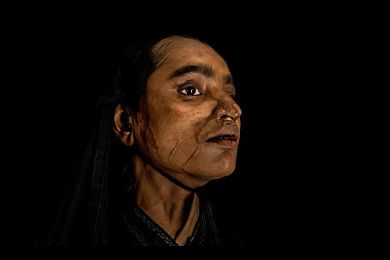
Pakistani Kiln Worker: Labor Till Death

Pakistani Kiln Worker
For Pakistani kiln worker, Amna Bhatti, the only escape from debt is death. Bhatti explains to the Washington Post, “We are poor, and we will always stay poor. When you enter this road, the only way out of it is death.” Many other Pakistani kiln workers face a similar reality.

According to the U.N., 21 percent of the population of Pakistan lives below the poverty line and some are left with no choice but to take out loans in exchange for labor. These loans can have very high interest rates, creating a cycle of bonded labor.

Workers labor in the hot sun to pay off their debt and, many times, their family’s debt, which can be passed down through the generations. Although this practice of paying off loans through labor has been outlawed by the Pakistani government since 1992, actual enforcement of the law is not practiced.

Most of the time, work is done for far less than minimum wage since employers regularly do not keep records and authorities have limited resources to oversee the industry. According to Kahlid Mahmoud, the director of the Labour Education Foundation located in Lahore, no more than a dozen kiln factories in Punjab, Pakistan pay the country’s minimum wage of $7.50 per 1000 bricks.

Actual pay can amount to as little as $1.25 cents a day. Workers are not excluded because of age either.

Child labor in Pakistan encompasses over 12 million children according to the International Labour Organization. Two million of these children work up to 14-hour days in the brickmaking industry. According to the Maplecroft risk analysis firm Pakistan places sixth in their list of 10 countries with the worst rankings for child labour. Many times these children work side by side with their parents.

Pakistan has also been ranked by the 2013 Global Slavery index as having “the third highest prevalence of modern-day slavery.” Female kiln workers are among the worst treated. Zakaria Nutkani of Action Aid explains, “Female workers have virtually no rights, as most of them do not even possess a national identity card, which is a basic document to prove a person’s existence in government records.” Nutkani explains further that female workers are often the lowest paid and face never-ending work because of additional responsibilities maintaining their households.

Cases of sexual abuse of women and children are common. Ghulam Fatima of the human rights advocacy group Bonded Labour Liberation Front explains that workers face extreme repercussions for refusing to work.

These repercussions can include murder or being sold to human traffickers. The punishments can even extend beyond the individual and to their families. Kiln worker Naser explains to CNN about his work conditions simply stating, “He beats me up if the work doesn’t get done.”

Options of escaping bonded labor are rare or non-existent. Bonded laborer Muhammad Mansha sold his kidney to buy his children out of their family’s debt.

Poverty allows conditions such as these to continue to thrive. It greatly limits the options and opportunities people could otherwise have access to. For these Pakistani kiln workers, this is their reality and they know it all too well.

– Christopher Kolezynski

Sources: Al Jazeera, The Washington Post, United Nations Development Programme in Pakistan, CNN World

July 28, 2014
https://borgenproject.org/wp-content/uploads/borgen-project-logo.svg 0 0 Borgen Project https://borgenproject.org/wp-content/uploads/borgen-project-logo.svg Borgen Project2014-07-28 11:02:152024-12-13 17:51:01Pakistani Kiln Worker: Labor Till Death
Activism, Advocacy, Global Poverty

How to Get Into Philanthropy

how_to_get_into_philanthropy
As defined by Merriam-Webster, philanthropy is the giving of money and time to help improve the lives of others. Despite the straightforward definition, philanthropy can relate to a broad range of actions, which is why a question many of us ask is how does one get into philanthropy?

When exploring this question, ask yourself, “What causes do I care about most?” With numerous organizations supporting a variety of causes, it can be difficult to choose among hundreds of philanthropic organizations.

As a result, many donors are strategic in their giving, meaning that they ensure that their donations will yield the best results coinciding with their beliefs. To help realize what causes you care most about, rank organizations according to the categories that they address, such as people, places, issues or philosophies.

Sites like CharityNavigator.org and GiveWell.org are helpful when researching and ranking organizations. Don’t be shocked if your rankings change over time. Like everything else, this is a learning process, so allow yourself some time to learn the best ways to donate.

Although monetary donations keep organizations working toward their specific cause, giving time is just as important as giving money. Organizations are always looking for volunteers and even full-time employees dedicated to the organization’s cause. The most popular position people typically apply for in a philanthropic organization is that of program staff member, whose main responsibility is grant-making; but there are so many more positions available that applicants may typically overlook.

Employment opportunities typically available at a philanthropic organization include: member of the foundation board, senior management, finance, programs, communications, administration/human resources, donor relations, research and grants management. All of these positions play a major role in an organization’s daily operations and in the achievement of its core mission.

An increasing amount of volunteers are serving the world’s poor in both the U.S. and foreign countries. Although the common perception of volunteers is that they are merely young and inexperienced college students or graduates volunteering to simply pass the time, volunteers are just as important and influential as employees. With the timing of assignments ranging from weeks to months to even years, volunteering can directly correspond with one’s schedule.

Volunteering has become more than just an easy way to assist international development efforts or humanitarian relief work; anyone can learn new skills and share their knowledge with others. With various opportunities available across the world, finding a volunteer position that is related to your interests or expertise is easy, thanks to sites like Volunteermatch.org and Idealist.org.

Even though philanthropy is commonly associated with donations, it goes beyond donating money. While considering how to get into philanthropy, remember that every action helps, whether you contribute your finances, time, or even your gifts and talents.

– Meghan Orner

Sources: Merriam-Webster, Philanthropy New York, Devex, Bridgespan
Photo: MillanCPA

July 28, 2014
https://borgenproject.org/wp-content/uploads/borgen-project-logo.svg 0 0 Borgen Project https://borgenproject.org/wp-content/uploads/borgen-project-logo.svg Borgen Project2014-07-28 10:36:122024-06-05 01:57:50How to Get Into Philanthropy
Global Poverty, Health

Cholera Outbreak in Haiti: The UN Responds

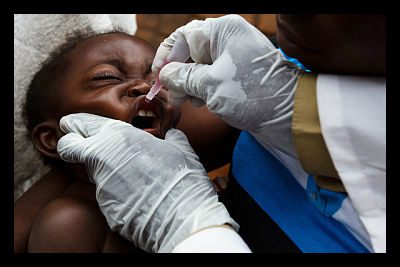
cholera in HaitiUnited Nations Secretary, General Ban Ki-moon, arrived in Hispaniola this past week, with renewed promises to the Haitian people burdened with an ongoing cholera epidemic. During his stay, the Secretary-General called for increased commitment to the $2.2 billion plan he first proposed at the end of 2012 — to help fight the cholera outbreak in Haiti, a plan for which donors have been scarce.

He also introduced the “Total Sanitation Campaign” that will attempt to lessen the impact of future cholera outbreaks in Haiti by addressing the absence of proper sanitation in rural areas. “As secretary-general of the United Nations, I want to assure you that the United Nations and its partners are strongly committed to ending the epidemic as quickly as possible,” said the Secretary-General.

Before the current epidemic, which has killed over 8,500 and infected 700,000 since 2010, Haitians had not seen a recorded case of bacterial infection within their borders for a century. Evidence suggests that U.N. peacekeepers from Nepal first brought the disease to Haiti in response to the 2010 earthquake that affected 3 million in the area.

Despite its claim of legal immunity, the UN must now defend itself against three lawsuits brought forth on behalf of the victims. Critics denounced the Secretary-General’s visit, stating that the UN must accept legal responsibility for the outbreak and compensate the Haitian people.

Cholera quickly spread throughout Haiti due to inadequate sewage systems and polluted water sources. While extreme poverty fell by seven percent from 2000 to 2012 nationally, poverty rates remained largely the same in rural areas where half of all households lack adequate sanitation and where more than half of the total population resides.

Of the rural population, 40 percent uses unprotected water sources, which lead to increased risk of contracting cholera. The economic gap between rural and urban populations in Haiti has grown, with 70 percent of rural households classified as chronically poor compared to those of urban areas at 20 percent.

The World Health Organization defines cholera as “an acute intestinal infection caused by ingestion of food or water contaminated with the bacterium Vibrio cholerae.” Symptoms include watery diarrhea that if untreated, can dehydrate and kill a patient. Yet the 75 percent of those infected who do not develop symptoms, can still infect others. Those with low immunity to disease, such as malnourished children and people with HIV, have an increased likelihood of infection.

Almost all families displaced by the earthquake four and a half years ago have since left temporary camps — a sign of increased progress in a burdened nation. As families continue to reestablish normalcy, the UN’s campaign plans to initially aid three million citizens over the next five years. According to the Secretary-General, “Cholera rates are declining and the battle is slowly being won. We must, however, intensify these efforts. And we must focus on the wider quest to ensure access to safe drinking water and adequate sanitation.” For now, anxious Haitians await both new donors and and initiative from the U.N. to take legal responsibility.

– Erica Lignell

Sources: UN, World Bank, BBC, ABC News, WHO, CBS News
Photo: Unsplash

July 28, 2014
https://borgenproject.org/wp-content/uploads/borgen-project-logo.svg 0 0 Borgen Project https://borgenproject.org/wp-content/uploads/borgen-project-logo.svg Borgen Project2014-07-28 10:32:042024-06-05 01:57:50Cholera Outbreak in Haiti: The UN Responds
Food & Hunger, Global Poverty, Health

New Purpose for the Irish Potato: Vita

Almost 170 years after the first crops began to rot in what is now the Republic of Ireland, an Irish nonprofit, Vita, hopes to give the potato a new purpose in alleviating hunger in the Horn of Africa. Working with Gama Gofa Zonal Administration, the International Potato Centre, Arba Minch University, Teagasc, Wageningen and the Irish Potato Federation, Vita founded the Potato Centre of Excellence in 2013. The Centre, based in Gama Gofa, Ethiopia, plans to help over 100,000 Ethiopian farmers grow potatoes as a staple crop within the the next five to 10 years.

Potatoes have long sustained the Irish population, and as Vita highlights, potatoes “use less water per nutritional output than all other major food sources and can be grown in Africa.” The Centre will give a bag of potato seeds to individual farmers with the idea that the farmers will return two bags of seeds the following year. Vita is in the process of introducing new strains of potatoes with the hope of increasing crop yields in the Horn of Africa.

Mother Teresa, Father Kevin Doheny and Father Norman Fitzgerald founded Vita in 1989 with the mission of tackling “…household food insecurity through community-led sustainable agriculture projects, which are scalable and replicable, with a special focus on women as the key enablers of sustainable development.”

The organization, located in Dublin, has also worked to further the efforts of the Potato Coalition of six countries in Sub-Saharan Africa. The United States Agency for International Development has help to fund the Coalition, which has already brought aid to over 10,000 farmers in Southern Ethiopia since its inception in 2013. The Coalition aims to eventually help four million potato farmers in Africa by connecting researchers, the private sector and local organizations.

The diversity of the new potato crops remains key to the success of potato farming across the region in order to protect against the Phytophthora infestans that causes the kind of potato blight seen in the 1846 to 1852 Irish famine. An estimated 1 million Irishmen died from starvation or epidemic as a result of the famine, and an additional 2 million left Ireland for better economic opportunity elsewhere.

Although the naturally occurring disease was disastrous on its own, many historians today point to the policies of the British government under Prime Minister Lord John Russell as massively negligent at best, genocide at worst. Influenced by new liberal ideas on the free market economy and long-held bigotry against the Irish, the Whig administration’s response was to introduce arbitrary public work projects and inadequate food rations via the Irish Poor Acts.

As then assistant secretary to the treasury, Lord John Russell claimed, “The judgement of God sent the calamity to teach the Irish a lesson, that calamity must not be too mitigated. …The real evil with which we have to contend is not the physical evil of the Famine, but the moral evil of the selfish, perverse and turbulent character of the people.”

In 1997, Prime Minister Tony Blair formally apologized for the British government’s role in the famine.

Even with continued tensions with the British over the status of Northern Ireland, the Irish now have the opportunity to evolve the potato from a painful reminder to a symbol of hope for a sustainable future.

– Erica Lignell

Sources: Vita, Vita’s Facebook page, Vita Annual Report, The Economist, University College Cork-Multitext Project
Photo: The Daily Spud

July 28, 2014
https://borgenproject.org/wp-content/uploads/borgen-project-logo.svg 0 0 Borgen Project https://borgenproject.org/wp-content/uploads/borgen-project-logo.svg Borgen Project2014-07-28 10:20:382024-12-13 17:51:01New Purpose for the Irish Potato: Vita
Economy, Global Poverty

How Fair is Fair Trade?

fair trade
Fair Trade is a system in which a deal is worked out between artisans or farmers in developing countries and businessmen or a middleman to sell products in more affluent countries for a price in which those producing the items get fair wages for their work.

The goal of these fair trade companies is to replace continual aid (in which the receiving end oftentimes feels helpless,) with a system where the “receiver” is able to create a sustainable lifestyle by utilizing their talents in a business. Over time, Fair Trade companies can build long-lasting relationships with their suppliers.

Paul Rice, CEO of Fair Trade U.S.A., says “The corporate community is increasingly realizing that this model and models like it are a way to align sustainability with profitability, they want a resilient and sustainable supply chain.”

A problem these companies are currently having is that they are not well known among their potential market. Consumer awareness for these products is currently at 55 percent, improving from the 34 percent that it was a few years ago. Consumers are increasingly questioning where their food and products are coming from and becoming thoughtful in their purchases.

Another problem dealing with this issue is the companies themselves. While there are standards for producers, labor, production and the economics behind the transaction, the producers still don’t always seem to receive a sustainable amount.

Ndongo Samba Sylla, a Senegalese development economist, studied common fair trade companies to find that most of the producers are coming from less poor areas rather than the very poor one, crop farmers, and calculated that for each dollar paid by a consumer, only about 3 cents more are given back to producers in fair trade programs than other producers.

Although the percentage comparison is not always favoring the producers in the way we would hope, many companies of this kind do charge more for their products, therefore more money would go to the producer in the end.

Aside from the prices, the standards for this model go beyond economics. The World Fair Trade Organization and the Fair Trade Federation Principles designed regulations for any company that calls themselves fair trade, many of which are not strictly economic.

The standards involve transparency and accountability between the client and the buyer, where the client cannot be taken advantage of. This kind of company must assist the producer, whether it be financial, educational, or market information, in order for the producer to sustain their business. Prompt payment is required, so the producers are able to have consistency, and equal payment between genders for equal work is also a necessity.

Although harder to define, fair trade companies must also be environmentally conscious and respectful of the producer’s culture. The companies are encouraged to use recycled materials (also more economically sustainable,) and companies must respect the manner in which the products are being made by not discouraging indigenous traditions and techniques if the producers do not wish to change them.

Overall, these companies work toward letting producers become sustainable partially through higher wages, but also empowering them through equality and respect they may not be receiving otherwise. Beyond economics, the business practices being upheld by these companies will still benefit the producers and help them succeed.

– Courtney Prentice

Sources: The Economist, The Guardian, Fair Trade, Fair Trade Federation
Photo: Tufts Now

July 28, 2014
https://borgenproject.org/wp-content/uploads/borgen-project-logo.svg 0 0 Borgen Project https://borgenproject.org/wp-content/uploads/borgen-project-logo.svg Borgen Project2014-07-28 10:01:032024-05-27 09:18:55How Fair is Fair Trade?
Global Poverty

How Privilege Affects Decision Making

People of low socioeconomic status are often considered responsible for their impoverishment. This mentality—“the poor are poor because they don’t work hard”—is seen so often in those looking from a point of privilege. Even when disregarding hereditary disadvantages, poor  individuals are blamed for bad choices that perpetuate poverty, such as smoking and failing to save money for long-term plans.

These judgments, however, are misguided in the way they criticize individuals so severely. Many psychologists, including University of Pennsylvania neuroscientists Joseph W. Kable and Joseph T. McGuire,  now believe that poverty influences the way humans—all humans—make decisions. In other words, individuals cannot be blamed before interpreting the psychological wear of poverty.

Complementing their findings, a poignant post on killermartinis.kinja.com, an online forum, acts as a window into the thought process of someone at the bottom end of the socioeconomic totem pole. Here’s an excerpt:

“I make a lot of poor financial decisions. None of them matter, in the long term. I will never not be poor, so what does it matter if I don’t pay a thing and a half this week instead of just one thing? It’s not like the sacrifice will result in improved circumstances; the thing holding me back isn’t that I blow five bucks at Wendy’s. It’s that now that I have proven that I am a Poor Person that is all that I am or ever will be.

“Poverty is bleak and cuts off your long-term brain. It’s why you see people with four different baby-daddies instead of one. You grab a bit of connection wherever you can to survive. You have no idea how strong the pull to feel worthwhile is. It’s more basic than food. You go to these people who make you feel lovely for an hour that one time, and that’s all you get. You’re probably not compatible with them for anything long-term, but right this minute they can make you feel powerful and valuable. It does not matter what will happen in a month. Whatever happens in a month is probably going to be just about as indifferent as whatever happened today or last week. None of it matters. We don’t plan long-term because if we do we’ll just get our hearts broken. It’s best not to hope. You just take what you can get as you spot it.”

This woman’s writing illustrates exactly what Kable and McGuire showed in their experiments. It seems that, contrary to common thought, patience is not always adaptive. Impatience and giving up can be the appropriate action if, for example, the future is unpredictable and may not hold the rewards one is waiting for.

“There are lots of situations, probably the majority of situations, in the real world,” Kable says, “where waiting longer is actually a valid cue that the reward is getting further and further away.”

Patience, which is linked to both intelligence and success later in life, may be a construct of privilege. When one comes from a place of privilege the rewards one waits for are, more often than not, granted. The same cannot be said of the poor, so naturally it is harder to wait when the reward of patience is usually not granted. It is especially hard to plan ahead when one does not have money and giving up is so simple and so instantaneously rewarding—when smoking a cigarette, like the woman on killermartinis.kinja.com continues to say, is the only relief.

“Our environment trains us about the value of persistence. Sometimes, it makes sense to wait,” said Maria Konnikova in an opinion piece for the New York Times featuring Kable and McGuire’s study. “At other times, the adage about the bird in hand begins to make sense.”

The adage goes, aptly, “a bird in the hand is worth two in the bush.” For people of low socioeconomic status this may be not only true, but also adaptive.

– Adam Kaminski

Sources: New York Times, Killermartinis
Photo: Salon

July 27, 2014
https://borgenproject.org/wp-content/uploads/borgen-project-logo.svg 0 0 Borgen Project https://borgenproject.org/wp-content/uploads/borgen-project-logo.svg Borgen Project2014-07-27 08:00:562024-05-27 09:18:50How Privilege Affects Decision Making
Global Poverty

Finding Beauty Between Poverty and Tourism

In Western countries, traveling is a privilege. Travel softens people’s psyche, allowing even the simplest of sights and gestures to hit travelers with an overwhelming sense of humility. Travel is a means of escape and rejuvenation, but sometimes it comes at the cost of the destination’s native population.

In her guest post on Kelsey Timmerman’s website, Callan Gaines attributed her experience in Guatemala to the beauty that was brought forth by the country’s poverty. She remarked how Americans lacked the villagers’ selflessness and gratitude, traits which stem from the villagers’ modest lifestyle. She was in awe at the ease with which she was moved by a smile or a hug. She reveled in community’s cozy atmosphere.

It is all too easy to romanticize poverty. However, sometimes it can inspire people to lend a hand and make a difference. Trips abroad humble and awaken visitors, especially when both travelers and host communities are respectful, creating a friendly environment.

Not all travel stories share Callan Gaines’ positive perspective, especially when that perspective comes from behind the curtain. Haiti’s Jalousie, a hillside slum in one of the capital’s districts, is going up in colors. Jalousie en Colors is a government project aiming to liven up the area by painting 1,000 houses in bright colors.

The underlying philosophy is that life will take a better turn when beauty is introduced. However, the money should not be going towards painting when there are more pressing issues facing Jalousie.

With a secondary fault line running underneath the hillside slum, Jalousie is at risk of enduring earthquakes and mudslides. In addition to these environmental hazards, residents need schools, electricity and a water supply. Instead of heeding these concerns, the Haitian government is changing Jalousie from an eye sore to a tourist backdrop. Despite claims that beautifying Jalousie is to lift the spirit of residents, only the houses facing the nearby hotels are painted.

Phase 2 of the project is underway, with an agenda to have 3,000 more houses painted and the reparation of a local soccer field. Concerns regarding the safety and infrastructure of Jalousie have been promptly dismissed.

In South America, preparation for the World Cup in Brazil has sparked distress across many of Brazil’s favelas. Residents face eviction threats as the government gathers momentum through their plans of urbanization. The government uses geological hazards as an excuse to justify their eviction intentions when the past few decades are a testament to the contrary. Residents cannot bear to leave behind the rich culture, history and diversity that has taken so long to come together, nor do they want to separate from families and neighbors.

The campaign to empty out favelas is still at full speed with the 2016 Olympics ahead. The government denies services to residents like garbage collection and lighting. There are rent increases and demolitions, and the evicted are dropped off in public housing. The gentrification of favelas crushes education, sanitation and infrastructure in order to sell an idealistic and exotic image of Brazil to the world.

Tourism is a large source of revenue. However, if poorly managed, tourism can severely damage a country. India and Nigeria are countries with failed tourism development strategies. Social injustice carves rifts between classes and weak policies can lead to irreparable destruction for the environment. The influx of foreigners and the government’s need to impress create a wave of low paying and exploitative jobs, used to keep up a welcoming illusion.

The United States Institute of Peace (USIP) Report on Tourism in the Developing World asserts that the host community, host government and foreign stakeholder must take responsible and respectful action in order to implement healthy tourism. Tourism should elicit positive feelings from both host and guest. The idea is that tourism promotes pride, peace, understanding and acceptance. It goes without saying that the idea needs to be a reality.

– Carmen Tu

Sources: ReliefWeb, USIP, The Guardian, Where Am I Wearing
Photo: UN

July 26, 2014
https://borgenproject.org/wp-content/uploads/borgen-project-logo.svg 0 0 Borgen Project https://borgenproject.org/wp-content/uploads/borgen-project-logo.svg Borgen Project2014-07-26 04:00:342024-06-05 01:57:48Finding Beauty Between Poverty and Tourism
Page 1988 of 2162«‹19861987198819891990›»

Get Smarter

  • Global Poverty 101
  • Global Poverty… The Good News
  • Global Poverty & U.S. Jobs
  • Global Poverty and National Security
  • Innovative Solutions to Poverty
  • Global Poverty & Aid FAQ’s
Search Search

Take Action

  • Call Congress
  • Email Congress
  • Donate
  • 30 Ways to Help
  • Volunteer Ops
  • Internships
  • Courses & Certificates
  • The Podcast
Borgen Project

“The Borgen Project is an incredible nonprofit organization that is addressing poverty and hunger and working towards ending them.”

-The Huffington Post

Inside The Borgen Project

  • Contact
  • About
  • Financials
  • President
  • Board of Directors
  • Board of Advisors

International Links

  • UK Email Parliament
  • UK Donate
  • Canada Email Parliament

Get Smarter

  • Global Poverty 101
  • Global Poverty… The Good News
  • Global Poverty & U.S. Jobs
  • Global Poverty and National Security
  • Innovative Solutions to Poverty
  • Global Poverty & Aid FAQ’s

Ways to Help

  • Call Congress
  • Email Congress
  • Donate
  • 30 Ways to Help
  • Volunteer Ops
  • Internships
  • Courses & Certificates
  • The Podcast
Scroll to top Scroll to top Scroll to top