• Link to X
  • Link to Facebook
  • Link to Instagram
  • Link to TikTok
  • Link to Youtube
  • About
    • About Us
      • President
      • Board of Directors
      • Board of Advisors
      • Financials
      • Our Methodology
      • Success Tracker
      • Contact
  • Act Now
    • 30 Ways to Help
      • Email Congress
      • Call Congress
      • Volunteer
      • Courses & Certificates
      • Be a Donor
    • Internships
      • In-Office Internships
      • Remote Internships
    • Legislation
      • Politics 101
  • The Blog
  • The Podcast
  • Magazine
  • Donate
  • Click to open the search input field Click to open the search input field Search
  • Menu Menu

Archive for category: Global Poverty

Key articles and information on global poverty.

Children, Development, Education, Global Poverty

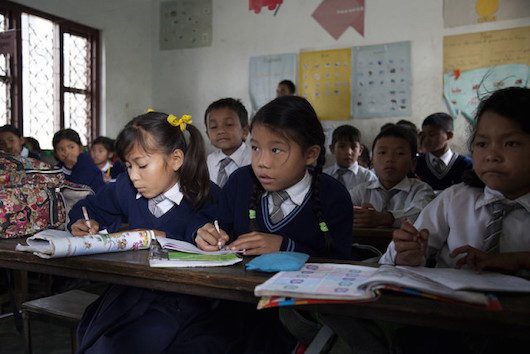
The Rising Potential For “The Educational Journey of a Girl”

“Over 31 million primary school-age girls are out of school despite progress in achieving universal primary education,” a report published by the Global Business Coalition for Education found.

This study was released on the International Day of the Girl Child, a time “to recognize girls’ rights and the unique challenges girls face around the world,” says the UN.

The study produced an infographic and report which followed a female’s educational journey from birth to adulthood, offering insight into the obstacles faced by many seeking an education.

The infographic illustrated many of the disadvantages girls must overcome but, due to their circumstances, may be unable to. For example, a child born to a literate mother is five times more likely to survive beyond the age of 5.

However, girls who start engaging in child labor tend to be between 5-7 years old and few of them are given the opportunity of enrolling in school, which means millions never make it.

While the study recognizes that many businesses already do a great deal to empower girls in secondary education, the report encouraged companies to begin making investments at an earlier age.

“Examining the wider life cycle of a girl and investing sooner would have economic and societal benefits and help companies to support girls to become the leaders, consumers, employees, employers and innovators of the future,” says A World at School, a global campaign working to place all children in school.

After surveying 32 companies that invest in girls, the report discovered that early support in a child’s education is more helpful and transformative because it aids in building foundations in subjects, such as numeracy and literacy, which could advance them later in life.

The study suggests that the key to enabling more girls to receive an education lies in early investment; starting early will help prepare them with the necessary skills they will need to advance at work and in life.

In fact, the infographic also revealed that girls who complete both primary and secondary education “are likely to earn income, have fewer unwanted pregnancies, and break the poverty cycle.”

To build a more involved and sustainable role in girls’ educational development, the report has issued the following recommendations:

  1. Build broad-based partnerships
  2. Invest now, invest early
  3. Expand the business case for girl’s education
  4. Grow the evidence base
  5. Strengthen the corporate voice for girl’s education
  6. Play an active role in addressing the global crisis
  7. Make the health and education link for girls
  8. Train the next generation of employees and business leaders
  9. Work with the international donor community to scale what works in girl’s education

For many children’s education, their only hope rests in receiving support during their early years. As Executive Chair of GBC-Education Sarah Brown said, “We know all too well that the economic empowerment of a woman does not start when she is an adult. It starts when she is a girl.”

– Nikki Schaffer

Sources: A World at School, UN
Photo: A World at School

October 28, 2015
https://borgenproject.org/wp-content/uploads/borgen-project-logo.svg 0 0 Borgen Project https://borgenproject.org/wp-content/uploads/borgen-project-logo.svg Borgen Project2015-10-28 01:30:552024-12-13 18:05:17The Rising Potential For “The Educational Journey of a Girl”
Global Poverty, Health, Sustainable Development Goals

Global Maternal Newborn Health Conference in Mexico City

newborn_health_conference

In response to the recent sustainable development goals created by the UN, Mexico City hosted a Global Maternal Newborn Health Conference to focus attention on and propel efforts towards improving maternal and newborn health and healthcare around the world.

Representatives of more than 50 countries, which included policymakers, healthcare workers, researchers and organization leaders, attended the conference.

The general public or those unable to attend in person had ample opportunity to participate virtually through webcasts, live converge and social media engagements. The theme of the Conference was “Reaching every mother and newborn with quality care.”

The talks, group sessions and skill demonstrations focused on six primary tracks: innovating to accelerate impact at scale, measuring for evaluation and accountability, bridging equity divides, generating new evidence to fill critical knowledge gaps, strengthening demand for health care and increasing health systems’ capacity to respond to population needs.

The conference was hosted with the intention of increasing collaboration to encourage innovation and improved global health.

Every day, about 800 women die from preventable causes related to pregnancy or childbirth. These deaths are often due to the fact that the women did not have access to adequate healthcare.

This helps explain why 99 percent of all maternal deaths occur in developing countries where woman are restricted geographically or economically from the medical care they need.

Mexico City was selected to host the conference because Mexico is a recognized global leader in maternal and newborn health improvements.

Their national maternal and newborn health agenda has been greatly improved through successful government policies and programs, as well as through assistance from local and national NGOs, philanthropic entities and academic organizations.

In order to abide by and accomplish the UN’s Sustainable Developmental Goals, nations and international organizations must find ways to work together to set satisfactory standards and procedures and flush out what strategies and techniques work and what ones do not.

Conferences like the Global Maternal Newborn Health Conference allow information to be shared as well as spur insight to solutions and inspire hope for progress.

– Brittney Dimond

Sources: Global MNH 2015, The Guardian, WHO
Photo: Flickr

October 28, 2015
https://borgenproject.org/wp-content/uploads/borgen-project-logo.svg 0 0 Borgen Project https://borgenproject.org/wp-content/uploads/borgen-project-logo.svg Borgen Project2015-10-28 01:30:452020-06-24 17:53:09Global Maternal Newborn Health Conference in Mexico City
Development, Global Poverty

Renewable Energy Campaigns Scheduled for Africa

Maasai-Green-Energy-Africa-solar-2-537x393Countries like Ghana, Kenya and the Congo have been making drastic improvements with regards to health, business and reducing overall poverty.

However, there is still a long way to go to completely eradicate poverty issues. Several countries and organizations have banded together in order to continue making progress in these areas.

One such project that is underway is the United Kingdom’s Energy Africa campaign. The goal of this campaign, as stated by the UK’s government site, is to “help Africa to achieve universal energy access by 2030. A reliable electricity supply is one of the most powerful tools for lifting people out of poverty and ending dependency on aid.”

Despite drastic improvements that have been made in Africa, USAID still reports, “Two out of three people in Sub-Saharan Africa lack access to electricity.”

Addressing this issue, the UK’s Energy Africa campaign states that “together with African governments, investors, businesses, NGOs, think tanks and other donors, DFID will work to increase investment in off-grid energy firms, overcome regulatory barriers, foster innovation, and accelerate delivery of solar energy systems to households across Africa.”

The UK alone is not the only group interested in renewable energy in Africa, though. The IRENA, International Renewable Energy Agency, has shown high hopes for an improved Africa through energy changes.

The IRENA recently came out with a report, Africa 2030, that outlines these hopes. In the report it is stated that “modern renewable energy will provide a prominent alternative to support the African population, which is striving for better living standards, more comfort, and fewer health hazards and avoiding extreme inconveniences.”

The main focus is to switch Africa to four key energy sources: biomass, hydropower, wind and solar power. While this large switch sounds expensive, professionals have shown it as a necessary investment.

The IRENA report has shown that “the abundance and high quality of renewable-energy resources render renewables economically competitive, in particular as the costs of renewable technologies are rapidly decreasing. Recent renewable-energy project deals concluded in Africa will deliver power at some of the lowest costs worldwide.”

The Energy Africa campaign was launched on Oct. 22. The promise of success in renewable energy campaigns is there. The hope to bring reliable and sustainable energy to everyone brings the promise of really “lifting people out of poverty and ending dependency on aid.”

— Katherine Martin

Sources: Gov.uk, USAID, IRENA
Photo: Assets Inhabitat

October 27, 2015
https://borgenproject.org/wp-content/uploads/borgen-project-logo.svg 0 0 Borgen Project https://borgenproject.org/wp-content/uploads/borgen-project-logo.svg Borgen Project2015-10-27 01:30:152024-12-13 18:05:18Renewable Energy Campaigns Scheduled for Africa
Global Poverty, Women and Female Empowerment

Bolivia’s Land for Agricultural Development Project

land_for_agricultural_development
The Land for Agricultural Development Project in Bolivia granted more than 150,000 hectares of land to poor farmers and indigenous people. Consequently, the average family income increased by 39%.

The program, which lasted seven years, initially focused on decentralizing the land market so that poor farmers and indigenous people were able to make purchases.

Over the course of the project, however, the changing market made land prices unaffordable, so the program expanded to include leasing, sharecropping and technical assistance in commercializing its products and investing in agriculture and livestock.

The U.S. $15 million program also promoted the involvement of women. Women participated in training programs focused on agricultural and administrative skills. By the closing date of the project, Sept. 15, 2014, women’s involvement had reached 38%.

The Land for Agricultural Development Project enabled 5,681 women to become direct individual beneficiaries, out of the 11,488 individual beneficiaries.

The 39% increase in the average family income is a result of 2,891 families becoming beneficiaries of the program, and also the investments they made in livestock, agriculture and agroforestry. This contributed to sustaining the livelihoods of families and, in the long run, ending the generational cycle of poverty.

The “Implementation Completion and Results Report,” released on March 12, 2015, revealed that the Bolivian government’s commitment to eradicating extreme poverty and empowering indigenous people was very instrumental in the success of the program.

When President Evo Morales came to power in 2006 he made the distribution of agricultural lands to poor and/or landless farmers and indigenous people one of his priorities. However, indigenous families were still struggling to sustain living because of the privatization of land markets.

Morales expressed gratitude for the partnership with the World Bank following the New 2012-2015 Country Partnership Strategy. He stated that “[it is time to] give power economic power to social movements, especially in rural areas where historically we have been abandoned.”

– Marie Helene Ngom

Sources: World Bank 1, World Bank 2, World Bank 3, New Agriculturalist
Photo: Google Images

October 26, 2015
https://borgenproject.org/wp-content/uploads/borgen-project-logo.svg 0 0 Borgen Project https://borgenproject.org/wp-content/uploads/borgen-project-logo.svg Borgen Project2015-10-26 01:30:162024-12-13 18:05:15Bolivia’s Land for Agricultural Development Project
Development, Global Health, Global Poverty, Health, USAID

USAID Grants Palladium Health Policy Plus

palladium_health_policy_plus

USAID tasked Palladium with implementing Health Policy Plus (HP+), which is a five-year $185 million project that focuses on strengthening health policy, financing, governance and advocacy in developing countries.

The initiation of Palladium Health Policy Plus is in perfect timing with the establishment of the new Global Sustainable Health Goal (SDGs).

It directly focuses on Goal 3, which is to “ensure healthy lives and promote well-being for all at all ages,” and goal 17: “strengthen the means of implementation and revitalize the global partnership for sustainable development.”

Palladium is greatly experienced in leading initiatives on social and economic development. They have led projects in 84 countries in collaboration with the U.S. Government and World Bank.

Ed Abel, president of Palladium’s U.S. business unit, said: “We are grateful to USAID in recognizing Palladium’s leadership in bringing positive impact to its global effort to end extreme poverty and promote resilient, democratic societies through health policy and financing.”

HP+ builds upon the previous Health Policy Project (HPP) that ended on Sep. 29, 2015. HPP was active from 2010 to 2015 and was implemented in 48 countries worldwide.

The USAID-funded HP+ was initiated on Aug. 28, 2015. Palladium plans on using the following “four pillars” to achieve success: International Development, Strategy Execution Consulting, Research Development and Training and finally Impact Investing.

These approaches will also take into account gender equality and equity issues, family planning and reproductive health (FP/RH), maternal and child health (MCH) and HIV and AIDS.

Palladium will be working in collaboration with Avenir Health, Futures Group Global Outreach, Plan International USA, Population Reference Bureau, RTI international, The White Ribbon Alliance for Safe Motherhood and ThinkWell.

Suneeta Sharma, HP+ Director, commented: “We’re looking forward to collaborating with USAID, health ministries and civil society actors worldwide to foster more equitable, sustainable, rights-based health services, supplies and delivery systems using evidence-based approaches for decision making and resource allocation.”

– Marie Helene Ngom

Sources: PRNewswire, Federal Grants, UN Sustainable Development, Palladium
Photo: Rachel Yang

October 26, 2015
https://borgenproject.org/wp-content/uploads/borgen-project-logo.svg 0 0 Borgen Project https://borgenproject.org/wp-content/uploads/borgen-project-logo.svg Borgen Project2015-10-26 01:30:162020-06-24 18:05:44USAID Grants Palladium Health Policy Plus
Global Poverty, USAID

Natural Disaster Education Eases Economic Blow

natural_disaster_education

As El Niño once again stirs the atmosphere. Skiers look forward to a good amount of snow and developing countries anticipate disaster.

El Niño is defined as “above-normal sea surface temperatures in the eastern and central equatorial Pacific Ocean.” It occurs every two to seven years and can last for several months.

When ocean temperatures change, so do wind and precipitation patterns and land temperatures. Some areas receive life-saving rainfall while others experience heavy flooding and droughts. Tropical cyclones and wildfires are also common side-effects.

Countries vulnerable to harsh weather, such as agriculture-based economies and areas with unstable infrastructure, face famine, disease and increased poverty. Economies without the means to make repairs deteriorate further, and families are left homeless and hungry.

This year, as the world faces one of the strongest El Niños in 50 years, USAID is implementing natural disaster education in vulnerable countries. The more prepared a country is to respond to and prevent natural disasters, the quicker its economy can recover.

In New Guinea, where a combination of drought and floods decimated the sweet potato crop and left many without a source of income, USAID is providing agricultural training to make fields more resilient. Techniques such as planting over last season’s crop stubble and using cover crops help the soil retain three times as much moisture.

Latin American meteorologists are learning to use the Flash Flood Guidance System to predict flash floods. Studying rainfall and absorption buys as much as six hours to evacuate people and animals. It’s not a lot of time, but it’s enough to prevent heavy casualties.

As more people move in Nacala, Mozambique, they risk settling in areas that are vulnerable to the climate. Flooding, erosion and water scarcity can damage infrastructure and impede development.

USAID founded the Climate Resilient Infrastructure Services program to educate newcomers about climate vulnerabilities and high-risk areas, as well as teach natural disaster response techniques. Climate change awareness saves a lot of money and prevents future heartache.

Similar to Nacala, Vietnam has begun studying climate change and proper responses. One of its cities, Hue, experiences frequent heavy floods, which encourage extreme poverty and disease.

USAID is helping Hue, and Vietnam in general, to predict flooding and create infrastructure that can withstand heavy water over an extended period of time.

As a result of warnings, communities in Africa organized food, medicine and housing in anticipation of natural disasters and resulting diseases. El Niño is occurring more frequently in Africa, leaving little time for recovery, so food and supply storage is vital.

Families who lose their homes and occupations can utilize the supplies until they regain their livelihood. Instead of dissolving, communities will remain intact and functional and poverty will be kept at bay.

Natural disasters leave thousands dead or impoverished each year, but it doesn’t have to be this way. Natural disaster education saves lives and prevents poverty. Instead of having to rebuild their lives from the ground up, people in developing countries can continue to move forward and improve their situations.

– Sarah Prellwitz

Sources: USAID 1, USAID 2, NOAA, Accuweather, IB Times, Live Science
Photo: Wikimedia

October 26, 2015
https://borgenproject.org/wp-content/uploads/borgen-project-logo.svg 0 0 Borgen Project https://borgenproject.org/wp-content/uploads/borgen-project-logo.svg Borgen Project2015-10-26 01:30:012024-06-04 04:33:51Natural Disaster Education Eases Economic Blow
Global Poverty

President Xi Jinping Vows to Eradicate Poverty in China

eradicate_poverty_in_china
Chinese President Xi Jinping announced during the 2015 Global Poverty Reduction and Development Forum opening presentation that he vows to eradicate poverty in China by 2020.

Over the past 15 years, China has lifted more than 600 million people out of poverty.

This impressive feat made them the first developing country to achieve the first Millennium Development Goal (MDG) target of halving poverty before the 2015 deadline.

Despite this commendable accomplishment, more than 70 million people in China are still living below the poverty line – earning less than 2,300 yuan annually, which is the equivalent of $362 U.S.

“Despite the achievements, China remains the world’s biggest developing country, and narrowing the urban-rural gap remains a big challenge for us,” said President Xi.

Similar to many countries worldwide, the disparity between the rich and poor in China continues to increase as the world’s second-largest economy slows its pace.

According to President Xi, only 12.3 million Chinese people earned enough money to move above the poverty line in 2014, compared to 43.3 million people in 2011.

In light of the International Day for the Eradication of Poverty on Oct. 17, the Chinese government will have to lift, on average, 1 million Chinese people out of poverty per month until 2020.

The Chinese government and China’s Office of Poverty Alleviation & Development plan to come up with a string of more effective and targeted measures to achieve the goal, including:

  • Launching Education Campaigns — With education at the forefront, people living in rural communities can receive proper education and will be more likely to escape poverty.
  • Encouraging Financial Support — Experienced financial specialists can help people living in poverty managed their money and teach them how to save money over a period of time.
  • Building Public Platforms — This will encourage middle-class Chinese people to join the fight in eradicating poverty.

“Chinese government has made great efforts on poverty alleviation. We hope to encourage all sectors of society to participant in the endeavor to lift all rural population out of poverty by 2020,” said Hong Tianyun, head of the Lead Group Office of Poverty Alleviation & Development in China.

– Alexandra Korman

Sources: CCTV, Reuters, The Times of India
Photo: Pixabay

October 25, 2015
https://borgenproject.org/wp-content/uploads/borgen-project-logo.svg 0 0 Borgen Project https://borgenproject.org/wp-content/uploads/borgen-project-logo.svg Borgen Project2015-10-25 01:30:522024-12-13 18:05:17President Xi Jinping Vows to Eradicate Poverty in China
Development, Global Health, Global Poverty, Health

Sustainable Blood Flow in West Africa

sustainable_blood_flow
Sisu Global Health has developed a device that recycles blood without using electricity for hospitals in developing countries.

According to the World Health Organization (WHO), “75 countries report collecting fewer than 10 donations per 1,000 population.” The vast majority of these countries are located in Africa.

Not only is blood itself in short supply (and expensive), clean and effective ways to obtain and transmit it are also lacking.

Of the donations low-income countries receive, only 16% are monitored through external quality assessment schemes, says the WHO. This leads to the continued spread of diseases, such as HIV.

In addition, unnecessary and unsafe transfusions run rampant in low-income clinics, creating even more problems.

Fortunately, a hospital in West Africa came up with a blood-collecting technique that would become the inspiration for a revolution in blood technology.

When Carolyn Yarina and Gillian Henker visited the hospital, they saw doctors use a cup to collect and reuse blood from internal bleeding, reports The Baltimore Sun.

Using this idea as a foundation, they created Sisu Global Health, a medical device company for emerging markets.

Their breakthrough technology, called the Hemafuse, is a manual autotransfusion device used to retransfuse a patient’s own blood during an internal hemorrhage, according to their website.

The Hemafuse does not need electricity to run, which makes it the perfect solution for clinics in developing countries.

With such a revolutionary, environmentally-friendly product, Sisu has already attracted attention from big-time investors.

According to The Baltimore Sun, the company has obtained a $100,000 investment from AOL Co-Founder Steve Case, after entering his “Rise of the Rest” startup competition.

Yarina and Henker have stumbled onto an immensely valuable idea here, one that will help ensure blood safety and sustainable blood flow in countries that have a desperate need for plasma.

– Ashley Tressel

Sources: Baltimore Sun, WHO, SISU Global Health, Rise of Rest

October 25, 2015
https://borgenproject.org/wp-content/uploads/borgen-project-logo.svg 0 0 Borgen Project https://borgenproject.org/wp-content/uploads/borgen-project-logo.svg Borgen Project2015-10-25 01:30:492024-05-27 09:28:12Sustainable Blood Flow in West Africa
Global Poverty

Youth Entrepreneurship Forum in Dushanbe

z1 miniature people
Since independence, the long civil war and recurring natural disasters have led to widespread poverty in Tajikistan. About half of the country’s population is poor and depends on agriculture to survive. The majority of the poor are unemployed, underemployed or self-employed.

On Oct. 12, 2015, a Youth Entrepreneurship Forum took place in Dushanbe with support from the World Bank Group. The goal of the event is to increase awareness of the importance of entrepreneurship for job creation and economic growth and to share ideas about entrepreneurship for youth in Tajikistan.

The World Bank has an active portfolio of 24 projects, including regional projects and Trust Funds. It intends to make a net commitment of U.S. $383 million to support economic growth through private sector development and investments in better public services, such as education, health, municipal services and social protection.

As part of the World Bank Group-financed Central Asia Youth Empowerment and Jobs Project, this event aims to improve the business climate and foster youth entrepreneurship in Tajikistan through improving the capacity of state entities and offering skills training for youth.

The event involved around 200 young entrepreneurs, private companies, civil society organizations, development partners, World Bank Group experts, representatives from the Government of Tajikistan and participants from the Slovak Republic.

At the forum, international and local experts introduced key concepts of entrepreneurship, including how to set up and manage a business, how to make entrepreneurial decisions and identify new business opportunities. Representatives from Tajikistan private companies and the Slovak Republic shared their experience of starting a business and discussed with young entrepreneurs about how entrepreneurship works at the individual and company level.

embassy_dushanbe_0Moreover, officials from the Secretariat of Consultative Council on Improvement Investment Climate under the President of Tajikistan and the Ministry of Finance of the Slovak Republic focused on policies that foster youth entrepreneurship and how to better link the private sector with education institutions.

The forum also includes the discussion on business and entrepreneurship opportunities offered by local and international civil society organizations, development partners and local associations and companies.

In order to put words into action, following the forum, a master class started on October 13 for start-up businesses intending to collect individual business advice from successful entrepreneurs from Tajikistan and the Slovak Republic.

“Young people are eager to work and need good job opportunities. A society that can deliver these opportunities is promoting growth and investing in its welfare,” said Patricia Veevers-Carter, World Bank Country Manager for Tajikistan. “The World Bank Group’s efforts in this area in Tajikistan are going to focus on helping youth develop skills and increase employment opportunities, as well as on assisting the Government in designing policies that help youth thrive.”

This project will benefit the society of Tajikistan with more jobs created by entrepreneurship and improved economy.

– Shengyu Wang

Sources: World Bank, Rural Poverty                                                                                                                                                                                                                                                                                                                                                 Photo: DIPNOTE

October 24, 2015
https://borgenproject.org/wp-content/uploads/borgen-project-logo.svg 0 0 Borgen Project https://borgenproject.org/wp-content/uploads/borgen-project-logo.svg Borgen Project2015-10-24 01:30:562020-06-29 11:02:41Youth Entrepreneurship Forum in Dushanbe
Aid, Developing Countries, Education, Global Poverty

International Scholarships: Hope for Developing Countries

International Scholarships: Hope for Developing Countries

Nelson Mandela, former president of South Africa and education advocate, once stated that “education is the most powerful weapon which you can use to change the world.”

It is with this outlook that countries have banded together to make education a priority in developing countries where change is most needed.

Primary education and ensuring that each child has access to it has been a first step, but what next? USAID along with several other countries and organizations have begun expanding their focus on continued education.

On the USAID site, it explains that “higher levels of education can raise developing countries’ productivity significantly. One study shows that an additional year of average secondary or university-level education in a country raises national output by 19 percent.”

The U.N. News Center showed this in its report on economic growth within developing countries. Its feature article shared, “Economic growth alone does not automatically translate into human development progress. [Developing countries] are therefore not just tapping into global trade, but they are also improving health and education services, which have allowed them to sustain their growth.”

Countries such as the U.S., U.K. and Poland have helped to expand educational opportunities through international scholarships.

Go Poland is one project that has helped more than 400 international students continue their education outside of their home country.

On its site, the organization notes that “new scholarship programmes translate into higher numbers of foreigners studying in Poland. Foreign students in Poland acquire expertise which they will be able to use afterwards for the benefit of their home countries.”

The same goals are maintained in all other international scholarships awarded to students from developing countries. It is an investment in the students, developing countries and the world at large.

Future scholarships for 2016 are already being handed out to students in various developing nations. These scholarships provide hope for a better future in countries that still have much room for growth.

– Katherine Martin

Sources: Washington Post, USAID, UN, Polska Pomoc
Photo: Pixabay

October 24, 2015
https://borgenproject.org/wp-content/uploads/borgen-project-logo.svg 0 0 Borgen Project https://borgenproject.org/wp-content/uploads/borgen-project-logo.svg Borgen Project2015-10-24 01:30:552024-12-13 18:05:17International Scholarships: Hope for Developing Countries
Page 1829 of 2163«‹18271828182918301831›»

Get Smarter

  • Global Poverty 101
  • Global Poverty… The Good News
  • Global Poverty & U.S. Jobs
  • Global Poverty and National Security
  • Innovative Solutions to Poverty
  • Global Poverty & Aid FAQ’s
Search Search

Take Action

  • Call Congress
  • Email Congress
  • Donate
  • 30 Ways to Help
  • Volunteer Ops
  • Internships
  • Courses & Certificates
  • The Podcast
Borgen Project

“The Borgen Project is an incredible nonprofit organization that is addressing poverty and hunger and working towards ending them.”

-The Huffington Post

Inside The Borgen Project

  • Contact
  • About
  • Financials
  • President
  • Board of Directors
  • Board of Advisors

International Links

  • UK Email Parliament
  • UK Donate
  • Canada Email Parliament

Get Smarter

  • Global Poverty 101
  • Global Poverty… The Good News
  • Global Poverty & U.S. Jobs
  • Global Poverty and National Security
  • Innovative Solutions to Poverty
  • Global Poverty & Aid FAQ’s

Ways to Help

  • Call Congress
  • Email Congress
  • Donate
  • 30 Ways to Help
  • Volunteer Ops
  • Internships
  • Courses & Certificates
  • The Podcast
Scroll to top Scroll to top Scroll to top