• Link to X
  • Link to Facebook
  • Link to Instagram
  • Link to TikTok
  • Link to Youtube
  • About
    • About Us
      • President
      • Board of Directors
      • Board of Advisors
      • Financials
      • Our Methodology
      • Success Tracker
      • Contact
  • Act Now
    • 30 Ways to Help
      • Email Congress
      • Call Congress
      • Volunteer
      • Courses & Certificates
      • Be a Donor
    • Internships
      • In-Office Internships
      • Remote Internships
    • Legislation
      • Politics 101
  • The Blog
  • The Podcast
  • Magazine
  • Donate
  • Click to open the search input field Click to open the search input field Search
  • Menu Menu

Archive for category: Global Poverty

Key articles and information on global poverty.

Global Poverty

The Wonderbag: Changing Women’s Lives

the_wonderbagThe Wonderbag is a revolutionary non-electric cooker with the capacity to change the way people cook around the world. The Wonderbag website describes the product as “a simple but revolutionary non-electric heat-retention cooker. It continues to cook food that has been brought to the boil by conventional methods for up to 12 hours without the use of additional fuel.”

The Wonderbag works by allowing the person cooking to heat any pot of food and then place the boiling pot into the bag and seal it. The initial heating can be done in any way whatsoever: on a stove in a modern kitchen, over a campfire or on a charcoal fire in a developing country’s village. The heat from the initial boiling keeps the food cooking inside the Wonderbag for eight to 12 hours.

The Wonderbag is portable and can be used anywhere. In addition to heating food, it can also be used as a cooler. All you have to do is freeze it and it will keep food cold for hours.

In an interview with the Huffington Post, inventor Sarah Collins said “The biggest killer in the world is indoor air pollution related diseases; over 4 million people die annually from cooking related fire diseases,” half of whom are under five years of age. Also, the burning of fuels causes hundreds of thousands of burns every year, according to the Wonderbag website.

Deforestation is a major problem around the world and is happening especially quickly in the developing world where they still use wood and charcoal as fuel and for the purposes of cooking. And by 2025, water shortages may affect up to two-thirds of the world’s population. In an interview with Climate Action, inventor Sarah Collins stated that: “The bag can reduce the amount of fossil fuels that people use for cooking by 90 percent.”

According to the Wonderbag website, the preparation of food can have a particularly damaging effect on the progress of women in developing countries. Preparing food can take hours, including the time spent gathering fuel. The use of the Wonderbag can free up several hours a day, allowing girls time to go to school and women time to do other work.

According to Climate Action, Collins says that through humanitarian work, she aims to get her product to “the people who live on a dollar a day in the developing world.” In the developing world, the bag can be used similarly to a slow cooker in a modern kitchen.

Finally, for each Wonderbag purchased by someone in the developed world, one will be donated to a family in the developing world, linking people all around the world to each other.

– Rhonda Marrone

Sources: Wonderbag, Facebook, Huffington Post, Climat Action Programme
Photo: Flickr

March 21, 2016
https://borgenproject.org/wp-content/uploads/borgen-project-logo.svg 0 0 Borgen Project https://borgenproject.org/wp-content/uploads/borgen-project-logo.svg Borgen Project2016-03-21 01:30:022024-12-13 18:05:53The Wonderbag: Changing Women’s Lives
Disease, Global Poverty

After Six Decades, Zika Virus in Asia Causes Concern

Zika Virus

The Zika virus has been in Asia and the Pacific for roughly six decades but its symptoms had caused little concern in the area. Yet after the recent outbreak in the Americas, certain countries in the region are now taking preventative measures.

Zika is an emerging mosquito-borne virus that was first identified in Uganda in 1947. The first outbreak in Asia, though, occurred in the 1960s.

“It has appeared in Indonesia, Malaysia, India, Cambodia, Vietnam, Thailand, the Philippines and Pakistan, but no widespread cases have been reported and symptoms have typically been mild and similar to dengue and chikungunya, which may have helped mask its presence,” according to the Associated Press.

Nonetheless, after the World Health Organization (WHO) declared a global emergency a few weeks ago, several countries in the region have started taking special precautions.

According to IRIN, “Tonga has declared an epidemic, and the government of the Cook Islands has advised women to delay becoming pregnant. Japan, South Korea, Nepal and India have issued advisories to pregnant women against traveling to infected countries.”

Nepal is attempting to get rid of standing water where the Zika-carrying Aedes aegypti mosquito might breed, said Dr. Babu Ram Marasini, director of the Department of Health Services.

“South Korea has announced a fine of two million won (about $1,700) on doctors who fail to immediately report suspected cases, while Malaysia has asked travelers to the country to report to health centers if they have symptoms,” added IRIN.

The U.S. Centers for Disease Control and Prevention says that it is unclear how the Zika virus arrived in the Americas. However, it is theorized that it arrived with participants from the Pacific at sporting events in Rio de Janeiro two years ago.

Since then, the Zika virus has been spreading rapidly across the Americas, with 1.5 million cases reported in Brazil alone.

IRIN emphasized that “despite Zika’s relatively benign history in Asia and the Pacific, there is a risk that a stronger form of the virus may have emerged, and that it could spread throughout the region with much more severe consequences than previous outbreaks.”

Additionally, Dr. Shailendra Saexana from the Indian Virological Society said “The strain in Brazil could be new because mutation rates in these viruses are high. Moist tropical climates, population explosion and international travel mean Asia is susceptible to Zika.”

Various Asian countries are currently very vulnerable to an outbreak of Zika, especially due to the increase in migration from rural areas to cities, as well as the lack of sanitation and abundance of stagnant water where mosquitoes can breed. However, with these new preventative measures in place, the risks may be reduced.

– Isabella Rolz

Sources: World Health Organization, IRIN, Associated Press
Photo: Flickr

March 21, 2016
https://borgenproject.org/wp-content/uploads/borgen-project-logo.svg 0 0 Borgen Project https://borgenproject.org/wp-content/uploads/borgen-project-logo.svg Borgen Project2016-03-21 01:29:372024-05-27 09:33:19After Six Decades, Zika Virus in Asia Causes Concern
Global Poverty

Improving the Diet of the Poor in Cuba

Poor in CubaIn the Post-World War II era, policies in the Global South have focused on improving the diet of impoverished populations, including the poor in Cuba, specifically on increasing animal protein consumption.

According to the U.N. Food and Agriculture Organization (FAO), there are 852 million undernourished people in the world, of whom approximately 815 million reside in developing countries.

“Rampant hunger and malnutrition impair the economic performance of individuals, households, and entire nations, and can lead to political instability and civil strife,” said Carmen G. Gonzalez, a professor at the University of Seattle.

Likewise, the health systems of the majority of countries, whether rich or poor, are inefficient and fragmented, preventing marginalized communities’ access to crucial health systems.

Nonetheless, in Cuba, these policies have reduced hunger in recent years, and the number of undernourished people is significantly diminishing.

“Cuba represents an important alternative example where modest infrastructure investments combined with a well-developed public health strategy have generated health status measures comparable with those of industrialized countries,” suggested the International Epidemiological Association.

After the 1959 Revolution in Cuba, the government led efforts to improve the diet and the health of impoverished citizens. One form of these efforts was an increase in animal protein production and consumption.

According to the World Health Organization (WHO), “there has been an increasing pressure on the livestock sector to meet the growing demand for high-value animal protein. The world’s livestock sector is growing at an unprecedented rate and the driving force behind this enormous surge is a combination of population growth, rising incomes and urbanization.”

Urbanization stimulates improvements in social and political spheres and there is still a gap between rural and urban nutrition. “Compared with the less diversified diets of the rural communities, city dwellers have a varied diet rich in animal proteins and fats, and characterized by higher consumption of meat, poultry, milk and other dairy products,” said WHO.

As diets become richer and more diverse, the protein derived from the livestock sector could improve the nutrition of the poor in Cuba. But through a developed health system, the Cuban government has not only successfully reduced malnutrition but also developed an advanced socio-economic strategy uniquely designed for developing nations.

– Isabella Rolz

Sources: World Health Organization , International Epidemiological Association , FAO
Photo: Flickr

March 20, 2016
https://borgenproject.org/wp-content/uploads/borgen-project-logo.svg 0 0 Borgen Project https://borgenproject.org/wp-content/uploads/borgen-project-logo.svg Borgen Project2016-03-20 01:30:412024-12-13 18:05:52Improving the Diet of the Poor in Cuba
Global Poverty

5 Habits of a Highly Successful Advocate

a Highly Successful AdvocateA successful advocate stirs up support for policies, legislation and public causes through civil education, awareness campaigns and lobbying with key decision-makers. Here are five things that can make any advocacy campaign more effective.

5 Habits of a Highly Successful Advocate

  1. Understanding Your Cause: A highly successful advocate understands the ins and outs of their cause. In order to speak passionately and authoritatively on an issue for which you are advocating, you must ensure that you read up on it, interact with people who understand and have experienced it and keep abreast of current affairs related to it. Advocacy is a full-time job and whenever you are interacting with other people or legislators, you have an opportunity to tell them about your campaign, so it really helps if you can converse comfortably about it.
  2. Creating Public Awareness: A cause that people know nothing about is doomed to fail. A highly successful advocate must, therefore, mount vigorous awareness campaigns around their cause. In this day and age of information proliferation through the Internet, social media has become one of the best ways to reach out to more people instantaneously. Creating online petitions and being very active on social media sites is a great way for an advocate to engage followers. Writing letters to editors of different newspapers is another means of putting your cause in the limelight. It is also important to blog and consistently publish articles around issues or legislation you are supporting. A successful advocate will also ensure that they network with people who are supporters of the cause.
  3. Consistently Calling and Emailing Congressional Leaders: Did you know that every time you call or email your congressional leaders in support of a piece of legislation, it is recorded and viewed by your elected official every week? Most legislators want to know as many of their constituents’ issues as possible; therefore, to be a successful advocate, you must set aside time each week to consistently call and email legislators to tell them about the cause you support.
  4. Meeting Elected Officials: According to the American Planning Association, meeting in person with elected leaders or their legislative staff is one of the most effective means of political advocacy. When going for lobbying meetings, it is important that you are well prepared in advance by knowing the specific problem you want to tackle and requesting a specific action or solution from the representative that you are meeting. You should also demonstrate that the issue you are presenting has an organized group of supporters. After the visit, ensure that you follow up by sending a thank-you note and tracking how the legislator responds to the issue.
  5. Fundraising: A highly successful advocate ensures that they are not strapped for cash when running their campaigns. It is important, therefore, to raise the capital that will allow you to regularly meet elected officials and key decision-makers, make phone calls and generally support overhead costs required to run your advocacy campaign.

– June Samo

Sources: American Planning Association, Government and Community Relations, Salsa, TASCO, The Advocacy Project, WFP
Photo: Flickr

March 20, 2016
https://borgenproject.org/wp-content/uploads/borgen-project-logo.svg 0 0 Borgen Project https://borgenproject.org/wp-content/uploads/borgen-project-logo.svg Borgen Project2016-03-20 01:30:032024-05-27 09:33:255 Habits of a Highly Successful Advocate
Global Poverty

BURO Bangladesh Fights Poverty in Bangladesh

BURO BangladeshBasic Unit for Resources and Opportunities of Bangladesh (BURO Bangladesh) is an organization that teaches poor Bangladeshis microfinance techniques that help them manage their money, operate businesses and obtain social services.

BURO Bangladesh currently serves 1.3 million impoverished people, many of whom are women, operates 644 branch offices in Bangladesh and employs more than 6,000 staff.

Established in 1990, the organization is one of the first microfinance institutions in the country to dedicate 100 percent of its operations to achieving financial sustainability for women and their families through commercial capital.

BURO Bangladesh offers two main programs, a microfinance program and a remittance program. The main goal of the microfinance program is to reduce poverty among the disadvantaged and the poor living in Bangladesh. Some of the features of the program include open withdrawal savings accounts, optional loans and operational and financial self-sufficiency resources.

The remittance program is designed specifically for expatriates who work abroad in order to provide for their families back in their home country. BURO Bangladesh has established partnerships with multiple banks and money transfer services across Bangladesh and Asia, such as Western Union, Xpress Money and Merchantrade products, to provide their clients with products.

Besides focusing on microfinancing to assist with poverty alleviation, they have also implemented other projects to address common issues in Bangladesh. These projects concern issues such as supplying clean water, both for consumption and hygiene purposes; human resource development within companies; and improving health, hygiene, nutrition and sanitation throughout the country.

According to its 2014-2015 report, BURO Bangladesh has successfully helped over one million people. In a country where approximately 36 percent of the population lives below the national poverty line of $2 per day, the organization plans to continue assisting impoverished people, particularly women, throughout Bangladesh until poverty is reduced significantly.

– Julia Hettiger

Sources: BURO Bangladesh, Mix Market, Nation Multimedia
Photo: Flickr

March 20, 2016
https://borgenproject.org/wp-content/uploads/borgen-project-logo.svg 0 0 Borgen Project https://borgenproject.org/wp-content/uploads/borgen-project-logo.svg Borgen Project2016-03-20 01:30:032024-06-04 04:33:55BURO Bangladesh Fights Poverty in Bangladesh
Foreign Aid, Foreign Policy, Global Poverty, Politics

Where Donald Trump Stands on Global Poverty

Donald Trump PovertyDonald Trump surprised America when he announced his candidacy in June 2015. Trump has been garnering public attention despite not having any “elective, appointive, or military public experience,” according to the Atlantic. The publication also states that every prior president has had experience in one or more of these areas.

In this presidential race, Trump has been focused on illegal immigration in the U.S., particularly Mexican and Muslim immigration. He continuously affirms his belief that illegal immigrants are a national security concern. He also continues to voice his disapproval of immigrants from Syria migrating to the U.S.

Other hallmarks of his candidacy have been his unapologetic rhetoric. Trump’s controversial appeals have become his greatest asset in acquiring votes. In addition to immigration, he has been particularly vocal about the Islamic State group and the threat he believes the terrorist organization poses.

In contrast to fellow presidential candidate Bernie Sanders’ humble beginnings and opposition to wealth inequality, Forbes identified Trump as one of the richest American billionaires. So given his wealth and his stance on immigration, where does Donald Trump stand when it comes to foreign aid?

“It is necessary that we invest in our infrastructure, stop sending foreign aid to countries that hate us and use that money to rebuild our tunnels, roads, bridges and schools—and nobody can do that better than me.”

– Donald Trump’s Presidential Announcement 2016

“Pakistan’s a real problem because they have nuclear weapons… I would say we don’t give them any money unless they get rid of their nuclear weapons.”

– Donald Trump speaking on Fox News, May 9, 2011

“Money should be spent in our country. We should rebuild our country and also by the way reduce our $16 trillion in debt.”

– Donald Trump speaking about Afghanistan, March 13, 2012

In addition to his opinions on foreign aid, Trump’s discourse on decreasing the poverty rate in the U.S., which currently stands at approximately 14 percent of the population, consists of diminishing public assistance and handing responsibility for the poor over to volunteer organizations.

The results of this presidential election will reveal whether Americans prefer a leader with proven experience or charismatic promises. Foreign aid plays an essential role in the lives of millions around the globe. The continued provision of this foreign aid from the U.S. depends on which leader Americans choose to elect.

– Mayra Vega

Sources: India Times, Talk Poverty, NPR, The Atlantic
Photo: NY Daily News

March 19, 2016
https://borgenproject.org/wp-content/uploads/borgen-project-logo.svg 0 0 Borgen Project https://borgenproject.org/wp-content/uploads/borgen-project-logo.svg Borgen Project2016-03-19 01:30:542024-06-04 04:33:54Where Donald Trump Stands on Global Poverty
Global Poverty, Government

Open Society Foundations: Giving Countries Their Freedom

Open Society FoundationsBillionaire George Soros’s Open Society Foundations (OSF) is committed to building “vibrant and tolerant societies whose governments are accountable and open to the participation of all people,” according to the organization’s website. “We seek to strengthen the rule of law, respect for human rights, minorities and a diversity of opinions, democratically elected governments and a civil society that helps keep government power in check.”

Authoritarian governments, in which absolute power is held by a single dictator or ruling party, have been linked to an increase in poverty. To unveil the full impact of authoritarian government on poverty, the Human Development Report of the United Nations analyzed the condition of sub-Saharan Africa over the last 30 years. The study revealed authoritarian governments are more likely to become corrupted, have greater levels of violence than democracies and often favor the poverty of their citizens.

Conversely, open societies allow for freedom of belief, flexible social structure and availability of information. Citizens have a greater say in the running of their own countries and lives.

George Soros founded OSF in 1979 when he realized he had the funds and connections to make a real difference. By 1984, he had established his first foundation in Hungary, which involved the distribution of photocopiers in a bid to lessen the communist control on freedom of print. Within two decades, OSF had become active in all regions of the world.

Despite its positive aims, some countries have not welcomed OSF’s mission. In May 2015, Russia banned ‘undesirable’ foreign organizations that could compromise its constitutional order or national security. “The ‘undesirables’ law and its implementation have been a terrible blow for civic freedoms in Russia,” said Hugh Williamson, the Europe and Central Asia director of Human Rights Watch.

Despite resistance, OSF continues to grow by way of a two-part strategy. First, it operates the Central European University, where future political leaders can research and analyze new solutions to ensure that open societies remain stable. Students from more than 100 countries attend the university.

Second, current OSF president Christopher Stone created the New Executives Fund, a $2 million fund to start off nonprofit organizations that support education, social change and public health. Every year, two or three selected nonprofits receive two-year grants ranging from $25,000 to $250,000. This fund, as well as supporting worthy causes, has directed global attention toward OSF.

Making inroads to transforming authoritarian governments into open societies helps to reduce poverty and improve standards of living. OSF is committed to forming governments across the globe “where all people are free to participate fully in civic, economic and cultural life.”

– Sarah Prellwitz

Sources: Philanthropy, HRW, Open Society Foundations 1, Open Society Foundations 2, Tide Global Learning
Photo: Google Images

March 19, 2016
https://borgenproject.org/wp-content/uploads/borgen-project-logo.svg 0 0 Borgen Project https://borgenproject.org/wp-content/uploads/borgen-project-logo.svg Borgen Project2016-03-19 01:30:362024-12-13 18:05:47Open Society Foundations: Giving Countries Their Freedom
Global Poverty

Dumsor in Ghana: Staying Connected

dumsorIf you were to ask any Ghanaian, whether local or in the diaspora, what Ghana’s biggest issue is, the response would undoubtedly be dumsor, pronounced “doom-sore.” This term refers to the continuous and unpredictable electric power outages in the country.
Though dumsor has been a problem for decades, it was not until 2012 that this issue worsened. Ghana now faces regular power outages which can last for about 12 hours per day.

The reasons for the outages are unclear. It has often been claimed that part of the West African Gas Pipeline (WAGP) was cut by a ship’s anchor, which consequently halted the transmission of gas for electricity production. Other theories claim that the Akosombo Bui and Kpong Dam are not functioning properly because of low water causing mechanical problems with power plants. But whatever the cause, this crisis has yet to be solved.

In 2013, the World Bank Enterprise Survey on African countries, including Ghana and Nigeria, named “the ongoing rampant poor electricity supply as one of the biggest barriers to growth of the country’s economy and hindrance to many multinational investors.”

The Ghana Ports and Harbours Authority (GPHA) was reported to have lost $100,000 in profits in 24 hours due to continuous power outages at the Tema Harbour site. Other manufacturing companies such as breweries, bakeries and clothing companies, businesses such as restaurants, salons and corporate offices, as well as important locations such as hospitals, airports and schools, are also being adversely affected.

Every working person in the country needs electricity. For the few who have generators, life is a bit more bearable. But a consequence that arises from this alternative is not only the noise that is created by these generators but the cost to maintain these devices. For those who can only afford candles, the use of this alternative can lead to fires.

The Ghanaian government, as well as the Volta River Authorities (VRA), Ghana Grid Company (GRIDCO), the Northern Electricity Distribution Company (NEDCO) and Electricity Company of Ghana (ECG) have been looked to for answers. Although the president has made several promises, including a notable one that dumsor would be over by Christmas 2015, the problem still persists.

At this point, after several denials and broken promises by the Ghanaian government, it has been realized by most that the current energy crisis is not a result of inadequate installed capacity but rather a lack of financial resources to utilize the installed capacity. Ghana already owes billions of dollars in debt to electricity companies within and outside Ghana.

After four years, despite public marches, protests by local celebrities, the launch of a dumsor app and all of the promises by the government, no real progress has been made so far. Addressing this issue will tremendously help the country economically and contribute to its development.

– Vanessa Awanyo

Sources: My Joy Online, Modern Ghana, AllAfrica

March 18, 2016
https://borgenproject.org/wp-content/uploads/borgen-project-logo.svg 0 0 Borgen Project https://borgenproject.org/wp-content/uploads/borgen-project-logo.svg Borgen Project2016-03-18 01:30:112020-06-19 18:19:29Dumsor in Ghana: Staying Connected
Food & Hunger, Global Poverty

UN World Food Programme Restores Food Rations to Syrians

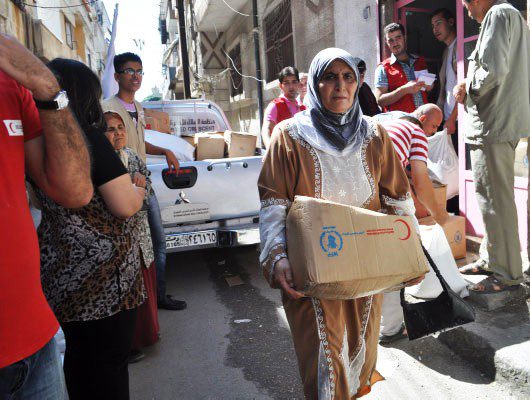
UN Food Rations to SyriaThe United Nations World Food Programme recently announced that a record pledge of $675 million, made at the Supporting Syria and the Region conference, will restore full food rations for Syrians.

In early February 2016, world leaders gathered at the conference in London to plan the restoration, the U.N. News Centre reports. According to the New York Times, most of the new money for the pledge was provided by Germany. The World Food Programme had to make cuts in aiding Syrian civilians last year because its budget was severely underfunded. This new pledge has helped the budget immensely.

The rations will go to Syrians inside the country, as well as refugees in the region. According to the U.N., there are 4.5 million Syrians inside the country and 1.8 million refugees outside the country in Jordan, Lebanon, Iraq and Egypt who rely on the World Food Programme every day.

The executive director of the World Food Programme Ertharin Cousin said, “the pledge now fully meets the basic food assistance necessities for those in need.” The pledge will also support increased student meals and other in-kind activities that will help create a better future for those affected, World Food Programme News reports. According to the U.N., these funds will allow the World Food Programme to provide a full food basket to families between April and October 2016.

The U.N. Office for the Coordination of Humanitarian Affairs also said that life-saving humanitarian assistance would be delivered by the U.N. and its partners to roughly 154,000 people living in besieged locations inside Syria. The assistance includes food, water, sanitation supplies, nutrition, household items, health and medical supplies.

Delivery trucks have already reached Moadimiyeh and more are expected to reach Madaya, Zabadani, Kefraya, Foah and East Ghouta. These deliveries will be in addition to regular operations delivering humanitarian aid to millions of Syrians, the U.N. reports.

According to Nonprofit Quarterly, the U.N. estimates that over 250,000 people have been killed and 12 million have been displaced due to the situation in Syria. The U.N. World Food Programme continues to do essential work to provide relief and assistance to the refugees and displaced persons.

– Kerri Whelan

Sources: WFP, United Nations, Nonprofit Quarterly, NY Times
Photo: United Nations

March 18, 2016
https://borgenproject.org/wp-content/uploads/borgen-project-logo.svg 0 0 Borgen Project https://borgenproject.org/wp-content/uploads/borgen-project-logo.svg Borgen Project2016-03-18 01:30:082024-06-11 02:48:18UN World Food Programme Restores Food Rations to Syrians
Global Poverty

Kenyan Startup BRCK Works to Connect Africa

BRCKKenyan startup BRCK, which creates the BRCK wifi device, has recently secured $3 million in funding for their product, which could advance Internet connectivity in Africa.

The BRCK wifi device is a solar-powered modem designed to withstand harsh environments and work using limited sources of power and Internet connections. It is also unique in that it can hop between various types of connections including Ethernet, wifi and 3G or 4G.

The device has eight hours of battery life, which is crucial due to Africa’s frequent power outages. BRCK’s slogan is: “If it works in Africa, it will work anywhere,” according to TechCrunch.

“Most of the organizations working to increase access to the Internet in Africa are dealing with it at the infrastructure level, with satellites or undersea cable, with mobile phone towers — and even balloons and drones,” said BRCK CEO Erik Hersman to CNN. “BRCK deals with the last meter of Internet connectivity in the bus stops and kiosks, homes and schools of Africa.”

The African-led company has sold over 2,500 devices in 54 countries since 2013. Most of their sales have been in India. The $3 million the company has secured comes from the TED organization and former AOL executives Jean and Steve Case, CNN reports.

“A lot of this funding is earmarked to grow our footprint, distribution and team around BRCK Education across the continent and globally,” said Hersman to CNN.

The majority of the 410 million school children in Africa do not have access to the Internet, which is something that the startup hopes to solve with its education program. The initiative works to provide remote schools with digital materials. Its ‘Kio Kit’ includes 40 water-resistant tablets, 40 earphones and a plug to provide wireless charging.

Schoolmaster Pastor George Njenga, who uses BRCK Education in his classrooms, told CNN, “This technology is a great help not only for the teachers but also the students, who are really learning a lot.”

With continued innovation, funding and expansion, BRCK has the potential to increase Internet connectivity across Africa and other largely unconnected parts of the world.

– Kaitlyn Arford

Sources: Tech Crunch, CNN, BRCK
Photo: CNN

March 18, 2016
https://borgenproject.org/wp-content/uploads/borgen-project-logo.svg 0 0 Borgen Project https://borgenproject.org/wp-content/uploads/borgen-project-logo.svg Borgen Project2016-03-18 01:30:042020-06-19 18:22:30Kenyan Startup BRCK Works to Connect Africa
Page 1817 of 2179«‹18151816181718181819›»

Get Smarter

  • Global Poverty 101
  • Global Poverty… The Good News
  • Global Poverty & U.S. Jobs
  • Global Poverty and National Security
  • Innovative Solutions to Poverty
  • Global Poverty & Aid FAQ’s
Search Search

Take Action

  • Call Congress
  • Email Congress
  • Donate
  • 30 Ways to Help
  • Volunteer Ops
  • Internships
  • Courses & Certificates
  • The Podcast
Borgen Project

“The Borgen Project is an incredible nonprofit organization that is addressing poverty and hunger and working towards ending them.”

-The Huffington Post

Inside The Borgen Project

  • Contact
  • About
  • Financials
  • President
  • Board of Directors
  • Board of Advisors

International Links

  • UK Email Parliament
  • UK Donate
  • Canada Email Parliament

Get Smarter

  • Global Poverty 101
  • Global Poverty… The Good News
  • Global Poverty & U.S. Jobs
  • Global Poverty and National Security
  • Innovative Solutions to Poverty
  • Global Poverty & Aid FAQ’s

Ways to Help

  • Call Congress
  • Email Congress
  • Donate
  • 30 Ways to Help
  • Volunteer Ops
  • Internships
  • Courses & Certificates
  • The Podcast
Scroll to top Scroll to top Scroll to top