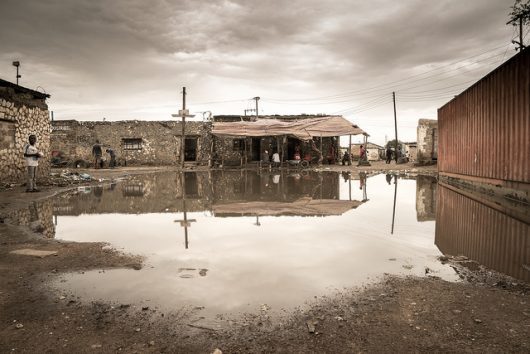
Aiming to alleviate global poverty, the World Bank has provided the financial backing for the construction and reconstruction of vital infrastructures, such as roads, dams and electrical grids, to war-torn and developing countries since 1944. In the fiscal year 2017, the World Bank granted $59 billion for projects in developing countries.
There are currently over 2,600 active projects worldwide ranging from financial risk management to roads and railways. Investments in infrastructure by the World Bank toward developing countries start in the billions of U.S. dollars. Here are the top five most expensive pledges for active projects in developing countries.
Eastern Dedicated Freight Corridor—II (India)
Active investments in infrastructure by the World Bank in India include the Eastern Dedicated Freight Corridor. It is an expansion effort that increases the reach and efficiency of freight cargo transportation in India’s northern and eastern regions, from Ludhiana to Dankuni.
The Eastern Freight Corridor, a project originally approved in October 2011, is a series of three projects that aim to double Indian Railways’ carrying capacity. In April 2014, the World Bank approved a $1.1 billion pledge, with a total cost of $1.65 billion, for the second tier of the project. This phase is set to build a 393-km, double-track, electrified, freight-only railway with a 25-ton axle-load at 100km/h. This sector will span between Kanpur and Mughal Sarai.
Uttar Pradesh, the most populous Indian state, stands to benefit from increased access to employment, health and education for its citizens by the de-cluttering of roadways. Once completed in December 2019, the full stretch of railway will be 1,839 km and is expected to reduce greenhouse gas emissions by up to 55 percent.
IN Swachh Bharat Mission Support Operation (India)
In 2015, the World Bank agreed to fund $1.5 billion of a $2.2 billion sanitation project, the Swachh Bharat Mission (SBM) Support Operation. The project focuses on the construction and promotion of using toilets in rural areas in India, in which 67 percent of Indians live.
The project is a part of a universal sanitation initiative that seeks to end the practice of open defecation by 2019. Ten percent of deaths in India are associated with poor sanitation. India also misses out on six percent of possible GDP due to insufficient sanitation. Further investments in infrastructure by the World Bank will provide $25 million to aid state training programs to encourage usage of toilets in rural areas.
PMGSY Rural Roads Project (India)
The Pradhan Mantri Gram Sadak Yojana (PMGSY) Rural Roads Project was established in 2010 when India’s National Rural Roads Development Agency and the World Bank agreed to a $1.5 billion deal. The project provides all-weather roads, servicing the states Jharkhand, Himachal Pradesh, Rajasthan, Meghalaya, Uttarakhand, Uttar Pradesh and Punjab.
The World Bank’s investment fully funds the PMGSY program for five years and covers civil works expenditures and furnishes a technical assistance program to assist agencies running it. PMGSY Rural completed work in April 2018 on a 7,000 km rural road, which is the longest road assembly in a year since PMGSY began in 2000.
This is the second of multiple investments in infrastructure by the World Bank as a part of the PMGSY project, the first being a $400 million loan in 2004. It connected 9,900 km of rural roads in Himachal Pradesh, Jharkhand, Rajasthan and Uttar Pradesh. The greater PMGSY project aims for 375,000 km of roads, linking 178,000 habitations and refurbishing 372,000 km of existing rural roads.
South-West Roads: Western Europe-Western China International Transit Corridor (Carec 1b & 6b) (Kazakhstan)
Investments in infrastructure by the World Bank in Kazakhstan look to improve road management and traffic safety. The South-West Roads Project was approved in 2009 when the World Bank agreed to fund $2.125 billion of the $2.50 billion total cost. The project includes constructing a 1,500-km road connecting China and Western Europe from the Aktobe and Kyzylorda district border to South Kazakhstan.
Road construction provides a local economic boost. The World Bank’s end of the deal employs 30,000 to 35,000 people. The cost of workers, subcontractors and materials boasts $1.6 million in spending power. Four thousand South Kazakhstan workers receive $600 a month, compared to the latest estimates that show the average Kazakhstan citizen earns $525 a month.
Eskom Investment Support Project (South Africa)
The largest, active investment in infrastructure by the World Bank is $3.75 billion, funding the Eskom Investment Support Project. Approved in April 2010, the total $10.75 billion project provides support for Eskom to enhance its energy supply and security.
Much of the funding was allocated for completion of the Medupi Power Station, the fourth-largest coal-fueled power plant. Stirring controversy, the plant is expected to add an annual 25 million metric tons of carbon emissions. Eskom is already reported to contribute to a 40 percent share of South Africa’s greenhouse gas emissions.
Eskom is South Africa’s state-owned primary electricity producer and Africa’s largest facility in electricity production. There is concern about Eskom as a monopoly producer of electricity and, accordingly, a call for more contributors in South Africa’s energy market. The National Union of Metalworkers of South Africa is currently pursuing a legal interdict from the Gauteng High Court in Pretoria in an effort to prevent Eskom from signing 27 renewable energy contracts.
As the World Bank continues to strive for its main objectives–decreasing the percentage of people living on less than $1.90 a day and spurring income growth for the bottom 40 percent–these projects, with such immense lending, are promising for the future of some of the world’s most economically vulnerable populations.
– Thomas Benjamin
Photo: Flickr
 Global poverty has been a worldwide concern for the last 200 years. At the close of 2016, global facts about poverty showed that 815 million out of 7.6 billion people were suffering from hunger, equal to one in nine people. However, statistics reported at the conclusion of 2017 bring new hope for 2018. The fight against poverty is working, as these five positive facts about global poverty demonstrate.
 Angola is a country in southern Africa sandwiched between three nations: Namibia, the Congo and Zambia. The United States established diplomatic relations with Angola
 Côte d’Ivoire, located in West Africa, is also known as the Ivory Coast. Agriculture dominates its economy, with oil and natural gases improving economic growth, too. Another aspect helping the economy is foreign aid, and the U.S. benefits from