• Link to X
  • Link to Facebook
  • Link to Instagram
  • Link to TikTok
  • Link to Youtube
  • About
    • About Us
      • President
      • Board of Directors
      • Board of Advisors
      • Financials
      • Our Methodology
      • Success Tracker
      • Contact
  • Act Now
    • 30 Ways to Help
      • Email Congress
      • Call Congress
      • Volunteer
      • Courses & Certificates
      • Be a Donor
    • Internships
      • In-Office Internships
      • Remote Internships
    • Legislation
      • Politics 101
  • The Blog
  • The Podcast
  • Magazine
  • Donate
  • Click to open the search input field Click to open the search input field Search
  • Menu Menu

Archive for category: Global Poverty

Key articles and information on global poverty.

Global Poverty, Philanthropy

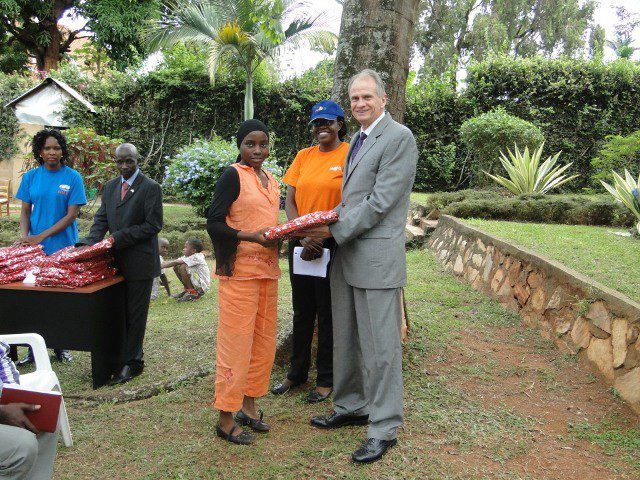
Dikembe Mutombo’s Impact on the DRC

Dikembe Mutombo's Impact
Dikembe Mutombo is most famous for his basketball career as a player in the NBA for 18 years and a four-time Defensive Player of the Year award recipient, but he is also well-known for his humanitarian work. Mutombo, born in Kinshasa, the capital city of the Democratic Republic of the Congo, has spent the last 22 years contributing much of his time to helping his home country. Dikembe Mutombo’s impact has been significant due to creating the Dikembe Mutombo Foundation.

The Democratic Republic of the Congo’s Struggle With Poverty

The Democratic Republic of the Congo (DRC) has faced a long history of injustice due to political corruption and economic collapse which has affected the country in a multitude of ways. Approximately 70 percent of Congolese people have little or no health care, and many hospitals and clinics lack necessary components to keep them running smoothly. Many health care facilities have shortages of personnel and equipment and frequently run out of necessary medicine and supplies.

Some of the top causes of death in the DRC include preventable or treatable conditions such as malaria, lower respiratory infections, tuberculosis and diarrheal diseases. However, in the last 12 years, child vaccinations have increased from 31 to 45 percent, and the DRC has been free of polio for over three years. Still, because 64 percent of Congolese live under the poverty line, they often have to make the choice between food and medicine.

The Dikembe Mutombo Foundation

Mutombo founded the Dikembe Mutombo Foundation (DMF) in 1997, in honor of his mother. Due to civil unrest, she was unable to get to the hospital for treatment and died that year.

This inspired Mutombo to create a foundation focused on primary health care, disease prevention, health policy and research and access to health care education. Its mission is to improve the health, education and quality of life for the people in the DRC.

DMF opened its first hospital in 2007, the Biamba Marie Mutombo Hospital, named after Dikembe Mutombo’s mother. It commits to providing high-quality health care regardless of economic status. Dikembe Mutombo’s impact has allowed the hospital to treat over 30,000 patients and employ almost 400 doctors and nurses.

A future project of the foundation will be the building of a Welcome House next to the hospital. It also plans to construct an elementary school with an emphasis on science and technology outside of Kinshasa.

Mutombo on the Ebola Crisis

Mutombo and his foundation have recently joined with the U.S. Center for Disease Control and Prevention (CDC) to communicate with the Congolese about the Ebola crisis. Almost a year after the initial outbreak, reports mentioned 2,284 cases of infection and almost 1,500 probable deaths, making this the 10th and worst Ebola outbreak that the DRC has faced.

The CDC began posting the public service announcements to its YouTube channel and on the agency’s website on Monday in some of the native languages of the DRC, French and Swahili. In the video, Mutombo describes the early signs of Ebola, treatment, preventative measures and recommendations. Mutombo told the Associated Press, “When there’s something happening around the world, it should be a concern of everyone living on this planet, and I think the epidemic of Ebola is touching all of us.”

Mutombo’s philanthropy in his home country of the Democratic Republic of Congo will impact generations to come. Mutombo stated it best in the Ebola PSA: “I believe as a son of Congo, I think my voice can be heard. Because everyone in the country knows my commitment to humanity and health.”

– Alexia Carvajalino
Photo: Flickr
September 3, 2019
https://borgenproject.org/wp-content/uploads/borgen-project-logo.svg 0 0 Kim Thelwell https://borgenproject.org/wp-content/uploads/borgen-project-logo.svg Kim Thelwell2019-09-03 13:01:262024-12-13 18:01:50Dikembe Mutombo’s Impact on the DRC
Global Poverty

Winters in Mongolia Threaten the Livelihoods

Winters in Mongolia
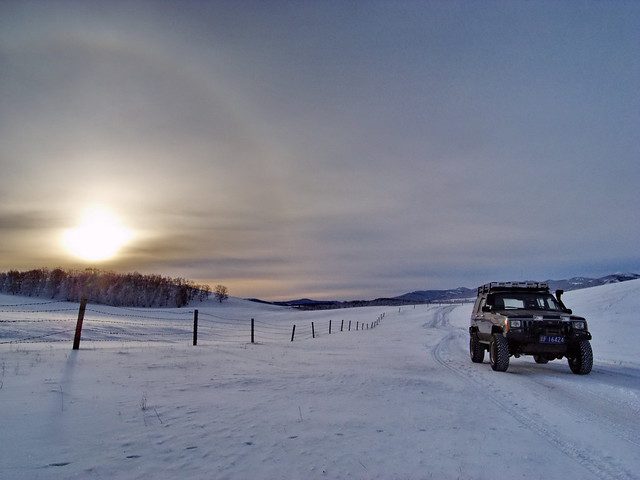
Mongolia, a mountainous country that borders both Russia and China, is infamous for its harsh, dry winters. Severe winters are particularly dangerous for the 40 percent of the population that survive by herding animals. Traditionally, Mongolian herders depend on their herds for everything; they eat the animals’ meat and drink their milk, burn the waste for warmth and sell and trade skins.

Dzud

The particularly deadly combination of summer droughts and freezing winters in Mongolia is so notorious that it has a name: dzud. This is the term used to describe the phenomenon in which dry summers prevent animals from obtaining the necessary protective fat to survive the extreme temperatures of the winter, and hundreds of thousands die, plunging many herders into poverty. As of 2016, the poverty rate in Mongolia was almost 30 percent and has increased disproportionately in rural areas. The percentage of rural residents living below the poverty line in 2016 was 49 percent, compared to 33 percent in cities.

There are several different types of dzud, classified by herders depending on weather patterns. Black dzud is characterized by long periods of drought, and a white dzud involves heavy snow that obstructs normal grazing patterns. Iron dzud entails a winter with a period of thawing and refreezing which encases pastures in ice, and a cold dzud causes animals to burn through their stores of fat prematurely.

Unstable Weather Conditions

Dzud has historically been a fact of life for Mongolian herders, generally occurring once or twice each decade, but evidence suggests that the natural disaster is becoming more frequent in recent years due to changing weather patterns. Mongolia experienced three dzuds at the turn of the 21st century and another in 2010, which killed 22 percent of all livestock in the country. Most recently, 2018’s dzud killed over 700,000 livestock. Experts have linked these severe droughts to the increasing frequency of deadly dzuds and predict worse and more frequent dzuds in the coming years.

Urbanization

For herders, this prediction is highly unsettling. Many have given up their ancestral pastoral lifestyles and moved to urban areas in search of more stable work. Oyutan Gonchig moved to Mongolia’s capital city, Ulaanbaatar, after the dzud of 2000 killed his herd. He says many of his friends and neighbors have also moved due to similar losses, and he questions whether herding animals is even sustainable anymore.

Increasing urbanization in Mongolia has contributed to other issues. Ulaanbaatar has grown by 70 percent in the past two decades and is now home to around 40 percent of Mongolia’s residents. Those in the city’s slums, called ger, often have to deal with a lack of sanitation, water, electricity and heat, making life in the city difficult for many. The ger house around 60 percent of the city’s residents.

A Growing Mining Industry

Other former farmers and herders are looking to the mines for financial stability. The nation is endowed with large quantities of natural resources like coal, copper and gold. Many Mongolians have migrated to provinces with rich mineral deposits to work in the mines or as truck drivers ferrying resources across state borders to buyers in China. Mining accounts for 90 percent of Mongolia’s exports, so the industry is lucrative. However, heavy traffic and collisions spell danger for the more than 12,000 drivers working the Sino-Mongolian border. 51 truck drivers were killed on the road from 2015-2018.

Who is Helping?

Dzud has caused widespread poverty and instability in Mongolia, resulting in hunger and malnourishment, but several nonprofit organizations are working to combat the detrimental impact of winters in Mongolia. Mercy Corps has been working on the ground in Mongolia since 1999, providing veterinary materials and services, strategic agricultural training and weather prediction services to help herders through dzud. Mercy Corps also encourages small businesses and entrepreneurs who have begun tapping into Mongolia’s budding tourism industry.

In 2017, World Animal Protection partnered with the International Federation of Red Cross and Red Crescent Societies (IFRC) and USAID to provide emergency nutrition packs to 1,740 Mongolian households. The packs included vitamin supplements, milk powder and food blocks to help livestock survive the harsh winters in Mongolia.

Despite these efforts, dzud is still contributing to rising rural poverty rates and the urbanization of Mongolia. A more serious, coalition-style response must be implemented to establish long-term solutions and poverty relief for Mongolian citizens and the animals so many depend on for survival.

– Nicollet Laframboise
Photo: Flickr

September 3, 2019
https://borgenproject.org/wp-content/uploads/borgen-project-logo.svg 0 0 Kim Thelwell https://borgenproject.org/wp-content/uploads/borgen-project-logo.svg Kim Thelwell2019-09-03 12:13:002019-12-16 12:04:56Winters in Mongolia Threaten the Livelihoods
Global Poverty, Refugees, Refugees and Displaced Persons

How the United States Can Help Refugees

The United States Can Help Refugees
The world has seen an incessant cycle of violent conflict, famine and environmental catastrophes in recent years. These events have caused an increase in refugees and displaced people to a number that human history has not seen before. To date, a record 70 million people worldwide are displaced. A significant question is how the United States can help refugees.

The United States has not only the resources but an obligation to remedy this ever-growing humanitarian crisis. Through humanitarian assistance, the United States has the ability to curb global instability for national security purposes. It is important to first understand how the United States can help refugees before looking at how to improve the current system.

U.S. refugee policy has historically set the standard for the rest of the world. However, modern policy has not evolved to meet the growing crisis at hand. It is crucial to continue the search for an adequate policy to end the push factors causing the refugee crisis and improve the quality of life for displaced people. The United States can accomplish this goal in two ways: by expanding upon existing humanitarian assistance and restructuring the United States’ current humanitarian system.

How the United States Helps Refugees and Displaced People

The United States has implemented a number of programs to improve the lives of refugees around the world. One such program is the Julia Taft fund. This program supports projects aimed at assisting refugees or refugee returnees to become self-sufficient in ways that are beneficial to their host communities. The fund provides financial assistance to local NGOs, community-based and faith-based organizations that seek to ameliorate the lives of refugees by improving economic conditions in their host communities.

With the support of the Julia Taft fund, the U.S. embassy in Chad helped open a salon in collaboration with a local NGO. The salon opened in April 2019, aims to reduce sexual violence against refugee women in urban areas. The 12 women selected for the project participated in an apprenticeship at a local salon and now have the skill set necessary to run their own business. This example demonstrates that the United States can use the fund to increase the self-sufficiency of displaced people while bringing value to the economy of the local host communities.

The implementation of programs, such as the Julia Taft Fund, demonstrates how the United States can help refugees. This fund provides refugees with the tools to be self-sufficient while also benefitting local economies. In order to continue and expand programs such as this, the U.S. must increase funding and the efficiency of its humanitarian aid delivery system. The United States sets the standard for humanitarian assistance to refugees. The United States must modernize this system for the benefit of global stability and national security.

How the United States Can Better Help Refugees and Displaced People

Increasing the capabilities of the United States humanitarian aid delivery system is crucial to managing the growing number of refugee crises. It is important to ask how the United States can help refugees and what the U.S. can do better to address this issue. The U.S. needs to empower its humanitarian organizations with increased funding and a sound organizational structure in order to address the changing needs of displaced people around the world.

In order to achieve a more efficient and influential U.S. humanitarian system, it is important to maintain and gradually increase funding to the State Department and USAID. The Trump administration is proposing cuts to both of these state entities. The proposed cuts would reduce funding by nearly one-third, from $8.7 billion to $6.3 billion. This potential decrease in funding would cripple the United States’ ability to effectively address the causes and mitigate the effects of refugee crises.

A well funded and autonomous USAID would be better equipped to implement humanitarian response programming for displaced people and their host communities. The State Department’s Bureau of Population, Refugees and Migration would simultaneously remain an independent entity focusing on policy and diplomatic responses to refugee crises. This structure would act to create a cohesive diplomatic and humanitarian response to the growing number of crises that impact people around the world.

– Peter Trousdale
Photo: Flickr

September 3, 2019
https://borgenproject.org/wp-content/uploads/borgen-project-logo.svg 0 0 Kim Thelwell https://borgenproject.org/wp-content/uploads/borgen-project-logo.svg Kim Thelwell2019-09-03 11:59:232019-09-03 11:59:23How the United States Can Help Refugees
Global Poverty

How MIT’s J-PAL Lab is Revolutionizing Social Policy

MIT's J-PAL LabOn a busy street in Cambridge, Massachusetts, an unassuming brick building houses the North American headquarters of the Abdul Latif Jameel Poverty Action Lab (J-PAL). Inside MIT’s J-PAL Lab, researchers analyze the results of randomly-designed experiments and the generalizability of their findings. Their test subjects? Social programs.
J-PAL and its Research

Anti-poverty work can take many forms: vocational training, credit access, education and the list goes on. Programs of various types can be valuable and worth funding, but because donors and organizations have limited amounts of funding, the relevant question is often not whether to support anti-poverty work, but how to support it. What programs are making the biggest difference? Where will a donation do the most good?

J-PAL co-founder Abhijit Banerjee puts it best in an interview with The Wire: “you have to basically focus on: where is the lever? That’s what we do, try to help find the lever, and then if you push the lever you go fast. But what [policy-makers] do is often… just hit everything and then some things hit the lever, some things hit the wall.” The strategy of “hitting anything” is certainly not useless, but to maximize impact, a person should concentrate on the mechanisms that maximize impact. J-PAL’s work is in locating the policy levers that will make a difference and encouraging policy-makers to use them.

MIT professors Abhijit Banerjee, Esther Duflo and Sendhil Mullainathan founded J-PAL in 2003 and it has grown quickly. As of 2019, J-PAL has a network of 181 affiliated professors around the world. A truly global organization, J-PAL has offices in Capetown, South Africa; Paris, France; Santiago, Chile; New Delhi, India; and Jakarta, India. J-PAL’s work focuses on researching the results of different cases of anti-poverty action to evaluate what is most effective and advise policymakers accordingly, and educating people about how and when to evaluate social programs.

J-PAL’s Approach

At its base, J-PAL’s approach is simple. Any case of policy-making has results, and by tracking actions and results in a large number of cases, one can determine which are successful and which are not, and therefore which to support in order to produce a maximum impact. Using this data, one can also attempt to predict the policies whose results could potentially be reproduced elsewhere. J-PAL’s methods also emphasize focusing on the mechanisms behind policies and not on specific details of a single scenario. Particular details vary from case to case, but human behavior does show certain patterns; in similar circumstances, policies that have worked before can work again.

J-PAL and its affiliated professors have performed over 900 evaluations and have developed a selection of case studies and other teaching resources to educate people about the analysis of social programs. Every year, J-PAL runs Evaluating Social Programs, a five-day course for policymakers, researchers and nonprofit workers that covers the basics of organizing scientifically sound evaluations and interpreting their results. Close to 50 people attended the 2018 course, which took place at MIT. J-PAL has also made the content of the course available online for free through the online education platform edX, allowing people around the globe to learn from J-PAL’s work. The case studies discussed in the course are also available on J-PAL’s website.

Moving Forward

MIT’s J-PAL Lab has encouraged the scaling up of policies ranging from remedial education in India, deworming in Kenya and community block grants in Indonesia. It also continues to study policy and advocate for effective social policies. The training that it provides for policy-makers allows them to maximize their impact in an economically efficient way. As J-PAL continues to grow, its affiliates will continue to find those levers.

– Meredith Charney
Photo: Flickr

September 3, 2019
https://borgenproject.org/wp-content/uploads/borgen-project-logo.svg 0 0 Kim Thelwell https://borgenproject.org/wp-content/uploads/borgen-project-logo.svg Kim Thelwell2019-09-03 11:39:202024-12-13 18:01:50How MIT’s J-PAL Lab is Revolutionizing Social Policy
Activism, Global Poverty

Top 10 Revolutionary Nelson Mandela Quotes on Love

Nelson Mandela Quotes on Love

As the first democratically elected president of South Africa, Nelson Mandela put persistent effort in dismantling the apartheid that divided the nation for 46 years. His peaceful protests against the racist legislation of the South African government exemplified legendary courage and leadership. These Nelson Mandela quotes on love reflect that through social activism and philanthropy, a passion for the betterment of humankind can change the world.

Nelson Mandela continuously inspires liberation movements across the world. His prison sentence of 27 years for the political offense of organizing and supporting the anti-apartheid movement lives on as a principle of a true hero. After being released from prison, Mandela won the Nobel Peace Prize. Then in 1994, he became the nation’s first democratically elected President. Inspiration for any oppressed group of people can be found in Mandela’s quotes about love for others and love of justice.

Ten Nelson Mandela Quotes on Love

  1. “The truth is that we are not yet free; we have merely achieved the freedom to be free, the right not to be oppressed. We have not taken the final step of our journey, but the first step on a longer and even more difficult road. For to be free is not merely to cast off one’s chains, but to live in a way that respects and enhances the freedom of others. The true test of our devotion to freedom is just beginning.”
  2. “No one is born hating another person because of the color of his skin, or his background, or his religion. People must learn to hate, and if they can learn to hate, they can be taught to love, for love comes more naturally to the human heart than its opposite.”
  3. “You will achieve more in this world through acts of mercy than you will through acts of retribution.”
  4. “During my lifetime I have dedicated myself to this struggle of the African people. I have fought against white domination, and I have fought against black domination. I have cherished the ideal of a democratic and free society in which all persons live together in harmony and with equal opportunities. It is an ideal which I hope to live for and to achieve. But if needs be, it is an ideal for which I am prepared to die.”
  5. “Everyone can rise above their circumstances and achieve success if they are dedicated to and passionate about what they do.”
  6. “As long as many of our people still live in utter poverty, as long as children still live under plastic covers, as long as many of our people are still without jobs, no South African should rest and wallow in the joy of freedom.”
  7. “Overcoming poverty is not a task of charity, it is an act of justice. Like slavery and apartheid, poverty is not natural. It is man-made and it can be overcome and eradicated by the actions of human beings. Sometimes it falls on a generation to be great. You can be that great generation. Let your greatness blossom.”
  8. “What counts in life is not the mere fact that we have lived. It is what difference we have made to the lives of others that will determine the significance of the life we lead.”
  9. “It is not our diversity which divides us; it is not our ethnicity or religion or culture that divides us. Since we have achieved our freedom, there can only be one division amongst us: between those who cherish democracy and those who do not.”
  10. “Let there be justice for all. Let there be peace for all. Let there be work, bread, water and salt for all. Let each know that for each the body, the mind and the soul have been freed to fulfill themselves.”

These Nelson Mandela quotes on love depict the ways in which he witnessed the world, and sought to change it. With love for oneself, others and one’s country, anything is possible.

– Nia Coleman
Photo: Wikimedia Commons

September 3, 2019
https://borgenproject.org/wp-content/uploads/borgen-project-logo.svg 0 0 Kim Thelwell https://borgenproject.org/wp-content/uploads/borgen-project-logo.svg Kim Thelwell2019-09-03 11:38:042024-05-29 23:10:54Top 10 Revolutionary Nelson Mandela Quotes on Love
Clean Water Access, Education, Food Security, Gender Equality, Global Poverty

6 Ways Access to Clean Water Changes Lives

Access to Clean Water
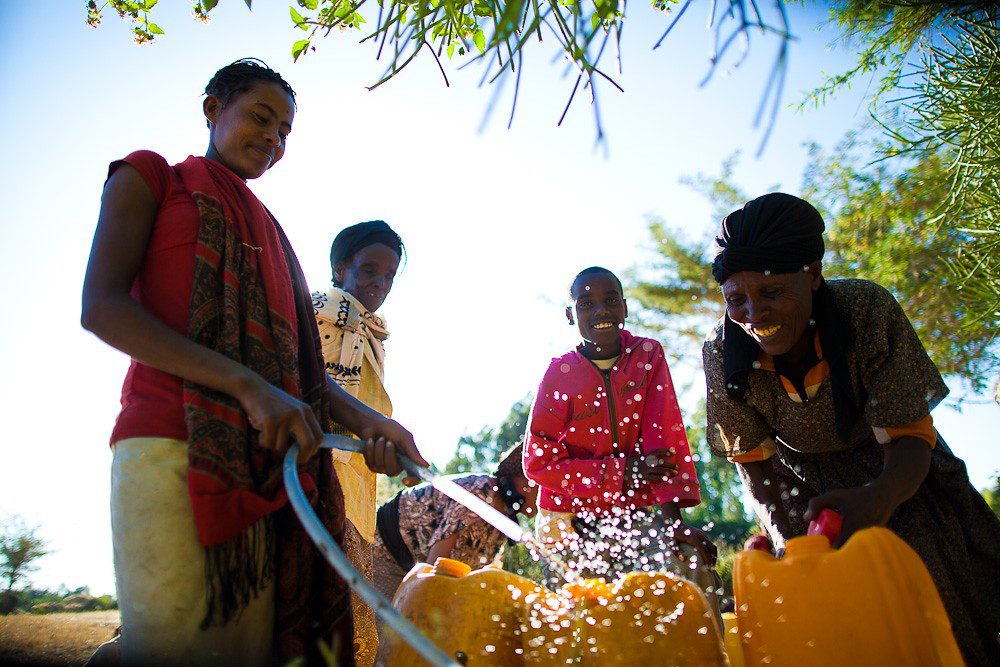
Around 844 million people in the world do not have access to clean water. The lack of access to clean water affects all aspects of life from drinking to agriculture and hygiene. Furthermore, the lack of clean water perpetuates gender inequality and traps communities in poverty. However, the world has made significant progress. Between 1990 and 2015, the percent of the world’s population with access to clean water rose from 76 percent to 91 percent. That means that millions of people have felt the benefits. Here are six ways that access to clean water changes lives.

6 Ways Clean Water Changes Lives

  1. Improved Sanitation: Around 2.4 billion people worldwide do not have access to toilets or basic sanitation. In Sub-Saharan Africa, just 24 percent of people in rural areas have access to a modern toilet. With no running water, villagers must go out into isolated fields in order to find privacy, leaving women and girls especially at risk of attack. A lack of bathrooms also means that girls often miss school while they are menstruating. When communities gain access to improved sanitation systems, quality of life improves, women and girls are safer and girls are more likely to go to school consistently.
  2. Improved Health: Currently, 80 percent of illnesses in developing nations are related to contaminated water and poor sanitation. This particularly affects children due to their weak immune systems. One-fifth of all deaths which occur under the age of 5 are from water-borne illnesses. When children are sick, they cannot go to school and often another family member has to miss work to take care of them. When people are healthy, children can go to school and adults can have steady employment, leading to continued economic development. The elimination of deaths from water-related illnesses alone would lead to an added $18.5 billion in economic gains for affected countries. Families also save money on health care costs with the elimination of water-borne illnesses.
  3. Increased Gender Equality: Eighty percent of the time, women and girls are responsible for collecting water when it is not available at home. Worldwide, women collectively spend 200 million hours daily collecting water, sometimes walking six kilometers a day. This means they have little time to work, go to school and take care of their families. The long walks also leave women vulnerable to assault and rape. Additionally, the long journey and heavy loads can be dangerous for pregnant women. Access to clean water at home increases the educational and economic opportunities available to women and girls. With increased water access, women could have time to work or even start small businesses. Additionally, girls could go to school, which would have a life-long impact. In fact, for every year a girl spends in school, she increases her anticipated income as an adult by 15 to 20 percent.
  4. Education: Walking to fetch water can take hours every day. Children, particularly girls, are often responsible for doing it. Access to clean water changes lives because when children no longer have to spend most of their day fetching water, they are free to go to school. Drinking dirty water can also cause students to fall behind in their studies as they deal with the symptoms of water-borne illnesses. Education generally becomes a low priority as people struggle to survive. With clean water at home, children can stay in school and build better futures for themselves.
  5. Food Security: Without clean water, it is difficult to grow crops and prepare food. While one might think of water mostly as something to drink, worldwide, people use 70 percent of water resources in agriculture. Eighty-four percent of people who are without modern water systems also live in rural areas, where many rely on subsistence agriculture. Improvements in water management lead to increased agricultural production and allow community members to start small gardens to grow food to eat or sell.
  6. Escaping Poverty: When people no longer have to spend a significant portion of their days fetching water, children have time to go to school and adults can work and learn trades. When people no longer get sick from water-borne illnesses, they can go to school and work uninterrupted. Clean water also allows people to grow more food and practice better sanitation. Access to clean water has a proven position impact on development. The World Health Organization estimates that every dollar that people invest in water and sanitation brings an economic return of between $3 and $34. The U.N. estimated that in sub-Saharan Africa alone, people spend 40 billion hours a year retrieving water. In fact, the world loses $260 billion of potential income each year due to a need to find water.

Many groups succeded in bringing clean water to communities and showing how access to clean water changes lives. For instance, Water.org helped more than 21 million people gain access to clean water through small loans. Millions worldwide spend more than 20 percent of their income on water, as a lack of clean water at home means they must go to a water merchant or pay exorbitant rates to have someone install plumbing. Giving people small loans allows them to quickly pay for plumbing, which eliminates costs in the future.

The Water Project addresses the water crisis by directly donating clean water sources. This organization builds and repairs wells, installs rain catchment tanks and constructs sand dams to improve irrigation. So far, the Water Project has helped close to 500,000 people gain access to clean water for drinking and agriculture.

The World Bank, UNICEF and the World Health Organization determined that providing basic water and sanitation infrastructure to those that need them would cost $28.4 billion a year for 15 years. Right now, the U.S. spends around $600 million on the military each year. A readjustment of federal priorities, taking into account the ripple effects which clean water has on communities, could make a drastic difference for the world’s poor.

– Clarissa Cooney
Photo: Flickr

September 3, 2019
https://borgenproject.org/wp-content/uploads/borgen-project-logo.svg 0 0 Kim Thelwell https://borgenproject.org/wp-content/uploads/borgen-project-logo.svg Kim Thelwell2019-09-03 11:26:432024-05-29 23:12:366 Ways Access to Clean Water Changes Lives
Food Security, Global Poverty, Technology

GreenFingers Mobile Aids the Food Insecure

GreenFingers Mobile Aids in Food Insecurity
Agriculture is at the center of many African families. With over 70 percent of African families depending on agriculture as their main source of income, 90 percent of them live on less than $1 to $2 a day. GreenFingers Mobile aids the food insecure to attempt to change that. This app provides small and emerging South African farmers access to the growing market to help reduce poverty and make Africa food secure.

How GreenFingers Mobile Works

Initially piloted in 2013, GreenFingers Mobile did not fully establish until 2015. Prior to 2018, the mobile app served three countries and assisted more than 5,000 smallholder farmers. Today, it serves more than 8,700 farmers across three countries. The goal of the app is to provide small farmers with access to the agriculture market. GreenFingers Mobile aids the food insecure by replacing the inefficient pen and paper system and supplying farmers with real-time data. Instead, it provides farmers with a variety of services that range from improving the yield of their harvest to a virtual profile to build their credibility within the market.

In addition to informing farmers of the wellbeing of their fields, GreenFingers Mobile also aids the food insecure by registering over 12,500 farmers in training courses. These training courses provide farmers with knowledge of the agricultural market and ways to improve the yield of their cash crops. According to the World Bank, in 2016, nearly one out of nine people living in sub-Saharan Africa, South Asia and East Asia suffered from chronic hunger. That same year, 27.4 percent of Africa’s population suffered food insecurity. With food insecurity on the rise, the app presents many small African farmers with the ability to fight back. Through GreenFingers’ efforts to ensure food security in growing communities, it simultaneously reduces poverty. With the threat of hunger erased, communities and countries will become self-sustaining.

GreenFingers Mobile’s Funding and Investors

In 2018, GreenFingers Mobile was a finalist in Google’s Impact Challenge and received $125,000 in funding. That same year, Kiva, an international nonprofit organization with the mission to expand financial services to developing countries, approved a $15,000 loan for the company. Many expect the app to grow the sub-Saharan agricultural market to five times its current size in 2030, going from $200 billion to $1 trillion. Within the next two years, GreenFingers Mobile hopes to have more than 30,000 farmers utilizing the app. In May 2019, GreenFingers Mobile launched the GFM Tree Tracking module, which will provide the farmers with over a million trees.

Among many of the app’s investors is the Hivos Food & Lifestyle Fund, which Hivos provides. Hivos is an organization that focuses on “social change, digital activism and rural innovations in the sectors of sustainable food systems, renewable energy and governance,” as the GreenFingers Mobile website says. Natalie Miller, GreenFingers Mobile CEO, says the fund provided several cycles of seeds and helped lower the entry barrier, which assisted the app in cutting prices by two-thirds.

With nearly 60,000 commercial transactions completed, GreenFingers Mobile continues to grow. It is paving the way for technological innovation in Africa. Though it will take time for Africa to see an effect on its food security, GreenFingers Mobile is on its way to improving the lives of those in poverty.

– Emily Beaver
Photo: Flickr

September 3, 2019
https://borgenproject.org/wp-content/uploads/borgen-project-logo.svg 0 0 Kim Thelwell https://borgenproject.org/wp-content/uploads/borgen-project-logo.svg Kim Thelwell2019-09-03 10:39:202019-09-03 10:39:20GreenFingers Mobile Aids the Food Insecure
Global Poverty, Technology

How Tala is Changing the World One Loan at a Time

Tala is Changing the WorldShivani Siroya’s startup, Tala, is changing the world by making a better, more equitable financial system one loan at a time. Billions of people around the world do not have a financial identity, making it impossible for them to advance due to a lack of credit history, but Tala is changing this.

The Financially Anonymous

Only 30 percent of the world’s adult population has a financial identity. The other 70 percent lack a credit history or any way of applying for loans. This severely limits opportunities to financially advance because loans are often necessary for larger investments, like starting a business, purchasing farm equipment or investing in better irrigation systems.

Credit and loans are only accessible with some type of paper trail or financial history if customers are borrowing from traditional banking institutions. It would be too risky to lend money to anyone lacking credit and financial history. Siroya, Tala’s founder and CEO, realized “that there are billions of people around the world who are not ever seen and don’t even have an identity. That felt really wrong.”

How Tala Works

Tala is a smartphone application available to anyone with an Android phone. With permission from the user, the application uses data collected from smartphones to create a digital credit history that determines if the customer is eligible for a loan. It serves the same purpose as traditional credit history to create a unique financial profile for each user. It is currently serving customers in Kenya, Tanzania, the Philippines, Mexico and India with Kenya accounting for the majority of users.

Using nontraditional data, Tala analyzes each of its three billion users using 10,000 unique data points to determine a user’s risk profile and whether they would be a credible borrower. Data points come from information gathered from texts, calls, sales transactions, application usages and personal identifiers that help to create a unique profile for each user. About 85 percent of Tala users receive a loan within 10 minutes of this vetting process. The average Tala loan is $50. Users typically invest these loans in equipment or business licenses, which are important opportunities that are not available to those who cannot access credit.

Tala expects customers to repay the loan within 30 days, which 90 percent of customers do on time. Tala is a loaning service that deals in microloans, ranging from $10 to $500. Since the company’s inception in Santa Monica in 2014, it has granted a total of six million loans worth $300 million and amassed a customer base of 1.3 million. Investors like Revolution Growth, IVP, Data Collective, Lowercase Capital, Ribbit Capital and Female Founders Fund with around 215 employees around the world fund Tala.

How Microloans Change Lives

Tala is a microfinancing company, using small loans to make big changes. Siroya herself has seen how these small funds make disproportionate improvements in people’s lives. Jennifer in Nairobi, a 65-year old food-service entrepreneur, needed credit to invest in a food stall and start her business. However, she had no credit history and banks refused to invest in her business aspirations. Her son heard of Tala and introduced her to the smartphone app. After answering eight to 10 questions, Tala approved her for a loan.

Over the last two years, Jennifer has taken out 30 loans and subsequently opened three food stalls. Additionally, she now has a formal credit history and can borrow money from formal bank institutions. In fact, Jennifer has used this opportunity to take out a small business loan from a bank and begin opening her own restaurant.

There are more people like Jennifer who lack opportunity but with help from Tala, they are beginning to see changes. By developing a real relationship with their customers, Tala is changing the world by updating the face of microfinancing and the very notion of credit history. Now it is possible to identify those who banking institutions ignored and give them a fair chance at empowering themselves.

– Julian Mok
Photo: Pixabay

September 3, 2019
https://borgenproject.org/wp-content/uploads/borgen-project-logo.svg 0 0 Kim Thelwell https://borgenproject.org/wp-content/uploads/borgen-project-logo.svg Kim Thelwell2019-09-03 09:50:242019-09-03 09:50:24How Tala is Changing the World One Loan at a Time
Child Soldiers, Children, Global Poverty

Rescued Child Soldiers Find Peace Through Art

Rescued Child Soldiers
At the age of seven, Judith became an accomplice to a murder. The Lord’s Resistance Army (LRA) raided her village and forced Judith to participate in the killing of her mother. The LRA then kidnapped Judith and her siblings and forced them to serve Joseph Kony. Thousands of children share Judith’s story. Today, the rescued child soldiers in Africa are finding healing and restoration through art.

The Rise of Joseph Kony and the Lord’s Resistance Army

The World Economic Forum found that poverty, social marginalization and political disenfranchisement were fertilizers for extremist groups to take root and grow. In the 1980s, poverty, social marginalization and political disenfranchisement hit Uganda hard. Estimates determined that one-third of the population lives below the poverty line.

Uganda government officials did little to improve the dire situation. As a result, rebel groups and organizations began to pop up throughout the country. The Holy Spirit Movement, a militaristic and spiritual rebel group, formed to fight against the oppression of the people in northern Uganda. Joseph Kony joined the movement in the mid-1980s. After the Holy Spirit Movement’s defeat in 1988, Kony kept the organization. He renamed the group the Lord’s Resistance Army. Kony used religion and traditional beliefs to continue the support of the people living in northern Uganda. His operation expanded to the nearby countries of South Sudan, the Democratic Republic of the Congo and the Central African Republic. The tactics Kony and the LRA used became more violent over time.

Kony and the LRA caused the displacement of more than 1.9 million people. Authorities issued a number of arrest warrants for Kony and leaders of the LRA on counts of war crimes and crimes against humanity. The LRA raided villages, burned down homes and murdered or mutilated thousands of people.

Child Soldiers in Africa

Kony lacked support for his cause and army. As a result, he abducted children and forced them into his service. Estimates state that the LRA kidnapped between 30,000 and 60,000 children. The LRA trained males to be child soldiers and females to be sex slaves. Fear was a major driver for children to remain in the LRA. Many children, like Judith, had to kill their parents and other loved ones for survival.

Art Is Restoring Peace to Rescued Child Soldiers

The U.N. called the LRA crisis the “most forgotten, neglected humanitarian emergency in the world.” A 29-minute film became the most effective tool in mobilizing the world into taking action against Kony and the LRA.

Art and social media were the key components of the success of the film “KONY 2012.” The U.S. advocacy group, Invisible Children, launched a digital campaign with the release of the film. The campaign’s goal was to make the infamous warlord famous in order to mobilize world leaders to stop him. The film garnered over 100 million views in six days. Public outcry and celebrity support increased the pressure for global leaders to take action against Kony. Eventually, authorities sanctioned a universal manhunt to capture Kony and put an end to the LRA. People have rescued many of the child soldiers in Africa but Kony still remains at-large. Today, the LRA has reduced to a group of fewer than 300 members.

Art has also been an effective tool for healing and restoration for the child victims of the LRA crisis. For many of the rescued child soldiers in Africa, there were some elements in their story that were too painful to put into words. Art became an avenue for those children to confront the past and face the future. Exile International, a nonprofit organization, has been providing healing to war-affected children through art-focused trauma care since 2008.

Recently, Exile International partnered with award-winning photographer and artist Jeremy Cowart to share the faces and powerful stories of child survivors. The Poza Project utilized the children’s art and Cowart’s talent to create a healing opportunity for the children to tell their own story of survival. Unique photographs and mixed art media created by the children were available for purchase. All the proceeds helped provide art therapy and holistic rehabilitation to children survivors of war. The Poza Project showcased a dozen children including Judith.

Judith spent nearly two years in captivity before being rescued. Today, she is back in school and working to become a psychiatric doctor. With the help of The Poza Project, Judith is one step closer to her dream of helping the other victims of Kony and the LRA.

– Paola Nuñez
Photo: Flickr
September 3, 2019
https://borgenproject.org/wp-content/uploads/borgen-project-logo.svg 0 0 Kim Thelwell https://borgenproject.org/wp-content/uploads/borgen-project-logo.svg Kim Thelwell2019-09-03 07:46:522019-09-03 07:46:52Rescued Child Soldiers Find Peace Through Art
Global Poverty, Technology

Three Tech Initiatives For Chinese Farmers

Tech Initiatives for Chinese Farmers
Over 800 million or 57.7 percent of people in China are using the internet. As the urban middle class continues to thrive and spend more time online, the impoverished rural communities have been lagging behind. In 2019, Chinese farmers are starting to benefit from the growing interconnectivity of the digital world. Corporations, in conjunction with the Chinese government, have developed tech initiatives for Chinese farmers to trade, learn and profit over the internet. Soon enough, rural communities should be able to unite with the middle class through e-commerce.

The Happy Farmer WeChat App

Happy Farmer is a philanthropic take on the once-popular Facebook game, FarmVille. Players harvest and cultivate crops within the various agricultural regions of China. People can spend virtual profits from these crops on coupons for real-world produce. The social media app WeChat launched Happy Farmer to take advantage of the rapid spread of attitudes and ideas across a massive audience. This allows hundreds of millions of WeChat users to share links and create groups with friends to purchase produce together.

The creator of WeChat, Tencent, developed Happy Farmer alongside the Chinese Ministry of Finance. Together, they were able to make Happy Farmer a precisely-targeted, functioning, charitable and educational tool. The game is directly based on real-world regions and their products so users can learn what region each crop comes from. This should promote an appreciation for the resources that rural counties provide. Advertisements within the game capitalize on the vast audience and all profits will go to alleviating poverty within the countries Happy Farmer is based on.

Taobao Live

Many middle-class Chinese consumers love to shop while watching live-streamed promotions. Taobao Live is China’s largest live-streaming e-commerce service. As Taobao strives to make its app the standard method of e-commerce, it is expanding to markets that have been falling behind the times. Taobao is promoting the growth of 1,000 new live-stream hosts to connect impoverished Chinese farmers with the modern Chinese consumer.

As one of the tech initiatives for Chinese farmers, the Taobao Live app features agricultural live-streams for two hours every day. The entire 15th day of each month shows agricultural live-streams specifically. Taobao Live has already been successful in promoting e-commerce as there has been an 80 percent rise in sales on its platform from poverty-stricken counties in the past six months.

The A-Idol Initiative by Alibaba AI Labs

The A-Idol Initiative provides free training in labeling and curating data to impoverished people of rural areas. This data then goes toward developing artificial intelligence through machine learning.

Women with families in poverty are often the ones to move away from their rural homes in search of employment. In order to combat this issue, women can enroll in the A-Idol Initiative to work from home instead. The skills learned in this initiative are applicable to other jobs, so workers can have mobility and security within their field.

Through these three tech initiatives for Chinese farmers, farmers should have a path into the middle class of China. Cooperation between big businesses, small businesses and the Chinese government has proven to be a formidable strategy against poverty and a growing class gap.

– Nicholas Pirhalla
Photo: Flickr

September 3, 2019
https://borgenproject.org/wp-content/uploads/borgen-project-logo.svg 0 0 Jennifer Philipp https://borgenproject.org/wp-content/uploads/borgen-project-logo.svg Jennifer Philipp2019-09-03 07:30:192019-08-27 12:03:53Three Tech Initiatives For Chinese Farmers
Page 1234 of 2180«‹12321233123412351236›»

Get Smarter

  • Global Poverty 101
  • Global Poverty… The Good News
  • Global Poverty & U.S. Jobs
  • Global Poverty and National Security
  • Innovative Solutions to Poverty
  • Global Poverty & Aid FAQ’s
Search Search

Take Action

  • Call Congress
  • Email Congress
  • Donate
  • 30 Ways to Help
  • Volunteer Ops
  • Internships
  • Courses & Certificates
  • The Podcast
Borgen Project

“The Borgen Project is an incredible nonprofit organization that is addressing poverty and hunger and working towards ending them.”

-The Huffington Post

Inside The Borgen Project

  • Contact
  • About
  • Financials
  • President
  • Board of Directors
  • Board of Advisors

International Links

  • UK Email Parliament
  • UK Donate
  • Canada Email Parliament

Get Smarter

  • Global Poverty 101
  • Global Poverty… The Good News
  • Global Poverty & U.S. Jobs
  • Global Poverty and National Security
  • Innovative Solutions to Poverty
  • Global Poverty & Aid FAQ’s

Ways to Help

  • Call Congress
  • Email Congress
  • Donate
  • 30 Ways to Help
  • Volunteer Ops
  • Internships
  • Courses & Certificates
  • The Podcast
Scroll to top Scroll to top Scroll to top