Fighting Poverty in Timor-Leste
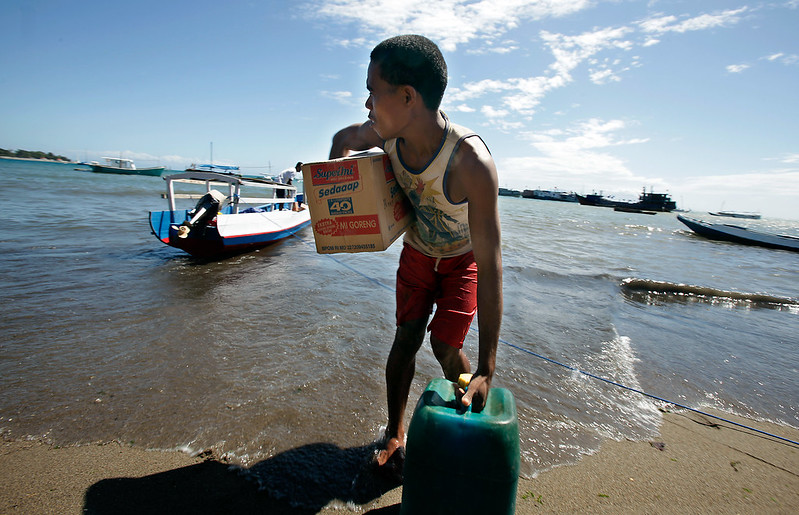 Timor-Leste, a small island north of Australia, continues to battle widespread poverty. For decades, the coastal communities of Timor-Leste have struggled with the dependency of crops and farming, but they have figured a new way, and it all starts with the sea.
The Numbers
More than half of Timor-Leste’s population is multidimensionally poor, and an additional 26.8% is on the cusp of extreme poverty. Despite the country’s past efforts to ameliorate conflict within communities, Timor-Leste ranks 104th out of 124 countries on the Global Hunger Index.
Childhood stunting is an unfortunate commonality among the families and children of Timor-Leste; more than half of the children under 5 struggle with stunting. Along with this, one in 24 children will die before the age of 5, and 38% of children under 5 are underweight, according to UNICEF.
In Timor-Leste, the most popular occupations that also generate the most income are crop farming, livestock rearing, fishing, formal employment and small scale businesses. Eighty-four percent of households rely on these occupations as a source of income and 63% of households rely solely on natural resource based livelihoods as a main source of income, making fisheries an important part of how Timor-Leste fights poverty.
How WorldFish is Making a Difference
WorldFish is a key component in helping the country of Timor-Leste fight poverty. WorldFish uses science to prioritize aquatic foods as a main source of nutrition. It aims to end hunger by 2030, and advance sustainable living for the whole planet. Timor-Leste’s WorldFish program is utilizing aquatic foods to change the trajectory of Timor’s food systems, in hopes to meet the nutritional needs of the country. WorldFish is currently working on two initiatives that rely on the sea to transform food systems.
Developed in 1988 as a part of a breeding program to create adaptable food sources, Genetically Improved Farm Tilapia (GIFT) has been wildly successful in its intention of increasing income and feeding local businesses, with Timor-Leste now cultivating its 14th generation of GIFT.
The second initiative is the development of Peskas, a digital monitoring platform. There was a lack of necessary information about where coastal fishers went and what they caught, and this led to government officials and policy change makers not knowing how to improve food insecurity in Timor-Leste.
Peskas uses GPS trackers to capture data about where fishers go, and document all that happened on their journey. That data is then seen on a public online dashboard, and this helps policymakers make more effective decisions about sustainability management. Peskas is not only the official fisheries monitoring system but Timor-Leste is being praised as an example in many other countries around the world.
Along these two, the Fish in Schools Meals pilot program from July 2023 aims to improve the consumption of fish in communities that are predominantly rural. The government has concentrated on developing sustainable fisheries and aquaculture sectors, which have successfully contributed to the influx of nutrition security.
Moving Forward
Since Timor-Leste’s independence in 2002, the country has seen extreme progress in maintaining stability as the youngest nation in Asia. As a country that is coming out of a recent conflict, they have managed to strengthen institutions and has benefited from economic growth.
This research highlights that the fisheries sector remains the most promising solution for how Timor-Leste fights poverty and could boost the well-being for the rural poor who live near the coast.
– Arielle Telfort
Arielle is based in Purchase, NY, USA and focuses on Global Health for The Borgen Project.
Photo: Flickr
