• Link to X
  • Link to Facebook
  • Link to Instagram
  • Link to TikTok
  • Link to Youtube
  • About
    • About Us
      • President
      • Board of Directors
      • Board of Advisors
      • Financials
      • Our Methodology
      • Success Tracker
      • Contact
  • Act Now
    • 30 Ways to Help
      • Email Congress
      • Call Congress
      • Volunteer
      • Courses & Certificates
      • Be a Donor
    • Internships
      • In-Office Internships
      • Remote Internships
    • Legislation
      • Politics 101
  • The Blog
  • The Podcast
  • Magazine
  • Donate
  • Click to open the search input field Click to open the search input field Search
  • Menu Menu

Archive for category: Foreign Aid

Foreign aid coverage and information.

COVID-19, Economy, Foreign Aid, Foreign Policy, Global Poverty, Politics

Into the Unknown: US-Chinese Relations in the Era of COVID-19

U.S. and ChinaCOVID-19 has brought nearly all facets of normal life and governance to a screeching halt. On all fronts, from the economy to the military, the coronavirus has changed the way this planet runs. One area that has been heavily affected by the pandemic but does not get as much attention is international relations.
Diplomatic relations between countries is one of the toughest areas of government. It has become even more difficult to fully engage in with the onset of COVID-19. With more states turning to domestic engagement, the status quo of international relations has been shaken. In no foreign relationship is this more clear than that between the United States of America and the People’s Republic of China.

U.S.-China Diplomatic Relations

Current diplomatic relations between the U.S. and China were established under President Richard Nixon in 1972. Since then, the relationship between the two countries has experienced highs and lows. In 2020, it is nearly at an all-time low. The hostile status of this relationship now mainly stems from the ascension of President Xi Jinping of China to power in 2013, and the election of the U.S. President Donald Trump in 2016.

Under these two leaders, U.S.-Chinese relations have greatly diminished over the last four years. A rise in nationalism and “America First” policies under President Trump’s administration has alienated the Chinese amidst constant public attacks on the ‘authoritarianism’ of Jinping’s government. For example, China’s encroachment on Hong Kong’s autonomy over the last two years has been the subject of extensive international condemnation, particularly from President Trump and the United States. In addition, the two countries have been engaged in a high-profile trade war since the beginning of 2018.

More recently, a dramatic escalation in the deteriorating relationship between the two countries was taken in July 2020, when the U.S. ordered the closing of the Chinese consulate in Houston, Texas, on the basis of technological-espionage on China’s part. In retaliation, China ordered the American consulate in the city of Chengdu to close as well. Another significant strain on the diplomatic relations between the U.S. and China is COVID-19.

The Outbreak of the Coronavirus

Since the outbreak of coronavirus began in Wuhan, China, in December 2019, more than 4,600 people have died in China, over a period of nearly nine months. In the same amount of time, almost 180,000 people have died in the U.S. The U.S. government has consistently blamed the Chinese for failing to contain the virus. China has firmly denied these accusations. COVID-19 has seriously damaged the economic and healthcare systems of both the U.S. and China. Both systems have lost nearly all economic gains they’ve made since the 2008-2010 recession. While state economies around the globe also suffer, the decline of the economies of these two specific countries has far-reaching implications. Not only is the global economy in danger, but military alliances and foreign aid are as well.

Global Economy

Nearly every nation on earth has some kind of economic partnership with either the U.S., China or both. For example, the United Arab Emirates has been an ally of the U.S. since 1974, but in recent years has engaged in a pivotal economic partnership with China. Continued threats of tariffs and pulling out of trade agreements threaten the balance of these partnerships. These threats could force smaller nations to choose sides between the U.S. and China, should this confrontation escalate.

Military Alliances

While the U.S. enjoys a military advantage over China, China has allied itself with many of America’s adversaries, such as Russia, Iran and North Korea. These alliances have been solidified in recent years, for example, just before the coronavirus broke out in China in December 2019, China, Russia and Iran conducted nearly a week-long military exercise in the Gulf of Oman, a strategic waterway for oil tankers. An American confrontation with any one of these countries could draw China into the conflict, which could spell disaster for the world order.

International Aid

As part of China’s “charm offensive” in the early 2000s, the country began to heavily invest in the reconstruction of the economies and infrastructure in impoverished African states. In exchange, China received rights to natural resources such as oil in these countries. The U.S. also maintains a high level of foreign assistance in Africa. COVID-19 forces the U.S. and China to put more of their respective resources toward rebuilding their own economies. However, the aid they both provide to developing states worldwide diminishes at a time when those states need it most.

It is clear that even before the coronavirus spread to all corners of the globe, the turbulent relationship between the U.S. and China was advancing toward a breaking point. The pandemic has, to some extent, halted the diminishing state of relations between the two countries. However, any further provocations similar to the closing of the consulates in Houston and Chengdu could result in a catastrophe. The impacts of this relationship extend beyond the U.S. and China; they affect nations that heavily depend on the aid they receive from both powers.

– Alexander Poran
Photo: Pixabay

October 12, 2020
https://borgenproject.org/wp-content/uploads/borgen-project-logo.svg 0 0 Kim Thelwell https://borgenproject.org/wp-content/uploads/borgen-project-logo.svg Kim Thelwell2020-10-12 07:30:362020-10-07 12:06:43Into the Unknown: US-Chinese Relations in the Era of COVID-19
COVID-19, Foreign Aid, Foreign Policy, Global Poverty

Kamala Harris’ Foreign Policy: What Everyone Needs To Know

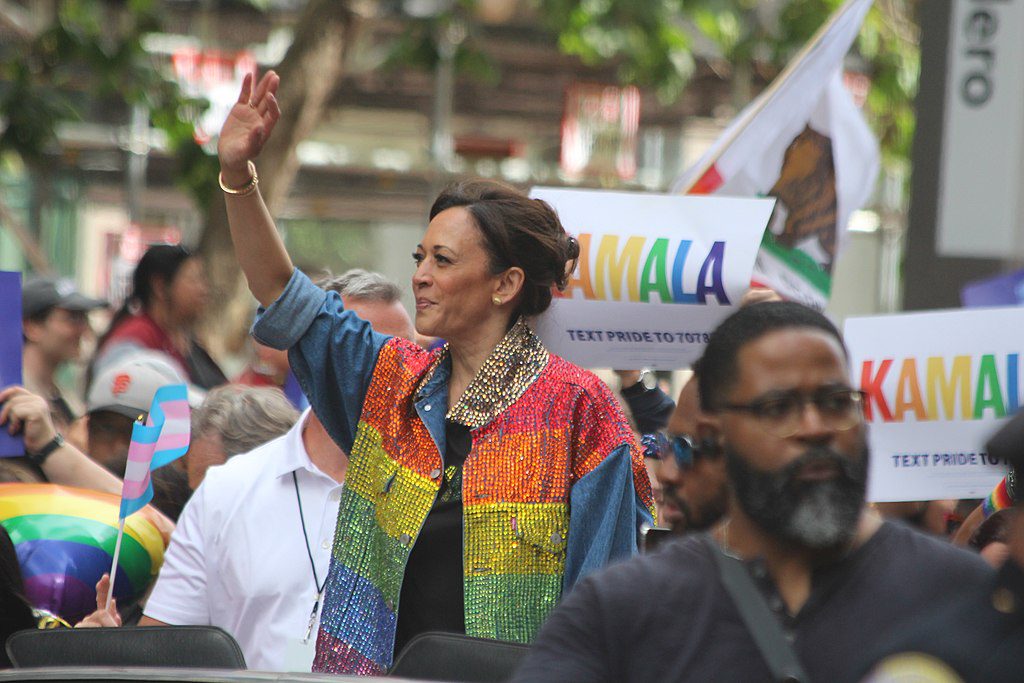
Kamala Harris' Foreign PolicyJoe Biden’s Vice President pick, Kamala Harris, is a new player when it comes to foreign aid and international relief. A strong arm with U.S./Mexico relations and domestic advocacy, Harris has some experience with addressing poverty. However, the question remains: what could this potential vice-presidential elect bring to the global table? This article will focus on Kamala Harris’ foreign policy. Specifically, her previous commitments to international humanitarian issues and what she outlines as her future focus.
Global Problems, Smart Diplomacy

Kamala Harris’ foreign policy, first and foremost, centers around a single axiom: “Smart diplomacy”. Harris is committed to preventing global conflict and believes that the U.S. is most successful when it stands in support of its global allies. She is an advocate for the ending the conflict in the Middle East, the deconstruction of nuclear arsenals and humanitarian relief efforts in Syria. Furthermore, Harris holds a staunch position on international threats. Abstractly, Harris’ policy could perhaps be described as proactive, rather than strictly reactionary. Regarding the human and financial toll that war often brings, Harris has been vocal and understands the direct correlation between conflict and economic instability. She hopes to reduce both.

Women of the World

As a freshman senator, one of the keystones of Harris’ policy focused on enriching the lives of women across the globe. In this vein, a (paraphrased) statement, “when women do better, we all do better” reflects this aspect of her policy. Harris recently co-sponsored the bill “Keeping Women and Girls Safe from the Start Act of 2020” (s.4003). This legislation’s aim is at reducing gender-based violence and providing sustained, humanitarian support for at-risk women. It is no secret that when destitute women have access to resources, agency and support — their communities flourish.

COVID-19, the Future and Cooperation

Kamala Harris is vocal when it comes to domestic COVID-19 relief. However, that is not to say that she has neglected the global perspective. Harris’ collaboration of the resolution s.res.579 illuminates her stance on what the U.S. needs to accomplish on the global stage. I.e., continued international support, cooperation with scientists across the globe to combat the new coronavirus and relief packages aimed at poorer communities and countries. Kamala Harris also introduced the “Improving Pandemic Preparedness and Response Through Diplomacy Act” (s.4118). This is a comprehensive bill that looks to the future of pandemic response and what will be done to combat and recover from future global pandemics. Notably, Harris’ foreign policy could potentially incorporate such radical legislation.

Africa and Beyond

Kamala Harris’ foreign policy regarding Africa is one that recognizes the continent’s diversity, potential and struggles. Harris has made statements advocating for strengthening diplomatic relationships with all of Africa to “foster shared prosperity” and “ensure global security in the near future”. Harris has also opposed reduced, foreign assistance to Central and South America. Instead, she advocates for greater investments in tackling the root issues of destabilization in Southern America.

Kamala’s Co-Sponsorships

Here is a collated list that takes a deeper look into what Kamala Harris has co-sponsored in recent years:

  1. No War Against Iran Act (s.3159): A bill proposed by Sen. Bernie Sanders [I-VT] that would prohibit further expenditures and military activity in Iran.
  2. Global Climate Change Resilience Strategy (s.2565): A bill proposed by Sen. Edward J. Markey [D-MA] created in hopes to address a future affected by climate change and the displacement of climate-refugees.
  3. International Climate Accountability Act (s.1743): A bill, sponsored by Jeanne Shaheen [D-NH] to prevent the withdrawal of the U.S. from the Paris Agreement.
  4. Burma Human Rights and Freedom Act of 2019 (s.1186): Legislation proposed by Sen. Benjamin L. Cardin [D-MD] to both address and aid the humanitarian crisis in Burma (Myanmar).

The Outlook, TBD

Kamala Harris’ foreign policy, in principle, is burgeoning but spells positivity and action for tackling some of the world’s greatest issues. Carefully cultivated, diplomatic relationships, pandemic relief and response legislation and a fresh outlook on familiar problems may be a positive step forward.

– Henry Comes-Prichett
Photo: Wikimedia Commons

October 7, 2020
https://borgenproject.org/wp-content/uploads/borgen-project-logo.svg 0 0 Kim Thelwell https://borgenproject.org/wp-content/uploads/borgen-project-logo.svg Kim Thelwell2020-10-07 09:39:302020-10-07 09:39:30Kamala Harris’ Foreign Policy: What Everyone Needs To Know
Foreign Aid, Global Poverty

The Benefits of Investment in Foreign Aid

Invest in Foreign Aid
The UN has reported that global poverty has reduced by half in the past 20 years, but estimates have determined that 10% of the global population continues to live in poverty. Roughly 736 million individuals live on less than $1.90 a day. With poverty being a multi-faceted issue and having implications ranging from the preservation of life to global economics and politics, here are some of the reasons why investment in foreign aid is a good idea.

Saving Lives

Research shows that many of the deaths per annum that occur due to poverty are preventable. Specifically, in children, estimates have determined that two in every three deaths are due to diseases and conditions that are treatable such as pneumonia, malaria and diarrhea. Famine, which claims 9 million lives a year and is responsible for half of all deaths of children aged 5 and below persists despite research that shows there is enough food produced to feed the population in its entirety by 1.5 times over. With the means readily available, committed support can make a life-saving difference.

Equalize Distribution of Wealth

In a report on economic inequality, researchers were able to determine that billionaires earned enough income to end poverty seven times over in 2017. With well documented adverse effects on GDP, increasing levels of income inequality have produced a measurable stagnation in global economic growth. Organizations like The Giving Pledge, which is comprised of a list of billionaires who have committed half of their wealth to charity, could help solve the problem in redistributing their wealth thereby accelerating global economic development.

The Value in Developing Economies

Since 2008, the U.S. has engaged in investment in foreign aid to Ghana. In fact, it has provided Ghana with $150 million to date. This relationship between the two countries has become increasingly mutualistic as the economy of Ghana continues to develop. An increase from 7.8% to 30.3% in exports from the U.S. shows that when one invests in foreign aid, it produces measurable returns. One can find similar results throughout the globe. For example, the U.S. invested north of $800 million to Afghanistan in 2020 alone but stands to make $1.2 billion in exports. Moreover, this is in spite of the fact that the bulk of funds are going toward democratic processes, human rights and governance.

Building Alliances

In the 20th century, South Korea, Germany and Japan were recipients of foreign aid via The Marshall Plan. The U.S. has providing foreign aid one of its mandates ever since. Today, South Korea and Germany are some of the United States’ most valuable allies and trading partners. With less than 1% of the federal budget going to foreign aid and the U.S. polling highest in how other countries view it as an ally globally, the importance of nurturing and maintaining alliances abroad benefits not only the economy but national security interests as well.

The upsides of concerted investment in foreign aid to eradicate global poverty are self-evident, with the global population experiencing highs in life expectancy, global literacy rates and access to higher education, as well as significant reductions in child and maternal mortality rates. It is clear that much work is necessary, but the world’s understanding of the issue has never been more sophisticated.

– Christian Montemayor
Photo: Flickr

October 4, 2020
https://borgenproject.org/wp-content/uploads/borgen-project-logo.svg 0 0 Jennifer Philipp https://borgenproject.org/wp-content/uploads/borgen-project-logo.svg Jennifer Philipp2020-10-04 12:05:382024-05-30 07:52:52The Benefits of Investment in Foreign Aid
Foreign Aid, Foreign Relations, Global Poverty, Refugees

UNRWA Struggles after the US Pulls Funding

UNRWA
The United Nations Relief and Works Agency (UNRWA) was specifically created to help Palestinian refugees after the 1948 Israeli-Arab war. The Palestinian refugee problem has only grown since its formation, so the U.N. has allowed the agency to continue operating.

Palestinian refugees are unique. Every person who was a resident or a resident’s descendant of what is now Israel all have a legal designation as ‘refugees.’ UNRWA now serves four generations of Palestinian refugees, having grown from serving 750,000 to 5.6 million.

The United States Pulls Funding

The United States pulled its funding from UNRWA in 2018. President Trump cited the reason behind the defunding as the agency’s incompetency. The United States had previously been contributing about $355,000 million of UNWRA’s budget.

The United States’ decision affected refugees who rely on UNRWA’s aid for education, health care, protection and basic human needs like food security. In 2017, reports determined that 39% of Palestinian refugees lived in poverty, and very little effort has occurred to assimilate Palestinians into host communities.

Palestine, Israel and the international community, in general, see the United States’ choice as an effort to delegitimize UNRWA and the 5.6 billion Palestinian refugees it serves. Revoking these generations of Palestinians’ refugee status would take away their right to return to their homeland.

Aftermath of Funding Removal

In 2020, the U.N. extended UNRWA’s mandate to the year 2023. However, UNRWA is still struggling financially. Not only did it appeal to the international community to donate a minimum of $1.4 billion for the yearly budget, but it requested another $14 million for COVID-19 emergency aid.

The UNRWA reported that it can only sustain operations until May 2020 with the added health crisis that COVID-19 brought on. It has only raised one-third of its budget. UNRWA’s director stated that the UNRWA must run on a “month to month basis” enduring the biggest financial instability since its creation.

Pleas for Help

The United States made the suggestion to transition the UNRWA’s responsibilities into the hands of the Arab countries that host Palestinian refugees. However, these nations are struggling to fill their own funding gap. Arab countries are suffering from high poverty rates and an influx of refugees from the ongoing conflict in Syria.

UNRWA has also sought the help of NGOs, such as Islamic Relief USA, to fill the funding gap. This is a faith-based organization that works to raise funds and mobilize volunteers for a range of initiatives including UNRWA. It has been helping Palestinian refugees since 1994. Islamic Relief USA has served 1,077,000 people from 2017 to 2019.

The United States government might have cut off funding to UNRWA as a result of flaws within the agency. It might have hoped to delegitimize the Palestinian right of return. Either way, Palestine’s impoverished people need UNRWA’s support. If UNRWA is not successful in gaining new donors, they will lose their access to education, health care and other necessary securities that are human rights.

– Olivia Welsh
Photo: Flickr

September 27, 2020
https://borgenproject.org/wp-content/uploads/borgen-project-logo.svg 0 0 Kim Thelwell https://borgenproject.org/wp-content/uploads/borgen-project-logo.svg Kim Thelwell2020-09-27 14:50:172020-11-03 14:50:31UNRWA Struggles after the US Pulls Funding
COVID-19, Foreign Aid, Global Poverty

Foreign Aid in the Age of COVID-19

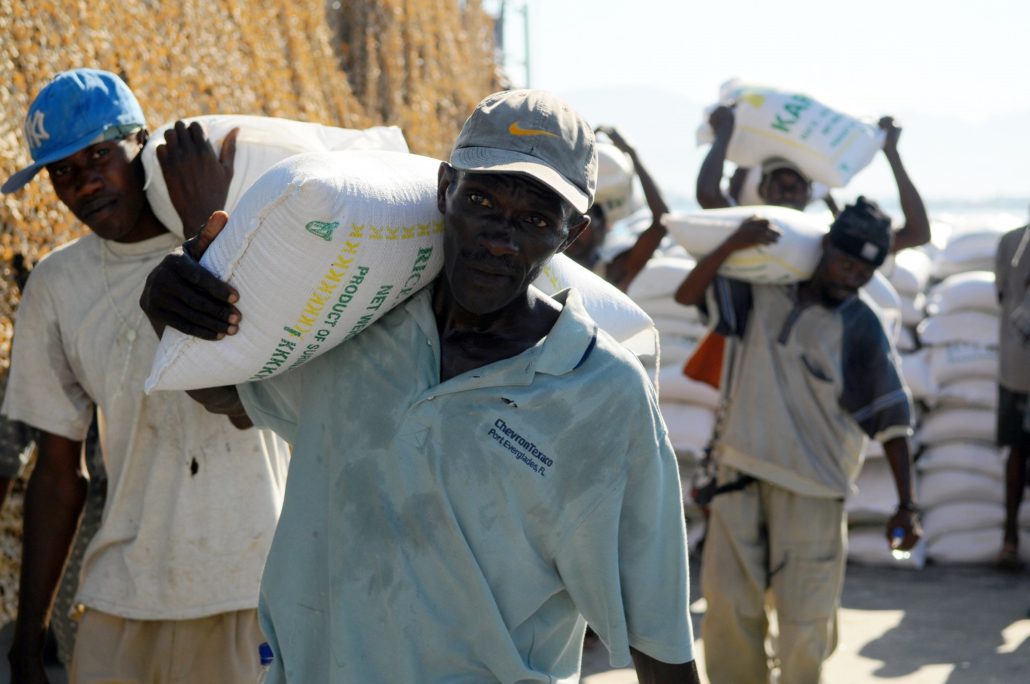
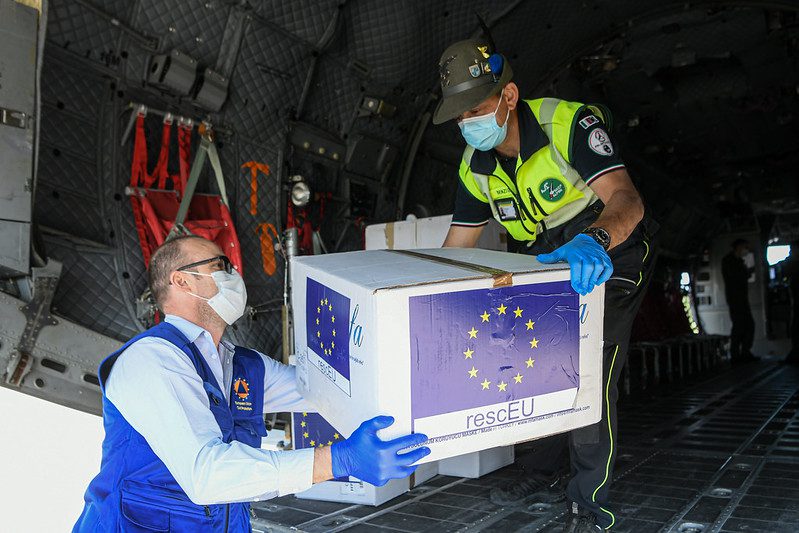
foreign aidAs the COVID-19 pandemic spread over the world, so did foreign aid in many forms. Countries were sending masks, money, equipment and even healthcare professionals. Despite suffering from the effects of the pandemic themselves, China, Taiwan and South Korea all contributed to providing 16 countries around the world, including in Europe and Asia.  Even the U.S. became among those who were aid recipients when a shipment of masks and equipment from Russia arrived in April 2020. Perhaps most notably, Italy received foreign assistance from the U.S., China, Cuba and Russia among other countries.
Concerns About Aid Effectiveness

A common misconception regarding aid is that developed countries rarely benefit from foreign aid. Studies have shown that most Americans think the U.S. spends too much on foreign aid. Moreover, many aid opponents argue that aid is ineffective, costly and creates dependence.

Even Africans, who receive 20% of U.S. aid, have raised concerns about aid effectiveness. In 2002, Senegalese President, Abdoulaye Wade, said “I’ve never seen a country develop itself through aid or credit. Countries that have developed—in Europe, America, Japan, Asian countries like Taiwan, Korea and Singapore—have all believed in free markets. There is no mystery there. Africa took the wrong road after independence.”

Foreign Aid to Developed Countries

The pandemic has shown that strong relations and aid are necessary for countries to overcome economic and healthcare challenges. Foreign aid has a complicated history, but many developed countries were recipients of aid in the past and still benefit from it in many ways.

Italy received around $240 billion in aid from the E.U. during the pandemic. If a similar aid package was given to Sub-Saharan Africa, it could provide primary healthcare to every African. If used to relieve food insecurity, $240 billion could end world hunger by 2030. That is not to say that foreign aid to developing countries should come at the expense of the recovery of developed countries. But contextualizing the funding helps demonstrate what foreign aid could do if distributed equally.

During the destruction of Notre Dame in Paris, France received $950 million in total from donations globally. The White House also pledged to help rebuild France, a year after announcing a reduction to the foreign aid budget. When it comes to aid, the question is not whether to provide it or not—it is about who to provide it to.

Foreign Aid to Developing Countries

Contrary to popular belief, the developing world does not receive nearly enough aid. The average Sub-Saharan African country receives less than $1 billion in aid annually. Following the Ebola outbreak in 2013 – a crisis that is most notably remembered for U.S. involvement – the WHO received around $460 million to help affected West African countries. The World Bank estimated that the outbreak cost $2.2 billion for these countries.

As African and Latin American countries see their first huge waves of the COVID-19 pandemic, it is now crucial that the U.S. and other countries continue to increase their foreign aid budget to help these nations recover. In addition to the pandemic, most developing countries are dealing with food insecurity as well as continuing political and civil unrest. Although aid alone will not resolve all these issues, it can alleviate the impact of the crisis. By being aid recipients themselves, Western and European countries can understand the importance of foreign assistance and take the necessary steps to help those in need.

– Beti Sharew
Photo: Flickr

September 18, 2020
https://borgenproject.org/wp-content/uploads/borgen-project-logo.svg 0 0 Kim Thelwell https://borgenproject.org/wp-content/uploads/borgen-project-logo.svg Kim Thelwell2020-09-18 01:31:492024-05-29 23:23:12Foreign Aid in the Age of COVID-19
Foreign Aid, Global Poverty

How Honduras Uses US Foreign Aid

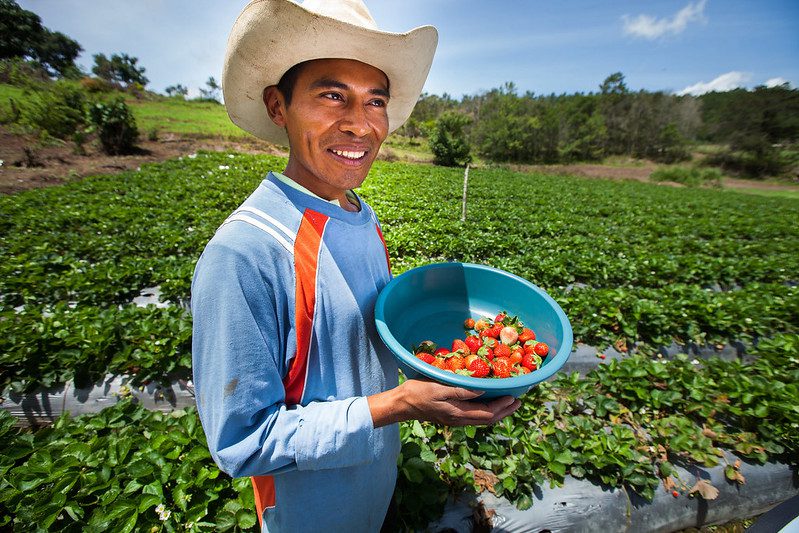
Honduras Uses U.S. Foreign AidAs one of the poorest countries in Central America, Honduras is one of the three countries in the region that receives U.S. foreign aid. However, in 2019, U.S. foreign aid to Central America came to a halt. The U.S. government denied foreign aid meant for three countries in the region: El-Salvador, Guatemala and Honduras. According to NPR, mass amounts of refugees migrating north caused the U.S. to suspend aid. In April of 2020, Secretary of State Michael Pompeo issued a press statement ensuring the resumption of foreign aid to Central America. Despite the reassurance of continuing U.S. support in the future, the suspension of foreign aid left many programs and people in Honduras without their usual financial support. Honduras alone has requested over $65 million in U.S. foreign aid for 2020. With U.S. lawmakers doubting the effectiveness of this type of financial support, here’s how Honduras uses U.S. foreign aid.
Maintaining Governance

Honduras uses U.S. foreign aid to maintain its governance. In 2018, Honduras spent $55 million on agencies that provide government assistance. These agencies encourage public participation in government and make sure governments maintain checks and balances and separation of powers. In short, these agencies keep the government ethical, honest and accountable to the people. USAID funded this entire sector of Honduras’ U.S. foreign aid. As a U.S. foreign agency, USAID works to strengthen democratic institutions and citizen participation in Honduras.

Human Rights

In 2018, Honduras spent about $6 million on preserving human rights under the law. Honduras uses U.S. foreign aid to fund many agencies that protect international human rights. Partially funded by USAID, Honduras’ human rights agencies ensure that all people find justice and fairness under the law. The U.S.-Honduras Bilateral Human Rights Working Group, a product of USAID, works to strengthen human rights institutions, citizen security and migration issues in Honduras. Without U.S. foreign aid funding human rights groups, vulnerable impoverished Hondurans, who are most susceptible to human rights violations, would have decreased legal resources.

Agriculture

Honduras spent $11 million on its agriculture industry in 2019 and $22 million in 2018. The country’s economy relies heavily on the international trade of its agriculture. The agricultural industry also employs 39% of the population in Honduras. With a large section of the population relying on agriculture as income, investing in agriculture is imperative to the country’s economy. Because of Honduras’ high poverty rate, a large part of the agriculture industry employs impoverished Hondurans. U.S. foreign aid is essential to the poverty-stricken portion of Honduras’ agriculture industry.

Education

Honduras uses U.S. foreign aid for considerable education development. In 2019, Honduras spent $24 million on basic education. This includes improving early childhood, primary and secondary education in Honduras. USAID largely funds this sector of Honduras’ foreign aid. USAID works with Honduras’ education systems on education reform, teacher training and alternative education for many children who can’t afford secondary school. Without U.S. foreign aid, impoverished children in Honduras could lose access to basic education and alternative education.

Minimizing Crime

Crime is a serious problem in Honduras. Honduras has one of the highest murder rates in the world. However, in 2012 Honduras began investing in crime prevention agencies, and investment has been increasing ever since. Honduras spent $25 million of U.S. foreign aid on crime-prevention agencies in 2019 compared to less than $300,000 in 2014. These agencies provide training to combat international crime and corruption while promoting international cooperation. In correlation with investments in crime-prevention agencies, homicide rates in Honduras dropped drastically in 2012. This portion of U.S. aid directly impacts Honduras’ impoverished communities where violence is prevalent.

Conclusion

The suspension of U.S. foreign aid to Central America created some doubt in the usefulness of foreign aid. However, Honduras uses U.S. foreign aid to fund agencies that work to better some of the most serious and significant problems affecting Hondurans. Many of these agencies help the most vulnerable and impoverished populations in Honduras.

– Kaitlyn Gilbert
Photo: Flickr

September 12, 2020
https://borgenproject.org/wp-content/uploads/borgen-project-logo.svg 0 0 Jennifer Philipp https://borgenproject.org/wp-content/uploads/borgen-project-logo.svg Jennifer Philipp2020-09-12 13:50:332024-05-29 23:18:35How Honduras Uses US Foreign Aid
Education, Foreign Aid, Global Poverty

The Effect of Map Bias on Developing Countries

Map Bias
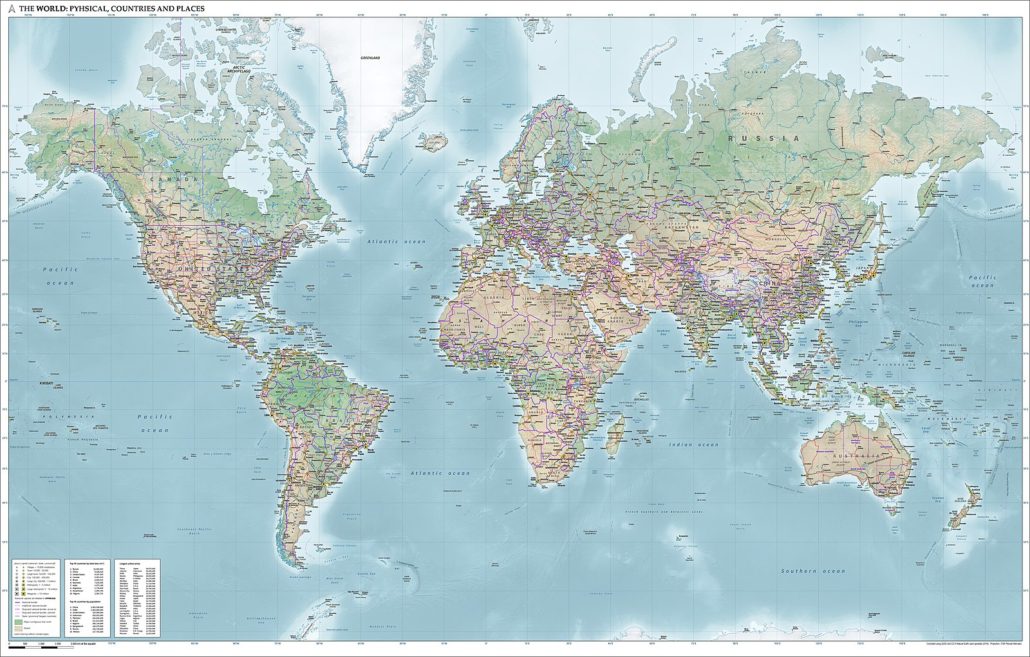
The map most people are familiar with looks something like the image above, having learned about it in school. But what if they learned that this map is wrong and that there is such a thing as map bias?

The Map Everyone Knows

The most common maps that people are familiar with are versions of the Mercator Projection Map. Flemish cartographer Gerardus Mercator created this map in 1569. Originally intended solely for ocean navigation, the map has found its way into the classrooms of many western schools including those in the United States. The Mercator Projection has many flaws and it is a prime example of how map bias can shape one’s world view.

As Gauss’ Theorem Egregium proved, it is mathematically impossible to translate a sphere onto a 2D plane without creating distortions in either the shape, size, distance or direction of points on that sphere. That is why creating maps of the world is so tricky. However, Mercator’s map is particularly flawed, and it is especially problematic when teaching young children basic geography.

The map compromises accurate landmass size in favor of accurate direction, in the hopes of being a better tool for navigation. By the north and south poles, landmasses are stretch beyond proportion while at the equator, countries shrink.

For example, the map shows Greenland as roughly the same size as the entire continent of Africa. However, in actuality, Africa is 14 times larger than Greenland. The European continent seems to be as large as South America when South America should really be twice its size. According to the Mercator map, the equator should run through Florida, not Indonesia, Brazil and the Congo. Additionally, the state of Alaska appears massive on the Mercator Projection, seemingly the size of half of the contiguous United States. However, its landmass is actually smaller than that of Mexico.

Map Bias and its Effects on our World View

With all these seemingly obvious flaws in the Mercator Map, it is difficult to understand its continued use in classrooms. However, when you analyze the Eurocentric bias in much of western education, the purpose of such a flawed map becomes clearer.

The Mercator Projection puts emphasis on Europe and North America. It both places them at the top, and enlarges them and shifts them downward to appear more central on the plane. Meanwhile, developing countries in Southeast Asia, South America and Africa appear minuscule in comparison, literally below the industrialized western nations.

This teaching of the Mercator Map is a prime example of what many know as map bias. Map bias can deeply affect the way people view the world and their inner sense of “importance.” When one sees their own country as larger, it may warp their views of the significance of other countries.

In a 2002 study that the Journal of Behavioral Decision Making published, an evaluation of 3-year-olds and adults showed that humans favor larger stimuli. Humans naturally gravitate to things that are larger and more centered. Another study from Kai Krause, a professor from the University of California Santa Barbara, showed that a majority of school children believe that the United States is the “largest country in the world.”

Therefore, people may unconsciously place the shrunken developing countries out of geographical importance, possibly affecting how much they see these countries as being “worthy” of support. The Mercator Map projects the message of colonialist superiority and reinforces the perceived inferiority of developing nations.

How to Change Map Bias

There has been much debate in recent years as to how to address issues of map bias. It is becoming increasingly clear that the education systems in place in western nations should stray away from imperialistically revisioned history including the way they teach geography.

The simplest solution is to start the widespread use of maps that do not discount developing countries. One example of this push came from the Boston Public Schools Board of Education in 2017. The school board voted in favor of adopting the Gail-Peters Projection to replace the Mercator Projection. It hopes to combat the diminished significance of southern-hemisphere continents on the latter map due to 86% of its students being students of color.

American schools should adopt maps that more accurately represent the planet. The Mercator Map is a colonial relic and schools should no longer use it to teach what the world looks like.

– Aidan Sun
Photo: Wikimedia Commons

September 12, 2020
https://borgenproject.org/wp-content/uploads/borgen-project-logo.svg 0 0 Kim Thelwell https://borgenproject.org/wp-content/uploads/borgen-project-logo.svg Kim Thelwell2020-09-12 13:24:522024-05-30 07:52:35The Effect of Map Bias on Developing Countries
Foreign Aid, Global Poverty

Important US Foreign Aid Facts

U.S. foreign aid
Secretary of State, George C. Marshall, built the foundations of U.S. foreign aid from 1947 to 1949. Marshall wanted to help reconstruct Europe after the brutalities of World War II by providing financial funding and technical support. The initiative was a great success. In 1950, President Harry S. Truman followed in Marshall’s footsteps and started the Point Four Program. The program’s goal was to reduce poverty and at the time, communism. Though many different agencies helped with foreign aid, none were specifically dedicated to foreign, economic development. President John F. Kennedy soon realized the need to bring these organizations together into one agency that could help foreign countries with their economic and social growth. Therefore, in 1961, the Foreign Assistance Act created USAID in the hope of uniting different countries in the name of development and modernization. Below are more U.S. foreign aid facts that everyone should know.

What Does the US Really Give?

While the U.S. is perceived as one of the top contributors of foreign aid, only about 1.2% of the U.S. federal budget goes to foreign assistance. This perhaps represents a lesser-known U.S. foreign aid fact. However, the U.S. gives the most in absolute terms. Notably, a comparison of GDP income ranks the U.S. as one of the lowest, out of 27 countries. Only 0.18% of the nation’s GDP income goes toward foreign aid. The U.S. is not giving nearly enough as it might otherwise.

How Foreign Aid Helps

One of many U.S. foreign aid “facts” that many people think true — “no matter how much is given, it makes no difference,” could not be further from the truth. Even with the estimated 1.2% given, millions of lives are saved as a result. Over the last 20 years, foreign aid lifted countless people out of extreme poverty, while fighting disease and malnutrition.

USAID invests in nearly 140 countries, providing 31 million education materials to children in need. Investing in childhood education is a surefire way to increase the chances for an objectively better future. “Nutrition-specific interventions” reach about 33 million children up to age five, along with other healthcare services. Despite these drastic improvements, there is still much more to do to improve the lives of the world’s poor.

How the US Benefits

Out of many, often overlooked U.S. foreign aid facts — is that the aid benefits both the recipients and the U.S., itself. Aid programs are extremely efficient ways to boost the U.S. economy. They operate via a domino effect — i.e., when poverty rates decline, more and more people can afford U.S. products. This increases the demand for products and leads to the creation of more U.S. jobs. Simply put, providing aid to poverty-ridden countries helps the U.S. fund domestic businesses and jobs. U.S. foreign aid contributes to both national and global security; it provides a safer country, domestically and a safer world abroad.

The benefits of U.S. foreign aid are plentiful, but the crux of the matter is that helping others when it is within the power of the U.S. is the noble thing to do. For more information on U.S. foreign aid and global poverty — click this hyperlink to hear more from the President of The Borgen Project, himself.

– Katelyn Mendez
Photo: Flickr

September 11, 2020
https://borgenproject.org/wp-content/uploads/borgen-project-logo.svg 0 0 Kim Thelwell https://borgenproject.org/wp-content/uploads/borgen-project-logo.svg Kim Thelwell2020-09-11 11:24:402024-06-06 00:43:14Important US Foreign Aid Facts
Foreign Aid, Global Poverty, Humanitarian Aid

5 Types of Foreign Aid

types of foreign aid
U.S. foreign assistance is defined as “aid given by the United States to other countries to support global peace, security, and development efforts, and provide humanitarian relief during times of crisis.” In 2019, the United States disbursed a total of $29 billion in foreign aid across all sectors to over 200 countries or geographical areas, amounting to 1% of its total budget. Within each category are many specific sectors, such as agriculture and food security, environment and climate change, gender equality, education, global health and many others. These sectors may overlap, and improvements in one area often lead to improvements in other areas as well, as many of these issues interconnect. Below are five types of foreign aid.

5 Types of Foreign Aid

  1. Military Aid: Military aid is any type of aid given to strengthen security measures within a country. An estimated 33% of total U.S. foreign aid is dedicated to the military sector. In 2018, $33.1 billion went toward military aid. The country that receives the largest amount of military aid from the U.S. is Afghanistan, which received about $5 billion in military aid alone. The country also received $953 million for developmental and other purposes, according to USAID. Contributing to the financial security of other countries may reduce conflict between nations and improve global security as a result. Military aid allows for nations to build relationships with allies, improve democracy, establish foreign military bases or potentially support counterterrorism efforts in other countries.
  2. Economic Aid: Economic aid is a general category that describes transfers that support the economies of recipient countries. The donor can either be an independent country or a large international organization. Aid of this type can be in the form of loans, grants or credits. The most common type of economic aid is Official Development Assistance (ODA), in which money goes toward the development of the recipient’s economy. The U.S. dedicated 0.16% of its total Gross National Income (GNI) to ODA in 2018, according to the OECD.
  3. Humanitarian Aid: The primary purpose of humanitarian aid is to improve the social wellbeing and the living situations for people in the recipient country. This can take place in response to a natural disaster, in which emergency supplies like first aid, water, food and clothing go to a country in need. Organizations may also send services such as healthcare volunteers to help with recovery efforts. In 2018, the U.S. disbursed $6.9 billion in emergency response assistance to foreign countries. For example, the U.S. dedicated about $700 million to Syria during the COVID-19 pandemic, to assist with emergency food, water, sanitation and medical care for vulnerable populations.
  4. Bilateral Aid: The most simple definition of bilateral aid is when a single country gives aid to another. This is a common occurrence within many countries, in which a developed country may transfer resources to a developing country. The donor country may introduce restrictions in terms of how the other country uses this assistance, such as by designating it to a specific sector. A donor country may offer funding through an international organization, but as long as “decisions regarding fund disposal are on balance taken at the donor’s discretion,” then it is still considered to be bilateral.
  5. Multilateral Aid: International organizations disperse multilateral aid, rather than a single country. These organizations, such as the World Bank, the United Nations and around 200 other groups, receive their funding from multiple nations and governments. They disburse that money to countries so they can use it for improvements in a variety of sectors.

Other types of foreign aid include “multi-bi” or “non-core” aid, which donor countries give to international organizations to disperse for a specific reason or to a specific area. Despite having separate categories and sectors, different types of foreign aid can influence one another, and no one type is most important.

– Sydney Bazilian
Photo: Flickr

September 11, 2020
https://borgenproject.org/wp-content/uploads/borgen-project-logo.svg 0 0 Kim Thelwell https://borgenproject.org/wp-content/uploads/borgen-project-logo.svg Kim Thelwell2020-09-11 10:16:462024-06-06 00:43:145 Types of Foreign Aid
Foreign Aid, Global Poverty

Congresswoman Ilhan Omar’s YouthBuild International Act

YouthBuild International Act
Around the world, over 200 million youth live in extreme poverty, earning less than $2 a day. On February 12, 2020, Congresswoman Ilhan Omar, Representative for Minnesota’s 5th congressional district, introduced her sponsorship for the YouthBuild International Act. The Act aims to amend and improve upon the Foreign Assistance Act of 1961. In doing so, it strives to program educational opportunities and employment training for underprivileged youth in developing countries.

The bill adds a new point to Section 105 of the indispensable Foreign Assistance Act of 1961. Following the original Act, the bill adds: “Program to provide disadvantaged youth in developing countries with opportunities to receive education and employment skills.” Following this broad point, the text describes five distinct goals for the bill: economic self-sufficiency, community engagement, leadership development, affordable housing and improvement of facilities.

Goals of the Bill

To begin, the bill states its goal to make higher education and employment skill-training more accessible to underprivileged youth. By providing these opportunities, the bill aims to equip youth with economic self-sufficiency. Secondly, the bill promises to provide poverty-ridden youth with opportunities for “meaningful work and service to their communities.” Thereafter, the bill promises to enhance the development of marketable leadership skills for youth in low-income communities.

Next, the bill proposes the establishment of affordable and permanent housing initiatives for homeless and low-income families. The final section of the bill promises to improve the energy efficiency and overall quality of community facilities. This is meant to benefit nonprofit and public facilities that protect homeless and low-income families. Youth participants in the program will contribute directly to these efforts.

Domestic Success

The potential for the YouthBuild International Act is demonstrated by the successes of the United States YouthBuild program. That program provides educational, employment and leadership opportunities to thousands of young Americans who lack education and employment. As of 2019, 70% of YouthBuild participants earned a certificate or a degree, 62% improved their literacy or mathematical skills and 54% gained earned education or employment.

Next Steps

The positive results of the United States YouthBuild program prove how successful the YouthBuild International Act could be. However, the odds are not in this bill’s favor. Although Congresswoman Omar introduced it nearly six months ago, the bill has neither gained any cosponsors nor moved past the House Foreign Affairs Committee. The Act remains stagnant despite its immense potential for change. According to Skopos Labs, the bill only has a 3% chance of being enacted into law.

Although domestic poverty legislation is more pressing than ever, these issues must not put foreign aid on the back-burner. It is vital to bring awareness to under-supported aid legislation, especially when it can lead to economic self-sufficiency. Passing the YouthBuild International Act could significantly uplift millions of vulnerable communities and break the cycle of poverty for future generations. This will not happen unless more Americans contact their senators and representatives about the YouthBuild International Act and other under-prioritized aid legislation.

– Stella Grimaldi
Photo: Flickr

September 10, 2020
https://borgenproject.org/wp-content/uploads/borgen-project-logo.svg 0 0 Kim Thelwell https://borgenproject.org/wp-content/uploads/borgen-project-logo.svg Kim Thelwell2020-09-10 10:01:522020-09-10 08:49:07Congresswoman Ilhan Omar’s YouthBuild International Act
Page 20 of 61«‹1819202122›»

Get Smarter

  • Global Poverty 101
  • Global Poverty… The Good News
  • Global Poverty & U.S. Jobs
  • Global Poverty and National Security
  • Innovative Solutions to Poverty
  • Global Poverty & Aid FAQ’s
Search Search

Take Action

  • Call Congress
  • Email Congress
  • Donate
  • 30 Ways to Help
  • Volunteer Ops
  • Internships
  • Courses & Certificates
  • The Podcast
Borgen Project

“The Borgen Project is an incredible nonprofit organization that is addressing poverty and hunger and working towards ending them.”

-The Huffington Post

Inside The Borgen Project

  • Contact
  • About
  • Financials
  • President
  • Board of Directors
  • Board of Advisors

International Links

  • UK Email Parliament
  • UK Donate
  • Canada Email Parliament

Get Smarter

  • Global Poverty 101
  • Global Poverty… The Good News
  • Global Poverty & U.S. Jobs
  • Global Poverty and National Security
  • Innovative Solutions to Poverty
  • Global Poverty & Aid FAQ’s

Ways to Help

  • Call Congress
  • Email Congress
  • Donate
  • 30 Ways to Help
  • Volunteer Ops
  • Internships
  • Courses & Certificates
  • The Podcast
Scroll to top Scroll to top Scroll to top