• Link to X
  • Link to Facebook
  • Link to Instagram
  • Link to TikTok
  • Link to Youtube
  • About
    • About Us
      • President
      • Board of Directors
      • Board of Advisors
      • Financials
      • Our Methodology
      • Success Tracker
      • Contact
  • Act Now
    • 30 Ways to Help
      • Email Congress
      • Call Congress
      • Volunteer
      • Courses & Certificates
      • Be a Donor
    • Internships
      • In-Office Internships
      • Remote Internships
    • Legislation
      • Politics 101
  • The Blog
  • The Podcast
  • Magazine
  • Donate
  • Click to open the search input field Click to open the search input field Search
  • Menu Menu

Archive for category: Food & Hunger

Information and stories on food.

Food & Hunger, Food Security, Global Poverty

Food Systems in Brazil: Key Challenges and Opportunities

Food Systems in BrazilFood systems in Brazil are diverse, complex and influenced by the country’s size, geography and rich cultural heritage. With 90% of its food domestically produced, the country is a leader in agribusiness and one of the world’s largest producers of agricultural products such as soybeans, coffee, sugarcane, beef and chicken. Yet, Brazil still faces a paradox—despite these impressive numbers, the nation struggles with hunger and inequality.

Sustainability and Environmental Impact

Brazil faces significant challenges in ensuring equitable food systems and access to healthy food, particularly for low-income populations. In 2021, 36% of Brazilians experienced food insecurity, according to research by FGV Social, a crisis exacerbated by changing weather patterns—one of the world’s most pressing concerns today. Droughts and extreme weather events have severely impacted food systems in Brazil, while industrial agriculture, particularly soybean and cattle farming, has contributed to deforestation and greenhouse gas emissions, further escalating environmental challenges.

Regions dependent on industrial agriculture are continually suffering from soil degradation and water pollution due to intensive farming practices, which affect food availability and increase the vulnerability of rural communities, especially in regions like the Northeast and Central-West, where the Amazon and Cerrado biomes are located and under threat.

Government subsidies often favor large agribusinesses over small-scale farmers, creating economic disparities and hindering the growth of sustainable local food systems.

Challenges and Opportunities

Brazil has strong food security and school feeding policies, but their effectiveness depends on political priorities. Changing weather patterns, global trade dynamics and social inequalities will continue to shape food systems in Brazil. The country’s current food system comes with significant hidden costs, estimated at about $500 billion annually, mainly due to unsustainable practices.

Brazilian President Luiz Inácio Lula da Silva emphasized this issue, stating: “Hunger is not the result of external factors. It is, above all, the result of political choices. Today, the world produces more than enough food to eradicate [hunger]. What is missing is creating the conditions for access to food.”

Addressing these challenges and adapting to these changes requires building resilient food systems, which will demand a multifaceted approach, including policy reforms, sustainable agricultural practices and initiatives to improve food access and equity. This was a key focus in the Webinar from the Sovereignty and Climate Center in partnership with the National Endowment for Democracy (NED), where experts analyzed the relationship between changing weather patterns and food security in Brazil.

PNAE & Bolsa Família

The Programa Nacional de Alimentação Escolar (PNAE) ensures that more than 40 million students in public schools receive free, nutritious meals daily. Established in 1955, PNAE prioritizes local food procurement, benefiting small-scale farmers while improving children’s access to healthy meals. The program has played a crucial role in reducing malnutrition and promoting food security in low-income communities.

As for the Bolsa Família Program, one of the most successful conditional cash transfer programs in the world, it benefits more than 21 million families. Launched in 2003, it provides financial aid to low-income families under the condition that children attend school and receive vaccinations. Through the program, extreme poverty reduced by 15% and significantly improved child nutrition and school enrollment rates across Brazil.

Strengthening these programs can help further advance sustainable food systems in Brazil, ensuring food security, supporting local farmers and reducing economic disparities.

Looking Ahead

There is a growing push toward more sustainable agricultural practices, such as agroecology and organic farming, driven by concerns over health and environmental sustainability. Transitioning to more sustainable food systems presents great potential for significant cost savings and ecological benefits.

One example is ProVeg Brazil, an organization promoting plant-based diets and sustainable food choices in a country where meat consumption and production are widespread. In 2024, 14% of Brazilians identified as vegetarian, reflecting a shift in dietary trends. While the vegan and organic markets are expanding, challenges remain, as organic and plant-based products are often more expensive than conventional options. Additionally, small-scale organic farmers face difficulties in distribution and certification, along with cultural preferences favoring traditional diets.

Despite these challenges, the growth of veganism and the organic food market signals a transformation in food systems in Brazil, offering promising opportunities for sustainability, health and economic innovation.

– Rhasna Albuquerque

Rhasna is based in Fortaleza, Ceara, Brazil and focuses on Good News and Celebs for The Borgen Project.

Photo: Pexels

March 19, 2025
https://borgenproject.org/wp-content/uploads/borgen-project-logo.svg 0 0 Jennifer Philipp https://borgenproject.org/wp-content/uploads/borgen-project-logo.svg Jennifer Philipp2025-03-19 01:30:312025-03-19 01:33:42Food Systems in Brazil: Key Challenges and Opportunities
Agriculture, Food & Hunger, Global Poverty

Egypt’s Food System: A Possible Shift in Subsidies for 2025

Egypt’s Food SystemAccording to the World Food Programme (WFP), 14.4% of Egypt’s 106.7 million population face food insecurity. Egypt’s 21% stunting rate, which indicates the percentage of children too short for their age, indicates that malnutrition continues to be a national health concern. Between 2022 and 2024, a unique set of circumstances aggravated the issues in Egypt’s food system, which have been long present in the country. However, new plans that the Egyptian government presented indicate a possible way forward in 2025.

The Roots of Egypt’s Food Insecurity

Egypt’s agronomic issues are a major cause of its food insecurity. This food insecurity aggravates and is aggravated by its economic issues. Due to the growing threat of changing weather patterns, Egypt is experiencing chronic desertification and land degeneration. According to a United Nations report from November 2024, “around 100 million hectares…of healthy and productive land is being degraded each year due to drought and desertification.” This scale of land degeneration is especially critical in Egypt considering the already limited nature of its farmland. Only around 4% of Egypt’s land is fit for agriculture, with the rest of the country being deserted and secluded from its main irrigation method, the Nile.

The drought brought on by the changing climate, coupled with a growing population, also means that Egypt experiences severe water scarcity. Not only does this water scarcity impact its irrigation, and thus Egypt’s food system, but its poor irrigation methods also impact its water scarcity. The country already uses approximately 90% of the Nile water for its agricultural system, meaning only 10% is available as drinking water for its population. The low efficiency of these agricultural systems and the increasing demand for water means that since the 1970s, Egypt has had to import water and food to make up for its scarcity. This reliance on importing water and food presents a huge financial burden on the country and also makes it more vulnerable to external shifts. 

Bread and Egypt’s Food Subsidies

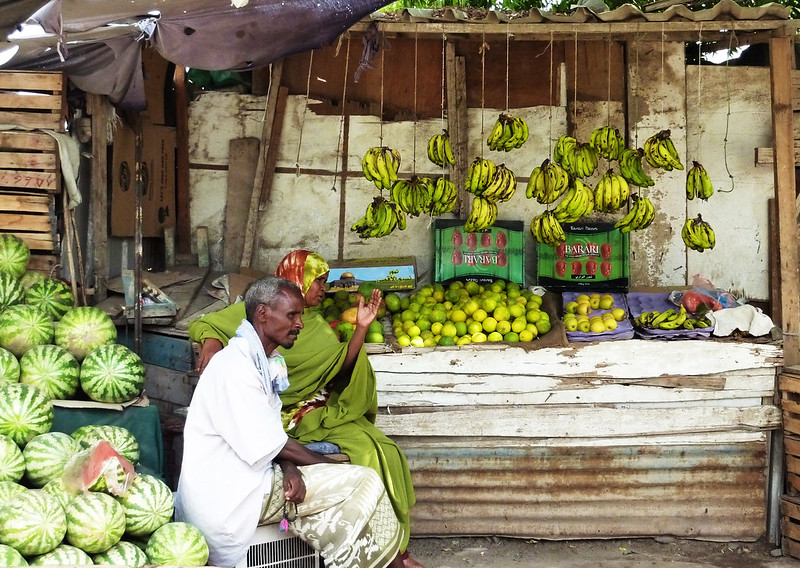
Egypt’s reliance on imports has everything to do with its food subsidies. More than 60 of the 105 million citizens depend on Egypt’s subsidized food system for sugar, pasta, and most importantly, bread. Bread is the main source of subsidized nutrition for the large majority of Egypt’s population, which consumes double as much as the country can produce. With wheat being one of the most water-intensive crops and Egypt’s lack of water, the country has become the largest importer of wheat in the world.

This presented a problem for Egypt in February of 2022, when the world’s largest exporter of wheat, Russia, declared war on Ukraine, the world’s fifth largest exporter of wheat. This sent Egypt into a crisis because historically, concretely, and symbolically access to bread represents the population’s stability. From the 1977 bread riots to the 2011 slogan “bread, freedom, social justice,” bread has long represented the struggle of the average Egyptian. 

As the World Bank Group puts it, “Egyptians seem to perceive food subsidies as the most concrete benefit they receive from government spending. Seen as an entitlement, food subsidies are politically sensitive.” This history of bread in the country puts further pressure on Egypt when making changes to its agriculture, imports or subsidies. 

Criticism and a Possible Way Forward

Many have criticized Egypt’s methods of tackling its food scarcity, suggesting that the country misplaces its budget and efforts. President el-Sisi’s government has long prioritized large-scale construction projects aimed at improving the economy such as the new mega-capital located 30 miles outside of Cairo. This new capital, however, does little to accommodate or feed its most vulnerable citizens. 

Moreover, though Egypt managed to maintain its subsidized system through the first few months of the 2022 Russia-Ukraine war, it increased pressure on local farmers in October 2022. During this time, the government cornered domestic farmers into selling them wheat. Though seemingly necessary in maintaining Egypt’s subsidized food system, these restrictions cut into the wheat that farmers use to feed their families. This period shed light on the possibly exploitative measures that the Egyptian government uses on local farmers. Egypt, however, does not apply this same strictness to laws that protect its agriculture. An important Egyptian regulation prohibits infrastructure on agricultural land, enforcement of which Aljazeera has described as “lax.”

The World Bank and the International Monetary Fund (IMF) have long criticized Egypt’s subsidized food system, arguing that it causes waste, pollution and does not appropriately target the poor. When Egypt borrowed $8 billion from the International Monetary Fund in 2024, there was “a zero-growth policy in the total number of subsidy beneficiaries.” However, a new move might change things in 2025. In August 2024, Egypt announced that it might shift from food subsidies to cash payments in 2025. If the World Bank is correct in its estimation, this transition to cash payments may allow Egypt to more efficiently support its population, and invest in important sectors such as health and education. 

Cash Assistance to Sudanese Refugees in Egypt

As of January 6, 2025, a new CERF-funded project offers emergency cash assistance to Egypt’s Sudanese refugees, aiming to soothe their food insecurity. This $2 million grant, set to run until July, offers every refugee $14.8 monthly, which they can claim through an e-card. This initiative should provide a huge momentary relief for Egypt, giving the country a chance to put in place its cash subsidies and ease its food insecurity. Also, the second phase of the “Transforming the Livelihoods of Smallholder Farmers” project is set to take place in 2025. Funded by five banks, in collaboration with the Central Bank of Egypt and the WFP, the project aims to improve the lives of small farmers by optimizing land, machine and water use. With a “34% increase in crop production, a 35% increase in net profit, and a 37.5% reduction in costs” during the first phase, the project shows great promise in its continuation through 2025. The compilation of major initiatives in Egypt may mean a decrease in food insecurity in Egypt this year. 

– Sophia Ghoneim

Sophia is based in Philadelphia, PA, USA and focuses on Technology and Politics for The Borgen Project.

Photo: Flickr
January 30, 2025
https://borgenproject.org/wp-content/uploads/borgen-project-logo.svg 0 0 Jennifer Philipp https://borgenproject.org/wp-content/uploads/borgen-project-logo.svg Jennifer Philipp2025-01-30 01:30:312025-02-06 01:28:08Egypt’s Food System: A Possible Shift in Subsidies for 2025
Food & Hunger, Global Poverty, Sustainable Development Goals

Hunger in The Netherlands

Hunger in the NetherlandsAs a high-income European country and one of the most substantial influencers in agricultural viability, as well as one of the foremost exporters of agricultural products throughout the globe, the Netherlands is not a country that the world would easily associate with hunger.

1940s Hunger Winter

Yet, 80 years ago, the Netherlands faced a food scarcity experience that left an indelible stamp on its history. This was the Dutch famine of 1944-45, remembered as the “Hunger Winter,” and was one of the major European famines of World War II. The famine occurred in late 1944 and early 1945 in the urban west of the country, after the southern part of the country had been liberated by the Allies. And it affected “probably the wealthiest, best educated and most mobile victims of any famine in history.” Although mortality was relatively low, the long-term effects were significant. Perhaps it was this experience that has framed today’s approach to hunger by the Dutch. 

Poverty and Hunger Today

Since 2018, poverty has decreased in the Netherlands, from 7.1% to 5.1%. This decrease was due to COVID-19 support, compensation for higher energy prices, and an increase in the minimum wage. Nevertheless, in 2023, a third of the poor were in long-term poverty.

The Global Food Security Index 2022 reports that the Netherlands is in the top 5 of 113 countries: affordability (3rd), availability (14th), quality and safety (12th), sustainability and adaptation (13th). Similarly, the Global Nutrition Report indicates that the country is on course for most targets, but off course for childhood overweight and men’s and women’s obesity, and shows no progress or worsening for low birth weight and for anemia for women of reproductive age. 

So, although poverty and hunger are not severe in the country, they still must be addressed.

Local Attention to Hunger

In 2002, a small garage-based initiative to address both food waste and poverty began in Rotterdam and has since grown into the Netherlands’ largest volunteer organization, Voedselbanken Nederland, with 14,000 volunteers supporting 178 local food banks. October 2024 was the Week of the Food Banks—coinciding with World Poverty Day and World Food Day. Voedselbanken Nederland estimates that it needs to reach approximately 400,000 more people who are eligible for assistance but have not yet gotten to a food bank. This is an activity of Schuttelaar & Partners, a corporation dedicated to a healthy and more sustainable agrifood system and food choices, and to accelerating the energy transition. 

The Netherlands and Global Hunger and Health Initiatives

  • Seed Valley. One outgrowth of the Hunger Winter and its loss of over 20,000 lives, was the Netherlands’ investment in agricultural subsidies, industrialization and rural infrastructure with the goal of growing twice as much food with half the resources. This is personified in “Seed Valley,” not actually a valley, but an area of some of the world’s largest seed conglomerates, located an hour north of Amsterdam. The country now produces 6% of Europe’s food on 1% of the continent’s farmland, with a focus on sustainability, including dietary change. The innovations of Seed Valley are aimed at the challenges of climate change and food insecurity on a global level, to rectify the harms of agricultural intensification. 
  • Global Health Hub. In September 2023, the Ministry of Health, Welfare and Sport and the Ministry of Foreign Affairs joined more than 20 parties in the Dutch Global Health Pact, to improve public health worldwide. The global health strategy includes strengthening national health systems, improving global pandemic preparedness,and addressing the mutual impacts between public health and climate change. 
  • Optimal Nutritional Care for All (ONCA). ONCA is a European campaign focused on implementing nutritional risk screening and optimal nutritional care in participating countries. The Netherlands is one of 20 participating countries and one of 16 countries that participated in the 2024 Malnutrition Awareness Week (November 11-25). Several online activities include fact sheets and guidelines, a nutrition day, a long-term malnutrition campaign, a campaign to combat malnutrition in older adults and special podcasts. 
  • 2nd Global Harmonization Initiative World Congress. The 2nd GHI World Congress will be held in Rotterdam, NL June 25-27, 2025. Challenges to be addressed include food security, safety, health and sustainability, as well as disparities in access to safe food, rising hunger, unaffordable healthy diets, adequate dietary intake and diseases and mortality. The role of science and technology will be prominent. 

The Netherlands has thus built on its horrific WWII struggle with hunger to become a local and global force for change for food security.

– Staff Reports
Photo: Pixabay

December 7, 2024
https://borgenproject.org/wp-content/uploads/borgen-project-logo.svg 0 0 Kim Thelwell https://borgenproject.org/wp-content/uploads/borgen-project-logo.svg Kim Thelwell2024-12-07 13:30:132024-12-11 12:34:54Hunger in The Netherlands
Food & Hunger, Food Insecurity, Global Poverty

Hunger in Ethiopia: Everything You Need to Know

Hunger in EthiopiaAccording to the World Food Programme (WFP), a staggering 55% of all children younger than 5 in Ethiopia suffer from hunger, highlighting the severe nutritional crisis facing the nation. In 2024, approximately 15.8 million people in Ethiopia required food support due to a complex interplay of factors such as rampant inflation, ongoing conflicts, severe droughts and the spread of diseases.

Ethiopia is currently grappling with one of the worst droughts in recent history, leading to widespread starvation and devastating consequences for vulnerable populations. The drought has destroyed crops and livestock, further exacerbating food shortages and pushing families into dire circumstances.

Many Ethiopians are also suffering from various diseases, with children particularly affected by hydrocephalus, a serious condition characterized by swelling of the brain due to the accumulation of spinal fluid. This condition can often be linked to malnutrition during pregnancy, underscoring the intergenerational impacts of food insecurity.

The Impacts of Conflict and Drought in Ethiopia

Conflict, drought and decreasing food support are endangering the lives of millions of Ethiopians and driving inflation to unprecedented levels in the region. While inflation in the U.S. and conflicts elsewhere contribute to the crisis, the situation is complex, with smaller issues, such as the availability of fuel for supply trucks delivering food and medicine, playing a critical role.

The disruption of supply chains due to fuel shortages has led to delays in delivering vital humanitarian assistance to affected communities. These delays have further strained the already limited resources available to those in need. Moreover, ongoing conflicts in various regions of the country have hindered access to agricultural land, preventing farmers from cultivating crops and worsening food scarcity.

Humanitarian needs in Ethiopia have tripled since 2015 and the country is experiencing its worst drought in decades, often described as the worst in a generation. This drought affects 8.1 million people, including approximately 2.5 million children, leading to water scarcity, food insecurity and severe disruptions in livelihoods. The consequences include rising food prices, increased malnutrition rates among children and the displacement of millions.

In southern and southeastern Ethiopia, an estimated 7.4 million people wake up hungry each day as the country grapples with its fourth consecutive failed rainy season. Drought, compounded by regional conflict, remains a significant challenge. These alarming statistics and health issues reflect the urgent need for comprehensive interventions to address not only immediate food needs but also the underlying causes of hunger and health disparities in Ethiopia.

What Is Being Done

Several organizations, including the United States Agency for International Development (USAID), are actively supporting Ethiopia through humanitarian assistance. In 2022, USAID announced $488 million to address various critical needs, including:

  • Emergency food assistance
  • Life-saving nutrition to treat malnourished children
  • Support for farmers to prevent livestock and crop loss
  • Aid for vulnerable populations
  • Assistance for farmers and agribusiness to build resilience
  • Provision of safe drinking water and emergency health care to mitigate disease exacerbated by hunger
  • Protection for women and children to prevent gender-based violence.

Summary

Ethiopia is facing a critical crisis as conflict, drought and hunger threaten millions of lives. However, several nonprofit organizations, such as USAID, are actively assisting the country in addressing these issues through humanitarian aid. With sustained support from both local and international organizations, Ethiopia has the potential to overcome these challenges and work toward a more stable future.

– Anthony Burt

Anthony is based in Kansas, USA and focuses on Technology and Politics for The Borgen Project.

Photo: Flickr
October 31, 2024
https://borgenproject.org/wp-content/uploads/borgen-project-logo.svg 0 0 Lynsey 2 https://borgenproject.org/wp-content/uploads/borgen-project-logo.svg Lynsey 22024-10-31 07:30:322024-10-31 00:28:52Hunger in Ethiopia: Everything You Need to Know
Food & Hunger, Global Poverty

ShareTheMeal: Social Media Helping Fight Hunger

ShareTheMealSocial media is multifaceted in its use and can help raise awareness for issues. Furthermore, it can be used to raise funds for the ever-increasing issue of global hunger. Social media not only reaches a wide audience to alert people to the issues but it also mobilises people to do something about it.

Advocacy and Engagement

Many people use multiple platforms such as Instagram and Twitter to raise awareness for issues across the world. Various organizations and individuals have used platforms for advocacy and engagement to help fight global hunger.

In 2015, the World Food Program (WFP) created the ShareTheMeal campaign which allows users to help those in need with just a few taps on their phone. This helped the cause as the ease of creating a change meant that people were more likely to donate and help the issue, as well as create awareness and a place for people to make a change on the issue of global hunger.

Social media can mobilize people to fundraise which is one of the ways how the ShareTheMeal campaign works. Sharing campaign links through social media brings users closer to helping those in need with only a few taps. ShareTheMeal campaign requires €0.70 minimum to pay and in 2022 it has helped provide 150 million meals around the world.

Real-Time Updates and Wider Reach

The fast-paced nature of social media means that there are real-time updates and the updates can reach people faster. With a broader and quicker reach, people all over the world take an interest and want to find out more. This can be seen through the ShareTheMeal campaign by highlighting certain issues quickly and in depth. In 2020, the Beirut blast further worsened the already existing food crisis in Lebanon. Within 48 hours, ShareTheMeal set up a campaign and helped provide food to people who were struggling, WFP reports.

ShareTheMeal also created a campaign to support people living in Palestine without proper resources to feed themselves and supported 1.1 million people with food just in July 2024. This highlights how campaigns that are on social media can reach a vast number of people quickly and create mass awareness and support for issues surrounding global hunger.

ShareTheMeal

This is just one of the many campaigns on social media currently trying to tackle the issue of global hunger. Charities and organizations that are using social media are important to help both large-scale issues as well as small scale, both by raising awareness and funds for global hunger.

– Rosie Miller

Rosie is based in Edinburgh, Scotland and focuses on Good News and Politics for The Borgen Project.

Photo: Flickr
October 20, 2024
https://borgenproject.org/wp-content/uploads/borgen-project-logo.svg 0 0 Naida Jahic https://borgenproject.org/wp-content/uploads/borgen-project-logo.svg Naida Jahic2024-10-20 01:30:072024-10-20 01:24:42ShareTheMeal: Social Media Helping Fight Hunger
Children, Food & Hunger, Food Security, Global Poverty

Tiny Food Gardens for Children’s Homes in Suriname

Tiny Food GardensEconomic hardships due to inflation and the impacts of COVID-19 increased the need for initiatives to improve access to healthy food for children’s homes in Suriname. Ambassadors of Forest93 Suriname have established Tiny Food Gardens and First Food Forests to address this pressing issue.

Forest 93

Suriname is the smallest country in South America and simultaneously the world’s most forested country, according to CEOWORLD. Its forests, stewarded by the Indigenous and Maroon population, cover more than 93% of the country. Green Growth Suriname (GGS) established Forest93 as a national campaign to strengthen the public’s connection to nature and raise awareness of the need for nature legislation and novel approaches to data collection.

The name of this campaign serves as a reminder of the Surinamese government’s pledge made at COP-23 to maintain 93% forest cover. In 2021, successful fundraising by GGS enabled the launch of the Tiny Food Gardens initiative. In 2023, the Fernandes Bottling Company donated funds through a Christmas Caravan fundraising to GGS to expand the Tiny Food Gardens program.

Tiny Food Gardens

The Tiny Food Gardens program (TFG) launched during the COVID-19 pandemic in 2021, a time of increased hardship. Following the economic struggles caused by inflation and a plunge in gross domestic product per capita in 2016, Suriname faced further challenges due to the pandemic. According to the International Labor Organization’s Suriname Mid-term Market Labor Policy 2022-2025, unemployment rose and more businesses failed in 2021 compared to 2019. These circumstances heightened the need for initiatives to improve access to healthy food, particularly for the vulnerable inhabitants of children’s homes in Suriname.

The TFG initiative provides gardening training, educational booklets to monitor plant growth and informative sessions on sustainable solutions to single-use plastic, such as using plastic bottles for planting, in children’s homes. With this knowledge, the homes can grow their spices and vegetables. TFG ensured the homes could run their gardens as independently as possible by training youths in woodwork to craft gardening tables using a “train-the-trainer” approach. To ensure proper project implementation, part of the group monitored the gardening activities in children’s homes in Suriname for the first six months.

Impact

Children’s homes had tiny gardens in the form of gardening tables created as part of a social program for incarcerated people. Forest93 reports that at least two gardening tables were delivered to six children’s homes in Paramaribo, Wanica and Commewijne districts. More than 150 children participated in the TFG program. They helped cultivate 53 small gardens. Eleven young people completed the train-the-trainer course, four of whom gained valuable experience monitoring the project.

In addition to learning gardening as an essential life skill, studies have shown that gardening benefits mental and physical health. Additionally, Forest93 allocated a budget to install water tanks for rainwater storage for irrigation after it became apparent that homes participating in the project experienced increased water bills.

Conclusion

The TFG program has helped children’s homes cut costs while providing healthy meals. This initiative, initiated by ambassadors of Forest93 Suriname, plays a significant role in encouraging youth and the wider community to reimagine the possibilities of creating food security. TFG teaches young people to maintain a garden and enables them to experience the (mental) health benefits of connecting with nature.

– Tanisha Groeneveld

Tanisha is based in Leeds, UK and focuses on Good News and Global Health for The Borgen Project.

Photo: Pexels

October 12, 2024
https://borgenproject.org/wp-content/uploads/borgen-project-logo.svg 0 0 Lynsey 2 https://borgenproject.org/wp-content/uploads/borgen-project-logo.svg Lynsey 22024-10-12 07:30:562024-10-12 00:18:17Tiny Food Gardens for Children’s Homes in Suriname
Aid, Food & Hunger, Global Poverty

The Gardener Combating Famine in Gaza

famine in GazaThe ongoing conflict in Gaza has resulted in an unprecedented humanitarian crisis, with almost 1.74 million more people poverty-stricken since the start of the war on October 7, 2023. Consequently, Gaza’s reality of food insecurity has escalated into one of famine. In response to the lack of food available, Mohammed Qomssan grows vegetables amongst the ruins of his family home in the Jabaliya refugee camp, combatting famine in Gaza and planting a glimmer of hope for the Palestinian people.

Famine in Gaza

In the face of food insecurity, foreign aid is crucial for survival and restoration. However, the unrelenting cruelty of the conflict in Gaza has caused barriers “for humanitarian agencies to safely get aid to affected populations.” According to the International Rescue Committee (IRC), “The danger extends to humanitarian workers. More than 260 aid workers have been killed, more than 190 of whom worked for the United Nations.” Considering that Palestinians no longer have their resources or land available to them due to the destruction of the war, this lack of foreign aid has significantly worsened the reality of hunger in Gaza. The U.N. experts report that “famine has spread across the entire Gaza strip.”

Gardening in the Face of Famine

Despite these bleak prospects, Mohammed Qomssan with the support of his family remains hopeful, unwilling to let the conflict take away their livelihood. Returning to their home in mid-June after facing displacement twice, the family found just two rooms of their house in a habitable condition. This was the moment that sparked Qomssan’s desire to reclaim what the conflict had taken from him and his loved ones, focusing on “survival, in a part of Gaza that most others have left.”

With the knowledge that the majority of the region’s farmers have been displaced and “an estimated 80% of cropland has been destroyed in some areas,” according to IRC, Qomssan and his family set to work to utilize the ruins of their home, clearing as much rubble and installing tarpaulin to create a temporary living room and garden. Qomssan’s innovative thinking saw the potential in objects such as a bathtub, buckets, tin cans, and various other containers found amongst the debris to grow vegetables in. Vegetables grown so far include aubergines, jute, rocket, and peppers, all now considered rare luxuries in Gaza.

Although the food markets in Gaza have a limited stock, especially fresh stock, they occasionally sell seeds which Qomssan looks out for to continue growing his food supply. Qomssan documents this journey on his social media accounts to encourage others and raise awareness of famine in Gaza, The Guardian reports.

Amongst the chaos and destruction, this family’s horticultural efforts in what Qomssan describes as a decision that would allow them “to live like ordinary people,” spreads a message to Gaza’s most vulnerable that in the face of crisis, there is hope and potential for restoration.

– Imogen Prince

Imogen is based in Oxford, UK and focuses on Good News for The Borgen Project.

Photo: Flickr
October 8, 2024
https://borgenproject.org/wp-content/uploads/borgen-project-logo.svg 0 0 Naida Jahic https://borgenproject.org/wp-content/uploads/borgen-project-logo.svg Naida Jahic2024-10-08 07:30:472024-10-08 07:25:54The Gardener Combating Famine in Gaza
Food Aid, Global Poverty, Women & Children

5 Charities Operating in Kashmir

Charities Operating in Kashmir
Kashmir often dubbed as ‘heaven on earth’ is a region that is equally beautiful as it is troubled. It has suffered a long history of geopolitical strife, changing weather patterns and natural disasters and the yet unsolvable question of its autonomy still lingers on most lips. The breathtaking landscape is split into areas that India administers on one side of the border and Pakistan on the other, with China also holding stake. Life in Kashmir is not without daily challenges and human rights violations in the region are frequent. The average person struggles to feed his family and children, unemployment rate is high and curfews and martial law is common. 

For a region witnessing many upheavals, it is the work of charitable organizations that bring relief and aid in times of great hardship. There are many charities operating in Kashmir that are doing tremendous work to combat the daily struggles faced by the Kashmiri people and to help alleviate some of the difficulties that are widespread in the land. Here are five charities operating in Kashmir.

Unite 4 Humanity

This charity operates on both sides of the border working hard to bring relief to as many parts of the divided region. It recognizes that 27% of the Kashmiri population is living under the poverty line and the rural areas are the ones most affected with the figure rising to 54%. Unite 4 Humanity has implemented many initiatives since 2012. The Borgen Project reached out to the organization which elaborated on its work citing that it has helped many communities in Kashmir. It mentioned that it has sent food packages to 1,454 families, and provided hot meals to 23,700 people and winter packages for 230 children. It is making sure donations reach the most disadvantaged of the population (orphans, widows and disabled).

Helping Hand for Relief and Development

Helping Hand for Relief and Development (HHRD) is another organization operating on either side of the line of control (LOC). It works in tandem with humanitarian teams on the ground in Jammu Kashmir and Azad Kashmir to ensure that the lives of the most vulnerable have protection. It has many different programs such as its seasonal Winter Relief which has been delivered to 336 beneficiaries and Global Qurbani with 29,890 beneficiaries. This charity operating in Kashmir also serves projects such as Skills Development and Medical In-Kind Gifts programmes that aim to reach the most affected, especially children and the elderly. In 2014, when the disastrous floods wrecked the region, HHRD provided instant relief assistance and aid to ensure as many people as possible received support. It continues to work for the displaced people on the ground.

Muslim Hands

Muslim Hands is a notable charity that has been carrying out tremendous work in Kashmir since 1994. Its efforts in the area have spanned more than 25 years. In just 2022 alone, the organization was able to ensure that emergency relief, food parcels and water provisions reached more than 169,000 people. Additionally, the charity has been able to provide medical supplies and treatment to 400,000 people, education to 50,000 children and necessary assistance and support to nearly 3,700 orphans.

CHINAR Kashmir

CHINAR Kashmir is a nonprofit organization that is working to improve the lives of the marginalized Kashmiri people through its advanced projects focusing on health care, education, empowerment and various kinds of relief work. The organization’s work concentrates on gender inequality, quality of education, youth and women empowerment. This also mirrors the objectives of the United Nations’ SDGs which focus on combating such global challenges. CHINAR Kashmir has been able to support 2,500 students and more than 1,000 women and families through its various programs such as the Remote Child Sponsorship Programme (RCSP) and Skills Enhancement and Entrepreneurship Development (SEED).

Orphans in Need

Orphans in Need has been operating in Kashmir for more than a decade. It emphasizes the lasting and devastating effect the many catastrophes have had on the children of Kashmir due to which approximately 215,000 children have lost a parent. The work of this organization is integral as it aims to support and provide relief to orphans in need of necessities and focuses on creating an avenue in which vulnerable children can live a normal life. The organization supplies deprived orphanages with resources and sponsorships to ensure children have the provisions they need. Just last year in 2023, the organization’s Qurbani donations fed thousands of orphans, widows and families.

Looking Ahead

While the issues prevailing in Kashmir are vast, the noteworthy and incredible work that many charities are doing is no small feat. These charities operating in Kashmir and others alike are committed to making a difference to the region.

– Aleena Shahid

Aleena is based in Bradford, UK and focuses on Good News and Celebs for The Borgen Project.

Photo: Flickr
September 21, 2024
https://borgenproject.org/wp-content/uploads/borgen-project-logo.svg 0 0 Jennifer Philipp https://borgenproject.org/wp-content/uploads/borgen-project-logo.svg Jennifer Philipp2024-09-21 07:30:372024-09-21 01:49:215 Charities Operating in Kashmir
Food & Hunger, Global Poverty, Poverty Reduction

Being Poor in Thailand: Life of the Urban Poor in Bangkok 

Being Poor in ThailandThailand has a poverty rate of 12.2%. Urban informal settlements or slums are places where a majority of urban poor dwell in many places worldwide. When zooming into Bangkok, the capital of Thailand, a total number of 300,000 households live in informal settlements across 1,500 communities. Being poor in Thailand often means residing in an informal settlement.

Khlong Toei

Urban sprawl is projecting threats of eviction and homelessness to informal settlements. Khlong Toei, the largest informal settlement in Bangkok and home to 100,000 people, is the next preferred site for upscale development. Current residents are offered affordable housing options in a residential tower, with only 13,000 available units. The rest of the residents will disperse into the margin of the city, away from their jobs and communities.

Fire hazards are also threatening the lives of residents in Khlong Toei. Due to the low to non-existent fire control infrastructure and the crowded nature of the settlements, fire has become a constant concern in the communities. Fire destroyed 30 homes in 2017 and this is one small event following a history of constant fire and explosions at the settlements.

Water Access

Being poor in Thailand, one often feels the powerful nature of water. Water pollution creates compound effects that make life in informal settlements even more challenging. Waste disposal has buried and polluted the canals that used to be the arteries of the city, making the informal settlers highly prone to vector-borne diseases.

Lack of access to fresh water and flood-control infrastructure has aggravated the environmental stress of living with the residents. Public health conditions related to sanitary water supply is a major concern in Bangkok’s informal settlements. Insufficient sanitary infrastructure and pricey protective equipment could be among the reasons why residents were could not carry out basic COVID-19 prevention activities, according to a 2022 research article.

Solutions

Nonprofit organizations have been assisting the urban poor in Khlong Toei. Founded in 2020, Bangkok Community Help Foundation has been working with residents, addressing sanitation issues, while providing essential supplies daily. Its help spans from housing projects to waste dump conversion. Latterly, help has extended to medical supplies during COVID-19 and survivor bags that pack preserved food supplies, covering 3,000 meals per day.

Urban informal settlements are not only hosts of self-built resilient communities but arts and crafts that would otherwise be lost. Many urban informal settlers in Bangkok work as street hawkers, vending homemade food and crafts, supporting a culture of vibrant street scenes that attract domestic and international visitors to Bangkok every year.

Residences of these urban informal settlements are facing drastic life-threatening challenges. NGOs and volunteers are working on addressing some of the public health and safety concerns, and it is calling for governmental and international aid to improve the quality of life and opportunities of urban dwellers.

– Yuhan Ji

Yuhan is based in Cambridge, MA, USA and focuses on Global Health for The Borgen Project.

Photo: Flickr
September 19, 2024
https://borgenproject.org/wp-content/uploads/borgen-project-logo.svg 0 0 Jennifer Philipp https://borgenproject.org/wp-content/uploads/borgen-project-logo.svg Jennifer Philipp2024-09-19 03:00:462024-09-30 22:37:07Being Poor in Thailand: Life of the Urban Poor in Bangkok 
Aid, Food Security, Global Poverty

Biofortified Sweet Potato: A Solution for Food Insecurity

Biofortified Sweet PotatoVitamin A deficiency affects approximately 140 million children worldwide, posing serious public health challenges, including weakened immunity, stunted growth and potential blindness. Since 2009, the International Potato Center (CIP), a component of CGIAR, has led initiatives to combat this deficiency, especially in Africa and Asia. Their solution includes the development of a climate-resilient, biofortified orange-fleshed sweet potato (OFSP). This innovation aims to address significant global challenges like malnutrition and food scarcity.

Combating Vitamin A Deficiency

CIP’s innovative crop plays a crucial role in combating vitamin A deficiency. Consuming just 125 grams of boiled orange-fleshed sweet potato (OFSP) can fulfill the daily vitamin A requirements for preschool-aged children, addressing malnutrition effectively. Researchers have released more than 100 pro-vitamin A sweet potato varieties in more than 20 countries, adapting each to local environmental conditions to ensure their success.

Nutritional and Health Benefits

While OFSP is rich in pro-vitamin A, biofortified potatoes developed by CIP also provide a wealth of essential nutrients. 100 grams of boiled potatoes can provide 16% of the daily potassium and 30% of the daily vitamin C needs. Recently, new varieties contain 40 to 80% more iron and zinc, with an absorption rate of 29%.  Due to OFSP, there has been a 22% reduction in vitamin A deficiency in 17 African countries.

Reaching Households

CIP’s biofortified sweet potato initiative currently benefits more than 6.4 million households, a number that’s projected to climb as the organization aims to reach 10 million households within the next five years. Studies reveal significant nutritional impacts: in Mozambique, incorporating Orange-Fleshed Sweet Potatoes (OFSP) into children’s diets has slashed vitamin A deficiency by 15%. Meanwhile, in Kenya, the incorporation of sweet potato puree into bread and buns has not only enriched food with essential nutrients but also spurred economic activity, generating more than $1 million in annual sales. Consuming just two slices of bread made with OFSP puree meets 10% of an adult’s daily vitamin A requirement.

Biofortified Sweet Potatoes in the Face of Harsh Climates

The continent of Africa contributes less than 5% of global greenhouse gas emissions and yet it is disproportionately impacted by changing weather patterns. By 2040, temperatures are expected to rise by 2 degrees Celsius. This not only presents a huge risk to food security but will have a severe impact on smallholder farmers who produce 90% of sub-Saharan Africa’s food. OFSP is a drought-resistant crop. More than 10 million households in Africa and South Asia now grow this crop. Furthermore, in addition to OFSP, CGIAR is developing more than 350 biofortified and climate-resistant crop varieties to benefit more than 50 million people in 41 countries. 

Future Prospects

The sweet potato program at the International Potato Center (CIP) has gained acclaim for its significant impact on global food security. In 2016, CIP researchers received the World Food Prize for their work in enhancing nutrition and food security through the cultivation of this crop. Continuing into the 2022-2024 period under the CGIAR Investment Prospectus, there is a strategic focus on transforming systems and bolstering resilient agrifood systems. This initiative champions the development of nutrient-rich and climate-resilient crops, including the biofortified sweet potato, aiming to secure a sustainable future for millions of smallholder farming families worldwide.

– Ellisha Hicken

Ellisha is based in London, UK and focuses on Technology and Solutions for The Borgen Project.

Photo: Flickr
September 19, 2024
https://borgenproject.org/wp-content/uploads/borgen-project-logo.svg 0 0 Precious Sheidu https://borgenproject.org/wp-content/uploads/borgen-project-logo.svg Precious Sheidu2024-09-19 01:30:212024-09-19 01:21:23Biofortified Sweet Potato: A Solution for Food Insecurity
Page 4 of 78«‹23456›»

Get Smarter

  • Global Poverty 101
  • Global Poverty… The Good News
  • Global Poverty & U.S. Jobs
  • Global Poverty and National Security
  • Innovative Solutions to Poverty
  • Global Poverty & Aid FAQ’s
Search Search

Take Action

  • Call Congress
  • Email Congress
  • Donate
  • 30 Ways to Help
  • Volunteer Ops
  • Internships
  • Courses & Certificates
  • The Podcast
Borgen Project

“The Borgen Project is an incredible nonprofit organization that is addressing poverty and hunger and working towards ending them.”

-The Huffington Post

Inside The Borgen Project

  • Contact
  • About
  • Financials
  • President
  • Board of Directors
  • Board of Advisors

International Links

  • UK Email Parliament
  • UK Donate
  • Canada Email Parliament

Get Smarter

  • Global Poverty 101
  • Global Poverty… The Good News
  • Global Poverty & U.S. Jobs
  • Global Poverty and National Security
  • Innovative Solutions to Poverty
  • Global Poverty & Aid FAQ’s

Ways to Help

  • Call Congress
  • Email Congress
  • Donate
  • 30 Ways to Help
  • Volunteer Ops
  • Internships
  • Courses & Certificates
  • The Podcast
Scroll to top Scroll to top Scroll to top