• Link to X
  • Link to Facebook
  • Link to Instagram
  • Link to TikTok
  • Link to Youtube
  • About
    • About Us
      • President
      • Board of Directors
      • Board of Advisors
      • Financials
      • Our Methodology
      • Success Tracker
      • Contact
  • Act Now
    • 30 Ways to Help
      • Email Congress
      • Call Congress
      • Volunteer
      • Courses & Certificates
      • Be a Donor
    • Internships
      • In-Office Internships
      • Remote Internships
    • Legislation
      • Politics 101
  • The Blog
  • The Podcast
  • Magazine
  • Donate
  • Click to open the search input field Click to open the search input field Search
  • Menu Menu

Archive for category: Food & Hunger

Information and stories on food.

Children, Food & Hunger, Global Poverty, Health

Addressing Malnutrition in Latin American Children

malnutrition in latin american children
Families residing in Latin America are currently experiencing a problem with nutrition, specifically with children being drastically underweight or overweight. This issue stems from inadequate health education, lack of access to healthy foods, and in some poorer communities, no access to any food at all. Reports in 2018 determined that 20% of children under the age of 5 were not growing at a normal pace due to some form of malnourishment. As a result, these children faced stunted growth and/or obesity. Organizations are tackling this issue by addressing poverty as the root cause of malnutrition in Latin American children.

How Poverty Leads to Malnutrition

In 2017, 184 million Latin Americans were living in poverty while 62 million were experiencing extreme poverty, creating an increased risk for child malnourishment. Low-income households often cannot purchase food, afford healthy foods or are food insecure, which perpetuates unhealthy development. This means children in poor homes are unable to consume the required number of food groups to support their growth. The poorest Latin American countries have it the worst. In 2019, one in two Guatemalan children under the age of 5 had stunted growth.

Children in marginalized households also face obesity. Obesity can lead to long-term health risks such as type 2 diabetes, cardiovascular ailments and mental health complications in adulthood. In 2017, 20% of children under the age of 20 were either obese or overweight in Latin America. A major reason for the continent’s growing obesity rate is the marketing of inappropriate diets. The U.N. highlighted a common marketing trend in Latin American countries: the cheaper choice receives heavy promotion, therefore outselling the healthier choice. This creates a higher demand for processed foods. Processed foods are more readily available in grocery stores than nutritious foods, perpetuating unhealthy habits among children in poverty.

Who is Helping?

There are many organizations that are working to end malnutrition in Latin American children. The nonprofit Save the Children currently has multiple programs in action that specifically target child malnourishment in Latin America by uplifting inclusive markets and strengthening household incomes. So far this nonprofit has provided over 350,000 Haitian children with vital nourishment. Kids Alive International also reaches out to vulnerable children by providing nutritious meals in the Dominican Republic, Guatemala, Haiti and Peru.

UNICEF calculated in 2019 that malnutrition affected 5.1 million children under the age of 5, with children from the poorest households being four times more likely to experience malnourishment. UNICEF is working toward making the Sustainable Development Goals a reality for Latin American children. It hopes to end poverty and the effects of malnutrition by 2030.

Malnutrition in Latin American children continues to be a health crisis with poverty being a primary source. Every child should have the right to healthy food and a healthy lifestyle. International aid helps make those rights a reality.

– Radley Tan
Photo: Pixabay

September 3, 2020
https://borgenproject.org/wp-content/uploads/borgen-project-logo.svg 0 0 Kim Thelwell https://borgenproject.org/wp-content/uploads/borgen-project-logo.svg Kim Thelwell2020-09-03 07:30:162020-09-02 13:32:21Addressing Malnutrition in Latin American Children
Food & Hunger, Global Poverty, Health, Poverty

Poverty and Obesity: A Paradox Amid COVID-19

poverty and obesity
The fact that both poverty and obesity simultaneously rose amid the COVID-19 pandemic, possibly tipping 130 million people into chronic malnutrition by the end of 2020, may initially come across as surprising. Yet, researchers have long documented the paradox of how impoverished individuals experiencing food insecurity are more likely to suffer from obesity than the wealthy. Poverty and obesity often go hand in hand as signs of food unavailability and a lack of healthy eating, respectively, but these conditions of malnutrition also carry more subtle risk factors like unemployment, lower education levels and limited social networks.

The Problem: Food Access, Not Just Food Availability

Food insecurity manifests itself in many ways beyond undernourishment from an insufficient quantity of food — the prominent of which is unreliable access to nutritious, healthy options. With COVID-19 exacerbating pre-existing inequities and inadequacies in global food systems, poor diets and their resultant boosting of obesity present an urgent problem for vulnerable populations in developing countries. “The pandemic is creating a problem not of food availability, but of food access because people will have less income because of the recession,” explained Maximo Torero, chief economist of the UN’s Food and Agriculture Organization.

UN Data further showed that if the trend of limited food access continues, the world’s hungry will surpass 840 million by 2030 — the very same year 193 countries have set as their target by which they will have eliminated all forms of malnutrition. And with disruptions to agricultural supply chains due to COVID-19, governments face growing pressure to take unprecedented action to tackle the worldwide spikes in food prices if they are to meet this target. It is also no coincidence that nearly all of the 50 countries with the most risk for sustained food-price swings have developing economies, according to Nomura’s Food Vulnerability Index.

Healthy eating emphasizes fresh produce and lean meats, ideally locally-sourced with minimal processing and preservatives. However, the agricultural and meat industries were the first and most affected when governments implemented COVID-19 quarantines and travel restrictions. The successive disruptions meant it was more difficult for farms to receive agriculture inputs of seeds, fertilizer and equipment, further delaying production of healthy eating staples: rice, maize, wheat, vegetables and other produce. Producers of unhealthier, more processed foods don’t face the same problem of financial losses from rotting food. Thus, during this time, those foods are more accessible and affordable at the expense of poorer consumers’ health.

The Effects: COVID-19 and Obesity

Unfortunately, the connection between COVID-19, poverty and obesity works in reverse as well. Obesity is a major risk factor for a more severe infection, resulting in higher hospitalization and death rates once one has caught the virus. Most recently, a number of studies and anecdotes have noted obesity as the predominant risk factor in youth, with cardiologist David Kass concluding “in populations with a high prevalence of obesity, COVID-19 will affect younger populations more than previously reported.” The CDC has incorporated these findings by specifying that obesity is just as significant a risk factor for severe COVID-19 illness as a suppressed immune system or chronic lung disease.

Though researchers have mostly focused on the link between COVID-19 and obesity in high-income countries, it may have more devastating effects in the developing world. Not only does evidence show “over 70% of the world’s 2 billion overweight and obese individuals live in low or middle-income countries,” obesity also leads to higher health care costs and lower work productivity, which go hand-in-hand with greater consumption of cheaper, unhealthy food options. The created feedback loop is referred to as the “double burden of malnutrition.” Moreover, as Kass’s findings suggested, the victims of COVID-19 in developing countries are younger. In India and Mexico respectively, less than 12% and 17% of deaths were of individuals older than 75, and both of these countries report much more deaths of middle-aged and younger individuals than the U.S. and Europe do.

Solutions to Improve Global Food Security

One estimate of how much governmental spending is needed to combat COVID-19’s effects on hunger and obesity was $10 billion, put forth by the International Food Policy Research Institute. However, even this amount may be insufficient when considering that food insecurity will only continue compounding if addressing poverty isn’t a cornerstone of the solutions put forth. The World Food Programme has prioritized this need for financial safety nets and social protection programs until investment in nutrition and expansion of social protections. Their Executive Director David Beasley plans to allocate $1.9 billion of already pledged funding to build food and cash stockpiles as a “life-saving buffer,” protecting the world’s poor from food shortages and food-price hikes. They also requested a further $350 million to set up transportation systems, limiting shortages and disruptions in the agricultural industry from occurring in the first place.

In combination with these correctional measures, governments should adopt a preventative approach to addressing obesity. “One of the most effective ways to address obesity and other non-communicable diseases is by ramping up investments in affordable, quality primary health care,” says Dr. Muhammad Pate, Global Director for Health, Nutrition and Population at the World Bank. “This makes sense both from a health and an economic perspective. Putting more resources on the front lines to detect and treat conditions early, before they become more serious, saves lives, improves health outcomes, reduces health care costs and strengthens preparedness.” With these efforts in place, the paradoxical relationship between poverty and obesity may begin to ease.

– Christine Mui
Photo: PXFuel

August 17, 2020
https://borgenproject.org/wp-content/uploads/borgen-project-logo.svg 0 0 Kim Thelwell https://borgenproject.org/wp-content/uploads/borgen-project-logo.svg Kim Thelwell2020-08-17 07:44:102020-08-17 07:44:10Poverty and Obesity: A Paradox Amid COVID-19
Children, Food Security, Hunger

5 Ways to Fight Hunger in Nicaragua

Nicaragua, although having made tremendous progress in recent years, is still one of the poorest and least developed countries in Latin America. According to the World Bank, 24.9% of Nicaraguans lived in poverty as of 2016. Of those people, 200,000 lived in extreme poverty making less than $1.90 a day. As a result of poverty and harsh climate conditions, hunger in Nicaragua is a prominent issue. Even though approximately 70% of the population works in agriculture, 300,000 people still require food aid. Located in what’s known as the Dry Corridor, Nicaragua faces erratic weather patterns prone to climate shocks that are consistent threats to stable food production. However, in spite of the unfavorable conditions, many organizations and programs are on the ground working to fight hunger in Nicaragua.

5 Initiatives to Fight Hunger in Nicaragua

  1. The World Food Program (WFP) offers various programs and services to alleviate hunger in Nicaragua. Since 1971, WFP has implemented strategies to improve food security. By supporting the National School Meal Program, the organization helped provide meals to more than 182,000 schoolchildren in April of 2020. Following a five-year plan that spans from 2019 to 2023, WFP aims to find long-term solutions to hunger in Nicaragua. Along with direct food assistance, WFP promotes creating efficient and sustainable agricultural practices by providing technical assistance in implementing weather-resilient farming methods, improving degraded ecosystems and developing technology for accurate climate information.
  2. The organization Food for the Hungry believes that chickens can be a catalyst for solving hunger. Food for the Hungry stated that chickens rank close to the top of its annual gift catalog because of their uses in decreasing hunger. The nonprofit sponsored a program in El Porvenir, Nicaragua called “Happy Chicks”. This initiative taught the locals skills related to running a poultry farm, which is a creative and sustainable way to provide daily meals to the community and, especially, children. These skills help communities learn to operate self-sufficiently.
  3. Indigenous women have a history of banding together to develop more sustainable agricultural practices. Slow Food is an organization that values the protection of food culture and understands the importance of responsible food production. The organization partnered with communities of indigenous women in Nicaragua to encourage cooperation in improving the quality of agricultural systems. Women in the organization shared ideas about planting and harvesting crops, while also promoting economic autonomy through marketing and commercializing excess products.
  4. The Caribbean Coast Food Security Project (PAIPSAN) is collaborating with communities on the Caribbean coast of Nicaragua to fight hunger. The organization provides assistance to those who would normally not have access to adequate technology or resources to engage in sustainable agricultural practices. PAIPSAN encourages farmers to utilize climate-resistant seeds and organic fertilizers, while also promoting innovative and environmentally friendly pest and disease control practices. The program also provides educational services to increase awareness of improving nutrition.
  5. Food assistance programs are a popular way of directly fighting hunger in Nicaragua. Food assistance programs generally provide a stable source of food for those in need. Hope Road Nicaragua works alongside other organizations, such as the Orphan Network and Rise Against Hunger, to provide 3,000 children with meals that include vitamin-dense rice and soy packs, beans, vegetables, chicken and tortillas.  The Rainbow Network is another food assistance program. It has set up 489 feeding centers, reaching approximately 13,581 people. The Rainbow Network also works with The American Nicaraguan Foundation to train community members on how to cook and operate the feeding centers. The American Nicaraguan Foundation itself is an organization that has provided more than 297.3 million meals to Nicaragua’s most vulnerable in the past 25 years. Along with its network of more than 700 partners, the foundation coordinates a variety of programs and allocates resources dedicated to poverty relief.

Nicaragua has made progress in recent years. However, vulnerable groups still need assistance with fighting hunger, a direct result of poverty in the country. In order to address this, many organizations are working to foster the idea of food sovereignty and fight hunger in Nicaragua. 

–Melanie McCrackin
Photo: Flickr

August 14, 2020
https://borgenproject.org/wp-content/uploads/borgen-project-logo.svg 0 0 Jennifer Philipp https://borgenproject.org/wp-content/uploads/borgen-project-logo.svg Jennifer Philipp2020-08-14 12:51:052024-05-29 23:18:535 Ways to Fight Hunger in Nicaragua
COVID-19, Food & Hunger, Global Poverty

Hunger in Croatia

Hunger in CroatiaHunger in Croatia has been a historical plague starting in 1917 when World War I set the country to a two-year famine. The struggle continued through the 2008 recession that increased poverty and unemployment rates by 8%. As in many contexts, Croatia’s economic hardship left many families with insecure food sources, with children being the most vulnerable to malnutrition and stunting. Consequently, in UNICEF’s 2014 report “Children of Recession,” the number of Croatian children living in poverty or at the brink of poverty was at an alarming level.

Fighting Hunger in Croatia by Addressing Poverty

Due to the correlation between poverty and hunger, the Minister of Social Welfare Milanka Opacic launched an initiative in 2015 to combat issues of hunger in Croatia. Part of this initiative included providing free school lunches to all children. As a result of this initiative, the Global Hunger Index in 2015 reported that Croatia, alongside 17 other countries, had reduced the number of people with insecure food sources by half. Furthermore, in 2016, the Global Hunger Index ranked Croatia as being of low concern for hunger.

The Link Between Hunger in Croatia and Agriculture

However, the problem of hunger in Croatia is not solely caused by poverty. Croatia is a country heavily dependent on food imports. Despite the fact that Croatia has quality agricultural land, plenty of water as well and a diverse climate and landscape, it is unable to produce enough food for the consumption needs of citizens. Based on its resources, Croatia should be a major exporter of agricultural goods; instead, Croatia imports 3.5 billion euros worth of food. One main cause of insufficient agriculture production in Croatia is inadequate and ineffective management of land. Due to this mismanagement, Croatian agricultural estates remain small, fragmented, underdeveloped and ultimately unproductive. Croatia suffers from agricultural stunting as a result of depopulated rural areas, a poor market value chain and outdated technology.

These issues will perpetually tie Croatia to food imports and fundamentally prevent the nation from being agriculturally independent. From an economic or trade perspective, this import dependence is not a problem. Every country in the world imports goods that it cannot produce domestically. However, in the era of COVID-19, heavy reliance on imports raises concerns; especially when the import is something as important and life-sustaining as food.

Steps Towards a Secure Croatia

While initiatives combating hunger in Croatia have made great domestic progress through increasing access to impoverished communities, there is still work to do. Experts call on Croatia to extend their hunger policies and focus on investing in domestic agricultural production. Croatia has already proven to be a country prone to hunger and it simply cannot afford to be self-sufficient in the provision of food in order to survive potential events like security threats, natural disasters or resource depletion.

Croatia has indisputably improved remarkably in regards to hunger since the 2008 recession. However, there is still a long way to go. This work requires funding, research and dedication; if successful, these efforts will result in an agriculturally independent and secure Croatia.

– Lily Jones
Photo: Flickr

August 9, 2020
https://borgenproject.org/wp-content/uploads/borgen-project-logo.svg 0 0 Kim Thelwell https://borgenproject.org/wp-content/uploads/borgen-project-logo.svg Kim Thelwell2020-08-09 01:30:092024-06-04 01:17:57Hunger in Croatia
Food & Hunger, Food Insecurity, Food Security, Global Poverty

Tackling Hunger in Finland

Hunger in Finland
Despite enjoying one of the world’s most advanced social-democratic welfare systems and the lowest human insecurity rates, there are still major struggles with poverty and hunger in Finland.

First Signs

The first signs of hunger in Finland emerged following a financial crisis in the 1990s which resulted in roughly 100,000 Finnish people reportedly hungry during the years 1992 and 1993. As a result, the foundation for a network of charity-based food aid provisions proliferated in Finland during the 1990s. Several spikes occurred in CFA rates in the late 1990s, with the largest increase at the turn of the century.

What is interesting about this particular response to food insecurity in Finland is that, in principle, the Nordic welfare state “is assumed to provide universal social security against social risks, such as poverty, for all its citizens.” However, at-risk people in Finland have received support largely through charity-based food aid, indicating that the current welfare state falls short of feeding everyone.

Giving Back

In 2013, EVIRA, the Finish Food Safety Authority, improved food safety regulations by allowing food and retail industries to donate food to charity with greater ease. This new food waste redistribution project was part of a new wave of social innovations in the greater E.U. which operated in efforts to reduce food insecurity and ecological waste.

As of 2014, the CFA in Finland had 400 distributors “including parishes, FBOs, unemployment organizations and other NGOs.” It reached roughly 22,000 Finnish people every week.

At-Risk Populations

Statistics Finland’s research shows that the number of people at risk for severe poverty and homelessness was 890,000 in 2017, which is roughly 16.4% of the population. Findings from the European Anti Poverty Network (EAPN) Poverty in Finland Report from 2019 show that the number of people living on minimum income benefits and experiencing livelihood problems such as food shortages continues to be a growing problem. The share of Finns turning to food banks every week was roughly 20,000 in 2019. The risk of poverty and malnutrition is highest amongst single mothers and older women living alone, according to the National Council of Women in Finland. Finland is also among one of the most racist countries in the E.U., making it even harder for migrants, especially women, to achieve success in the current economic climate. As a result, many migrants in Finland are poor and at risk of food insecurity.

A Hopeful Horizon

Progressive social reform strategies such as Finland’s Housing First strategy with the extensive food aid provision network in the country have the power to eradicate hunger in Finland. In fact, Finland’s Housing First strategy already accomplished a lot in regard to shelter insecurity in the country. Perhaps a stronger state role in providing food aid could be the extra push necessary to completely tackle the stagnating food insecurity problem.

– Jasmeen Bassi
Photo: Unsplash

August 5, 2020
https://borgenproject.org/wp-content/uploads/borgen-project-logo.svg 0 0 Kim Thelwell https://borgenproject.org/wp-content/uploads/borgen-project-logo.svg Kim Thelwell2020-08-05 15:52:252020-08-05 15:52:25Tackling Hunger in Finland
Food Security, Global Poverty

More Than A Trend: What Food Allergies in Germany Are Costing The Poor

Despite being a necessary precaution to avoiding life-threatening reactions, managing food allergies is still considerably more difficult for low-income families, according to researchers at the University of Waterloo. Although much progress has been made to increase awareness of food allergies, in Germany in particular, the high costs of allergen-free food products and medications leave Germany’s poor disproportionately affected by allergen-free food inaccessibility. With increases in both food sensitivities and poverty rates in recent years, Germany might encounter a growing issue of food inaccessibility — and it may not be the only country to do so.

Prevalence of Food Allergies in Germany

Globally, the prevalence of food allergies has been rising steadily over the past few decades, affecting nearly 10% of children in Australia and 2% of adults throughout Europe.

In Germany, a study conducted by the Environmental Medicine Commission of the Robert Koch Institute (RKI) places the prevalence of food allergies in adults at 4.7%. While researchers note that there have been relatively no changes to the doctor-diagnosed prevalence of food allergies in Germany over the past 15 years, food sensitivities in Germany still remain higher than in most other European countries. Approximately 25.5% of adults were “sensitized” to at least one food in the RKI study, meaning that researchers detected IgE antibodies specific to at least one food allergen in their blood. That compares to a food sensitivity prevalence of only 11% of Spain’s population and 14% of the U.K.’s population.

Although researchers previously observed a greater prevalence of allergies in urban areas, research in Bavaria found that rural areas aren’t excluded from the allergy “epidemic” either. While several studies have associated living on farms with a decreased risk of food allergies in Germany, other research notes an increased prevalence of allergies (37.3%) in the Bavarian countryside as compared to the German national average (20.0%).

The Cost of Allergies

Such data suggests an increased demand for allergen-free foods in rural communities—a hard ask considering the disproportionate distribution of supermarkets. Although supermarkets and discounters are widely accessible by car throughout Germany, by foot their accessibility is considerably poorer in rural areas, especially for less mobile groups like the elderly.

Even if there are supermarkets nearby, however, that doesn’t mean they shelve allergen-free products. Despite the prevalence of food allergies in Germany, allergen-free food products are still considerably more expensive than their mainstream counterparts ($4.50 for a loaf of gluten-free bread compared to $2.50 for a whole grain loaf in the U.K.). The high costs of purchasing ingredient substitutes, preventing cross-contamination and ensuring compliance with strict government regulations contribute to these costs, according to BBC.

Like allergen-free food products, potentially life-saving diagnostics and medications remain a large expense for those with food allergies in Germany and across Europe. Between hospital visits, allergy treatments and travel costs, researchers at the University of Finland concluded that families with a child between 1-2 years of age spend an average of $3,600 on managing their child’s food allergy.

The high costs of allergen-free foods and treatments as well as the lack of accessibility to supermarkets, are not favorable for the food security of Germany’s poor. With 15.5% of the German population currently living in poverty, inaccessibility to expensive allergen-free products may become a more severe problem. However, across Germany, nonprofits and government agencies are taking action to tackle allergen-free food inaccessibility from as many angles as possible.

Increasing Supply of Allergen-Free Food Products

As a result of the increasing demand of allergen-free products (a robust 20% increase over the past 12 months in the case of EHL Ingredients), German food manufacturers are accelerating production of their “free-from” lines. In 2008, for example, only 6.4% of dairy products were lactose-free; by 2013, that number had nearly doubled to 12.1%.

However, nonprofits aren’t simply waiting for the increased demand for allergen-free foods to take down towering prices. Many, like the German Celiac Society (DZG), are also actively intervening to ensure accessibility to gluten-free foods for those with food allergies in Germany.

“Gluten-free food in Germany tend to be twice as expensive as gluten-containing food,” says Michael Mikolajczak, the DZG’s press office representative. “The DZG is talking to politicians about tax-free allowance for people with celiac disease in order to achieve financial compensation.”

Although Larissa Nitz, member of the DZG’s youth committee, said that such tax relief initiatives never were quite successful, both she and Mikolajczak point towards Germany’s strong welfare system as a source of financial assistance for those managing food allergies in Germany.

Accessibility of Food Banks

When it comes to supermarket accessibility, the norm of “buying local” combined with the high prevalence of food banks makes the long distance to supermarkets a less acute issue for those with food allergies in Germany. In fact, according to a 2015 paper examining the German food bank system, only 6.69% of all residents and 5.75% of all welfare recipients lacked access to at least one food bank in their district.

While the researchers did not examine whether these food banks offer allergen-free food products, they did mention that a majority of food donations (82.29%) were supplied by regular donors, most notably retailers. According to Nitz, this may be a reason for hope. As manufacturers of allergen-free food products experience heightened demand, their increased supply of products might allow them to lower prices, and perhaps even contribute more frequently to food bank donations. Food banks, in turn, might be able to contribute more frequently to schools, where the availability of gluten-free food options is oftentimes widely variable.

“In terms of lunch at universities and in-office canteens for those youths who already work, the experiences are very different,” said Nitz. “A concrete initiative we have as the youth committee, is that we on a yearly basis request the possibility of gluten-free breakfast, lunch and dinner as well as features like an exclusive toaster for gluten-free use only from German youth hostels.”

Physician Training and Health Insurance

National health insurance and increased allergy awareness have helped ensure more equitable access to treatments. Physician knowledge of food allergies in Germany is continuously enhanced by the research-based training of the Comprehensive Allergy Center Charite (CACC) in Berlin. The cost of doctor’s visits, on the other hand, are eased by the universal health insurance provided under German’s statutory healthcare system, to which 85% of Germany’s population have access as of 2014.

Allergen-free food accessibility has improved in accordance with increases in food allergies in Germany, as well as poverty rates. Allergy medications and allergen-free food products remain expensive. However, increased product demand combined with food banks and a national healthcare plan all point towards progress in the fight for global food security.

– Petra Dujmic
Photo: Pixabay

August 4, 2020
https://borgenproject.org/wp-content/uploads/borgen-project-logo.svg 0 0 Jennifer Philipp https://borgenproject.org/wp-content/uploads/borgen-project-logo.svg Jennifer Philipp2020-08-04 16:46:212024-05-29 23:18:32More Than A Trend: What Food Allergies in Germany Are Costing The Poor
Food Security, Global Poverty

Locusts Threatening Food Security in East Africa

Food Security in East AfricaAn apocalyptic scene—swarming locusts blanketing the sky. This is an image the world is mostly unfamiliar with. In fact, locusts are the oldest migratory pest in the world and are often associated with destruction.

A Snapshot of the Problem

There can be as many as 80 million locusts compacted into just a half square mile, and they bring with them devastating effects. In only one day, one square kilometer of these pests can destroy the agricultural produce that could sustain 35,000 people. The FAO states that during plagues, like the ones that occurred in East Africa during 2020, locusts can damage the livelihood of a staggering 1/10 of the world’s population.

Locust migration occurs in a cycle of boom and bust. This biological uncertainty makes it hard for countries to garner the funding, political will, knowledge and capacity to proactively address the threat through long-term infrastructure. However, failure to detect and control locusts proactively can result in devastating plagues. These can require millions of dollars to address and have catastrophic effects on food security, particularly in East Africa. The experience of one Somalian farmer portrays the catastrophic impact these pests have. Abdirahman Hussein Mohamoud relies on his farm to support his family. In May, he lost his entire $5,000 investment in crops to locusts. In his own words, his hard work “has all come to nothing.”

Possible Solutions

The FAO tries to combat the threat of locusts through early detection and warning with its Desert Locusts Information Service. USAID works towards strengthening the government’s capacity to address the threat of locus proactively in addition to the $19 million of US humanitarian response to reduce the size and impact of swarms. However, there is still an overwhelming lack of policies addressing locusts in East African countries. For this reason, there is a heavy reliance on pesticides for rapid response.

The use of pesticides, while incredibly effective for killing locusts, can negatively impact the health of humans and the environment. In Uganda, desert locusts are a common food source and the people often consume them immediately after the use of harsh pesticides. A number of community health advocates are raising concerns with the lack of adequate training and information on the potential impact these pesticides can have on human health. Executive Director of the Mpala Research Centre in northern Kenya, Dino Martins, warns that mass spraying can harm biodiversity as well. Martins points to the need to create more sustainable alternatives to controlling locusts such as biopesticides of pheromones.

Impact of COVID-19

While locusts pose a major threat to food security in East Africa, COVID-19 has made poor communities even more vulnerable. Resources for aid are stretched thin with a high priority on coronavirus relief. Despite this, countries in East Africa have maintained the control and monitoring of desert locusts as a national priority.

However, the slowdown in the global supply chain and cross-border mobility is raising concerns about the difficulty of acquiring pesticides for controlling locusts and protecting food security in East Africa. In March, an order of pesticides from Somalia to Ethiopia was delayed due to cargo flights being cut back. This showcases the dangerous impact COVID-19 can have on controlling the epidemic of locusts. Cyril Ferrand, the FAO’s Resilience Team Leader for East Africa, states access to pesticides is the biggest challenge facing their ability to control the impact of these pests.

Governments are exempting restrictions on movement for locusts control groups, recognizing their need to continue work. The FAO has stated they have been able to continue their efforts despite restriction. For instance, they have been able to treat more than 240,000 hectares with pesticides in East Africa. FAO has also trained 740 people on how to conduct ground control operations for locusts. So far, FAO has raised half of the $300 million it expects to need for pesticides.

– Leah Bordlee
Photo: Flickr

July 29, 2020
https://borgenproject.org/wp-content/uploads/borgen-project-logo.svg 0 0 Kim Thelwell https://borgenproject.org/wp-content/uploads/borgen-project-logo.svg Kim Thelwell2020-07-29 01:30:082024-05-29 23:22:08Locusts Threatening Food Security in East Africa
Food & Hunger, Food Security, Hunger, Malnourishment

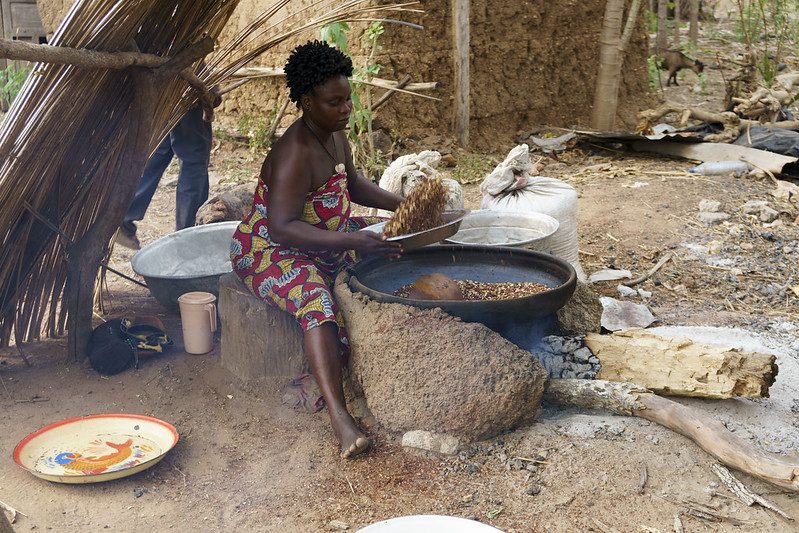
Hunger in Benin

Hunger in BeninThe Republic of Benin, a former French colony, is a coastal West African country with a 2024 population of over 14 million, equally distributed between urban and rural areas. Just under two-thirds of the population is under the age of 25. 

Benin’s most recent poverty rate measured by the international poverty line ($3.65) is only 12.7%, but as measured by the national poverty line, over a third (36.2%) of the population is considered to be poor. The urban-rural poverty gap saw a 10% difference (40.6%-30.8%) at the last assessment, with significant regional, gender, age and sociodemographic disparities. 

Background

Benin ranks 91 out of the 125 countries in the 2023 Global Hunger Index, its score of 22.6 putting it in the “Serious” category. This score is an improvement from 33.9 in 2000. The measured indicators of undernourishment, child mortality and child wasting are now all at or below 10%, but child stunting remains over 30%. Child stunting measures the proportion of children under five with low height for their age, which reflects chronic undernutrition. 

Benin exemplifies some of the successes that international organizations and state governments have had in collaborating with Benin’s leadership to create positive change. Key players in Benin’s fight against hunger include the nonprofit The Hunger Project, the U.N.’s World Food Programme and the World Bank.

The Hunger Project in Benin

The Hunger Project (THP) has been working in Benin since 1997 to fight hunger and poverty. THP’s approach to rural development is the “Epicenter Strategy,” where they partner with individuals and communities to achieve sustainable self-reliance. In Benin, THP established 18 epicenters in eight of the country’s twelve departments, sixteen of which have already declared self-sufficiency. The strategy begins by empowering women as change agents, mobilizing people to build individual capacity, leadership and confidence, and then creating partnerships with local government. Nutrition programs achieve synergy with farming and food security and multiple other programs, including health, water and sanitation, education, adult literacy and microfinance. 

In 2023, THP initiated four new projects in Benin’s central and northern regions as part of a vision for 2027 to improve nutritional and food security. THP’s mission to empower youth, women and other vulnerable groups is targeting the 450,000 residents in rural Benin. 

WFP’s Role in Alleviating Hunger in Benin

The U.N.’s World Food Programme reports high food insecurity in Benin, noting that almost 83% of households cannot afford a healthy diet. WFP began its support in Benin in 2017 by initiating integrated school feeding programs in 75% of Benin’s public primary schools. The Government of Benin is committed to full coverage, allocating $200 million for a five-year program cycle.

At its November 2023 Executive Board session, WFP approved a three-year country strategic plan for Benin (2024-2027), based on Benin’s own 2021-2026 national action plan. Continuing the national school feeding program, along with policy advisory work and technical assistance, three outcomes are WFP’s focus: Meeting urgent food and nutrition needs by people affected by global, regional and climate shocks; enhanced nutrition, health and education for communities and school-age children through access to basic social services and affordable, nutritious diets; and increased capacity of targeted systems and institutions to implement programs that promote food security and nutrition. It is intended that the strategic plan will contribute to the achievement of multiple Strategic Development Goals, including SDG  1 (No Poverty) and SDG 2 (Zero Hunger). 

World Bank Group Support in Benin

The World Bank Group established a Country Partnership Framework with Benin covering 2018-2023, with a new CPF to begin this year (2024-2028). The World Bank Group’s commitment of $2.7 billion finances seven regional and 19 national projects. COVID-19 responses included activation of the Emergency Response Component of the Early Childhood Nutrition and Development Project.  

In June 2024, the World Bank approved $150 million in additional International Development Association support to improve Benin’s food security and productivity through increased production of market garden produce and rice, as well as support for various agricultural supplies, production technologies and advisory services. The World Bank country manager for Benin reports that two-thirds of Benin’s population is employed in agriculture so investment in this sector is “an important pillar for food security and a key driver of fragility prevention mechanisms.” 

– Staff Reports
Photo: Flickr
Updated: August 24, 2024

July 27, 2020
https://borgenproject.org/wp-content/uploads/borgen-project-logo.svg 0 0 Borgen Project https://borgenproject.org/wp-content/uploads/borgen-project-logo.svg Borgen Project2020-07-27 12:40:442024-08-25 12:37:19Hunger in Benin
Food & Hunger, Global Poverty

7 Facts about Hunger in Malaysia

Malaysia is a small Southeast Asian country known for its fast-growing economy and great ethnic, linguistic, cultural and religious diversity. However, like many nations, Malaysian citizens face persistent challenges when it comes to issues of poverty, specifically hunger and malnourishment. Here are seven facts about hunger in Malaysia.

7 Facts about Hunger in Malaysia

  1. Hunger Level: As recorded in the 2019 Global Hunger Index, out of the 117 qualifying countries, Malaysia ranks 57th and endures a moderate hunger level.
  2. Malnourishment and Causes: Though Malaysia has been able to drastically reduce the country’s poverty rate, malnutrition is still a crucial issue. Malnutrition is an imbalance in a person’s energy or nutrient consumption. The condition is not always as apparent as one would presume. It is common in many South Asian and Southeast Asian cultures for daily diets to be quite starch-heavy, as most meals contain rice in some way. Though this allows people to feel full, a diet heavily reliant upon starch does not include the nutrients needed for a healthy lifestyle. According to nutritionist André Rhoen, one possible solution is making healthy food more affordable to the underprivileged through food fortification.
  3. Child Hunger: Poverty and malnutrition in Malaysia have a severe long-term impact on children. 23% of children aged four are stunted, with 22% underweight and 32% wasting, or thinner than the average. A study surveying 16 low-cost Public Housing Projects in Kuala Lumpur and Selangor found that 22% of children under five experienced stunted growth, double the global rate.
  4. Poverty and Prices: Despite having a comparatively higher GDP than other nations struggling with hunger issues, Malaysia’s population suffers from higher rates of malnourishment and impaired growth. 12% of children in Malaysia eat fewer than three meals a day and 97% of households reported that they felt that the cost of food was too high, hindering their ability to prepare healthy meals for their children.
  5. Fighting Hunger: Several Malaysian NGOs are working to combat poverty and hunger in the country. One of these organizations is Rise Against Hunger Malaysia, which strives to provide food and aid to vulnerable communities in Malaysia. Since its inception in 1998, they have implemented many anti-hunger and anti-poverty initiatives. These include their meal packaging program and several sustainable community development projects. As of July 2020, they have packaged 12,866,000 meals in Malaysia. Furthermore, the United Nations Millennium Development Goals include a plan to eradicate hunger and poverty in countries such as Malaysia by 2030.
  6. Progress: Despite these problems, Malaysia has progressed much in the last few decades. In 1970, half of all Malaysian households were poor; in just 15 years, Malaysia more than halved the absolute poverty rate. This trend has continued in the last few decades; only 5.1% of households were considered poor in 2002.
  7. The Lost Food Project: A significant way Malaysia is progressing regarding food poverty is through The Lost Food Project (TLFP). TLFP is working to build a sustainable future by “rescuing ‘lost’ food and finding it a new home with people who need it most” within the country. It is a volunteer-run organization that provides people in vulnerable communities in Malaysia with surplus food; its goal is not only eliminating hunger in Malaysia but also ending food waste.

Hunger and malnutrition are still major crises in Malaysia that disproportionately affect the poor, particularly children. However, despite these challenges, the country has done a remarkable job of increasing the standard of living for its citizens. With possible policy implementations such as universal childcare allowance and reassessing the Poverty Line Income, the future looks hopeful.

– Shreeya Sharma
Photo: FreeMalaysiaToday(FMT)
Updated: November 1, 2024

July 22, 2020
https://borgenproject.org/wp-content/uploads/borgen-project-logo.svg 0 0 Kim Thelwell https://borgenproject.org/wp-content/uploads/borgen-project-logo.svg Kim Thelwell2020-07-22 13:28:242024-11-03 17:24:177 Facts about Hunger in Malaysia
Food & Hunger, Food Security, Global Poverty

5 Facts about Hunger in Sudan

5 facts about hunger in SudanThe Republic of Sudan is a country located in Northeast Africa with a population of more than 45 million. Its capital city, Khartoum, is home to nearly six million people. For much of its post-independence history, Sudan has struggled with significant political instability ranging from civil war to intertribal strife. Further unrest unfolded after South Sudan seceded from Sudan in 2011; this resulted in a full-fledged war between the countries by 2012. All of these factors have contributed to widespread food insecurity and malnutrition among Sudanese people. To learn more about this issue, here are five key facts about hunger in Sudan.

5 Facts About Hunger in Sudan

  1. Rising food prices and high inflation levels increase the risk of hunger. According to the World Food Program (WFP), 5.8 million people in Sudan suffer from food insecurity. Low purchasing power means that Sudanese often cannot buy enough food. For example, an average local food basket costs at least three-fourths of a Sudanese household income.
  2. Sudan’s volatile economy exacerbates the problem of food insecurity. The volatility comes from weak infrastructure and the loss of a large share of oil production revenues after South Sudan’s secession. Sudan has been struggling to recover from these losses ever since.
  3. Malnutrition and stunting levels among Sudanese children are very high. Malnutrition and stunting, or decreased growth, both come from hunger. More than half a million children in Sudan are severely and acutely malnourished. In addition, more than a third of children under five, or 2.3 million, suffer from stunting. Sudan is one of 14 countries that have four-fifths of the world’s stunted children.
  4. Sudan depends heavily on the vulnerable agricultural sector. This decreases food security and increases hunger in Sudan, especially given that it is where 80% of the country’s labor force is employed. Many factors make agriculture unreliable. Sudan is exposed to environmental disruptions such as desertification and periodic droughts and floods. It also suffers from a lack of sufficient water supplies and water pollution.
  5. Many displaced persons in Sudan are at a high risk of hunger. Ongoing domestic conflicts in Sudan have led to the internal displacement of nearly two million Sudanese. Additionally, there has been an influx of more than a million refugees, most of whom are from South Sudan. These internally displaced persons and refugees often rely on food assistance. In addition to providing food vouchers, which enable Sudanese families to buy food locally, USAID has reportedly contributed more than 600,000 metric tons in food aid between 2013 and 2017.

Fortunately, many organizations are stepping up to diminish hunger in Sudan. USAID’s Office of Food for Peace (FFP), in partnership with other organizations like the WFP and UNICEF, is conducting efforts to support food-insecure Sudanese families. As of 2020, FFP has donated $226.9 million to provide assistance and agricultural training. In addition, USAID’s Famine Early Warning Systems Network (FEWS NET) has also been a useful tool that monitors and evaluates the food security-related needs of Sudan. The network thus allows for earlier responses to potential crises.

Based on the above facts about hunger in Sudan, it is clear that the African nation continues to face crippling challenges ranging from a weak economic structure to poor child health. To satisfy the nutritional needs of its population, Sudan will continue to need the efforts and outreach of organizations such as the FFP and UNICEF.

– Oumaima Jaayfer
Photo: Flickr

July 13, 2020
https://borgenproject.org/wp-content/uploads/borgen-project-logo.svg 0 0 Kim Thelwell https://borgenproject.org/wp-content/uploads/borgen-project-logo.svg Kim Thelwell2020-07-13 01:30:242024-05-29 23:18:295 Facts about Hunger in Sudan
Page 21 of 78«‹1920212223›»

Get Smarter

  • Global Poverty 101
  • Global Poverty… The Good News
  • Global Poverty & U.S. Jobs
  • Global Poverty and National Security
  • Innovative Solutions to Poverty
  • Global Poverty & Aid FAQ’s
Search Search

Take Action

  • Call Congress
  • Email Congress
  • Donate
  • 30 Ways to Help
  • Volunteer Ops
  • Internships
  • Courses & Certificates
  • The Podcast
Borgen Project

“The Borgen Project is an incredible nonprofit organization that is addressing poverty and hunger and working towards ending them.”

-The Huffington Post

Inside The Borgen Project

  • Contact
  • About
  • Financials
  • President
  • Board of Directors
  • Board of Advisors

International Links

  • UK Email Parliament
  • UK Donate
  • Canada Email Parliament

Get Smarter

  • Global Poverty 101
  • Global Poverty… The Good News
  • Global Poverty & U.S. Jobs
  • Global Poverty and National Security
  • Innovative Solutions to Poverty
  • Global Poverty & Aid FAQ’s

Ways to Help

  • Call Congress
  • Email Congress
  • Donate
  • 30 Ways to Help
  • Volunteer Ops
  • Internships
  • Courses & Certificates
  • The Podcast
Scroll to top Scroll to top Scroll to top