• Link to X
  • Link to Facebook
  • Link to Instagram
  • Link to TikTok
  • Link to Youtube
  • About
    • About Us
      • President
      • Board of Directors
      • Board of Advisors
      • Financials
      • Our Methodology
      • Success Tracker
      • Contact
  • Act Now
    • 30 Ways to Help
      • Email Congress
      • Call Congress
      • Volunteer
      • Courses & Certificates
      • Be a Donor
    • Internships
      • In-Office Internships
      • Remote Internships
    • Legislation
      • Politics 101
  • The Blog
  • The Podcast
  • Magazine
  • Donate
  • Click to open the search input field Click to open the search input field Search
  • Menu Menu

Archive for category: Food & Hunger

Information and stories on food.

Food & Hunger, Global Poverty

7 Facts about Hunger in Malaysia

Malaysia is a small Southeast Asian country known for its fast-growing economy and great ethnic, linguistic, cultural and religious diversity. However, like many nations, Malaysian citizens face persistent challenges when it comes to issues of poverty, specifically hunger and malnourishment. Here are seven facts about hunger in Malaysia.

7 Facts about Hunger in Malaysia

  1. Hunger Level: As recorded in the 2019 Global Hunger Index, out of the 117 qualifying countries, Malaysia ranks 57th and endures a moderate hunger level.
  2. Malnourishment and Causes: Though Malaysia has been able to drastically reduce the country’s poverty rate, malnutrition is still a crucial issue. Malnutrition is an imbalance in a person’s energy or nutrient consumption. The condition is not always as apparent as one would presume. It is common in many South Asian and Southeast Asian cultures for daily diets to be quite starch-heavy, as most meals contain rice in some way. Though this allows people to feel full, a diet heavily reliant upon starch does not include the nutrients needed for a healthy lifestyle. According to nutritionist André Rhoen, one possible solution is making healthy food more affordable to the underprivileged through food fortification.
  3. Child Hunger: Poverty and malnutrition in Malaysia have a severe long-term impact on children. 23% of children aged four are stunted, with 22% underweight and 32% wasting, or thinner than the average. A study surveying 16 low-cost Public Housing Projects in Kuala Lumpur and Selangor found that 22% of children under five experienced stunted growth, double the global rate.
  4. Poverty and Prices: Despite having a comparatively higher GDP than other nations struggling with hunger issues, Malaysia’s population suffers from higher rates of malnourishment and impaired growth. 12% of children in Malaysia eat fewer than three meals a day and 97% of households reported that they felt that the cost of food was too high, hindering their ability to prepare healthy meals for their children.
  5. Fighting Hunger: Several Malaysian NGOs are working to combat poverty and hunger in the country. One of these organizations is Rise Against Hunger Malaysia, which strives to provide food and aid to vulnerable communities in Malaysia. Since its inception in 1998, they have implemented many anti-hunger and anti-poverty initiatives. These include their meal packaging program and several sustainable community development projects. As of July 2020, they have packaged 12,866,000 meals in Malaysia. Furthermore, the United Nations Millennium Development Goals include a plan to eradicate hunger and poverty in countries such as Malaysia by 2030.
  6. Progress: Despite these problems, Malaysia has progressed much in the last few decades. In 1970, half of all Malaysian households were poor; in just 15 years, Malaysia more than halved the absolute poverty rate. This trend has continued in the last few decades; only 5.1% of households were considered poor in 2002.
  7. The Lost Food Project: A significant way Malaysia is progressing regarding food poverty is through The Lost Food Project (TLFP). TLFP is working to build a sustainable future by “rescuing ‘lost’ food and finding it a new home with people who need it most” within the country. It is a volunteer-run organization that provides people in vulnerable communities in Malaysia with surplus food; its goal is not only eliminating hunger in Malaysia but also ending food waste.

Hunger and malnutrition are still major crises in Malaysia that disproportionately affect the poor, particularly children. However, despite these challenges, the country has done a remarkable job of increasing the standard of living for its citizens. With possible policy implementations such as universal childcare allowance and reassessing the Poverty Line Income, the future looks hopeful.

– Shreeya Sharma
Photo: FreeMalaysiaToday(FMT)
Updated: November 1, 2024

July 22, 2020
https://borgenproject.org/wp-content/uploads/borgen-project-logo.svg 0 0 Kim Thelwell https://borgenproject.org/wp-content/uploads/borgen-project-logo.svg Kim Thelwell2020-07-22 13:28:242024-11-03 17:24:177 Facts about Hunger in Malaysia
Food & Hunger, Food Security, Global Poverty

5 Facts about Hunger in Sudan

5 facts about hunger in SudanThe Republic of Sudan is a country located in Northeast Africa with a population of more than 45 million. Its capital city, Khartoum, is home to nearly six million people. For much of its post-independence history, Sudan has struggled with significant political instability ranging from civil war to intertribal strife. Further unrest unfolded after South Sudan seceded from Sudan in 2011; this resulted in a full-fledged war between the countries by 2012. All of these factors have contributed to widespread food insecurity and malnutrition among Sudanese people. To learn more about this issue, here are five key facts about hunger in Sudan.

5 Facts About Hunger in Sudan

  1. Rising food prices and high inflation levels increase the risk of hunger. According to the World Food Program (WFP), 5.8 million people in Sudan suffer from food insecurity. Low purchasing power means that Sudanese often cannot buy enough food. For example, an average local food basket costs at least three-fourths of a Sudanese household income.
  2. Sudan’s volatile economy exacerbates the problem of food insecurity. The volatility comes from weak infrastructure and the loss of a large share of oil production revenues after South Sudan’s secession. Sudan has been struggling to recover from these losses ever since.
  3. Malnutrition and stunting levels among Sudanese children are very high. Malnutrition and stunting, or decreased growth, both come from hunger. More than half a million children in Sudan are severely and acutely malnourished. In addition, more than a third of children under five, or 2.3 million, suffer from stunting. Sudan is one of 14 countries that have four-fifths of the world’s stunted children.
  4. Sudan depends heavily on the vulnerable agricultural sector. This decreases food security and increases hunger in Sudan, especially given that it is where 80% of the country’s labor force is employed. Many factors make agriculture unreliable. Sudan is exposed to environmental disruptions such as desertification and periodic droughts and floods. It also suffers from a lack of sufficient water supplies and water pollution.
  5. Many displaced persons in Sudan are at a high risk of hunger. Ongoing domestic conflicts in Sudan have led to the internal displacement of nearly two million Sudanese. Additionally, there has been an influx of more than a million refugees, most of whom are from South Sudan. These internally displaced persons and refugees often rely on food assistance. In addition to providing food vouchers, which enable Sudanese families to buy food locally, USAID has reportedly contributed more than 600,000 metric tons in food aid between 2013 and 2017.

Fortunately, many organizations are stepping up to diminish hunger in Sudan. USAID’s Office of Food for Peace (FFP), in partnership with other organizations like the WFP and UNICEF, is conducting efforts to support food-insecure Sudanese families. As of 2020, FFP has donated $226.9 million to provide assistance and agricultural training. In addition, USAID’s Famine Early Warning Systems Network (FEWS NET) has also been a useful tool that monitors and evaluates the food security-related needs of Sudan. The network thus allows for earlier responses to potential crises.

Based on the above facts about hunger in Sudan, it is clear that the African nation continues to face crippling challenges ranging from a weak economic structure to poor child health. To satisfy the nutritional needs of its population, Sudan will continue to need the efforts and outreach of organizations such as the FFP and UNICEF.

– Oumaima Jaayfer
Photo: Flickr

July 13, 2020
https://borgenproject.org/wp-content/uploads/borgen-project-logo.svg 0 0 Kim Thelwell https://borgenproject.org/wp-content/uploads/borgen-project-logo.svg Kim Thelwell2020-07-13 01:30:242024-05-29 23:18:295 Facts about Hunger in Sudan
Food Insecurity, Food Security, Global Poverty

Brexit and Its Effects on the European Economy

BrexitJanuary 31, 2020, was a historic day for the European Union, for it marks the day the United Kingdom left the Union based on a public vote (referendum) held in June 2016. Seventeen point four million citizens opted for Brexit in 2016 and, after several negotiations and talks, the U.K. is now the first former member of the European Union. An important and large-scale decision such as this has the ability to distort economic stability greatly.

Trade

The EU is the world’s largest single market that allows free trade among all its members. It is also responsible for negotiating trade policies on behalf of its members, establishing a single, strong voice throughout various negotiations. Since Britain is no longer a member, it must create its own suitable trade policies with the countries it wishes to trade within the Union. Britain also needs to negotiate for its own demands. It was projected that the U.K. stood to lose $32 billion after Brexit, with no trade agreement in place between the U.K. and the EU. Losses incurred are more likely to increase as the EU accounts for nearly 46% of the U.K.’s exports. Researchers project that Ireland’s exports to Britain may drop by at least 10%. This creates a serious trade imbalance and hence contributes to the national deficit of the nation.

Food Poverty

British citizens consume a significant amount of imported food. Brexit could lead to a rise in food poverty, as about 30% of food is imported from the EU and 11% is from countries whose trade policies were negotiated by the EU. Since there is no trade policy in place, food insecurity is bound to rise. Food prices will likely rise 6% by June 2020, according to researchers. Overall, an increase in food poverty may be on the horizon.

Immigration

The U.K. had announced that post-Brexit only highly skilled immigrants will be able to secure jobs and the additional requirements have already created an impact on the economy. Immigrants mostly work low-skilled jobs and the implementation of this policy has already lead to shortages. At least one in 11 posts are vacant. Also, immigrants occupy nearly one-sixth (140,000) of the 840,000 care worker jobs. The new regulations will soon prompt vacancies and greatly affect people with disabilities and the elderly.

The Potential Solutions

Trade talks between the U.K. and the EU are taking place effectively. British Prime Minister Boris Johnson proposed a “Canada-style free trade agreement” which the EU is prepared to accept, given the fact that the agreement would demand no tariffs or quotas from them. This shows that negotiations are productive and that the U.K. is trying to cause very little disturbance to the economy. Aware of its reliance on imports from the EU, the U.K. has opted for a mutually beneficial free trade agreement. As the cost of imports and exports are reduced, the trade imbalances are corrected. This in turn will influence food poverty as the general price levels will decrease and imported food will become affordable.

Additionally, there are multiple organizations and government schemes that help combat food poverty in the U.K. For example, The Trussell Trust and other independent foodbanks have distributed nearly 3 million food packages between 2018 and 2019. The organization Healthy Start allows the purchase of basic food necessities for pregnant women and mothers with infants.

What Are the Benefits of Brexit for the UK?

The U.K. is free to trade with other nations such as Japan, the U.S. and India without EU restrictions. This will stimulate growth in all nations involved in possible free trade and help tackle domestic issues, such as unemployment and hunger. Effective trading can lead to increased employment opportunities and better living standards.

The U.K. has given almost half a trillion pounds to the EU to be a member of the bloc. The amount the U.K. will save is significant enough to be directed at rising food insecurity, short-term deficit and unemployment. The U.K. is also able to craft specific policies to suit its needs instead of being subject to the ones crafted by the EU. The ability to do this helps the U.K. and other nations involved, as all policies will be tailored to be mutually beneficial and appropriate.

Overall, Brexit is a challenge. It is difficult to adjust to and likely poses serious threats to economic stability in the near future. However, this is only a short-term issue. Once the transition period is over, a structured agreement between the E.U. and the U.K. will help their economies regain stability.

– Mridula Divakar
Photo: Flickr

July 12, 2020
https://borgenproject.org/wp-content/uploads/borgen-project-logo.svg 0 0 Kim Thelwell https://borgenproject.org/wp-content/uploads/borgen-project-logo.svg Kim Thelwell2020-07-12 01:30:542020-07-22 18:30:07Brexit and Its Effects on the European Economy
Food Security, Global Poverty, Hunger

Addressing Hidden Hunger in Singapore

Hunger in Singapore
With one of the highest concentrations of millionaires in the world and a reputation for being a “Food Paradise,’” it is difficult to imagine that food security is an issue in Singapore. However, hunger persists despite Singapore’s reputation as an affluent and food-secure nation. This hidden hunger in Singapore is a result of food insecurity and has caused malnutrition throughout the country.

Hidden Hunger in Singapore

Singapore is ranked as the world’s most food-secure nation, yet many Singaporeans still struggle to access a sufficient and nutritious diet. This “hidden hunger,” or the high rate of malnutrition, has created a significant issue for the nation. According to the U.N., about 4.1% of Singaporeans experienced moderate to severe food insecurity between 2016 and 2018. Food security is more than having access to the amount of food needed to survive; it is having nutritionally adequate food that is vital for a person’s growth and development.

A large part of Singapore’s population experiences food insecurity first-hand. Researchers from the Lien Center for Social Innovation reported that only 2.5% of the survey respondents from four low-income neighborhoods had no food insecurity, while 80% of respondents experienced mild to moderate food insecurity. The researchers found that within the last 12 months, one in five low-income households in Singapore had to go a whole day without eating or could not eat when hungry due to a lack of resources.

However, food insecurity is not limited to low-income households. In fact, approximately 27% of the study participants had an average monthly income of $2,000 and above. This suggests that financial constraints are not the sole cause of food insecurity in Singapore.

Food Insecurity Leads to Malnutrition

This widespread hunger in Singapore leads to a high rate of malnutrition, especially in children and the elderly population. ONE (SINGAPORE) reported that one in 10 Singaporeans lack sufficient access to essentials, including healthy and nutritious food. This makes access to healthy food an unattainable reality for many.

Malnutrition as a consequence of an unhealthy or insufficient diet creates even more health-related issues for at-risk populations. ONE (SINGAPORE)’s website reports that upwards of 23,000 children in Singapore are malnourished as a result of food insecurity. This is a staggering number for such an affluent country. Around one in three elderly Singaporeans are at risk of being malnourished. In 2015, about half of the elderly population admitted to hospitals “were eating poorly,” making them more vulnerable to medical complications and other adverse outcomes.

Food Support Systems: Lacking Coordination

Despite the abundance and diversity of food assistance groups in Singapore, including nonprofit organizations, charities, soup kitchens, Meals-on-Wheels providers and informal volunteer groups, many people experiencing food insecurity remain hungry. According to the Lien Center for Social Innovation, more than half of the survey participants who experienced severe food insecurity received infrequent or no support at all.

In spite of the support systems in place (approximately 125 in 2018), the results of this report suggest they may be inefficient in addressing Singapore’s hidden hunger. Some attribute the inefficiency to the lack of coordination between systems. Many of these food support groups operated independently and there was no information-sharing network in place. This often created more problems: duplication of assistance, food waste and in some cases, little to no aid. In order to better coordinate efforts, stronger communication between different food aid organizations is needed.

Finding Common Ground

In 2018, officers from the Ministry of Social and Family Development started engaging several food aid organizations informally. This created the foundation for a multi-agency workgroup in 2019 which brings together food support organizations and agencies. The purpose of this workgroup is to provide a platform for collaboration to end food insecurity and food waste in Singapore.

While the workgroup is still in its infancy, it has made headway in coordinating efforts among the groups. The stakeholders have worked together to address food waste by compiling a list of sources that are willing to contribute unwanted food. In addition, they are working to map food groups and their needs in order to eliminate duplication of assistance and sourcing issues. These efforts make Singapore’s food assistance programs more efficient and effective.


Many helping hands devoted to alleviating hidden hunger in Singapore. However, the lack of coordination among these well-intentioned groups sometimes leads to mismatches between the providers and the beneficiaries. By recognizing the “hidden hunger” in Singapore and coordinating governmental efforts, the nation and its charities may be able to more efficiently address food insecurity in the nation.

– Minh-Ha La
Photo: Flickr

June 3, 2020
https://borgenproject.org/wp-content/uploads/borgen-project-logo.svg 0 0 Lynsey Alexander https://borgenproject.org/wp-content/uploads/borgen-project-logo.svg Lynsey Alexander2020-06-03 11:00:292024-05-29 22:58:04Addressing Hidden Hunger in Singapore
Food Security, Foreign Aid, Global Poverty, Poverty

7 Facts About Poverty in Puerto Rico

Poverty in Puerto Rico
Puerto Rico is a Caribbean island between the Caribbean Sea and the North Atlantic Ocean, east of the Dominican Republic. A population of 3.194 million resides in Puerto Rico and represents more than 0.04% of the world population, yet many are living in severe levels of poverty to this day. Puerto Rico has been dynamic and competitive when it comes to its local economies until recent years. Its economy now relies mostly on aid from the United States government. Here are seven facts about poverty in Puerto Rico.

7 Facts About Poverty in Puerto Rico

  1. More than 44% of the population of Puerto Rico lives in poverty, compared to the national U.S. average of approximately 12%. That is 1.4 million Puerto Rican citizens in comparison to 39.3 million U.S. citizens. Puerto Rico relies mainly on financial and federal aid from the U.S. government because it has ties to the U.S. as a U.S. colony. As a result, the country often struggles to independently support itself.
  2. Before the recent hurricanes, around 1.5 million of the Puerto Rican population suffered from food insecurity. The child food insecurity rate was 56%, which is 281,335 Puerto Rican children. The main reason for food insecurity is that hurricane season often hits Puerto Rico rather hard, and its access to imported goods only comes from the U.S. There are local countries and islands surrounding that are willing to help, but due to the ruling that Puerto Rico can only receive U.S. goods, these essential goods have higher tax rates. To improve this, the Puerto Rican governor organized committees to correspond with third party task forces in the U.S. to ship essential supplies over, especially after Hurricane Maria.
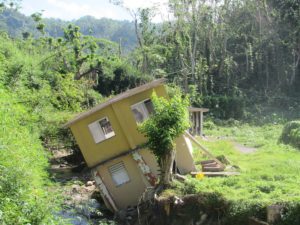
  3. Hurricane Maria, the strongest hurricane to hit Puerto Rico in nearly a century, made landfall on September 20, 2017. It compounded the destruction that Hurricane Irma caused just weeks before, affecting residential living, wildlife and everything in between. For example, areas that Hurricane Maria hit left homes without a proper roof, even over 600 days after the hurricane. Infrastructure damage can only receive so many repairs, as when hurricane season returns less than a year later, Puerto Rico often lacks proper recovery and preparation. An NGO aid project called All Hands Volunteers kickstarted to gut and remove debris, as well as demolish unsafe structures and repair cement roofing. It operates out of two cities, Barranquitas and Yabucoa.
  4. A year after Hurricane Maria, 10s of thousands in Puerto Rico are still living under blue tarps, designed as temporary roofs. This is the result of a lack of funds, resources and helping hands to Puerto Rico during its greatest and most desperate time of need. To improve this, task forces in U.S. states like Florida have been using small charter planes to import essential goods and supplies to bring relief and rebuild as best as possible. This is necessary even years after the initial storm.
  5. Families are struggling to find work to afford food, water, shelter and resources to rebuild their homes. Whether families have a solid income or not, it is apparent that most are food insecure to this day as a result of the storm. This is especially accurate when 80% of the island or 2.5 million people were without electricity for over a year after the hurricane. People also only have employment from establishments that are still standing or that people rebuilt.
  6. Due to the living conditions of the island, several thousand citizens have moved out of Puerto Rico and have yet to return. This could mean that they flew to stay with family in the U.S. or had to find work and shelter elsewhere with short notice. Some left temporarily, and others have yet to return to their homes due to a lack of funds for repairs. Puerto Rico wants to avoid further devastation and harm to its citizens during the season.
  7. While Puerto Rico is still recovering, the damage it experienced could have been much worse. The citizens still living on the island have shown compassion, resilience and teamwork toward one another. Without water or power, the people have shown great strength and support through waiting for recovery assistance, both financially and physically. This shows that against all odds, the citizens of Puerto Rico have managed to come back with all the strength they could muster to rebuild and recover.

Poverty in Puerto Rico is minimizing gradually and it is thanks to the help and assistance from the citizens of the United States standing alongside the island. These seven facts about poverty in Puerto Rico have shown that hurricane season will always have a destructive impact, but with continued assistance, poverty in Puerto Rico can reduce.

– Kimberly Elsey
Photo: Flickr

May 28, 2020
https://borgenproject.org/wp-content/uploads/borgen-project-logo.svg 0 0 Jennifer Philipp https://borgenproject.org/wp-content/uploads/borgen-project-logo.svg Jennifer Philipp2020-05-28 07:30:002024-05-29 23:16:007 Facts About Poverty in Puerto Rico
Food Security, Global Poverty

Mexico’s Milpa Farms Offer Model of Sustainability

Milpa farms
For more than 4,000 years, the Mayan practice of milpa farming has thrived in Mexico’s Yucatán Peninsula. Now, researchers believe that studying milpa farms could offer new solutions to many of the lingering problems plaguing modern agriculture.

An Ancient Practice

The milpa system’s origins lie in the ancient domestication of maize. Maize, also known as corn, is a particularly nutritious grain that rapidly became the staple crop of the Americas. From tortillas to popcorn, maize offers a wealth of different uses even today, making it widely appreciated for its versatility.

A key difference that sets maize apart from other grains like wheat and rice is that maize is open-pollinated, meaning that it relies on the wind for its dissemination. In practical terms, this means that maize can spread its seeds around a wider, less restricted area. Thus, maize often grows in mixed fields alongside other plants like beans and squash, practicing a kind of mutualism.

Maize benefits from the presence of the beans, for example, whose roots process the nitrogen in the soil that maize requires, while the beans themselves gain the opportunity to climb the tall maize stalks and soak-in the sun. Observing this natural pattern, Mesoamericans extended the concept to their own fields of maize, creating the first milpa farms.

How Milpa Works

So, what is it that makes milpa farms so sustainable? In a word: diversity. Modern agricultural techniques typically rely on rotating fields of single-crop yields, which, while productive, place enormous stress on the soil. Over time, as repeated cultivation leads to intensifying erosion, the fields become less capable of absorbing the nutrients necessary to sustain healthy crops. Milpa farms avoid this problem by hosting an assortment of different crops within the same field. This mimics the real-life diversity that exists in nature.

In a traditional milpa farm, farmers plant around a dozen crop varieties simultaneously (most commonly maize, beans and squash). Because each plant provides the nutrients that another requires, the soil never fully depletes. As a result, there exist fields in Central America which have seen continuous cultivation for 4,000 years without a loss of productivity, something unheard of in other parts of the world

Benefits of Milpa Farms

The milpa’s enduring success has led researchers in recent years to turn to it as a potential model for tackling some of the biggest problems facing modern agriculture. Indeed, while it is unlikely that the milpa’s exact circumstances can function on an industrial scale, researchers believe that further study could potentially lead to major improvements in the way farms operate.

For one, the genetic diversity of the crops the milpa produces brings with it comparative advantages. Crop varieties that have seen traditional use in milpa farms are known for their tolerance and highly resilient nature. This helps them overcome pests, competition and resource limitation in a way that less-diverse modern varieties struggle with. Additionally, as this is process done without need of fertilizer or pesticides, it also prevents pollution of nearby groundwater. This makes it easier for local populations to maintain access to clean drinking water.

Tackling Food Insecurity in Mexico

While a full shift from modern agricultural techniques remains infeasible at the moment, researchers believe that strategic adoption of the milpa system could offer a potential solution to some of the food security issues that plague modern Mexico, where more than 10 percent of the population lacks access to adequate food supply.

For one, small farmers who operate traditional milpa farms are typically far more self-sufficient than those who use the alternative. Furthermore, a lack of need for expensive modern fertilizers and machinery makes milpa more cost-effective for those in Mexico’s impoverished rural regions.

Most crucially, however, milpa farms also require significantly less land than the large-scale industrial efforts that dominate Mexican agriculture. In a country increasingly pressed to make efficient use of its land resources, strategic adoption of the milpa system could benefit millions of Mexicans.

– James Roark
Photo: Wikimedia

May 13, 2020
https://borgenproject.org/wp-content/uploads/borgen-project-logo.svg 0 0 Lynsey Alexander https://borgenproject.org/wp-content/uploads/borgen-project-logo.svg Lynsey Alexander2020-05-13 12:35:042024-05-29 23:15:44Mexico’s Milpa Farms Offer Model of Sustainability
Food & Hunger, Global Poverty, Hunger, World Hunger

5 NGOs Fighting World Hunger

Five NGOs Fighting World HungerEnding world hunger isn’t an easy task. For decades now, famine and food insecurity have caused problems worldwide. When kids are malnourished, they are unable to successfully perform at school, limiting their chances at an education. They are also at risk of weakened immune systems. Non-governmental organizations are working to help fight famine. Here are five NGOs fighting world hunger all across the world.

5 NGOs Fighting World Hunger

  1. Action Against Hunger. Action Against Hunger is a global nonprofit organization that has been working to end famine since 1979. Originally starting in France, Action Against Hunger now works in more than 50 countries worldwide, including Malawi, Cambodia, Nepal and Ethiopia. The organization takes a hands-on approach, addressing malnutrition through several points. These include developing nutritional products, promoting food security through public health and using research to develop nutritional products. The final goal of the organization is ending world hunger.
  2. A Growing Culture. A Growing Culture believes in ending word hunger by advocating for independent, smallholder farmers everywhere. According to the organization, smallholder farmers make up 94 percent of the world farms while providing 70 percent of the world’s food. A Growing Culture supports farmers in creating sustainable agricultural practices through outreach, information exchange and advocacy. By doing this, it ensures that local farms can grow crops to help their local communities. Sustainable farming practices are better for ecological systems as well as people. Smallholder farms have less risk of pesticide abuse, waste runoff and water supply contamination.
  3. The Carbon Underground. The Carbon Underground believes in ending world hunger by using a technique called regenerative agriculture. Regenerative agriculture is described as “a system of farming principles and practices that increases biodiversity, enriches soils, improves watersheds and enhances ecosystem services.” This can include capturing carbon in the soil while reversing atmospheric accumulation. The Carbon Underground organization also believes that regenerative agriculture is beneficial for food and freshwater security and healthier food production. Furthermore, it supports the world’s farmers. These benefits can change entire communities and cities. When people have access to fresh water and clean crops, they are able to have nutritious meals, feel more focused in school or work and contribute to society.
  4. The Small Planet Institute. In the late 1960s, Frances Moore Lappé began writing a book that would revolutionize the way people would think about food. The book, titled “Diet for a Small Planet,” sold more than three million copies. In the book, Lappé discusses the myth of “scarcity in a world of plenty.” It dives into concepts of responsible agriculture, the environmental impact of animal products and the philosophy of food. The award-winning book went on to become the inspiration for The Small Planet Institute, an organization that she began with her daughter. One of the main programs of the group is dedicated to ending world hunger by discussing some of the myths and facts about famine.
  5. Alliance for Food Sovereignty in Africa (AFSA). The Alliance for Food Sovereignty in Africa (AFSA) believes in transitioning Africa toward safe agriculture and an environmentally friendly future. The AFSA also strongly believes in consumer action. This means that consumers should have a say in the crops grown, the way they are produced and agroecology. Agroecology is the link between agriculture and the ecological process in which it can flourish. By giving African citizens the skills they need to succeed in farms, they are able to contribute more to society, send children to school and give communities the ability to flourish independently.

World hunger continues to be a problem worldwide. However, non-government organizations are stepping in to help combat these problems. Malnutrition and famine are proven to hinder students in school, parents in the workforce and communities. But with the help of these organizations, vulnerable people are able to get the assistance they need in the fight toward ending world hunger.

– Asha Swann
Photo: Flickr

April 13, 2020
https://borgenproject.org/wp-content/uploads/borgen-project-logo.svg 0 0 Lynsey Alexander https://borgenproject.org/wp-content/uploads/borgen-project-logo.svg Lynsey Alexander2020-04-13 07:30:472024-05-29 23:15:345 NGOs Fighting World Hunger
Developing Countries, Food & Hunger, Food Aid, Global Poverty

9 Organizations Fighting South Sudan’s Hunger Crisis

South Sudan’s Hunger Crisis
South Sudan gained independence in 2011, and in 2013 a civil war broke out. The civil war has displaced approximately more than 4 million people and caused extreme poverty. With the country still stuck in the throngs of conflict and the population on the verge of starvation, humanitarian aid has been especially important during this time. Here are nine organizations fighting South Sudan’s hunger crisis.

9 Organizations Fighting South Sudan’s Hunger Crisis

  1. Action Against Hunger: Action Against Hunger is a nonprofit organization that emerged in 1979 in Paris, France. Currently, Action Against Hunger is fighting emergencies in many countries in Africa with South Sudan being a focus area. The nonprofit has been working in South Sudan since 1985 and has focused its efforts on the recent civil war conflict and treating malnutrition. In 2018, it provided nutrition and other health services to 178,000 people; 46,607 children received malnutrition screenings and 3,250 obtained treatment in hard-to-reach-areas.
  2. International Medical Corps: International Medical Corps is a nonprofit that has been working in South Sudan since the mid-1990s. It provides seeds, tools and food to families in need to support a better livelihood as well as 24-hour stabilization centers that provide health care services. The organization works in five of the country’s 11 states providing outpatient and inpatient treatment for acute malnutrition. Nutrition programs are in Unity, Jonglei, Upper Nile, Central Equatoria and Western Bahr-el Ghazal states and have implemented a blanket supplementary feeding program to prevent malnutrition in countries children.
  3. Save the Children: Save the Children is a U.S.-based nonprofit that has been working to better the lives of children all over the world since 1932. It provides food assistance following natural disasters, builds economic and food security within communities, strengthens socio-economic conditions and gives youths the means and information to earn a sustainable income. In South Sudan, Save the Children is the lead provider in six of 11 states with 61 primary health care facilities, 45 outpatient centers and 58 feeding programs for infants and children suffering from malnutrition. Over the years, it has given 466,579 children vital nutrition.
  4. International Rescue Committee: The Emergency Rescue Committee and the International Relief Association created the International Rescue Committee in 1942, joining forces. The organization has been working in South Sudan since 1989 but has doubled its efforts since the country gained independence and civil war followed quickly behind. It mainly works in the Central Equatoria, Northern Bahr el Ghazal, Unity and Lakes states where it has opened health clinics and is providing nutrition and sanitation services to the communities. In 2018, the International Rescue Committee assisted 900,000 people in South Sudan.
  5. World Food Programme: The World Food Programme is the leading organization dealing with food assistance and providing communities with the ability to improve nutrition. Established in 1961, the World Food Programme works in over 83 countries a year. The first development program launched in Sudan and since then food assistance has increased over the years. The organization works to deliver food to hard-to-reach communities, provide school meals and treat malnutrition in children throughout the country with the help of 12,000 nutrition volunteers in South Sudan; in 2019, it assisted 5 million people.
  6. World Food Program U.S.A.: The World Food Program U.S.A. is a United State-based nonprofit that came into being in 1995. It has a partner in the United Nations World Food Programme. World Food Program U.S.A. works with U.S. policymakers, corporations and foundations to fight global hunger. The organization provides funding for the use of air-drops, all-terrain vehicles and river barges to get food to people. An average of eight air-drops, which can feed 2,000 each, occur in South Sudan. Also, it uses blockchain technology, called Scope, to monitor nutrition success cases. Over 1.4 million people have registered in the system.
  7. Humanity and Inclusion: Humanity and Inclusion, previously known as Handicap International, emerged in 1983. This nonprofit works with the disabled and handicapped communities within places facing extreme poverty, disaster and conflict. It provides services, rehabilitation and nutrition health information. Humanity and Inclusion has worked in South Sudan since 2006. The facilities had to close in 2013 due to the civil war, but have returned and now focus their efforts on rehabilitation of the country’s disabled or injured. Humanity and Inclusion work in South Sudan states Yambio, Lankien, Malakal, Bor, Bientu and Yida.
  8. Care: Care started out in 1945 and works to aid communities in emergencies. It also helps farmers, fishers and pastoralists ensure the nutrition of their families. Care has been working in South Sudan since 1993. The organization delivers emergency food assistance with care packages including sorghum, lentils and cooking oil. It also provides agricultural support, cash and environmental awareness-raising training.
  9. Oxfam International: A group of independent organizations founded Oxfam in 1995. Oxfam works to help fight global poverty worldwide, and it supports over 500,000 people in South Sudan. The organization provides emergency food distribution centers and clean, safe water to communities. In 2017, Oxfam built a solar-powered water treatment plant that reaches 24,000 people within the state of Juba. It also provides families with assets like livestock, tools, seeds and fishing gear to help people provide food for themselves, and give training on better farming methods.

South Sudan’s hunger crisis is a man-made tragedy and 60 percent of the population still faces severe hunger. Still, South Sudan is a great example of humanitarian action making a tremendous impact on communities. South Sudan has avoided famine with the help of many organizations providing food assistance, emergency aid and ways to have a better livelihood.

– Taylor Pittman
Photo: Flickr

April 12, 2020
https://borgenproject.org/wp-content/uploads/borgen-project-logo.svg 0 0 Kim Thelwell https://borgenproject.org/wp-content/uploads/borgen-project-logo.svg Kim Thelwell2020-04-12 01:30:072020-04-07 13:03:029 Organizations Fighting South Sudan’s Hunger Crisis
Developing Countries, Development, Food & Hunger, Global Poverty, Malnourishment

The Role of Food Aid in Fighting World Hunger

Food Aid in Fighting World Hunger
Fighting world hunger is one of the most prominent issues activists tackle in the fight against global poverty. While famine and food shortages are a major contributor to hunger in impoverished places, they are not the only contributors. In working to lift themselves out of poverty, nations do not only lack funding, but also resources and opportunities.

If an impoverished nation has a limited set of food, it often has the dilemma of choosing between using its limited amount of food to guarantee its population meals or to export it in the hopes of generating capital and improving the country’s overall situation longterm. On the other hand, it is often difficult for a nation to maintain a healthy economy when the workers are too busy focusing on meeting their necessities.

Malnourishment in Eastern Africa

While the number of starving people decreased in the world overall in the past few years, eastern Sub-Saharan Africa still holds most of the world’s undernourished population. In this region, 30.8 percent of the population still suffers from a food shortage.

Eastern African countries like Uganda, Kenya, Burundi, Rwanda, South Sedan and Tanzania have a primarily agriculture driven economy with coffee, cut flowers, tea, tobacco, fish and vegetables being its main exports.

In the East African Community (EAC), up to 44 percent of the GDP comes from agriculture, with 80 percent of the region’s population relying on agriculture for their livelihoods.

Producing food is not the problem itself, as having an agriculture-centered economy means that there is enough food to sustain an economy. However, when a bad season destroys a harvest, food prices suddenly soar as a result. This happened to Kenya in 1984 when a drought caused a food shortage. It previously grew food both for consumption and export, keeping pace with a growing population. When this happens, the people who are more reliant on this harvest as an accessible food source cannot afford it. Developed countries can afford to purchase these exports at inflated prices, though they are not reliant on them as their main food source.

The Weight of the Developed World

The developed countries are not ignorant of developing country’s food stability or quality of life and will often try to send direct food aid to assist hungry nations. When wealthier countries do try to help in the form of sending food aid, though, sometimes they wind up unintentionally causing more damage in the longterm.

Sending food aid to malnourished countries to help with fighting world hunger might help the starving population in the short term, but it does nothing to triage the bleeding infrastructure that exacerbated the food shortage to begin with. Reliance on food aid can depress the prices at which farmers sell locally grown crops, hampering production if no one buys what they are producing, which can further cripple the local economy in the long run.

World Vision

While there are some drawbacks with direct food aid, there are other means of aid that developed countries can send in addition to food. Investing in the country’s infrastructure so that farmers know how to grow more food more effectively can help protect them from food shortages if a poor growing season hits. Providing resources for impoverished countries to set up schools can allow the population to move away from a purely agricultural economy, and allow it to cultivate a more diverse one. This can, in turn, create more jobs for the people to earn an income with.

World Vision works to end global poverty and improve the welfare of families, women and children through long term programs and education. In Burundi and Rwanda, World Vision has been fighting world hunger by providing improved seeds and fertilizers to farmers, while also connecting them with markets to encourage turning a surplus of food into an income.

In providing individuals with access to credit and loans via Village Savings and Loans Associations (VSLAs), the community can meet day-to-day needs while also supplementing other income-generating projects.

World Vision institutes and trains savings groups, who strive to help families within the community save money. World Vision also creates non-agricultural job opportunities.

Successes

As of 2017, more than 1,600 VSLAs’ stabilized the lives of 100,000 children. This means that 7,385 hungry children gained more than 400 grams due to health programs. Around 4,560 farmers trained in agricultural sustainability in Burundi whereas 20,244 did in Rwanda in both 2016 and 2017. In 2017, 22,522 farmers had the resources they needed to grow their crops while 14,611 farmers did in 2016 and 2017. The number of World Vision-created savings groups grew to 6,831 with 107,159 members, while the organization created 2,230 non-agricultural jobs.

As a result of World Vision’s work in Rwanda, families went from making $15.01 per month to $42.20 from non-agricultural endeavors. Around 73.5 percent of adolescents reported having sufficient food, which was a 32 percent increase from 55.5 percent in 2014.

In Kenya, World Vision works closely with the government, abiding by the Kenya Health Policy and the National Food and Nutritional Security Policy to encourage maternal, infant and young child nutrition, agricultural and livestock nutrition and education in nutrition.

A focus on productivity, sustainability and education can help a lucrative economy take root, and the proper guidance on how to maintain it can create a solid foothold for the nation to maneuver out of starvation and poverty.

– Catherine Lin
Photo: Flickr

April 9, 2020
https://borgenproject.org/wp-content/uploads/borgen-project-logo.svg 0 0 Kim Thelwell https://borgenproject.org/wp-content/uploads/borgen-project-logo.svg Kim Thelwell2020-04-09 05:30:092020-04-09 10:35:16The Role of Food Aid in Fighting World Hunger
Food & Hunger, Food Insecurity, Global Poverty

8 Facts About Food Insecurity in Afghanistan

Eight Facts about Food Insecurity in Afghanistan
Afghanistan, although rich in natural resources, has high rates of poverty and food insecurity. More than half of the population lives below the poverty line, and conflict has caused food insecurity to increase. Other challenges include climate change and natural disasters, which will only exacerbate the nation’s struggles in the coming years. Here are eight facts about food insecurity in Afghanistan.

8 Facts About Food Insecurity in Afghanistan

  1. Food insecurity is defined as the lack of access to healthy, affordable food. In Afghanistan, food insecurity is driven by a number of factors, including droughts, flooding, climate shocks and insufficient infrastructure.
  2. Between 2014 and 2017, food insecurity in Afghanistan increased significantly, reaching 13.2 million out of a total population of 35.7 million. Approximately 54 percent of the population lives in poverty and an estimated 41 percent of Afghan children under the age of five are stunted due to food insecurity.
  3. Food insecurity is worsened by conflict. Due to the seemingly unending conflict in the Middle East, the people of Afghanistan have been denied access to the most basic human right: food. Years of oppression from the Taliban regime along with drought further worsened food insecurity in Afghanistan.
  4. Bombings conducted by the U.S. and the U.K. have also driven many people into camps where food delivery is nearly impossible. As of Dec. 2018, there were more than 2.5 million internally displaced persons (IDPs) in Afghanistan. Even outside of camps, displaced individuals are more likely to experience food insecurity.
  5. Groups like the World Food Program (WFP) assisted more than 3.6 million people in 2015. Most of the assistance came in the form of food deliveries to people in rural areas where food insecurity is the highest. The WFP’s work aims to protect the most vulnerable and impoverished families and illiterate schoolchildren. They also place a particular emphasis on protecting women and girls.
  6. In 2015, the WFP also reached more than 814,000 women and children with take-home food baskets. Along with these baskets were small tablets that provide nutrients that those who are food insecure often lack.
  7. The nonprofit organization Action Against Hunger was able to help 374,814 people in 2018. In the same year, conflict escalated even further in Afghanistan, forcing 278,000 Afghans to flee their homes. Action Against Hunger has operated in Afghanistan for two decades. Since 1995, this program has worked to alleviate malnutrition in children, build safe sanitation services and create food security across the nation.
  8. The Save the Children Initiative has also worked to quell the extreme food insecurity that has resulted from years of war and conflict in the Middle East. Save the Children has helped 24,733 parents to provide food for their children so they do not become malnourished.

These eight facts about food insecurity in Afghanistan highlight that while Afghanistan has seen years of conflict and still wears the scars of war, there are always organizations working to alleviate the hunger crisis. There are many things people in the U.S. can do to help alleviate this conflict as well, including voting to continue foreign aid to the Middle East and supporting candidates and congressional leaders who wish to end the war in this region of the world.

– William Mendez
Photo: Flickr

April 1, 2020
https://borgenproject.org/wp-content/uploads/borgen-project-logo.svg 0 0 Lynsey Alexander https://borgenproject.org/wp-content/uploads/borgen-project-logo.svg Lynsey Alexander2020-04-01 09:30:592020-04-01 09:07:158 Facts About Food Insecurity in Afghanistan
Page 22 of 78«‹2021222324›»

Get Smarter

  • Global Poverty 101
  • Global Poverty… The Good News
  • Global Poverty & U.S. Jobs
  • Global Poverty and National Security
  • Innovative Solutions to Poverty
  • Global Poverty & Aid FAQ’s
Search Search

Take Action

  • Call Congress
  • Email Congress
  • Donate
  • 30 Ways to Help
  • Volunteer Ops
  • Internships
  • Courses & Certificates
  • The Podcast
Borgen Project

“The Borgen Project is an incredible nonprofit organization that is addressing poverty and hunger and working towards ending them.”

-The Huffington Post

Inside The Borgen Project

  • Contact
  • About
  • Financials
  • President
  • Board of Directors
  • Board of Advisors

International Links

  • UK Email Parliament
  • UK Donate
  • Canada Email Parliament

Get Smarter

  • Global Poverty 101
  • Global Poverty… The Good News
  • Global Poverty & U.S. Jobs
  • Global Poverty and National Security
  • Innovative Solutions to Poverty
  • Global Poverty & Aid FAQ’s

Ways to Help

  • Call Congress
  • Email Congress
  • Donate
  • 30 Ways to Help
  • Volunteer Ops
  • Internships
  • Courses & Certificates
  • The Podcast
Scroll to top Scroll to top Scroll to top